
SPARC-like 1/SPARCL1 Antibody (390) [CoraFluor™ 1]
Novus Biologicals | Catalog # NBP2-89237CL1

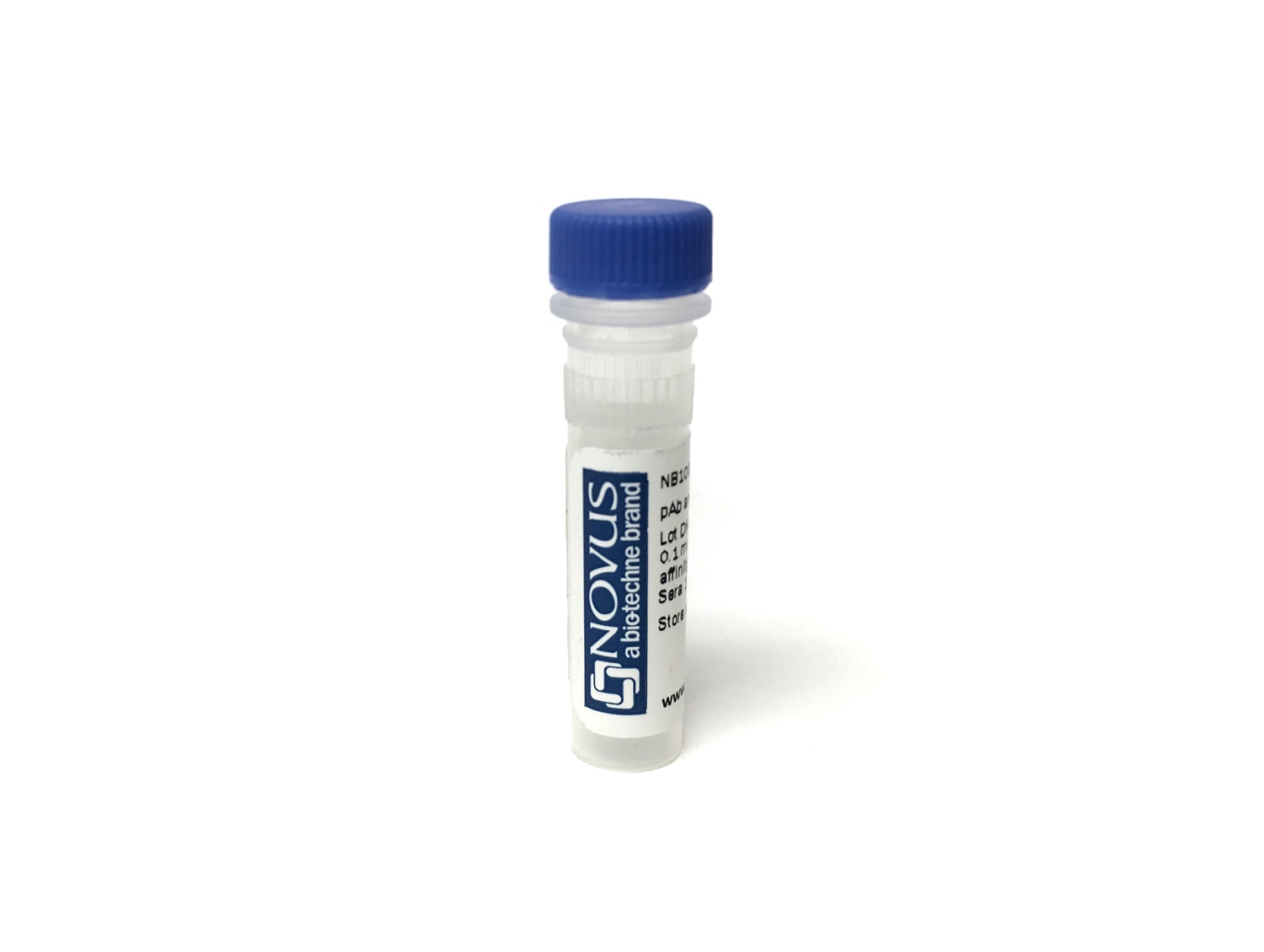
Key Product Details
Species Reactivity
Applications
Label
Antibody Source
Product Specifications
Immunogen
Clonality
Host
Isotype
Description
For specialized conjugation needs, like large quantities, specific concentrations, and defined F/P ratios, bulk and custom antibody conjugation services are available.
CoraFluor(TM) 1 is a high performance terbium-based TR-FRET (Time-Resolved Fluorescence Resonance Energy Transfer) or TRF (Time-Resolved Fluorescence) donor for high throughput assay development. CoraFluor(TM) 1 absorbs UV light at approximately 340 nm, and emits at approximately 490 nm, 545 nm, 585 nm and 620 nm. It is compatible with common acceptor dyes that absorb at the emission wavelengths of CoraFluor(TM) 1. CoraFluor(TM) 1 can be used for the development of robust and scalable TR-FRET binding assays such as target engagement, ternary complex, protein-protein interaction and protein quantification assays.
CoraFluor(TM) 1, amine reactive
CoraFluor(TM) 1, thiol reactive
For more information, please see our CoraFluor(TM) TR-FRET technology flyer.
Applications for SPARC-like 1/SPARCL1 Antibody (390) [CoraFluor™ 1]
Immunocytochemistry/ Immunofluorescence
Formulation, Preparation, and Storage
Purification
Formulation
Preservative
Concentration
Shipping
Stability & Storage
Background: SPARC-like 1/SPARCL1
Alternate Names
Gene Symbol
Additional SPARC-like 1/SPARCL1 Products
Product Documents for SPARC-like 1/SPARCL1 Antibody (390) [CoraFluor™ 1]
Certificate of Analysis
To download a Certificate of Analysis, please enter a lot or batch number in the search box below.
Product Specific Notices for SPARC-like 1/SPARCL1 Antibody (390) [CoraFluor™ 1]
Sold for research purposes only under agreement from Massachusetts General Hospital, US Patent No. 12,134,721. A license is required for development of new commercial assay platforms (e.g., microarrays, microfluidics), diagnostic use or other unlicensed uses. Please contact Technical Support for further details: techsupport@bio-techne.com.
This product is for research use only and is not approved for use in humans or in clinical diagnosis. Primary Antibodies are guaranteed for 1 year from date of receipt.
Related Research Areas
Customer Reviews for SPARC-like 1/SPARCL1 Antibody (390) [CoraFluor™ 1]
There are currently no reviews for this product. Be the first to review SPARC-like 1/SPARCL1 Antibody (390) [CoraFluor™ 1] and earn rewards!
Have you used SPARC-like 1/SPARCL1 Antibody (390) [CoraFluor™ 1]?
Submit a review and receive an Amazon gift card!
$25/€18/£15/$25CAN/¥2500 for a review with an image
$10/€7/£6/$10CAN/¥1110 for a review without an image
Submit a review
Protocols
Find general support by application which include: protocols, troubleshooting, illustrated assays, videos and webinars.
- Appropriate Fixation of IHC/ICC Samples
- Cellular Response to Hypoxia Protocols
- ClariTSA™ Fluorophore Kits
- Detection & Visualization of Antibody Binding
- ICC Cell Smear Protocol for Suspension Cells
- ICC Immunocytochemistry Protocol Videos
- ICC for Adherent Cells
- Immunocytochemistry (ICC) Protocol
- Immunocytochemistry Troubleshooting
- Immunofluorescence of Organoids Embedded in Cultrex Basement Membrane Extract
- Immunohistochemistry (IHC) and Immunocytochemistry (ICC) Protocols
- Preparing Samples for IHC/ICC Experiments
- Preventing Non-Specific Staining (Non-Specific Binding)
- Primary Antibody Selection & Optimization
- Protocol for VisUCyte™ HRP Polymer Detection Reagent
- Protocol for the Fluorescent ICC Staining of Cell Smears - Graphic
- Protocol for the Fluorescent ICC Staining of Cultured Cells on Coverslips - Graphic
- Protocol for the Preparation and Fluorescent ICC Staining of Cells on Coverslips
- Protocol for the Preparation and Fluorescent ICC Staining of Non-adherent Cells
- Protocol for the Preparation and Fluorescent ICC Staining of Stem Cells on Coverslips
- Protocol for the Preparation of a Cell Smear for Non-adherent Cell ICC - Graphic
- TUNEL and Active Caspase-3 Detection by IHC/ICC Protocol
- The Importance of IHC/ICC Controls
- View all Protocols, Troubleshooting, Illustrated assays and Webinars