Modulating the Tumor Necrosis Factor-alpha Induced Inflammatory Response in Human Colonic Epithelial Cells by Inhibiting NF kappa B Signaling
by J. Rivard, A. James, G. Wegner, K. Reagan.
Scientific Meeting PostersABSTRACT
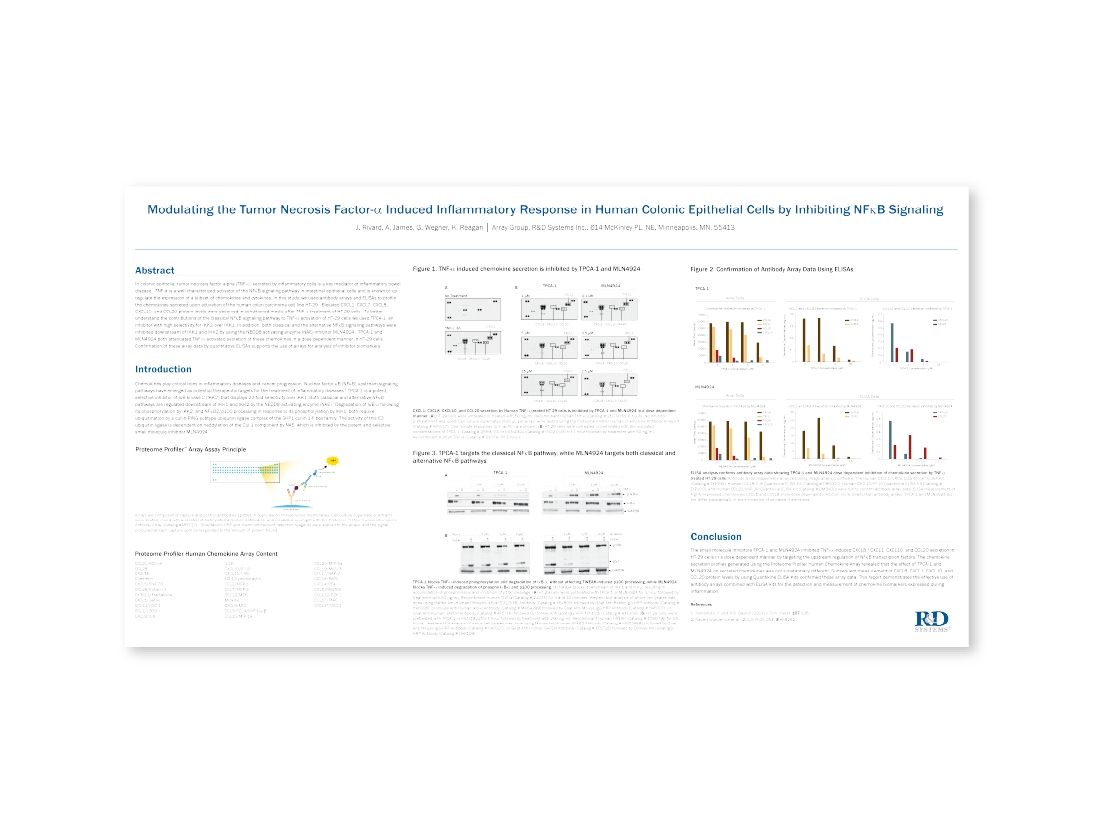
In colonic epithelia, tumor necrosis factor alpha (TNF-alpha) secreted by inflammatory cells is a key mediator of inflammatory bowel disease. TNF-alpha is a well-characterized activator of the NF-kappaB signaling pathway in intestinal epithelial cells and is known to upregulate the expression of a subset of chemokines and cytokines. In this study, we used antibody arrays and ELISAs to profile the chemokines secreted upon activation of the human colon carcinoma cell line HT-29. Elevated CXCL1, CXCL7, CXCL8, CXCL10, and CCL20 protein levels were observed in conditioned media after TNF-alpha treatment of HT-29 cells. To better understand the contributions of the classical NF kappa B signaling pathway to TNF-alpha activation of HT-29 cells we used TPCA-1, an inhibitor with high selectivity for IKK2 over IKK1. In addition, both classical and the alternative NF kappa B signaling pathways were inhibited downstream of IKK1 and IKK2 by using the NEDD8 activating enzyme (NAE)-inhibitor MLN4924. TPCA-1 and MLN 4924 both attenuated TNF-alpha activated secretion of these chemokines in a dose dependent manner in HT-29 cells. Confirmation of these array data by quantitative ELISAs supports the use of arrays for analysis of inhibitor biomarkers.
Download PDF