
Automated CE-SDS for Purity and Size Analysis of Biotherapeutics
Speed Up Size-based Protein Analysis with Automated CE‑SDS
CE-SDS on Maurice automates capillary electrophoresis SDS (CE-SDS) to deliver fast, reliable purity and size variant analysis of biotherapeutic proteins. Unlike traditional slab gel methods, Maurice runs both reduced and non-reduced CE-SDS assays in 5-35 minutes with minimal hands-on time. Results are highly reproducible, making Maurice equally suited for early-stage development and regulated QC environments.
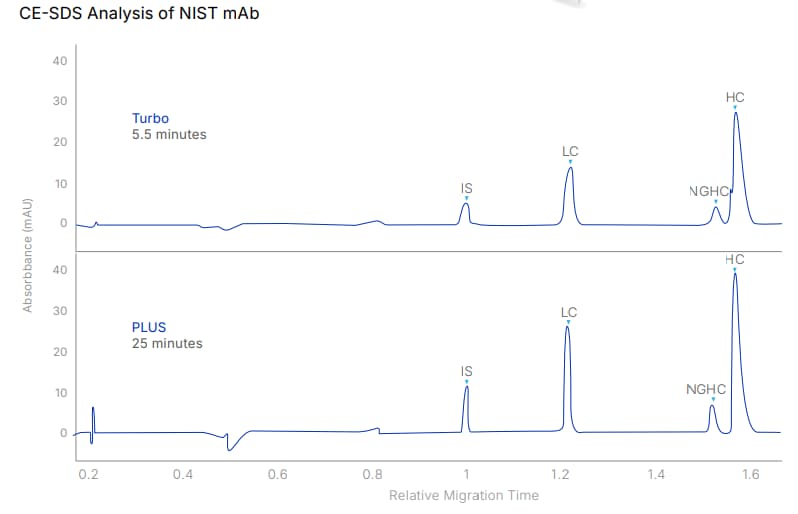
Use Maurice, MauriceFlex, and Maurice S systems to eliminate the manual burden of SDS‑PAGE and accelerate your CE‑SDS workflows. Run Turbo CE‑SDS and CE‑SDS PLUS assays on a single platform to generate high‑quality purity and identity data in minutes. These systems deliver consistent, quantitative separations for mAbs, ADCs, fusion proteins, viral vectors, and other biologics.
Advantages of CE-SDS Over SDS-PAGE
Gels are good, but capillaries are better. Upgrade from SDS-PAGE and outdated CE systems for automated, high-quality protein purity analysis with CE-SDS on Maurice™ and MauriceFlex™ systems.
- Automation – Pre-filled capillaries eliminate the need for gel casting, staining, and imaging, reducing hands-on time and user variability.
- Higher resolution – Narrow-bore capillaries minimize band broadening, leading to sharper, well-defined peaks.
- Superior reproducibility – Automated separation ensures consistent performance across runs, free from gel-to-gel variability.
- Quantitative precision – Integrated detection provides accurate, reproducible peak integration, unlike subjective band intensity assessments.
- High throughput – Rapid run times (as few as 5.5 min) enable the analysis of multiple samples in a fraction of the time required for SDS-PAGE.
- Analyzes various therapeutic modalities – mAbs, fusion proteins, viral vectors, bispecific antibodies, ADCs, and more
- Less toxic waste – Removes the need for hazardous reagents such as acrylamide, a neurotoxin required for gel preparation in SDS-PAGE. Automated separation also reduces the need for staining and destaining solutions, leading to fewer reagents and easier waste disposal.
- Compliance with multiple software options: Compass for iCE, Waters™ Empower® CDS, or Thermo Scientific™ Chromeleon® CDS
CE-SDS on Maurice Systems
The Maurice platforms enable CE-SDS analysis, along with other CE capabilities like icIEF (imaged capillary isoelectric focusing) for charge analysis and icIEF-based fractionation for charge variant separation and fraction collection. Switching between the three CE methods is as simple as plugging in the appropriate cartridge. For CE-SDS, there are two Maurice cartridges designed to address specific analytical needs depending on the phase of drug development.
- Maurice Turbo CE-SDS Cartridge
- For high-throughput needs
- Results in as little as 5.5 minutes per sample for 96 samples
- Suitable for upstream and downstream analysis
- Maurice CE-SDS PLUS Cartridge
- Superior resolution
- Results in 25 minutes per sample for 48 samples
- Best for analytical development and QC product release
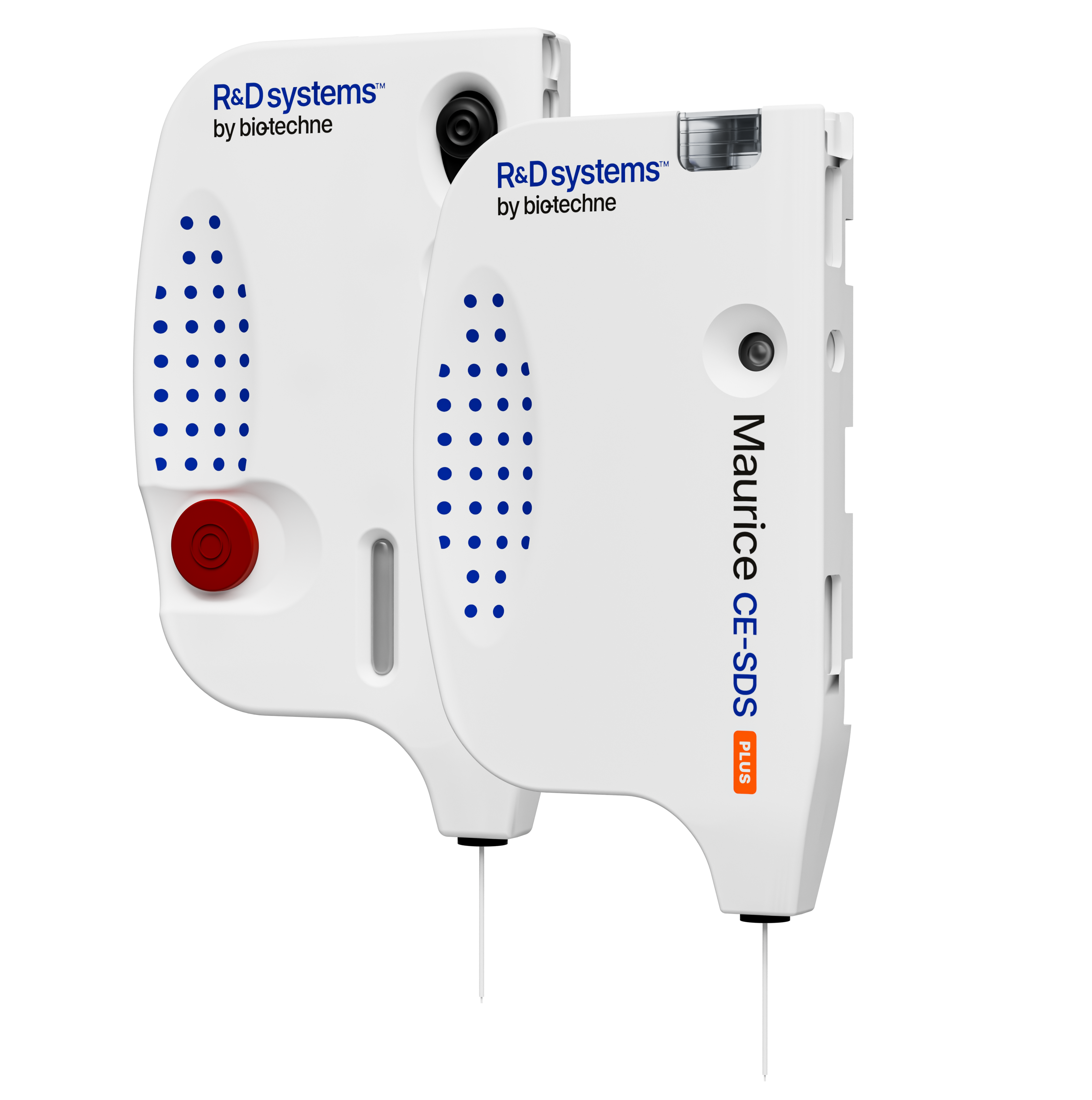
Both cartridges offer significant benefits over SDS-PAGE, as outlined above. Furthermore, CE-SDS on the Maurice system analyzes various biotherapeutic molecules – mAbs, bispecific antibodies, ADCs, fusion proteins, vaccines, GMP cytokines, large biomolecules (IgMs), and viral vectors for cell and gene therapy applications. Irrespective of the molecule being analyzed, CE-SDS on Maurice provides a linear and highly reproducible method.
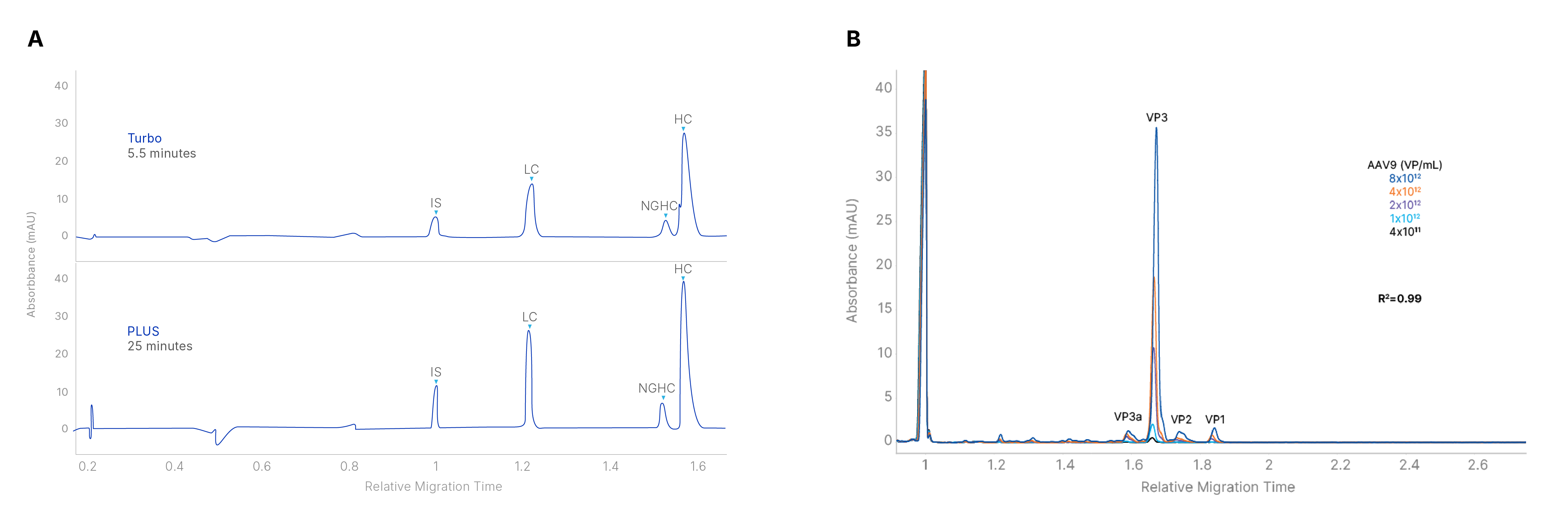
CE-SDS Analysis with Maurice. A. demonstrates a comparison of the Maurice Turbo CE-SDS and Maurice CE-SDS PLUS methods for the analysis of NIST mAb under reduced conditions. Both methods are comparable with the expected peaks detected. B. shows the profile of AAV9 analyzed at serially diluted concentrations with the Maurice CE-SDS PLUS cartridge. The method is linear, with an R2 value of 0.99.
While CE-SDS produces results in the electropherogram format, the software used for data analysis, Compass for iCE, also allows the lane analysis of different peaks detected for comparison to traditional gels if needed. Get:
- Virtual lane analysis
- Comparable banding
- Quantitative data that SDS-PAGE doesn’t give
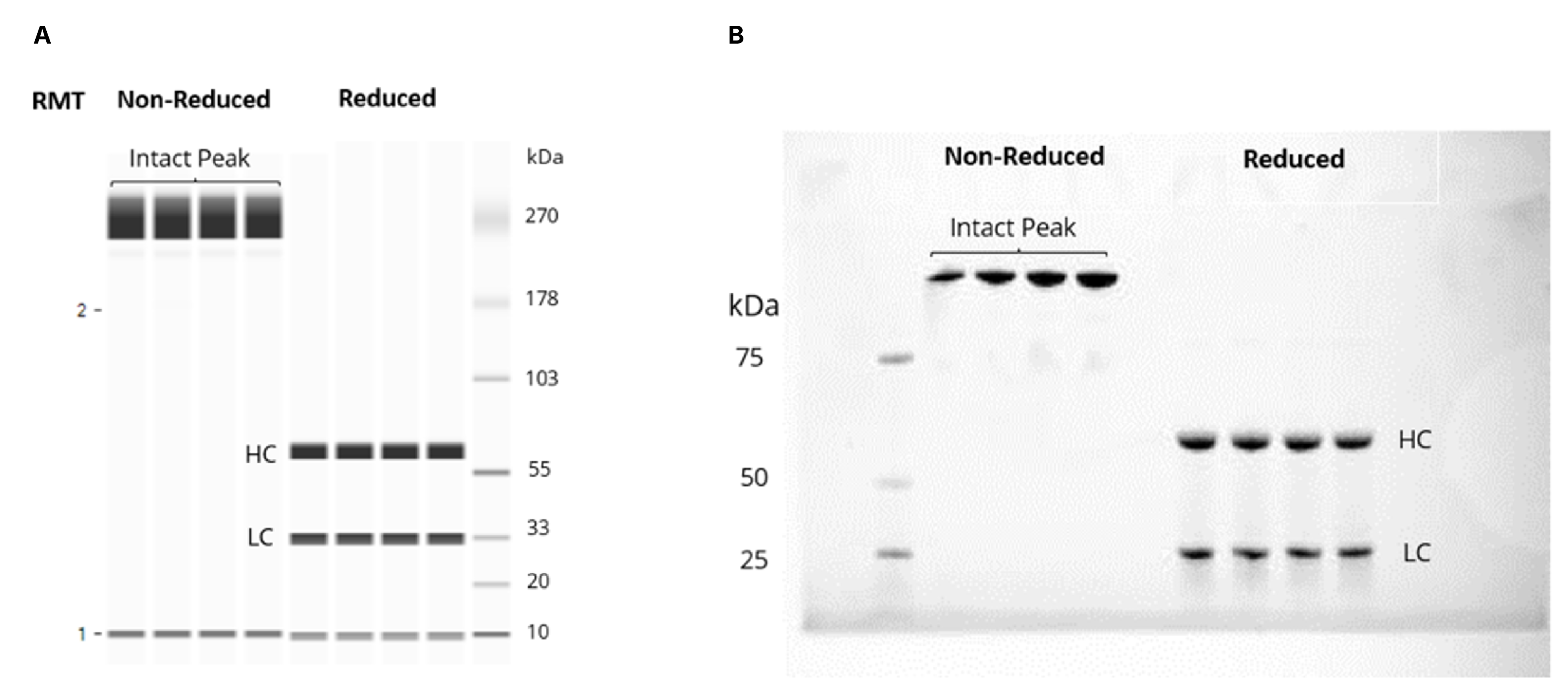
Lane analysis of the size profiles of Belimumab. CE-SDS under non-reduced conditions assesses the integrity of the intact molecule, detecting size variants such as aggregates and fragments that arise from broken or missing disulfide bonds. Under reduced conditions, disulfide bonds are intentionally cleaved, allowing the heavy chain (HC) and light chain (LC) to be resolved and quantified individually. Together, reduced and non-reduced CE-SDS provide a comprehensive picture of a biotherapeutic's size variant profile and molecular integrity critical quality attributes required by regulatory agencies for both drug development and QC release testing. A. The virtual gel image generated with the Lane View feature on Compass for iCE shows bands for the intact peak under non-reduced conditions, with a dominant intact band along with faint bands corresponding to minor species and shows bands for HC and LC under reduced conditions. B. The SDS-PAGE gel run under non-reduced and reduced conditions show similar bands to those from Turbo CE-SDS, indicating the comparability of both methods.
Suitability of Maurice CE-SDS in QC Workflows
- Delivers highly reproducible results, meeting stringent requirements of regulated QC environments
- Provides superior resolution
- Supports 21 CFR Part 11-compliant data collection, ensuring data integrity and audit-trail readiness.
- Compatible with Waters Empower 3 chromatography data software and Thermo Scientific Chromeleon CDS via dedicated Control Kits, enabling seamless integration into existing QC data systems.
- Provides equivalent data to that listed in USP <129>
Related Products
| Product | Catalog Number |
|---|---|
| MauriceFlex System | 090-158 |
| Maurice System | 090-000 |
| Maurice S. System | 090‑001 |
| Maurice CE-SDS PLUS Cartridge | PS-MC02-SP |
| Maurice Turbo CE-SDS Cartridge | PS-MC02-TS |
| Maurice CE-SDS PLUS Application Kit | PS-MAK03-S |
| Maurice Turbo CE-SDS Application Kit | PS-MAK01-TS |
Resources
Turbo CE-SDS Cartridges versus SDS-PAGE
CE-SDS delivers the same size-based protein separation as SDS-PAGE—without the manual mess. In this application note, see how the Maurice™ system with Turbo CE-SDS™ cartridge brings speed, precision, and reproducibility to protein characterization. Real-world comparisons with SDS-PAGE highlight why CE-SDS is the better fit for today’s analytical needs.
AAV Purity and Identity Assay
This application note details the analysis of two AAV critical quality attributes (CQAs) - identity and purity – using CE-SDS. Instead of using multiple methods (SDS-PAGE for AAV purity and confirming serotypes using PCR or ELISA) to obtain this data, the Maurice instrument can analyze all these attributes – and more -on one platform.
Equivalency Data for USP <129> using CE-SDS
This application note provides a comparability study using the Maurice CE-SDS PLUS method with the USP <129> protocol for the analysis of monoclonal antibodies. Using USP’s IgG System Suitability Reference Standard, the USP <129> method was first run on Maurice to determine ease of method transfer, followed by optimization of the Maurice protocol for comparison with USP <129>.
Rapid Analysis of IgM Molecules
This application note demonstrates a rapid, high-quality CE-SDS method on the Maurice system for the analysis of IgM proteins. Specifically, you will read about how the Turbo CE-SDS cartridge provides data on IgM purity, stability, identity, and reproducibility, in just 14 minutes of run time.
Assessment of Upstream Bioprocess Samples
This whitepaper describes how the Maurice instrument, using the Turbo CE-SDS cartridge, provides quantitative data that can be used for the analysis of purity of cell culture samples for both the supernatants as well as the purified antibodies. This workflow offers a fast method to screen a high volume of upstream samples during the cell culture and cell line development stages.
Simplified Lentiviral Vector Characterization
This application note demonstrates a robust and automated CE-SDS method on the Maurice instrument, which can be used as both an identity assay as well as a titer assay for LVV analysis using the Maurice CE-SDS PLUS method. The advantages versus using ELISA and SDS-PAGE methods are discussed.
Addressing Challenges of Size & Purity Analysis for Fusion Proteins, ADCs, AAVs with CE-SDS
In this webinar, Caroline Daniels (Shattuck Labs) describes a workflow using the Maurice system for heterodimer fusion protein size and purity analysis using the Turbo CE-SDS cartridge for routine analysis to reduce run time while maintaining resolution. This method is being used to support process development decisions to enrich for the bispecific protein as well as to support GMP release and stability.
Unlocking the power of AAV & LVV Analytics for Optimizing Viral Vector Purity Analysis
This webinar discusses how to optimize CE-SDS methods on Maurice for analyzing AAVs, lentivirus, and adenovirus.
Turn the Page on SDS-PAGE
Prof. Hermann Wätzig from the Institute of Medicinal and Pharmaceutical Chemistry, Braunschweig, Germany discusses how transitioning from SDS-PAGE to CE-SDS benefits research, both from an academic and industrial perspective. He highlights the current state-of-the art instrumentation and method development landscape.
Benefits of using CE-SDS compared to SDS-PAGE
In this video, Dr. Watzig illuminates the advantages of using CE-SDS on the Maurice instrument compared to traditional SDS-PAGE for biotherapeutic protein size characterization.
FAQs
What does CE-SDS mean?
CE-SDS stands for capillary electrophoresis sodium dodecyl sulfate. It is an automated, capillary-based technique used to separate proteins by size under denaturing conditions. CE-SDS is the modern, quantitative successor to traditional SDS-PAGE gel electrophoresis, and is widely used in biopharmaceutical development to assess the purity, molecular weight, and size variant profile of biologics such as monoclonal antibodies, antibody-drug conjugates (ADCs), and recombinant proteins.
What is the role of SDS in CE-SDS?
Sodium dodecyl sulfate (SDS) is an anionic detergent that binds to proteins and denatures them, unfolding their three-dimensional structure. Because SDS binds proportionally to protein mass, it coats each unfolded protein chain with a uniform negative charge relative to its size. This means that when an electric field is applied, all proteins migrate based solely on their molecular weight rather than their native charge or shape. Smaller proteins move faster, larger ones more slowly. SDS is what makes CE-SDS a reliable size-based separation technique.
How does CE-SDS work in protein analysis?
In CE-SDS, the protein sample is first denatured and coated with SDS, then loaded into a narrow capillary filled with a sieving matrix. When voltage is applied, proteins migrate through the matrix at rates determined by their size, where smaller fragments travel faster than larger ones. Maurice detects the separated proteins by UV absorbance as they pass the detector, generating an electropherogram with distinct peaks corresponding to the main protein species and any size variants or impurities. Both reduced and non-reduced CE-SDS conditions can be run, providing complementary information about subunit composition and intact molecule integrity respectively.
How does CE-SDS differ from traditional SDS-PAGE?
CE-SDS and SDS-PAGE are based on the same principle, which is the size-based separation of SDS-denatured proteins, but differ significantly in format, throughput, and data quality. SDS-PAGE is a manual, gel-based technique that requires staining and densitometry for quantitation, making it labor-intensive, low in throughput, and difficult to standardize across labs. CE-SDS is fully automated, runs in a capillary rather than a gel, and delivers quantitative, reproducible results in a fraction of the time. CE-SDS also requires far smaller sample volumes, produces digital data that is audit-trail ready, and is suitable for use in regulated environments. None of these advantages can be found with SDS-PAGE.
Can CE-SDS be used for QC release testing?
Yes. CE-SDS is an established method for QC release and stability testing of biotherapeutics, and is referenced in regulatory guidelines including USP and ICH. Maurice supports 21 CFR Part 11-compliant workflows and is compatible with Waters Empower 3 software via a dedicated Control Kit, making it well suited for integration into regulated QC laboratory environments.
What is the difference between Turbo CE-SDS and CE-SDS PLUS?
Maurice offers two CE-SDS configurations optimized for different needs. Turbo CE-SDS is designed for speed, delivering results in as little as 10 minutes per sample, making it ideal for high-throughput screening and process development workflows where rapid turnaround is a priority. CE-SDS PLUS is optimized for resolution and sensitivity, providing enhanced separation of closely related size variants and low-abundance impurities. The choice between the two depends on whether speed or analytical depth is the primary requirement for a given application.
Can CE-SDS analyze viral vectors?
Yes. CE-SDS is increasingly being applied to the characterization of viral vectors used in gene therapy, including adeno-associated viruses (AAVs) and lentiviruses. On Maurice, CE-SDS can be used to assess the capsid protein composition and purity of viral vector preparations, providing critical quality attribute data to support gene therapy development and manufacturing. Given the complexity and high value of viral vector samples, the small sample volume requirements of Maurice are a particular advantage in this application.
Why choose Maurice for CE-SDS?
Maurice is a purpose-built capillary electrophoresis platform that delivers automated, high-resolution CE-SDS analysis with minimal hands-on time. It runs both reduced and non-reduced CE-SDS assays, supports multiple method configurations including Turbo CE-SDS and CE-SDS PLUS, and is compatible with regulated QC workflows with 21 CFR Part 11 compliance and Waters Empower 3 integration. Critically, the same Maurice instrument also runs icIEF, giving laboratories a single, consolidated platform for both charge and size variant analysis across the full biotherapeutic development lifecycle.