
ABCA1 Antibody (1276B) [DyLight 350]
Novus Biologicals | Catalog # FAB72071D
Recombinant Monoclonal Antibody

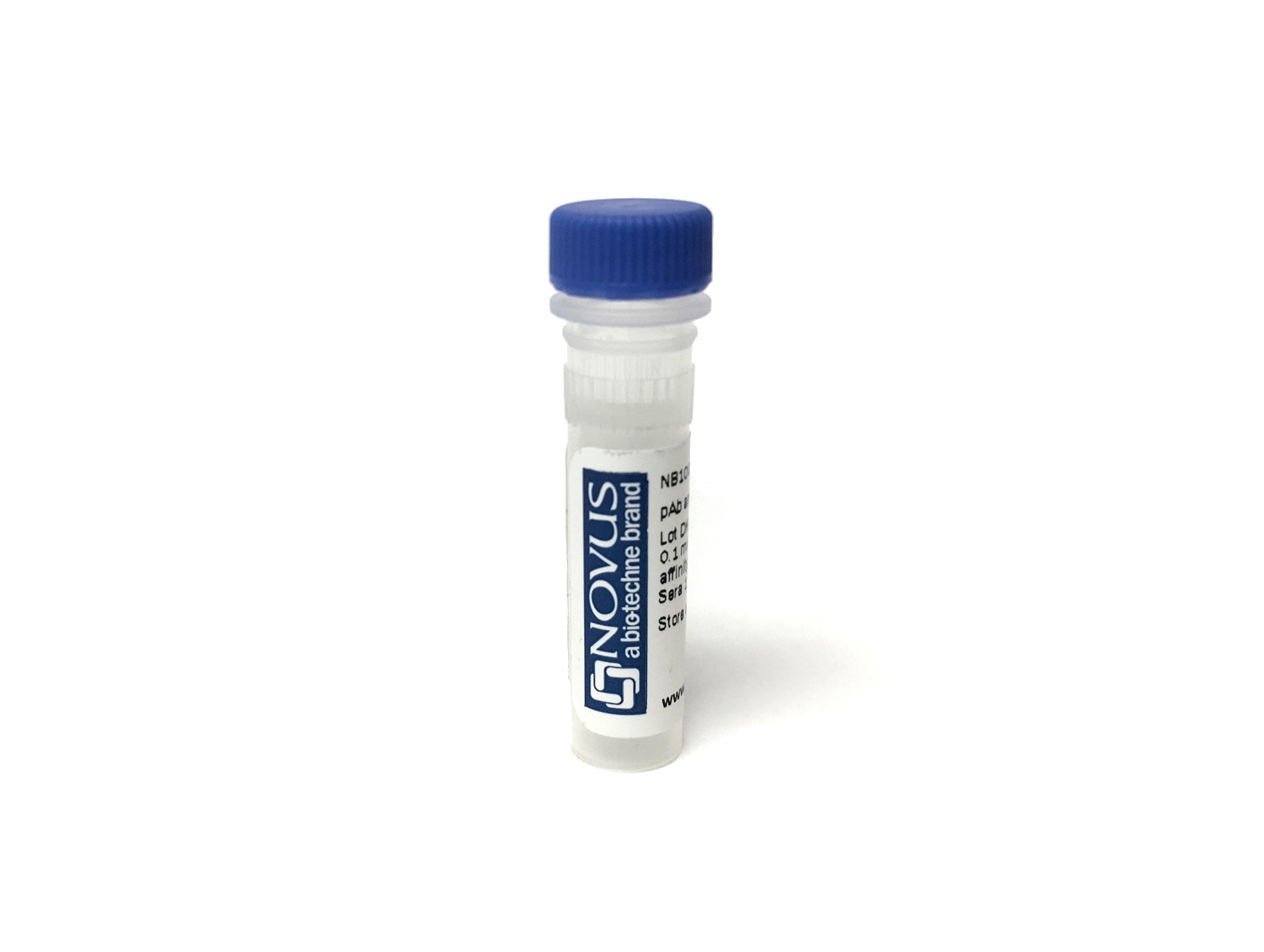
Key Product Details
Species Reactivity
Human
Applications
Western Blot
Label
DyLight 350 (Excitation = 353 nm, Emission = 432 nm)
Antibody Source
Recombinant Monoclonal Rabbit IgG Clone # 1276B
Loading...
Product Specifications
Immunogen
Human ABCA1 synthetic peptide
Accession # O95477
Accession # O95477
Specificity
Detects human ABCA1 in direct ELISAs and Western blots.
Clonality
Monoclonal
Host
Rabbit
Isotype
IgG
Description
This conjugate is made on demand and is not held in inventory. Each order represents a unique lot. All conjugates are generated using validated conjugation protocols and meet strict degree of labeling (F/P) specifications; additional information is available upon request. The antibody concentration is provided on the individual product label.
For specialized conjugation needs, like large quantities, specific concentrations, and defined F/P ratios, bulk and custom antibody conjugation services are available.
For specialized conjugation needs, like large quantities, specific concentrations, and defined F/P ratios, bulk and custom antibody conjugation services are available.
Applications for ABCA1 Antibody (1276B) [DyLight 350]
Application
Recommended Usage
Western Blot
Optimal dilutions of this antibody should be experimentally determined.
Application Notes
Recommended applications are based on validated applications from the unconjugated base product MAB72071. This conjugated antibody is not kept in inventory and is made to order using validated conjugation protocols.
Formulation, Preparation, and Storage
Purification
Protein A or G purified from cell culture supernatant
Formulation
50mM Sodium Borate
Preservative
0.05% Sodium Azide
Concentration
Please see the vial label for concentration. If unlisted please contact technical services.
Shipping
The product is shipped with polar packs. Upon receipt, store it immediately at the temperature recommended below.
Stability & Storage
Store at 4C in the dark.
Background: ABCA1
ABCA1 is comprised of 2,261 amino acids with a theoretical molecular weight of 254 kDa and human ABCA1 shares 97% amino acid identity with mouse ABCA1. The general structure of ABCA consists of two transmembrane domains (TMDs) and two nucleotide binding domains (NBDs). ABCA1 is a widely distributed cell-membrane protein with the highest expression found in macrophages. DHHC8 mediated palmitoylation of ABCA1 is essential for its localization to the plasma membrane and expression of mouse ABCA1 (not human) is induced by cAMP analogs (2). ABCA1 is phosphorylated at Ser1042 and Ser2054 by PKA, with Ser2054 being key for regulating phospholipid efflux. Mutations in ABCA1 have been linked to atherosclerosis and the progression of metabolic syndrome phenotypes: high density lipoprotein deficiency type 1 (HDLD1); also known as Tangier disease (TGD), and high density lipoprotein deficiency type 2 (HDLD2); also known as familial hypoalphalipoproteinemia (FHA) (3).
References
1.Oram JF, Lawn RM. (2001) ABCA1. The gatekeeper for eliminating excess tissue cholesterol. J Lipid Res. 42(8):1173-9. PMID: 11483617
2.Singaraja RR, Kang MH, Vaid K, Sanders SS, Vilas GL, Arstikaitis P, Coutinho J, Drisdel RC, El-Husseini Ael D, Green WN, Berthiaume L, Hayden MR. (2009) Palmitoylation of ATP-binding cassette transporter A1 is essential for its trafficking and function. Circ Res. 105(2):138-47. PMID: 19556522
3.Attie AD. (2007) ABCA1: at the nexus of cholesterol, HDL and atherosclerosis. Trends in Biochemical Sciences 32(4):172-9. PMID: 17324574
Long Name
ATP-binding Cassette, Sub-family A (ABC1), Member 1
Alternate Names
ABC1, CERP, HDLDT1, TGD
Additional ABCA1 Products
Product Documents for ABCA1 Antibody (1276B) [DyLight 350]
Certificate of Analysis
To download a Certificate of Analysis, please enter a lot or batch number in the search box below.
Product Specific Notices for ABCA1 Antibody (1276B) [DyLight 350]
DyLight (R) is a trademark of Thermo Fisher Scientific Inc. and its subsidiaries.
This product is for research use only and is not approved for use in humans or in clinical diagnosis. Primary Antibodies are guaranteed for 1 year from date of receipt.
Related Research Areas
Customer Reviews for ABCA1 Antibody (1276B) [DyLight 350]
There are currently no reviews for this product. Be the first to review ABCA1 Antibody (1276B) [DyLight 350] and earn rewards!
Have you used ABCA1 Antibody (1276B) [DyLight 350]?
Submit a review and receive an Amazon gift card!
$25/€18/£15/$25CAN/¥2500 for a review with an image
$10/€7/£6/$10CAN/¥1110 for a review without an image
Submit a review
Protocols
Find general support by application which include: protocols, troubleshooting, illustrated assays, videos and webinars.
- Cellular Response to Hypoxia Protocols
- R&D Systems Quality Control Western Blot Protocol
- Troubleshooting Guide: Western Blot Figures
- Western Blot Conditions
- Western Blot Protocol
- Western Blot Protocol for Cell Lysates
- Western Blot Troubleshooting
- Western Blot Troubleshooting Guide
- View all Protocols, Troubleshooting, Illustrated assays and Webinars
FAQs for ABCA1 Antibody (1276B) [DyLight 350]
Showing
1
-
2 of
2 FAQs
Showing All
-
Q: For Western blot protocol for ABCA1 antibody NB400-105, why does it suggest treating with beta-ME while not heating?
A: For some membrane proteins it is not recommended to boil the samples. You may incubate them at room temperature or at 37C in SDS sample buffer with BME. However, from personal experience, if you boil the samples you will not see the protein on the blot. I do not think the exact reason is known.
-
Q: Our customer would like to consult something about the ABCA1 antibody with the Cat No. NB400-105. In the datasheet, it showed this protein expressed very low in most cell types. The customer may test the mouse liver tissues, and he doesn’t know the expression level of ABCA1 in this tissue. Is it necessary to induce the expression via LXR treatment to get enough protein expressed? If he doesn’t induce the expression, how much protein loaded was suitable as recommended?
A:
Our own Western blot data for NB400-105 was generated by treating RAW cells with 9-cis-retinoic acid and 22R-hydroxycholesterol, which are both known to induce expression of ABCA1 in macrophages. 40ug of protein was loaded on to the gel in this instance. Unfortunately we do not have any testing data from mouse liver tissues using this particular antibody, however the data for another of our ABCA1 antibodies may be of interest to your customer: NB100-2068. The Western blot data for this product was generated using mouse liver tissue, and a clear band can be seen at the expected molecular weight in wild type tissue. We loaded 30ug of protein when running this Western blot, however, your customer may need to optimise the staining procedure for their sample type.
-
Q: For Western blot protocol for ABCA1 antibody NB400-105, why does it suggest treating with beta-ME while not heating?
A: For some membrane proteins it is not recommended to boil the samples. You may incubate them at room temperature or at 37C in SDS sample buffer with BME. However, from personal experience, if you boil the samples you will not see the protein on the blot. I do not think the exact reason is known.
-
Q: Our customer would like to consult something about the ABCA1 antibody with the Cat No. NB400-105. In the datasheet, it showed this protein expressed very low in most cell types. The customer may test the mouse liver tissues, and he doesn’t know the expression level of ABCA1 in this tissue. Is it necessary to induce the expression via LXR treatment to get enough protein expressed? If he doesn’t induce the expression, how much protein loaded was suitable as recommended?
A:
Our own Western blot data for NB400-105 was generated by treating RAW cells with 9-cis-retinoic acid and 22R-hydroxycholesterol, which are both known to induce expression of ABCA1 in macrophages. 40ug of protein was loaded on to the gel in this instance. Unfortunately we do not have any testing data from mouse liver tissues using this particular antibody, however the data for another of our ABCA1 antibodies may be of interest to your customer: NB100-2068. The Western blot data for this product was generated using mouse liver tissue, and a clear band can be seen at the expected molecular weight in wild type tissue. We loaded 30ug of protein when running this Western blot, however, your customer may need to optimise the staining procedure for their sample type.
Loading...