
Human Alkaline Phosphatase/ALPP - Ready-To-Use ELISA Kit (Colorimetric)
Novus Biologicals | Catalog # NBP3-31065

Key Product Details
Sample Type & Volume Required Per Well
Sensitivity
Assay Range
Product Specifications
Assay Type
Kit Type
Species
Description
Assay Length: 3 hours
Precision
Intra-Assay Precision (Precision within an assay) %CV < 10 (example only; lot dependent)
Inter-Assay Precision (Precision between assays) %CV < 12 (example only; lot dependent)
Scientific Data Images
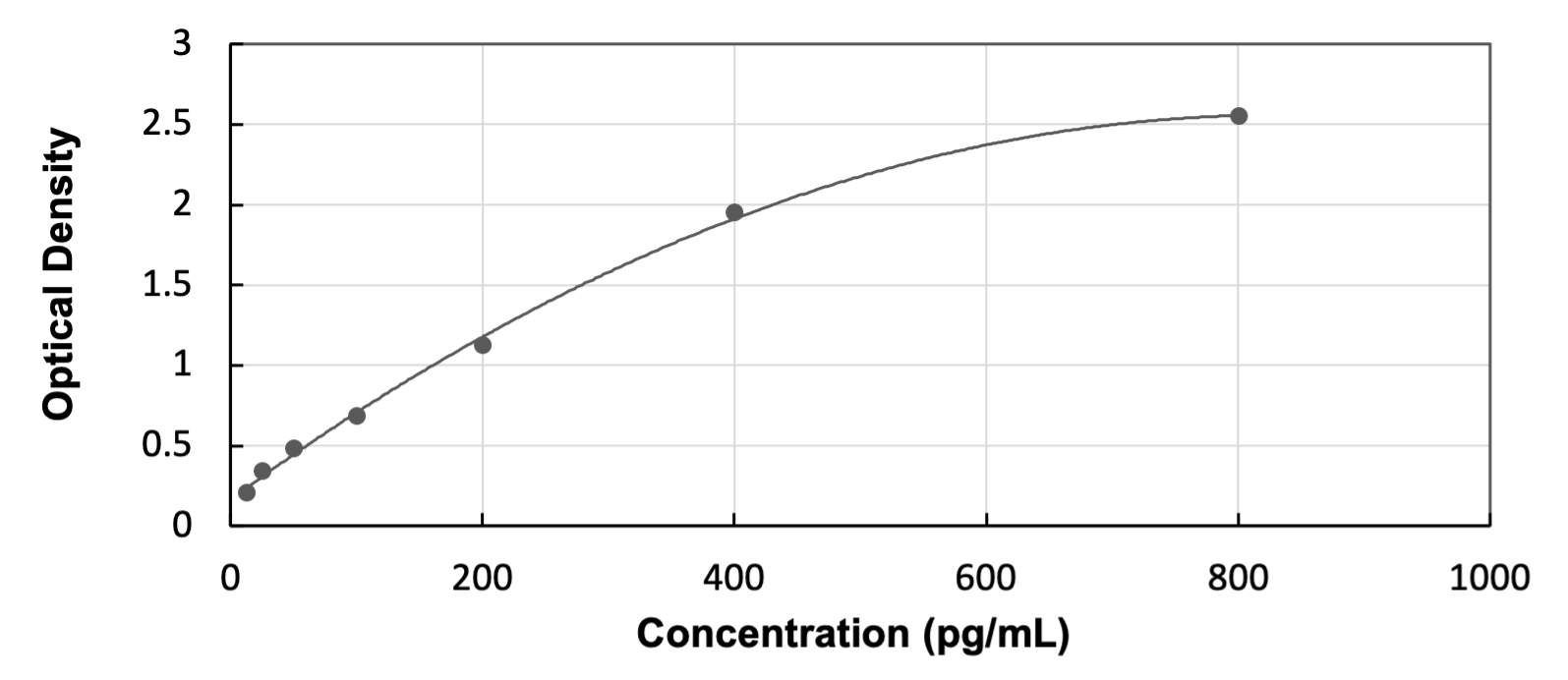
ELISA: Human Alkaline Phosphatase/ALPP - Ready-To-Use ELISA Kit (Colorimetric) [NBP3-31065] -
ELISA: Human Alkaline Phosphatase/ALPP - Ready-To-Use ELISA Kit (Colorimetric) [NBP3-31065] - Standard Curve ReferenceKit Contents
- Detection Solution A
- Detection Solution B
- Instruction manual
- Plate sealer for 96 wells
- Pre-coated 96T strip plate
- Standard
- Standard Diluent
- Stop Solution
- TMB Substrate
- Wash Buffer (30 x concentrate)
Preparation and Storage
Shipping
Stability & Storage
Background: Alkaline Phosphatase/ALPP
Long Name
Alternate Names
Gene Symbol
Additional Alkaline Phosphatase/ALPP Products
Product Documents
Certificate of Analysis
To download a Certificate of Analysis, please enter a lot or batch number in the search box below.
Product Specific Notices
This product is for research use only and is not approved for use in humans or in clinical diagnosis. ELISA Kits are guaranteed for 6 months from date of receipt.
Related Research Areas
Customer Reviews
There are currently no reviews for this product. Be the first to review Human Alkaline Phosphatase/ALPP - Ready-To-Use ELISA Kit (Colorimetric) and earn rewards!
Have you used Human Alkaline Phosphatase/ALPP - Ready-To-Use ELISA Kit (Colorimetric)?
Submit a review and receive an Amazon gift card!
$25/€18/£15/$25CAN/¥2500 for a review with an image
$10/€7/£6/$10CAN/¥1110 for a review without an image
Submit a review
Protocols
Find general support by application which include: protocols, troubleshooting, illustrated assays, videos and webinars.
- ELISA Sample Preparation & Collection Guide
- ELISA Troubleshooting Guide
- How to Run an R&D Systems DuoSet ELISA
- How to Run an R&D Systems Quantikine ELISA
- How to Run an R&D Systems Quantikine™ QuicKit™ ELISA
- Quantikine HS ELISA Kit Assay Principle, Alkaline Phosphatase
- Quantikine HS ELISA Kit Principle, Streptavidin-HRP Polymer
- Sandwich ELISA (Colorimetric) – Biotin/Streptavidin Detection Protocol
- Sandwich ELISA (Colorimetric) – Direct Detection Protocol
- Troubleshooting Guide: ELISA
- View all Protocols, Troubleshooting, Illustrated assays and Webinars
FAQs
-
Q: I am looking to use a placental alkaline phosphatase antibody for sorting syncytiotrophoblast material from female tissue. It looks like most people who use these antibodies use in-house versions and references for commercially available antibodies I've found are from the '80's. I noticed you have several different monoclonal antibodies and was hoping you could give me a little more information on them and potential applications they've been tested for. Also, do you have a biotinylated or fluorophore-conjugated version?
A:
None of our placental alkaline phosphatase antibodies are biotinylated or fluorchrome conjugated but we offer a number of kits for this application and our lab can do a custom conjugation as well, for an additional fee. NB600-750 is useful in FACS with human cells, so I would recommend this antibody for your experiment. We back the use of this antibody as stated on the datasheet with the 100% Novus Guarantee. If you have questions about another antibody, I will be happy to answer them.