
ATPase Activity Assay Kit (Colorimetric)
Novus Biologicals | Catalog # NBP3-24475

Key Product Details
Sample Type & Volume Required Per Well
Sensitivity
Assay Range
Product Specifications
Kit Type
Species
Description
Assay time: 80 min
Precision
Intra-Assay Precision (Precision within an assay) %CV < 4
Inter-Assay Precision (Precision between assays) %CV < 5
Recovery for ATPase Activity Assay Kit (Colorimetric)
Recovery
Scientific Data Images for ATPase Activity Assay Kit (Colorimetric)
ATPase Activity Assay Kit (Colorimetric) [NBP3-24475] -
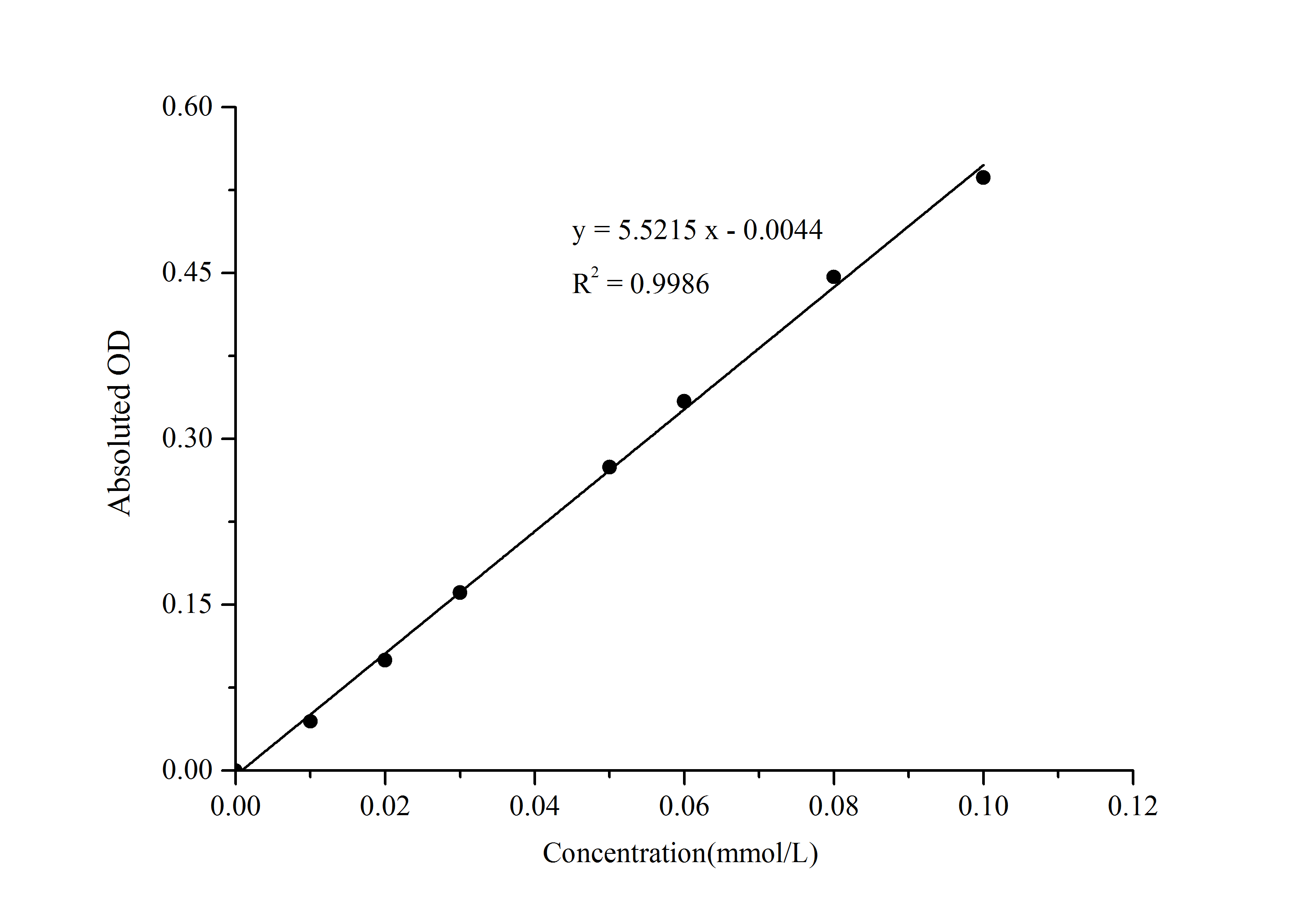
ATPase Activity Assay Kit (Colorimetric) [NBP3-24475] - Standard Reference Curve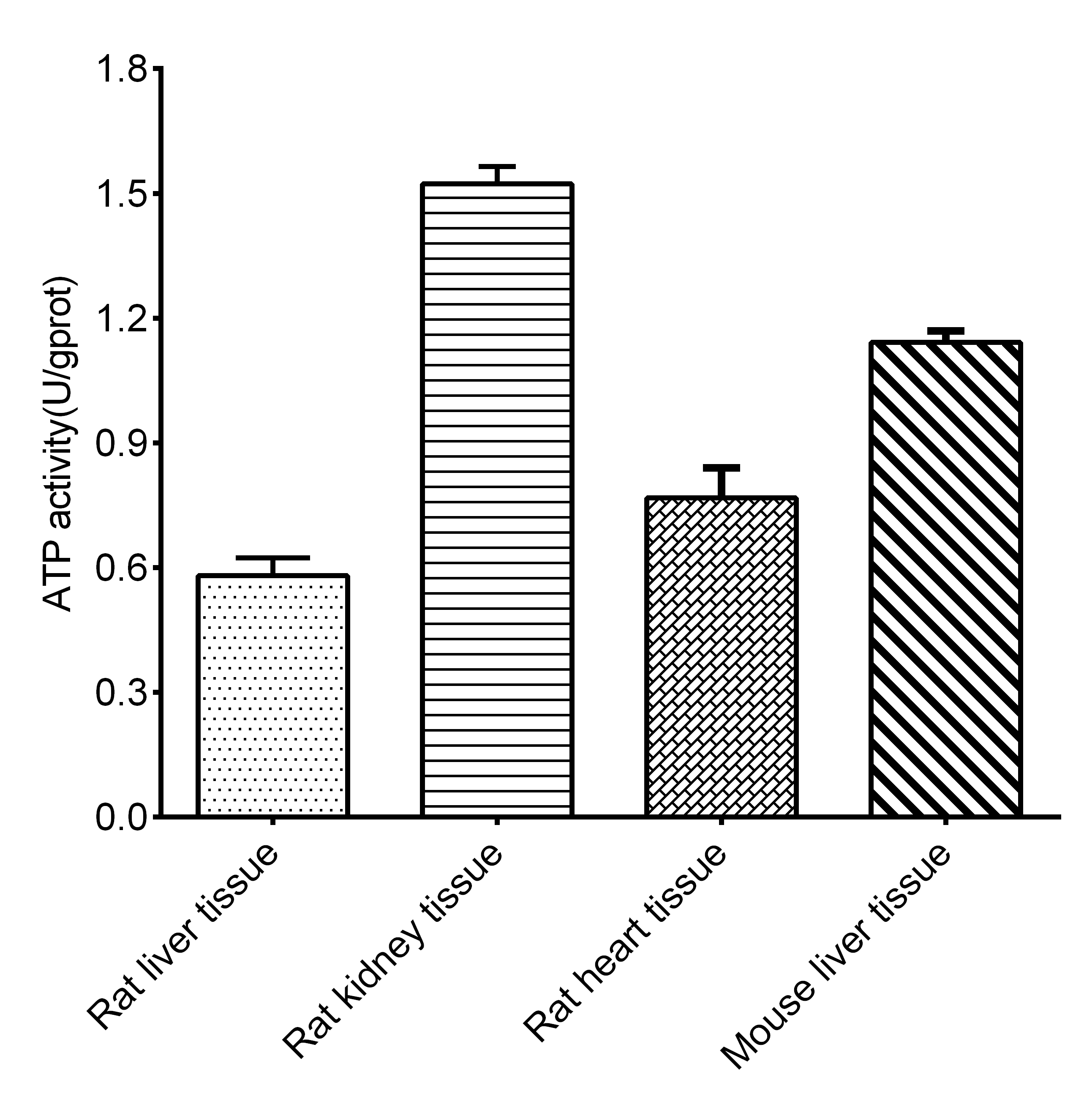
ATPase Activity Assay Kit (Colorimetric) [NBP3-24475] -
ATPase Activity Assay Kit (Colorimetric) [NBP3-24475] - Assay ExampleKit Contents for ATPase Activity Assay Kit (Colorimetric)
- Microplate
- Plate Sealer
- Reagent 1: Buffer Solution
- Reagent 2: Substrate
- Reagent 3: Acid Reagent
- Reagent 4: Chromogenic Agent A
- Reagent 5: Chromogenic Agent B
- Reagent 6: 10 mmol/L Standard
Preparation and Storage
Shipping
Stability & Storage
Background: ATPase
Alternate Names
Gene Symbol
Additional ATPase Products
Product Documents for ATPase Activity Assay Kit (Colorimetric)
Certificate of Analysis
To download a Certificate of Analysis, please enter a lot or batch number in the search box below.
Product Specific Notices for ATPase Activity Assay Kit (Colorimetric)
This product is for research use only and is not approved for use in humans or in clinical diagnosis. Kits are guaranteed for 6 months from date of receipt.
Related Research Areas
Customer Reviews for ATPase Activity Assay Kit (Colorimetric)
There are currently no reviews for this product. Be the first to review ATPase Activity Assay Kit (Colorimetric) and earn rewards!
Have you used ATPase Activity Assay Kit (Colorimetric)?
Submit a review and receive an Amazon gift card!
$25/€18/£15/$25CAN/¥2500 for a review with an image
$10/€7/£6/$10CAN/¥1110 for a review without an image
Submit a review
FAQs for ATPase Activity Assay Kit (Colorimetric)
-
Q: I have phosphate in my enzyme. What can I do?
A: You can dialyse or desalt the enzyme into a phosphate-free buffer. Alternatively, you can use a special resin (PiBind) to remove the phosphate.
-
Q: I have 5% DMSO in my assay. Can I use PiColorLock Gold?
A: Yes, the reagent is designed for drug screening work and other situations that require DMSO.
-
Q: I have a high background in my ATPase assay and I definitely do not have free phosphate in my sample
A: This is almost always due to inadequate mixing of the special stabilizer with the sample and detection reagent. Make sure the stabilizer is pipetted up and down several times to ensure thorough mixing.
-
Q: I would like to measure the conversion of pyrophosphate to phosphate. Can I use the PiColorLock Gold Phosphate Detection System for this purpose?
A: Yes, only the phosphate will give a signal; pyrophosphate will not.
-
Q: I have phosphate in my enzyme. What can I do?
A: You can dialyse or desalt the enzyme into a phosphate-free buffer. Alternatively, you can use a special resin (PiBind) to remove the phosphate.
-
Q: I have 5% DMSO in my assay. Can I use PiColorLock Gold?
A: Yes, the reagent is designed for drug screening work and other situations that require DMSO.
-
Q: I have a high background in my ATPase assay and I definitely do not have free phosphate in my sample
A: This is almost always due to inadequate mixing of the special stabilizer with the sample and detection reagent. Make sure the stabilizer is pipetted up and down several times to ensure thorough mixing.
-
Q: I would like to measure the conversion of pyrophosphate to phosphate. Can I use the PiColorLock Gold Phosphate Detection System for this purpose?
A: Yes, only the phosphate will give a signal; pyrophosphate will not.
-
Q: I have phosphate in my enzyme. What can I do?
A: You can dialyse or desalt the enzyme into a phosphate-free buffer. Alternatively, you can use a special resin (PiBind) to remove the phosphate.
-
Q: I have 5% DMSO in my assay. Can I use PiColorLock Gold?
A: Yes, the reagent is designed for drug screening work and other situations that require DMSO.
-
Q: I have a high background in my ATPase assay and I definitely do not have free phosphate in my sample
A: This is almost always due to inadequate mixing of the special stabilizer with the sample and detection reagent. Make sure the stabilizer is pipetted up and down several times to ensure thorough mixing.
-
Q: I would like to measure the conversion of pyrophosphate to phosphate. Can I use the PiColorLock Gold Phosphate Detection System for this purpose?
A: Yes, only the phosphate will give a signal; pyrophosphate will not.
-
Q: I have phosphate in my enzyme. What can I do?
A: You can dialyse or desalt the enzyme into a phosphate-free buffer. Alternatively, you can use a special resin (PiBind) to remove the phosphate.
-
Q: I have 5% DMSO in my assay. Can I use PiColorLock Gold?
A: Yes, the reagent is designed for drug screening work and other situations that require DMSO.
-
Q: I have a high background in my ATPase assay and I definitely do not have free phosphate in my sample
A: This is almost always due to inadequate mixing of the special stabilizer with the sample and detection reagent. Make sure the stabilizer is pipetted up and down several times to ensure thorough mixing.
-
Q: I would like to measure the conversion of pyrophosphate to phosphate. Can I use the PiColorLock Gold Phosphate Detection System for this purpose?
A: Yes, only the phosphate will give a signal; pyrophosphate will not.