
Rat CD68/SR-D1 ELISA Kit (Colorimetric)
Novus Biologicals | Catalog # NBP2-75159

Loading...
Key Product Details
Sample Type & Volume Required Per Well
Serum, plasma and other biological fluids (100 uL)
Sensitivity
0.47 ng/mL
Assay Range
0.78 - 50 ng/mL
Loading...
Product Specifications
Assay Type
Sandwich-ELISA
Kit Type
ELISA Kit (Colorimetric)
Species
Rat
Specificity
This Rat CD68/SR-D1 ELISA Kit (Colorimetric) recognizes Rat D68/SR-D1 in samples. No significant cross-reactivity or interference between Rat CD68 and analogues was observed.
Precision
Intra-Assay Precision (Precision within an assay) CV% < 5.66%
Inter-Assay Precision (Precision between assays) CV% < 5.23%
Recovery for Rat CD68/SR-D1 ELISA Kit (Colorimetric)
Recovery
86-109%
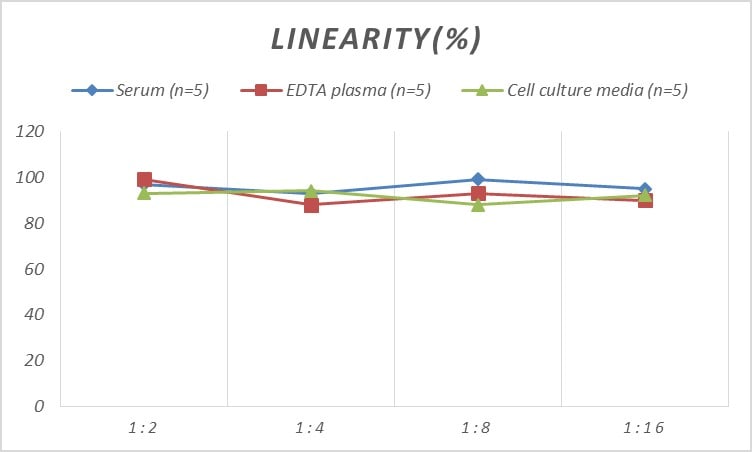
Linearity
Scientific Data Images for Rat CD68/SR-D1 ELISA Kit (Colorimetric)
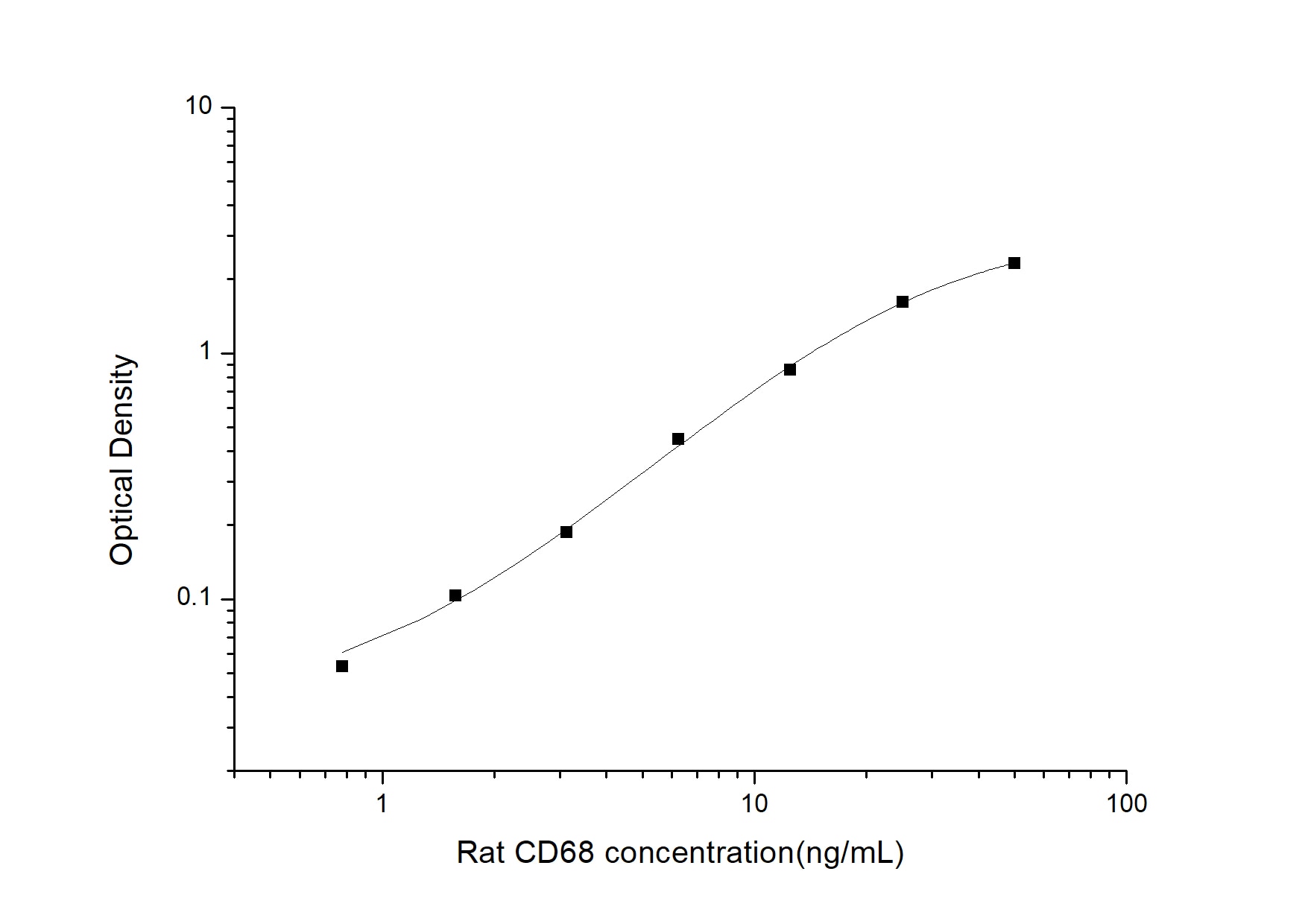
ELISA: Rat CD68/SR-D1 ELISA Kit (Colorimetric) [NBP2-75159] -
ELISA: Rat CD68/SR-D1 ELISA Kit (Colorimetric) [NBP2-75159] - Standard Curve ReferenceKit Contents for Rat CD68/SR-D1 ELISA Kit (Colorimetric)
- Biotinylated Detection Ab Diluent
- Concentrated Biotinylated Detection Ab (100x)
- Concentrated HRP Conjugate (100x)
- Concentrated Wash Buffer (25x)
- HRP Conjugate Diluent
- Micro ELISA Plate (Dismountable)
- Plate Sealer
- Product Manual
- Reference Standard
- Sample Diluent
- Stop Solution
- Substrate Reagent
Preparation and Storage
Shipping
The product is shipped with polar packs. Upon receipt, store it immediately at the temperature recommended below.
Stability & Storage
Storage of components varies. See protocol for specific instructions.
Background: CD68/SR-D1
CD68 is highly expressed in cells of the mononuclear phagocyte system such as macrophages, microglia, osteoclasts, and myeloid dendritic cells (DCs); and is expressed to a lesser extent in lymphoid cells (CD19+ B lymphocytes and CD4+ T lymphocytes), human umbilical cord mesenchymal stem cells (MSCs), fibroblasts, endothelial cells, multiple non-hematopoietic cancer cell lines, and human arterial intimal smooth muscle cells (SMCs). Expression has been also observed in diseased states for granulocytes and neutrophils, in particular basophils from myeloproliferative disorders and intestinal neutrophils from inflammatory bowel disease (IBD), respectively (1).
Although the function of CD68 has yet to be established, it has often been used as an immunohistochemistry (IHC) marker of inflammation and for granular cell tumors (GCTs). CD68+ tumor associated macrophages (TAMs) has been suggested to be a predictive marker for poor cancer prognosis, but a meta-analysis showed the presence of CD68 is not correlated with survival (2). In addition, a role in hepatic malaria infection has been reported based on the finding that peptide P39 binds CD68, considered a receptor for malaria sporozoite, and inhibits parasite entry into Kupffer cells. CD68 was deemed a member of the Scavenger receptor family due to its upregulation in macrophages following inflammatory stimuli, ability to bind modified LDL, phosphatidylserine, and apoptotic cells, as well as shuttling between the plasma membrane and endosomes. CD68 has been linked to atherogenesis based on binding and internalization of its ligand, oxLDL (1).
References
1. Chistiakov, DA, Killingsworth, MC, Myasoedova, VA. Orekhov AN, Bobryshev YV. (2017) CD68/macrosialin: not just a histochemical marker. Lab Invest. 97:4-13. PMID: 27869795
2. Troiano G, Caponio VCA, Adipietro I, Tepedino M, Santoro R, Laino L, Lo Russo L, Cirillo N, Lo Muzio L. (2019) Prognostic significance of CD68+ and CD163+ tumor associated macrophages in head and neck squamous cell carcinoma: A systematic review and meta-analysis. Oral Oncol. 93:66-75. PMID: 31109698.
Alternate Names
CD68, gp110, Macrosialin, SCARD1, SR-D1, SRD1
Gene Symbol
CD68
Additional CD68/SR-D1 Products
Product Documents for Rat CD68/SR-D1 ELISA Kit (Colorimetric)
Certificate of Analysis
To download a Certificate of Analysis, please enter a lot or batch number in the search box below.
Product Specific Notices for Rat CD68/SR-D1 ELISA Kit (Colorimetric)
This product is for research use only and is not approved for use in humans or in clinical diagnosis. ELISA Kits are guaranteed for 6 months from date of receipt.
Citations for Rat CD68/SR-D1 ELISA Kit (Colorimetric)
 Powered by Bioz
Customer Reviews for Rat CD68/SR-D1 ELISA Kit (Colorimetric)
There are currently no reviews for this product. Be the first to review Rat CD68/SR-D1 ELISA Kit (Colorimetric) and earn rewards!
Have you used Rat CD68/SR-D1 ELISA Kit (Colorimetric)?
Submit a review and receive an Amazon gift card!
$25/€18/£15/$25CAN/¥2500 for a review with an image
$10/€7/£6/$10CAN/¥1110 for a review without an image
Submit a review
Protocols
Find general support by application which include: protocols, troubleshooting, illustrated assays, videos and webinars.
- ELISA Sample Preparation & Collection Guide
- ELISA Troubleshooting Guide
- How to Run an R&D Systems DuoSet ELISA
- How to Run an R&D Systems Quantikine ELISA
- How to Run an R&D Systems Quantikine™ QuicKit™ ELISA
- Quantikine HS ELISA Kit Assay Principle, Alkaline Phosphatase
- Quantikine HS ELISA Kit Principle, Streptavidin-HRP Polymer
- Sandwich ELISA (Colorimetric) – Biotin/Streptavidin Detection Protocol
- Sandwich ELISA (Colorimetric) – Direct Detection Protocol
- Troubleshooting Guide: ELISA
- View all Protocols, Troubleshooting, Illustrated assays and Webinars
Loading...
Associated Pathways
