
MGST2 Antibody - BSA Free
Novus Biologicals | Catalog # NBP1-82653

![Western Blot: MGST2 Antibody [NBP1-82653]](https://resources.rndsystems.com/images/products/MGST2-Antibody-Western-Blot-NBP1-82653-img0007.jpg "Western Blot: MGST2 Antibody [NBP1-82653]")
Scientific images may be resized, cropped, or adjusted for brightness or contrast for presentation purposes. These updates are limited to presentation and do not affect the underlying scientific interpretation of the data. Where available, additional source data may be provided upon request.
Key Product Details
Species Reactivity
Validated:
Cited:
Applications
Validated:
Cited:
Label
Antibody Source
Format
Product Specifications
Immunogen
Clonality
Host
Isotype
Scientific Data Images for MGST2 Antibody - BSA Free
Western Blot: MGST2 Antibody [NBP1-82653]
Western Blot: MGST2 Antibody [NBP1-82653] - Analysis in human cell line HepG2.![Immunohistochemistry-Paraffin: MGST2 Antibody [NBP1-82653]](https://resources.rndsystems.com/images/products/MGST2-Antibody-Immunohistochemistry-Paraffin-NBP1-82653-img0002.jpg "Immunohistochemistry-Paraffin: MGST2 Antibody [NBP1-82653]")
Immunohistochemistry-Paraffin: MGST2 Antibody [NBP1-82653]
Immunohistochemistry-Paraffin: MGST2 Antibody [NBP1-82653] - Staining of human liver shows strong cytoplasmic positivity in hepatocytes.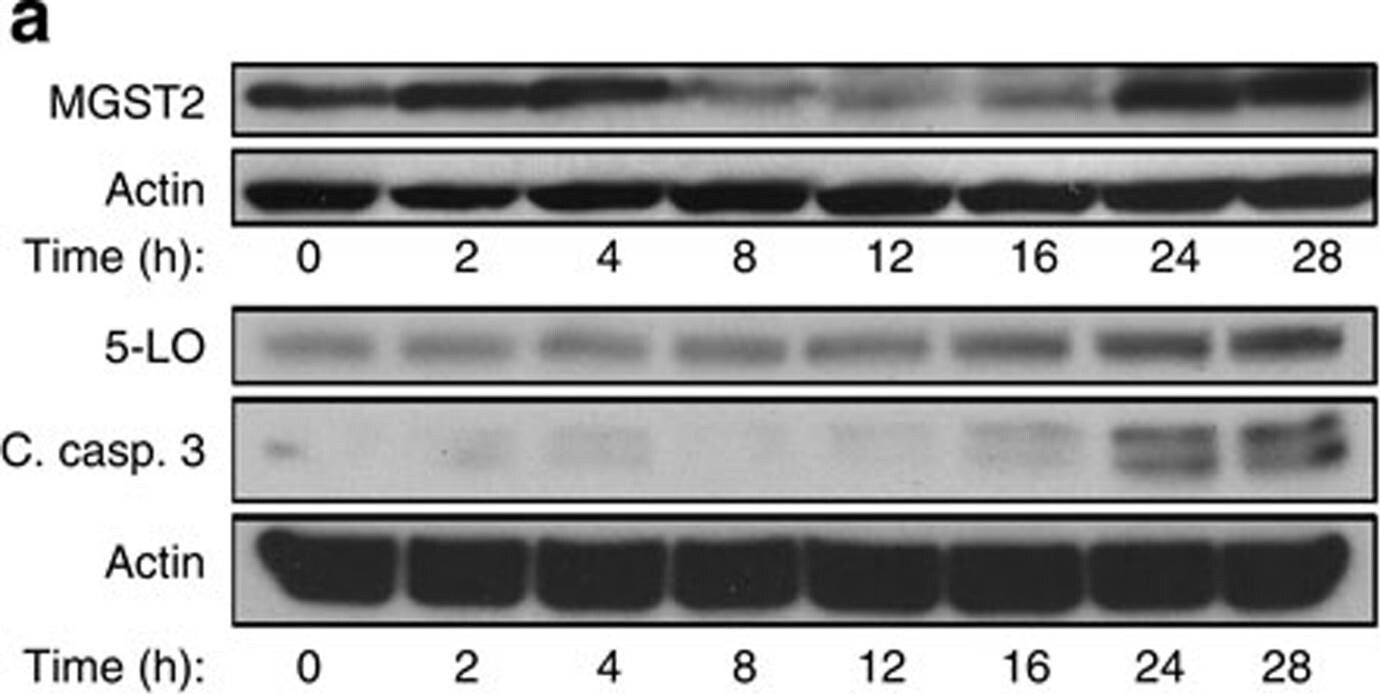
Western Blot: MGST2 Antibody - BSA Free [NBP1-82653] -
ER stress triggers expression and nuclear localization of proteins involved in LTC4 biosynthesis.(a) Immunoblot of proteins expressed in WISH cells at different times after induction of ER stress with BfA. Blots are representatives of three replicates. (b–e) Immunostain of the indicated proteins following treatment of WISH cells with vehicle or BfA. Trans. is transmission light microscopy. Nuclei were counterstained with Hoechst 33258 (Hoechst). Shown are merges of 5-LO and MGST2; 5-LO, Hoechst and cPLA2; Hoechst, 5-LO and FLAP; and MGST2 and the ER marker protein disulfide isomerase (PDI). Bars, 5 μm. (f) Quantification of per cent co-localization of FLAP and MGST2 with 5-LO, as determined by analysis of confocal microscopy images. n=6, P<0.0001 for both pairs. (g) Quantification of per cent nuclear localization of the indicated proteins as determined by analysis of confocal microscopy of the images shown in panels b–e. n≥6, P<0.0001 for all samples. Values in f and g represent the mean+/-s.d. Statistical significance was determined using one-way analysis of variance (ANOVA). Image collected and cropped by CiteAb from the following open publication (https://pubmed.ncbi.nlm.nih.gov/26656251), licensed under a CC-BY license. Not internally tested by Novus Biologicals.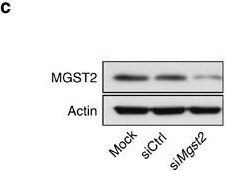
Western Blot: MGST2 Antibody - BSA Free [NBP1-82653] -
The MGST2-LTC4 pathway elicits ER stress-triggered cell death.Survival was determined by crystal violet staining and is relative to vehicle-treated cells. (a,b) Survival of WISH cells transfected with the indicated siRNA, treated with BfA (0.5 μg ml−1, 24 h). Bar, 100 μm. n=3, **P<0.02. (c) Immunoblot of MGST2 in extracts of WISH cells treated as in a. (d,e) Survival of WISH cells treated with BfA and pranlukast. Bar, 200 μm. n=3, ***P<0.001. (f,g) Survival of human HaCaT pre-keratinocytes treated with BfA (1.3 μg ml−1, 48 h) and BAY u9773 (80 nM). Bar, 100 μm. n=4, ***P<0.0001. (h,i) Survival of WISH cells treated with BfA (48 h) and BAY cysLT2. Bar, 500 μm. n=4, ***P<0.001. (j,k) Survival of HaCaT pre-keratinocytes treated with the proteasome inhibitor MG262 (0.05 μM) and zileuton. Bar, 50 μm. n=4, ***P<0.001. (l,m) Survival of B16 cells treated with Tm, thapsigargin (Tg) or BfA (1.3 μg ml−1) and the CysLTR1 antagonist MK571. Bar, 200 μm. n=4, ***P<0.001. (n) Immunoblot of the necrosis marker HMGB1 (top panel) in media of B16 cells treated with BfA (1.3 μg ml−1) and MK571 (MK). Ponceau S staining served as loading control. (o) Immunoblot of cleaved caspase-3 in extracts of WISH cells treated with Tm (2 μg ml−1, 48 h) and the indicated inhibitors. (p,q) Survival of B16 cells treated with LTC4. Bar, 200 μm. n=3, ***P<0.001. (r) Survival of B16 cells treated with LTC4 or LTD4. Bar, 200 μm. (s,t) Survival of HEK 293T cells stably transfected with Tet-inducible Mgst2 expression vector, treated with doxycycline (2 μg ml−1, 48 h). Bar, 200 μm. n=3, ***P<0.001. Immunoblots c,n and o are representatives of three replicates. Values in b,e,g,i,k,m,q and t represent the mean+/-s.d. Statistical significance was determined using one-way ANOVA. Image collected and cropped by CiteAb from the following open publication (https://pubmed.ncbi.nlm.nih.gov/26656251), licensed under a CC-BY license. Not internally tested by Novus Biologicals.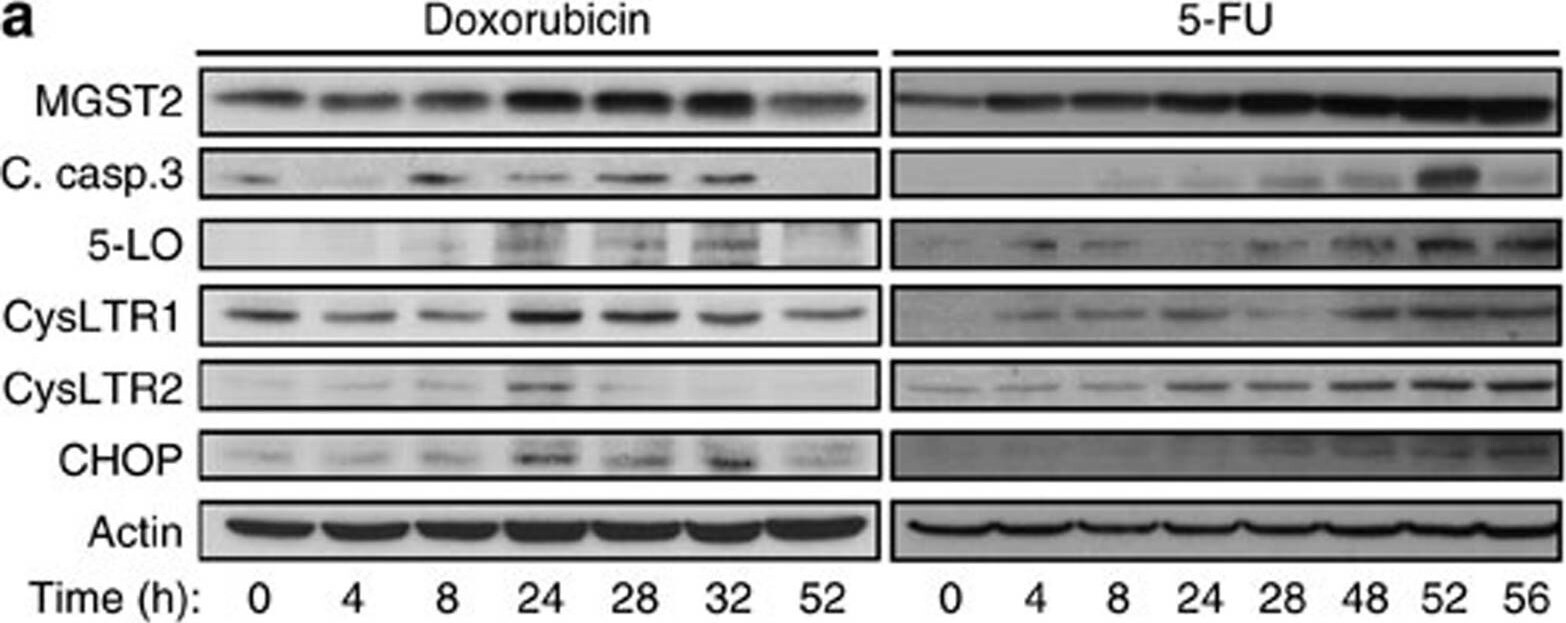
Western Blot: MGST2 Antibody - BSA Free [NBP1-82653] -
Chemotherapy-activated MGST2-LTC4 pathway triggers NOX4-mediated oxidative DNA damage and cell death.(a) Immunoblot of the indicated proteins in extracts of WISH cells treated with doxorubicin (5 μM) or 5-FU (20 μg ml−1) for the indicated times. (b) Immunostain of 5-LO and MGST2 in WISH cells treated with vehicle or doxorubicin (Doxo, 5 μM). Nuclei were counterstained with Hoechst. Trans. is transmission light microscopy. All image channels except the transmission light microscopy were merged. Bar, 5 μm. (c,d) Immunostain of LTC4 in WISH cells pre-treated with vehicle, siControl or siMgst2, followed by vehicle or doxorubicin (1 μM, 36 h). Nuclei were counterstained with Hoechst. Bar, 20 μm. n=3, ****P<0.0001, ***P<0.001. (e,f) Immunostain of NOX4 in cells treated with vehicle or doxorubicin. Bar, 20 μm. n=3, ***P<0.001. (g,h) ROS detection with DCFH-DA in cells treated with vehicle or doxorubicin (2.5 μM, 48 h) in the absence or presence of the indicated inhibitors. Bar, 50 μm. n=6, ***P<0.0001. (i,j) Immunostain of the dsDNA break marker gamma -H2AX in cells treated with doxorubicin (5 μM, 48 h) in the absence or presence of the indicated LTC4 receptor antagonists. Bar, 20 μm. n=3–4, ***P<0.0001. (k,l) Survival of primary WT and Mgst2-deficient MEFs, treated with vehicle or doxorubicin (10 μM) and then stained with crystal violet. Bar, 50 μm. Viabilities of vehicle-treated WT and and KO MEFs were taken as 100% survival, respectively. n=3, ***P<0.005. Images a and b are representatives of three replicates. Values in d,f,h,j and l represent the mean+/-s.d. Statistical significance was determined using one-way ANOVA. Image collected and cropped by CiteAb from the following open publication (https://pubmed.ncbi.nlm.nih.gov/26656251), licensed under a CC-BY license. Not internally tested by Novus Biologicals.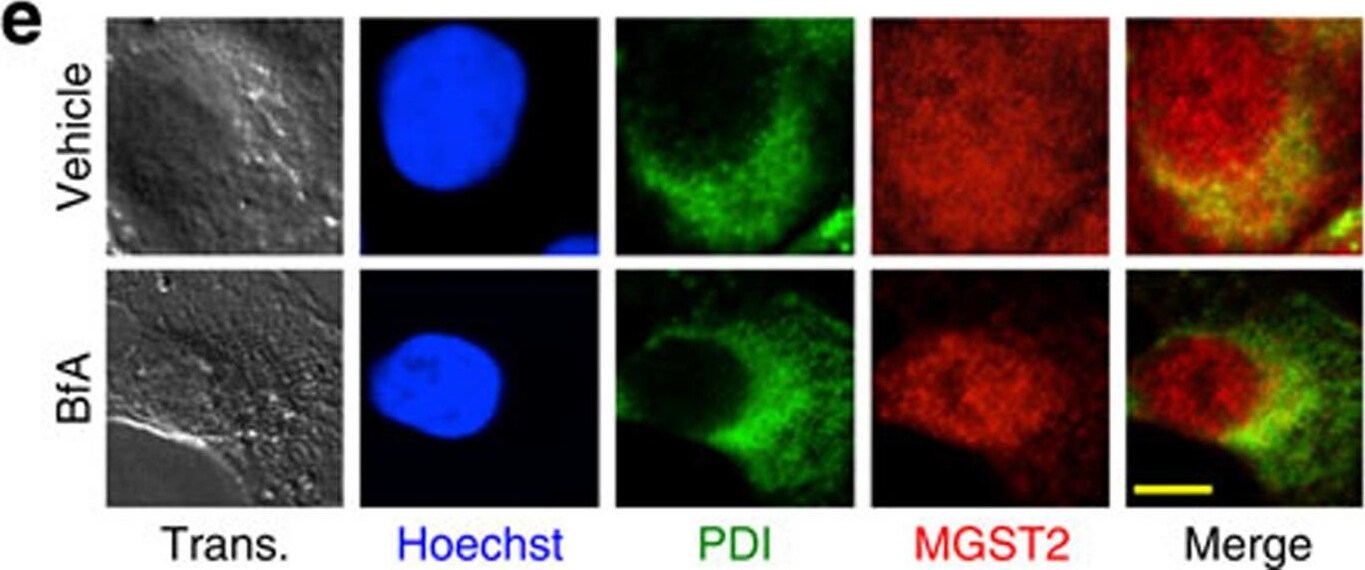
Immunocytochemistry/ Immunofluorescence: MGST2 Antibody - BSA Free [NBP1-82653] -
ER stress triggers expression and nuclear localization of proteins involved in LTC4 biosynthesis.(a) Immunoblot of proteins expressed in WISH cells at different times after induction of ER stress with BfA. Blots are representatives of three replicates. (b–e) Immunostain of the indicated proteins following treatment of WISH cells with vehicle or BfA. Trans. is transmission light microscopy. Nuclei were counterstained with Hoechst 33258 (Hoechst). Shown are merges of 5-LO and MGST2; 5-LO, Hoechst and cPLA2; Hoechst, 5-LO and FLAP; and MGST2 and the ER marker protein disulfide isomerase (PDI). Bars, 5 μm. (f) Quantification of per cent co-localization of FLAP and MGST2 with 5-LO, as determined by analysis of confocal microscopy images. n=6, P<0.0001 for both pairs. (g) Quantification of per cent nuclear localization of the indicated proteins as determined by analysis of confocal microscopy of the images shown in panels b–e. n≥6, P<0.0001 for all samples. Values in f and g represent the mean+/-s.d. Statistical significance was determined using one-way analysis of variance (ANOVA). Image collected and cropped by CiteAb from the following open publication (https://pubmed.ncbi.nlm.nih.gov/26656251), licensed under a CC-BY license. Not internally tested by Novus Biologicals.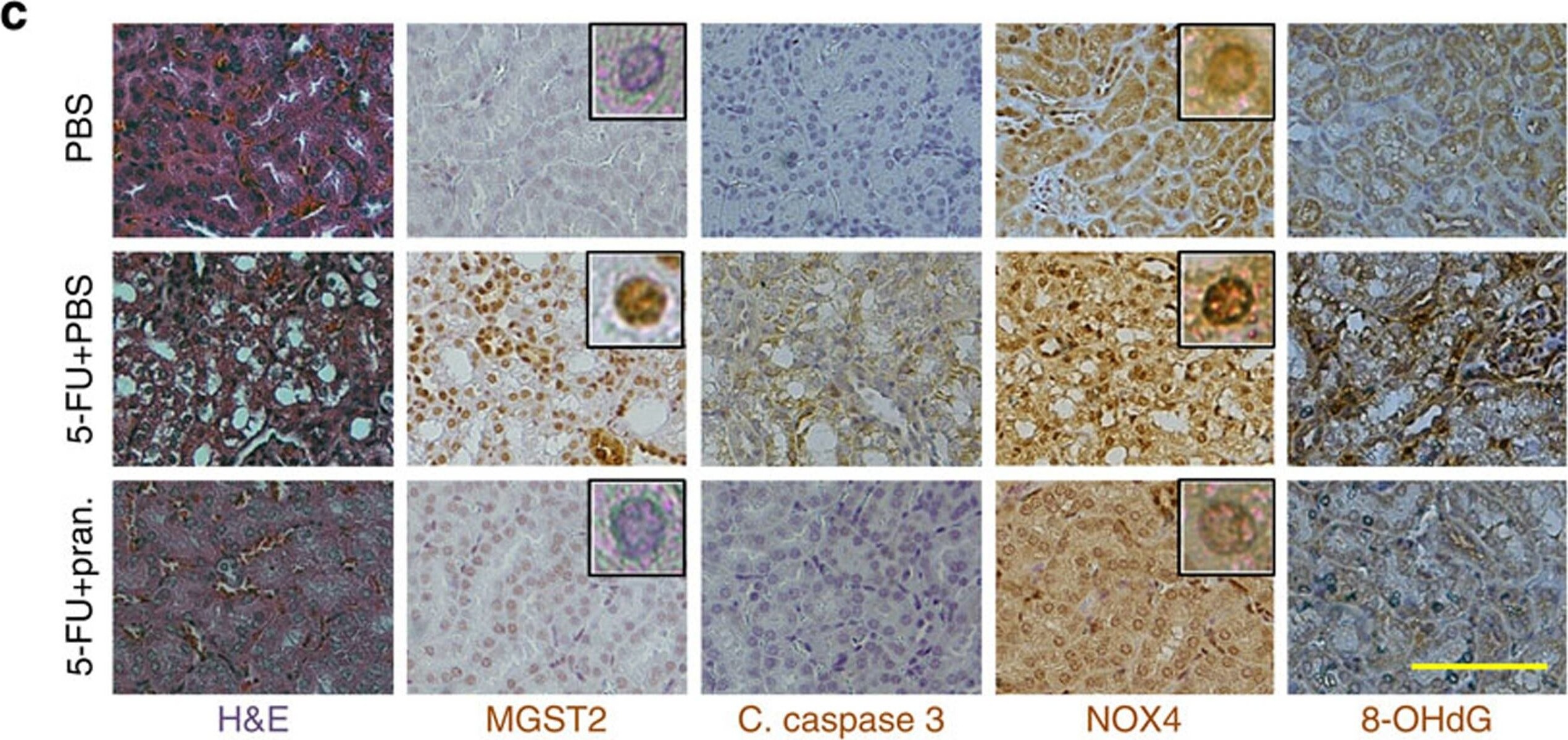
Immunohistochemistry: MGST2 Antibody - BSA Free [NBP1-82653] -
Mgst2 deficiency and LTC4 inhibition attenuate 5-FU-triggered DNA damage and toxicity.(a) Survival of WT and Mgst2-deficient mice (10 per group) given 5-FU (300 mg kg−1, ip) at time=0. P=0.0085. (b) Survival of WT 129/Sv mice (18 per group) treated with 5-FU as in a. Vehicle or pranlukast (1 mg kg−1) were administered at days 0, 1, 2, 5, 6 and 7. P=0.032. The statistical significance was determined in a and b using the Gehan–Breslow–Wilcoxon test. (c) Haematoxylin–eosin (H&E) stain and immunostain of the indicated proteins and 8-OHdG in kidney slices of WT mice treated with 5-FU (300 mg kg−1, ip at time=0) followed by five administrations of PBS or pranlukast (Pran., 3 mg kg−1, ip) as in b. Kidneys were processed at day 13. Bar, 50 μm. Insets: enlarged images showing immunostained nuclei. The images of kidney slices are representatives of slices from three mice per group. (d) Survival of U266 myeloma cells treated with bortezomib alone or together with the indicated LTC4 inhibitors (10 μM each). n=3. (e) Survival of CCRF-CEM T-cell leukaemia lymphoblasts treated with doxorubicin together with the indicated LTC4 inhibitors (10 μM each). n=3. No significant differences were found between vehicle and any of the inhibitors in d and e. Statistical significance was determined using one-way ANOVA. Image collected and cropped by CiteAb from the following open publication (https://pubmed.ncbi.nlm.nih.gov/26656251), licensed under a CC-BY license. Not internally tested by Novus Biologicals.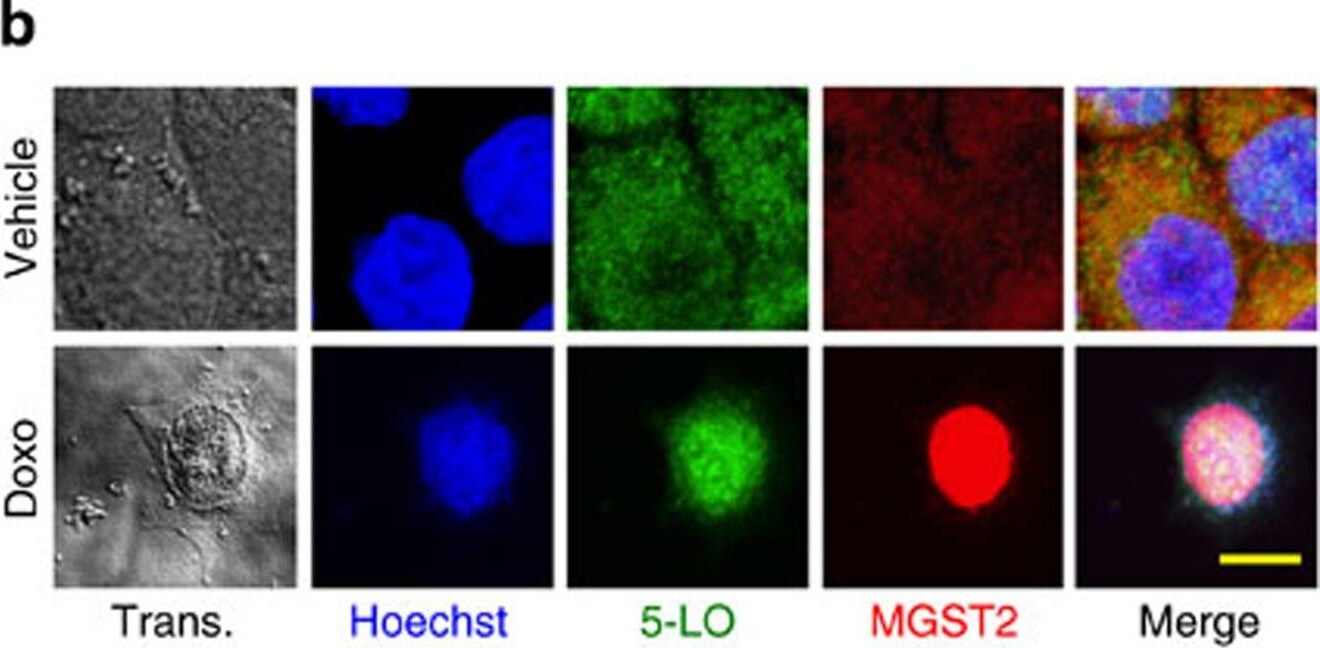
Immunocytochemistry/ Immunofluorescence: MGST2 Antibody - BSA Free [NBP1-82653] -
Chemotherapy-activated MGST2-LTC4 pathway triggers NOX4-mediated oxidative DNA damage and cell death.(a) Immunoblot of the indicated proteins in extracts of WISH cells treated with doxorubicin (5 μM) or 5-FU (20 μg ml−1) for the indicated times. (b) Immunostain of 5-LO and MGST2 in WISH cells treated with vehicle or doxorubicin (Doxo, 5 μM). Nuclei were counterstained with Hoechst. Trans. is transmission light microscopy. All image channels except the transmission light microscopy were merged. Bar, 5 μm. (c,d) Immunostain of LTC4 in WISH cells pre-treated with vehicle, siControl or siMgst2, followed by vehicle or doxorubicin (1 μM, 36 h). Nuclei were counterstained with Hoechst. Bar, 20 μm. n=3, ****P<0.0001, ***P<0.001. (e,f) Immunostain of NOX4 in cells treated with vehicle or doxorubicin. Bar, 20 μm. n=3, ***P<0.001. (g,h) ROS detection with DCFH-DA in cells treated with vehicle or doxorubicin (2.5 μM, 48 h) in the absence or presence of the indicated inhibitors. Bar, 50 μm. n=6, ***P<0.0001. (i,j) Immunostain of the dsDNA break marker gamma -H2AX in cells treated with doxorubicin (5 μM, 48 h) in the absence or presence of the indicated LTC4 receptor antagonists. Bar, 20 μm. n=3–4, ***P<0.0001. (k,l) Survival of primary WT and Mgst2-deficient MEFs, treated with vehicle or doxorubicin (10 μM) and then stained with crystal violet. Bar, 50 μm. Viabilities of vehicle-treated WT and and KO MEFs were taken as 100% survival, respectively. n=3, ***P<0.005. Images a and b are representatives of three replicates. Values in d,f,h,j and l represent the mean+/-s.d. Statistical significance was determined using one-way ANOVA. Image collected and cropped by CiteAb from the following open publication (https://pubmed.ncbi.nlm.nih.gov/26656251), licensed under a CC-BY license. Not internally tested by Novus Biologicals.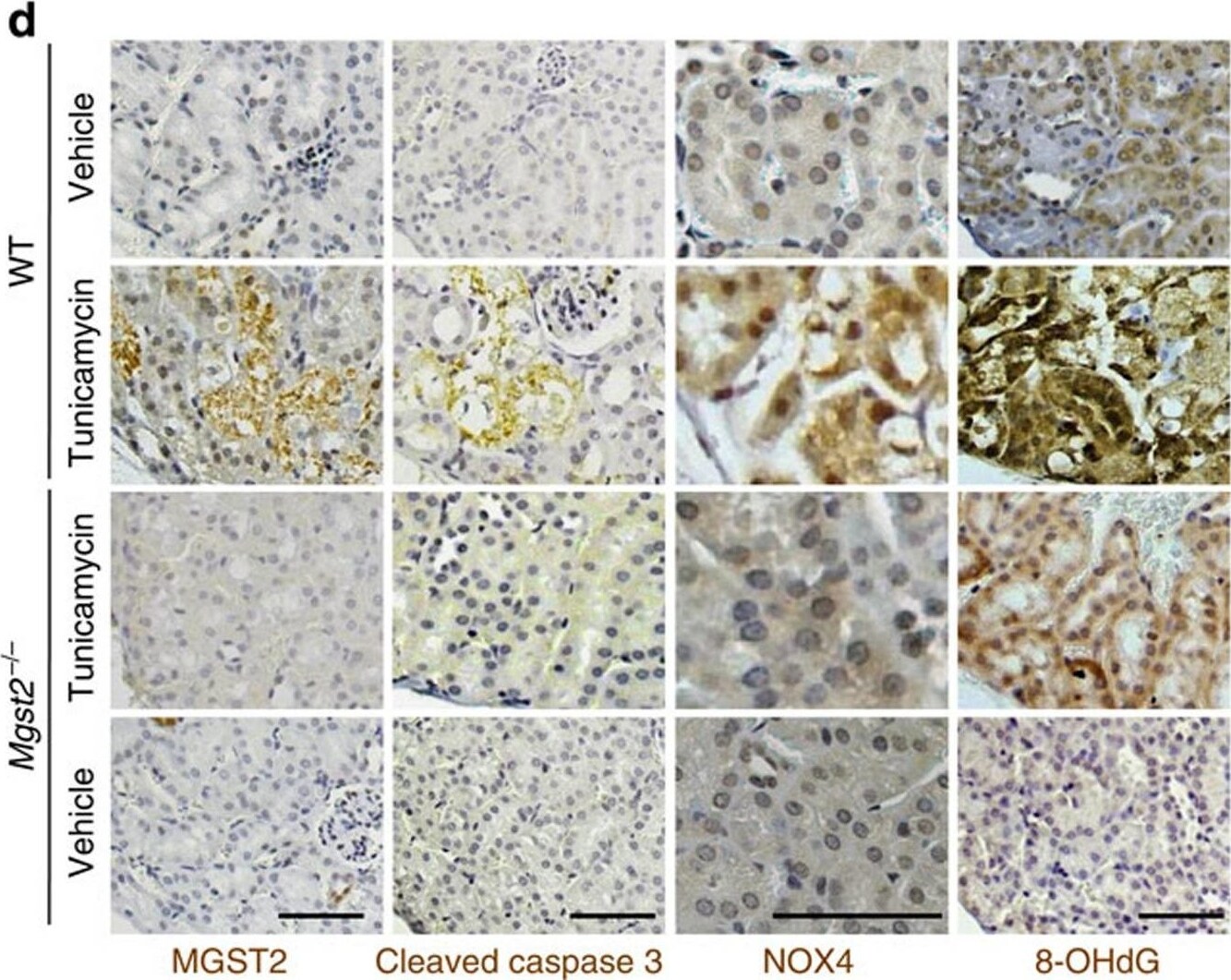
Immunohistochemistry: MGST2 Antibody - BSA Free [NBP1-82653] -
Mgst2 deficiency and LTC4 inhibition attenuate ER stress-triggered oxidative damage to mouse kidneys and mouse morbidity.(a) Haematoxylin–eosin stained kidney slices from WT and Mgst2-deficient mice given a single dose of Tm (1.5 mg kg−1, ip) at time=0. Kidneys were removed and processed on day 4. The image is a representative of 10 kidneys obtained from 5 mice per group. Bar, 200 μm. (b) Quantification of per cent areas of vacuoles representing damage to kidney proximal tubules shown in a. n=5, ***P<0.001. Values represent the mean+/-s.d. Statistical significance was determined using one-way ANOVA. No vacuoles were observed in kidneys of untreated mice. (c) Immunohistochemical stains of proximal tubules (brown) using anti-aminopeptidase A in kidney sections from WT and Mgst2-deficient mice treated with Tm as in a. Nuclei were counterstained with haematoxylin (grey-blue). Bar, 50 μm. (d) Immunohistochemical stains of the indicated markers in kidney sections as in c. Figures are representatives of kidneys from three mice. Bars, 50 μm. (e) Survival of WT and Mgst2-deficient 129/Sv mice (20 per group) given Tm (2.5 mg kg−1, ip) at time=0. P=0.0393. (f) Survival of WT 129/Sv mice (10 per group) given Tm (1.5 mg kg−1, ip) at time=0 and daily administrations of either vehicle or pranlukast (ip, 1 mg kg−1, vertical arrows). P=0.0009. The statistical significance was determined in e and f using the Gehan–Breslow–Wilcoxon test. Image collected and cropped by CiteAb from the following open publication (https://pubmed.ncbi.nlm.nih.gov/26656251), licensed under a CC-BY license. Not internally tested by Novus Biologicals.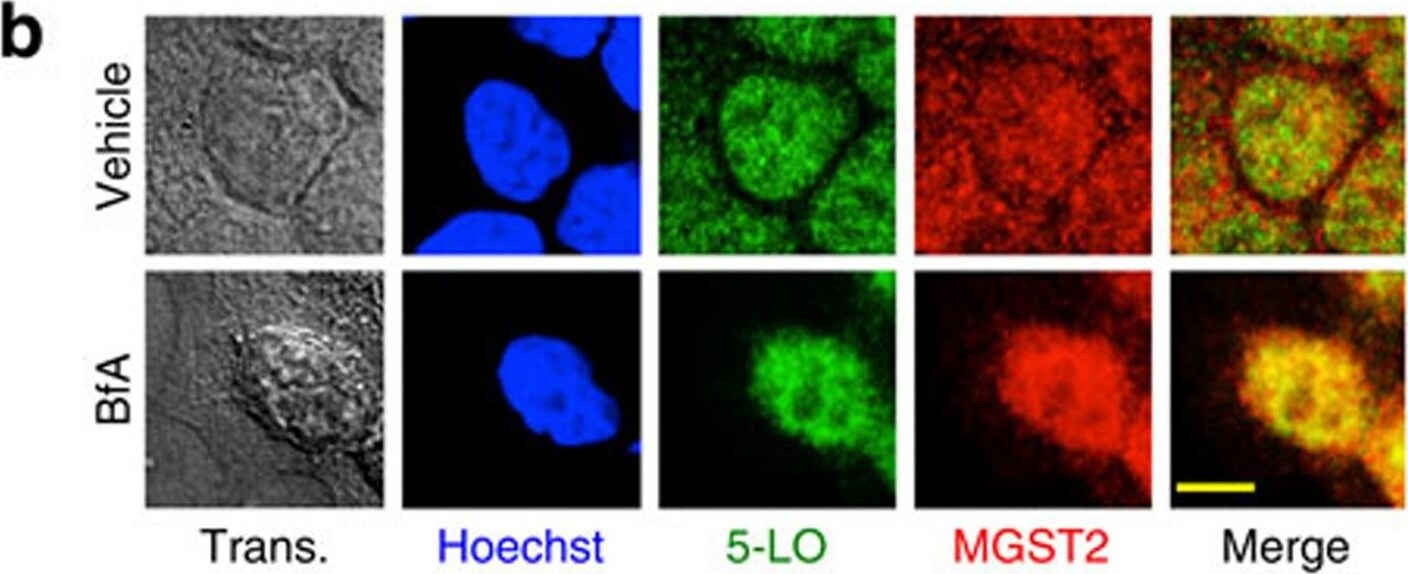
Immunocytochemistry/ Immunofluorescence: MGST2 Antibody - BSA Free [NBP1-82653] -
ER stress triggers expression and nuclear localization of proteins involved in LTC4 biosynthesis.(a) Immunoblot of proteins expressed in WISH cells at different times after induction of ER stress with BfA. Blots are representatives of three replicates. (b–e) Immunostain of the indicated proteins following treatment of WISH cells with vehicle or BfA. Trans. is transmission light microscopy. Nuclei were counterstained with Hoechst 33258 (Hoechst). Shown are merges of 5-LO and MGST2; 5-LO, Hoechst and cPLA2; Hoechst, 5-LO and FLAP; and MGST2 and the ER marker protein disulfide isomerase (PDI). Bars, 5 μm. (f) Quantification of per cent co-localization of FLAP and MGST2 with 5-LO, as determined by analysis of confocal microscopy images. n=6, P<0.0001 for both pairs. (g) Quantification of per cent nuclear localization of the indicated proteins as determined by analysis of confocal microscopy of the images shown in panels b–e. n≥6, P<0.0001 for all samples. Values in f and g represent the mean+/-s.d. Statistical significance was determined using one-way analysis of variance (ANOVA). Image collected and cropped by CiteAb from the following open publication (https://pubmed.ncbi.nlm.nih.gov/26656251), licensed under a CC-BY license. Not internally tested by Novus Biologicals.Applications for MGST2 Antibody - BSA Free
Immunohistochemistry
Immunohistochemistry-Paraffin
Western Blot
Formulation, Preparation, and Storage
Purification
Formulation
Format
Preservative
Concentration
Shipping
Stability & Storage
Background: MGST2
Alternate Names
Gene Symbol
Additional MGST2 Products
Product Documents for MGST2 Antibody - BSA Free
Certificate of Analysis
To download a Certificate of Analysis, please enter a lot or batch number in the search box below.
Product Specific Notices for MGST2 Antibody - BSA Free
This product is for research use only and is not approved for use in humans or in clinical diagnosis. Primary Antibodies are guaranteed for 1 year from date of receipt.
Citations for MGST2 Antibody - BSA Free
 Powered by Bioz
Customer Reviews for MGST2 Antibody - BSA Free
There are currently no reviews for this product. Be the first to review MGST2 Antibody - BSA Free and earn rewards!
Have you used MGST2 Antibody - BSA Free?
Submit a review and receive an Amazon gift card!
$25/€18/£15/$25CAN/¥2500 for a review with an image
$10/€7/£6/$10CAN/¥1110 for a review without an image
Submit a review
Protocols
Find general support by application which include: protocols, troubleshooting, illustrated assays, videos and webinars.
- Antigen Retrieval Protocol (PIER)
- Antigen Retrieval for Frozen Sections Protocol
- Appropriate Fixation of IHC/ICC Samples
- Cellular Response to Hypoxia Protocols
- Chromogenic IHC Staining of Formalin-Fixed Paraffin-Embedded (FFPE) Tissue Protocol
- Chromogenic Immunohistochemistry Staining of Frozen Tissue
- ClariTSA™ Fluorophore Kits
- Detection & Visualization of Antibody Binding
- Fluorescent IHC Staining of Frozen Tissue Protocol
- Graphic Protocol for Heat-induced Epitope Retrieval
- Graphic Protocol for the Preparation and Fluorescent IHC Staining of Frozen Tissue Sections
- Graphic Protocol for the Preparation and Fluorescent IHC Staining of Paraffin-embedded Tissue Sections
- Graphic Protocol for the Preparation of Gelatin-coated Slides for Histological Tissue Sections
- IHC Sample Preparation (Frozen sections vs Paraffin)
- Immunofluorescent IHC Staining of Formalin-Fixed Paraffin-Embedded (FFPE) Tissue Protocol
- Immunohistochemistry (IHC) and Immunocytochemistry (ICC) Protocols
- Immunohistochemistry Frozen Troubleshooting
- Immunohistochemistry Paraffin Troubleshooting
- Preparing Samples for IHC/ICC Experiments
- Preventing Non-Specific Staining (Non-Specific Binding)
- Primary Antibody Selection & Optimization
- Protocol for Heat-Induced Epitope Retrieval (HIER)
- Protocol for Making a 4% Formaldehyde Solution in PBS
- Protocol for VisUCyte™ HRP Polymer Detection Reagent
- Protocol for the Preparation & Fixation of Cells on Coverslips
- Protocol for the Preparation and Chromogenic IHC Staining of Frozen Tissue Sections
- Protocol for the Preparation and Chromogenic IHC Staining of Frozen Tissue Sections - Graphic
- Protocol for the Preparation and Chromogenic IHC Staining of Paraffin-embedded Tissue Sections
- Protocol for the Preparation and Chromogenic IHC Staining of Paraffin-embedded Tissue Sections - Graphic
- Protocol for the Preparation and Fluorescent IHC Staining of Frozen Tissue Sections
- Protocol for the Preparation and Fluorescent IHC Staining of Paraffin-embedded Tissue Sections
- Protocol for the Preparation of Gelatin-coated Slides for Histological Tissue Sections
- R&D Systems Quality Control Western Blot Protocol
- TUNEL and Active Caspase-3 Detection by IHC/ICC Protocol
- The Importance of IHC/ICC Controls
- Troubleshooting Guide: Immunohistochemistry
- Troubleshooting Guide: Western Blot Figures
- Western Blot Conditions
- Western Blot Protocol
- Western Blot Protocol for Cell Lysates
- Western Blot Troubleshooting
- Western Blot Troubleshooting Guide
- View all Protocols, Troubleshooting, Illustrated assays and Webinars