
Meteorin is a novel secreted protein that is expressed by undifferentiated neural and glial progenitors, and astrocytes. Its name derives from its ability to generate glial cells with long meteor-like tails. Mouse meteorin is synthesized as a 291 amino acid (aa) precursor that contains a 270 aa mature region. It contains eight cysteines with no identifiable domains or N-linked glycosylation sites. Mature mouse meteorin is 82% and 77% aa identical to human and bovine meteorin, respectively.
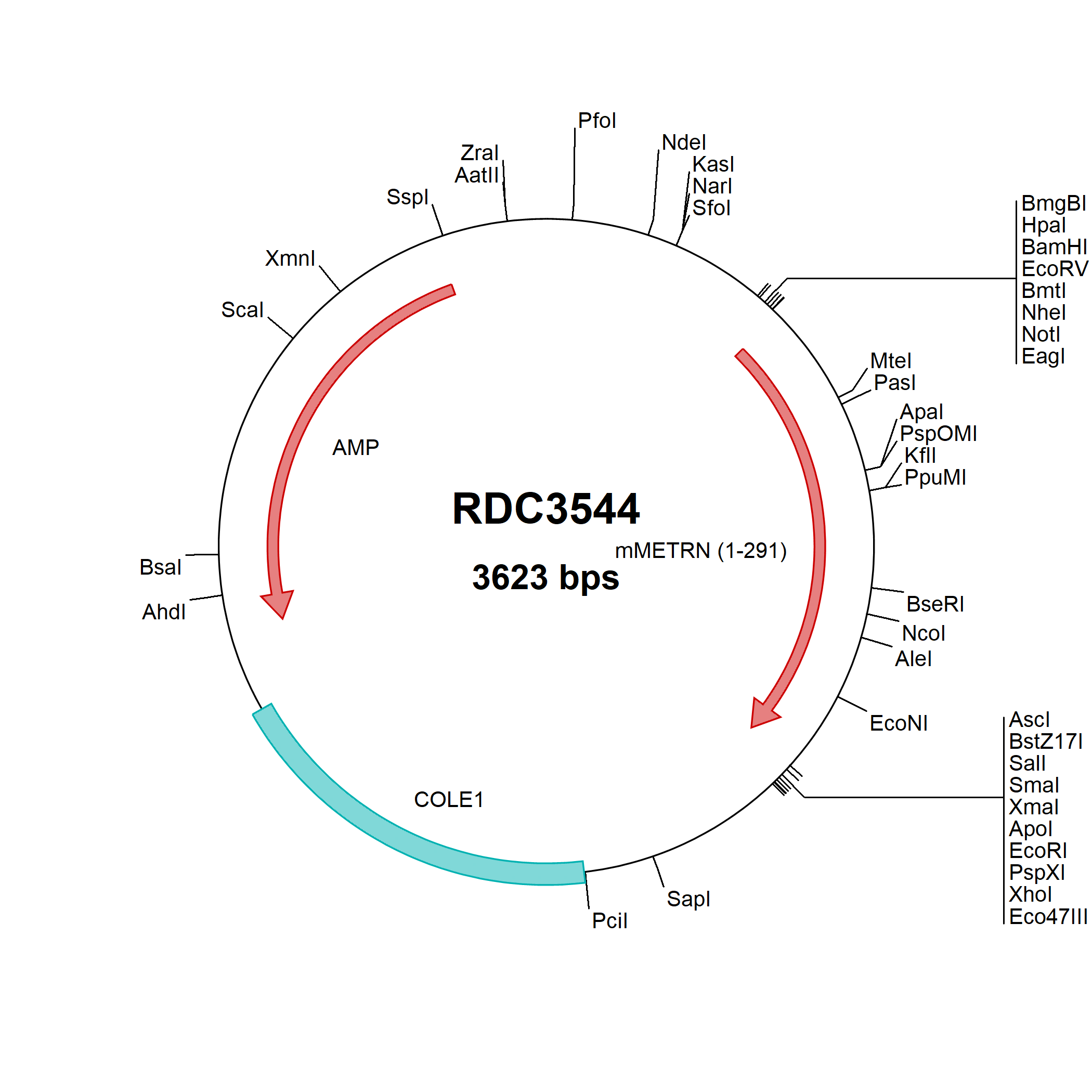
Mouse Meteorin (NP_598480.1) VersaClone cDNA
R&D Systems | Catalog # RDC3544

Loading...
Loading...
Formulation, Preparation, and Storage
Shipping
The product is shipped at ambient temperature. Upon receipt, store it immediately at the temperature recommended below.
Storage
Store the unopened product at -20 to -70 °C. Use a manual defrost freezer and avoid repeated freeze-thaw cycles. Do not use past expiration date.
Background: Meteorin
Alternate Names
METRN
Gene Symbol
METRN
UniProt
Additional Meteorin Products
Product Documents for Mouse Meteorin (NP_598480.1) VersaClone cDNA
Certificate of Analysis
To download a Certificate of Analysis, please enter a lot or batch number in the search box below.
Note: Certificate of Analysis not available for kit components.
Product Specific Notices for Mouse Meteorin (NP_598480.1) VersaClone cDNA
For research use only
Related Research Areas
Customer Reviews for Mouse Meteorin (NP_598480.1) VersaClone cDNA
There are currently no reviews for this product. Be the first to review Mouse Meteorin (NP_598480.1) VersaClone cDNA and earn rewards!
Have you used Mouse Meteorin (NP_598480.1) VersaClone cDNA?
Submit a review and receive an Amazon gift card!
$25/€18/£15/$25CAN/¥2500 for a review with an image
$10/€7/£6/$10CAN/¥1110 for a review without an image
Submit a review
Loading...