
LAG-3 (Lymphocyte activation gene-3), designated CD223, is a 70 kDa type I transmembrane protein that is a member of the immunoglobulin superfamily (IgSF) (1, 2). LAG-3 shares approximately 20% amino acid sequence homology with CD4, but has similar structure and binds to MHC class II with higher affinity, providing negative regulation of T cell receptor signaling (1, 2). Human LAG-3 cDNA encodes 525 amino acids (aa) that include a 28 aa signal sequence, a 422 aa extracellular domain (ECD) with four Ig-like domains, a transmembrane region and a highly charged cytoplasmic region. Within the ECD, human LAG-3 shares 70%, 67%, 76%, and 73% aa sequence identity with mouse, rat, porcine, and bovine LAG-3, respectively. LAG-3 is expressed on activated CD4+ and CD8+ T cells, NK cells, and plasmacytoid dendritic cells (pDC), but not on resting T cells (1-3). LAG-3 on activated CD4+CD25+ Treg cells plays a role in their suppressive activity (4). LAG-3 limits the expansion of activated T cells and pDC in response to selected stimuli (3-5). A soluble 54 kDa form, sLAG-3, can be shed by metalloproteinases ADAM10 and TACE/ADAM17 (6, 7). While monomeric sLAG-3 itself may be inactive, shedding allows for normal T cell activation by removing negative regulation (7). Binding of a homodimerized sLAG-3/Ig fusion protein to MHC class II molecules induces maturation of immature DC, and secretion of cytokines such as IFN-gamma and TNF-alpha by type 1 cytotoxic CD8+ T cells and NK cells (8, 9). sLAG-3/Ig has been used as a potential adjuvant to stimulate a cytotoxic anti-cancer immune response (9, 10). In mice, deletion of LAG-3 and another negative regulator, PD-1, facilitates anti-cancer response but also blocks self-tolerance and increases susceptibility to autoimmune diseases (11, 12). In humans, antibody-mediated down‑regulation of LAG-3 and PD-1 allows more effective control of chronic malaria, while in NOD (non‑obese diabetic) mice, deletion of LAG-3 alone accelerates diabetes (12-14).
Recombinant Human LAG-3 Fc Chimera Protein, CF
R&D Systems | Catalog # 2319-L3


Loading...
Key Product Details
- Recombinant Human LAG-3 Protein supports immune checkpoint inhibitor development through binding and blocking assays for T cell modulation strategies.
- R&D Systems NS0-derived Recombinant Human LAG-3 Fc Chimera Protein (2319-L3)
- Quality control testing to verify active proteins with lot specific assays by in-house scientists
- All R&D Systems proteins are covered with a 100% guarantee
Source
NS0
Accession Number
Structure / Form
Disulfide-linked homodimer
Applications
Bioactivity
Loading...
Product Specifications
Source
Mouse myeloma cell line, NS0-derived human LAG-3 protein
| Human LAG-3 (Leu23-Leu450) Accession # P18627 |
IEGRMD | Human IgG1 (Pro100-Lys330) |
| N-terminus | C-terminus |
Purity
>95%, by SDS-PAGE under reducing conditions and visualized by silver stain.
Endotoxin Level
<0.10 EU per 1 μg of the protein by the LAL method.
N-terminal Sequence Analysis
Leu23
Predicted Molecular Mass
72.7 kDa (monomer)
SDS-PAGE
75-90 kDa, under reducing conditions.
Activity
Measured by its ability to induce TNF-alpha secretion by JAWSII mouse immature dendritic cells.
The ED50 for this effect is 1-4 µg/mL.
The ED50 for this effect is 1-4 µg/mL.
Reviewed Applications
Read 4 reviews rated 5 using 2319-L3 in the following applications:
Formulation, Preparation, and Storage
2319-L3
| Formulation | Lyophilized from a 0.2 μm filtered solution in PBS. |
| Reconstitution | Reconstitute at 100 μg/mL in sterile PBS. Reconstitute 30 minutes prior to use with minimal agitation.
Loading...
|
| Shipping | The product is shipped at ambient temperature. Upon receipt, store it immediately at the temperature recommended below. |
| Stability & Storage | Use a manual defrost freezer and avoid repeated freeze-thaw cycles.
|
Calculators
Background: LAG-3
References
- Triebel, F. et al. (1990) J. Exp. Med. 171:1393.
- Baixeras, E. et al. (1992) J. Exp. Med 176:327.
- Workman, C.J. et al. (2004) J. Immunol. 172:5450.
- Huang, C.T. et al. (2004) Immunity 21:503.
- Workman, C.J. et al. (2009) J. Immunol. 182:1885.
- Li, N. et al. (2004) J. Immunol. 173:6806.
- Li, N. et al. (2007) EMBO J. 26:494.
- Andreae, S. et al. (2003) Blood 102:2130.
- Brignone, C. et al. (2007) J. Immunol. 179:4202.
- Brignone, C. et al. (2010) J. Transl. Med. 8:71.
- Woo, S.R. et al. (2011) Cancer Res. 72:917.
- Okazaki, T. et al. (2011) J. Exp. Med. 208:395.
- Bettini, M. et al. (2011) J. Immunol. 187:3493.
- Butler, N.S. et al. (2012) Nat. Immunol. 13:188.
Long Name
Lymphocyte-activation Gene 3
Alternate Names
CD223, LAG3
Gene Symbol
LAG3
UniProt
Additional LAG-3 Products
Product Documents for Recombinant Human LAG-3 Fc Chimera Protein, CF
Certificate of Analysis
To download a Certificate of Analysis, please enter a lot or batch number in the search box below.
Note: Certificate of Analysis not available for kit components.
Product Specific Notices for Recombinant Human LAG-3 Fc Chimera Protein, CF
For research use only
Related Research Areas
Citations for Recombinant Human LAG-3 Fc Chimera Protein, CF
 Powered by Bioz
Customer Reviews for Recombinant Human LAG-3 Fc Chimera Protein, CF (4)
5 out of 5
4 Customer Ratings
Have you used Recombinant Human LAG-3 Fc Chimera Protein, CF?
Submit a review and receive an Amazon gift card!
$25/€18/£15/$25CAN/¥2500 for a review with an image
$10/€7/£6/$10CAN/¥1110 for a review without an image
Submit a review
Customer Images
Showing
1
-
4 of
4 reviews
Showing All
Filter By:
-
Application: Cell ProliferationVerified Customer | Posted 03/25/2019
-
Application: Apoptosis assayVerified Customer | Posted 07/11/2018
-
Application: In vitro bioactivity in cell cultureVerified Customer | Posted 11/03/2017
-
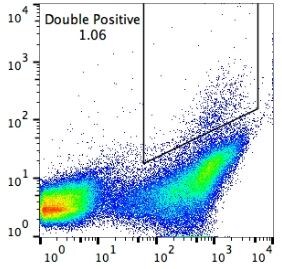
Application: FACS sortingVerified Customer | Posted 06/16/2017FACS sorting of a yeast scFv library expressing LAG-3 binding antibodies.Yeast scFv that bind to LAG-3-Fc are in the upper right quadrant. The expected number of binders was observed and were later confirmed to be true LAG-3 binders.

There are no reviews that match your criteria.
Loading...