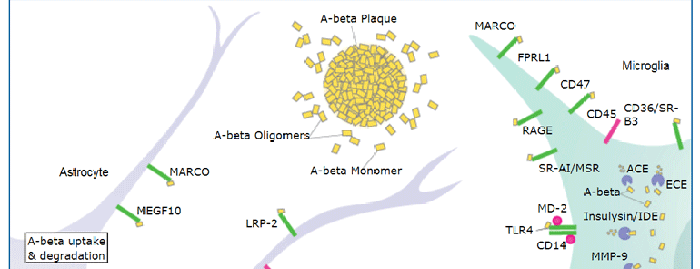
CCL2, also called monocyte chemotactic protein-1 (MCP-1) or JE, is a member of the C-C or beta chemokine family that is best known as a chemotactic agent for mononuclear cells (1, 2). Mouse CCL2 cDNA encodes a 148 amino acid (aa) precursor protein with a 23 aa signal peptide and a 125 aa mature protein (1). Removal of the first 5 aa of the mature protein, including the N-terminal pyrrolidone carboxylic acid-modified glutamine, occurs naturally by metalloproteinase cleavage and downregulates activity but not receptor binding (3). Mouse CCL2 forms a broad band around 25 kDa on SDS-PAGE due to non-covalent dimerization and variable carbohydrate content (1). Mouse and rat express a form of CCL2 that is extended by 49 aa compared to other species. Mature mouse CCL2 shares 82% amino acid (aa) identity with rat CCL2 over the entire sequence, and 58%, 56%, 55%, 53% and 53% aa identity with human, equine, porcine, bovine and canine CCL2, respectively, over aa 24 ‑ 101. Human CCL2 can, however, induce a limited response in rodent cells, and mouse CCL2 has full activity on human cells (2, 4). Fibroblasts, glioma cells, smooth muscle cells, endothelial cells, lymphocytes and mononuclear phagocytes can produce CCL2 either constitutively or upon mitogenic stimulation, but monocytes and macrophages appear to be the major source (1, 2). In addition to its chemotactic activity, CCL2 induces enzyme and cytokine release by monocytes, NK cells and lymphocytes, and histamine release by basophils that express its receptor, CCR2 (2). Additionally, it promotes Th2 polarization in CD4+ T cells (5). CCL2-mediated recruitment of monocytes to sites of inflammation is proposed to play a role in the pathology of atherosclerosis, multiple sclerosis and allergic asthma (6, 7). When a DNA sequence encoding the 125 aa residue of the mature CCL2 protein was expressed in E. coli at R&D Systems, the purified protein had the predicted N-terminus but a mass of 8525 Da. The truncation of most of the C-terminal extension could be due either to purification artifact or to post-translational modification. The truncated recombinant CCL2 has a potency similar to that of human MCP-1 in the monocyte chemotaxis assay.
Recombinant Mouse CCL2/JE/MCP-1 Protein
R&D Systems | Catalog # 479-JE

Key Product Details
- R&D Systems E. coli-derived Recombinant Mouse CCL2/JE/MCP-1 Protein (479-JE)
- Quality control testing to verify active proteins with lot specific assays by in-house scientists
- All R&D Systems proteins are covered with a 100% guarantee
Source
Accession Number
Applications
Product Specifications
Source
Gln24-Arg96
Purity
Endotoxin Level
N-terminal Sequence Analysis
Predicted Molecular Mass
Activity
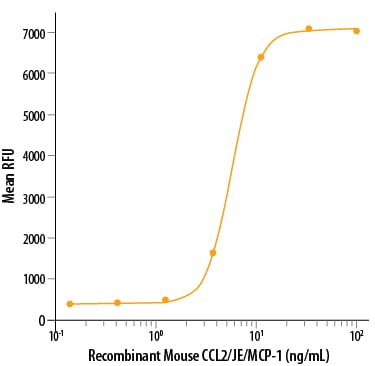
The ED50 for this effect is typically 2-10 ng/mL.
Reviewed Applications
Read 7 reviews rated 4.9 using 479-JE in the following applications:
Scientific Data Images for Recombinant Mouse CCL2/JE/MCP-1 Protein
Recombinant Mouse CCL2/JE/MCP-1 Protein Bioactivity
Recombinant Mouse CCL2/JE/MCP-1 (Catalog # 479-JE) chemoattracts the BaF3 mouse pro-B cell line transfected with human CCR2A. The ED50 for this effect is 2-10 ng/mL.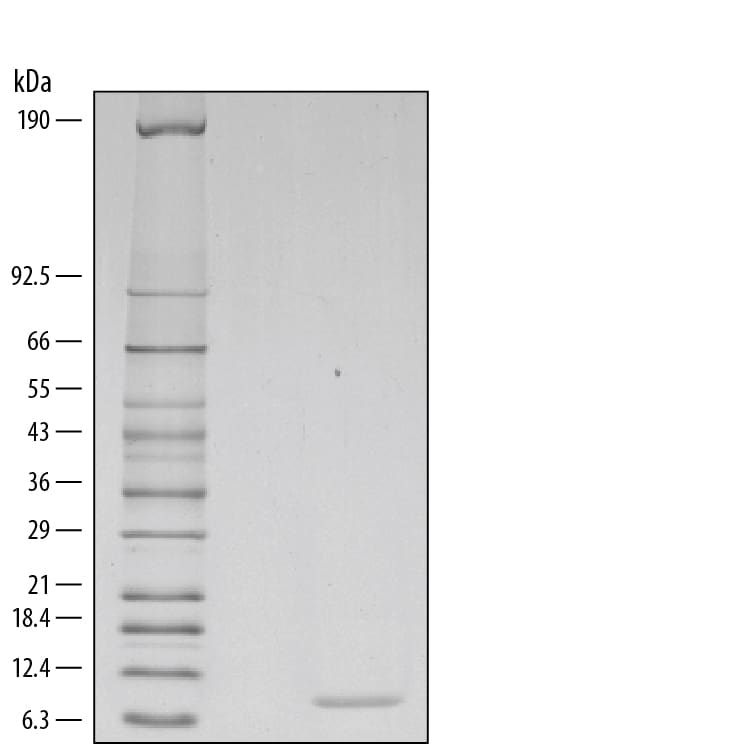
Recombinant Mouse CCL2/JE/MCP-1 Protein SDS-PAGE
1 μg/lane of Recombinant Mouse CCL2/JE/MCP-1 was resolved with SDS-PAGE under reducing (R) conditions and visualized by silver staining, showing a band at 8 kDa.Formulation, Preparation, and Storage
Carrier Free
What does CF mean?CF stands for Carrier Free (CF). We typically add Bovine Serum Albumin (BSA) as a carrier protein to our recombinant proteins. Adding a carrier protein enhances protein stability, increases shelf-life, and allows the recombinant protein to be stored at a more dilute concentration. The carrier free version does not contain BSA.
What formulation is right for me?In general, we advise purchasing the recombinant protein with BSA for use in cell or tissue culture, or as an ELISA standard. In contrast, the carrier free protein is recommended for applications, in which the presence of BSA could interfere.
Carrier: 479-JE
| Formulation | Lyophilized from a 0.2 μm filtered solution in PBS with BSA as a carrier protein. |
| Reconstitution | Reconstitute at 100 μg/mL in sterile PBS containing at least 0.1% human or bovine serum albumin. |
| Shipping | The product is shipped at ambient temperature. Upon receipt, store it immediately at the temperature recommended below. |
| Stability & Storage | Use a manual defrost freezer and avoid repeated freeze-thaw cycles.
|
Carrier Free: 479-JE/CF
| Formulation | Lyophilized from a 0.2 μm filtered solution in PBS. |
| Reconstitution | Reconstitute at 100 μg/mL in sterile PBS. |
| Shipping | The product is shipped at ambient temperature. Upon receipt, store it immediately at the temperature recommended below. |
| Stability & Storage | Use a manual defrost freezer and avoid repeated freeze-thaw cycles.
|
Calculators
Background: CCL2/JE/MCP-1
References
- Rollins, B.J. et al. (1988) Proc. Natl. Acad. Sci. USA. 85:3738.
- Deshmane, S.L. et al. (2009) J. Interferon Cytokine Res. 29:313.
- Dean, R.A. et al. (2008) Blood. 112:3455.
- Van Riper, G. et al. (1993) J. Exp. Med. 177:851.
- Luther, S.A. and J.G. Cyster (2001) Nat. Immunol. 2:102.
- Daly, C. et al. (2003) Microcirculation 10:247.
- Aukrust, P. et al. (2008) Arterioscler. Thromb. Vasc. Biol. 28:1909.
Alternate Names
Gene Symbol
UniProt
Additional CCL2/JE/MCP-1 Products
Product Documents for Recombinant Mouse CCL2/JE/MCP-1 Protein
Certificate of Analysis
To download a Certificate of Analysis, please enter a lot or batch number in the search box below.
Note: Certificate of Analysis not available for kit components.
Product Specific Notices for Recombinant Mouse CCL2/JE/MCP-1 Protein
For research use only
Citations for Recombinant Mouse CCL2/JE/MCP-1 Protein
 Powered by Bioz
Customer Reviews for Recombinant Mouse CCL2/JE/MCP-1 Protein (7)
Have you used Recombinant Mouse CCL2/JE/MCP-1 Protein?
Submit a review and receive an Amazon gift card!
$25/€18/£15/$25CAN/¥2500 for a review with an image
$10/€7/£6/$10CAN/¥1110 for a review without an image
Submit a review
Customer Images
-
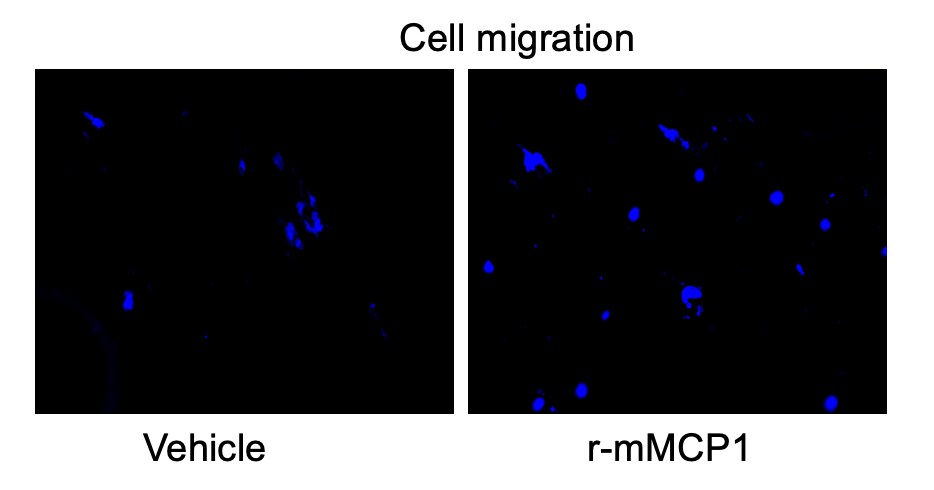
Application: Cell migration/motilityVerified Customer | Posted 07/25/2023

-
Application: Enzymatic activity in vitroVerified Customer | Posted 01/28/2019
-
Application: In vitro bioactivity in cell cultureVerified Customer | Posted 01/28/2019
-
Application: Cell ProliferationVerified Customer | Posted 09/27/2018
-
Application: Mouse aortic ring assayVerified Customer | Posted 07/19/2018
-
Application: Cell AdhesionVerified Customer | Posted 03/28/2018
-
Verified Customer | Posted 04/24/2017
There are no reviews that match your criteria.