
Dendritic cell and monocyte chemokine-like protein (DMC), also known as VEGF-correlated chemokine-1 (VCC-1), is a secreted molecule with a size and predicted three-dimensional folding pattern similar to that of chemokines CXCL8/IL-8 and CXCL14/BRAK (1, 2). It has no predicted N-glycosylation sites, so cleavage of a 22 amino acid (aa) signal sequence likely results in a mature mouse DMC molecule of 97 aa and 11 kDa size. DMC is constitutively produced by airway and intestinal epithelium (1). It induces the chemotaxis of quiescent, but not LPS‑activated peripheral blood monocytes and dendritic cells, and also binds these cells specifically (1). DMC expression is increased in endothelial cells when they are induced to form tubes in vitro (2). Transgenic overexpression in NIH3T3 cells causes up‑regulation of proteins such as VEGF and FGF basic, and increases cell growth rate and tumorigenicity (2). DMC and two other chemokines that play roles in angiogenesis, CXCL1/GRO and CXCL8/IL-8, show significantly correlated expression with that of VEGF in primary lung, breast and esophageal tumors (2). DMC is therefore suggested to play a role in tumor angiogenesis. Mature mouse DMC shares 82%, 71% and 66% amino acid sequence identity with rat, human and bovine DMC, respectively.
Recombinant Mouse CXCL17/VCC-1 Protein
R&D Systems | Catalog # 4270-DM

Key Product Details
- R&D Systems E. coli-derived Recombinant Mouse CXCL17/VCC-1 Protein (4270-DM)
- Quality control testing to verify active proteins with lot specific assays by in-house scientists
- All R&D Systems proteins are covered with a 100% guarantee
Source
Accession Number
Applications
Product Specifications
Source
Ser23-Leu119
Purity
Endotoxin Level
N-terminal Sequence Analysis
Predicted Molecular Mass
Activity
The ED50 for this effect is 1-5 µg/mL.
Reviewed Applications
Read 1 review rated 5 using 4270-DM in the following applications:
Formulation, Preparation, and Storage
Carrier Free
What does CF mean?CF stands for Carrier Free (CF). We typically add Bovine Serum Albumin (BSA) as a carrier protein to our recombinant proteins. Adding a carrier protein enhances protein stability, increases shelf-life, and allows the recombinant protein to be stored at a more dilute concentration. The carrier free version does not contain BSA.
What formulation is right for me?In general, we advise purchasing the recombinant protein with BSA for use in cell or tissue culture, or as an ELISA standard. In contrast, the carrier free protein is recommended for applications, in which the presence of BSA could interfere.
Carrier: 4270-DM
| Formulation | Lyophilized from a 0.2 μm filtered solution in PBS with BSA as a carrier protein. |
| Reconstitution | Reconstitute at 100 μg/mL in sterile PBS containing at least 0.1% human or bovine serum albumin. |
| Shipping | The product is shipped at ambient temperature. Upon receipt, store it immediately at the temperature recommended below. |
| Stability & Storage | Use a manual defrost freezer and avoid repeated freeze-thaw cycles.
|
Carrier Free: 4270-DM/CF
| Formulation | Lyophilized from a 0.2 μm filtered solution in PBS. |
| Reconstitution | Reconstitute at 100 μg/mL in sterile PBS. |
| Shipping | The product is shipped at ambient temperature. Upon receipt, store it immediately at the temperature recommended below. |
| Stability & Storage | Use a manual defrost freezer and avoid repeated freeze-thaw cycles.
|
Calculators
Background: CXCL17/VCC-1
References
- Pisabarro, M. T. et al. (2006) J. Immunol. 176:2069.
- Weinstein, E. J. et al. (2006) Biochem. Biophys. Res. Commun. 350:74.
Alternate Names
Gene Symbol
UniProt
Additional CXCL17/VCC-1 Products
Product Documents for Recombinant Mouse CXCL17/VCC-1 Protein
Certificate of Analysis
To download a Certificate of Analysis, please enter a lot or batch number in the search box below.
Note: Certificate of Analysis not available for kit components.
Product Specific Notices for Recombinant Mouse CXCL17/VCC-1 Protein
For research use only
Related Research Areas
Citations for Recombinant Mouse CXCL17/VCC-1 Protein
 Powered by Bioz
Customer Reviews for Recombinant Mouse CXCL17/VCC-1 Protein (1)
Have you used Recombinant Mouse CXCL17/VCC-1 Protein?
Submit a review and receive an Amazon gift card!
$25/€18/£15/$25CAN/¥2500 for a review with an image
$10/€7/£6/$10CAN/¥1110 for a review without an image
Submit a review
Customer Images
-
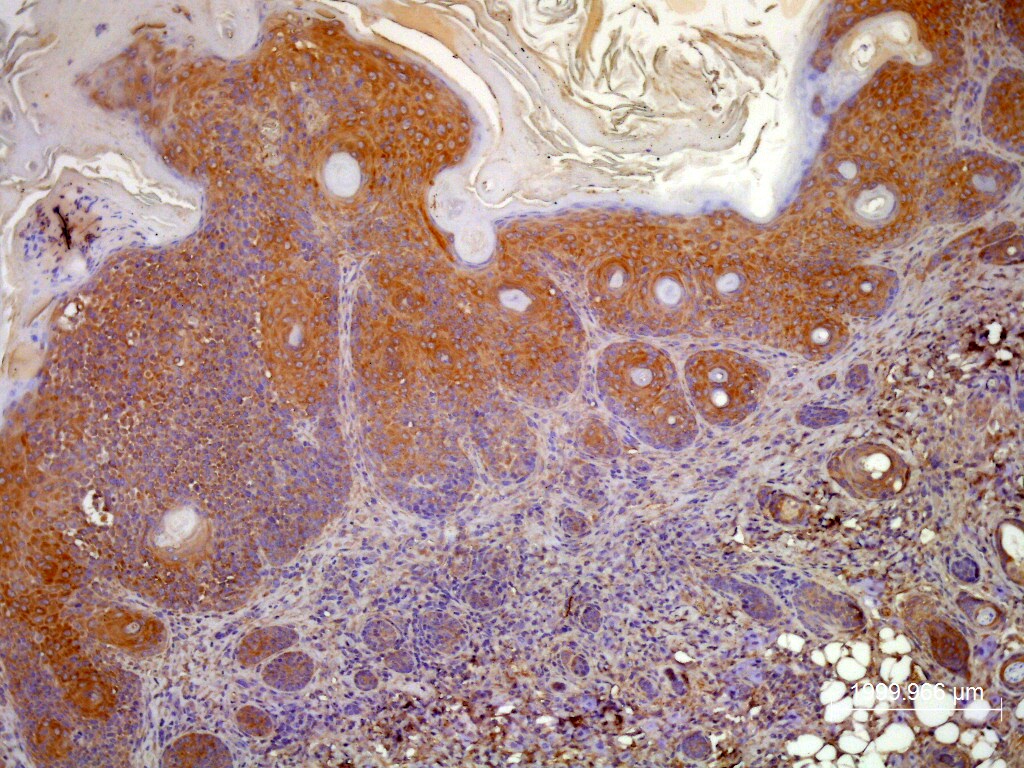
Application: ImmunohistochemistryVerified Customer | Posted 02/06/2020Immunostaining of FFPE slide of head and neck squamous cell carcinoma on a mouse xenograft model for CXCL17

There are no reviews that match your criteria.
Associated Pathways
