Key Product Details

Species Reactivity

Validated:

Human

Cited:

Human

Applications

Validated:

Western Blot, Neutralization, Immunocytochemistry

Cited:

Immunohistochemistry-Frozen, Western Blot, Neutralization, Immunocytochemistry, Cell Selection

Label

Unconjugated

Antibody Source

Monoclonal Mouse IgG2A Clone # 32437
Loading...

Product Specifications

Immunogen

S. frugiperda insect ovarian cell line Sf 21-derived recombinant human IL‑1 RII
Phe14-Glu343 (Glu297Gly)
Accession # P27930

Specificity

Detects human IL-1 RII in direct ELISAs and Western blots. In direct ELISAs, no cross-reactivity with recombinant human (rh) IL-1 RI, rhIL‑18 R, and recombinant mouse IL-18 R is observed.

Clonality

Monoclonal

Host

Mouse

Isotype

IgG2A

Endotoxin Level

<0.10 EU per 1 μg of the antibody by the LAL method.

Scientific Data Images for Human IL‑1 RII Antibody

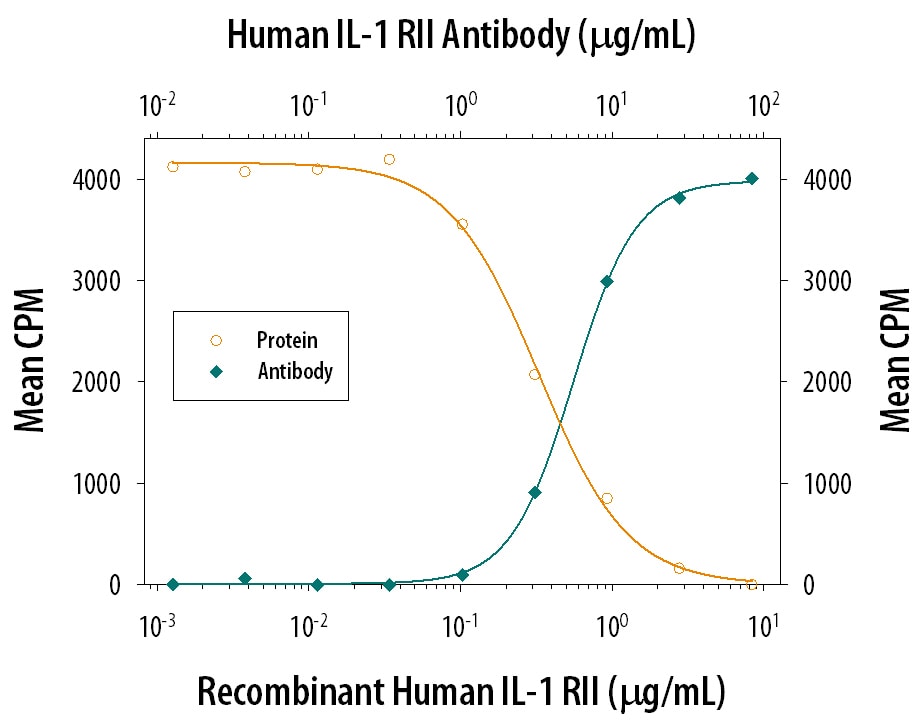
IL‑1 RII Inhibition of IL‑1 beta /IL‑1F2‑dependent Cell Proliferation and Neutralization by Human IL‑1 RII Antibody.

IL‑1 RII Inhibition of IL‑1 beta /IL‑1F2‑dependent Cell Proliferation and Neutralization by Human IL‑1 RII Antibody.

Recombinant Human IL-1 RII (263-2R) inhibits Recombinant Human IL-1 beta / IL-1F2 (201-LB) induced proliferation in the D10.G4.1 mouse helper T cell line in a dose-dependent manner (orange line). Inhibition of Recombinant Human IL-1 beta /IL-1F2 (50 pg/mL) activity elicited by Recombinant Human IL-1 RII (2 µg/mL) is neutralized (green line) by increasing concentrations of Mouse Anti-Human IL-1 RII Monoclonal Antibody (Catalog # MAB263). The ND50 is typically 2-6 µg/mL.

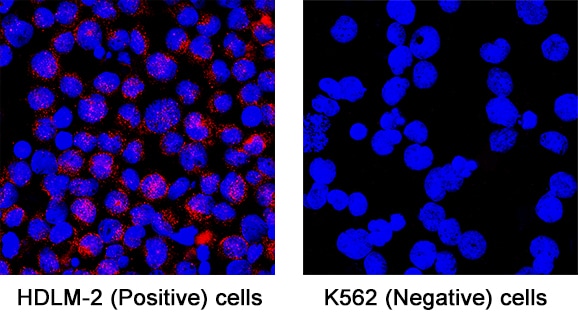
Detection of IL‑1 RII in HDLM-2 (positive) and K562 (negative).

IL‑1 RII was detected in immersion fixed HDLM‑2 human Hodgkin’s lymphoma cells (positive) and absent in K562 human chronic myelogenous leukemia cells (negative) using Mouse Anti-Human IL‑1 RII Monoclonal Antibody (Catalog # MAB263) at 25 µg/mL for 3 hours at room temperature. Cells were stained using the NorthernLights™ 557-conjugated Anti-Mouse IgG Secondary Antibody (red; Catalog # NL007) and counterstained with DAPI (blue). Specific staining was localized to cell surface. View our protocol for Fluorescent ICC Staining of Non-adherent Cells.

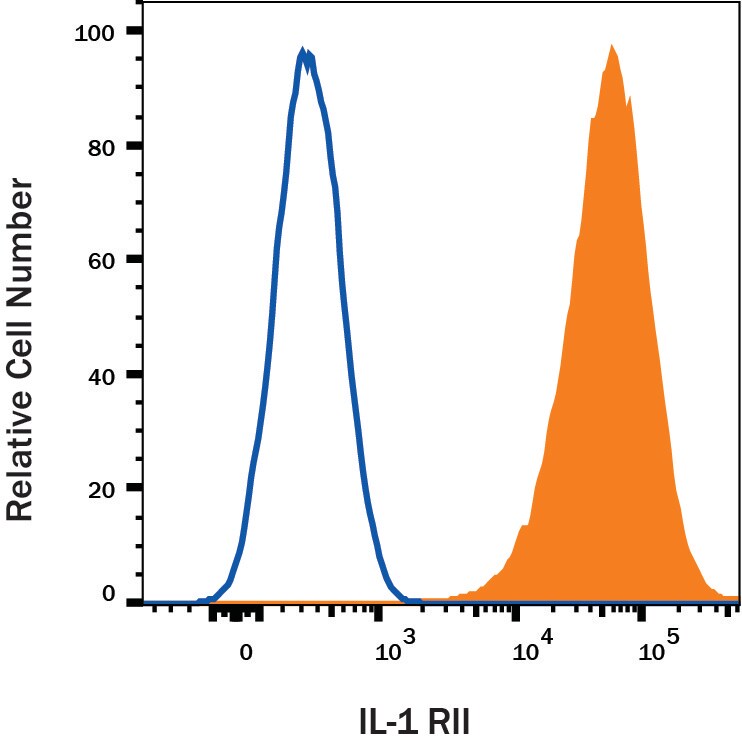
Detection of IL‑1 RII in HDLM-2 cells by Flow Cytometry

HDLM-2 cells were stained with Mouse Anti-Human IL‑1 RII Monoclonal Antibody (Catalog # MAB263, filled histogram) or isotype control antibody (Catalog # MAB003, open histogram) followed by Allophycocyanin-conjugated Anti-Mouse IgG Secondary Antibody (Catalog # F0101B). View our protocol for Staining Membrane-associated Proteins.

Detection of Human IL-1 RII by Immunocytochemistry/ Immunofluorescence

Detection of Human IL-1 RII by Immunocytochemistry/ Immunofluorescence

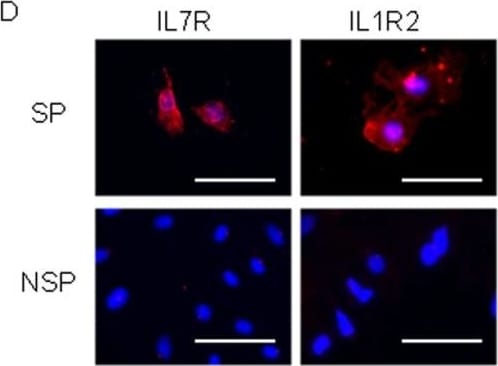
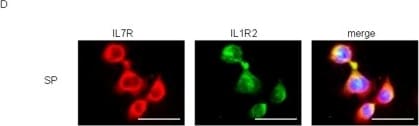
Isolation of SP cells from human first trimester vCTB.(A) Immunocytochemistry images of CGB, CK7, CSH1, HLA−G, CD9 and HLA1 expression in primary vCTB cells isolated by Percoll gradient centrifugation. Each protein expression is shown as red signals (scale bars, 50 µm). The isolated cells were plated on chamber slides with HBM and stained the next day. (B) The SP cells represent 0.12±0.28% (n = 22) of the total primary vCTB. Co-incubation of the cells with verapamil erased the SP cell fraction. (C) The expression of CD105, CD146 and VIM in SP cells from primary vCTB cells was analyzed by immunocytochemistry. All images show counterstaining with Hoechst 33852. Each protein expression is shown as red signals (scale bars, 50 µm). (D) Immunocytochemistry images of IL7R and IL1R2 expression in SP and NSP cells counterstained with Hoechst 33852. IL7R and IL1R2 expressions are shown as red signals (scale bars, 50 µm). (E) The expression of CGB, CSH1 HLA−G, CK7, PHLDA2 and EOMES in IL7R/IL1R2 double-positive cells was assessed by immunocytochemistry. These expressions are shown as green signals (scale bars, 50 µm). (F) Induction of differentiation in IL7R/IL1R2 positive cells was determined by IL7R, IL1R2, CSH1 and CGB expression. IL7R/IL1R2 positive cells from primary human vCTB were analyzed after being cultured in HBM for 2 weeks. IL7R and IL1R2 expressions are shown as red signals; CSH1 and CGB expressions are shown as green signals (scale bars, 50 µm). The cell marked with an arrow show positive for CGB and negative for IL7R expression. In contrast, the cell marked with an arrowhead was positive for IL7R and negative for CGB expression. The outlines of the cells are indicated by broken lines. Image collected and cropped by CiteAb from the following open publication (https://pubmed.ncbi.nlm.nih.gov/21760941), licensed under a CC-BY license. Not internally tested by R&D Systems.
Detection of Human IL-1 RII by Immunocytochemistry/ Immunofluorescence

Detection of Human IL-1 RII by Immunocytochemistry/ Immunofluorescence

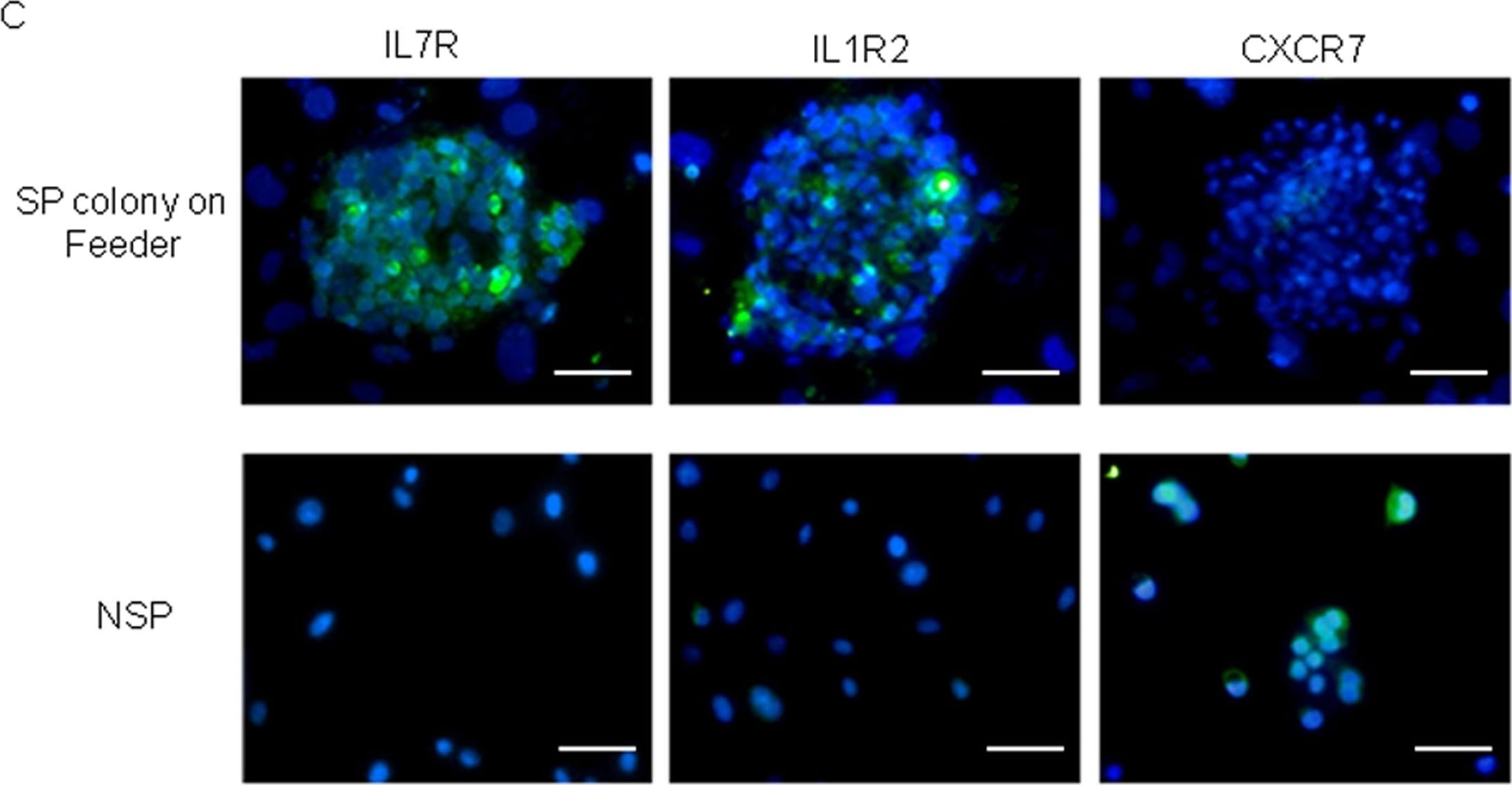
IL7R and IL1R2 were abundantly expressed in HTR-8/SVneo-SP cells.(A) IL7R and IL1R2 mRNA expressions between HTR-8/SVneo-SP and -NSP cells were compared by real-time RT-PCR. The mRNA levels were normalized to those of GAPDH and error bars show standard deviations (n = 3). Asterisk indicates statistically significant (p<0.01). (B) Western blot analysis of IL7R, IL1R2 and CXCR7 proteins in HTR-8/SVneo-SP and -NSP cells. SP cells exclusively expressed IL7R and IL1R2, while NSP exclusively expressed CXCR7. (C) The protein expression of IL7R, IL1R2 or CXCR7 was analyzed by immunocytochemistry. All images counterstained with Hoechst 33852. Each protein expression is shown as green signals (scale bars, 50 µm). (D) IL7R and IL1R2 expressions in HTR-8/SVneo-SP cells were analyzed by immunocytochemistry. All images were counterstained with Hoechst 33852. IL7R and IL1R2 expressions are shown as red and green signals respectively (scale bars, 50 µm). Image collected and cropped by CiteAb from the following open publication (https://pubmed.ncbi.nlm.nih.gov/21760941), licensed under a CC-BY license. Not internally tested by R&D Systems.
Detection of Human IL-1 RII by Immunocytochemistry/ Immunofluorescence

Detection of Human IL-1 RII by Immunocytochemistry/ Immunofluorescence

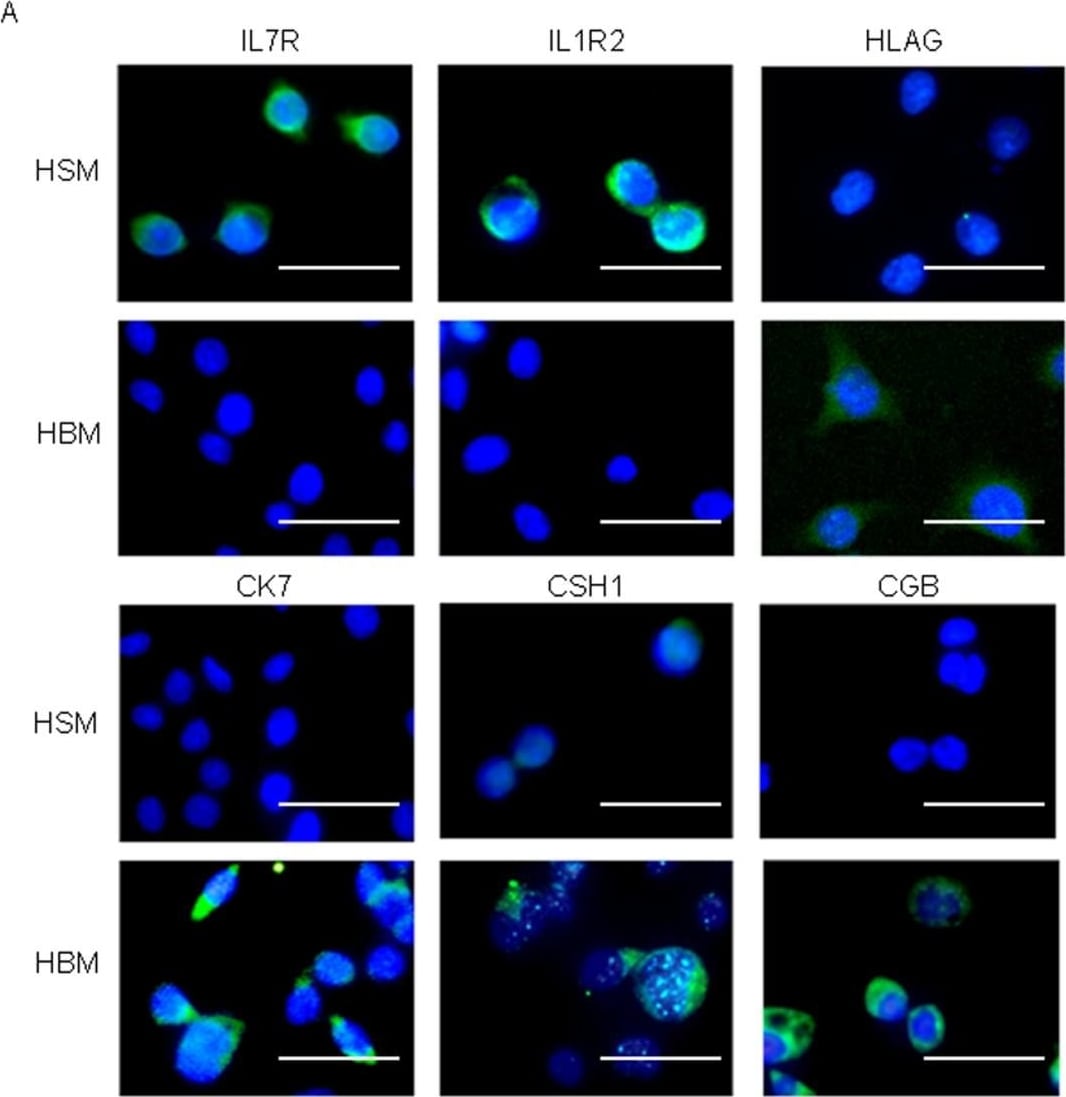
SP and IL1R2/IL7R double-positive cells differentiated into multiple trophoblast cell lineages.(A) Immunocytochemistry images of IL7R, IL1R2, CK7, CSH1, CGB and HLA−G expression in SP cells sorted from HTR-8/SVneo parent cells. Each protein expression is shown as green signals (scale bars, 50 µm). The cells were assayed after culture for 2 weeks in HSM or HBM. (B) Flow cytometry results of IL1R2-positive cells after being sorted by MACS. SP cells were obtained from IL1R2-positive cells after culture for 2 weeks (4.78±1.45% from 3 independent experiments). (C) Induction of trophoblast differentiation of IL7R/IL1R2 double-positive HTR-8/SVneo cells confirmed by differentiation marker, CSH1 and CGB expression. IL7R and IL1R2 expressions are shown as red signals; CSH1 and CGB expressions are shown as green signals (scale bars, 50 µm). The cells marked with an arrow show positive for CSH1 or CGB and negative for IL1R2 or IL7R expression. Image collected and cropped by CiteAb from the following open publication (https://pubmed.ncbi.nlm.nih.gov/21760941), licensed under a CC-BY license. Not internally tested by R&D Systems.
Detection of Human IL-1 RII by Immunocytochemistry/ Immunofluorescence

Detection of Human IL-1 RII by Immunocytochemistry/ Immunofluorescence

IL7R and IL1R2 were abundantly expressed in HTR-8/SVneo-SP cells.(A) IL7R and IL1R2 mRNA expressions between HTR-8/SVneo-SP and -NSP cells were compared by real-time RT-PCR. The mRNA levels were normalized to those of GAPDH and error bars show standard deviations (n = 3). Asterisk indicates statistically significant (p<0.01). (B) Western blot analysis of IL7R, IL1R2 and CXCR7 proteins in HTR-8/SVneo-SP and -NSP cells. SP cells exclusively expressed IL7R and IL1R2, while NSP exclusively expressed CXCR7. (C) The protein expression of IL7R, IL1R2 or CXCR7 was analyzed by immunocytochemistry. All images counterstained with Hoechst 33852. Each protein expression is shown as green signals (scale bars, 50 µm). (D) IL7R and IL1R2 expressions in HTR-8/SVneo-SP cells were analyzed by immunocytochemistry. All images were counterstained with Hoechst 33852. IL7R and IL1R2 expressions are shown as red and green signals respectively (scale bars, 50 µm). Image collected and cropped by CiteAb from the following open publication (https://pubmed.ncbi.nlm.nih.gov/21760941), licensed under a CC-BY license. Not internally tested by R&D Systems.

Applications for Human IL‑1 RII Antibody

Application
Recommended Usage

Immunocytochemistry

8-25 µg/mL
Sample: Immersion fixed HDLM‑2 human Hodgkin's lymphoma cells (positive) and absent in K562 human chronic myelogenous leukemia cells (negative)

Western Blot

1 µg/mL
Sample: Recombinant Human IL‑1 RII (Catalog # 263-2R) under non-reducing conditions only

Neutralization

Measured by its ability to neutralize IL‑1 RII-mediated inhibition of proliferation in the D10.G4.1 mouse helper T cell line. The Neutralization Dose (ND50) is typically 2-6 µg/mL in the presence of 2 µg/mL Recombinant Human IL‑1 RII, 50 pg/mL Recombinant Human IL‑1 beta /IL‑1F2.

Formulation, Preparation, and Storage

Purification

Protein A or G purified from ascites

Reconstitution

Reconstitute at 0.5 mg/mL in sterile PBS. For liquid material, refer to CoA for concentration.


Loading...

Formulation

Lyophilized from a 0.2 μm filtered solution in PBS with Trehalose. See Certificate of Analysis for details.
*Small pack size (-SP) is supplied either lyophilized or as a 0.2 µm filtered solution in PBS.

Shipping

Lyophilized product is shipped at ambient temperature. Liquid small pack size (-SP) is shipped with polar packs. Upon receipt, store immediately at the temperature recommended below.

Stability & Storage

Use a manual defrost freezer and avoid repeated freeze-thaw cycles.
  • 12 months from date of receipt, -20 to -70 °C as supplied.
  • 1 month, 2 to 8 °C under sterile conditions after reconstitution.
  • 6 months, -20 to -70 °C under sterile conditions after reconstitution.

Calculators

The reconstitution calculator allows you to quickly calculate the volume of a reagent to reconstitute your vial. Simply enter the mass of reagent and the target concentration and the calculator will determine the rest.

=
÷

Background: IL-1 RII

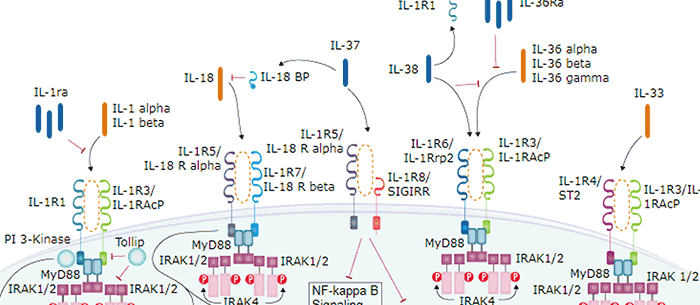
Two distinct types of receptors that bind the pleiotropic cytokines IL-1 alpha and IL-1 beta have been described. The IL-1 receptor type I is an 80 kDa transmembrane protein that is expressed predominantly by T cells, fibroblasts and endothelial cells. IL-1 receptor type II is a 68 kDa transmembrane protein found on B lymphocytes, neutrophils, monocytes, large granular leukocytes and endothelial cells. Both receptors are members of the immunoglobulin superfamily and show approximately 28% sequence similarity in their extracellular domains. The two receptor types do not heterodimerize in a receptor complex.

An IL-1 receptor accessory protein that can heterodimerize with the type I receptor in the presence of IL-1 alpha or IL-1 beta but not IL-1ra, was identified (1). This type I receptor complex appears to mediate all the known IL-1 biological responses. The receptor type II has a short cytoplasmic domain and does not transduce IL-1 signals. In addition to the membrane-bound form of IL-1 RII, a naturally-occurring soluble form of IL-1 RII has been described. It has been suggested that the type II receptor, either as the membrane-bound or as the soluble form, serves as a decoy for IL-1 and inhibits IL-1 action by blocking the binding of IL-1 to the signaling type I receptor complex.

References

  1. Greenfeder, S. et al. (1995) J. Biol. Chem. 270:13757.

Long Name

Interleukin 1 Receptor II

Alternate Names

CD121b, IL-1 R beta, IL-1RII, IL1R2, IL1RII

Entrez Gene IDs

7850 (Human); 16178 (Mouse)

Gene Symbol

IL1R2

UniProt

Additional IL-1 RII Products

Product Documents for Human IL‑1 RII Antibody

Certificate of Analysis

To download a Certificate of Analysis, please enter a lot or batch number in the search box below.

Note: Certificate of Analysis not available for kit components.

Product Specific Notices for Human IL‑1 RII Antibody

For research use only

Citations for Human IL‑1 RII Antibody

Customer Reviews for Human IL‑1 RII Antibody

There are currently no reviews for this product. Be the first to review Human IL‑1 RII Antibody and earn rewards!

Have you used Human IL‑1 RII Antibody?

Submit a review and receive an Amazon gift card!

$25/€18/£15/$25CAN/¥2500 Yen for a review with an image

$10/€7/£6/$10CAN/¥1110 Yen for a review without an image

Submit a review
Amazon Gift Card

Protocols

Find general support by application which include: protocols, troubleshooting, illustrated assays, videos and webinars.

FAQs

No product specific FAQs exist for this product.

View all FAQs for Antibodies