
APE Antibody
Novus Biologicals | Catalog # NB100-897

![Western Blot: APE Antibody [NB100-897]](https://resources.rndsystems.com/images/products/APE-Antibody-Western-Blot-NB100-897-img0001.jpg "Western Blot: APE Antibody [NB100-897]")
Scientific images may be resized, cropped, or adjusted for brightness or contrast for presentation purposes. These updates are limited to presentation and do not affect the underlying scientific interpretation of the data. Where available, additional source data may be provided upon request.
Key Product Details
Species Reactivity
Validated:
Cited:
Predicted:
Applications
Validated:
Cited:
Label
Antibody Source
Product Specifications
Immunogen
Reactivity Notes
Specificity
Clonality
Host
Isotype
Scientific Data Images for APE Antibody
Western Blot: APE Antibody [NB100-897]
Western Blot: APE Antibody [NB100-897] - Staining of A431 (A), HeLa (B) and MCF7 (C) nuclear lysates (35ug protein in RIPA buffer). Primary incubation was 1 hour. Detected by chemiluminescence.![Immunohistochemistry-Paraffin: APE Antibody [NB100-897]](https://resources.rndsystems.com/images/products/APE-Antibody-Immunohistochemistry-Paraffin-NB100-897-img0002.jpg "Immunohistochemistry-Paraffin: APE Antibody [NB100-897]")
Immunohistochemistry-Paraffin: APE Antibody [NB100-897]
Immunohistochemistry-Paraffin: APE Antibody [NB100-897] - Staining of paraffin embedded Human Breast. Steamed antigen retrieval with Tris/EDTA buffer pH 9, HRP-staining.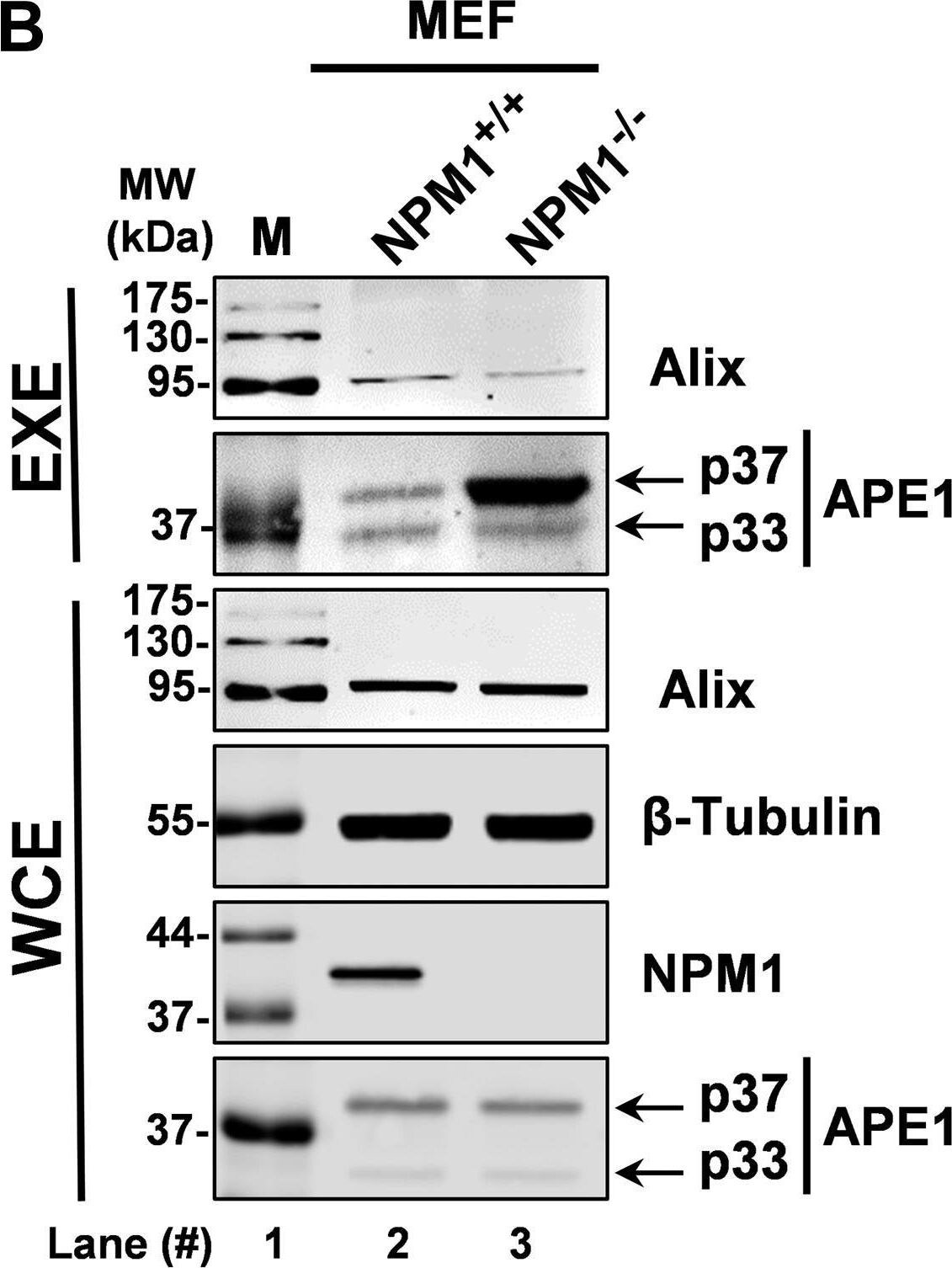
Western Blot: APE Antibody [NB100-897] -
APE1 EVs secretion in a panel of mammalian cell lines:A, western blotting analyses for APE1 detection carried out in EXE of JHH-6, A549, HCT116P53+/+, HCT116p53-/-, CH13F3 delta /+/+, and CH12F3 delta / delta / delta cells. Both APE1 p37 and p33 forms have been detected. Alix was used as a loading control. WCE were analyzed as a positive control of APE1 expression. The molecular mass (MW) expressed in kDa is shown on the left side of the image. B, western blotting analyses for APE1 detection carried out in EXE of MEFNPM1+/+ and MEFNPM1-/- cells. Both APE1 p37 and p33 forms have been detected. Alix was used as a loading control. WCE were analyzed as a positive control of APE1 expression and beta -Tubulin (apparent molecular weight 52 kDa) was detected as loading control. Western blotting analysis for NPM1 detection was carried out as a control for cells genotype. The molecular mass (MW) expressed in kDa is shown on the left side of the image. C, western blotting analyses for APE1 detection in WCE and EXE derived from OCI-AML2 and OCI-AML3 cell lines. beta -Tubulin (apparent molecular weight 52 kDa) and Alix (apparent molecular weight 95 kDa) detection was carried out as loading controls. APE1 p37 and p33 are indicated by arrows. The molecular mass (MW) expressed in kDa is shown on the left side of the image. The percentages of exosomal APE1 p37 and p33 forms in OCI-AML2 and OCI-AML3 cell lines are indicated in the scatter plot on the right panel and in Fig. S5. Data are expressed as mean +/- SD of three independent replicas. Image collected and cropped by CiteAb from the following open publication (https://pubmed.ncbi.nlm.nih.gov/33753167), licensed under a CC-BY license. Not internally tested by Novus Biologicals.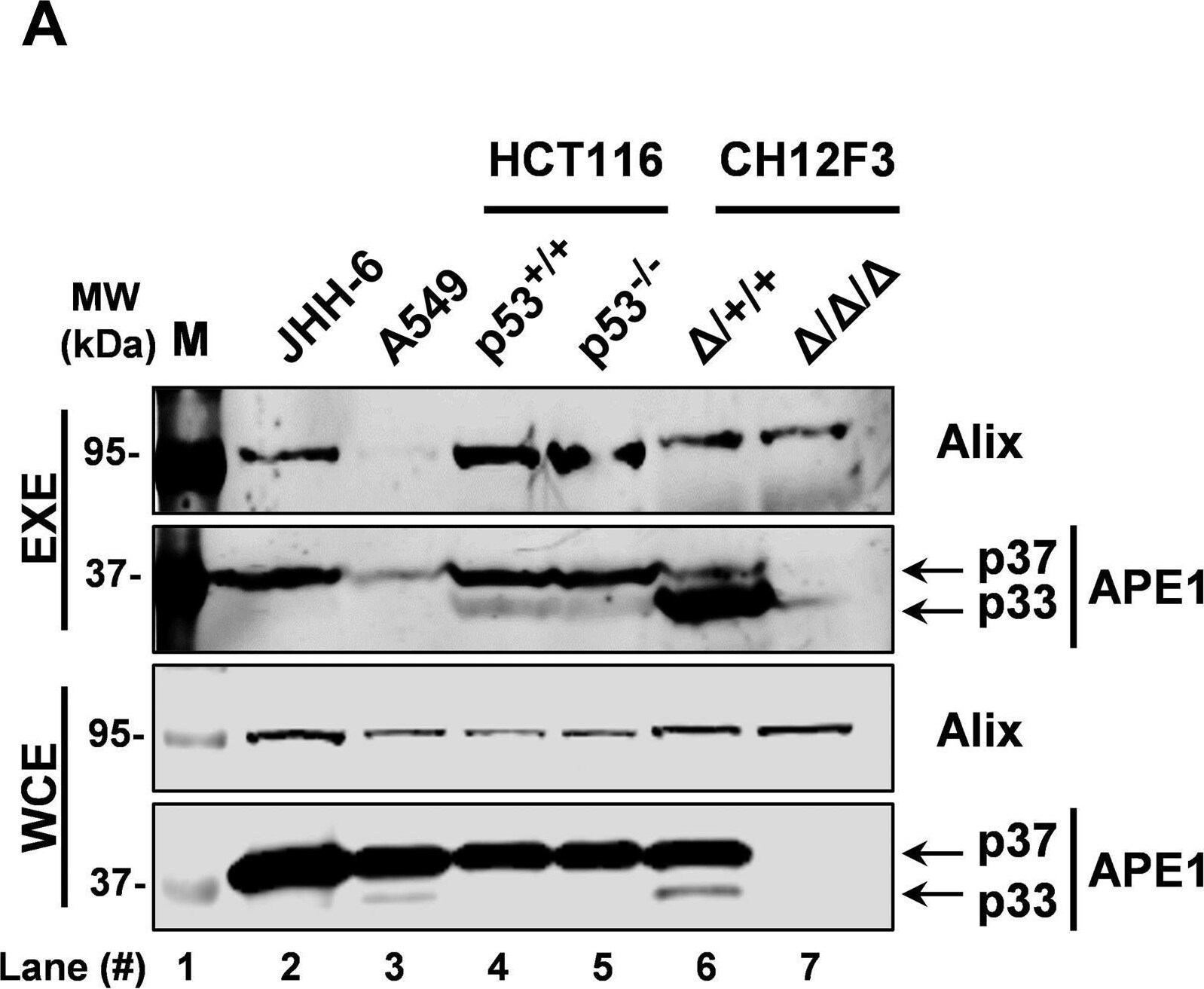
Western Blot: APE Antibody [NB100-897] -
APE1 EVs secretion in a panel of mammalian cell lines:A, western blotting analyses for APE1 detection carried out in EXE of JHH-6, A549, HCT116P53+/+, HCT116p53-/-, CH13F3 delta /+/+, and CH12F3 delta / delta / delta cells. Both APE1 p37 and p33 forms have been detected. Alix was used as a loading control. WCE were analyzed as a positive control of APE1 expression. The molecular mass (MW) expressed in kDa is shown on the left side of the image. B, western blotting analyses for APE1 detection carried out in EXE of MEFNPM1+/+ and MEFNPM1-/- cells. Both APE1 p37 and p33 forms have been detected. Alix was used as a loading control. WCE were analyzed as a positive control of APE1 expression and beta -Tubulin (apparent molecular weight 52 kDa) was detected as loading control. Western blotting analysis for NPM1 detection was carried out as a control for cells genotype. The molecular mass (MW) expressed in kDa is shown on the left side of the image. C, western blotting analyses for APE1 detection in WCE and EXE derived from OCI-AML2 and OCI-AML3 cell lines. beta -Tubulin (apparent molecular weight 52 kDa) and Alix (apparent molecular weight 95 kDa) detection was carried out as loading controls. APE1 p37 and p33 are indicated by arrows. The molecular mass (MW) expressed in kDa is shown on the left side of the image. The percentages of exosomal APE1 p37 and p33 forms in OCI-AML2 and OCI-AML3 cell lines are indicated in the scatter plot on the right panel and in Fig. S5. Data are expressed as mean +/- SD of three independent replicas. Image collected and cropped by CiteAb from the following open publication (https://pubmed.ncbi.nlm.nih.gov/33753167), licensed under a CC-BY license. Not internally tested by Novus Biologicals.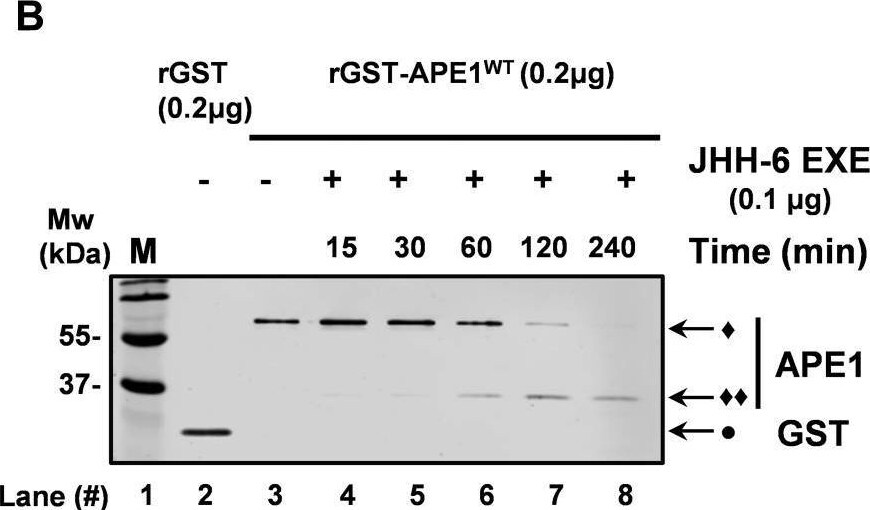
Western Blot: APE Antibody [NB100-897] -
APE1 proteolytic activity characterization in exosomes:A, western blotting analyses for APE1 p37 and p33 detection in EVs derived from JHH-6 MG-132 treated cells and the respective untreated CTR cells (left panel). Alix (apparent molecular weight 95 kDa) was used as loading control. The percentage of exosomal APE1 p37 and p33 forms in both CTR and MG-132 JHH-6 cells has been obtained by densitometry analysis, and it is indicated in the scatter plot (middle panel) and in Fig. S6. Western blotting analysis for I kappa B-alpha (apparent molecular weight 38 kDa) detection was performed in CTR and MG-132 treated JHH-6 WCE as a confirmation of proteases inhibition. The molecular mass (MW), expressed in kDa, is shown on the left side of the image. Data are expressed as mean +/- SD of three independent replicas. B, EVs possess proteases able to cleave rGST-APE1 protein. In vitro proteolytic activity exerted by EXE (0.1 μg) upon rGST-APE1WT (0.2 μg) (apparent molecular weight 65 kDa). The reactions were performed at 37 C for the indicated times and the substrates (♦) and the products (♦♦) of reactions have been detected by Western blotting using APE1 antibody (left panel). rGST (0.2 μg) (apparent molecular weight 29 kDa) indicated as (•) has been detected by western blotting using GST antibody. C, graph illustrating the comparison of EXE cleavage activity upon rGST-APE1WT and rGST-APE1K4pleA. Data are expressed as mean +/- SD of three independent technical replicas. ∗p < 0.05, ∗∗p < 0.01, ∗∗∗p < 0.001, ∗∗∗∗p < 0.0001. Image collected and cropped by CiteAb from the following open publication (https://pubmed.ncbi.nlm.nih.gov/33753167), licensed under a CC-BY license. Not internally tested by Novus Biologicals.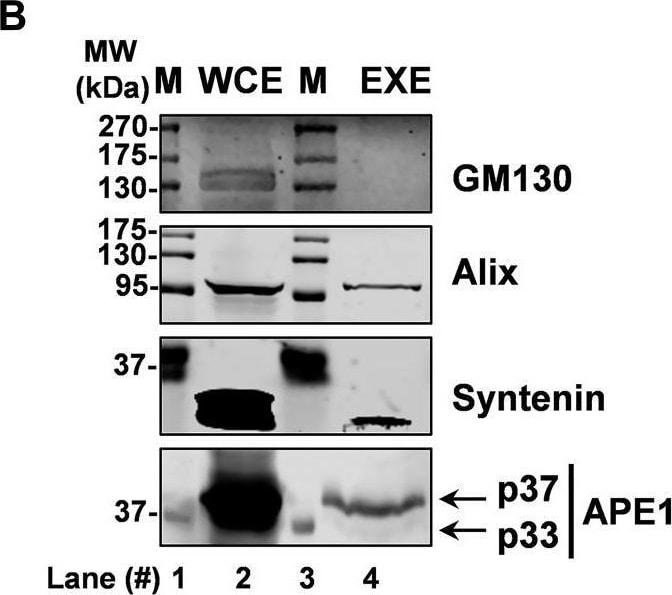
Western Blot: APE Antibody [NB100-897] -
EVs characterization and APE1 protein content analysis in JHH-6 cells:A, average size distribution curve determined by NTA of EVs derived from JHH-6 conditioned medium. The average concentration of vesicles was plotted against their size. The mean mode sizes and standard deviations are reported nearby the curve. B, western blotting analysis performed in JHH-6 WCE and EXE for APE1 detection (predicted molecular weight 37 kDa). APE1 p37 and p33 forms were observed in EXE. WCE were used as a positive APE1 control (lower panel). Golgi apparatus protein GM130 (apparent molecular weight 130 kDa) was assayed as exosome negative marker, Alix (apparent molecular weight 95 kDa) and Syntenin (apparent molecular weight 32 kDa) were assayed as exosome positive markers. C, AlphaScreen assay titrating the recombinant rGST-APE1 protein using Glutathione Donor beads and Protein A/G Acceptor beads in the presence of anti-APE1 antibody. The signal of the recombinant protein was detected in NBI-isolated vesicles upon a 95 C heating step. The specific fluorescence counts, indicating a high signal to background ratio, were normalized to background after subtraction of the aspecific binding when considered at two EV concentrations in the scatter plot. Image collected and cropped by CiteAb from the following open publication (https://pubmed.ncbi.nlm.nih.gov/33753167), licensed under a CC-BY license. Not internally tested by Novus Biologicals.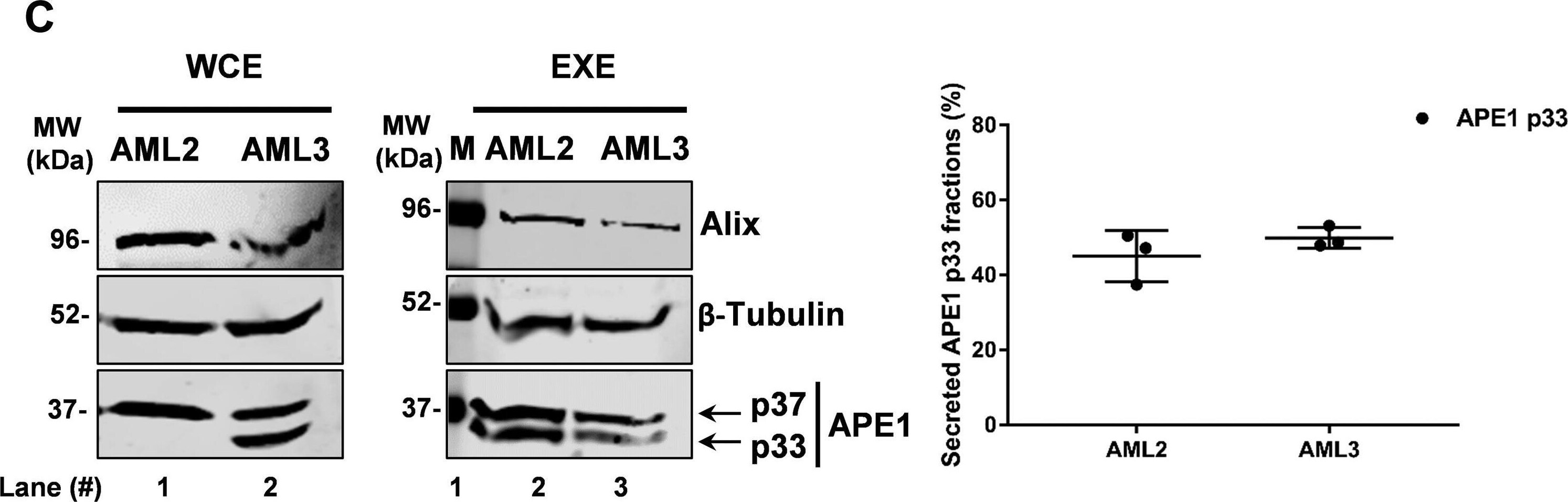
Western Blot: APE Antibody [NB100-897] -
APE1 EVs secretion in a panel of mammalian cell lines:A, western blotting analyses for APE1 detection carried out in EXE of JHH-6, A549, HCT116P53+/+, HCT116p53-/-, CH13F3 delta /+/+, and CH12F3 delta / delta / delta cells. Both APE1 p37 and p33 forms have been detected. Alix was used as a loading control. WCE were analyzed as a positive control of APE1 expression. The molecular mass (MW) expressed in kDa is shown on the left side of the image. B, western blotting analyses for APE1 detection carried out in EXE of MEFNPM1+/+ and MEFNPM1-/- cells. Both APE1 p37 and p33 forms have been detected. Alix was used as a loading control. WCE were analyzed as a positive control of APE1 expression and beta -Tubulin (apparent molecular weight 52 kDa) was detected as loading control. Western blotting analysis for NPM1 detection was carried out as a control for cells genotype. The molecular mass (MW) expressed in kDa is shown on the left side of the image. C, western blotting analyses for APE1 detection in WCE and EXE derived from OCI-AML2 and OCI-AML3 cell lines. beta -Tubulin (apparent molecular weight 52 kDa) and Alix (apparent molecular weight 95 kDa) detection was carried out as loading controls. APE1 p37 and p33 are indicated by arrows. The molecular mass (MW) expressed in kDa is shown on the left side of the image. The percentages of exosomal APE1 p37 and p33 forms in OCI-AML2 and OCI-AML3 cell lines are indicated in the scatter plot on the right panel and in Fig. S5. Data are expressed as mean +/- SD of three independent replicas. Image collected and cropped by CiteAb from the following open publication (https://pubmed.ncbi.nlm.nih.gov/33753167), licensed under a CC-BY license. Not internally tested by Novus Biologicals.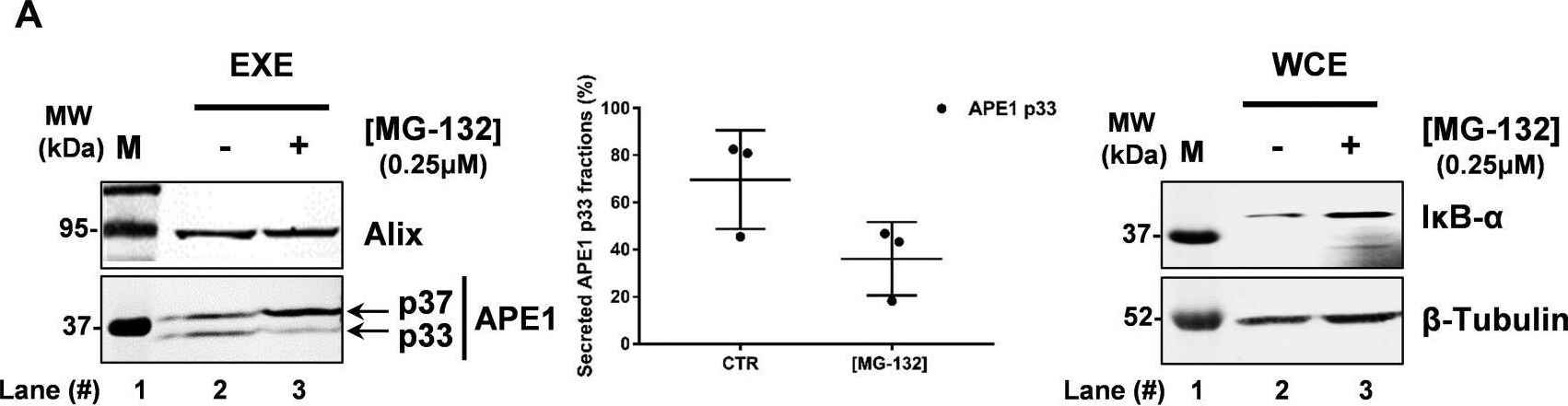
Western Blot: APE Antibody [NB100-897] -
APE1 proteolytic activity characterization in exosomes:A, western blotting analyses for APE1 p37 and p33 detection in EVs derived from JHH-6 MG-132 treated cells and the respective untreated CTR cells (left panel). Alix (apparent molecular weight 95 kDa) was used as loading control. The percentage of exosomal APE1 p37 and p33 forms in both CTR and MG-132 JHH-6 cells has been obtained by densitometry analysis, and it is indicated in the scatter plot (middle panel) and in Fig. S6. Western blotting analysis for I kappa B-alpha (apparent molecular weight 38 kDa) detection was performed in CTR and MG-132 treated JHH-6 WCE as a confirmation of proteases inhibition. The molecular mass (MW), expressed in kDa, is shown on the left side of the image. Data are expressed as mean +/- SD of three independent replicas. B, EVs possess proteases able to cleave rGST-APE1 protein. In vitro proteolytic activity exerted by EXE (0.1 μg) upon rGST-APE1WT (0.2 μg) (apparent molecular weight 65 kDa). The reactions were performed at 37 C for the indicated times and the substrates (♦) and the products (♦♦) of reactions have been detected by Western blotting using APE1 antibody (left panel). rGST (0.2 μg) (apparent molecular weight 29 kDa) indicated as (•) has been detected by western blotting using GST antibody. C, graph illustrating the comparison of EXE cleavage activity upon rGST-APE1WT and rGST-APE1K4pleA. Data are expressed as mean +/- SD of three independent technical replicas. ∗p < 0.05, ∗∗p < 0.01, ∗∗∗p < 0.001, ∗∗∗∗p < 0.0001. Image collected and cropped by CiteAb from the following open publication (https://pubmed.ncbi.nlm.nih.gov/33753167), licensed under a CC-BY license. Not internally tested by Novus Biologicals.Applications for APE Antibody
Immunohistochemistry
Immunohistochemistry-Paraffin
Peptide ELISA
Western Blot
Formulation, Preparation, and Storage
Purification
Formulation
Preservative
Concentration
Shipping
Stability & Storage
Background: APE
Long Name
Alternate Names
Entrez Gene IDs
Gene Symbol
UniProt
Additional APE Products
Product Documents for APE Antibody
Certificate of Analysis
To download a Certificate of Analysis, please enter a lot or batch number in the search box below.
Product Specific Notices for APE Antibody
This product is for research use only and is not approved for use in humans or in clinical diagnosis. Primary Antibodies are guaranteed for 1 year from date of receipt.
Related Research Areas
Citations for APE Antibody
 Powered by Bioz
Customer Reviews for APE Antibody
There are currently no reviews for this product. Be the first to review APE Antibody and earn rewards!
Have you used APE Antibody?
Submit a review and receive an Amazon gift card!
$25/€18/£15/$25CAN/¥2500 for a review with an image
$10/€7/£6/$10CAN/¥1110 for a review without an image
Submit a review
Protocols
Find general support by application which include: protocols, troubleshooting, illustrated assays, videos and webinars.
- Antigen Retrieval Protocol (PIER)
- Antigen Retrieval for Frozen Sections Protocol
- Appropriate Fixation of IHC/ICC Samples
- Cellular Response to Hypoxia Protocols
- Chromogenic IHC Staining of Formalin-Fixed Paraffin-Embedded (FFPE) Tissue Protocol
- Chromogenic Immunohistochemistry Staining of Frozen Tissue
- ClariTSA™ Fluorophore Kits
- Detection & Visualization of Antibody Binding
- ELISA Sample Preparation & Collection Guide
- ELISA Troubleshooting Guide
- Fluorescent IHC Staining of Frozen Tissue Protocol
- Graphic Protocol for Heat-induced Epitope Retrieval
- Graphic Protocol for the Preparation and Fluorescent IHC Staining of Frozen Tissue Sections
- Graphic Protocol for the Preparation and Fluorescent IHC Staining of Paraffin-embedded Tissue Sections
- Graphic Protocol for the Preparation of Gelatin-coated Slides for Histological Tissue Sections
- How to Run an R&D Systems DuoSet ELISA
- How to Run an R&D Systems Quantikine ELISA
- How to Run an R&D Systems Quantikine™ QuicKit™ ELISA
- ICC Cell Smear Protocol for Suspension Cells
- ICC Immunocytochemistry Protocol Videos
- ICC for Adherent Cells
- IHC Sample Preparation (Frozen sections vs Paraffin)
- Immunocytochemistry (ICC) Protocol
- Immunocytochemistry Troubleshooting
- Immunofluorescence of Organoids Embedded in Cultrex Basement Membrane Extract
- Immunofluorescent IHC Staining of Formalin-Fixed Paraffin-Embedded (FFPE) Tissue Protocol
- Immunohistochemistry (IHC) and Immunocytochemistry (ICC) Protocols
- Immunohistochemistry Frozen Troubleshooting
- Immunohistochemistry Paraffin Troubleshooting
- Preparing Samples for IHC/ICC Experiments
- Preventing Non-Specific Staining (Non-Specific Binding)
- Primary Antibody Selection & Optimization
- Protocol for Heat-Induced Epitope Retrieval (HIER)
- Protocol for Making a 4% Formaldehyde Solution in PBS
- Protocol for VisUCyte™ HRP Polymer Detection Reagent
- Protocol for the Fluorescent ICC Staining of Cell Smears - Graphic
- Protocol for the Fluorescent ICC Staining of Cultured Cells on Coverslips - Graphic
- Protocol for the Preparation & Fixation of Cells on Coverslips
- Protocol for the Preparation and Chromogenic IHC Staining of Frozen Tissue Sections
- Protocol for the Preparation and Chromogenic IHC Staining of Frozen Tissue Sections - Graphic
- Protocol for the Preparation and Chromogenic IHC Staining of Paraffin-embedded Tissue Sections
- Protocol for the Preparation and Chromogenic IHC Staining of Paraffin-embedded Tissue Sections - Graphic
- Protocol for the Preparation and Fluorescent ICC Staining of Cells on Coverslips
- Protocol for the Preparation and Fluorescent ICC Staining of Non-adherent Cells
- Protocol for the Preparation and Fluorescent ICC Staining of Stem Cells on Coverslips
- Protocol for the Preparation and Fluorescent IHC Staining of Frozen Tissue Sections
- Protocol for the Preparation and Fluorescent IHC Staining of Paraffin-embedded Tissue Sections
- Protocol for the Preparation of Gelatin-coated Slides for Histological Tissue Sections
- Protocol for the Preparation of a Cell Smear for Non-adherent Cell ICC - Graphic
- Quantikine HS ELISA Kit Assay Principle, Alkaline Phosphatase
- Quantikine HS ELISA Kit Principle, Streptavidin-HRP Polymer
- R&D Systems Quality Control Western Blot Protocol
- Sandwich ELISA (Colorimetric) – Biotin/Streptavidin Detection Protocol
- Sandwich ELISA (Colorimetric) – Direct Detection Protocol
- TUNEL and Active Caspase-3 Detection by IHC/ICC Protocol
- The Importance of IHC/ICC Controls
- Troubleshooting Guide: ELISA
- Troubleshooting Guide: Immunohistochemistry
- Troubleshooting Guide: Western Blot Figures
- Western Blot Conditions
- Western Blot Protocol
- Western Blot Protocol for Cell Lysates
- Western Blot Troubleshooting
- Western Blot Troubleshooting Guide
- View all Protocols, Troubleshooting, Illustrated assays and Webinars