
Autoimmune Regulator/AIRE Antibody (609930) [Biotin]
Novus Biologicals | Catalog # FAB6184B

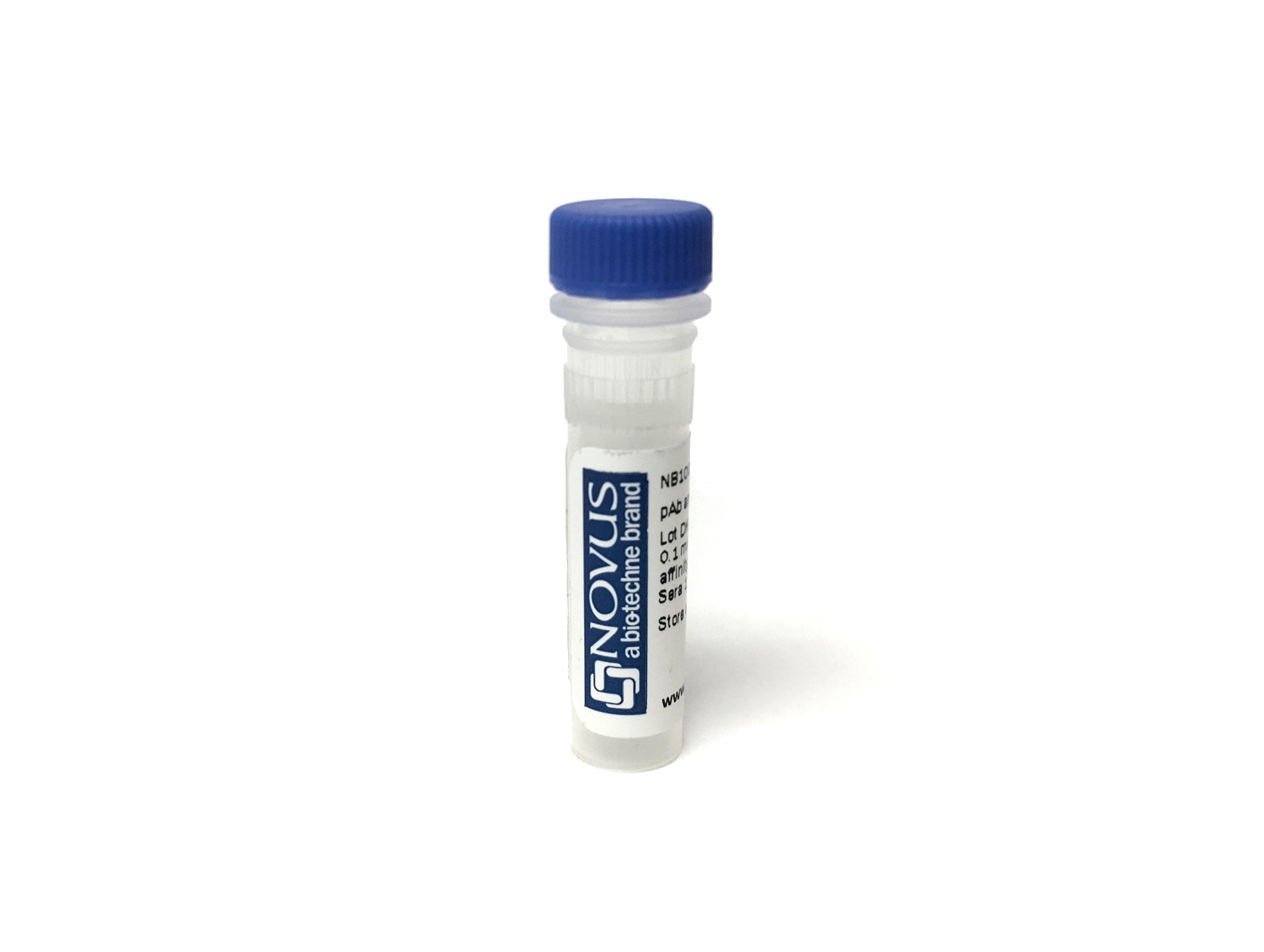
Key Product Details
Species Reactivity
Applications
Label
Antibody Source
Product Specifications
Immunogen
Ser476-Ser552 (predicted)
Accession # Q9Z0E3
Specificity
Clonality
Host
Isotype
Description
For specialized conjugation needs, like large quantities, specific concentrations, and defined F/P ratios, bulk and custom antibody conjugation services are available.
Applications for Autoimmune Regulator/AIRE Antibody (609930) [Biotin]
CyTOF-ready
Intracellular Staining by Flow Cytometry
Western Blot
Flow Cytometry Panel Builder
Bio-Techne Knows Flow Cytometry
Save time and reduce costly mistakes by quickly finding compatible reagents using the Panel Builder Tool.
Advanced Features
- Spectra Viewer - Custom analysis of spectra from multiple fluorochromes
- Spillover Popups - Visualize the spectra of individual fluorochromes
- Antigen Density Selector - Match fluorochrome brightness with antigen density

Formulation, Preparation, and Storage
Purification
Formulation
Preservative
Concentration
Shipping
Stability & Storage
Background: Autoimmune Regulator/AIRE
Alternate Names
Gene Symbol
Additional Autoimmune Regulator/AIRE Products
Product Documents for Autoimmune Regulator/AIRE Antibody (609930) [Biotin]
Certificate of Analysis
To download a Certificate of Analysis, please enter a lot or batch number in the search box below.
Product Specific Notices for Autoimmune Regulator/AIRE Antibody (609930) [Biotin]
This product is for research use only and is not approved for use in humans or in clinical diagnosis. Primary Antibodies are guaranteed for 1 year from date of receipt.
Customer Reviews for Autoimmune Regulator/AIRE Antibody (609930) [Biotin]
There are currently no reviews for this product. Be the first to review Autoimmune Regulator/AIRE Antibody (609930) [Biotin] and earn rewards!
Have you used Autoimmune Regulator/AIRE Antibody (609930) [Biotin]?
Submit a review and receive an Amazon gift card!
$25/€18/£15/$25CAN/¥2500 for a review with an image
$10/€7/£6/$10CAN/¥1110 for a review without an image
Submit a review
Protocols
Find general support by application which include: protocols, troubleshooting, illustrated assays, videos and webinars.
- 7-Amino Actinomycin D (7-AAD) Cell Viability Flow Cytometry Protocol
- Cellular Response to Hypoxia Protocols
- Extracellular Membrane Flow Cytometry Protocol
- Flow Cytometry Protocol for Cell Surface Markers
- Flow Cytometry Protocol for Staining Membrane Associated Proteins
- Flow Cytometry Staining Protocols
- Flow Cytometry Troubleshooting Guide
- Intracellular Flow Cytometry Protocol Using Alcohol (Methanol)
- Intracellular Flow Cytometry Protocol Using Detergents
- Intracellular Nuclear Staining Flow Cytometry Protocol Using Detergents
- Intracellular Staining Flow Cytometry Protocol Using Alcohol Permeabilization
- Intracellular Staining Flow Cytometry Protocol Using Detergents to Permeabilize Cells
- Propidium Iodide Cell Viability Flow Cytometry Protocol
- Protocol for Liperfluo
- Protocol for the Characterization of Human Th22 Cells
- Protocol for the Characterization of Human Th9 Cells
- Protocol: Annexin V and PI Staining by Flow Cytometry
- Protocol: Annexin V and PI Staining for Apoptosis by Flow Cytometry
- R&D Systems Quality Control Western Blot Protocol
- Troubleshooting Guide: Fluorokine Flow Cytometry Kits
- Troubleshooting Guide: Western Blot Figures
- Western Blot Conditions
- Western Blot Protocol
- Western Blot Protocol for Cell Lysates
- Western Blot Troubleshooting
- Western Blot Troubleshooting Guide
- View all Protocols, Troubleshooting, Illustrated assays and Webinars
FAQs for Autoimmune Regulator/AIRE Antibody (609930) [Biotin]
-
Q: I am looking into a positive control for Western blotting. We are trying to detect the AIRE protein and are not sure whether the antibody we have is picking up the protein. Are you able to tell me whether the human thymus whole tissue lysate (NB820-59456) has been used to detect for AIRE expression by Western blotting?
A:
I am not currently aware of any references to the use of our human thymus whole tissue lysate being used to detect AIRE by Western blotting. On looking through the Western blot images for all seven of our AIRE antibodies, I see that these have been generated using lysates from RT-4 cells (bladder), U-251 MG cells (brain), 293 cells (human embryonic kidney), human spleen lysate, liver lysate and tonsil lysate. Additionally, you may find the Human Protein Atlas link to AIRE useful. At this site you can find protein expression profiles based on immunohistochemistry for a large number of human tissues, cancers and cell lines: The Human Protein Atlas.