
EGFR Antibody - Humanized, (Research Grade imgatuzumab Biosimilar) - Low Endotoxin, Azide and BSA Free
Novus Biologicals | Catalog # NBP3-28465
Recombinant Monoclonal Antibody

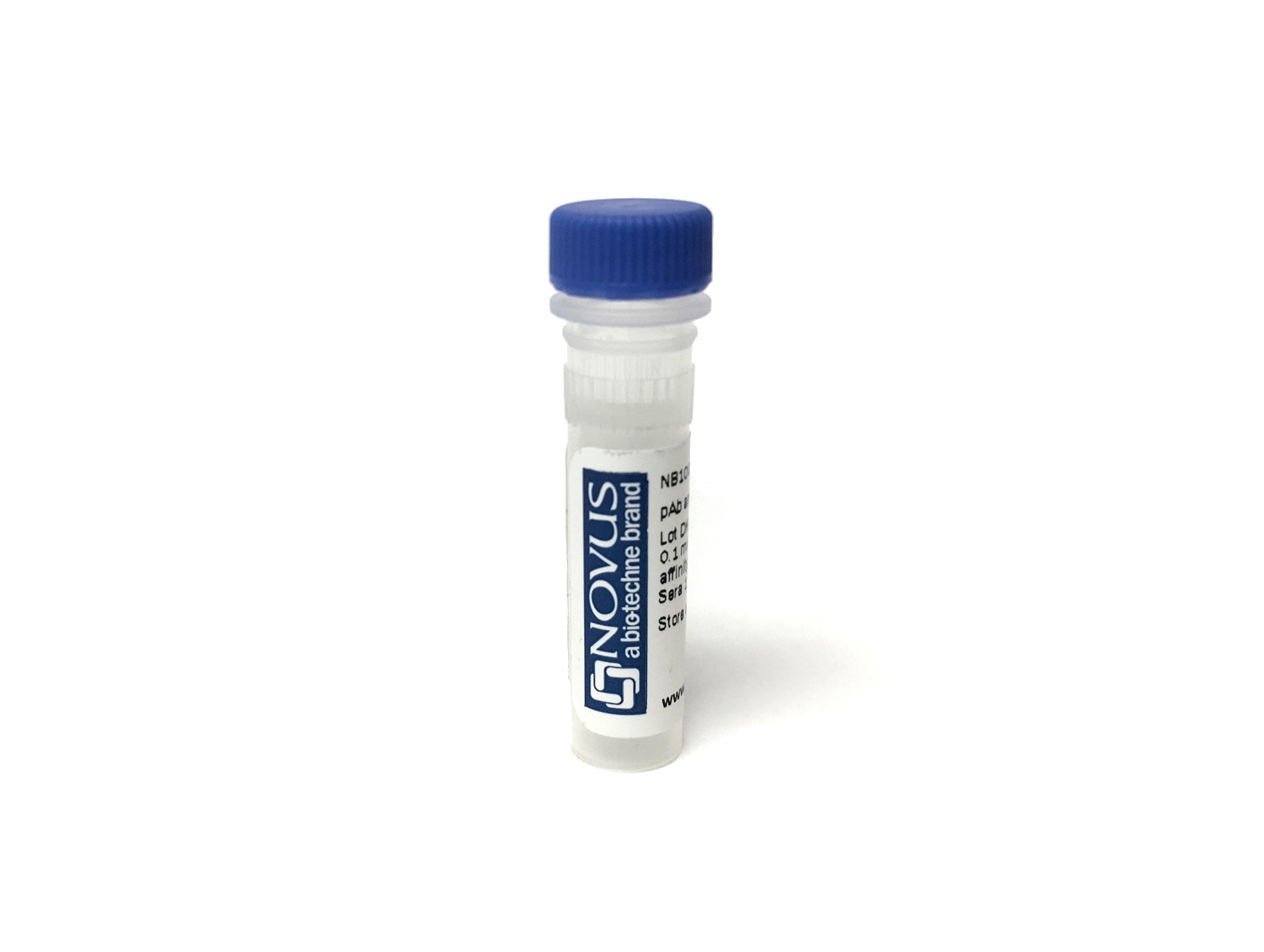
Key Product Details
Species Reactivity
Human
Applications
ELISA, Flow Cytometry, Functional
Label
Unconjugated
Antibody Source
Recombinant Monoclonal Human IgG1 expressed in CHO
Format
Low Endotoxin, Azide and BSA Free
Loading...
Product Specifications
Immunogen
ERBB1 / EGFR / HER1
Clonality
Monoclonal
Host
Human
Isotype
IgG1
Description
The heavy chain type is huIgG1, and the light chain type is hukappa. It has a predicted MW of 145.5 kDa.
Also known as 'imgatuzumab'.
This product is shipped at ambient temperature. Upon receipt, store immediately at -20C or lower for 12 months in a lyophilized state. - 80C for 3 months after reconstitution. Avoid repeated freeze-thaw cycles.
Also known as 'imgatuzumab'.
This product is shipped at ambient temperature. Upon receipt, store immediately at -20C or lower for 12 months in a lyophilized state. - 80C for 3 months after reconstitution. Avoid repeated freeze-thaw cycles.
Endotoxin Level
< 0.001EU/ug,determined by LAL method.
Applications
Application
Recommended Usage
ELISA
Optimal dilutions of this antibody should be experimentally determined.
Flow Cytometry
Optimal dilutions of this antibody should be experimentally determined.
Functional
Optimal dilutions of this antibody should be experimentally determined.
Flow Cytometry Panel Builder
Bio-Techne Knows Flow Cytometry
Save time and reduce costly mistakes by quickly finding compatible reagents using the Panel Builder Tool.
Advanced Features
- Spectra Viewer - Custom analysis of spectra from multiple fluorochromes
- Spillover Popups - Visualize the spectra of individual fluorochromes
- Antigen Density Selector - Match fluorochrome brightness with antigen density

Formulation, Preparation, and Storage
Purification
Protein A purified
Reconstitution
Reconstitute with sterile, distilled water to a final concentration of 1 mg/ml. Gently shake to solubilize completely. Do not vortex.
Formulation
Lyophilized from 25mM histidine, 8% sucrose, 0.01% Tween80 (pH6.2)
Format
Low Endotoxin, Azide and BSA Free
Preservative
No Preservative
Concentration
LYOPH mg/ml
Shipping
The product is shipped at ambient temperature. Upon receipt, store it immediately at the temperature recommended below.
Stability & Storage
Store at -20C in powder form. Store at -80C once reconstituted.
Calculators
Background: EGFR
In addition to its role in normal development, EGFR mutations or overexpression is observed in many tumors, including breast cancer, non-small cell lung carcinoma (NSCLC), colon cancer, and more (3-6). Small molecule tyrosine kinase inhibitors (TKIs), like gefitinib, erlotinib, and afatinib, have shown great efficacy in treating patients with EGFR activating mutations, especially for NSCLC (4-6). However, most patients eventually develop acquired resistance to TKIs and thus combination and alternative therapies are in development (4-6). A third-generation TKI, osimertinib, is approved for NSCLC patients with resistance to first-line EGFR TKI treatment (6). Additionally, combination therapies of EGFR TKIs with monoclonal antibody immunotherapies, like anti-PD-L1, are being further investigated in clinical trials (6).
References
1. Roskoski R Jr. Small molecule inhibitors targeting the EGFR/ErbB family of protein-tyrosine kinases in human cancers. Pharmacol Res. 2019; 139:395-411. https://doi.org/10.1016/j.phrs.2018.11.014
2. Sigismund S, Avanzato D, Lanzetti L. Emerging functions of the EGFR in cancer. Mol Oncol. 2018; 12(1):3-20. https://doi.org/10.1002/1878-0261.12155
3. Normanno N, De Luca A, Bianco C, et al. Epidermal growth factor receptor (EGFR) signaling in cancer. Gene. 2006; 366(1):2-16. https://doi.org/10.1016/j.gene.2005.10.018
4. Liu Q, Yu S, Zhao W, Qin S, Chu Q, Wu K. EGFR-TKIs resistance via EGFR-independent signaling pathways. Mol Cancer. 2018; 17(1):53. https://doi.org/10.1186/s12943-018-0793-1
5. Harrison PT, Vyse S, Huang PH. Rare epidermal growth factor receptor (EGFR) mutations in non-small cell lung cancer. Semin Cancer Biol. 2020; 61:167-179. https://doi.org/10.1016/j.semcancer.2019.09.015
6. Wu SG, Shih JY. Management of acquired resistance to EGFR TKI-targeted therapy in advanced non-small cell lung cancer. Mol Cancer. 2018; 17(1):38. https://doi.org/10.1186/s12943-018-0777-1
Long Name
Epidermal Growth Factor Receptor
Alternate Names
EGF R, ErbB, ErbB1, HER-1
Gene Symbol
EGFR
UniProt
Additional EGFR Products
Product Documents
Certificate of Analysis
To download a Certificate of Analysis, please enter a lot or batch number in the search box below.
Product Specific Notices
This product is for research use only and is not approved for use in humans or in clinical diagnosis. Primary Antibodies are guaranteed for 1 year from date of receipt.
Related Research Areas
Customer Reviews
There are currently no reviews for this product. Be the first to review EGFR Antibody - Humanized, (Research Grade imgatuzumab Biosimilar) - Low Endotoxin, Azide and BSA Free and earn rewards!
Have you used EGFR Antibody - Humanized, (Research Grade imgatuzumab Biosimilar) - Low Endotoxin, Azide and BSA Free?
Submit a review and receive an Amazon gift card!
$25/€18/£15/$25CAN/¥2500 for a review with an image
$10/€7/£6/$10CAN/¥1110 for a review without an image
Submit a review
Protocols
Find general support by application which include: protocols, troubleshooting, illustrated assays, videos and webinars.
- 7-Amino Actinomycin D (7-AAD) Cell Viability Flow Cytometry Protocol
- ELISA Sample Preparation & Collection Guide
- ELISA Troubleshooting Guide
- Extracellular Membrane Flow Cytometry Protocol
- Flow Cytometry Protocol for Cell Surface Markers
- Flow Cytometry Protocol for Staining Membrane Associated Proteins
- Flow Cytometry Staining Protocols
- Flow Cytometry Troubleshooting Guide
- How to Run an R&D Systems DuoSet ELISA
- How to Run an R&D Systems Quantikine ELISA
- How to Run an R&D Systems Quantikine™ QuicKit™ ELISA
- Intracellular Flow Cytometry Protocol Using Alcohol (Methanol)
- Intracellular Flow Cytometry Protocol Using Detergents
- Intracellular Nuclear Staining Flow Cytometry Protocol Using Detergents
- Intracellular Staining Flow Cytometry Protocol Using Alcohol Permeabilization
- Intracellular Staining Flow Cytometry Protocol Using Detergents to Permeabilize Cells
- Propidium Iodide Cell Viability Flow Cytometry Protocol
- Protocol for Liperfluo
- Protocol for the Characterization of Human Th22 Cells
- Protocol for the Characterization of Human Th9 Cells
- Protocol: Annexin V and PI Staining by Flow Cytometry
- Protocol: Annexin V and PI Staining for Apoptosis by Flow Cytometry
- Quantikine HS ELISA Kit Assay Principle, Alkaline Phosphatase
- Quantikine HS ELISA Kit Principle, Streptavidin-HRP Polymer
- Sandwich ELISA (Colorimetric) – Biotin/Streptavidin Detection Protocol
- Sandwich ELISA (Colorimetric) – Direct Detection Protocol
- Troubleshooting Guide: ELISA
- Troubleshooting Guide: Fluorokine Flow Cytometry Kits
- View all Protocols, Troubleshooting, Illustrated assays and Webinars
Loading...
Associated Pathways


