

![Western Blot: GAPDH Antibody [NB300-320]](https://resources.rndsystems.com/images/products/GAPDH-Antibody-Western-Blot-NB300-320-img0008.jpg "Western Blot: GAPDH Antibody [NB300-320]")
Scientific images may be resized, cropped, or adjusted for brightness or contrast for presentation purposes. These updates are limited to presentation and do not affect the underlying scientific interpretation of the data. Where available, additional source data may be provided upon request.
Loading...
Key Product Details
Species Reactivity
Validated:
Human, Mouse, Rat, Canine, Drosophila, Insect
Cited:
Human, Mouse, Rat, Canine, Insect, Insect - Drosophila
Predicted:
Porcine (100%). Backed by our 100% Guarantee.
Applications
Validated:
Immunohistochemistry, Immunohistochemistry-Paraffin, Western Blot, Peptide ELISA, Immunocytochemistry/ Immunofluorescence, Simple Western, Single Cell Western
Cited:
Western Blot, Immunocytochemistry/ Immunofluorescence
Label
Unconjugated
Antibody Source
Polyclonal Goat IgG
Loading...
Product Specifications
Immunogen
This GAPDG antibody was developed against the peptide sequence C-HQVVSSDFNSDT corresponding to C-Terminus according to NP_002037.2.
Reactivity Notes
Drosophilia reactivity reported in scientific literature (PMID: 28888970 and PMID: 33046910). Canine reactivity reported in scientific literature (PMID: 30030415). Use in Mouse reported in scientific literature (PMID:32771388).
Localization
Cytoplasmic
Clonality
Polyclonal
Host
Goat
Isotype
IgG
Theoretical MW
36 kDa.
Disclaimer note: The observed molecular weight of the protein may vary from the listed predicted molecular weight due to post translational modifications, post translation cleavages, relative charges, and other experimental factors.
Disclaimer note: The observed molecular weight of the protein may vary from the listed predicted molecular weight due to post translational modifications, post translation cleavages, relative charges, and other experimental factors.
Scientific Data Images for GAPDH Antibody
Western Blot: GAPDH Antibody [NB300-320]
Western Blot: GAPDH Antibody [NB300-320] - Staining of Human Liver (A) and Tonsil (B) with antibody at 0.001 ug/mL and Rat Brain lysate (C) with antibody at 0.3 ug/mL (35 ug protein in RIPA buffer). Detected by chemiluminescence. Approx. 37 kDa band observed in Rat Brain lysates and approx. 35 kDa in Human Liver and Tonsil lysates (calculated MW of 36.1 kDa according to Human NP_002037.2 and 35.8 kDa according to Rat NP_058704.1).![Immunocytochemistry/ Immunofluorescence: GAPDH Antibody [NB300-320]](https://resources.rndsystems.com/images/products/GAPDH-Antibody-Immunocytochemistry-Immunofluorescence-NB300-320-img0010.jpg "Immunocytochemistry/ Immunofluorescence: GAPDH Antibody [NB300-320]")
Immunocytochemistry/ Immunofluorescence: GAPDH Antibody [NB300-320]
Immunocytochemistry/Immunofluorescence: GAPDH Antibody [NB300-320] - Immunofluorescence analysis of paraformaldehyde fixed HeLa cells, permeabilized with 0.15% Triton. Primary incubation 1hr (10 ug/mL) followed by Alexa Fluor 488 secondary antibody (2 ug/mL), showing cytoplasmic and vesicle staining. The nuclear stain is DAPI (blue). Negative control: Unimmunized goat IgG (10 ug/mL) followed by Alexa Fluor 488 secondary antibody (2 ug/mL). Strong expression of the protein seen in the cytoplasm and vesicles of HeLa cells.![Immunohistochemistry-Paraffin: GAPDH Antibody [NB300-320]](https://resources.rndsystems.com/images/products/GAPDH-Antibody-Immunohistochemistry-Paraffin-NB300-320-img0011.jpg "Immunohistochemistry-Paraffin: GAPDH Antibody [NB300-320]")
Immunohistochemistry-Paraffin: GAPDH Antibody [NB300-320]
Immunohistochemistry-Paraffin: GAPDH Antibody [NB300-320] - Staining of paraffin embedded Human Pancreas. Antibody at 2.5 ug/mL. Steamed antigen retrieval with citrate buffer pH 6, AP-staining.![Western Blot: GAPDH Antibody [NB300-320]](https://resources.rndsystems.com/images/products/GAPDH-Antibody-Western-Blot-NB300-320-img0005.jpg "Western Blot: GAPDH Antibody [NB300-320]")
Western Blot: GAPDH Antibody [NB300-320]
GAPDH-Antibody-Western-Blot-NB300-320-img0005.jpg![Western Blot: GAPDH Antibody [NB300-320]](https://resources.rndsystems.com/images/products/GAPDH-Antibody-Western-Blot-NB300-320-img0007.jpg "Western Blot: GAPDH Antibody [NB300-320]")
Western Blot: GAPDH Antibody [NB300-320]
Western Blot: GAPDH Antibody [NB300-320] - Staining of HEK293 (A) and HeLa (B) cell lysate (35 ug protein in RIPA buffer). Antibody at 0.001 ug/mL. Detected by chemiluminescence. Approx 36 kDa band observed in lysates of cell line HEK293 and approx. 35 kDa in HeLa cell lysates.(calculated MW of 36.1 kDa according to Human NP_002037.2).![Immunocytochemistry/ Immunofluorescence: GAPDH Antibody [NB300-320]](https://resources.rndsystems.com/images/products/GAPDH-Antibody-Immunocytochemistry-Immunofluorescence-NB300-320-img0009.jpg "Immunocytochemistry/ Immunofluorescence: GAPDH Antibody [NB300-320]")
Immunocytochemistry/ Immunofluorescence: GAPDH Antibody [NB300-320]
Immunocytochemistry/Immunofluorescence: GAPDH Antibody [NB300-320] - Immunofluorescence analysis of paraformaldehyde fixed A549 cells, permeabilized with 0.15% Triton. Primary incubation 1hr (10 ug/mL) followed by Alexa Fluor 488 secondary antibody (2 ug/mL), showing cytoplasmic and vesicle staining. The nuclear stain is DAPI (blue). Negative control: Unimmunized goat IgG (10 ug/mL) followed by Alexa Fluor 488 secondary antibody (2 ug/mL). Strong expression of the protein seen in the cytoplasm and vesicles of A549 cells.![Immunohistochemistry-Paraffin: GAPDH Antibody [NB300-320]](https://resources.rndsystems.com/images/products/GAPDH-Antibody-Immunohistochemistry-Paraffin-NB300-320-img0006.jpg "Immunohistochemistry-Paraffin: GAPDH Antibody [NB300-320]")
Immunohistochemistry-Paraffin: GAPDH Antibody [NB300-320]
GAPDH-Antibody-Immunohistochemistry-Paraffin-NB300-320-img0006.jpg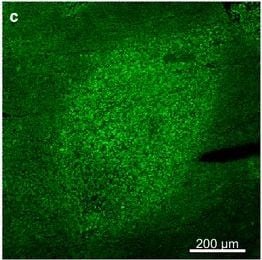
Immunocytochemistry/ Immunofluorescence: GAPDH Antibody [NB300-320] -
Upregulation of GAPDH & Tom20 in C6 gliomas. a A section of rat brain stained with hematoxilin & eosin to show a glioma produced by implantation of C6 cells in the right caudate nucleus. In this case, cells also grew in the region of the syringe needle track through the cortex. (b–d). A small glioma labeled by bisbenzamide (b) & with antibodies against Tom20 (c) & GAPDH (d). The brightness & contrast have been increased. e Illustration of a strip perpendicular to the rim of a glioma (labeled with bisbenzamide) & along which intensity profiles were measured. f, g Tom20 & GAPDH fluorescence along such a strip (barely visible without enhancement). The graphs show the raw intensity values given by ImageJ. Image collected & cropped by CiteAb from the following publication (https://pubmed.ncbi.nlm.nih.gov/26032618), licensed under a CC-BY license. Not internally tested by Novus Biologicals.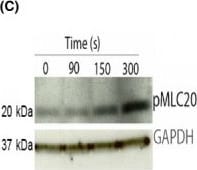
Western Blot: GAPDH Antibody [NB300-320] -
Western Blot: GAPDH Antibody [NB300-320] - PAR2 causes contraction of smooth muscle cells from human prostate. (A & B) Decrease in diameter of collagen hydrogels after PAR2 activation with SLIGKV (80 µM). (C) Representative western blot & (D) densitometry showing time dependent increase in level of phosphorylated MLC20 in PSMC after PAR2 is activated. Data represent mean ± SEM of at least three independent experiments. Diameter of collagen hydrogels were measured in ImageJ (version 1.50i) & significance analyzed in Prism (version 7.04) with one‐way ANOVA followed by Tukey's multiple comparison test. *P < 0.05, **P < 0.01 Image collected & cropped by CiteAb from the following publication (https://pubmed.ncbi.nlm.nih.gov/31198907), licensed under a CC-BY license. Not internally tested by Novus Biologicals.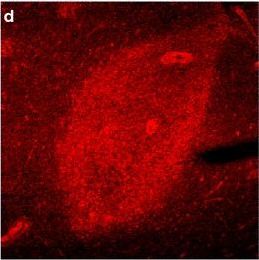
Immunocytochemistry/ Immunofluorescence: GAPDH Antibody [NB300-320] -
Immunocytochemistry/ Immunofluorescence: GAPDH Antibody [NB300-320] - Upregulation of GAPDH & Tom20 in C6 gliomas. a A section of rat brain stained with hematoxilin & eosin to show a glioma produced by implantation of C6 cells in the right caudate nucleus. In this case, cells also grew in the region of the syringe needle track through the cortex. (b–d). A small glioma labeled by bisbenzamide (b) & with antibodies against Tom20 (c) & GAPDH (d). The brightness & contrast have been increased. e Illustration of a strip perpendicular to the rim of a glioma (labeled with bisbenzamide) & along which intensity profiles were measured. f, g Tom20 & GAPDH fluorescence along such a strip (barely visible without enhancement). The graphs show the raw intensity values given by ImageJ. Image collected & cropped by CiteAb from the following publication (https://pubmed.ncbi.nlm.nih.gov/26032618), licensed under a CC-BY license. Not internally tested by Novus Biologicals.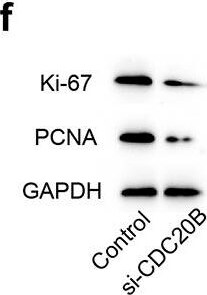
Western Blot: GAPDH Antibody [NB300-320] -
Western Blot: GAPDH Antibody [NB300-320] - CDC20B was the protein effector regulated by hsa-miR-633. (a) CDC20B level was up-regulated after ox-LDL treatment revealed by Western blotting. (b) CDC20B level was decreased after the treatment of hsa-miR-633 mimics revealed by Western blotting. (c) CDC20B level was increased after the treatment of hsa-miR-633 inhibitor revealed by Western blotting. (d) The luciferase reporter plasmids were constructed as illustrated. (e) Relative luciferase activities after co-transfection CDC20B WT & hsa-miR-633/Control, or CDC20B Mut & hsa-miR-633/Control were measured. (f) The expression levels of two proliferation markers, Ki67 & PCNA after the treatment of si-CDC20B were measured using Western blotting. (g) Colony formation assay was conducted to examine the proliferation abilityafter the treatment of si-CDC20B. (h) Transwell migration & invasion assays were conducted to examine the migration & invasion abilities of VSMCs after the treatment of si-CDC20B. (i) Quantification results of (g). (j) Quantification results of (h). *P < 0.05, **P < 0.01, ***P < 0.001. Image collected & cropped by CiteAb from the following publication (https://pubmed.ncbi.nlm.nih.gov/35212610), licensed under a CC-BY license. Not internally tested by Novus Biologicals.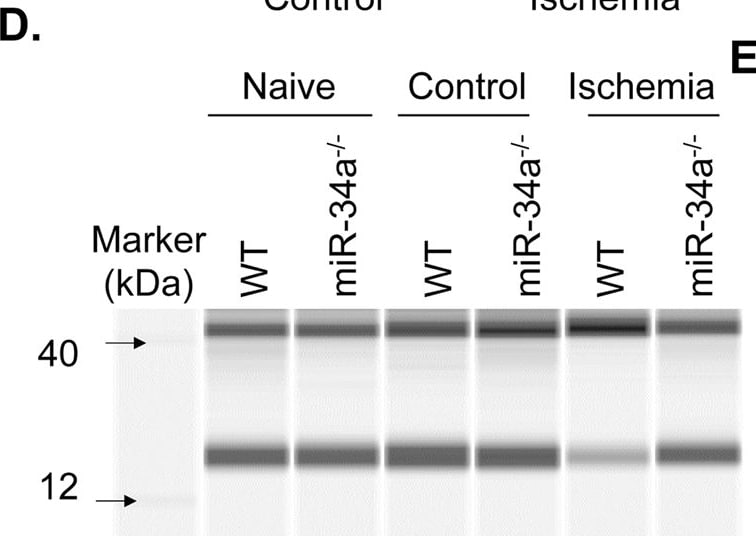
Simple Western: GAPDH Antibody [NB300-320] -
Simple Western: GAPDH Antibody [NB300-320] - MiR-34a affects stroke outcomes via interacting with cytochrome c. (A) WES system image showing CYC, VDAC & GAPDH expression from hemispheres of WT & miR-34a−/− mice at 6 h post-stroke. (B) Relative CYC expression normalized to GAPDH from the data generated by the WES system. CYC level is significantly decreased in ischemic hemispheres of WT mice but no significant changes in miR-34a−/− mice between contralateral hemispheres (Control) & ischemic hemispheres (Ischemia). N = 5 per group, **p < 0.01, One-way ANOVA followed by post hoc Tuckey’s test was used for data analysis. Data are expressed as mean ± S.D. (C) Relative VDAC expression normalized to GAPDH from the data generated by the WES system. VDAC was not significantly altered in WT mice nor miR-34a−/− mice. (D) Multiplexed WES system image showing CYC & GAPDH expression from purified pCECs of WT & miR-34a−/− mice (n = 10 per group, pooled cell samples) at 6 h post-stroke. (E) Relative CYC expression by normalization to GAPDH. A 2.8 fold decrease of CYC level was observed in WT mice but no changes were observed in miR-34a−/− mice between contralateral hemispheres & ischemic hemispheres. (F) A CYC reporter was coexpressed with a miR-34a plasmid, a miR-34a mimic, a miR-34c mimic, or a plasmid control in cultured cerebral vascular endothelial cells for 24 hours. Relative firefly luciferase activity was evaluated & normalized to renilla luciferase activity. Relative firefly luciferase activity was reduced by miR-34a plasmid & miR-34a mimic. The experiment was repeated 3 times & triplicates were used for each analysis. Data represents the mean ± S.D. *p < 0.05. One-way ANOVA followed by post-hoc Tuckey’s test was used for analysis. Image collected & cropped by CiteAb from the following publication (https://pubmed.ncbi.nlm.nih.gov/32094435), licensed under a CC-BY license. Not internally tested by Novus Biologicals.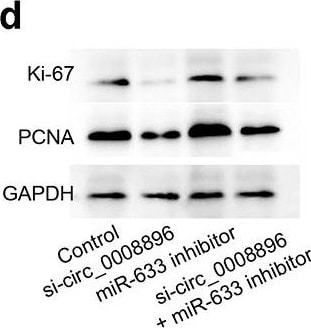
Western Blot: GAPDH Antibody [NB300-320] -
Western Blot: GAPDH Antibody [NB300-320] - Hsa-miR-633 inhibitor could reverse the si-circ_0008896 phenotypes. (a) CCK8 assay was conducted to measure cell viability after up-regulation of hsa-miR-633. (b) The expression levels of two proliferation markers, Ki67 & PCNA after up-regulation of hsa-miR-633 were measured using Western blotting. (c) CCK8 assay was conducted to measure cell viability after the treatment of si-circ0008896, hsa-miR-633 inhibitor & si-circ0008896+ hsa-miR-633 inhibitor. (d) The expression levels of two proliferation markers, Ki67 & PCNA after the treatment of si-circ0008896, hsa-miR-633 inhibitor & si-circ0008896+ hsa-miR-633 inhibitor were measured using Western blotting. (e) Colony formation assay was conducted to examine proliferation ability number of colonies after the treatment of si-circ0008896, hsa-miR-633 inhibitor & si-circ0008896+ hsa-miR-633 inhibitor. (f) Quantification results of (e). (g) Transwell migration & invasion assays were conducted to examine the migration & invasion abilities of VSMCs after the treatment of si-circ0008896, hsa-miR-633 inhibitor & si-circ0008896+ hsa-miR-633 inhibitor. (h) Quantification results of (g). *P < 0.05, **P < 0.01, ***P < 0.001. Image collected & cropped by CiteAb from the following publication (https://pubmed.ncbi.nlm.nih.gov/35212610), licensed under a CC-BY license. Not internally tested by Novus Biologicals.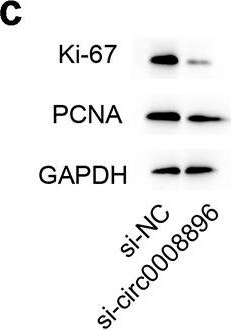
Western Blot: GAPDH Antibody [NB300-320] -
Western Blot: GAPDH Antibody [NB300-320] - Down-regulation of hsa_circ_0008896 inhibited proliferation, migration & invasion in vitro. (a) The expression level of hsa_circ_0008896 after si-circ_0008896 transfection was detected using quantitative PCR. (b) CCK8 assay was conducted to measure cell viability after down-regulation of hsa_circ_0008896. (c) The expression levels of two proliferation markers, Ki67 & PCNA after down-regulation of hsa_circ_0008896 were detected using Western blotting. (d) Colony formation assay was conducted to examine proliferation ability after down-regulation of hsa_circ_0008896. (e) The quantification results of (d). (f) Transwell migration & invasion assays were conducted to examine the migration & invasion abilities of VSMCs after down-regulation of hsa_circ_0008896. (g) The quantification results of (f). *P < 0.05, **P < 0.01, ***P < 0.001. Image collected & cropped by CiteAb from the following publication (https://pubmed.ncbi.nlm.nih.gov/35212610), licensed under a CC-BY license. Not internally tested by Novus Biologicals.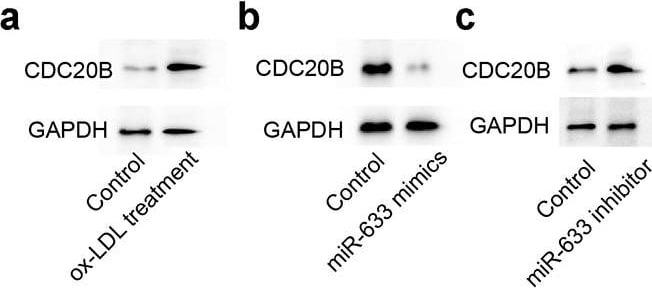
Western Blot: GAPDH Antibody [NB300-320] -
Western Blot: GAPDH Antibody [NB300-320] - CDC20B was the protein effector regulated by hsa-miR-633. (a) CDC20B level was up-regulated after ox-LDL treatment revealed by Western blotting. (b) CDC20B level was decreased after the treatment of hsa-miR-633 mimics revealed by Western blotting. (c) CDC20B level was increased after the treatment of hsa-miR-633 inhibitor revealed by Western blotting. (d) The luciferase reporter plasmids were constructed as illustrated. (e) Relative luciferase activities after co-transfection CDC20B WT & hsa-miR-633/Control, or CDC20B Mut & hsa-miR-633/Control were measured. (f) The expression levels of two proliferation markers, Ki67 & PCNA after the treatment of si-CDC20B were measured using Western blotting. (g) Colony formation assay was conducted to examine the proliferation abilityafter the treatment of si-CDC20B. (h) Transwell migration & invasion assays were conducted to examine the migration & invasion abilities of VSMCs after the treatment of si-CDC20B. (i) Quantification results of (g). (j) Quantification results of (h). *P < 0.05, **P < 0.01, ***P < 0.001. Image collected & cropped by CiteAb from the following publication (https://pubmed.ncbi.nlm.nih.gov/35212610), licensed under a CC-BY license. Not internally tested by Novus Biologicals.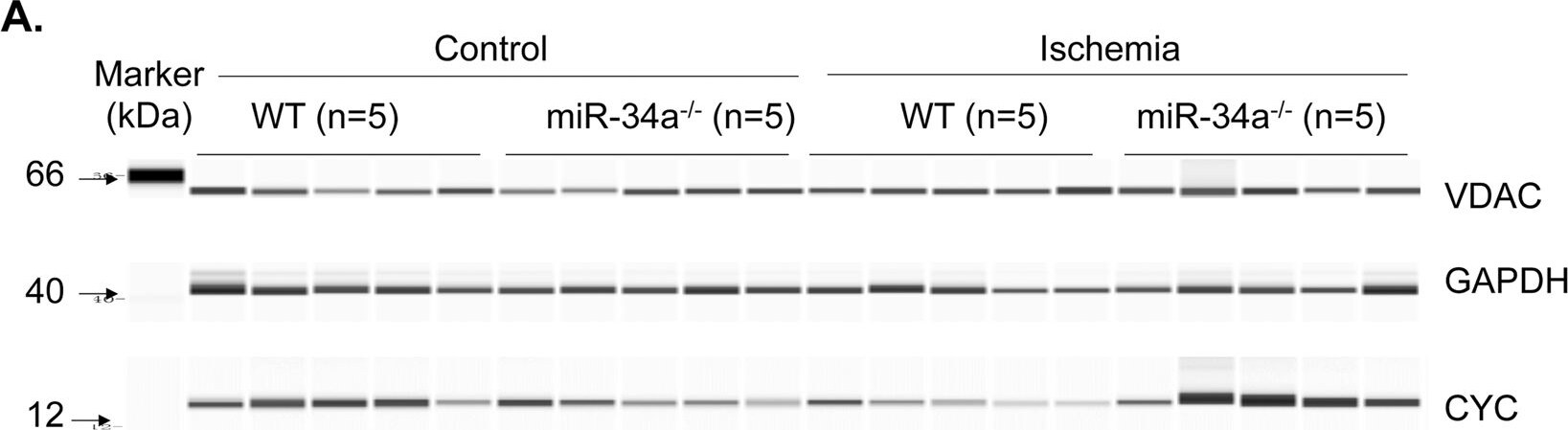
Simple Western: GAPDH Antibody [NB300-320] -
Simple Western: GAPDH Antibody [NB300-320] - MiR-34a affects stroke outcomes via interacting with cytochrome c. (A) WES system image showing CYC, VDAC & GAPDH expression from hemispheres of WT & miR-34a−/− mice at 6 h post-stroke. (B) Relative CYC expression normalized to GAPDH from the data generated by the WES system. CYC level is significantly decreased in ischemic hemispheres of WT mice but no significant changes in miR-34a−/− mice between contralateral hemispheres (Control) & ischemic hemispheres (Ischemia). N = 5 per group, **p < 0.01, One-way ANOVA followed by post hoc Tuckey’s test was used for data analysis. Data are expressed as mean ± S.D. (C) Relative VDAC expression normalized to GAPDH from the data generated by the WES system. VDAC was not significantly altered in WT mice nor miR-34a−/− mice. (D) Multiplexed WES system image showing CYC & GAPDH expression from purified pCECs of WT & miR-34a−/− mice (n = 10 per group, pooled cell samples) at 6 h post-stroke. (E) Relative CYC expression by normalization to GAPDH. A 2.8 fold decrease of CYC level was observed in WT mice but no changes were observed in miR-34a−/− mice between contralateral hemispheres & ischemic hemispheres. (F) A CYC reporter was coexpressed with a miR-34a plasmid, a miR-34a mimic, a miR-34c mimic, or a plasmid control in cultured cerebral vascular endothelial cells for 24 hours. Relative firefly luciferase activity was evaluated & normalized to renilla luciferase activity. Relative firefly luciferase activity was reduced by miR-34a plasmid & miR-34a mimic. The experiment was repeated 3 times & triplicates were used for each analysis. Data represents the mean ± S.D. *p < 0.05. One-way ANOVA followed by post-hoc Tuckey’s test was used for analysis. Image collected & cropped by CiteAb from the following publication (https://pubmed.ncbi.nlm.nih.gov/32094435), licensed under a CC-BY license. Not internally tested by Novus Biologicals.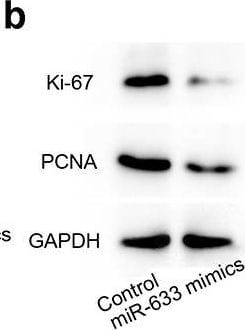
Western Blot: GAPDH Antibody [NB300-320] -
Western Blot: GAPDH Antibody [NB300-320] - Hsa-miR-633 inhibitor could reverse the si-circ_0008896 phenotypes. (a) CCK8 assay was conducted to measure cell viability after up-regulation of hsa-miR-633. (b) The expression levels of two proliferation markers, Ki67 & PCNA after up-regulation of hsa-miR-633 were measured using Western blotting. (c) CCK8 assay was conducted to measure cell viability after the treatment of si-circ0008896, hsa-miR-633 inhibitor & si-circ0008896+ hsa-miR-633 inhibitor. (d) The expression levels of two proliferation markers, Ki67 & PCNA after the treatment of si-circ0008896, hsa-miR-633 inhibitor & si-circ0008896+ hsa-miR-633 inhibitor were measured using Western blotting. (e) Colony formation assay was conducted to examine proliferation ability number of colonies after the treatment of si-circ0008896, hsa-miR-633 inhibitor & si-circ0008896+ hsa-miR-633 inhibitor. (f) Quantification results of (e). (g) Transwell migration & invasion assays were conducted to examine the migration & invasion abilities of VSMCs after the treatment of si-circ0008896, hsa-miR-633 inhibitor & si-circ0008896+ hsa-miR-633 inhibitor. (h) Quantification results of (g). *P < 0.05, **P < 0.01, ***P < 0.001. Image collected & cropped by CiteAb from the following publication (https://pubmed.ncbi.nlm.nih.gov/35212610), licensed under a CC-BY license. Not internally tested by Novus Biologicals.Applications for GAPDH Antibody
Application
Recommended Usage
Immunocytochemistry/ Immunofluorescence
10 ug/mL
Immunohistochemistry-Paraffin
2.5 ug/mL
Peptide ELISA
Detection limit 1:128000
Single Cell Western
100 ug/ml
Western Blot
0.001 - 0.003 ug/mL
Application Notes
Single Cell Western reported by an internal validation on HeLa-GFP cells at a concentration of 100 ug/ml See Simple Western Antibody Database for Simple Western validation: separated by Size
Reviewed Applications
Read 2 reviews rated 4.5 using NB300-320 in the following applications:
Formulation, Preparation, and Storage
Purification
Immunogen affinity purified
Formulation
Tris saline (20 mM Tris pH 7.3, 150 mM NaCl), 0.5% BSA
Preservative
0.02% Sodium Azide
Concentration
0.5 mg/ml
Shipping
The product is shipped with polar packs. Upon receipt, store it immediately at the temperature recommended below.
Stability & Storage
Store at -20C. Avoid freeze-thaw cycles.
Background: GAPDH
References
1) Barber RD, Harmer DW, Coleman RA, Clark BJ. (2005) GAPDH as a housekeeping gene: analysis of GAPDH mRNA expression in a panel of 72 human tissues. Physiol Genomics. 21(3):389-95. PMID: 15769908
2) Jia Y, Takimoto K. (2006) Mitogen-activated protein kinases control cardiac KChIP2 gene expression. Circ Res. 98(3):386-93. PMID: 16385079
3) Godsel LM, Hsieh SN, Amargo EV, Bass AE, Pascoe-McGillicuddy LT, Huen AC, Thorne ME, Gaudry CA, Park JK, Myung K, Goldman RD, Chew TL, Green KJ. (2005) Desmoplakin assembly dynamics in four dimensions: multiple phases differentially regulated by intermediate filaments and actin. J Cell Biol. 171(6):1045-59. PMID: 16365169
4) Sirover MA1. (1999) New insights into an old protein: the functional diversity of mammalian glyceraldehyde-3-phosphate dehydrogenase. Biochim Biophys Acta. 1432(2): 159-84. PMID: 10407139
5) Tristan C, Shahani N, Sedlak TW, Sawa A. (2011) The diverse functions of GAPDH: views from different subcellular compartments. Cell Signal. 23(2):317-23. PMID: 20727968
Long Name
Glyceraldehyde-3-phosphate Dehydrogenase
Alternate Names
G3PDH
Gene Symbol
GAPDH
UniProt
Additional GAPDH Products
Product Documents for GAPDH Antibody
Certificate of Analysis
To download a Certificate of Analysis, please enter a lot or batch number in the search box below.
Product Specific Notices for GAPDH Antibody
This product is for research use only and is not approved for use in humans or in clinical diagnosis. Primary Antibodies are guaranteed for 1 year from date of receipt.
Related Research Areas
Citations for GAPDH Antibody
 Powered by Bioz
Customer Reviews for GAPDH Antibody (2)
4.5 out of 5
2 Customer Ratings
Have you used GAPDH Antibody?
Submit a review and receive an Amazon gift card!
$25/€18/£15/$25CAN/¥2500 for a review with an image
$10/€7/£6/$10CAN/¥1110 for a review without an image
Submit a review
Customer Images
-(01-mg)_NB300-320_9436.jpg)
-(01-mg)_NB300-320_9416.png)
Showing
1
-
2 of
2 reviews
Showing All
Filter By:
-
Application: Western BlotSample Tested: 293T cellsSpecies: HumanVerified Customer | Posted 08/19/2014WB for GAPDH in 293T cells

-
Application: Western BlotSample Tested: Mouse Triceps and Rectus AbdominisSpecies: MouseVerified Customer | Posted 08/18/2014Mouse Triceps (left) and Rectus Abdominis (right) Homogenate. 20ug total protein loaded.
There are no reviews that match your criteria.
Protocols
Find general support by application which include: protocols, troubleshooting, illustrated assays, videos and webinars.
- Antigen Retrieval Protocol (PIER)
- Antigen Retrieval for Frozen Sections Protocol
- Appropriate Fixation of IHC/ICC Samples
- Cellular Response to Hypoxia Protocols
- Chromogenic IHC Staining of Formalin-Fixed Paraffin-Embedded (FFPE) Tissue Protocol
- Chromogenic Immunohistochemistry Staining of Frozen Tissue
- ClariTSA™ Fluorophore Kits
- Detection & Visualization of Antibody Binding
- ELISA Sample Preparation & Collection Guide
- ELISA Troubleshooting Guide
- Fluorescent IHC Staining of Frozen Tissue Protocol
- Graphic Protocol for Heat-induced Epitope Retrieval
- Graphic Protocol for the Preparation and Fluorescent IHC Staining of Frozen Tissue Sections
- Graphic Protocol for the Preparation and Fluorescent IHC Staining of Paraffin-embedded Tissue Sections
- Graphic Protocol for the Preparation of Gelatin-coated Slides for Histological Tissue Sections
- How to Run an R&D Systems DuoSet ELISA
- How to Run an R&D Systems Quantikine ELISA
- How to Run an R&D Systems Quantikine™ QuicKit™ ELISA
- ICC Cell Smear Protocol for Suspension Cells
- ICC Immunocytochemistry Protocol Videos
- ICC for Adherent Cells
- IHC Sample Preparation (Frozen sections vs Paraffin)
- Immunocytochemistry (ICC) Protocol
- Immunocytochemistry Troubleshooting
- Immunofluorescence of Organoids Embedded in Cultrex Basement Membrane Extract
- Immunofluorescent IHC Staining of Formalin-Fixed Paraffin-Embedded (FFPE) Tissue Protocol
- Immunohistochemistry (IHC) and Immunocytochemistry (ICC) Protocols
- Immunohistochemistry Frozen Troubleshooting
- Immunohistochemistry Paraffin Troubleshooting
- Preparing Samples for IHC/ICC Experiments
- Preventing Non-Specific Staining (Non-Specific Binding)
- Primary Antibody Selection & Optimization
- Protocol for Heat-Induced Epitope Retrieval (HIER)
- Protocol for Making a 4% Formaldehyde Solution in PBS
- Protocol for VisUCyte™ HRP Polymer Detection Reagent
- Protocol for the Fluorescent ICC Staining of Cell Smears - Graphic
- Protocol for the Fluorescent ICC Staining of Cultured Cells on Coverslips - Graphic
- Protocol for the Preparation & Fixation of Cells on Coverslips
- Protocol for the Preparation and Chromogenic IHC Staining of Frozen Tissue Sections
- Protocol for the Preparation and Chromogenic IHC Staining of Frozen Tissue Sections - Graphic
- Protocol for the Preparation and Chromogenic IHC Staining of Paraffin-embedded Tissue Sections
- Protocol for the Preparation and Chromogenic IHC Staining of Paraffin-embedded Tissue Sections - Graphic
- Protocol for the Preparation and Fluorescent ICC Staining of Cells on Coverslips
- Protocol for the Preparation and Fluorescent ICC Staining of Non-adherent Cells
- Protocol for the Preparation and Fluorescent ICC Staining of Stem Cells on Coverslips
- Protocol for the Preparation and Fluorescent IHC Staining of Frozen Tissue Sections
- Protocol for the Preparation and Fluorescent IHC Staining of Paraffin-embedded Tissue Sections
- Protocol for the Preparation of Gelatin-coated Slides for Histological Tissue Sections
- Protocol for the Preparation of a Cell Smear for Non-adherent Cell ICC - Graphic
- Quantikine HS ELISA Kit Assay Principle, Alkaline Phosphatase
- Quantikine HS ELISA Kit Principle, Streptavidin-HRP Polymer
- R&D Systems Quality Control Western Blot Protocol
- Sandwich ELISA (Colorimetric) – Biotin/Streptavidin Detection Protocol
- Sandwich ELISA (Colorimetric) – Direct Detection Protocol
- TUNEL and Active Caspase-3 Detection by IHC/ICC Protocol
- The Importance of IHC/ICC Controls
- Troubleshooting Guide: ELISA
- Troubleshooting Guide: Immunohistochemistry
- Troubleshooting Guide: Western Blot Figures
- Western Blot Conditions
- Western Blot Protocol
- Western Blot Protocol for Cell Lysates
- Western Blot Troubleshooting
- Western Blot Troubleshooting Guide
- View all Protocols, Troubleshooting, Illustrated assays and Webinars
FAQs for GAPDH Antibody
Showing
1
-
5 of
8 FAQs
Showing All
-
Q: Do you offer a smaller size for the GAPDH antibodies?
A: We offer sample sizes for many of our GAPDH loading control antibodies including NB300-221.
-
Q: I need a suitable loading control antibody that I can use in western blot of rat nerve extracts, which do you recommend?
A: This GAPDH antibody (NB300-221) is a good choice for a loading control antibody and has been cited in over 180 publications and used on rat lysates with good results.
-
Q: I want to know why GAPDH is used as a loading control antibody in WB techniques.
A: Our GAPDH antibody makes a good loading control because GAPDH is a housekeeping gene essential to metabolism that is globally expressed in most tissue types and cell lines.
-
Q: I wanted to know which of the two housekeeping genes B-actin or GAPDH can be used for best results. I intend to do an experiment to determine expression of IL-6 and TNF-alpha in liver and kidney tissues.
A: For homogenized tissue, beta-actin and GAPDH are both fine.
-
Q: I'm looking for a loading control between 24kDa - 65kDa for use in simple western, we tried an actin antibody we already had but it didn't work. What can you recommend?
A: Our GAPDH antibody NB300-221 has been validated in simple western and detects around 35 kDa so I think it would be a good choice for a simple western loading control antibody based on your size requirements.
-
Q: We need a loading control antibody for WB working with HeLa cell line, will this GAPDH antibody work for that?
A: GAPDH is expressed in HeLa cell lines but whether or not it is the best option for a loading control antibody depends on the size of the protein you are interested in. GAPDH antibody is a good choice for low to mid MW targets, as GAPDH detects around 35 kDa.
-
Q: We received GAPDH antibody NB600-502 and there was only about 15µl of antibody in the tube. I was under the impression this should have been 100µl.
A: The unit size of this product is 0.1 mg with a concentration of 6.7 mg/ml. Hence the volume should be no less than 14.9 ul.
-
Q: What secondary antibody should I use for visualization of the GAPDH antibody?
A: This GAPDH antibody is raised in mouse so you would want to use an anti-mouse secondary with the dye of your choice.
-
Q: Do you offer a smaller size for the GAPDH antibodies?
A: We offer sample sizes for many of our GAPDH loading control antibodies including NB300-221.
-
Q: I need a suitable loading control antibody that I can use in western blot of rat nerve extracts, which do you recommend?
A: This GAPDH antibody (NB300-221) is a good choice for a loading control antibody and has been cited in over 180 publications and used on rat lysates with good results.
-
Q: I want to know why GAPDH is used as a loading control antibody in WB techniques.
A: Our GAPDH antibody makes a good loading control because GAPDH is a housekeeping gene essential to metabolism that is globally expressed in most tissue types and cell lines.
-
Q: I wanted to know which of the two housekeeping genes B-actin or GAPDH can be used for best results. I intend to do an experiment to determine expression of IL-6 and TNF-alpha in liver and kidney tissues.
A: For homogenized tissue, beta-actin and GAPDH are both fine.
-
Q: I'm looking for a loading control between 24kDa - 65kDa for use in simple western, we tried an actin antibody we already had but it didn't work. What can you recommend?
A: Our GAPDH antibody NB300-221 has been validated in simple western and detects around 35 kDa so I think it would be a good choice for a simple western loading control antibody based on your size requirements.
-
Q: We need a loading control antibody for WB working with HeLa cell line, will this GAPDH antibody work for that?
A: GAPDH is expressed in HeLa cell lines but whether or not it is the best option for a loading control antibody depends on the size of the protein you are interested in. GAPDH antibody is a good choice for low to mid MW targets, as GAPDH detects around 35 kDa.
-
Q: We received GAPDH antibody NB600-502 and there was only about 15µl of antibody in the tube. I was under the impression this should have been 100µl.
A: The unit size of this product is 0.1 mg with a concentration of 6.7 mg/ml. Hence the volume should be no less than 14.9 ul.
-
Q: What secondary antibody should I use for visualization of the GAPDH antibody?
A: This GAPDH antibody is raised in mouse so you would want to use an anti-mouse secondary with the dye of your choice.
-
Q: Do you offer a smaller size for the GAPDH antibodies?
A: We offer sample sizes for many of our GAPDH loading control antibodies including NB300-221.
-
Q: I need a suitable loading control antibody that I can use in western blot of rat nerve extracts, which do you recommend?
A: This GAPDH antibody (NB300-221) is a good choice for a loading control antibody and has been cited in over 180 publications and used on rat lysates with good results.
-
Q: I want to know why GAPDH is used as a loading control antibody in WB techniques.
A: Our GAPDH antibody makes a good loading control because GAPDH is a housekeeping gene essential to metabolism that is globally expressed in most tissue types and cell lines.
-
Q: I wanted to know which of the two housekeeping genes B-actin or GAPDH can be used for best results. I intend to do an experiment to determine expression of IL-6 and TNF-alpha in liver and kidney tissues.
A: For homogenized tissue, beta-actin and GAPDH are both fine.
-
Q: I'm looking for a loading control between 24kDa - 65kDa for use in simple western, we tried an actin antibody we already had but it didn't work. What can you recommend?
A: Our GAPDH antibody NB300-221 has been validated in simple western and detects around 35 kDa so I think it would be a good choice for a simple western loading control antibody based on your size requirements.
-
Q: We need a loading control antibody for WB working with HeLa cell line, will this GAPDH antibody work for that?
A: GAPDH is expressed in HeLa cell lines but whether or not it is the best option for a loading control antibody depends on the size of the protein you are interested in. GAPDH antibody is a good choice for low to mid MW targets, as GAPDH detects around 35 kDa.
-
Q: We received GAPDH antibody NB600-502 and there was only about 15µl of antibody in the tube. I was under the impression this should have been 100µl.
A: The unit size of this product is 0.1 mg with a concentration of 6.7 mg/ml. Hence the volume should be no less than 14.9 ul.
-
Q: What secondary antibody should I use for visualization of the GAPDH antibody?
A: This GAPDH antibody is raised in mouse so you would want to use an anti-mouse secondary with the dye of your choice.
-
Q: Do you offer a smaller size for the GAPDH antibodies?
A: We offer sample sizes for many of our GAPDH loading control antibodies including NB300-221.
-
Q: I need a suitable loading control antibody that I can use in western blot of rat nerve extracts, which do you recommend?
A: This GAPDH antibody (NB300-221) is a good choice for a loading control antibody and has been cited in over 180 publications and used on rat lysates with good results.
-
Q: I want to know why GAPDH is used as a loading control antibody in WB techniques.
A: Our GAPDH antibody makes a good loading control because GAPDH is a housekeeping gene essential to metabolism that is globally expressed in most tissue types and cell lines.
-
Q: I wanted to know which of the two housekeeping genes B-actin or GAPDH can be used for best results. I intend to do an experiment to determine expression of IL-6 and TNF-alpha in liver and kidney tissues.
A: For homogenized tissue, beta-actin and GAPDH are both fine.
-
Q: I'm looking for a loading control between 24kDa - 65kDa for use in simple western, we tried an actin antibody we already had but it didn't work. What can you recommend?
A: Our GAPDH antibody NB300-221 has been validated in simple western and detects around 35 kDa so I think it would be a good choice for a simple western loading control antibody based on your size requirements.
-
Q: We need a loading control antibody for WB working with HeLa cell line, will this GAPDH antibody work for that?
A: GAPDH is expressed in HeLa cell lines but whether or not it is the best option for a loading control antibody depends on the size of the protein you are interested in. GAPDH antibody is a good choice for low to mid MW targets, as GAPDH detects around 35 kDa.
-
Q: We received GAPDH antibody NB600-502 and there was only about 15µl of antibody in the tube. I was under the impression this should have been 100µl.
A: The unit size of this product is 0.1 mg with a concentration of 6.7 mg/ml. Hence the volume should be no less than 14.9 ul.
-
Q: What secondary antibody should I use for visualization of the GAPDH antibody?
A: This GAPDH antibody is raised in mouse so you would want to use an anti-mouse secondary with the dye of your choice.
-
Q: Do you offer a smaller size for the GAPDH antibodies?
A: We offer sample sizes for many of our GAPDH loading control antibodies including NB300-221.
-
Q: I need a suitable loading control antibody that I can use in western blot of rat nerve extracts, which do you recommend?
A: This GAPDH antibody (NB300-221) is a good choice for a loading control antibody and has been cited in over 180 publications and used on rat lysates with good results.
-
Q: I want to know why GAPDH is used as a loading control antibody in WB techniques.
A: Our GAPDH antibody makes a good loading control because GAPDH is a housekeeping gene essential to metabolism that is globally expressed in most tissue types and cell lines.
-
Q: I wanted to know which of the two housekeeping genes B-actin or GAPDH can be used for best results. I intend to do an experiment to determine expression of IL-6 and TNF-alpha in liver and kidney tissues.
A: For homogenized tissue, beta-actin and GAPDH are both fine.
-
Q: I'm looking for a loading control between 24kDa - 65kDa for use in simple western, we tried an actin antibody we already had but it didn't work. What can you recommend?
A: Our GAPDH antibody NB300-221 has been validated in simple western and detects around 35 kDa so I think it would be a good choice for a simple western loading control antibody based on your size requirements.
-
Q: We need a loading control antibody for WB working with HeLa cell line, will this GAPDH antibody work for that?
A: GAPDH is expressed in HeLa cell lines but whether or not it is the best option for a loading control antibody depends on the size of the protein you are interested in. GAPDH antibody is a good choice for low to mid MW targets, as GAPDH detects around 35 kDa.
-
Q: We received GAPDH antibody NB600-502 and there was only about 15µl of antibody in the tube. I was under the impression this should have been 100µl.
A: The unit size of this product is 0.1 mg with a concentration of 6.7 mg/ml. Hence the volume should be no less than 14.9 ul.
-
Q: What secondary antibody should I use for visualization of the GAPDH antibody?
A: This GAPDH antibody is raised in mouse so you would want to use an anti-mouse secondary with the dye of your choice.
-
Q: Do you offer a smaller size for the GAPDH antibodies?
A: We offer sample sizes for many of our GAPDH loading control antibodies including NB300-221.
-
Q: I need a suitable loading control antibody that I can use in western blot of rat nerve extracts, which do you recommend?
A: This GAPDH antibody (NB300-221) is a good choice for a loading control antibody and has been cited in over 180 publications and used on rat lysates with good results.
-
Q: I want to know why GAPDH is used as a loading control antibody in WB techniques.
A: Our GAPDH antibody makes a good loading control because GAPDH is a housekeeping gene essential to metabolism that is globally expressed in most tissue types and cell lines.
-
Q: I wanted to know which of the two housekeeping genes B-actin or GAPDH can be used for best results. I intend to do an experiment to determine expression of IL-6 and TNF-alpha in liver and kidney tissues.
A: For homogenized tissue, beta-actin and GAPDH are both fine.
-
Q: I'm looking for a loading control between 24kDa - 65kDa for use in simple western, we tried an actin antibody we already had but it didn't work. What can you recommend?
A: Our GAPDH antibody NB300-221 has been validated in simple western and detects around 35 kDa so I think it would be a good choice for a simple western loading control antibody based on your size requirements.
-
Q: We need a loading control antibody for WB working with HeLa cell line, will this GAPDH antibody work for that?
A: GAPDH is expressed in HeLa cell lines but whether or not it is the best option for a loading control antibody depends on the size of the protein you are interested in. GAPDH antibody is a good choice for low to mid MW targets, as GAPDH detects around 35 kDa.
-
Q: We received GAPDH antibody NB600-502 and there was only about 15µl of antibody in the tube. I was under the impression this should have been 100µl.
A: The unit size of this product is 0.1 mg with a concentration of 6.7 mg/ml. Hence the volume should be no less than 14.9 ul.
-
Q: What secondary antibody should I use for visualization of the GAPDH antibody?
A: This GAPDH antibody is raised in mouse so you would want to use an anti-mouse secondary with the dye of your choice.
-
Q: Do you offer a smaller size for the GAPDH antibodies?
A: We offer sample sizes for many of our GAPDH loading control antibodies including NB300-221.
-
Q: I need a suitable loading control antibody that I can use in western blot of rat nerve extracts, which do you recommend?
A: This GAPDH antibody (NB300-221) is a good choice for a loading control antibody and has been cited in over 180 publications and used on rat lysates with good results.
-
Q: I want to know why GAPDH is used as a loading control antibody in WB techniques.
A: Our GAPDH antibody makes a good loading control because GAPDH is a housekeeping gene essential to metabolism that is globally expressed in most tissue types and cell lines.
-
Q: I wanted to know which of the two housekeeping genes B-actin or GAPDH can be used for best results. I intend to do an experiment to determine expression of IL-6 and TNF-alpha in liver and kidney tissues.
A: For homogenized tissue, beta-actin and GAPDH are both fine.
-
Q: I'm looking for a loading control between 24kDa - 65kDa for use in simple western, we tried an actin antibody we already had but it didn't work. What can you recommend?
A: Our GAPDH antibody NB300-221 has been validated in simple western and detects around 35 kDa so I think it would be a good choice for a simple western loading control antibody based on your size requirements.
-
Q: We need a loading control antibody for WB working with HeLa cell line, will this GAPDH antibody work for that?
A: GAPDH is expressed in HeLa cell lines but whether or not it is the best option for a loading control antibody depends on the size of the protein you are interested in. GAPDH antibody is a good choice for low to mid MW targets, as GAPDH detects around 35 kDa.
-
Q: We received GAPDH antibody NB600-502 and there was only about 15µl of antibody in the tube. I was under the impression this should have been 100µl.
A: The unit size of this product is 0.1 mg with a concentration of 6.7 mg/ml. Hence the volume should be no less than 14.9 ul.
-
Q: What secondary antibody should I use for visualization of the GAPDH antibody?
A: This GAPDH antibody is raised in mouse so you would want to use an anti-mouse secondary with the dye of your choice.
-
Q: Do you offer a smaller size for the GAPDH antibodies?
A: We offer sample sizes for many of our GAPDH loading control antibodies including NB300-221.
-
Q: I need a suitable loading control antibody that I can use in western blot of rat nerve extracts, which do you recommend?
A: This GAPDH antibody (NB300-221) is a good choice for a loading control antibody and has been cited in over 180 publications and used on rat lysates with good results.
-
Q: I want to know why GAPDH is used as a loading control antibody in WB techniques.
A: Our GAPDH antibody makes a good loading control because GAPDH is a housekeeping gene essential to metabolism that is globally expressed in most tissue types and cell lines.
-
Q: I wanted to know which of the two housekeeping genes B-actin or GAPDH can be used for best results. I intend to do an experiment to determine expression of IL-6 and TNF-alpha in liver and kidney tissues.
A: For homogenized tissue, beta-actin and GAPDH are both fine.
-
Q: I'm looking for a loading control between 24kDa - 65kDa for use in simple western, we tried an actin antibody we already had but it didn't work. What can you recommend?
A: Our GAPDH antibody NB300-221 has been validated in simple western and detects around 35 kDa so I think it would be a good choice for a simple western loading control antibody based on your size requirements.
-
Q: We need a loading control antibody for WB working with HeLa cell line, will this GAPDH antibody work for that?
A: GAPDH is expressed in HeLa cell lines but whether or not it is the best option for a loading control antibody depends on the size of the protein you are interested in. GAPDH antibody is a good choice for low to mid MW targets, as GAPDH detects around 35 kDa.
-
Q: We received GAPDH antibody NB600-502 and there was only about 15µl of antibody in the tube. I was under the impression this should have been 100µl.
A: The unit size of this product is 0.1 mg with a concentration of 6.7 mg/ml. Hence the volume should be no less than 14.9 ul.
-
Q: What secondary antibody should I use for visualization of the GAPDH antibody?
A: This GAPDH antibody is raised in mouse so you would want to use an anti-mouse secondary with the dye of your choice.
Loading...