Best Seller

Human MMP-9 Quantikine ELISA Kit

R&D Systems | Catalog # DMP900

R&D Systems
Loading...

Key Product Details

Assay Length

3.5 hours

Sample Type & Volume Required Per Well

Cell Culture Supernates (10 µL), Serum (10 µL), Platelet-poor Heparin Plasma (10 µL), Saliva (10 µL), Urine (100 µL)

Sensitivity

0.156 ng/mL

Assay Range

0.312-20 ng/mL (Cell Culture Supernates, Serum, Platelet-poor Heparin Plasma, Saliva, Urine)
Loading...

Product Summary for Human MMP-9 Quantikine ELISA Kit

The Quantikine Human MMP-9 Immunoassay is a 3.5 hour solid phase ELISA designed to measure MMP-9 (92 kDa pro- and 82 kDa active forms but not the 65 kDa form) in cell culture supernates, saliva, serum, plasma, and urine. It is calibrated with CHO cell-expressed recombinant human pro-MMP-9 and the antibodies were raised against the recombinant factor. Natural human MMP-9 showed dose-response curves that were parallel to the standard curves obtained using the recombinant Quantikine kit standards, indicating that this kit can be used to determine relative mass values of natural human MMP-9.

Product Specifications

Assay Type

Solid Phase Sandwich ELISA

Format

96-well strip plate

Measurement

Quantitative ELISA

Detection Method

Colorimetric - 450nm (TMB)

Conjugate

HRP

Species

Human

Specificity

Natural and recombinant human 92 kDa Pro-MMP-9 and the 82 kDa active MMP-9

Cross-reactivity

< 0.5% cross-reactivity observed with available related molecules. < 50% cross-species reactivity observed with species tested.

Interference

Interference observed with 1 or more available related molecules.

Sample Values

Serum/Platelet-poor Plasma/Saliva/Urine - Samples from apparently healthy volunteers were evaluated for the presence of human MMP-9 in this assay. No medical histories were available for the donors used in this study.

Sample TypeMean of Detectable (ng/mL)% DetectableRange (ng/mL)
Serum (n=37)436100169-705
Platelet-poor heparin plasma (n=37)3210013.2-105
Saliva (n=4)201100102-543
Urine (n=53)3.6545ND-33.6
ND=Non-detectable

Cell Culture Supernates - Human peripheral blood mononuclear cells (5 x 10⁶ cells/mL) were cultured in RPMI supplemented with 5% fetal bovine serum, 50 μM beta -mercaptoethanol, 2 mM L-glutamine, 100 U/mL penicillin, and 100 μg/mL streptomycin sulfate. The cells were cultured unstimulated or stimulated with 10 μg/mL PHA. Aliquots of the cell culture supernates were removed on days 1 and 5 and assayed for levels of human MMP-9.
ConditionDay 1 (ng/mL)Day 5 (ng/mL)
Unstimulated13233.8
Stimulated522210


Precision

Intra-Assay Precision (Precision within an assay) Three samples of known concentration were tested on one plate to assess intra-assay precision.

Inter-Assay Precision (Precision between assays) Three samples of known concentration were tested in separate assays to assess inter-assay precision.

Cell Culture Supernates, Platelet-poor Heparin Plasma, Saliva, Serum, Urine

Intra-Assay Precision Inter-Assay Precision
Sample 1 2 3 1 2 3
n 20 20 20 40 40 40
Mean (ng/mL) 0.833 2.04 11.0 0.972 2.35 12.2
Standard Deviation 0.017 0.039 0.316 0.077 0.184 0.845
CV% 2.0 1.9 2.9 7.9 7.8 6.9

Recovery for Human MMP-9 Quantikine ELISA Kit

The recovery of Pro-MMP-9 spiked to three levels throughout the range of the assay was evaluated.

Sample Type Average % Recovery Range %
Cell Culture Media (n=5) 97 85-104
Platelet-poor Heparin Plasma (n=5) 96 89-108
Saliva (n=4) 90 74-114
Serum (n=5) 95 91-99
Urine (n=5) 91 82-99

Linearity

To assess the linearity of the assay, samples spiked with or containing high concentrations of Pro-MMP-9 were diluted with Calibrator Diluent to produce samples with values within the dynamic range of the assay.

Human MMP-9 ELISA Linearity

Scientific Data Images for Human MMP-9 Quantikine ELISA Kit

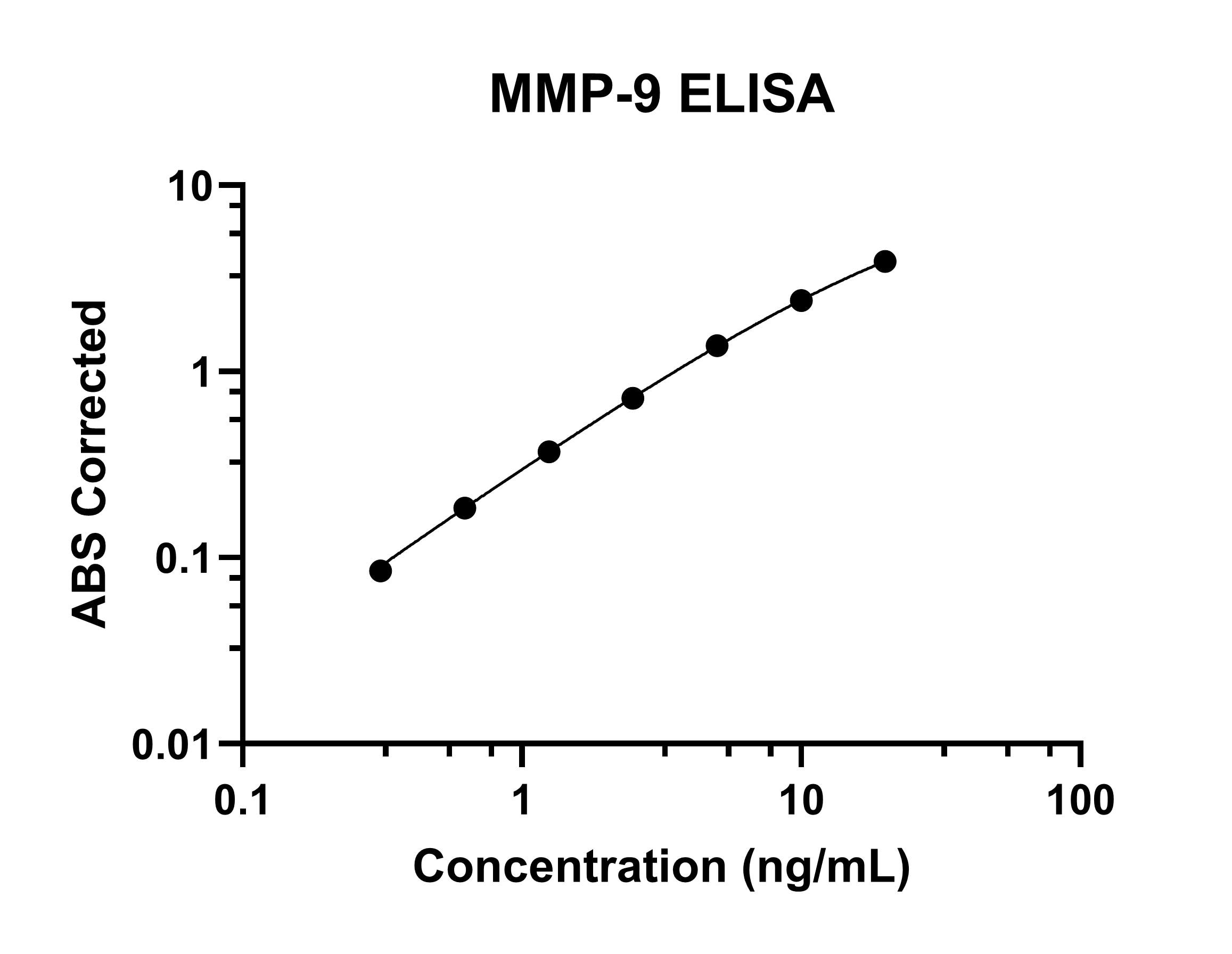
Human MMP-9 ELISA Standard Curve

Human MMP-9 ELISA Standard Curve

Preparation and Storage

Shipping

The product is shipped at ambient temperature. Upon receipt, store it immediately at the temperature recommended below.

Stability & Storage

Store the unopened product at 2 - 8 °C. Do not use past expiration date.

Background: MMP-9

Matrix metalloproteinases (MMPs), also called matrixins, constitute a family of zinc and calcium dependent endopeptidases that function in the breakdown of the extracellular matrix (ECM) and in the processing of a variety of molecules in different subcellular environments. They play an important role in many normal physiological processes such as embryonic development, morphogenesis, reproduction, and tissue remodeling (1, 2). They also participate in inflammatory and autoimmune disorders such as arthritis, cancer, and cardiovascular disease (3-5). While the amounts of newly synthesized MMPs are regulated mainly at the levels of transcription, the proteolytic activities of existing MMPs are controlled through both the activation of proenzymes or zymogens and the inhibition of active enzymes by endogenous inhibitors, alpha 2-Macroglobulin, and tissue inhibitors of metalloproteinases (TIMPs) (6). 
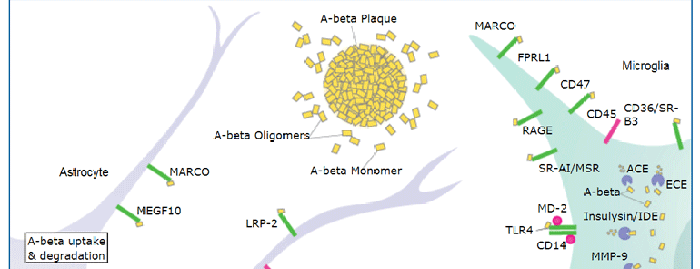
MMP-9 (also referred to as gelatinase B, 92 kDa type IV collagenase, 92 kDa gelatinase, and type V collagenase) is secreted as a glycosylated proenzyme (6-8). Activation of the proenzyme involves proteolytic removal of the N-terminal pro region, resulting in the 82 kDa active enzyme (9, 10). Active human MMP-9 shares 72% and 74% amino acid sequence identity with mouse and rat MMP-9, respectively. In addition to the zinc-binding site, the catalytic domain also contains three contiguous fibronectin type II homology units responsible for binding gelatin (11). A proline-rich hinge region links the catalytic domain to the C-terminal hemopexin-like domain. In vitro treatment of the proenzyme with 4-aminophenylmercuric acetate (APMA) produces not only the active enzyme but also a C-terminal truncated form with activity comparable to that of the active form (12). MMP-9 degrades components of the ECM with high specific activity for denatured collagens (gelatin). It can cleave native collagens of type III, IV, V, and XI, as well as Elastin, Nidogen-1, and Vitronectin (2, 3). MMP-9 can also cleave a variety of chemokines and growth factors (e.g. IL-1 beta, CXCL8/IL-8, CXCL7, CXCL4, CXCL1, Latent TGF-beta, membrane bound TNF-alpha, VEGF, and FGF basic), Amyloid beta peptide, Substance P, and Myelin Basic Protein (3, 13-15). This action can increase or decrease the biological activity of soluble factors and can also liberate them from association with the ECM (16, 17). MMP-9 can also trigger signaling through various transmembrane proteins or inhibit signaling by inducing their shedding from the cell surface (e.g. CD44, E-Cadherin, Integrins, ICAM-1, and IL-2 R alpha ) (3, 18-20). 
MMP-9 is produced by a variety of normal and transformed cells including neutrophils, monocytes, macrophages, astrocytes, fibroblasts, osteoclasts, chondrocytes, keratinocytes, endothelial and epithelial cells. It exerts physiological and pathological angiogenic and remodeling effects on the vasculature (21-25). Activated neutrophils release proMMP-9 which is free of TIMP-1, allowing the liberation of pro-angiogenic FGF-2 from the ECM (17). MMP-9 in complex with TIMP-1 does not induce FGF-2 release (17). Neutrophil-derived MMP-9 exacerbates the inflammatory response, in part by generating collagen-derived peptides that induce the release of additional neutrophil MMP9 (26). MMP-9 also plays a role in bone formation and remodeling (1, 21, 27), methamphetamineinduced behavioral sensitization and reward (28), the regulation of neuronal synapse remodeling (29), trophoblast invasion during implantation (30), and the inactivation of Serpin alpha 1-Proteinase Inhibitor (31). The shedding of adhesion proteins by MMP-9 has a direct effect on tumor cell invasiveness (18-20). 
Circulating levels of MMP-9 are increased in many inflammatory disorders including intraluminal thrombus formation (32), atherosclerosis (33), Crohn's disease (34), hepatitis C virus infection (35), colorectal cancer (36), and Duchenne muscular dystrophy (37). The ratio of MMP-9 to TIMP-1 is also increased in multiple sclerosis serum (38) and cystic fibrosis sputum (39), but it is decreased in the serum during cytomegalovirus infection (40). Levels of free MMP-9 and complexes of MMP-9 with Lipocalin-2/NGAL are elevated in the urine of ovarian cancer and uterine tract infection patients, respectively (41, 42).

Long Name

Matrix Metalloproteinase 9

Alternate Names

CLG4B, Gelatinase B, GELB, MANDP2, MMP9

Entrez Gene IDs

4318 (Human); 17395 (Mouse); 81687 (Rat); 102117693 (Cynomolgus Monkey)

Gene Symbol

MMP9

Additional MMP-9 Products

Product Documents for Human MMP-9 Quantikine ELISA Kit

Certificate of Analysis

To download a Certificate of Analysis, please enter a lot or batch number in the search box below.

Note: Certificate of Analysis not available for kit components.

Product Specific Notices for Human MMP-9 Quantikine ELISA Kit

For research use only

⚠ WARNING: This product can expose you to chemicals including N,N-Dimethylforamide, which is known to the State of California to cause cancer. For more information, go to www.P65Warnings.ca.gov.

Citations for Human MMP-9 Quantikine ELISA Kit

Customer Reviews for Human MMP-9 Quantikine ELISA Kit (10)

4.8 out of 5
10 Customer Ratings
5 Stars
80%
4 Stars
20%
3 Stars
0%
2 Stars
0%
1 Stars
0%

Have you used Human MMP-9 Quantikine ELISA Kit?

Submit a review and receive an Amazon gift card!

$25/€18/£15/$25CAN/¥2500 Yen for a review with an image

$10/€7/£6/$10CAN/¥1110 Yen for a review without an image

Submit a review
Amazon Gift Card

Customer Images


Showing  1 - 5 of 10 reviews Showing All
Filter By:
  • Human MMP-9 Quantikine ELISA Kit
    Name: Anonymous
    Sample Tested: Plasma
    Verified Customer | Posted 11/12/2024
    Human MMP-9 Quantikine ELISA Kit DMP900
  • Human MMP-9 Quantikine ELISA Kit
    Name: Anonymous
    Sample Tested: Urine
    Verified Customer | Posted 11/16/2022
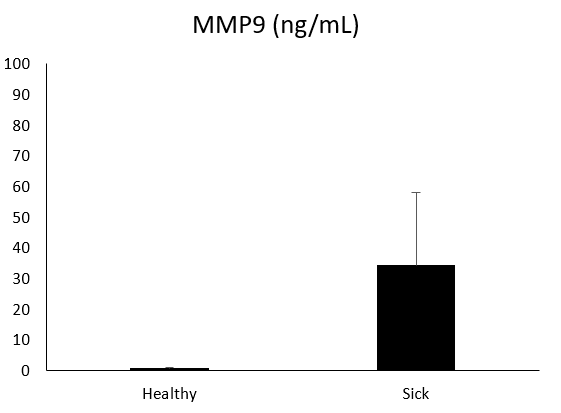
    urine samples should maybe be concentrated
    Human MMP-9 Quantikine ELISA Kit DMP900
  • Human MMP-9 Quantikine ELISA Kit
    Name: Anonymous
    Sample Tested: Serum
    Verified Customer | Posted 11/02/2022
    Human MMP-9 Quantikine ELISA Kit DMP900
  • Human MMP-9 Quantikine ELISA Kit
    Name: Anonymous
    Sample Tested: 3A-sub E human placenta cell line and A375 human melanoma cell line
    Verified Customer | Posted 09/25/2020
  • Human MMP-9 Quantikine ELISA Kit
    Name: Anonymous
    Sample Tested: Human Aortic Endothelial Cells
    Verified Customer | Posted 03/21/2019
  • Human MMP-9 Quantikine ELISA Kit
    Name: Leo Zhelnin
    Sample Tested: Cell culture supernatant and LX2
    Verified Customer | Posted 11/13/2018
    Human MMP-9 Quantikine ELISA Kit DMP900
  • Human MMP-9 Quantikine ELISA Kit
    Name: Anonymous
    Sample Tested: Serum
    Verified Customer | Posted 06/19/2018
  • Human MMP-9 Quantikine ELISA Kit
    Name: Anonymous
    Sample Tested: HT-29 human colon adenocarcinoma cell line, LoVo human colorectal adenocarcinoma cell line, SK-OV-3 human ovarian adenocarcinoma cell line, SCC-25 human tongue carcinoma cell line and NCI-N87 human gastric carcinoma cell line
    Verified Customer | Posted 04/30/2018
  • Human MMP-9 Quantikine ELISA Kit
    Name: Leslie Priddy
    Sample Tested: Serum
    Verified Customer | Posted 03/30/2018
  • Human MMP-9 Quantikine ELISA Kit
    Name: Anonymous
    Sample Tested: Cell culture supernatant
    Verified Customer | Posted 05/22/2017

There are no reviews that match your criteria.

Showing  1 - 5 of 10 reviews Showing All

Protocols

View specific protocols for Human MMP-9 Quantikine ELISA Kit (DMP900):

Refer to the product for complete assay procedure.

Bring all reagents and samples to room temperature before use. It is recommended that all samples, standards, and controls be assayed in duplicate.
  1.   Prepare all reagents, standard dilutions, and samples as directed in the product insert.
  2.   Remove excess microplate strips from the plate frame, return them to the foil pouch containing the desiccant pack, and reseal.

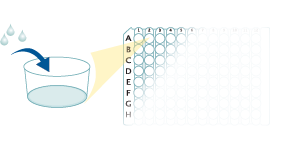
  3. 100 µL Assay Diluent
  4.   Add 100 µL of Assay Diluent to each well.

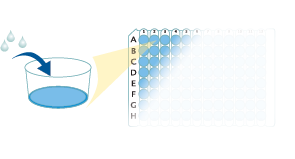
  5. 100 µL Standard, Control, or Sample
  6.   Add 100 µL of Standard, control, or sample to each well. Cover with a plate sealer, and incubate at room temperature for 2 hours on a horizontal orbital microplate shaker.
  7.   Aspirate each well and wash, repeating the process 3 times for a total of 4 washes.

  8. 200 µL Conjugate
  9.   Add 200 µL of Conjugate to each well. Cover with a new plate sealer, and incubate at room temperature for 1 hour on the shaker.
  10.   Aspirate and wash 4 times.

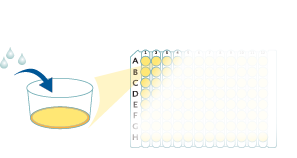
  11. 200 µL Substrate Solution
  12.   Add 200 µL Substrate Solution to each well. Incubate at room temperature for 30 minutes on the benchtop. PROTECT FROM LIGHT.

  13. 50 µL Stop Solution
  14.   Add 50 µL of Stop Solution to each well. Read at 450 nm within 30 minutes. Set wavelength correction to 540 nm or 570 nm.

Find general support by application which include: protocols, troubleshooting, illustrated assays, videos and webinars.

FAQs

No product specific FAQs exist for this product.

View all FAQs for ELISA Kits