L-Selectin/CD62L Antibody [DyLight 350]
Novus Biologicals | Catalog # AF728D

Key Product Details
Species Reactivity
Human
Applications
Western Blot, Neutralization
Label
DyLight 350 (Excitation = 353 nm, Emission = 432 nm)
Antibody Source
Polyclonal Sheep IgG
Loading...
Product Specifications
Immunogen
Chinese hamster ovary cell line CHO-derived recombinant human L-Selectin
Specificity
Detects human L‑Selectin in direct ELISAs and Western blots.
Clonality
Polyclonal
Host
Sheep
Isotype
IgG
Description
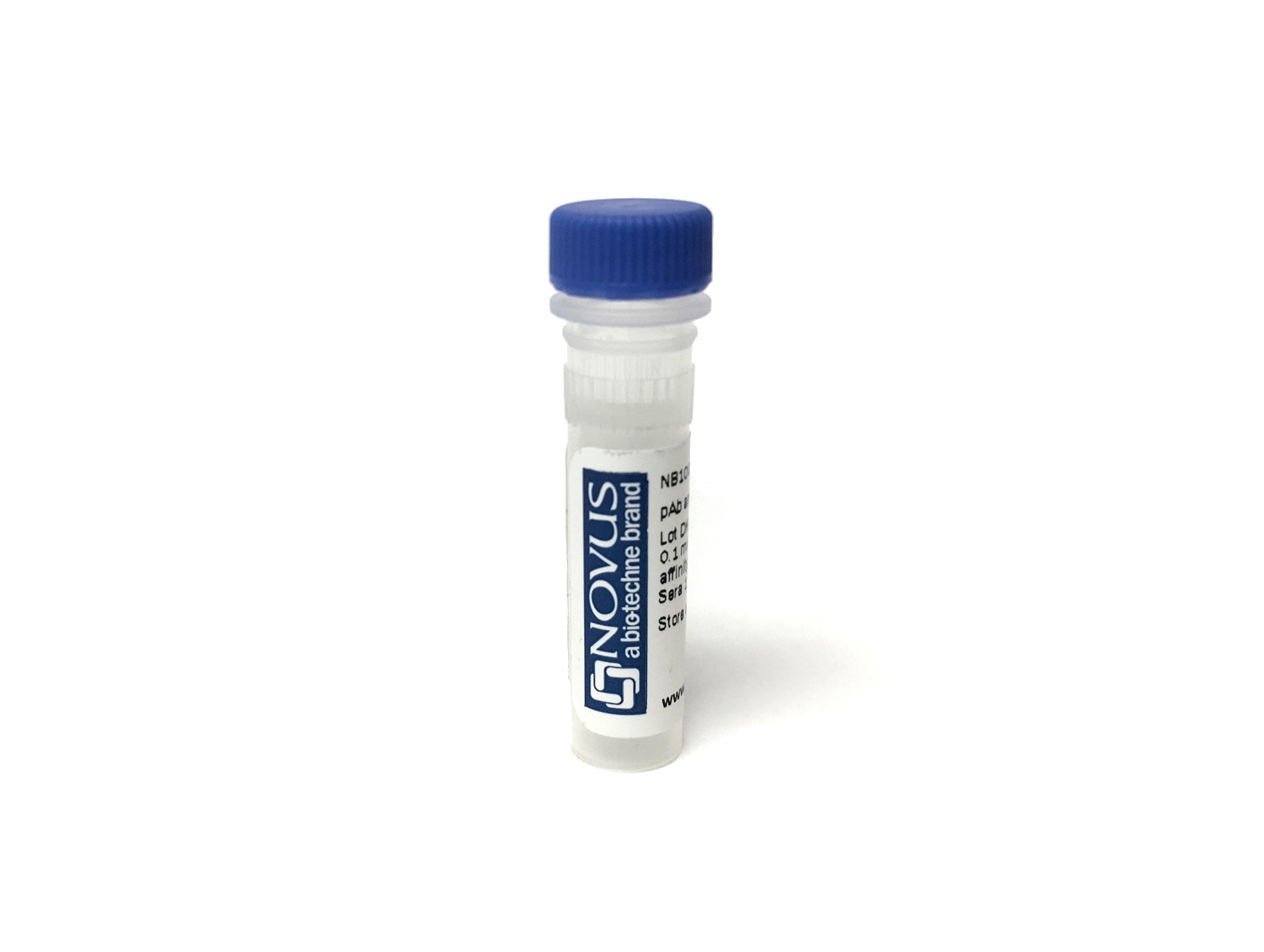
This conjugate is made on demand and is not held in inventory. Each order represents a unique lot. All conjugates are generated using validated conjugation protocols and meet strict degree of labeling (F/P) specifications; additional information is available upon request. The antibody concentration is provided on the individual product label.
For specialized conjugation needs, like large quantities, specific concentrations, and defined F/P ratios, bulk and custom antibody conjugation services are available.
For specialized conjugation needs, like large quantities, specific concentrations, and defined F/P ratios, bulk and custom antibody conjugation services are available.
Applications for L-Selectin/CD62L Antibody [DyLight 350]
Application
Recommended Usage
Western Blot
Optimal dilutions of this antibody should be experimentally determined.
Neutralization
Optimal dilutions of this antibody should be experimentally determined.
Application Notes
Recommended applications are based on validated applications from the unconjugated base product AF728. This conjugated antibody is not kept in inventory and is made to order using validated conjugation protocols.
Formulation, Preparation, and Storage
Purification
Antigen Affinity-purified
Formulation
50mM Sodium Borate
Preservative
0.05% Sodium Azide
Concentration
Please see the vial label for concentration. If unlisted please contact technical services.
Shipping
The product is shipped with polar packs. Upon receipt, store it immediately at the temperature recommended below.
Stability & Storage
Store at 4C in the dark.
Background: L-Selectin/CD62L
L-selectin expressed on leukocytes binds to ligands expressed by endothelial cells where it plays a role in lymphocyte homing to secondary lymphoid organs (2-5). L-selectin specifically recognizes and binds to sulfated sialyl-Lewis epitopes of O-linked glycans (2-4). Ligands for L-selectin include glycosylation-dependent cell adhesion molecule-1 (GlyCAM-1), CD34, mucosal vascular addressin cell adhesion molecule-1 (MAdCAM-1), and P-selectin glycoprotein ligand-1 (PSGL-1) (2,4). Elevated levels of selectin ligands on tumor cells are associated with cancer progression and metastasis (3). High levels of L-selectin and soluble L-selectin (sL-selectin) has been implicated in a number of pathologies from viral infection and allergies, to sepsis and multiple sclerosis (2,4,5). For example, L-selectin has been shown to play a role in human immunodeficiency virus (HIV) infection. HIV envelope glycans, such as gp120, binds to L-selectin/CD62L on CD4+ T cells, facilitating viral adhesion (2,5). A disintegrin and metalloproteinase (ADAM)17 is the primary enzyme responsible for L-selectin shedding in leukocytes, which is triggered in response to inflammatory signals (1,2,5). AMAD17 inhibitors block L-selectin shedding and reduce viral release (2,5). Given their role in cancer and other diseases, selectins and their ligands are potential targets for therapeutic intervention (3,5). For instance, murine models have shown that anti-L-selectin antibodies can delay onset of graft versus host disease (5).
References
1. Ivetic A. (2018). A head-to-tail view of L-selectin and its impact on neutrophil behaviour. Cell and Tissue Research, 371(3), 437-453. https://doi.org/10.1007/s00441-017-2774-x
2. Ivetic, A., Hoskins Green, H. L., & Hart, S. J. (2019). L-selectin: a major regulator of leukocyte adhesion, migration and signaling. Frontiers in Immunology, 10, 1068. https://doi.org/10.3389/fimmu.2019.01068
3. Borsig L. (2018). Selectins in cancer immunity. Glycobiology, 28(9), 648-655. https://doi.org/10.1093/glycob/cwx105
4. Kneuer, C., Ehrhardt, C., Radomski, M. W., & Bakowsky, U. (2006). Selectins-potential pharmacological targets?. Drug Discovery Today, 11(21-22), 1034-1040. https://doi.org/10.1016/j.drudis.2006.09.004
5. Segura, J., He, B., Ireland, J., Zou, Z., Shen, T., Roth, G., & Sun, P. D. (2021). The role of L-Selectin in HIV infection. Frontiers in Microbiology, 12, 725741. https://doi.org/10.3389/fmicb.2021.725741
Alternate Names
CD62L, hLHRc, LAM1, LECAM1, Leu-8, LNHR, LSEL, Lyam-1, LYAM1, PLNHR, SELL, TQ1
Gene Symbol
SELL
Additional L-Selectin/CD62L Products
Product Documents for L-Selectin/CD62L Antibody [DyLight 350]
Certificate of Analysis
To download a Certificate of Analysis, please enter a lot or batch number in the search box below.
Product Specific Notices for L-Selectin/CD62L Antibody [DyLight 350]
DyLight (R) is a trademark of Thermo Fisher Scientific Inc. and its subsidiaries.
This product is for research use only and is not approved for use in humans or in clinical diagnosis. Primary Antibodies are guaranteed for 1 year from date of receipt.
Related Research Areas
Customer Reviews for L-Selectin/CD62L Antibody [DyLight 350]
There are currently no reviews for this product. Be the first to review L-Selectin/CD62L Antibody [DyLight 350] and earn rewards!
Have you used L-Selectin/CD62L Antibody [DyLight 350]?
Submit a review and receive an Amazon gift card!
$25/€18/£15/$25CAN/¥2500 for a review with an image
$10/€7/£6/$10CAN/¥1110 for a review without an image
Submit a review
Protocols
Find general support by application which include: protocols, troubleshooting, illustrated assays, videos and webinars.
- Cellular Response to Hypoxia Protocols
- R&D Systems Quality Control Western Blot Protocol
- Troubleshooting Guide: Western Blot Figures
- Western Blot Conditions
- Western Blot Protocol
- Western Blot Protocol for Cell Lysates
- Western Blot Troubleshooting
- Western Blot Troubleshooting Guide
- View all Protocols, Troubleshooting, Illustrated assays and Webinars
Loading...
Associated Pathways