
Growth differentiation factor-9 (GDF-9) is a member of the transforming growth factor-beta (TGF-beta ) superfamily, and is an oocyte secreted paracrine factor essential for mammalian ovarian folliculogenesis (1‑2). Mouse GDF-9 is synthesized as a 441 amino acid (aa) prepropeptide that contains a 29 aa signal sequence, a 277 aa propeptide, and a 135 aa mature chain. Residues 340‑441 constitute a TGF-beta like domain. In addition, there is one potential site of N-linked glycosylation in the mature chain. Unlike other members of the TGF-beta superfamily, GDF‑9 lacks the conserved cysteine residue that is believed to form the sole disulfide linkage between subunits in other family members (3). Mature mouse GDF-9 shares 90% aa sequence identity with mature human GDF 9. The protein is expressed throughout the development of the maturing follicle (2). GDF-9 functions as a paracrine factor in the regulation of granulosa cell proliferation and differentiation, and is essential for fertility (2, 4). Studies on GDF-9 null mice have demonstrated arrested follicular development at the primary follicle stage (5). Mouse GDF-9 induces Smad2 phosphorylation and inhibin production in rat diethylstilbestrol treated granulosa cells (6) and in human granulosa-luteal cells (7). The downstream signaling actions of GDF 9 are mediated by the type I receptor, activin receptor-like kinase 5 (ALK5), initiating the subsequent activation of Smad2 and Smad3 (2, 8). GDF 9 uses the BMP type II receptor (BMPRII) as its other signaling receptor (2, 9).

Scientific images may be resized, cropped, or adjusted for brightness or contrast for presentation purposes. These updates are limited to presentation and do not affect the underlying scientific interpretation of the data. Where available, additional source data may be provided upon request.
Key Product Details
Species Reactivity
Validated:
Cited:
Applications
Validated:
Cited:
Label
Antibody Source
Product Specifications
Immunogen
Specificity
Clonality
Host
Isotype
Scientific Data Images for GDF-9 Antibody
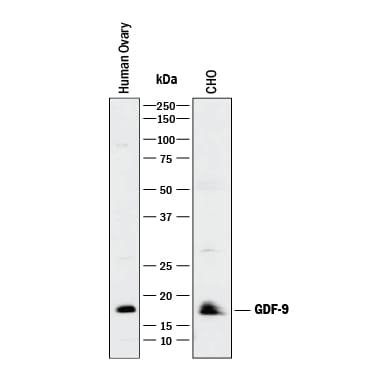
Detection of Human/Hamster GDF‑9 by Western Blot.
Western blot shows lysates of human ovary tissue and CHO Chinese hamster ovary cell line. PVDF membrane was probed with 1 µg/mL of Goat Anti-Human/Mouse/Hamster GDF-9 Antigen Affinity-purified Polyclonal Antibody (Catalog # AF739) followed by HRP-conjugated Anti-Goat IgG Secondary Antibody (HAF017). A specific band was detected for GDF-9 at approximately 18 kDa (as indicated). This experiment was conducted under reducing conditions and using Immunoblot Buffer Group 1.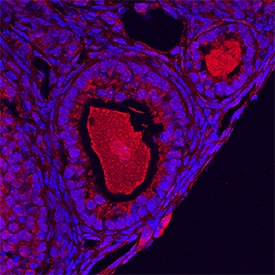
GDF‑9 in Mouse Ovary.
GDF-9 was detected in perfusion fixed frozen sections of mouse ovary using Goat Anti-Human/Mouse/Hamster GDF-9 Antigen Affinity-purified Polyclonal Antibody (Catalog # AF739) at 5 µg/mL overnight at 4 °C. Tissue was stained using the NorthernLights™ 557-conjugated Anti-Goat IgG Secondary Antibody (red; NL001) and counterstained with DAPI (blue). Specific staining was localized to developing oocytes. View our protocol for Fluorescent IHC Staining of Frozen Tissue Sections.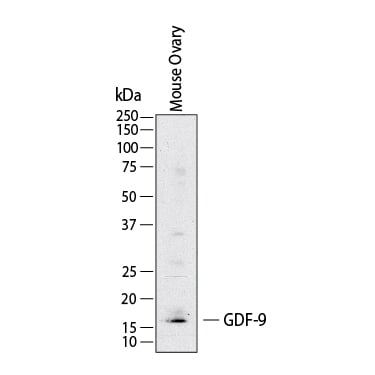
Detection of Mouse GDF‑9 by Western Blot.
Western Blot shows lysates of mouse ovary. PVDF membrane was probed with 1 µg/ml of Goat Anti-Human/Mouse/Hamster GDF‑9 Antigen Affinity-purified Polyclonal Antibody (Catalog # AF739) followed by HRP-conjugated Anti-Goat IgG Secondary Antibody (Catalog # HAF017). A specific band was detected for GDF‑9 at approximately 17 kDa (as indicated). This experiment was conducted under reducing conditions and using Western Blot Buffer Group 1.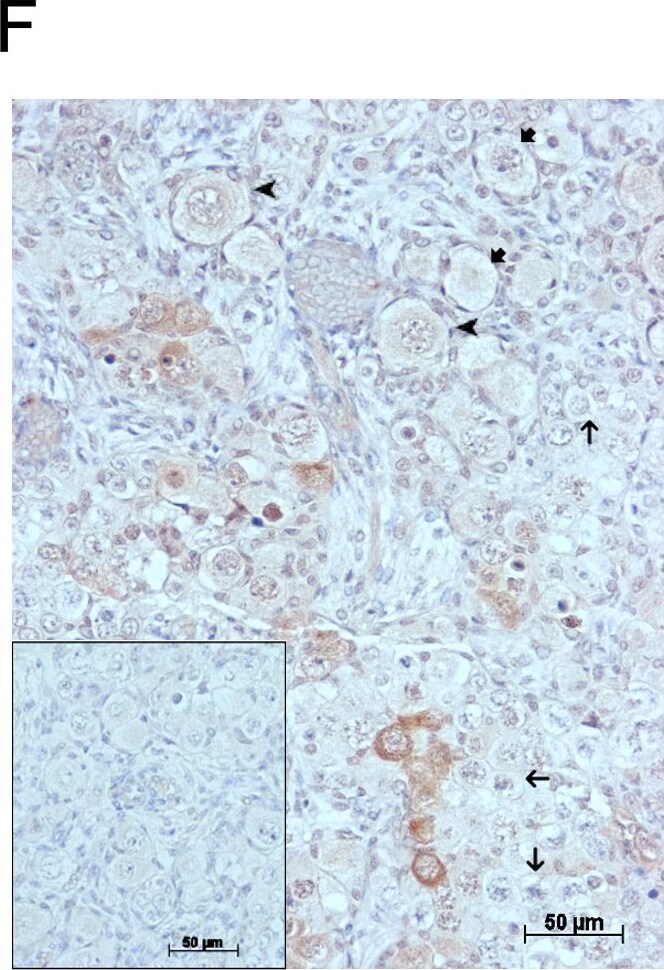
Detection of Human GDF-9 by Immunohistochemistry-Paraffin
GDF9 is expressed in the human fetal ovary.qRT-PCR analysis of GDF9 (A), BMP15 (B) and NOBOX (C) mRNA expression in human fetal ovary across the gestational range of 8 to 20 weeks. Ovaries (n = 5–7 per group) were grouped according to developmental stage and transcript levels measured relative to those of RPL32. Bars indicate mean±sem. Statistically different levels are indicated by asterisks above the columns, thus expression of GDF9 at 18–20 weeks was significantly higher than at 8–11 weeks (p<0.005) as was expression of BMP15 and of NOBOX (both p<0.01). DAB immunohistochemical detection of GDF9: 19 week (D, E) and 20 week (F) human fetal ovary stained with anti-GDF9 antibody or normal goat IgG negative control (F inset)—positive staining is brown. Thick arrows indicate primordial follicles and thin arrows germ cells that are not stained for GDF9 while the arrowheads indicate primordial follicles that are positive for GDF9. Scale bars are 50μm (D and F) and 20μm (E). Image collected and cropped by CiteAb from the following open publication (https://pubmed.ncbi.nlm.nih.gov/25790371), licensed under a CC-BY license. Not internally tested by R&D Systems.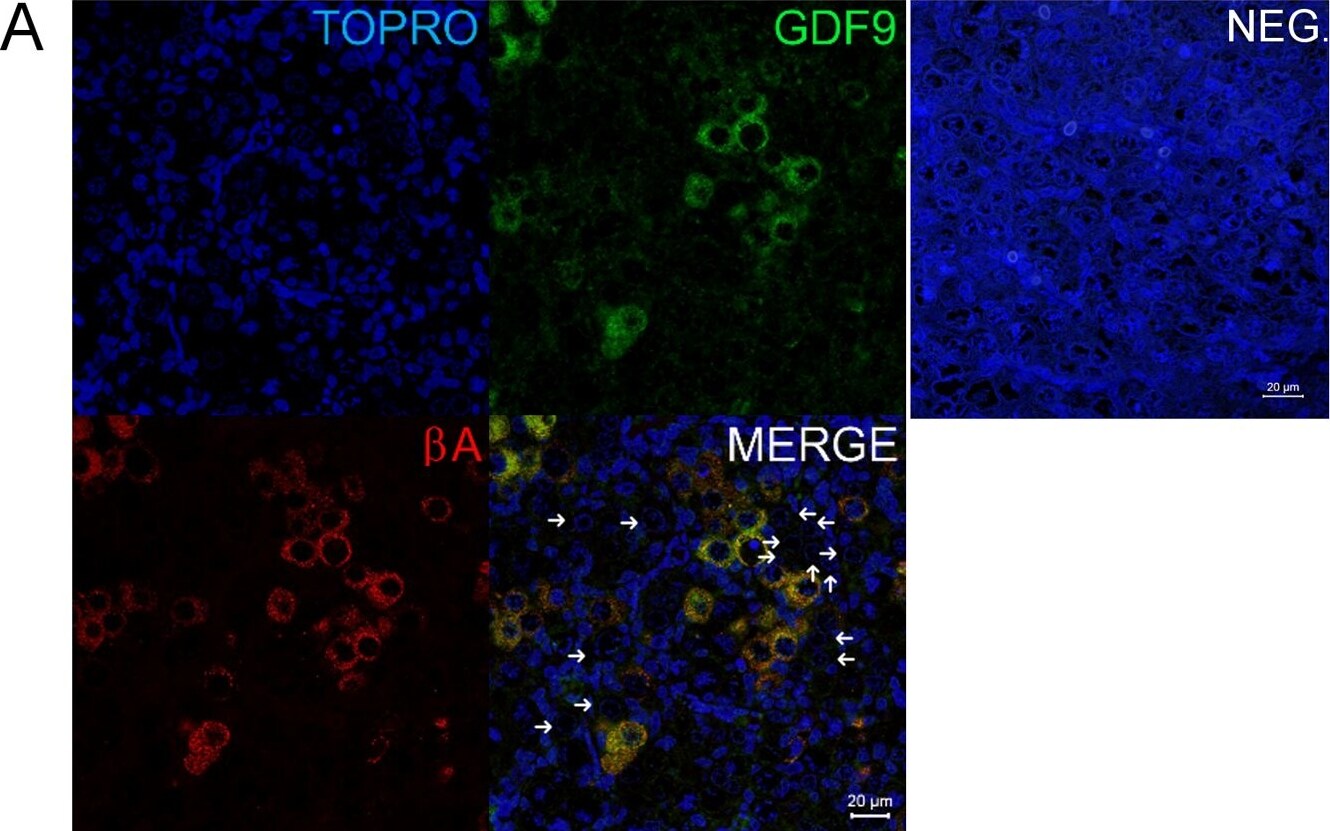
Detection of Human GDF-9 by Immunocytochemistry/ Immunofluorescence
Co-localisation of GDF9 with activin beta A but not DAZL or BOLL prior to follicle formation.(A) Double immunohistochemistry of 18 week fetal ovary stained for GDF9 (green) and activin beta A (red), thus in the merged image co-expression is yellow. Unstained germ cells are indicated with arrows. Counterstain is TOPRO. (B) Triple fluorescent immunohistochemistry for GDF9 (green), DAZL (blue) and BOLL (red) in 20 week human fetal ovary with DAPI as counterstain (grey). Split channel and merged images in (A) and (B) are shown as are merged images of non-immune serum negative control (NEG). Scale bars are 20μm. (C) Nuclear diameters of DAZL, BOLL and GDF9 stained germ cells indicates that GDF9 positive cells are significantly larger (p<0.001) than DAZL but not BOLL expressing cells (bars indicate mean ± sem). (D) Higher magnification merged image of GDF9/DAZL/BOLL immunohistochemistry showing one large primordial follicle is positive for both GDF9 and DAZL but other follicles are positive only for DAZL. Image collected and cropped by CiteAb from the following open publication (https://pubmed.ncbi.nlm.nih.gov/25790371), licensed under a CC-BY license. Not internally tested by R&D Systems.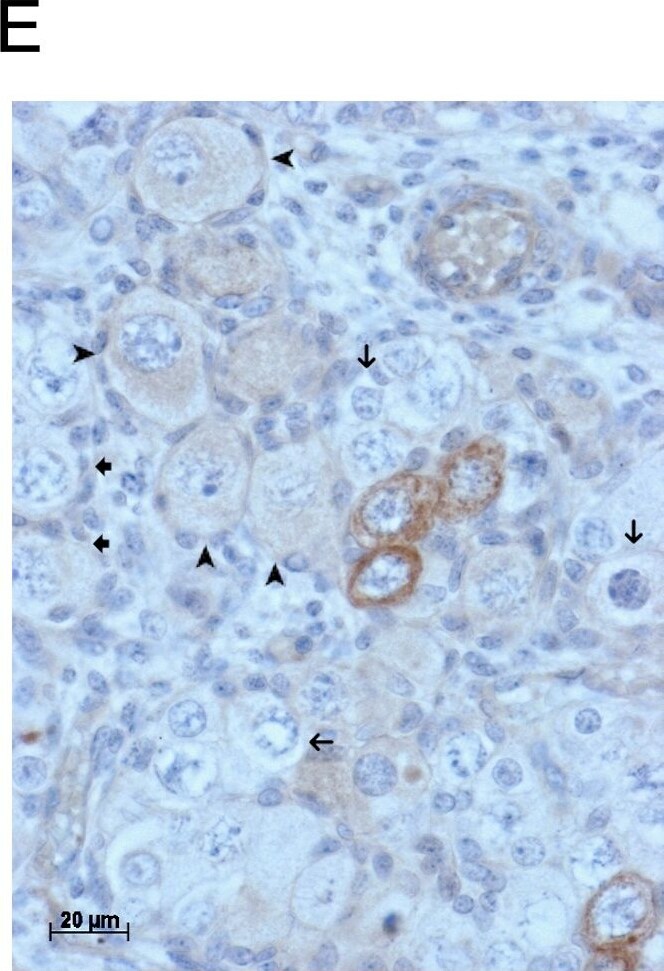
Detection of Human GDF-9 by Immunohistochemistry-Paraffin
GDF9 is expressed in the human fetal ovary.qRT-PCR analysis of GDF9 (A), BMP15 (B) and NOBOX (C) mRNA expression in human fetal ovary across the gestational range of 8 to 20 weeks. Ovaries (n = 5–7 per group) were grouped according to developmental stage and transcript levels measured relative to those of RPL32. Bars indicate mean±sem. Statistically different levels are indicated by asterisks above the columns, thus expression of GDF9 at 18–20 weeks was significantly higher than at 8–11 weeks (p<0.005) as was expression of BMP15 and of NOBOX (both p<0.01). DAB immunohistochemical detection of GDF9: 19 week (D, E) and 20 week (F) human fetal ovary stained with anti-GDF9 antibody or normal goat IgG negative control (F inset)—positive staining is brown. Thick arrows indicate primordial follicles and thin arrows germ cells that are not stained for GDF9 while the arrowheads indicate primordial follicles that are positive for GDF9. Scale bars are 50μm (D and F) and 20μm (E). Image collected and cropped by CiteAb from the following open publication (https://pubmed.ncbi.nlm.nih.gov/25790371), licensed under a CC-BY license. Not internally tested by R&D Systems.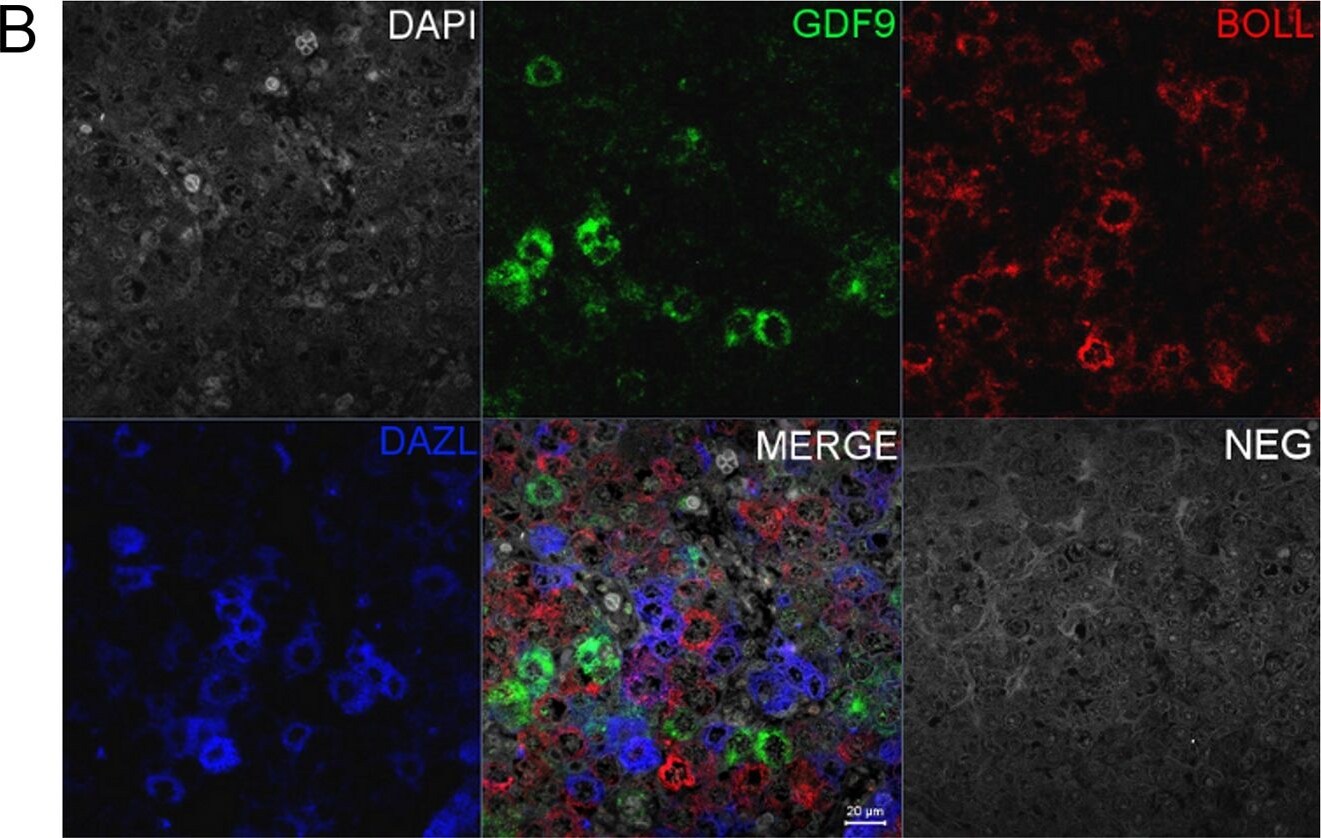
Detection of Human GDF-9 by Immunocytochemistry/ Immunofluorescence
Co-localisation of GDF9 with activin beta A but not DAZL or BOLL prior to follicle formation.(A) Double immunohistochemistry of 18 week fetal ovary stained for GDF9 (green) and activin beta A (red), thus in the merged image co-expression is yellow. Unstained germ cells are indicated with arrows. Counterstain is TOPRO. (B) Triple fluorescent immunohistochemistry for GDF9 (green), DAZL (blue) and BOLL (red) in 20 week human fetal ovary with DAPI as counterstain (grey). Split channel and merged images in (A) and (B) are shown as are merged images of non-immune serum negative control (NEG). Scale bars are 20μm. (C) Nuclear diameters of DAZL, BOLL and GDF9 stained germ cells indicates that GDF9 positive cells are significantly larger (p<0.001) than DAZL but not BOLL expressing cells (bars indicate mean ± sem). (D) Higher magnification merged image of GDF9/DAZL/BOLL immunohistochemistry showing one large primordial follicle is positive for both GDF9 and DAZL but other follicles are positive only for DAZL. Image collected and cropped by CiteAb from the following open publication (https://pubmed.ncbi.nlm.nih.gov/25790371), licensed under a CC-BY license. Not internally tested by R&D Systems.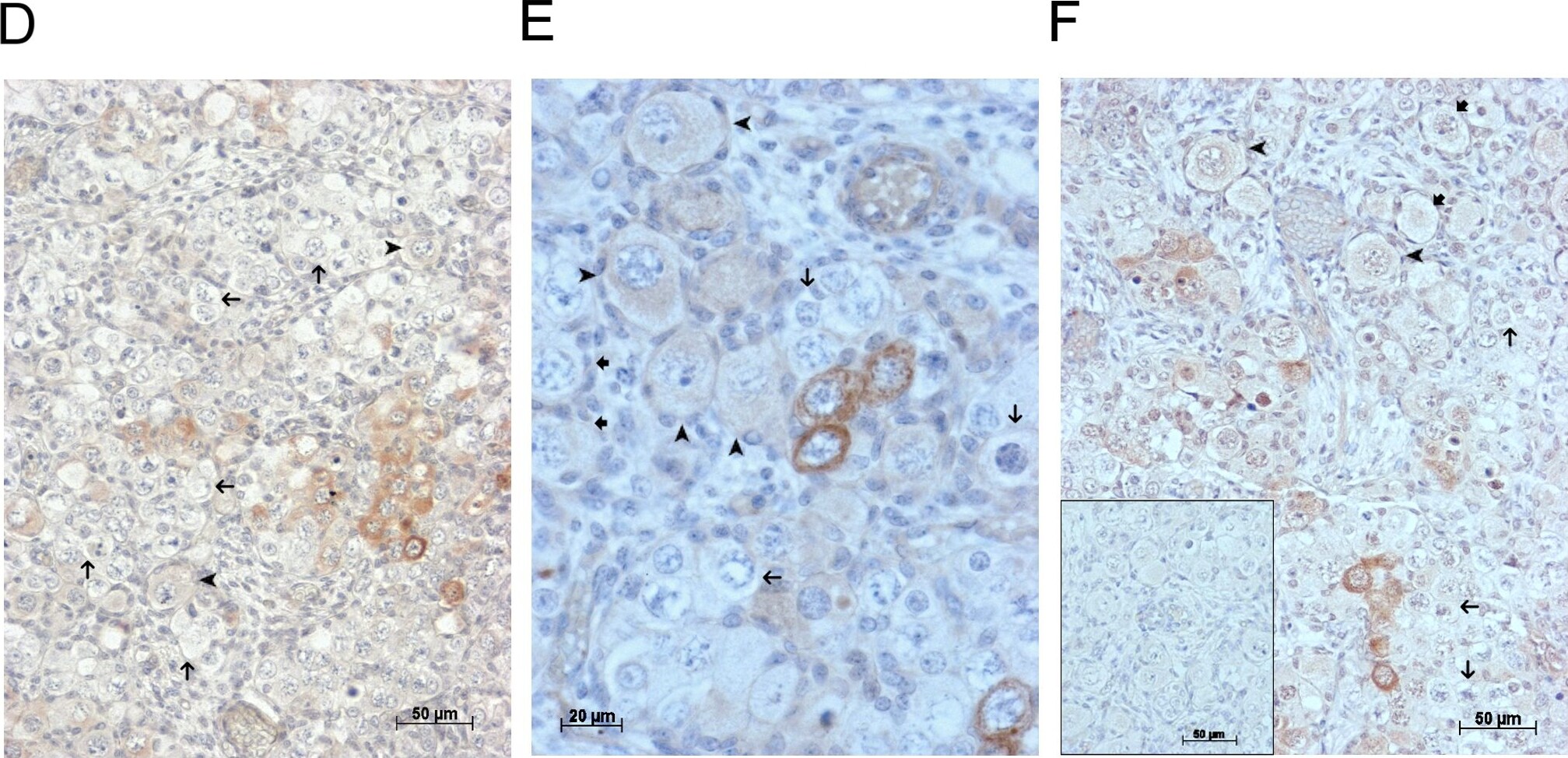
Detection of Human GDF-9 by Immunohistochemistry
GDF9 is expressed in the human fetal ovary.qRT-PCR analysis of GDF9 (A), BMP15 (B) and NOBOX (C) mRNA expression in human fetal ovary across the gestational range of 8 to 20 weeks. Ovaries (n = 5–7 per group) were grouped according to developmental stage and transcript levels measured relative to those of RPL32. Bars indicate mean±sem. Statistically different levels are indicated by asterisks above the columns, thus expression of GDF9 at 18–20 weeks was significantly higher than at 8–11 weeks (p<0.005) as was expression of BMP15 and of NOBOX (both p<0.01). DAB immunohistochemical detection of GDF9: 19 week (D, E) and 20 week (F) human fetal ovary stained with anti-GDF9 antibody or normal goat IgG negative control (F inset)—positive staining is brown. Thick arrows indicate primordial follicles and thin arrows germ cells that are not stained for GDF9 while the arrowheads indicate primordial follicles that are positive for GDF9. Scale bars are 50μm (D and F) and 20μm (E). Image collected and cropped by CiteAb from the following open publication (https://pubmed.ncbi.nlm.nih.gov/25790371), licensed under a CC-BY license. Not internally tested by R&D Systems.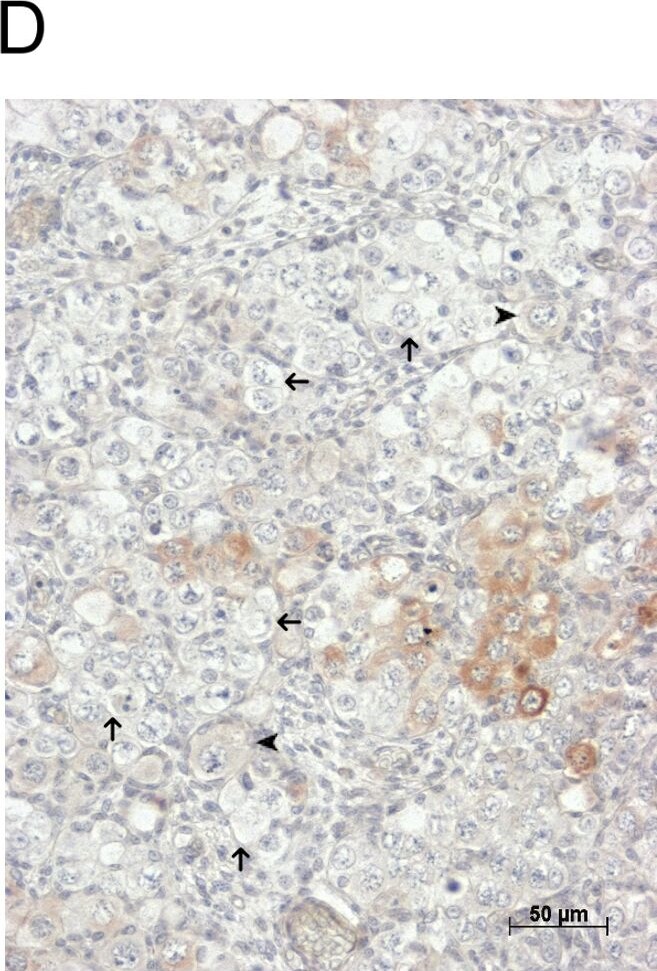
Detection of Human GDF-9 by Immunohistochemistry-Paraffin
GDF9 is expressed in the human fetal ovary.qRT-PCR analysis of GDF9 (A), BMP15 (B) and NOBOX (C) mRNA expression in human fetal ovary across the gestational range of 8 to 20 weeks. Ovaries (n = 5–7 per group) were grouped according to developmental stage and transcript levels measured relative to those of RPL32. Bars indicate mean±sem. Statistically different levels are indicated by asterisks above the columns, thus expression of GDF9 at 18–20 weeks was significantly higher than at 8–11 weeks (p<0.005) as was expression of BMP15 and of NOBOX (both p<0.01). DAB immunohistochemical detection of GDF9: 19 week (D, E) and 20 week (F) human fetal ovary stained with anti-GDF9 antibody or normal goat IgG negative control (F inset)—positive staining is brown. Thick arrows indicate primordial follicles and thin arrows germ cells that are not stained for GDF9 while the arrowheads indicate primordial follicles that are positive for GDF9. Scale bars are 50μm (D and F) and 20μm (E). Image collected and cropped by CiteAb from the following open publication (https://pubmed.ncbi.nlm.nih.gov/25790371), licensed under a CC-BY license. Not internally tested by R&D Systems.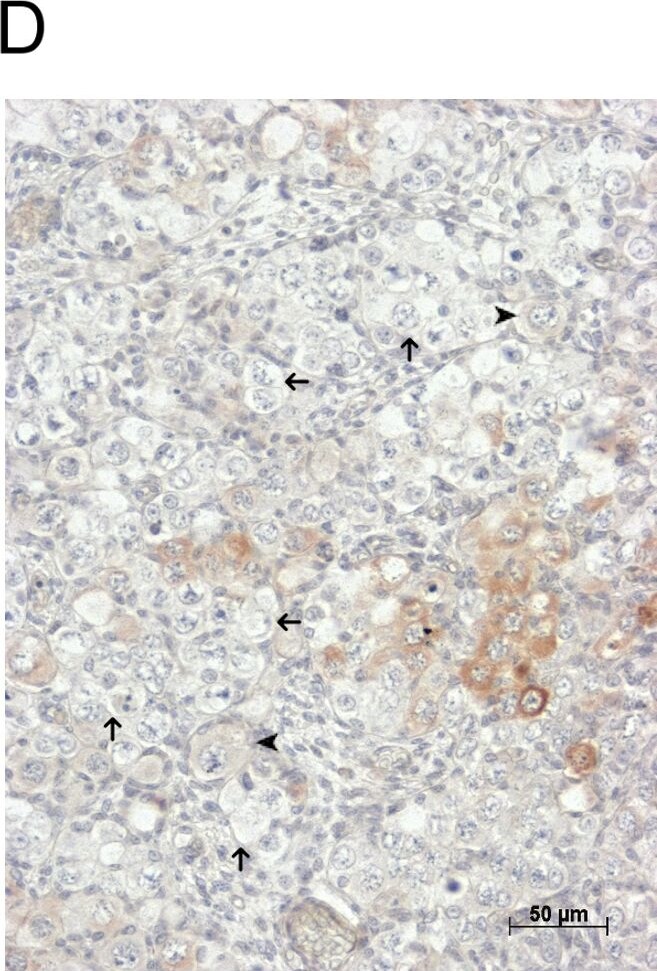
Detection of Human GDF-9 by Immunohistochemistry-Paraffin
GDF9 is expressed in the human fetal ovary.qRT-PCR analysis of GDF9 (A), BMP15 (B) and NOBOX (C) mRNA expression in human fetal ovary across the gestational range of 8 to 20 weeks. Ovaries (n = 5–7 per group) were grouped according to developmental stage and transcript levels measured relative to those of RPL32. Bars indicate mean±sem. Statistically different levels are indicated by asterisks above the columns, thus expression of GDF9 at 18–20 weeks was significantly higher than at 8–11 weeks (p<0.005) as was expression of BMP15 and of NOBOX (both p<0.01). DAB immunohistochemical detection of GDF9: 19 week (D, E) and 20 week (F) human fetal ovary stained with anti-GDF9 antibody or normal goat IgG negative control (F inset)—positive staining is brown. Thick arrows indicate primordial follicles and thin arrows germ cells that are not stained for GDF9 while the arrowheads indicate primordial follicles that are positive for GDF9. Scale bars are 50μm (D and F) and 20μm (E). Image collected and cropped by CiteAb from the following open publication (https://pubmed.ncbi.nlm.nih.gov/25790371), licensed under a CC-BY license. Not internally tested by R&D Systems.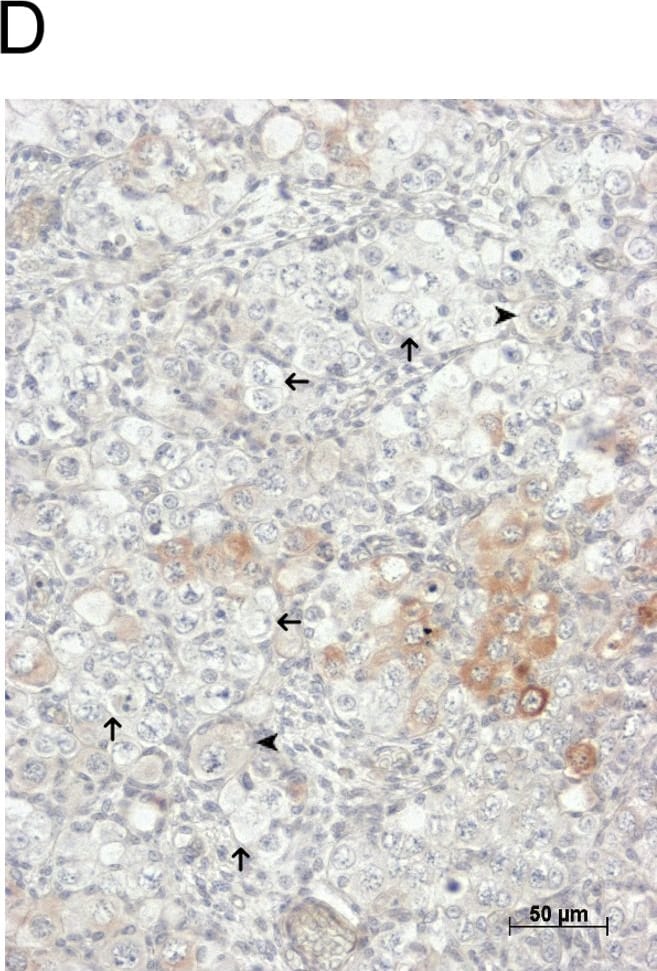
Detection of Human GDF-9 by Immunohistochemistry-Paraffin
GDF9 is expressed in the human fetal ovary.qRT-PCR analysis of GDF9 (A), BMP15 (B) and NOBOX (C) mRNA expression in human fetal ovary across the gestational range of 8 to 20 weeks. Ovaries (n = 5–7 per group) were grouped according to developmental stage and transcript levels measured relative to those of RPL32. Bars indicate mean±sem. Statistically different levels are indicated by asterisks above the columns, thus expression of GDF9 at 18–20 weeks was significantly higher than at 8–11 weeks (p<0.005) as was expression of BMP15 and of NOBOX (both p<0.01). DAB immunohistochemical detection of GDF9: 19 week (D, E) and 20 week (F) human fetal ovary stained with anti-GDF9 antibody or normal goat IgG negative control (F inset)—positive staining is brown. Thick arrows indicate primordial follicles and thin arrows germ cells that are not stained for GDF9 while the arrowheads indicate primordial follicles that are positive for GDF9. Scale bars are 50μm (D and F) and 20μm (E). Image collected and cropped by CiteAb from the following open publication (https://pubmed.ncbi.nlm.nih.gov/25790371), licensed under a CC-BY license. Not internally tested by R&D Systems.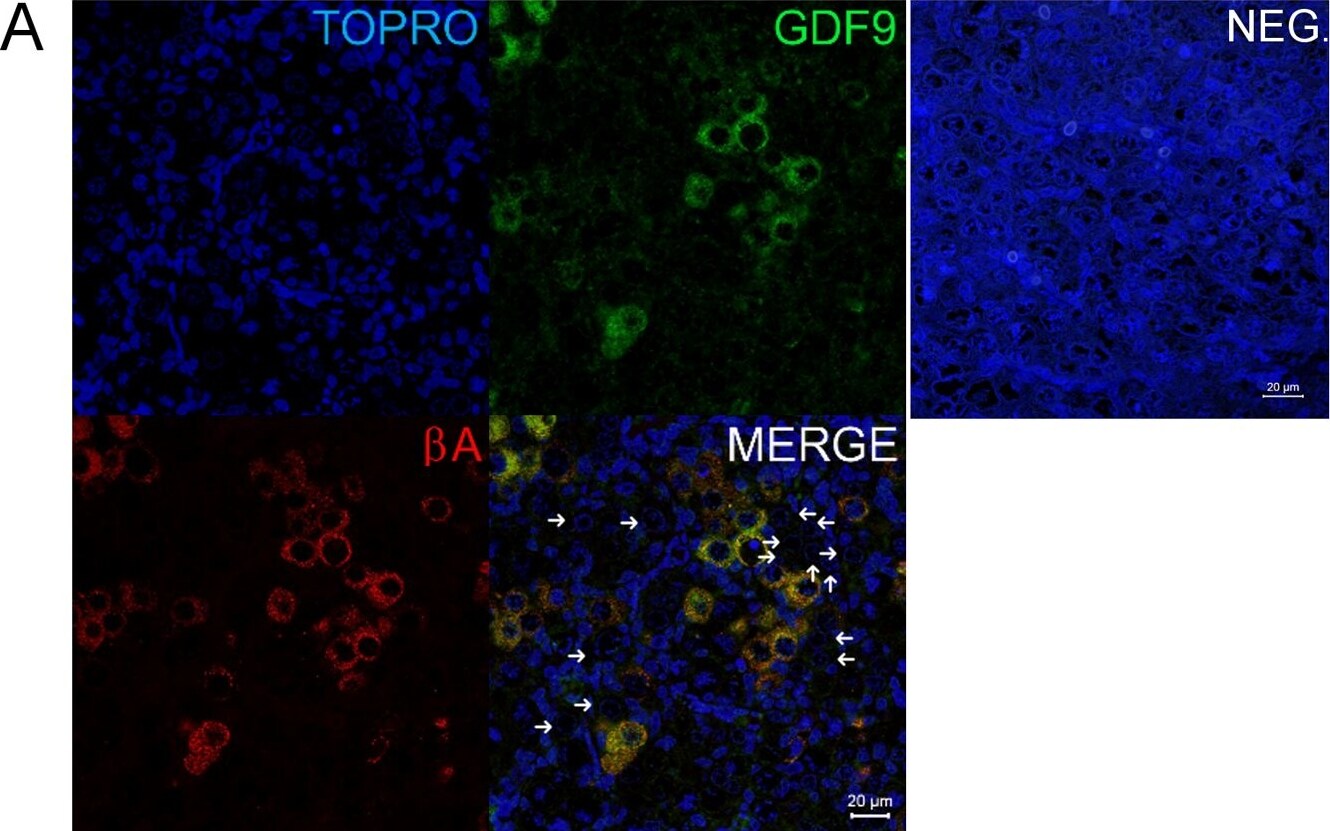
Detection of Human GDF-9 by Immunocytochemistry/ Immunofluorescence
Co-localisation of GDF9 with activin beta A but not DAZL or BOLL prior to follicle formation.(A) Double immunohistochemistry of 18 week fetal ovary stained for GDF9 (green) and activin beta A (red), thus in the merged image co-expression is yellow. Unstained germ cells are indicated with arrows. Counterstain is TOPRO. (B) Triple fluorescent immunohistochemistry for GDF9 (green), DAZL (blue) and BOLL (red) in 20 week human fetal ovary with DAPI as counterstain (grey). Split channel and merged images in (A) and (B) are shown as are merged images of non-immune serum negative control (NEG). Scale bars are 20μm. (C) Nuclear diameters of DAZL, BOLL and GDF9 stained germ cells indicates that GDF9 positive cells are significantly larger (p<0.001) than DAZL but not BOLL expressing cells (bars indicate mean ± sem). (D) Higher magnification merged image of GDF9/DAZL/BOLL immunohistochemistry showing one large primordial follicle is positive for both GDF9 and DAZL but other follicles are positive only for DAZL. Image collected and cropped by CiteAb from the following open publication (https://pubmed.ncbi.nlm.nih.gov/25790371), licensed under a CC-BY license. Not internally tested by R&D Systems.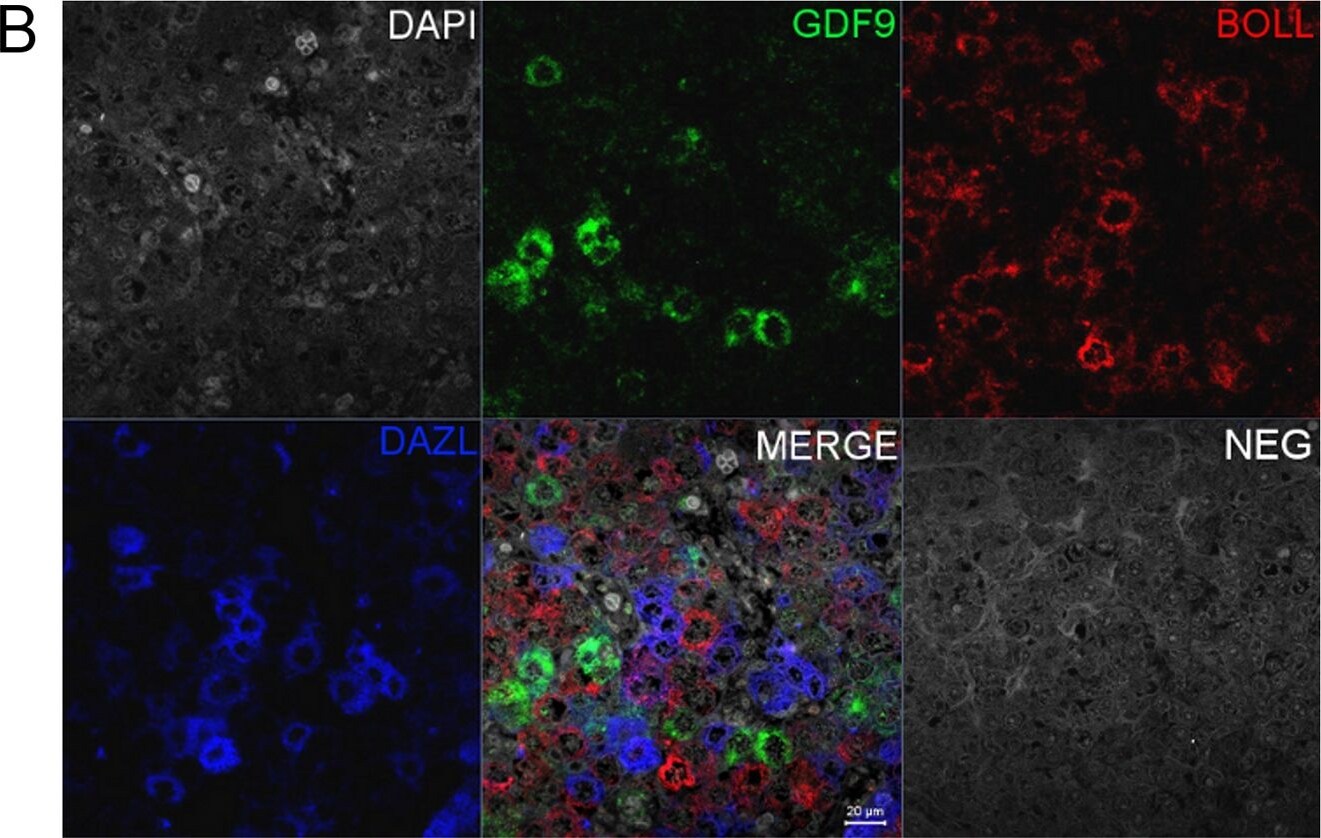
Detection of Human GDF-9 by Immunocytochemistry/ Immunofluorescence
Co-localisation of GDF9 with activin beta A but not DAZL or BOLL prior to follicle formation.(A) Double immunohistochemistry of 18 week fetal ovary stained for GDF9 (green) and activin beta A (red), thus in the merged image co-expression is yellow. Unstained germ cells are indicated with arrows. Counterstain is TOPRO. (B) Triple fluorescent immunohistochemistry for GDF9 (green), DAZL (blue) and BOLL (red) in 20 week human fetal ovary with DAPI as counterstain (grey). Split channel and merged images in (A) and (B) are shown as are merged images of non-immune serum negative control (NEG). Scale bars are 20μm. (C) Nuclear diameters of DAZL, BOLL and GDF9 stained germ cells indicates that GDF9 positive cells are significantly larger (p<0.001) than DAZL but not BOLL expressing cells (bars indicate mean ± sem). (D) Higher magnification merged image of GDF9/DAZL/BOLL immunohistochemistry showing one large primordial follicle is positive for both GDF9 and DAZL but other follicles are positive only for DAZL. Image collected and cropped by CiteAb from the following open publication (https://pubmed.ncbi.nlm.nih.gov/25790371), licensed under a CC-BY license. Not internally tested by R&D Systems.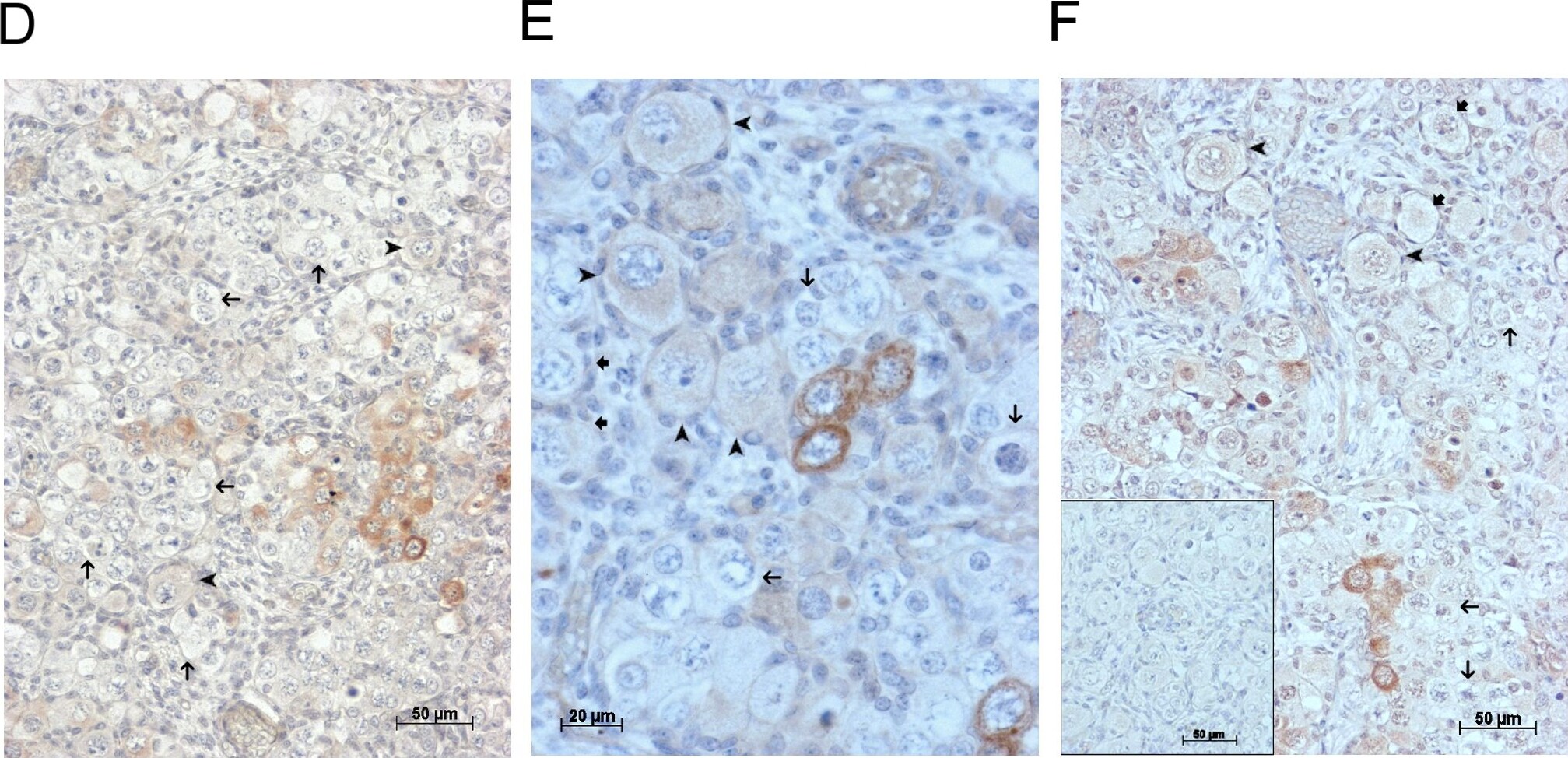
Detection of Human GDF-9 by Immunohistochemistry
GDF9 is expressed in the human fetal ovary.qRT-PCR analysis of GDF9 (A), BMP15 (B) and NOBOX (C) mRNA expression in human fetal ovary across the gestational range of 8 to 20 weeks. Ovaries (n = 5–7 per group) were grouped according to developmental stage and transcript levels measured relative to those of RPL32. Bars indicate mean±sem. Statistically different levels are indicated by asterisks above the columns, thus expression of GDF9 at 18–20 weeks was significantly higher than at 8–11 weeks (p<0.005) as was expression of BMP15 and of NOBOX (both p<0.01). DAB immunohistochemical detection of GDF9: 19 week (D, E) and 20 week (F) human fetal ovary stained with anti-GDF9 antibody or normal goat IgG negative control (F inset)—positive staining is brown. Thick arrows indicate primordial follicles and thin arrows germ cells that are not stained for GDF9 while the arrowheads indicate primordial follicles that are positive for GDF9. Scale bars are 50μm (D and F) and 20μm (E). Image collected and cropped by CiteAb from the following open publication (https://pubmed.ncbi.nlm.nih.gov/25790371), licensed under a CC-BY license. Not internally tested by R&D Systems.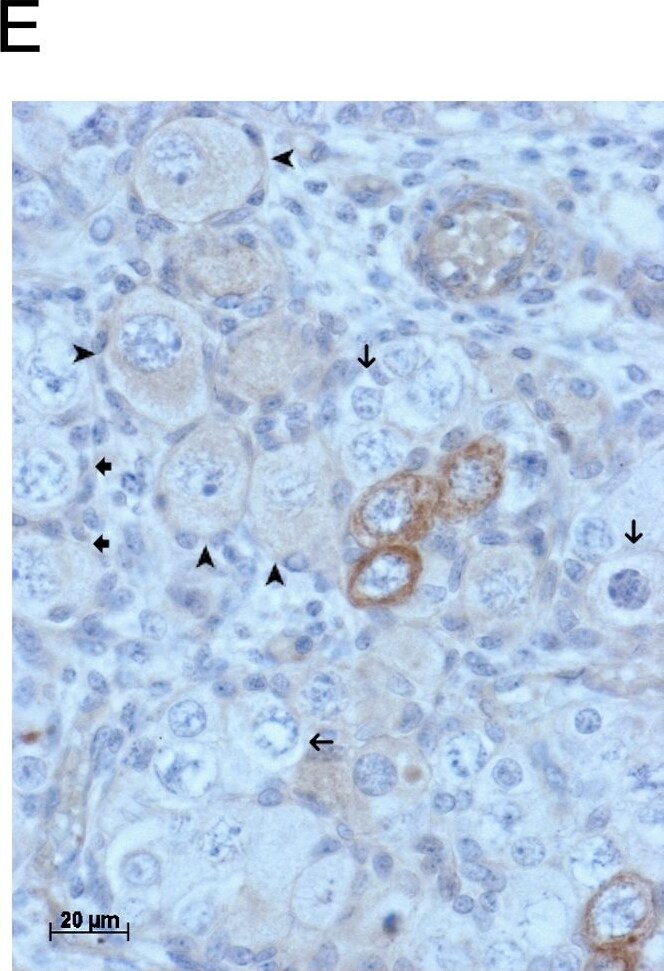
Detection of Human GDF-9 by Immunohistochemistry-Paraffin
GDF9 is expressed in the human fetal ovary.qRT-PCR analysis of GDF9 (A), BMP15 (B) and NOBOX (C) mRNA expression in human fetal ovary across the gestational range of 8 to 20 weeks. Ovaries (n = 5–7 per group) were grouped according to developmental stage and transcript levels measured relative to those of RPL32. Bars indicate mean±sem. Statistically different levels are indicated by asterisks above the columns, thus expression of GDF9 at 18–20 weeks was significantly higher than at 8–11 weeks (p<0.005) as was expression of BMP15 and of NOBOX (both p<0.01). DAB immunohistochemical detection of GDF9: 19 week (D, E) and 20 week (F) human fetal ovary stained with anti-GDF9 antibody or normal goat IgG negative control (F inset)—positive staining is brown. Thick arrows indicate primordial follicles and thin arrows germ cells that are not stained for GDF9 while the arrowheads indicate primordial follicles that are positive for GDF9. Scale bars are 50μm (D and F) and 20μm (E). Image collected and cropped by CiteAb from the following open publication (https://pubmed.ncbi.nlm.nih.gov/25790371), licensed under a CC-BY license. Not internally tested by R&D Systems.
Detection of Human GDF-9 by Immunohistochemistry-Paraffin
GDF9 is expressed in the human fetal ovary.qRT-PCR analysis of GDF9 (A), BMP15 (B) and NOBOX (C) mRNA expression in human fetal ovary across the gestational range of 8 to 20 weeks. Ovaries (n = 5–7 per group) were grouped according to developmental stage and transcript levels measured relative to those of RPL32. Bars indicate mean±sem. Statistically different levels are indicated by asterisks above the columns, thus expression of GDF9 at 18–20 weeks was significantly higher than at 8–11 weeks (p<0.005) as was expression of BMP15 and of NOBOX (both p<0.01). DAB immunohistochemical detection of GDF9: 19 week (D, E) and 20 week (F) human fetal ovary stained with anti-GDF9 antibody or normal goat IgG negative control (F inset)—positive staining is brown. Thick arrows indicate primordial follicles and thin arrows germ cells that are not stained for GDF9 while the arrowheads indicate primordial follicles that are positive for GDF9. Scale bars are 50μm (D and F) and 20μm (E). Image collected and cropped by CiteAb from the following open publication (https://pubmed.ncbi.nlm.nih.gov/25790371), licensed under a CC-BY license. Not internally tested by R&D Systems.Applications for GDF-9 Antibody
Immunohistochemistry
Sample: Immersion fixed frozen sections of mouse embryo (E11-13) and perfusion fixed frozen sections of mouse ovary
Western Blot
Sample: Human ovary tissue, mouse ovary tissue, and CHO Chinese hamster ovary cell line
Formulation, Preparation, and Storage
Purification
Reconstitution
Formulation
Shipping
Stability & Storage
- 12 months from date of receipt, -20 to -70 °C as supplied.
- 1 month, 2 to 8 °C under sterile conditions after reconstitution.
- 6 months, -20 to -70 °C under sterile conditions after reconstitution.
Calculators
Background: GDF-9
References
- McGrath, S.A. et al. (1995) Mol. Endocrinol. 9:131.
- Mottershead, D.G. et al. (2008) Mol. Cell. Endocrinol. 283:58.
- McPherron, A.C. and S.-J. Lee (1992) J. Biol. Chem. 268:3444.
- Gilchrist, R.B. et al. (2006) J. Cell. Sci. 119:3811.
- Dong, J. et al. (1996) Nature 383:531.
- Roh, J.S. et al. (2003) Endocrinology 144:172.
- Kaivo-Oja, N. et al. (2003) J. Clin. Endocrinol. Metab. 88:755.
- Mazerbourg, S. et al. (2004) Mol. Endocrinol. 18:653.
- Vitt, U.A. et al. (2002) Biol. Reprod. 67:473.
Long Name
Alternate Names
Gene Symbol
Additional GDF-9 Products
Product Documents for GDF-9 Antibody
Certificate of Analysis
To download a Certificate of Analysis, please enter a lot or batch number in the search box below.
Note: Certificate of Analysis not available for kit components.
Product Specific Notices for GDF-9 Antibody
For research use only
Related Research Areas
Citations for GDF-9 Antibody
 Powered by Bioz
Customer Reviews for GDF-9 Antibody
There are currently no reviews for this product. Be the first to review GDF-9 Antibody and earn rewards!
Have you used GDF-9 Antibody?
Submit a review and receive an Amazon gift card!
$25/€18/£15/$25CAN/¥2500 for a review with an image
$10/€7/£6/$10CAN/¥1110 for a review without an image
Submit a review
Protocols
Find general support by application which include: protocols, troubleshooting, illustrated assays, videos and webinars.
- Antigen Retrieval Protocol (PIER)
- Antigen Retrieval for Frozen Sections Protocol
- Appropriate Fixation of IHC/ICC Samples
- Cellular Response to Hypoxia Protocols
- Chromogenic IHC Staining of Formalin-Fixed Paraffin-Embedded (FFPE) Tissue Protocol
- Chromogenic Immunohistochemistry Staining of Frozen Tissue
- ClariTSA™ Fluorophore Kits
- Detection & Visualization of Antibody Binding
- Fluorescent IHC Staining of Frozen Tissue Protocol
- Graphic Protocol for Heat-induced Epitope Retrieval
- Graphic Protocol for the Preparation and Fluorescent IHC Staining of Frozen Tissue Sections
- Graphic Protocol for the Preparation and Fluorescent IHC Staining of Paraffin-embedded Tissue Sections
- Graphic Protocol for the Preparation of Gelatin-coated Slides for Histological Tissue Sections
- IHC Sample Preparation (Frozen sections vs Paraffin)
- Immunofluorescent IHC Staining of Formalin-Fixed Paraffin-Embedded (FFPE) Tissue Protocol
- Immunohistochemistry (IHC) and Immunocytochemistry (ICC) Protocols
- Immunohistochemistry Frozen Troubleshooting
- Immunohistochemistry Paraffin Troubleshooting
- Preparing Samples for IHC/ICC Experiments
- Preventing Non-Specific Staining (Non-Specific Binding)
- Primary Antibody Selection & Optimization
- Protocol for Heat-Induced Epitope Retrieval (HIER)
- Protocol for Making a 4% Formaldehyde Solution in PBS
- Protocol for VisUCyte™ HRP Polymer Detection Reagent
- Protocol for the Preparation & Fixation of Cells on Coverslips
- Protocol for the Preparation and Chromogenic IHC Staining of Frozen Tissue Sections
- Protocol for the Preparation and Chromogenic IHC Staining of Frozen Tissue Sections - Graphic
- Protocol for the Preparation and Chromogenic IHC Staining of Paraffin-embedded Tissue Sections
- Protocol for the Preparation and Chromogenic IHC Staining of Paraffin-embedded Tissue Sections - Graphic
- Protocol for the Preparation and Fluorescent IHC Staining of Frozen Tissue Sections
- Protocol for the Preparation and Fluorescent IHC Staining of Paraffin-embedded Tissue Sections
- Protocol for the Preparation of Gelatin-coated Slides for Histological Tissue Sections
- R&D Systems Quality Control Western Blot Protocol
- TUNEL and Active Caspase-3 Detection by IHC/ICC Protocol
- The Importance of IHC/ICC Controls
- Troubleshooting Guide: Immunohistochemistry
- Troubleshooting Guide: Western Blot Figures
- Western Blot Conditions
- Western Blot Protocol
- Western Blot Protocol for Cell Lysates
- Western Blot Troubleshooting
- Western Blot Troubleshooting Guide
- View all Protocols, Troubleshooting, Illustrated assays and Webinars