![Mouse IL-1 RII Antibody [Alexa Fluor® 750]](https://resources.rndsystems.com/images/icons/RnD-Default-Product-Image_Antibodies-Icon.svg "Mouse IL-1 RII Antibody [Alexa Fluor® 750]")

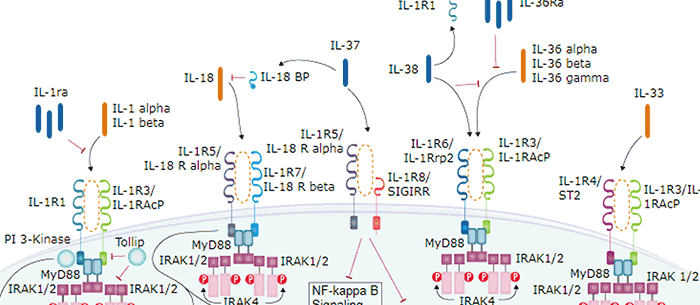
Two distinct types of receptors that bind the pleiotropic cytokines IL-1 alpha and IL-1 beta have been described. The IL-1 receptor type I is an 80 kDa transmembrane protein that is expressed predominantly by T cells, fibroblasts, and endothelial cells. IL-1 receptor type II is a 68 kDa transmembrane protein found on B lymphocytes, neutrophils, monocytes, large granular leukocytes and endothelial cells. Both receptors are members of the immunoglobulin superfamily and show approximately 28% sequence similarity in their extracellular domains. The two receptor types do not heterodimerize in a receptor complex. Mouse IL-1 RII shares 59% amino acid sequence homology with human IL-1 RII in their extracellular domains.
An IL-1 receptor accessory protein (1) that can heterodimerize with the type I receptor in the presence of IL-1 alpha or IL-1 beta but not IL-1ra, was identified. This type I receptor complex appears to mediate all the known IL-1 biological responses. The receptor type II has a short cytoplasmic domain and does not transduce IL-1 signals. In addition to the membrane-bound form of IL-1 RII, a naturally-occurring soluble form of IL-1 RII has been described. It has been suggested that the type II receptor, either as the membrane-bound or as the soluble form, serves as a decoy for IL-1 and inhibits IL-1 action by blocking the binding of IL-1 to the signaling type I receptor complex. Recombinant IL-1 soluble receptor type II is a potent antagonist of IL-1 action.