
NT5C Antibody - BSA Free
Novus Biologicals | Catalog # NBP1-84563

![Knockdown Validated: NT5C Antibody [NBP1-84563]](https://resources.rndsystems.com/images/products/NT5C-Antibody-Knockdown-Validated-NBP1-84563-img0012.jpg "Western Blot: NT5C Antibody [NBP1-84563]")
![Immunocytochemistry/ Immunofluorescence: NT5C Antibody [NBP1-84563]](https://resources.rndsystems.com/images/products/NT5C-Antibody-Immunocytochemistry-Immunofluorescence-NBP1-84563-img0011.jpg "Immunocytochemistry/ Immunofluorescence: NT5C Antibody [NBP1-84563]")
Scientific images may be resized, cropped, or adjusted for brightness or contrast for presentation purposes. These updates are limited to presentation and do not affect the underlying scientific interpretation of the data. Where available, additional source data may be provided upon request.
Key Product Details
Validated by
Species Reactivity
Validated:
Cited:
Applications
Validated:
Cited:
Label
Antibody Source
Format
Product Specifications
Immunogen
Reactivity Notes
Clonality
Host
Isotype
Scientific Data Images for NT5C Antibody - BSA Free
Immunocytochemistry/ Immunofluorescence: NT5C Antibody [NBP1-84563]
Immunocytochemistry/Immunofluorescence: NT5C Antibody [NBP1-84563] - Staining of human cell line U-2 OS shows localization to cytosol. Antibody staining is shown in green.![Simple Western: NT5C Antibody [NBP1-84563]](https://resources.rndsystems.com/images/products/NT5C-Antibody-Simple-Western-NBP1-84563-img0007.jpg "Simple Western: NT5C Antibody [NBP1-84563]")
Simple Western: NT5C Antibody [NBP1-84563]
Simple Western: NT5C Antibody [NBP1-84563] - Simple Western lane view shows a specific band for NT5C in 0.2 mg/ml of RT-4 lysate. This experiment was performed under reducing conditions using the 12-230 kDa separation system.![Simple Western: NT5C Antibody [NBP1-84563]](https://resources.rndsystems.com/images/products/NT5C-Antibody-Simple-Western-NBP1-84563-img0009.jpg "Simple Western: NT5C Antibody [NBP1-84563]")
Simple Western: NT5C Antibody [NBP1-84563]
Simple Western: NT5C Antibody [NBP1-84563] - Electropherogram image(s) of corresponding Simple Western lane view. NT5C antibody was used at 1:20 dilution on U-2OS lysates(s).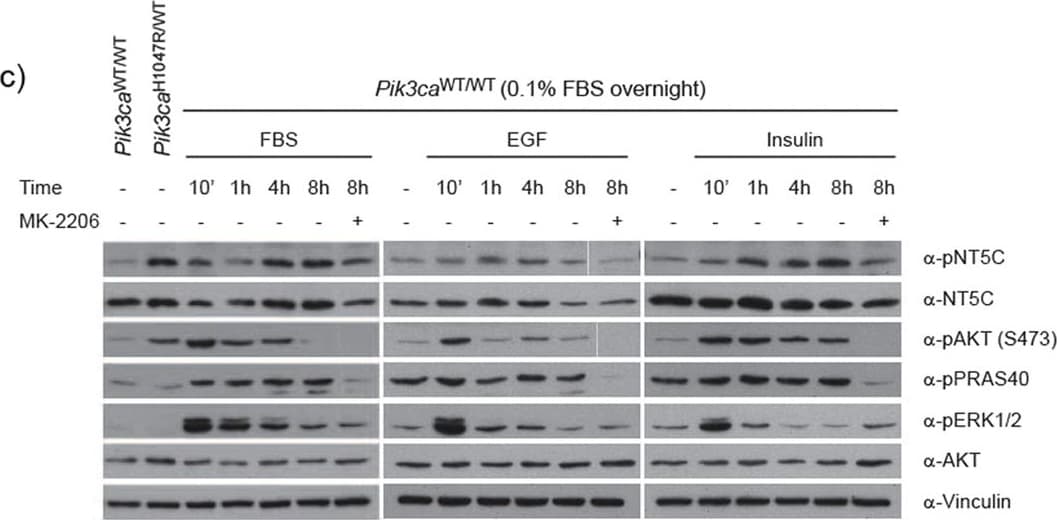
Western Blot: NT5C Antibody [NBP1-84563] -
Western Blot: NT5C Antibody [NBP1-84563] - Regulation of NT5C S184 phosphorylation.(a) Sensitivity of S184 phosphorylation to PI3K pathway inhibitors. Primary MEFs were treated with A66 (3 μM), MK-2206 (1 μM), Rapamycin (20 nM), U0126 (10 μM) or DMSO as control for 3 h or overnight (o/n) for 16–18 h before lysis. (left) Lysates were immunoblotted as indicated. (right) Quantification of 4 independent experiments. Values are expressed relative to DMSO treated Pik3caH1047R/WT cells. Error bars are sem, **p < 0.01. (b) Sensitivity of S184 phosphorylation to growth factor deprivation. Indicated primary MEFs were grown in 10% FBS or starved overnight in 0.1% FBS. (top) Lysates were immunoblotted as indicated. (bottom) Quantification of 5 independent experiments. Values are expressed relative to Pik3caH1047R/WT cells grown in 10% FBS. Error bars are sem, ***p < 0.001. (c) Sensitivity of S184 phosphorylation to growth factor stimulation. Primary MEFs were starved overnight in 0.1% FBS & stimulated with FBS (10%), Insulin (100 nM) or EGF (100 ng/ml) for the indicated times before lysis. DMSO or MK-2206 (1 μM) was added at same time as stimuli. (top) Lysates were immunoblotted as indicated. (bottom) Quantification of 3–5 independent experiments. Values are expressed relative to time 0 for each stimuli. Error bars are sem. Image collected & cropped by CiteAb from the following publication (https://pubmed.ncbi.nlm.nih.gov/28059163), licensed under a CC-BY license. Not internally tested by Novus Biologicals.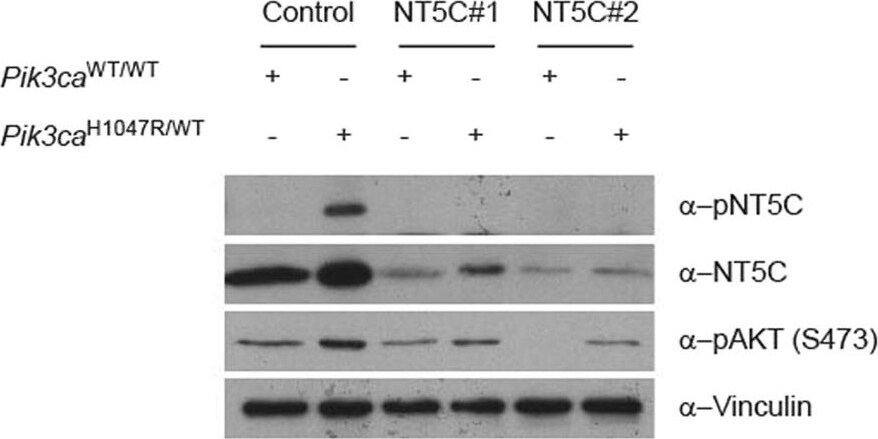
Western Blot: NT5C Antibody [NBP1-84563] -
Western Blot: NT5C Antibody [NBP1-84563] - Impact of S184 phosphorylation of NT5C catalytic activity.(a) S184 phosphorylation does not regulate NT5C nucleotidase activity in vitro. (left) Immunoprecipitates of Flag-NT5C ectopically expressed in HEK293 cells were incubated with 5 mM of the indicated nucleotides. Phosphate release was measured using a malachite green colorimetric assay & expressed as a percent of total nucleotide. The experiment was performed in duplicate & repeated 3 times independently. Error bars are sem. (right) Representative immunoblot from experimental cells. (b) Cells expressing Pik3caH1047R have elevated dNTP levels. (left, middle) Nucleotides were extracted from primary MEFs & analysed by UPLC-MS/MS. The experiment was performed in triplicate & repeated 4 times independently. Error bars are sem, *p < 0.05, **p < 0.01. (right) Representative immunoblot from experimental cells. (c) Effect of NT5C knockdown on cellular dCTP levels. (left) Nucleotides were extracted from primary MEFs, stably expressing indicated siRNA, & analysed by UPLC-MS/MS. The experiment was performed in triplicate & repeated 3 times independently. Error bars are sem. (right) Representative immunoblot from experimental cells. Image collected & cropped by CiteAb from the following publication (https://pubmed.ncbi.nlm.nih.gov/28059163), licensed under a CC-BY license. Not internally tested by Novus Biologicals.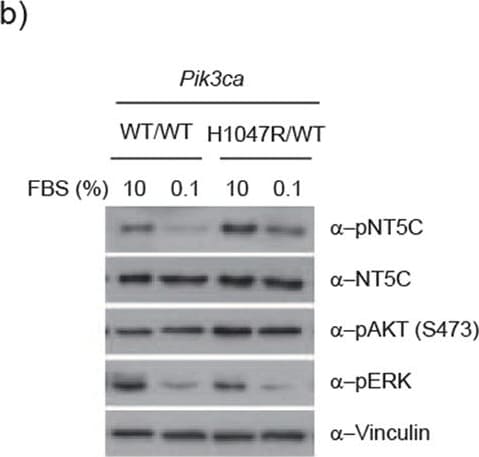
Western Blot: NT5C Antibody [NBP1-84563] -
Western Blot: NT5C Antibody [NBP1-84563] - Regulation of NT5C S184 phosphorylation.(a) Sensitivity of S184 phosphorylation to PI3K pathway inhibitors. Primary MEFs were treated with A66 (3 μM), MK-2206 (1 μM), Rapamycin (20 nM), U0126 (10 μM) or DMSO as control for 3 h or overnight (o/n) for 16–18 h before lysis. (left) Lysates were immunoblotted as indicated. (right) Quantification of 4 independent experiments. Values are expressed relative to DMSO treated Pik3caH1047R/WT cells. Error bars are sem, **p < 0.01. (b) Sensitivity of S184 phosphorylation to growth factor deprivation. Indicated primary MEFs were grown in 10% FBS or starved overnight in 0.1% FBS. (top) Lysates were immunoblotted as indicated. (bottom) Quantification of 5 independent experiments. Values are expressed relative to Pik3caH1047R/WT cells grown in 10% FBS. Error bars are sem, ***p < 0.001. (c) Sensitivity of S184 phosphorylation to growth factor stimulation. Primary MEFs were starved overnight in 0.1% FBS & stimulated with FBS (10%), Insulin (100 nM) or EGF (100 ng/ml) for the indicated times before lysis. DMSO or MK-2206 (1 μM) was added at same time as stimuli. (top) Lysates were immunoblotted as indicated. (bottom) Quantification of 3–5 independent experiments. Values are expressed relative to time 0 for each stimuli. Error bars are sem. Image collected & cropped by CiteAb from the following publication (https://pubmed.ncbi.nlm.nih.gov/28059163), licensed under a CC-BY license. Not internally tested by Novus Biologicals.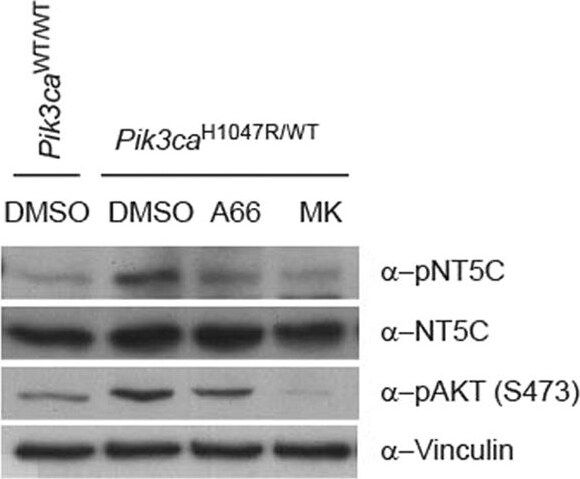
Western Blot: NT5C Antibody [NBP1-84563] -
Western Blot: NT5C Antibody [NBP1-84563] - Impact of S184 phosphorylation of NT5C catalytic activity.(a) S184 phosphorylation does not regulate NT5C nucleotidase activity in vitro. (left) Immunoprecipitates of Flag-NT5C ectopically expressed in HEK293 cells were incubated with 5 mM of the indicated nucleotides. Phosphate release was measured using a malachite green colorimetric assay & expressed as a percent of total nucleotide. The experiment was performed in duplicate & repeated 3 times independently. Error bars are sem. (right) Representative immunoblot from experimental cells. (b) Cells expressing Pik3caH1047R have elevated dNTP levels. (left, middle) Nucleotides were extracted from primary MEFs & analysed by UPLC-MS/MS. The experiment was performed in triplicate & repeated 4 times independently. Error bars are sem, *p < 0.05, **p < 0.01. (right) Representative immunoblot from experimental cells. (c) Effect of NT5C knockdown on cellular dCTP levels. (left) Nucleotides were extracted from primary MEFs, stably expressing indicated siRNA, & analysed by UPLC-MS/MS. The experiment was performed in triplicate & repeated 3 times independently. Error bars are sem. (right) Representative immunoblot from experimental cells. Image collected & cropped by CiteAb from the following publication (https://pubmed.ncbi.nlm.nih.gov/28059163), licensed under a CC-BY license. Not internally tested by Novus Biologicals.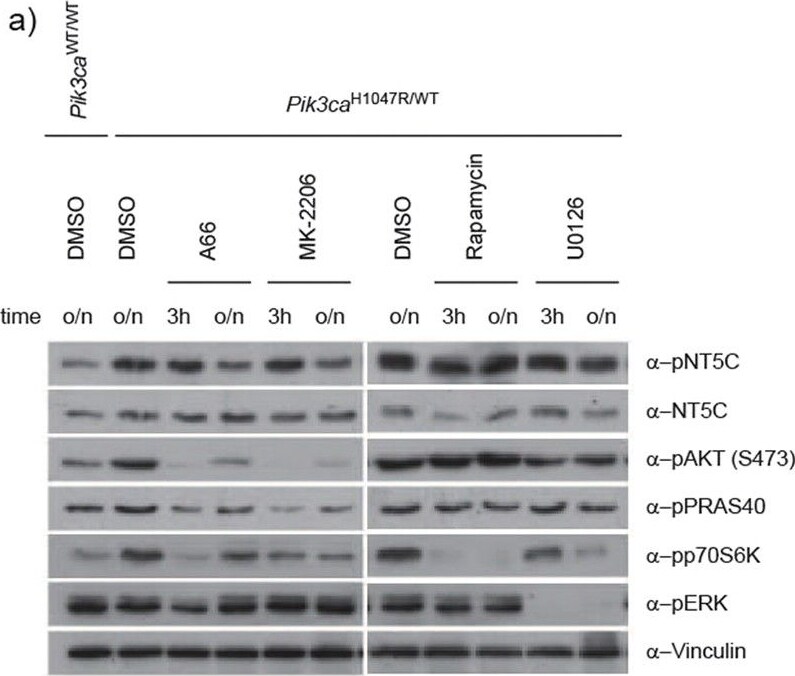
Western Blot: NT5C Antibody [NBP1-84563] -
Western Blot: NT5C Antibody [NBP1-84563] - Regulation of NT5C S184 phosphorylation.(a) Sensitivity of S184 phosphorylation to PI3K pathway inhibitors. Primary MEFs were treated with A66 (3 μM), MK-2206 (1 μM), Rapamycin (20 nM), U0126 (10 μM) or DMSO as control for 3 h or overnight (o/n) for 16–18 h before lysis. (left) Lysates were immunoblotted as indicated. (right) Quantification of 4 independent experiments. Values are expressed relative to DMSO treated Pik3caH1047R/WT cells. Error bars are sem, **p < 0.01. (b) Sensitivity of S184 phosphorylation to growth factor deprivation. Indicated primary MEFs were grown in 10% FBS or starved overnight in 0.1% FBS. (top) Lysates were immunoblotted as indicated. (bottom) Quantification of 5 independent experiments. Values are expressed relative to Pik3caH1047R/WT cells grown in 10% FBS. Error bars are sem, ***p < 0.001. (c) Sensitivity of S184 phosphorylation to growth factor stimulation. Primary MEFs were starved overnight in 0.1% FBS & stimulated with FBS (10%), Insulin (100 nM) or EGF (100 ng/ml) for the indicated times before lysis. DMSO or MK-2206 (1 μM) was added at same time as stimuli. (top) Lysates were immunoblotted as indicated. (bottom) Quantification of 3–5 independent experiments. Values are expressed relative to time 0 for each stimuli. Error bars are sem. Image collected & cropped by CiteAb from the following publication (https://pubmed.ncbi.nlm.nih.gov/28059163), licensed under a CC-BY license. Not internally tested by Novus Biologicals.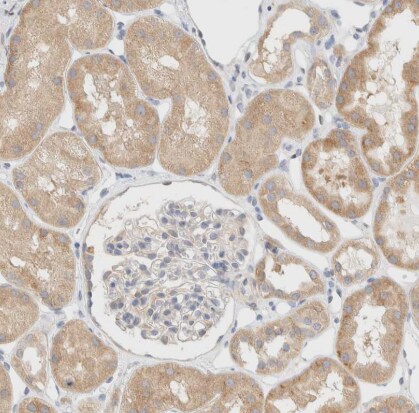
Immunohistochemistry-Paraffin: NT5C Antibody [NBP1-84563] -
Immunohistochemistry-Paraffin: NT5C Antibody [NBP1-84563] -Staining of human kidney shows moderate cytoplasmic positivity in cells in tubules.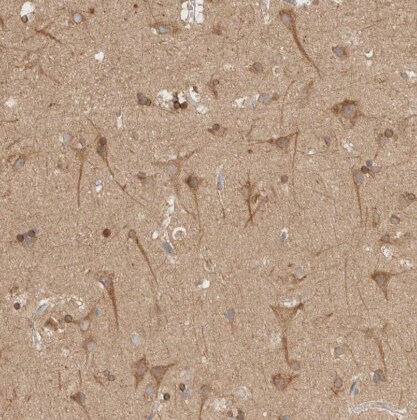
Immunohistochemistry-Paraffin: NT5C Antibody [NBP1-84563] -
Immunohistochemistry-Paraffin: NT5C Antibody [NBP1-84563] -Staining of human cerebral cortex shows moderate cytoplasmic positivity in neuronal cells.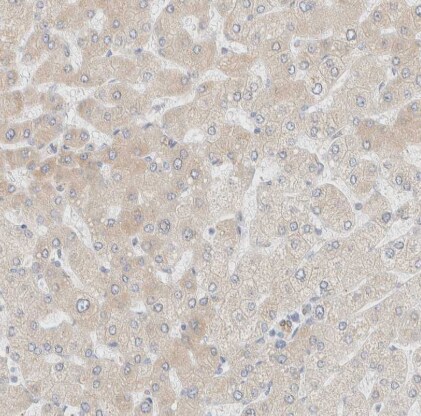
Immunohistochemistry-Paraffin: NT5C Antibody [NBP1-84563] -
Immunohistochemistry-Paraffin: NT5C Antibody [NBP1-84563] -Staining of human liver shows weak cytoplasmic positivity in hepatocytes as expected.![NT5C Antibody - BSA Free Immunohistochemistry-Paraffin: NT5C Antibody - BSA Free [NBP1-84563]](https://resources.rndsystems.com/images/products/nbp1-84563_rabbit-polyclonal-nt5c-antibody-104202515403143.jpg "Immunohistochemistry-Paraffin: NT5C Antibody - BSA Free [NBP1-84563]")
Immunohistochemistry-Paraffin: NT5C Antibody - BSA Free [NBP1-84563]
Staining of human intestine shows strong cytoplasmic positivity in glandular cells.Applications for NT5C Antibody - BSA Free
Immunocytochemistry/ Immunofluorescence
Immunohistochemistry
Immunohistochemistry-Paraffin
Simple Western
See Simple Western Antibody Database for Simple Western validation: Tested in U-2OS, RT-4, separated by Size, antibody dilution of 1:20, apparent MW was 29 kDa
Formulation, Preparation, and Storage
Purification
Formulation
Format
Preservative
Concentration
Shipping
Stability & Storage
Background: NT5C
Alternate Names
Gene Symbol
Additional NT5C Products
Product Documents for NT5C Antibody - BSA Free
Certificate of Analysis
To download a Certificate of Analysis, please enter a lot or batch number in the search box below.
Product Specific Notices for NT5C Antibody - BSA Free
This product is for research use only and is not approved for use in humans or in clinical diagnosis. Primary Antibodies are guaranteed for 1 year from date of receipt.
Citations for NT5C Antibody - BSA Free
 Powered by Bioz
Customer Reviews for NT5C Antibody - BSA Free
There are currently no reviews for this product. Be the first to review NT5C Antibody - BSA Free and earn rewards!
Have you used NT5C Antibody - BSA Free?
Submit a review and receive an Amazon gift card!
$25/€18/£15/$25CAN/¥2500 for a review with an image
$10/€7/£6/$10CAN/¥1110 for a review without an image
Submit a review
Protocols
Find general support by application which include: protocols, troubleshooting, illustrated assays, videos and webinars.
- Antigen Retrieval Protocol (PIER)
- Antigen Retrieval for Frozen Sections Protocol
- Appropriate Fixation of IHC/ICC Samples
- Cellular Response to Hypoxia Protocols
- Chromogenic IHC Staining of Formalin-Fixed Paraffin-Embedded (FFPE) Tissue Protocol
- Chromogenic Immunohistochemistry Staining of Frozen Tissue
- ClariTSA™ Fluorophore Kits
- Detection & Visualization of Antibody Binding
- Fluorescent IHC Staining of Frozen Tissue Protocol
- Graphic Protocol for Heat-induced Epitope Retrieval
- Graphic Protocol for the Preparation and Fluorescent IHC Staining of Frozen Tissue Sections
- Graphic Protocol for the Preparation and Fluorescent IHC Staining of Paraffin-embedded Tissue Sections
- Graphic Protocol for the Preparation of Gelatin-coated Slides for Histological Tissue Sections
- ICC Cell Smear Protocol for Suspension Cells
- ICC Immunocytochemistry Protocol Videos
- ICC for Adherent Cells
- IHC Sample Preparation (Frozen sections vs Paraffin)
- Immunocytochemistry (ICC) Protocol
- Immunocytochemistry Troubleshooting
- Immunofluorescence of Organoids Embedded in Cultrex Basement Membrane Extract
- Immunofluorescent IHC Staining of Formalin-Fixed Paraffin-Embedded (FFPE) Tissue Protocol
- Immunohistochemistry (IHC) and Immunocytochemistry (ICC) Protocols
- Immunohistochemistry Frozen Troubleshooting
- Immunohistochemistry Paraffin Troubleshooting
- Preparing Samples for IHC/ICC Experiments
- Preventing Non-Specific Staining (Non-Specific Binding)
- Primary Antibody Selection & Optimization
- Protocol for Heat-Induced Epitope Retrieval (HIER)
- Protocol for Making a 4% Formaldehyde Solution in PBS
- Protocol for VisUCyte™ HRP Polymer Detection Reagent
- Protocol for the Fluorescent ICC Staining of Cell Smears - Graphic
- Protocol for the Fluorescent ICC Staining of Cultured Cells on Coverslips - Graphic
- Protocol for the Preparation & Fixation of Cells on Coverslips
- Protocol for the Preparation and Chromogenic IHC Staining of Frozen Tissue Sections
- Protocol for the Preparation and Chromogenic IHC Staining of Frozen Tissue Sections - Graphic
- Protocol for the Preparation and Chromogenic IHC Staining of Paraffin-embedded Tissue Sections
- Protocol for the Preparation and Chromogenic IHC Staining of Paraffin-embedded Tissue Sections - Graphic
- Protocol for the Preparation and Fluorescent ICC Staining of Cells on Coverslips
- Protocol for the Preparation and Fluorescent ICC Staining of Non-adherent Cells
- Protocol for the Preparation and Fluorescent ICC Staining of Stem Cells on Coverslips
- Protocol for the Preparation and Fluorescent IHC Staining of Frozen Tissue Sections
- Protocol for the Preparation and Fluorescent IHC Staining of Paraffin-embedded Tissue Sections
- Protocol for the Preparation of Gelatin-coated Slides for Histological Tissue Sections
- Protocol for the Preparation of a Cell Smear for Non-adherent Cell ICC - Graphic
- TUNEL and Active Caspase-3 Detection by IHC/ICC Protocol
- The Importance of IHC/ICC Controls
- Troubleshooting Guide: Immunohistochemistry
- View all Protocols, Troubleshooting, Illustrated assays and Webinars