
AI-Engineered Designer Proteins
Proteins Designed For Performance





Overcome Cell Culture Challenges with R&D Systems AI-Engineered Designer Proteins
Discover the future of protein design with R&D Systems designer proteins engineered to overcome key challenges in cell culture. Using advanced technologies including generative AI, protein evolution, and rational design, these proteins are optimized to deliver enhanced stability, improved biological activity, and consistent performance in demanding workflows such as cell therapy, organoids, and stem cell culture.
Maintain biological performance over time, reduce variability, and simplify complex workflows.
- Improved Stability: Maintain bioactivity over extended culture durations, even under challenging conditions
- Enhanced Potency: Achieve stronger biological responses with optimized activity and receptor engagement
- Greater Consistency: Reduce variability across experiments with more stable and predictable protein performance
- Workflow Efficiency: Minimize re-dosing and simplify media formulation for complex cell culture systems
- Designed for Translation: Animal-free proteins supporting reproducibility from research to advanced workflows
Our state-of-the-art designer proteins mirror the biological functionality of their wild-type counterparts while introducing optimized features to meet the evolving demands of cell therapy workflows and research applications.
With tailored functionalities such as hyperactivity, improved receptor affinities, enhanced workflow efficiency, and heat stability, our new designer cytokines and growth factors represent a breakthrough in cell culture innovation.
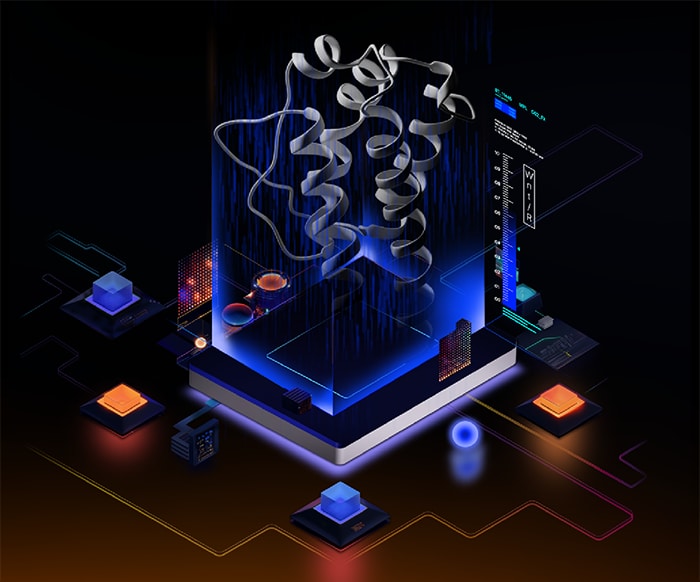
Featured AI-Engineered Designer Proteins
Heat Stable Growth Factors
- FGF4 Heat Stable – Proven stability benchmark enabling consistent organoid culture over extended durations
- FGF7 (KGF) Heat Stable – Reliable epithelial signaling for regenerative and organoid applications
- FGF8b Heat Stable – Consistent developmental signaling for complex and long-term cell models
Heat Stable Cytokines
- IL‑3 Heat Stable – Improved stability for hematopoietic and stem cell culture workflows
Enhanced Activity Cytokines
- IL‑15 Hyperactive – Increased receptor affinity for efficient NK and T cell expansion in cell therapy workflows
Our AI-Engineered Designer Proteins are engineered across multiple performance dimensions—including stability, efficiency, affinity, and activity—to address key challenges in modern cell culture workflows.
Proteins Designed for Thermal Stability
Engineered for enhanced structural stability, our heat stable proteins maintain high bioactivity in cell culture for longer periods than their wild-type counterparts. This increased stability reduces degradation in media, enabling more consistent results across extended culture durations and minimizing the need for repeated growth factor additions.
Validated with engineered growth factors such as FGF4 Heat Stable protein, which retains biological activity after extended exposure to 37 °C, while wild-type protein rapidly loses function.
Heat Stable Proteins
Ideal for cell therapy applications, heat stable proteins ensure:
- Improved Stability: Maintain bioactivity under extended culture and thermal stress conditions
- Consistent Cultures: Reduce variability across long-term experiments and complex cell systems
- Reliable Performance: Deliver reproducible signaling comparable to wild-type proteins
- Workflow Efficiency: Decrease frequency of media supplementation in demanding workflows
Building on enhanced stability, additional engineered proteins further optimize cellular responses through improved activity and receptor engagement.
Proteins Designed for Efficiency
Engineered to be water-soluble and easier to purify, our Wnt/R-Spondin Agonist Proteins effectively activate canonical Wnt signaling.
Wnt/R-Spondin Agonist Proteins
Key reagents for advancing stem cell research, organoid development, and regenerative medicine, these proteins offer:
- All-in-One Activation: Reduce experimental complexity with a single, cost-effective protein
- Streamline Workflows: Save time with a well-defined reagent to substitute for conditioned media or the addition of two individual proteins
- Reliable Performance: Effectively promotes Wnt receptor activation and canonical Wnt signaling
- Increased Solubility: More amenable to media formulations than traditional Wnt proteins
Proteins Designed for Affinity
Engineered to engage target receptors with higher affinity, these proteins show improved binding and cell expansion compared to their standard protein counterparts.
IL-2 (CD122-Directed) Protein
Ideal for large scale CAR T-cell or TIL expansion, this protein ensures:
- Enhanced CD122 Binding: Displays increased affinity to the IL-2 beta receptor (CD122) with decreased affinity to the IL-2 alpha receptor (CD25), resulting in more effective expansion of effector T cells
- Improved Output: Maintains growth of CD8+/CD4+ T cells for workflows requiring extended T cell proliferation
- Sustained Potential: Improved proliferation capacity and enhanced naive population without increased exhaustion of T cells
Proteins Designed for Hyperactivity
Engineered for enhanced biological activity, hyperactive proteins are designed to deliver stronger cellular responses compared to their wild-type counterparts. By optimizing receptor engagement and signaling efficiency, these proteins enable more effective cell expansion and differentiation in demanding applications.
Examples include IL‑15 Hyperactive protein, engineered for increased affinity to IL‑15 receptors, enabling more efficient expansion of NK cells and tumor-infiltrating lymphocytes (TILs) in cell therapy workflows.
- Enhanced Activity: Achieve higher biological potency compared to wild-type proteins
- Improved Cell Expansion: Support efficient proliferation in demanding cell culture systems
- Optimized Receptor Engagement: Increase signaling efficiency through enhanced affinity
- Greater Workflow Efficiency: Reduce protein usage while maintaining or improving outcomes
Together, these engineered capabilities enable more consistent, efficient, and scalable cell culture workflows.
Featured Content
Application Note: Development of an AI Modified IL-2 Heat Stable Agonist Protein
Explore the benefits of IL-2 Heat Stable Agonist Protein, which can withstand high temperatures and extended culture durations
Application Note: Characterization of Potent Wnt/R-Spondin Agonist Proteins
Learn about Wnt/R-Spondin Agonist Proteins, offering an all-in-one approach to Wnt signaling activation and increased solubility
FGF basic Heat Stable Protein: Designed for Stability
Optimize workflows with FGF basic Heat Stable Protein, designed to retain activity at high temperatures for extended cultures
Activin A Hyperactive Protein: Designed for Hyperactivity
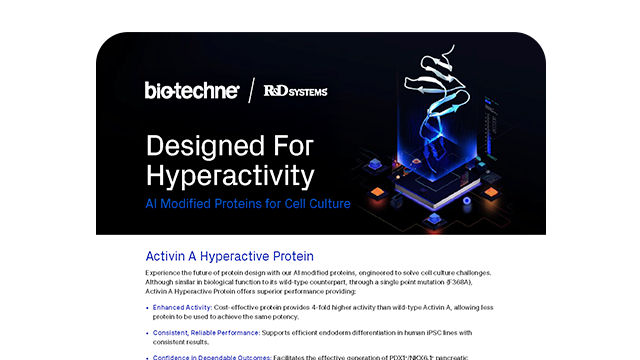
Read about our new Activin A Hyperactive Protein, exhibiting 4-fold higher activity than the wild-type protein
AI-Engineered Designer Protein Sample Request
We are now offering free samples of our AI-Engineered Designer Proteins. Please fill out the form below and specify which AI-Engineered Designer Proteins you are interested in testing. A team member will reach out to confirm shipping and send you a sample of the designated protein while supplies last. Interested in sampling more than one AI-Engineered Designer Proteins? Let us know in the Comments box.
View All AI-Engineered Designer Proteins
| Heat Stable Proteins | Efficient Proteins | Affinity Proteins | Hyperactive Proteins |
|---|---|---|---|
| RUO FGF basic Heat Stable: Catalog # BT-FGFBHS | Wnt/RSPO1 Agonist: Catalog # BT-WRSP1 | IL-2 (CD122-Directed): Catalog # BT-002DBR | Activin A Hyperactive: Catalog # BT-ACTAH |
| Animal-free Preclinical FGF basic Heat Stable: Catalog # BT-FGFBHS-AFL | Wnt/RSPO2 Agonist: Catalog # BT-WRSP2 | IL-15 Hyperactive: Catalog # BT-015H | |
| GMP FGF basic Heat Stable: Catalog # BT-FGFBHS-GMP | Wnt/RSPO3 Agonist: Catalog # BT-WRSP3 | ||
| FGF-10 Heat Stable: Catalog # BT-FGF10HS | |||
| FGF-4 Heat Stable: Catalog # BT-FGF4HS | |||
| FGF-8b Heat Stable: Catalog # BT-FGF8bHS | |||
| FGF-7 Heat Stable: Catalog # BT-FGF7HS | |||
| IL-3 Heat Stable: Catalog # BT-003HS | |||
| IL-2 Heat Stable Agonist: Catalog # BT-002HS |