
Recombinant Human FGF-10 Heat Stable Protein, CF
R&D Systems | Catalog # BT-FGF10HS

Loading...
Key Product Details
- R&D Systems E. coli-derived Recombinant Human FGF-10 Heat Stable Protein (BT-FGF10HS)
- Quality control testing to verify active proteins with lot specific assays by in-house scientists
- All R&D Systems proteins are covered with a 100% guarantee
Source
E. coli
Applications
Bioactivity
Loading...
Product Specifications
Source
E. coli-derived human FGF-10 protein
Prorietary, engineered based on O15520.
Prorietary, engineered based on O15520.
Purity
>90%, by SDS-PAGE visualized with Silver Staining and quantitative densitometry by Coomassie® Blue Staining.
Endotoxin Level
<0.10 EU per 1 μg of the protein by the LAL method.
SDS-PAGE
19-23 kDa, under reducing conditions.
Activity
Measured in a cell proliferation assay using Ba/F3 mouse pro B cells transfected with human FGF RIIb.
The ED50 for this effect is 4.00-60.0 ng/mL.
The ED50 for this effect is 4.00-60.0 ng/mL.
Reviewed Applications
Read 1 review rated 5 using BT-FGF10HS in the following applications:
Scientific Data Images for Recombinant Human FGF-10 Heat Stable Protein, CF
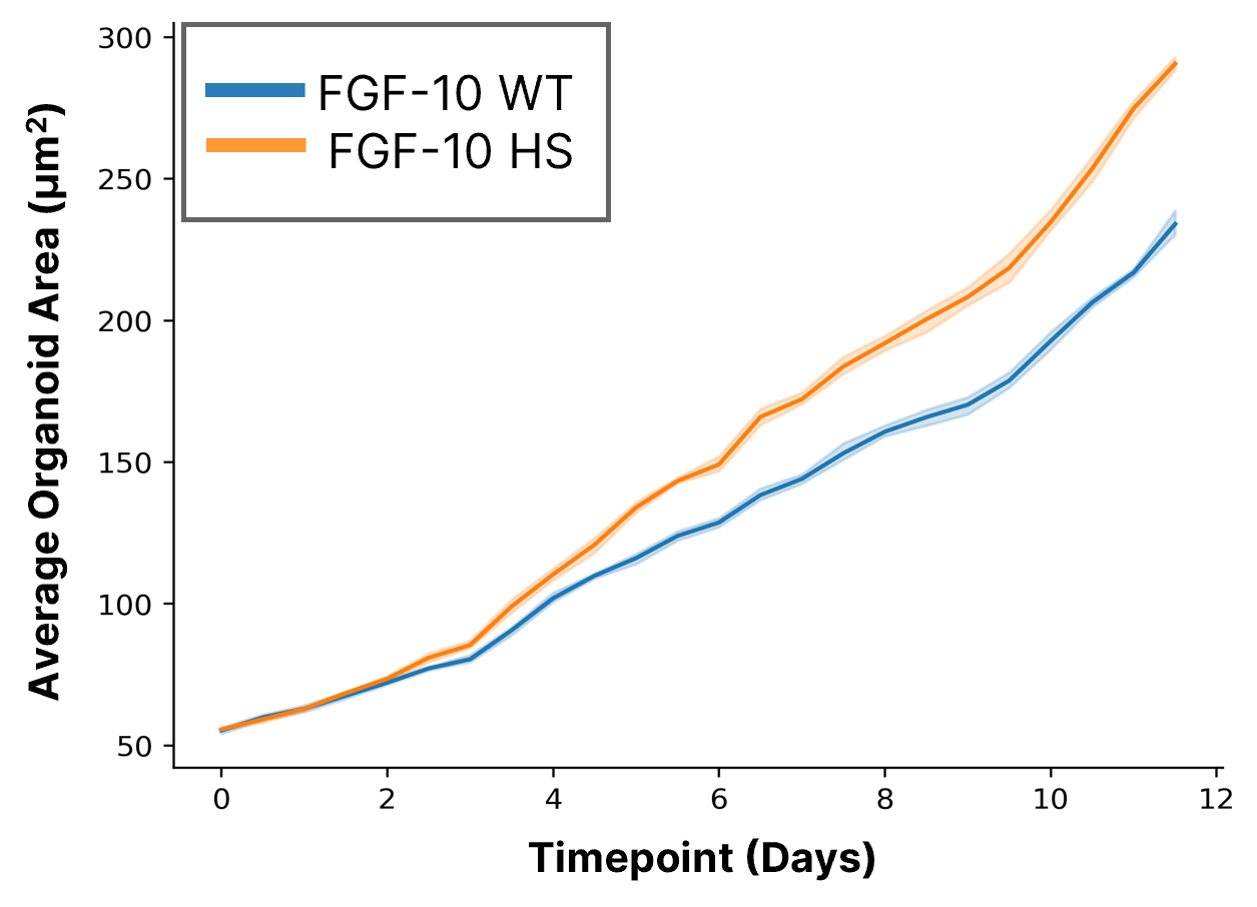
Lung organoid crowth curve comparrison
Size curve of adult tissue derived lung organoids grown with 100ng/mL of either wild type FGF-10 (WT) (Catalog #(345-FG) or FGF-10 Heat Stable (HS) (Catalog #(345-FG) in Cultrex™ UltiMatrix (Catalog #([[BME001-05]])). Cell density was 10k per 10 μl dome. After embedding, cells were cultured in the Incucyte SX5 and fed every 2-3 days.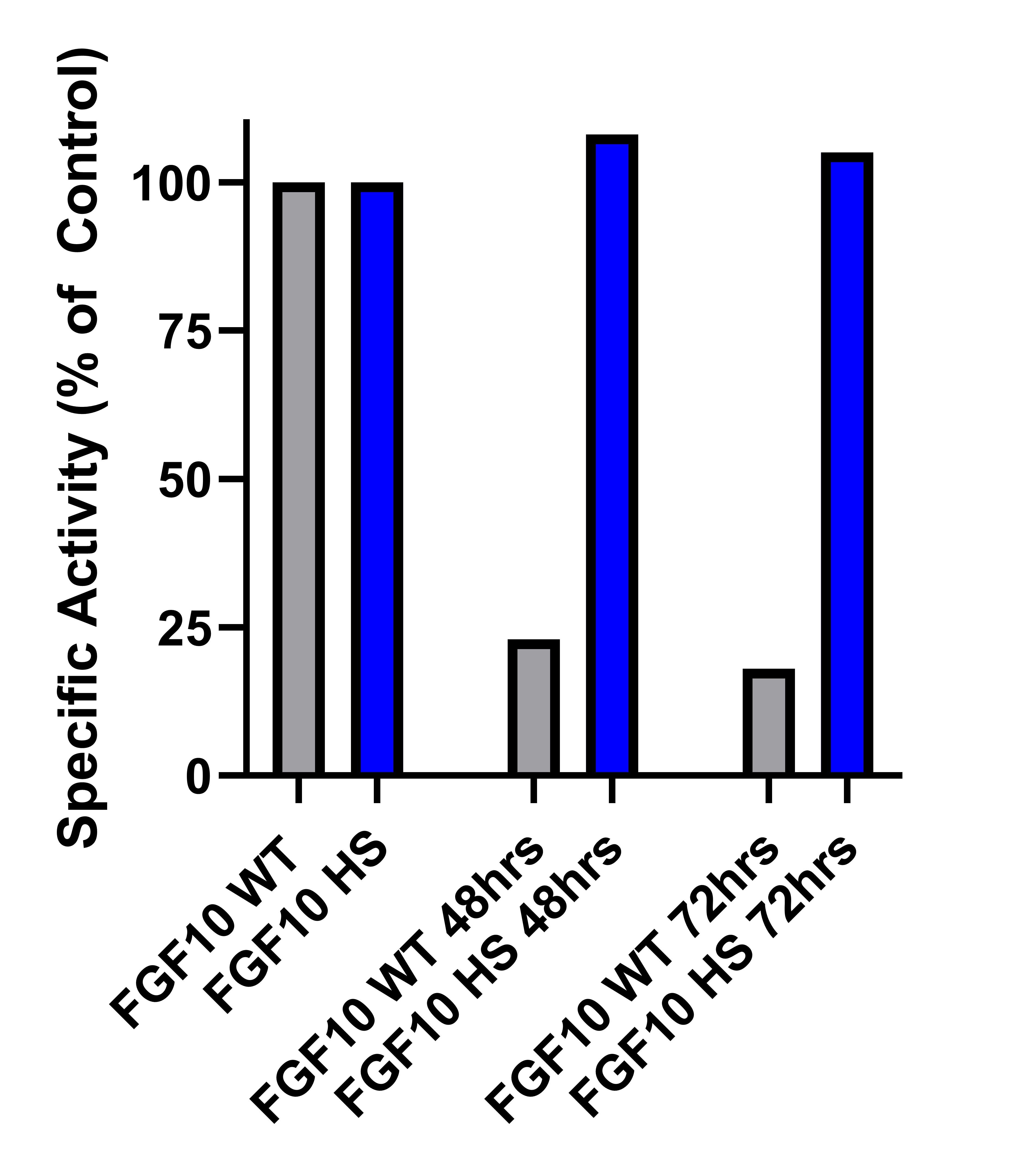
Heat Stable FGF-10 maintains activity at 48hr and 72 hrs at 37°C where Wild Type FGF-10 loses activity.
To evaluate the signal transduction response triggered by FGF-10, a HEK293 cell line that expresses a reporter for SEAP controlled by the Serum Response Element was utilized. Wild type FGF-10 (345-FG) and Heat Stable FGF-10HS (BT-FGF10HS) were incubated in DMEM media at 37°C for 48 or 72 hrs at concentrations of 600 ng/mL. Specific activity was assessed through a SEAP bioassay in HEK293 cells, wherein cells were treated with FGF-10 WT or FGF-10HS for 24 hours. The specific activity % of control was determined, with the control comprising FGF-10 stored at 4°C without any incubation.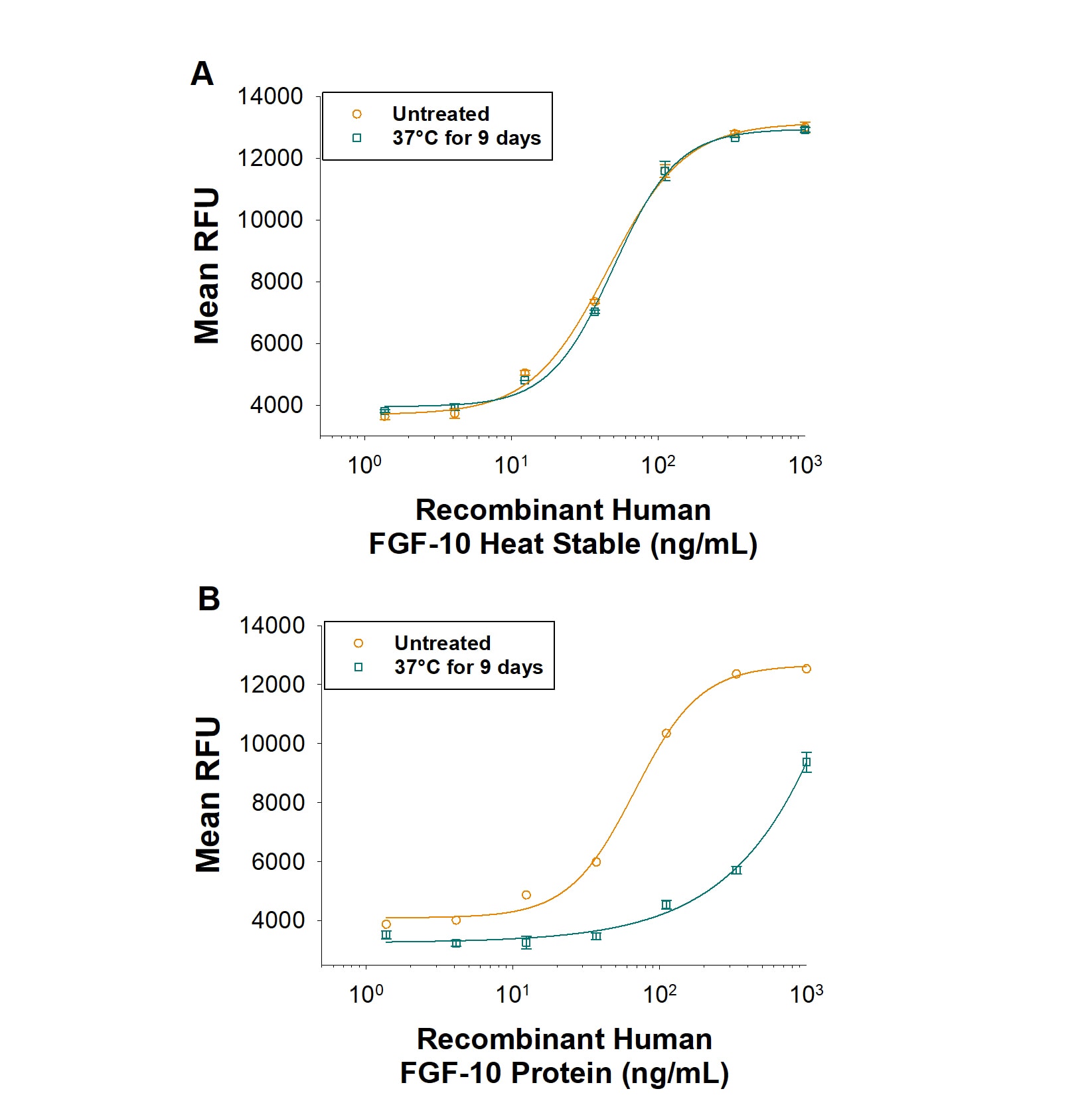
Recombinant Human FGF‑10 Heat Stable Bioactivity.
Recombinant Human FGF‑10 protein induces proliferation of Ba/F3 mouse pro-B cells transfected with human FGFR2b. (A) Recombinant Human FGF‑10 Heat Stable (Catalog # BT-FGF10HS) or (B) Recombinant Human FGF‑10 (345-FG) were either untreated or incubated at 37°C for 9 days in media. The heat-stable (HS) FGF‑10 retained similar bioactivity after incubation compared to the untreated HS protein, indicating that the HS protein has increased thermal stability. In contrast, the wild-type (WT) FGF‑10 protein showed a significant loss of activity following incubation, suggesting less thermal stability.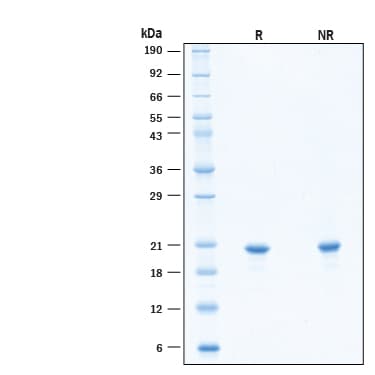
Recombinant Human FGF‑10 Heat Stable Protein SDS-PAGE.
2 μg/lane of Recombinant Human FGF‑10 Heat Stable Protein (Catalog # BT-FGF10HS) was resolved with SDS-PAGE under reducing (R) and non-reducing (NR) conditions and visualized by Coomassie® Blue staining, showing bands at 19-23 kDa, under reducing conditions.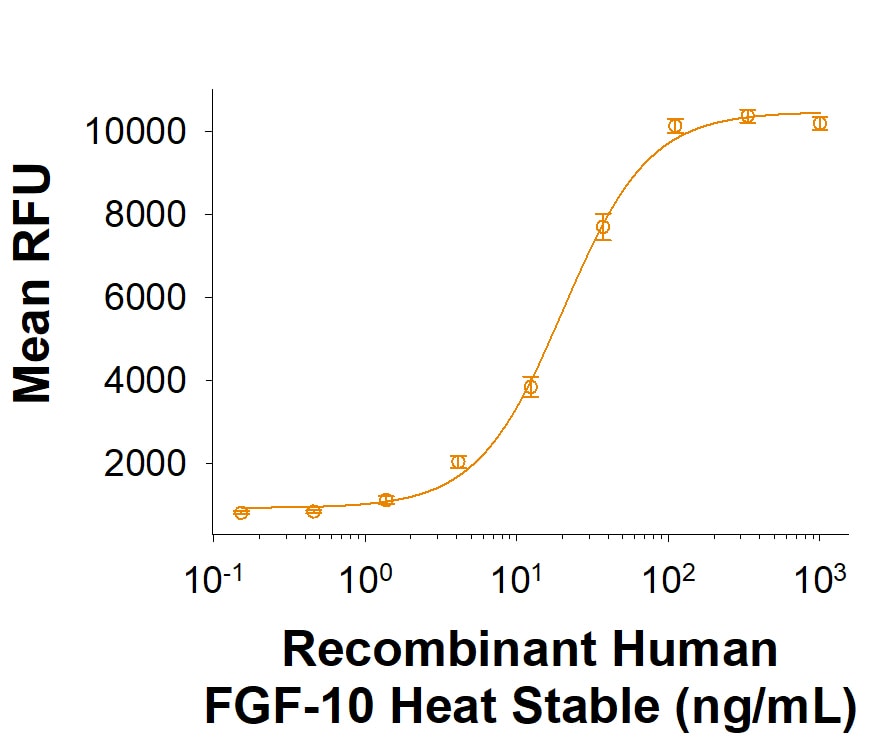
Recombinant Human FGF‑10 Heat Stable Protein Bioactivity.
Bioactivity of Recombinant Human FGF-10 Heat Stable Protein (Catalog # BT-FGF10HS) was measured in a cell proliferation assay using Ba/F3 mouse pro B cells transfected with human FGF RIIb. The ED50 for this effect is 4.00-60.0 ng/mL.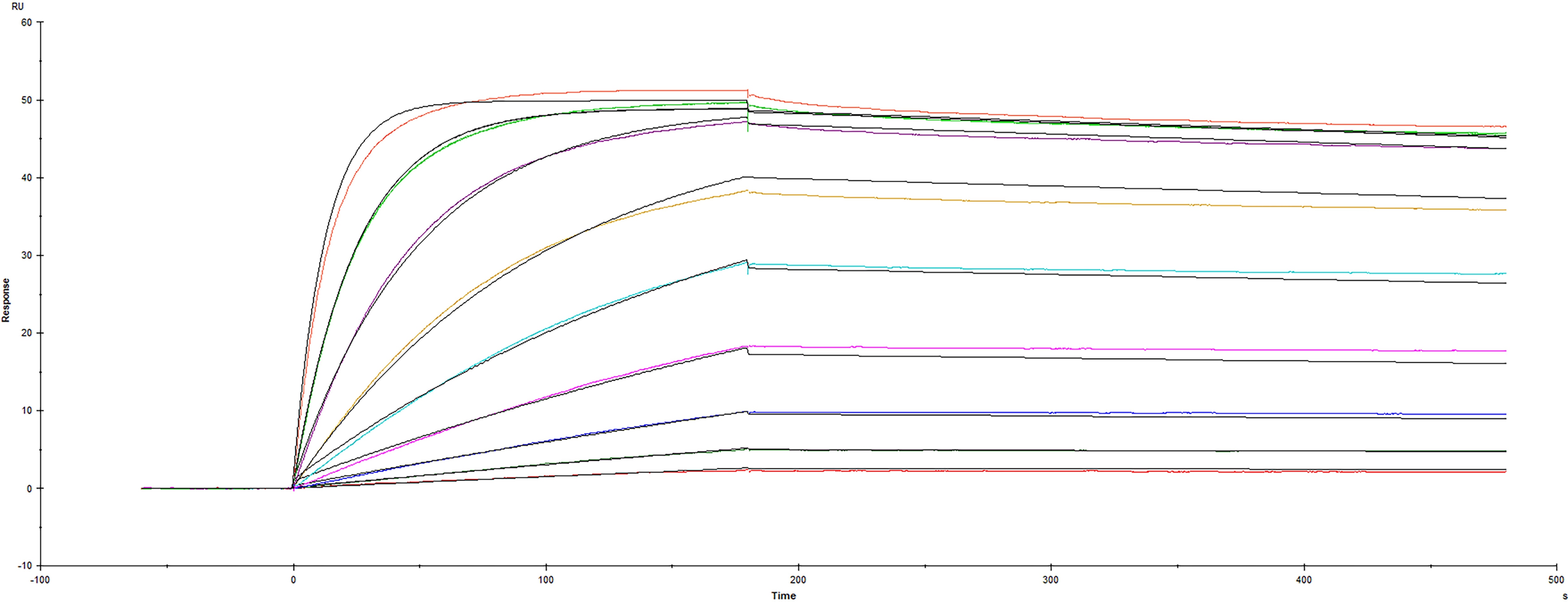
Recombinant Human FGF-10 Heat Stable SPR
Recombinant Human FGF R2 beta (IIIb) (Catalog # 665-FR) was captured on Biacore Sensor Chip CM5 via Recombinant Protein A/G/L (Catalog # NBP2-34985), and binding to Recombinant Human FGF 10 Heat Stable (Catalog # BT-FGF10HS) was measured at a concentration range between 0.0488 nM and 12.5 nM. The double-referenced sensorgram was fit to a two-state reaction binding model to determine the binding kinetics and affinity, with an affinity constant of KD=36.5 pM. (Biacore T200).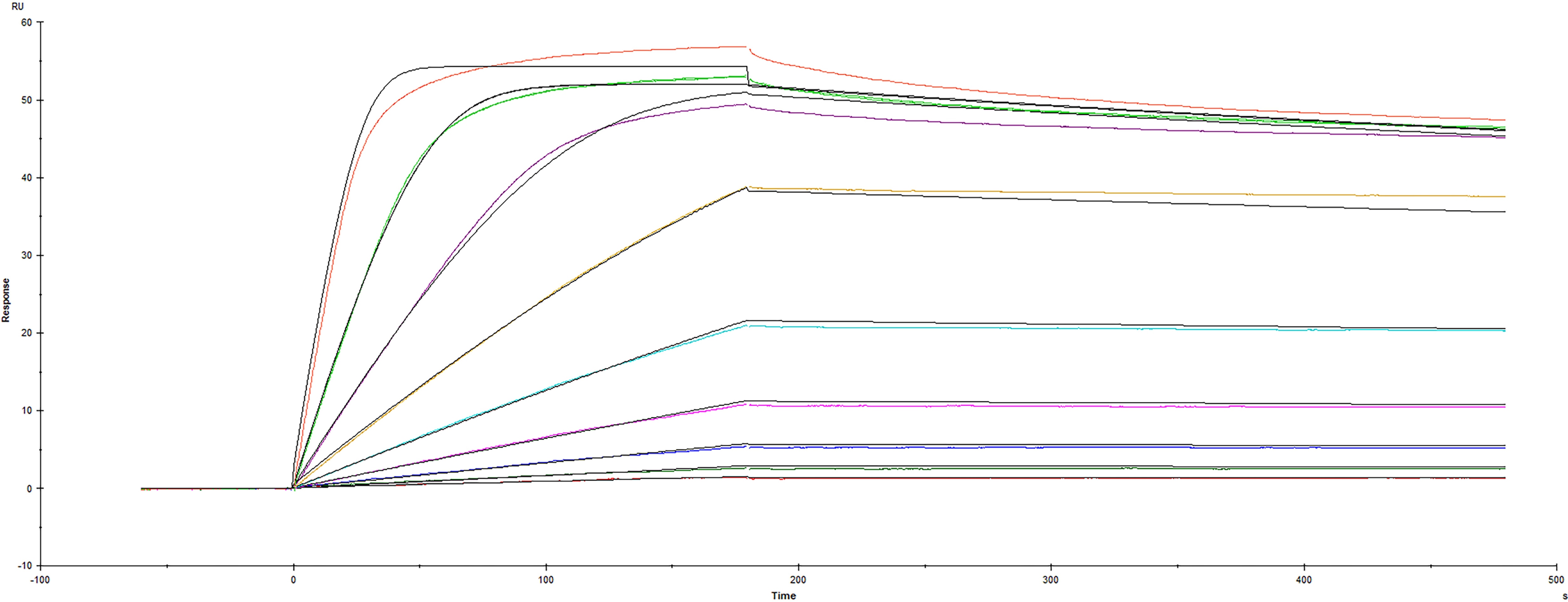
Recombinant Human FGF-10 SPR
Recombinant Human FGF R2 beta (IIIb) (Catalog # 665-FR) was captured on Biacore Sensor Chip CM5 via Recombinant Protein A/G/L (Catalog # NBP2-34985), and binding to Recombinant Human FGF 10 (Catalog # 345-FG) was measured at a concentration range between 0.0488 nM and 12.5 nM. The double-referenced sensorgram was fit to a two-state reaction binding model to determine the binding kinetics and affinity, with an affinity constant of KD=36.2 pM. (Biacore T200).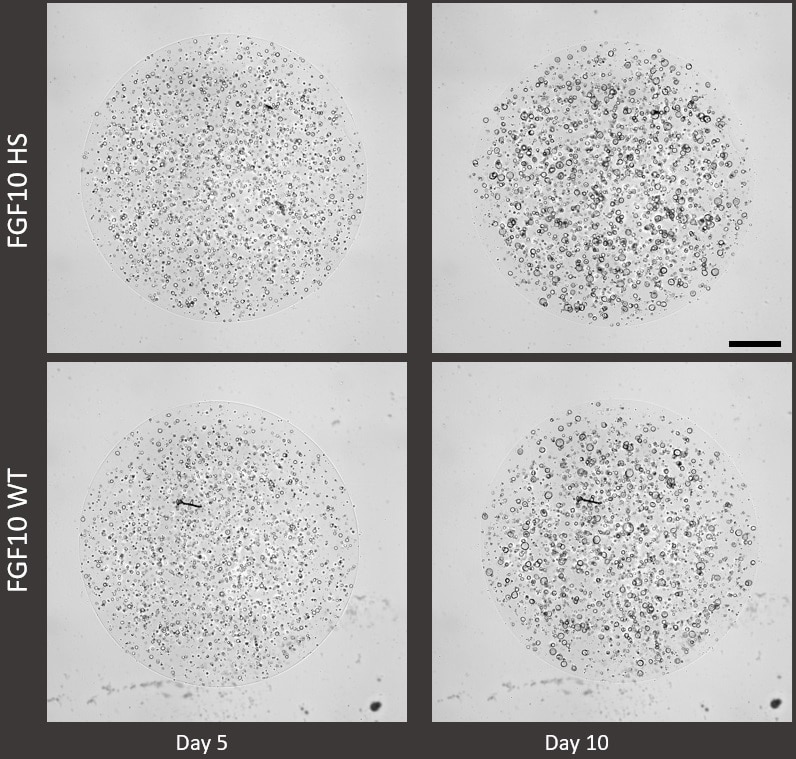
Heat Stable FGF-10 Supports Organoid Growth Equivalent to Wild Type in Basement Membrane Extract.
Adult airway organoids were cultured in Cultrex UltiMatrix (Catalog # BME001-05) with either Recombinant Human FGF-10 Heat Stable Protein (HS, Catalog # BT-FGF10HS) or wild type Recombinant Human FGF-10 (WT, Catalog # 345-FG). Scale bar indicates 1 mm.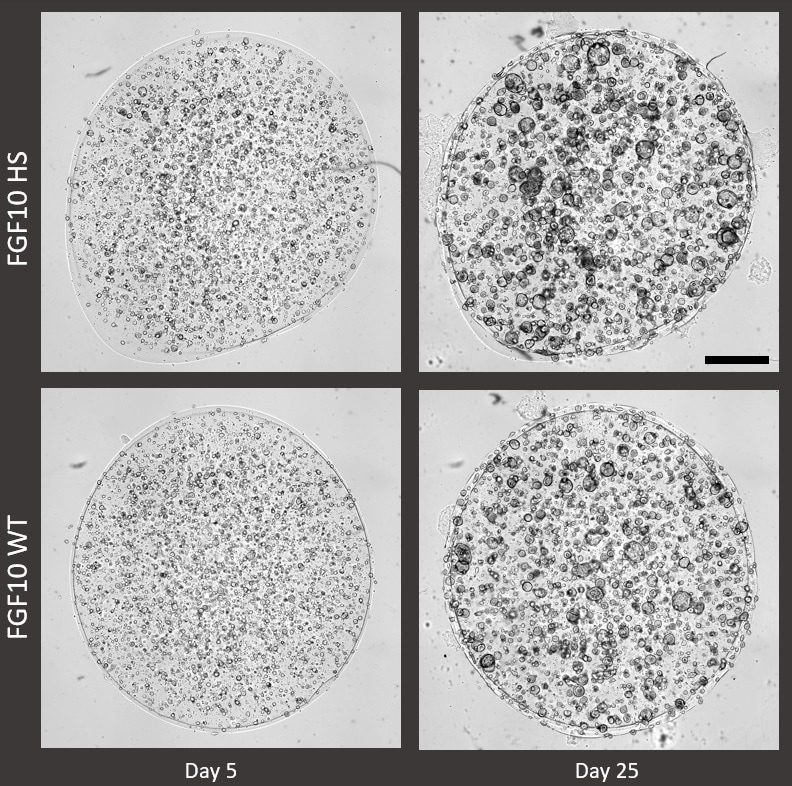
Heat Stable Protein Supports Organoid Growth Equivalent to Wild Type in a Defined Matrix.
Adult airway organoids were cultured in Cultrex Synthetic Hydrogel (Catalog # CSH-RUO-01) with either Recombinant Human FGF-10 Heat Stable Protein (HS, Catalog # BT-FGF10HS) or wild type Recombinant Human FGF-10 Protein (WT, Catalog # 345-FG). Scale bar indicates 1 mm.Formulation, Preparation, and Storage
BT-FGF10HS
| Formulation | Lyophilized from a 0.2 μm filtered solution in MOPS, Na2SO4, EDTA and DTT with Trehalose. |
| Reconstitution | Reconstitute at 250 μg/mL in water. |
| Shipping | The product is shipped at ambient temperature. Upon receipt, store it immediately at the temperature recommended below. |
| Stability & Storage | Use a manual defrost freezer and avoid repeated freeze-thaw cycles.
|
Calculators
Background: FGF-10
Long Name
Fibroblast Growth Factor 10
Alternate Names
FGF10, KGF-2, KGF2
Gene Symbol
FGF10
Additional FGF-10 Products
Product Documents for Recombinant Human FGF-10 Heat Stable Protein, CF
Certificate of Analysis
To download a Certificate of Analysis, please enter a lot or batch number in the search box below.
Note: Certificate of Analysis not available for kit components.
Product Specific Notices for Recombinant Human FGF-10 Heat Stable Protein, CF
For research use only
Related Research Areas
Customer Reviews for Recombinant Human FGF-10 Heat Stable Protein, CF (1)
5 out of 5
1 Customer Rating
Have you used Recombinant Human FGF-10 Heat Stable Protein, CF?
Submit a review and receive an Amazon gift card!
$25/€18/£15/$25CAN/¥2500 for a review with an image
$10/€7/£6/$10CAN/¥1110 for a review without an image
Submit a review
Customer Images
Showing
1
-
1 of
1 review
Showing All
Filter By:
-
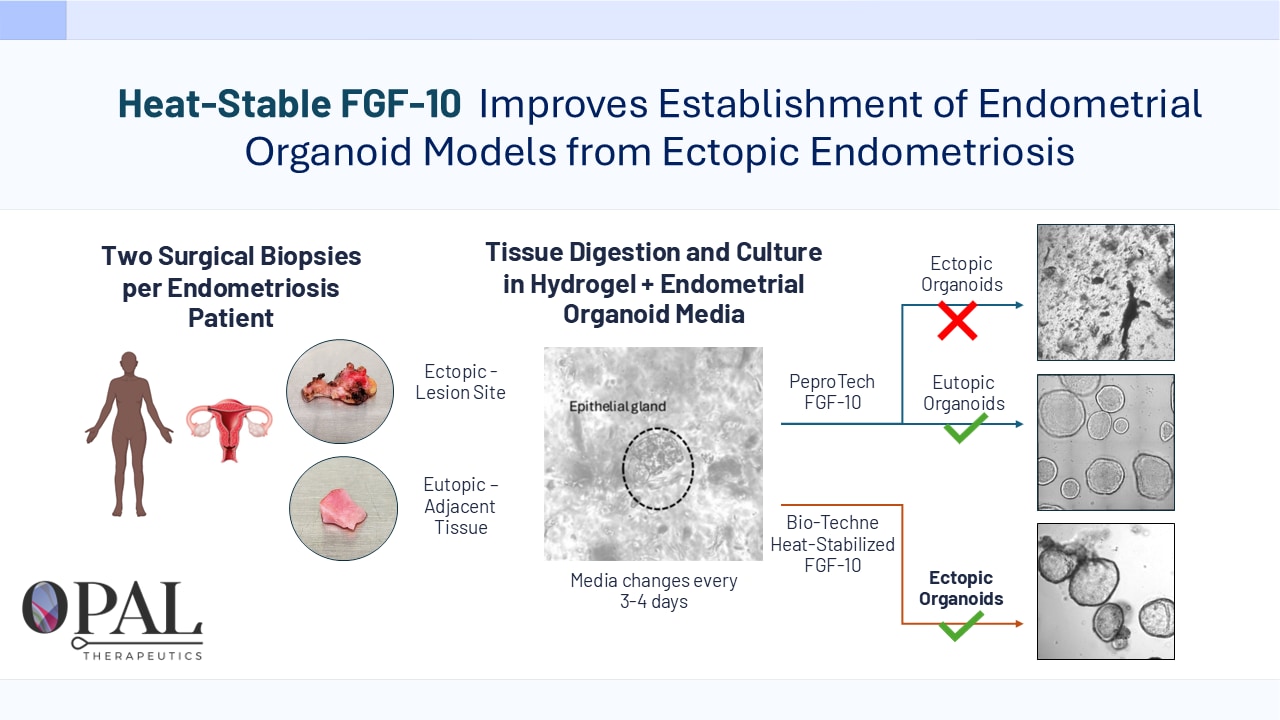
Application: Organoid ModelsVerified Customer | Posted 08/25/2026Heat-Stable FGF-10 Improves Establishment of Endometrial Organoid Models from Ectopic EndometriosisTwo Surgical Biopsies per Endometriosis Patient, Tissue Digestion and Culture in Hydrogel + Endometrial Organoid Media, Bio-Techne Heat-Stabilized FGF-10 produced Ectopic organoids while Peprotech FGF-10 did not.

There are no reviews that match your criteria.


