Best Seller

Recombinant Human IL-15 Protein

R&D Systems | Catalog # 247-ILB

Analyzed by SEC-MALS
R&D Systems
Loading...

Key Product Details

  • R&D Systems E. coli-derived Recombinant Human IL-15 Protein (247-ILB)
  • Quality control testing to verify active proteins with lot specific assays by in-house scientists
  • All R&D Systems proteins are covered with a 100% guarantee

Source

E. coli

Accession Number

Applications

Bioactivity
Loading...

Product Specifications

Source

E. coli-derived human IL-15 protein
Asn49-Ser162

Purity

>97%, by SDS-PAGE with silver staining.

Endotoxin Level

<0.10 EU per 1 μg of the protein by the LAL method.

N-terminal Sequence Analysis

Asn49

Predicted Molecular Mass

12.5 kDa

SDS-PAGE

10 kDa, under reducing conditions.

Activity

Measured in a cell proliferation assay using MO7e human megakaryocytic leukemic cells.
The ED50 for this effect is 0.3-2.6 ng/mL.

Reviewed Applications

Read 1 review rated 5 using 247-ILB in the following applications:

Scientific Data Images for Recombinant Human IL-15 Protein

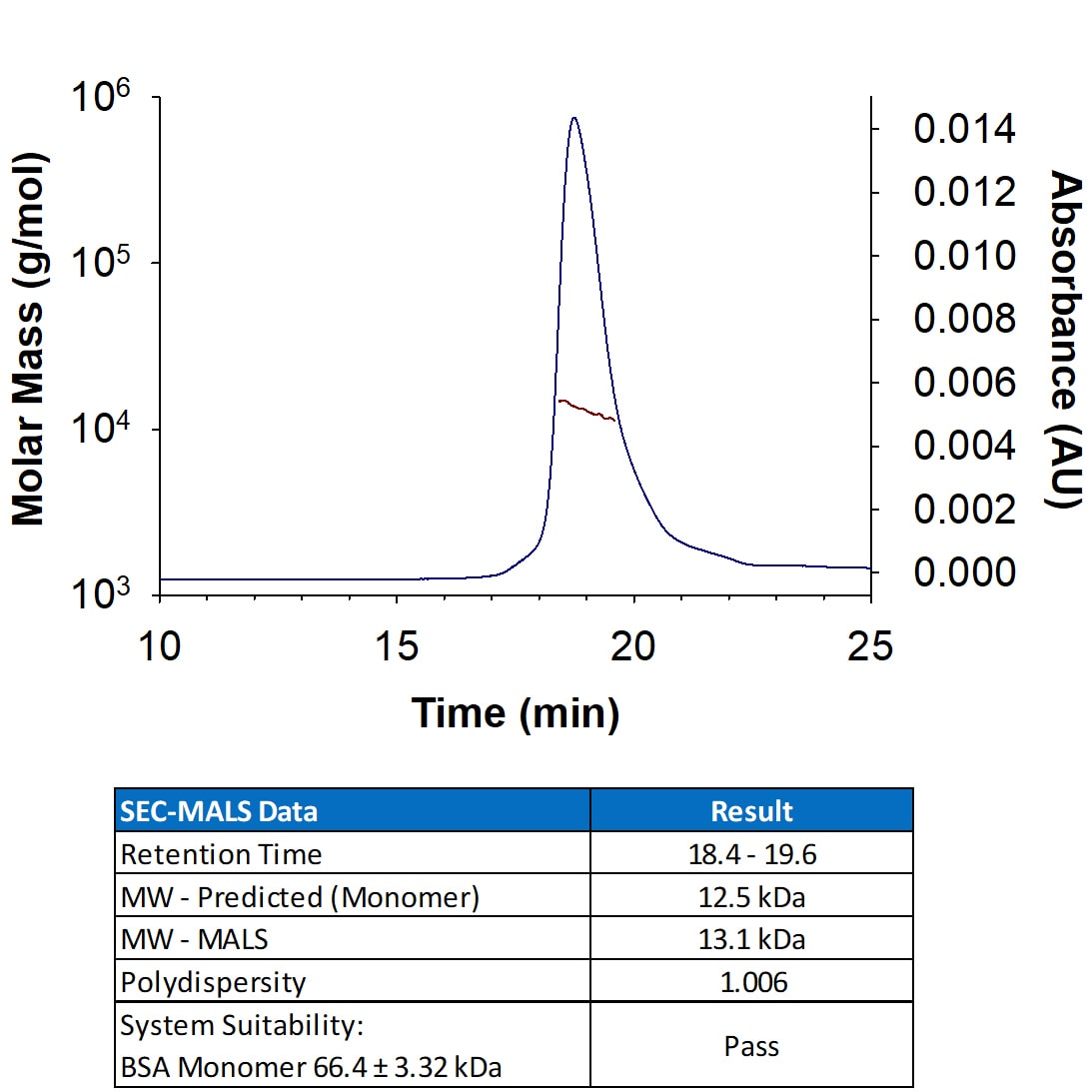
Recombinant Human IL‑15 Protein SEC-MALS.

Recombinant Human IL-5 Protein (Catalog # 247-ILB) has a molecular weight (MW) of 13.1 kDa as analyzed by SEC-MALS, suggesting that this protein is a monomer. 

Formulation, Preparation, and Storage

Carrier Free
What does CF mean?

CF stands for Carrier Free (CF). We typically add Bovine Serum Albumin (BSA) as a carrier protein to our recombinant proteins. Adding a carrier protein enhances protein stability, increases shelf-life, and allows the recombinant protein to be stored at a more dilute concentration. The carrier free version does not contain BSA.

What formulation is right for me?

In general, we advise purchasing the recombinant protein with BSA for use in cell or tissue culture, or as an ELISA standard. In contrast, the carrier free protein is recommended for applications, in which the presence of BSA could interfere.

Carrier: 247-ILB
Formulation Lyophilized from a 0.2 μm filtered solution in PBS with BSA as a carrier protein.
Reconstitution Reconstitute at 100 μg/mL in sterile PBS.
Shipping The product is shipped at ambient temperature. Upon receipt, store it immediately at the temperature recommended below.
Stability & Storage Use a manual defrost freezer and avoid repeated freeze-thaw cycles.
  • 12 months from date of receipt, -20 to -70 °C as supplied.
  • 1 month, 2 to 8 °C under sterile conditions after reconstitution.
  • 3 months, -20 to -70 °C under sterile conditions after reconstitution.
Carrier Free: 247-ILB/CF
Formulation Lyophilized from a 0.2 μm filtered solution in PBS.
Reconstitution Reconstitute at 100 μg/mL in sterile PBS.
Shipping The product is shipped at ambient temperature. Upon receipt, store it immediately at the temperature recommended below.
Stability & Storage Use a manual defrost freezer and avoid repeated freeze-thaw cycles.
  • 12 months from date of receipt, -20 to -70 °C as supplied.
  • 1 month, 2 to 8 °C under sterile conditions after reconstitution.
  • 3 months, -20 to -70 °C under sterile conditions after reconstitution.

Calculators

The reconstitution calculator allows you to quickly calculate the volume of a reagent to reconstitute your vial. Simply enter the mass of reagent and the target concentration and the calculator will determine the rest.

=
÷

Background: IL-15

Interleukin 15 (IL-15) is a widely expressed 14 kDa cytokine that is structurally and functionally related to IL-2 and plays an important role in many immunological diseases (1, 2). Mature human IL-15 shares 70% amino acid sequence identity with mouse and rat IL-15. Alternative splicing generates isoforms of IL-15 with either a long or short signal peptide (LSP or SSP), and the SSP isoform is retained intracellularly (3). IL-15 binds with high affinity to IL-15 R alpha (4). It binds with lower affinity to a complex of IL-2 R beta and the common gamma chain ( gamma c) which are also subunits of the IL-2 receptor complex (5). IL-15 associates with IL-15 R alpha in the endoplasmic reticulum, and this complex is expressed on the cell surface (6).

The dominant mechanism of IL-15 action is known as transpresentation in which IL-15 and IL-15 R alpha are coordinately expressed on the surface of one cell and interact with complexes of IL-2 R beta / gamma c on adjacent cells (7). This enables cells to respond to IL-15 even if they do not express IL-15 R alpha (6). In human and mouse, soluble IL-15-binding forms of IL-15 R alpha can be generated by proteolytic shedding and bind up nearly all the IL-15 in circulation (8-10). Soluble IL-15 R alpha functions as an inhibitor that limits IL-15 action (4, 9). Ligation of membrane-associated IL-15/IL-15 R alpha complexes also induces reverse signaling that promotes activation of the IL-15/IL-15 R alpha expressing cells (11). IL-15 induces or enhances the differentiation, maintenance, or activation of multiple T cell subsets including NK, NKT, Th17, Treg, and CD8+ memory cells (12 - 16). An important component of these functions is the ability of IL‑15 to induce dendritic cell differentiation and inflammatory activation (11, 14). IL-15 exhibits anti-tumor activity independent of its actions on NK cells or CD8+ T cells (17). It also inhibits the deposition of lipid in adipocytes, and its circulating levels are decreased in obesity (18).

Immunotherapy treatment with recombinant IL-15 has the advantage of not stimulating Treg cells like IL-2 does but has the drawback of associated toxicity at higher doses. This has led to increased investigation on mitigating IL-15 toxicity and combination immunotherapy approaches using immune checkpoint inhibitors (19, 20). Preclinical and early clinical studies have shown the potential of also using IL-15 in combination with cancer vaccines to improve their anti-tumor response (20). IL-15 can also be used for the preconditioning of CAR T cells or for engineering cells to express IL-15 in vivo. Adoptive cell transfer of NK cells engineered to express CD19 and IL-15 were well tolerated in patients with CD19-positive cancers (20).

IL-15 can be used in combination with other cytokines like IL-21 to increase the efficiency of NK cell expansion and maturation in stem cell culture protocols (21). The combination of IL-15 with IL-7 also promotes expansion of early-differentiated CD8+ T cells in culture with the added benefit of decreasing Treg cell generation, unlike IL-2, for adoptive cell transfer in cancer immunotherapy (22). GMP IL-7 and GMP IL-15 are commonly used in combination for ex vivo expansion of T cells for cellular therapies.

References

  1. De Sabatino, A. et al. (2011) Cytokine Growth Factor Rev. 22:19.
  2. Grabstein, K. et al. (1994) Science 264:965.
  3. Tagaya, Y. et al. (1997) Proc. Natl. Acad. Sci. USA 94:14444.
  4. Giri, J.G. et al. (1995) EMBO J. 14:3654.
  5. Giri, J. et al. (1994) EMBO J. 13:2822.
  6. Dubois, S. et al. (2002) Immunity 17:537.
  7. Castillo, E.F. and K.S. Schluns (2012) Cytokine 59:479.
  8. Budagian, V. et al. (2004) J. Biol. Chem. 279:40368.
  9. Mortier, E. et al. (2004) J. Immunol. 173:1681.
  10. Bergamaschi, C. et al. (2012) Blood 120:e1.
  11. Budagian, V. et al. (2004) J. Biol. Chem. 279:42192.
  12. Mortier, E. et al. (2003) J. Exp. Med. 205:1213.
  13. Gordy, L.E. et al. (2011) J. Immunol. 187:6335.
  14. Harris, K.M. (2011) J. Leukoc. Biol. 90:727.
  15. Xia, J. et al. (2010) Clin. Immunol. 134:130.
  16. Schluns, K.S. et al. (2002) J. Immunol. 168:4827.
  17. Davies, E. et al. (2010) J. Leukoc. Biol. 88:529.
  18. Barra, N.G. et al. (2010) Obesity 18:1601.
  19. Xue, D. et al. (2021) Antibody Therapeutics. 4(2): 123-133.
  20. Wolfarth, A.A. et al. (2022) Immune Netw. 22(1): e5.
  21. Oberoi, P. et al. (2020). Cells. 9(911).
  22. Chamucero-Millares, J.A. et al. (2021) Cellular Immunology. 360(104257).

Long Name

Interleukin 15

Alternate Names

IL15

Entrez Gene IDs

3600 (Human); 16168 (Mouse); 25670 (Rat); 102119613 (Cynomolgus Monkey); 493682 (Feline)

Gene Symbol

IL15

UniProt

Additional IL-15 Products

Product Documents for Recombinant Human IL-15 Protein

Certificate of Analysis

To download a Certificate of Analysis, please enter a lot or batch number in the search box below.

Note: Certificate of Analysis not available for kit components.

Product Specific Notices for Recombinant Human IL-15 Protein

For research use only

Citations for Recombinant Human IL-15 Protein

Customer Reviews for Recombinant Human IL-15 Protein (1)

5 out of 5
1 Customer Rating
5 Stars
100%
4 Stars
0%
3 Stars
0%
2 Stars
0%
1 Stars
0%

Have you used Recombinant Human IL-15 Protein?

Submit a review and receive an Amazon gift card!

$25/€18/£15/$25CAN/¥2500 Yen for a review with an image

$10/€7/£6/$10CAN/¥1110 Yen for a review without an image

Submit a review
Amazon Gift Card

Customer Images


Showing  1 - 1 of 1 review Showing All
Filter By:
  • Recombinant Human IL-15 Protein
    Name: Lana Jagannathan
    Application: Stem/Immune cell maintenance or differentiation
    Verified Customer | Posted 08/26/2024
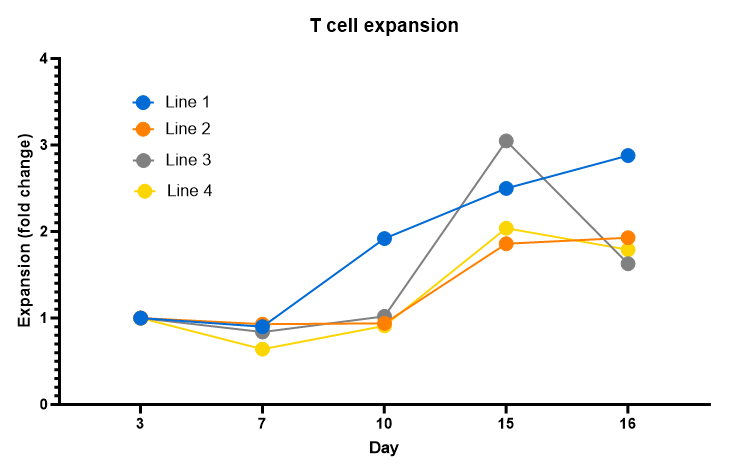
    IL-15 addition in primary T cell culture will produce activation signals in T cells (e.g. increased IFN-g signaling) which may induce exhaustion if not alternated with another cytokine.
    Recombinant Human IL-15 Protein 247-ILB

There are no reviews that match your criteria.

Showing  1 - 1 of 1 review Showing All

FAQs

No product specific FAQs exist for this product.

View all FAQs for Proteins and Enzymes