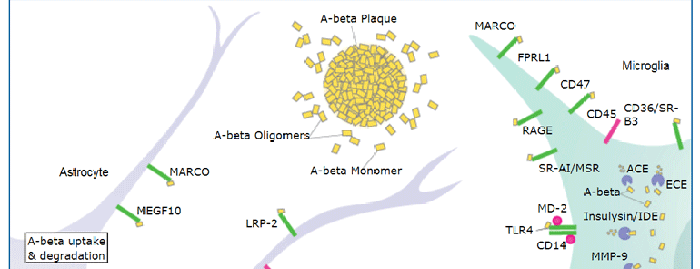
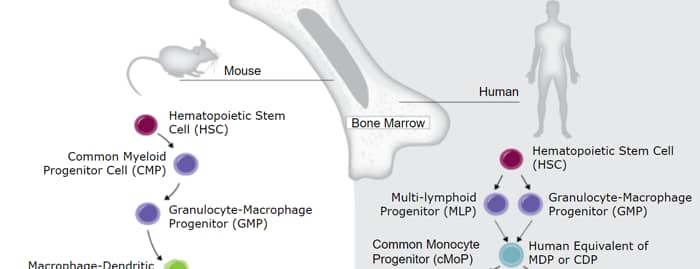
Neprilysin, (NEP, neutral endopeptidase 24.11, EC 3.4.24.11), is a zinc metallopeptidase expressed at the cell surface of a variety of cells. The enzyme functions both as an endopeptidase with a thermolysin-like specificity and as a dipeptidylcarboxypeptidase. NEP has been shown to be involved in the degradation of enkephalins in the mammalian brain and the inactivation of circulating atrial natriuretic peptide (1, 2). NEP has also been identified as the common acute lymphocytic leukemia antigen (CALLA), and is expressed on the surface of lymphocytes in some disease states (3, 4). These and other observations have resulted in considerable interest in NEP as a target for analgesics and antihypertensive drugs. NEP is also a major degrading enzyme of amyloid beta peptide (A beta ) in the brain, indicating that down-regulation of NEP activity, which could be caused by aging, can contribute to the development of Alzheimer's disease by promoting A beta accumulation (5).
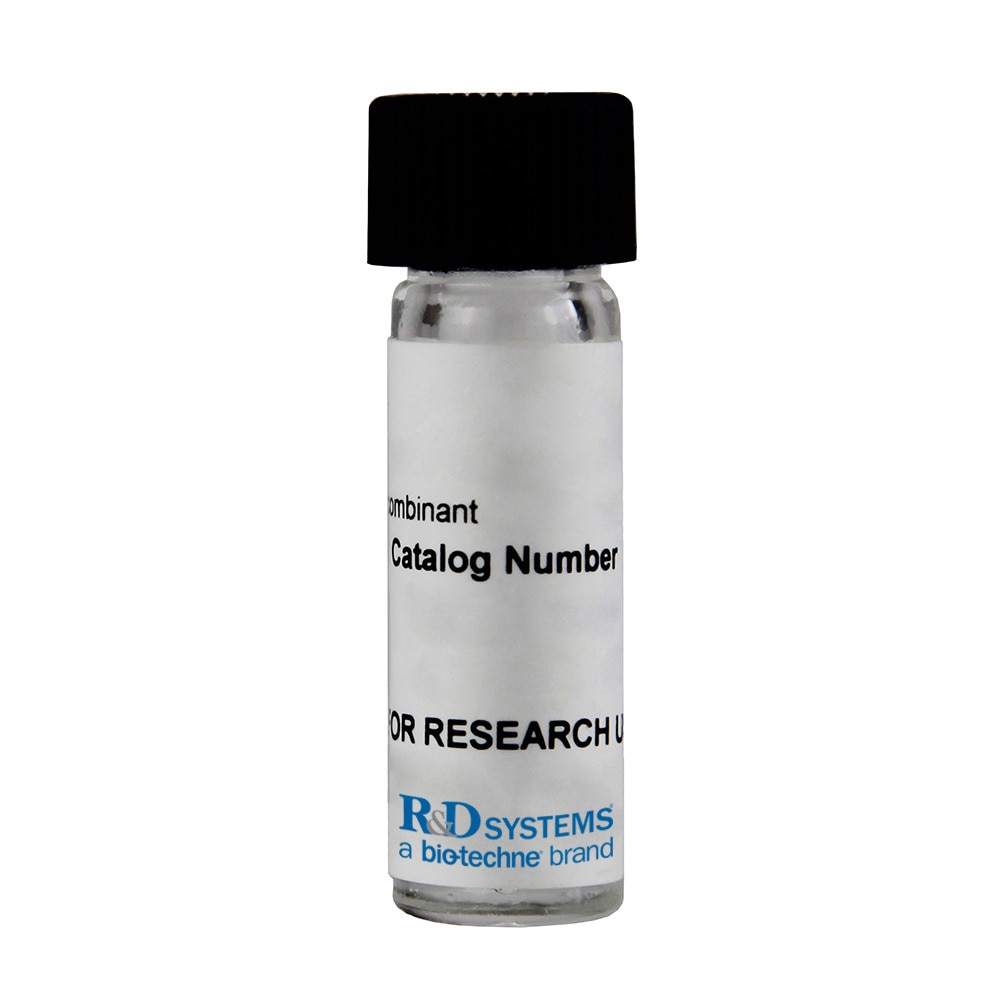
Recombinant Mouse Neprilysin (CHO-expressed) Protein, CF
R&D Systems | Catalog # 1126-ZNC

Key Product Details
- R&D Systems CHO-derived Recombinant Mouse Neprilysin (CHO-expressed) Protein (1126-ZNC)
- Quality control testing to verify active proteins with lot specific assays by in-house scientists
- All R&D Systems proteins are covered with a 100% guarantee
Source
Accession Number
Applications
Product Specifications
Source
Tyr52-Trp750, with an N-terminal 5-His tag
Purity
Endotoxin Level
N-terminal Sequence Analysis
Predicted Molecular Mass
SDS-PAGE
Activity
The specific activity is >3,000 pmol/min/μg, as measured under the described conditions.
Formulation, Preparation, and Storage
1126-ZNC
| Formulation | Supplied as a 0.2 μm filtered solution in Tris, NaCl and ZnCl2. |
| Shipping | The product is shipped with polar packs. Upon receipt, store it immediately at the temperature recommended below. |
| Stability & Storage | Use a manual defrost freezer and avoid repeated freeze-thaw cycles.
|
Background: Neprilysin/CD10
References
-
Malfroy, B. et al. (1978) Nature 276:523.
- Kenny, A.J. and Stephenson, S.L. (1988) FEBS Lett. 232:1.
- LeTarte, M. et al. (1988) J. Exp. Med. 168:1247.
- Shipp, M.A. et al. (1988) Proc. Natl. Acad. Sci. USA 85:4819.
- Itwata, N. et al. (2001) Science 292:1550.
Alternate Names
Gene Symbol
UniProt
Additional Neprilysin/CD10 Products
Product Documents for Recombinant Mouse Neprilysin (CHO-expressed) Protein, CF
Certificate of Analysis
To download a Certificate of Analysis, please enter a lot or batch number in the search box below.
Note: Certificate of Analysis not available for kit components.
Product Specific Notices for Recombinant Mouse Neprilysin (CHO-expressed) Protein, CF
For research use only
Citations for Recombinant Mouse Neprilysin (CHO-expressed) Protein, CF
 Powered by Bioz
Customer Reviews for Recombinant Mouse Neprilysin (CHO-expressed) Protein, CF
There are currently no reviews for this product. Be the first to review Recombinant Mouse Neprilysin (CHO-expressed) Protein, CF and earn rewards!
Have you used Recombinant Mouse Neprilysin (CHO-expressed) Protein, CF?
Submit a review and receive an Amazon gift card!
$25/€18/£15/$25CAN/¥2500 for a review with an image
$10/€7/£6/$10CAN/¥1110 for a review without an image
Submit a review
Protocols
View specific protocols for Recombinant Mouse Neprilysin (CHO-expressed) Protein, CF (1126-ZNC):
- Assay Buffer: 50 mM Tris, pH 9.0
- Recombinant Mouse Neprilysin (rmNeprilysin) (Catalog # 1126-ZNC)
- Substrate: MCA-Arg-Pro-Pro-Gly-Phe-Ser-Ala-Phe-Lys(DNP)-OH (Catalog # ES005), 2 mM stock in DMSO
- F16 Black Maxisorp Plate (Nunc, Catalog # 475515)
- Fluorescent Plate Reader (Model: SpectraMax Gemini EM by Molecular Devices) or equivalent
- Dilute rmNeprilysin to 0.1 µg/mL in Assay Buffer.
- Dilute Substrate to 20 µM in Assay Buffer.
- In a plate, load 50 µL of 0.1 µg/mL rmNeprilysin, and start the reaction by adding 50 µL of 20 µM Substrate. Include a Substrate Blank containing 50 µL Assay Buffer and 50 µL of 20 µM Substrate.
- Read at excitation and emission wavelengths of 320 nm and 405 nm (top read), respectively, in kinetic mode for 5 minutes.
- Calculate specific activity:
|
Specific Activity (pmol/min/µg) = |
Adjusted Vmax* (RFU/min) x Conversion Factor** (pmol/RFU) |
| amount of enzyme (µg) |
*Adjusted for Substrate Blank
**Derived using calibration standard MCA-Pro-Leu-OH (Bachem, Catalog # M-1975).
Per Well:
- rmNeprilysin: 0.005 µg
- Substrate: 10 µM