
SARS-CoV-2 Spike Antibody (CR3022) [Allophycocyanin] - Chimeric
Novus Biologicals | Catalog # NBP2-90979APC
Recombinant Monoclonal Antibody

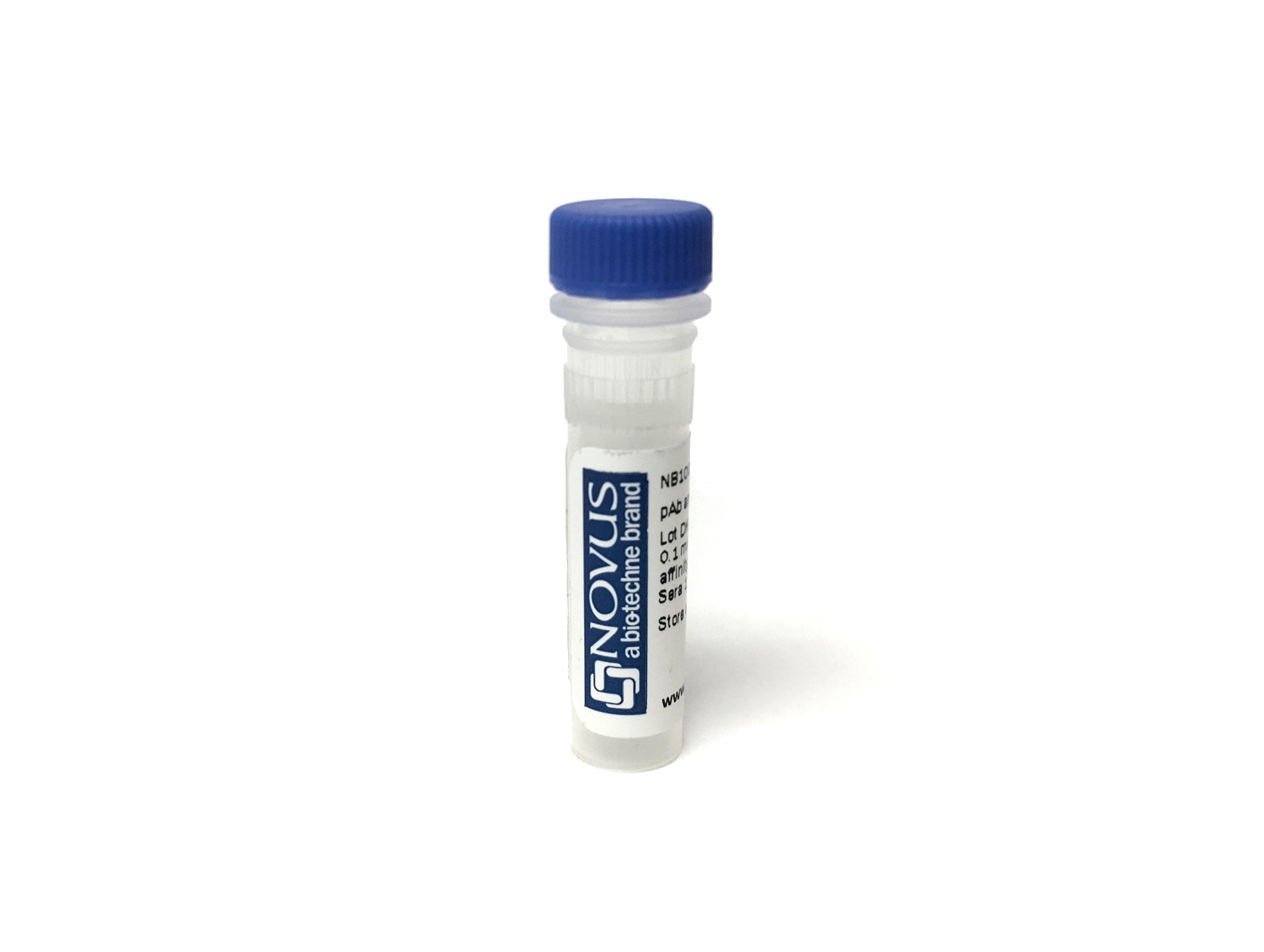
Key Product Details
Species Reactivity
SARS-CoV, SARS-CoV-2
Applications
ELISA, Neutralization, Immunocytochemistry/ Immunofluorescence, Surface Plasmon Resonance
Label
Allophycocyanin (Excitation = 620-650 nm, Emission = 660-670 nm)
Antibody Source
Recombinant Monoclonal Rabbit IgG Kappa Clone # CR3022
Loading...
Product Specifications
Immunogen
The original monoclonal antibody was generated through an scFv library derived from a peripheral blood lymphocytes of a patient exposed to the SARS-CoV.
Specificity
This antibody binds to both SARS-CoV and SARS-CoV-2 with high affinity (PMID: 16796401 & 32065055). It binds the amino acids 318-510 in the S1 domain of the SARS-CoV Spike protein as well as SARS-CoV-2 (COVID-19) Spike protein. The antibody also binds to P462L-substituted S318-510 fragments of the SARS spike protein. The binding epitope is only accessible in the "open" confromation of the spike protein (Joyce et al. 2020). NBP2-90979 cross-reacts with spike protein of Omicron and Delta variants.
Clonality
Monoclonal
Host
Rabbit
Isotype
IgG Kappa
Description
This conjugate is made on demand and is not held in inventory. Each order represents a unique lot. All conjugates are generated using validated conjugation protocols and meet strict degree of labeling (F/P) specifications; additional information is available upon request. The antibody concentration is provided on the individual product label.
For specialized conjugation needs, like large quantities, specific concentrations, and defined F/P ratios, bulk and custom antibody conjugation services are available.
For specialized conjugation needs, like large quantities, specific concentrations, and defined F/P ratios, bulk and custom antibody conjugation services are available.
Applications for SARS-CoV-2 Spike Antibody (CR3022) [Allophycocyanin] - Chimeric
Application
Recommended Usage
ELISA
Optimal dilutions of this antibody should be experimentally determined.
Immunocytochemistry/ Immunofluorescence
Optimal dilutions of this antibody should be experimentally determined.
Surface Plasmon Resonance
Optimal dilutions of this antibody should be experimentally determined.
Neutralization
Optimal dilutions of this antibody should be experimentally determined.
Application Notes
Recommended applications are based on validated applications from the unconjugated base product NBP2-90979. This conjugated antibody is not kept in inventory and is made to order using validated conjugation protocols.
Formulation, Preparation, and Storage
Purification
Protein A purified
Formulation
PBS
Preservative
0.05% Sodium Azide
Concentration
Please see the vial label for concentration. If unlisted please contact technical services.
Shipping
The product is shipped with polar packs. Upon receipt, store it immediately at the temperature recommended below.
Stability & Storage
Store at 4C in the dark.
Background: Spike
Given the critical role of the spike protein RBD in the interaction with the ACE2 receptor and viral entry, a number of neutralizing antibodies against the RBD have been developed as potential therapeutics for treating COVID-19 (3). These antibodies bind the RBD domain on the S1 subunit inhibiting the interaction with ACE2 (3). However, more studies need to be done as neutralizing antibodies can result in antibody-dependent enhancement, in which the viral entry and replication within the host cell is increased (4). One potential way to combat antibody-dependent enhancement is the use of nanobodies (4). Furthermore, there are currently several vaccine strategies that are in clinical trials, or recently federally approved, that utilize the spike protein in different forms (e.g. full length, S1 RBD, RBD-Fc, N-terminal) for protecting against SARS-CoV-2 infection (4,5). These vaccine strategies include DNA vaccines, viral vector-based vaccines, RNA vaccines, and subunit vaccines (4,5).
References
1. Pillay T. S. (2020). Gene of the month: the 2019-nCoV/SARS-CoV-2 novel coronavirus spike protein. Journal of Clinical Pathology. https://doi.org/10.1136/jclinpath-2020-206658
2. Malik Y. A. (2020). Properties of Coronavirus and SARS-CoV-2. The Malaysian Journal of Pathology.
3. Ho M. (2020). Perspectives on the development of neutralizing antibodies against SARS-CoV-2. Antibody Therapeutics. https://doi.org/10.1093/abt/tbaa009
4. Samrat, S. K., Tharappel, A. M., Li, Z., & Li, H. (2020). Prospect of SARS-CoV-2 spike protein: Potential role in vaccine and therapeutic development. Virus Research. https://doi.org/10.1016/j.virusres.2020.198141
5. Sternberg, A., & Naujokat, C. (2020). Structural features of coronavirus SARS-CoV-2 spike protein: Targets for vaccination. Life Sciences. https://doi.org/10.1016/j.lfs.2020.118056
Long Name
Spike Protein
Alternate Names
S Protein
Gene Symbol
S
Additional Spike Products
Product Documents for SARS-CoV-2 Spike Antibody (CR3022) [Allophycocyanin] - Chimeric
Certificate of Analysis
To download a Certificate of Analysis, please enter a lot or batch number in the search box below.
Product Specific Notices for SARS-CoV-2 Spike Antibody (CR3022) [Allophycocyanin] - Chimeric
This product is for research use only and is not approved for use in humans or in clinical diagnosis. Primary Antibodies are guaranteed for 1 year from date of receipt.
Related Research Areas
Customer Reviews for SARS-CoV-2 Spike Antibody (CR3022) [Allophycocyanin] - Chimeric
There are currently no reviews for this product. Be the first to review SARS-CoV-2 Spike Antibody (CR3022) [Allophycocyanin] - Chimeric and earn rewards!
Have you used SARS-CoV-2 Spike Antibody (CR3022) [Allophycocyanin] - Chimeric?
Submit a review and receive an Amazon gift card!
$25/€18/£15/$25CAN/¥2500 for a review with an image
$10/€7/£6/$10CAN/¥1110 for a review without an image
Submit a review
Protocols
Find general support by application which include: protocols, troubleshooting, illustrated assays, videos and webinars.
- Appropriate Fixation of IHC/ICC Samples
- Cellular Response to Hypoxia Protocols
- ClariTSA™ Fluorophore Kits
- Detection & Visualization of Antibody Binding
- ELISA Sample Preparation & Collection Guide
- ELISA Troubleshooting Guide
- How to Run an R&D Systems DuoSet ELISA
- How to Run an R&D Systems Quantikine ELISA
- How to Run an R&D Systems Quantikine™ QuicKit™ ELISA
- ICC Cell Smear Protocol for Suspension Cells
- ICC Immunocytochemistry Protocol Videos
- ICC for Adherent Cells
- Immunocytochemistry (ICC) Protocol
- Immunocytochemistry Troubleshooting
- Immunofluorescence of Organoids Embedded in Cultrex Basement Membrane Extract
- Immunohistochemistry (IHC) and Immunocytochemistry (ICC) Protocols
- Preparing Samples for IHC/ICC Experiments
- Preventing Non-Specific Staining (Non-Specific Binding)
- Primary Antibody Selection & Optimization
- Protocol for VisUCyte™ HRP Polymer Detection Reagent
- Protocol for the Fluorescent ICC Staining of Cell Smears - Graphic
- Protocol for the Fluorescent ICC Staining of Cultured Cells on Coverslips - Graphic
- Protocol for the Preparation and Fluorescent ICC Staining of Cells on Coverslips
- Protocol for the Preparation and Fluorescent ICC Staining of Non-adherent Cells
- Protocol for the Preparation and Fluorescent ICC Staining of Stem Cells on Coverslips
- Protocol for the Preparation of a Cell Smear for Non-adherent Cell ICC - Graphic
- Quantikine HS ELISA Kit Assay Principle, Alkaline Phosphatase
- Quantikine HS ELISA Kit Principle, Streptavidin-HRP Polymer
- Sandwich ELISA (Colorimetric) – Biotin/Streptavidin Detection Protocol
- Sandwich ELISA (Colorimetric) – Direct Detection Protocol
- TUNEL and Active Caspase-3 Detection by IHC/ICC Protocol
- The Importance of IHC/ICC Controls
- Troubleshooting Guide: ELISA
- View all Protocols, Troubleshooting, Illustrated assays and Webinars
Loading...