
CXCR7/RDC-1 is a G protein-coupled receptor (GPCR) member of the CXC subfamily of chemokine receptors. Human CXCR7/RDC-1 is 362 amino acids (aa) in length with a predicted molecular weight of 41 kDa. Mouse and rat CXCR7/RDC-1 share 93% aa sequence identity with the human protein. CXCR7/RDC-1 binds to and acts as a scavenger for CXCL11/I-TAC and CXCL12/SDF-1. CXCR7/RDC-1 can also function as a co-receptor for HIV and SIV. Unlike other chemokine receptors, CXCR7/RDC-1 does not activate G protein signaling, but instead initiates beta-Arrestin-mediated receptor-ligand internalization. Although CXCR7/RDC-1 itself does not activate G protein signaling, the receptor can heterodimerize with CXCR4 to activate G proteins in response to CXCL12/SDF-1 binding. Studies on CXCR7/RDC-1 knockout mice suggest that it is critical for cardiovascular development. While CXCR7/RDC-1 does not appear to signal in normal hematopoietic cells, it is highly expressed in leukemic cells where it activates Akt signaling that promotes cell trafficking and adhesion. CXCR7/RDC-1 also mediates neuronal migration, displays aberrant signaling in astrocytes, and is highly expressed in glioma cells.
CXCR7/RDC-1 Antibody (896032) [Biotin]
Novus Biologicals | Catalog # FAB8399B

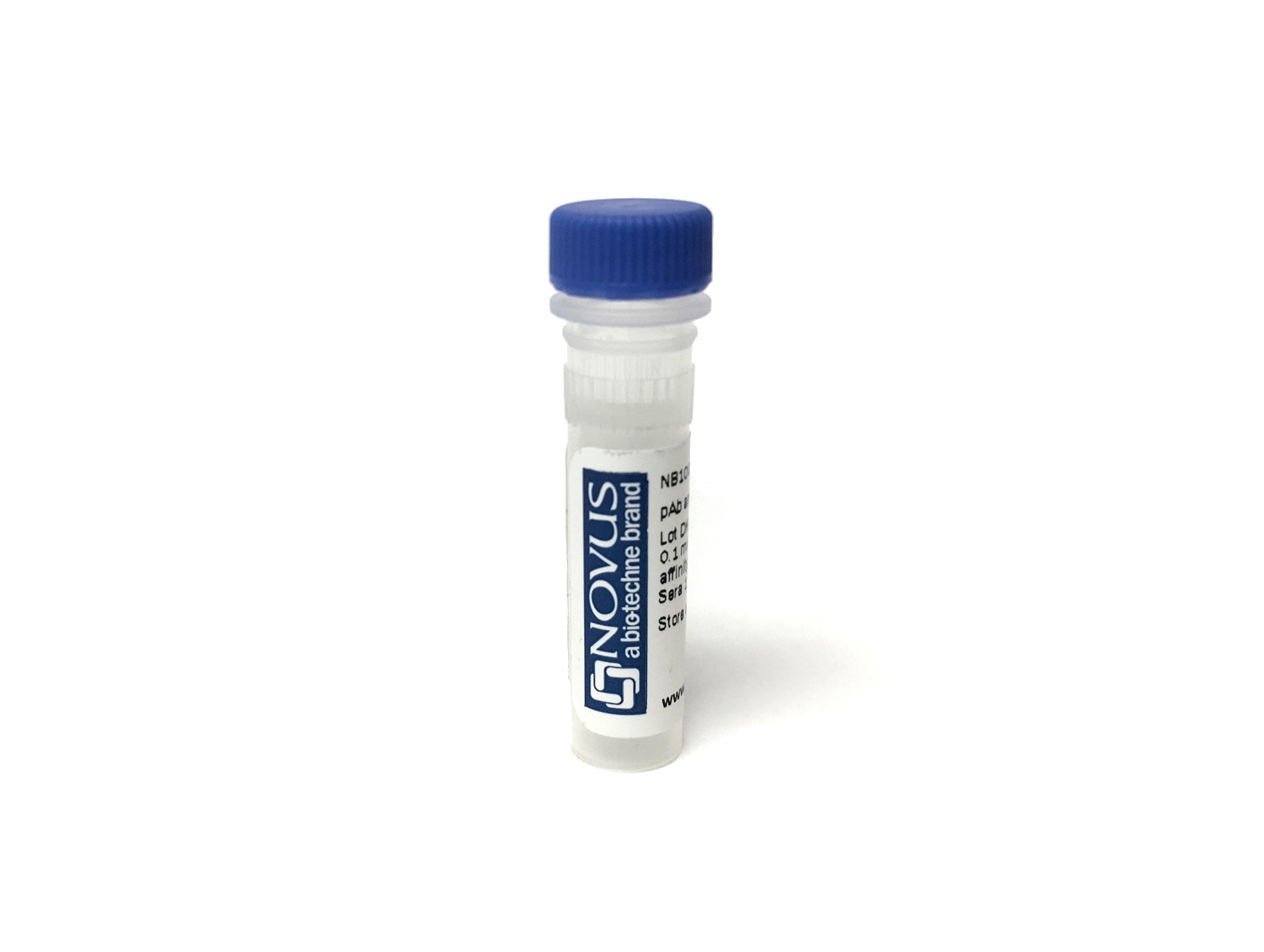
Key Product Details
Species Reactivity
Applications
Label
Antibody Source
Product Specifications
Immunogen
Met1-Lys362
Accession # NP_445804
Specificity
Clonality
Host
Isotype
Description
For specialized conjugation needs, like large quantities, specific concentrations, and defined F/P ratios, bulk and custom antibody conjugation services are available.
Applications for CXCR7/RDC-1 Antibody (896032) [Biotin]
CyTOF-ready
Flow Cytometry
Flow Cytometry Panel Builder
Bio-Techne Knows Flow Cytometry
Save time and reduce costly mistakes by quickly finding compatible reagents using the Panel Builder Tool.
Advanced Features
- Spectra Viewer - Custom analysis of spectra from multiple fluorochromes
- Spillover Popups - Visualize the spectra of individual fluorochromes
- Antigen Density Selector - Match fluorochrome brightness with antigen density

Formulation, Preparation, and Storage
Purification
Formulation
Preservative
Concentration
Shipping
Stability & Storage
Background: CXCR7/RDC-1
Alternate Names
Gene Symbol
Additional CXCR7/RDC-1 Products
Product Documents for CXCR7/RDC-1 Antibody (896032) [Biotin]
Certificate of Analysis
To download a Certificate of Analysis, please enter a lot or batch number in the search box below.
Product Specific Notices for CXCR7/RDC-1 Antibody (896032) [Biotin]
This product is for research use only and is not approved for use in humans or in clinical diagnosis. Primary Antibodies are guaranteed for 1 year from date of receipt.
Customer Reviews for CXCR7/RDC-1 Antibody (896032) [Biotin]
There are currently no reviews for this product. Be the first to review CXCR7/RDC-1 Antibody (896032) [Biotin] and earn rewards!
Have you used CXCR7/RDC-1 Antibody (896032) [Biotin]?
Submit a review and receive an Amazon gift card!
$25/€18/£15/$25CAN/¥2500 for a review with an image
$10/€7/£6/$10CAN/¥1110 for a review without an image
Submit a review
Protocols
Find general support by application which include: protocols, troubleshooting, illustrated assays, videos and webinars.
- 7-Amino Actinomycin D (7-AAD) Cell Viability Flow Cytometry Protocol
- Extracellular Membrane Flow Cytometry Protocol
- Flow Cytometry Protocol for Cell Surface Markers
- Flow Cytometry Protocol for Staining Membrane Associated Proteins
- Flow Cytometry Staining Protocols
- Flow Cytometry Troubleshooting Guide
- Intracellular Flow Cytometry Protocol Using Alcohol (Methanol)
- Intracellular Flow Cytometry Protocol Using Detergents
- Intracellular Nuclear Staining Flow Cytometry Protocol Using Detergents
- Intracellular Staining Flow Cytometry Protocol Using Alcohol Permeabilization
- Intracellular Staining Flow Cytometry Protocol Using Detergents to Permeabilize Cells
- Propidium Iodide Cell Viability Flow Cytometry Protocol
- Protocol for Liperfluo
- Protocol for the Characterization of Human Th22 Cells
- Protocol for the Characterization of Human Th9 Cells
- Protocol: Annexin V and PI Staining by Flow Cytometry
- Protocol: Annexin V and PI Staining for Apoptosis by Flow Cytometry
- Troubleshooting Guide: Fluorokine Flow Cytometry Kits
- View all Protocols, Troubleshooting, Illustrated assays and Webinars
Associated Pathways
