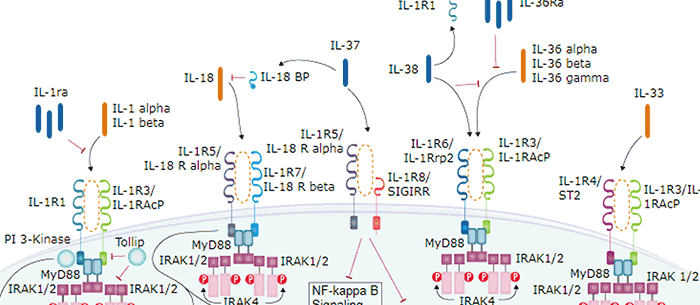
Interleukin 18 (IL-18) is a member of the IL-1 family of cytokines and shares numerous immunoregulatory functions with IL-12. The functional IL-18 receptor complex is composed of two subunits designated IL-18 R alpha (also termed IL-1 R5 and IL-1 Rrp) and IL-18 R beta (also termed IL-1 R7 and AcPL). Both IL-18 R alpha and IL-18 R beta belong to the IL-1 receptor superfamily. Although IL-18 R by itself binds IL-18 with low affinity and IL-18 R beta does not bind IL-18 in vitro, co-expression of IL‑18 R alpha and IL‑18 R beta is required for high affinity binding and IL-18 responsiveness. Human IL-18 R cDNA encodes a 541 amino acid (aa) precursor type I membrane protein with a hydrophobic signal, an extracellular domain comprised of three immunoglobulin-like domains, a transmembrane domain and a cytoplasmic region of approximately 200 aa. Human and mouse IL-18 R share 65% amino acid sequence homology. IL-18 R is widely expressed in numerous tissues including spleen, thymus, leukocyte, liver, lung, heart, small and large intestine, prostate and placenta.
Human IL-18 R alpha/IL-1 R5 Antibody (70625)
R&D Systems | Catalog # MAB840

Scientific images may be resized, cropped, or adjusted for brightness or contrast for presentation purposes. These updates are limited to presentation and do not affect the underlying scientific interpretation of the data. Where available, additional source data may be provided upon request.
Key Product Details
Validated by
Species Reactivity
Validated:
Cited:
Applications
Validated:
Cited:
Label
Antibody Source
Product Specifications
Immunogen
Glu20-Arg329
Accession # Q13478
Specificity
Clonality
Host
Isotype
Endotoxin Level
Scientific Data Images for Human IL-18 R alpha/IL-1 R5 Antibody (70625)
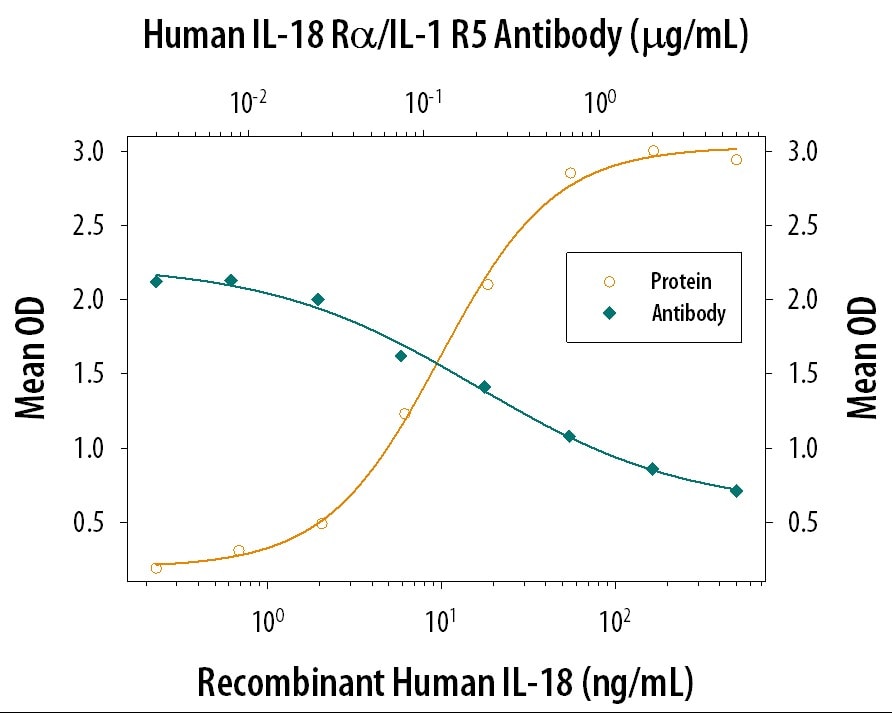
IFN‑ gamma Secretion Induced by IL‑18/IL‑1F4 and Neutralization by IL‑18 R alpha /IL‑1 R5 Antibody.
Human IL‑18 R alpha /IL‑1 R5 Antibody (Catalog # MAB840) neutralizes IL‑18/IL‑1F4 (9124-IL) induced IFN‑ gamma secretion in KG-1 human myeloid leukemia cells in the presence of Recombinant Human TNF-alpha (210-TA) as measured by the Human IFN-gamma Quantikine ELISA Kit (DIF50C). The Neutralization Dose (ND50) is typically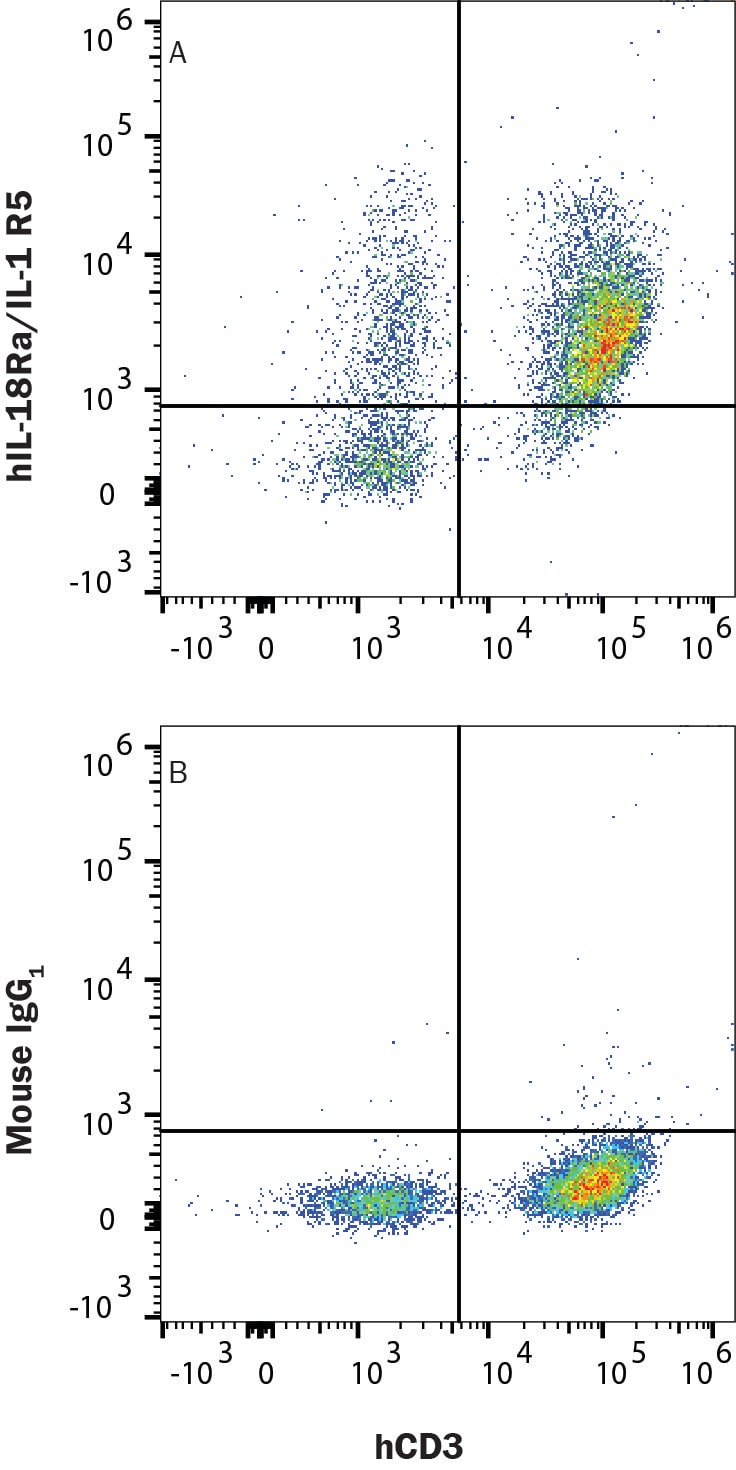
Detection of IL-18 R alpha/IL-1 R5 in Human PBMCs by Flow Cytometry.
Human peripheral blood mononuclear cells (PBMCs) were stained with (A) Mouse Anti-Human IL-18 R alpha/IL-1 R5 Monoclonal Antibody (Catalog # MAB840) or (B) Mouse IgG1 isotype control antibody (MAB002) followed by Goat anti-Mouse IgG APC-conjugated Secondary Antibody (F0102B) and Mouse Anti-Human CD3 PE-conjugated Monoclonal Antibody (FAB100P). Staining was performed using our Staining Membrane-associated Proteins protocol.
IL‑18 R alpha /IL‑1 R5 in Human PBMCs.
IL-18 Ra/IL-1 R5 was detected in immersion fixed human peripheral blood mononuclear cells (PBMCs) using 10 µg/mL Mouse Anti-Human IL-18 Ra/IL-1 R5 Mono-clonal Antibody (Catalog # MAB840) for 3 hours at room temperature. Cells were stained with the NorthernLights™ 557-conjugated Anti-Mouse IgG Secondary Antibody (red; NL007) and counter-stained with DAPI (blue). View our protocol for Fluorescent ICC Staining of Non-adherent Cells.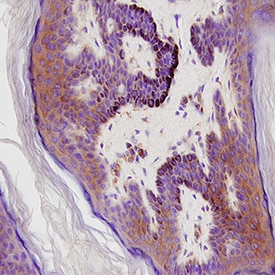
Detection of IL‑18 R alpha /IL‑1 R5 in Human Skin.
IL‑18 R alpha /IL‑1 R5 was detected in immersion fixed paraffin-embedded sections of Human Skin using Mouse Anti-Human IL‑18 R alpha /IL‑1 R5 Monoclonal Antibody (Catalog # MAB840) at 15 µg/mL for 1 hour at room temperature followed by incubation with the Anti-Mouse IgG VisUCyte™ HRP Polymer Antibody (Catalog # VC001). Before incubation with the primary antibody, tissue was subjected to heat-induced epitope retrieval using VisUCyte Antigen Retrieval Reagent-Basic (VCTS021). Tissue was stained using DAB (brown) and counterstained with hematoxylin (blue). Specific staining was localized to cytoplasm and cell surface of keratinocytes. View our protocol for IHC Staining with VisUCyte HRP Polymer Detection Reagents.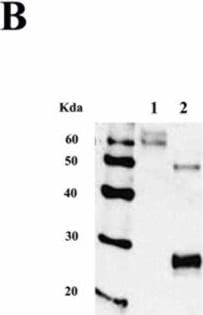
Detection of Human IL-18R alpha/IL-1 R5 by Western Blot
Soluble interleukin-18 receptor alpha complex is associated with interleukin-18 and the soluble form of the interleukin-18 receptor beta chain. (A) Sodium dodecyl sulfate (SDS)-polyacrylamide gel electrophoresis of the serum interleukin (IL)-18 receptor alpha (IL-18R alpha ) complex. Purified H44 monoclonal antibody (mAb) was coupled to a 5-mL HiTrap NHS-activated HP column (GE Healthcare). Pooled human blood serum (120 mL) was applied to this affinity column. The IL-18R alpha complex was eluted with elution buffer at a flow rate of 2 mL/minute. Every 1 mL of the elution buffer was collected into a test tube containing 50 mL of neutralization buffer (collected fractions were denoted in order as fractions 1, 2, 3 and so on). A 10-μL aliquot of every fraction (fractions 1 to 8) was treated with the same volume of sample buffer containing 4% SDS (Tris-Glycine SDS Sample Buffer (2×); Invitrogen). Electrophoresis was carried out in the presence of 0.1% SDS, and the gel was stained with Coomassie Brilliant Blue. (B) Western blots of the serum IL-18R alpha complex using an antihuman IL-18R alpha mAb are shown. Western blot analysis was performed using antihuman IL-18R alpha mAb 70625 (R&D Systems, Inc.). Lane 1: Western blot showing 1 μg of rhIL-18R alpha /Fc chimera protein (R&D Systems, Inc.). Lane 2: Western blot showing 5 μg of isolated serum IL-18R alpha complex. (C) Western blot showing serum IL-18R alpha complex using an antihuman IL-18 mAb. Western blot analysis was performed using antihuman IL-18 mAb clone 8 with 5 μg of isolated serum IL-18R alpha complex. (D) Western blot showing serum IL-18R alpha complex using an antihuman IL-18R beta mAb. Western blot analysis was performed using antihuman IL-18R beta mAb 132016 (R&D Systems, Inc.) with 5 μg of isolated serum IL-18R alpha complex. Image collected and cropped by CiteAb from the following publication (https://pubmed.ncbi.nlm.nih.gov/21435242), licensed under a CC-BY license. Not internally tested by R&D Systems.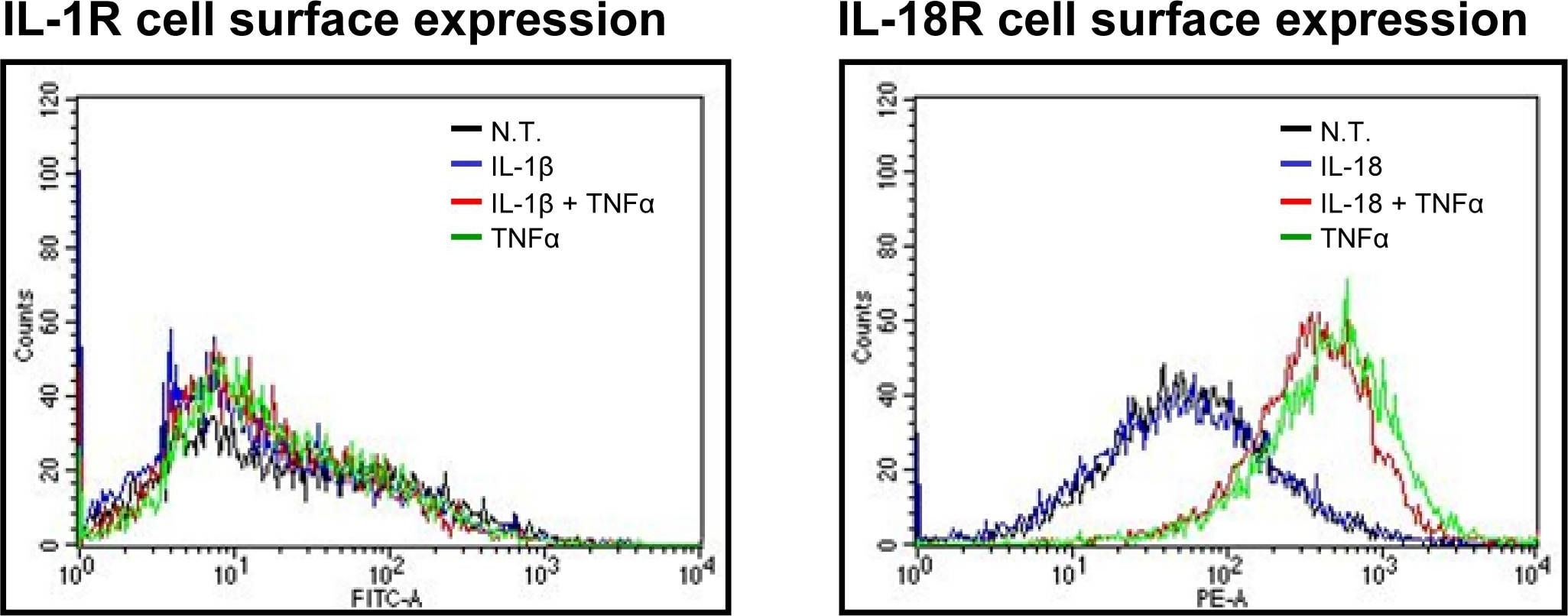
Detection of Human IL-18R alpha/IL-1 R5 by Flow Cytometry
Effect of TNF alpha treatment on KG-1 IL-18R and IL-1R surface expression.KG-1 cells (106/ml) were incubated with the indicated combinations of rIL-1 beta, rIL-18, rTNF alpha (10 ng/ml each) for 24 h. Cells were stained with IL-18R-PE and IL-1R-FITC followed by flow cytometry analysis. Results are representative of 3 separate experiments. Image collected and cropped by CiteAb from the following open publication (https://pubmed.ncbi.nlm.nih.gov/19707556), licensed under a CC-BY license. Not internally tested by R&D Systems.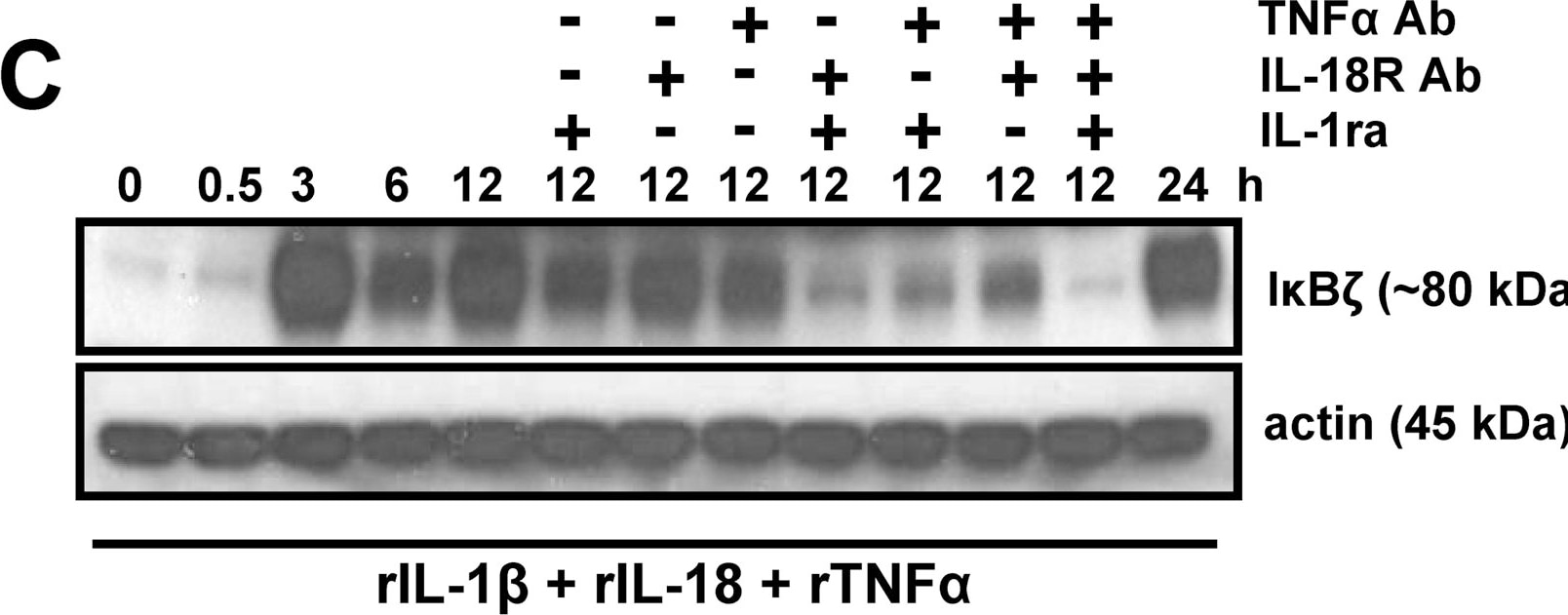
Detection of Human IL-18R alpha/IL-1 R5 by Western Blot
The synergistic effect of TNF alpha and IL-1 beta /IL-18 on I kappa B zeta protein expression is partially suppressed with a TNF alpha -specific Ab, but completely blocked with IL-1 beta and/or IL-18 neutralization.KG-1 cells (106/ml) were stimulated with rIL-1 beta, rIL-18, rTNF alpha (10 ng/ml each) (A), or the indicated combinations of these cytokines (B and C) for the indicated time points. At selected time points, the cells were incubated with the recombinant proteins in the presence of IL-1ra (100 µg/ml), IL-18R Ab (10 µg/ml), TNF alpha Ab (10 µg/ml), or different combinations of these neutralizing agents. Protein-matched total cell extracts were analyzed by Western blotting using anti-serum against I kappa B zeta and actin Ab. Results are representative of at least 3 separate experiments. Image collected and cropped by CiteAb from the following open publication (https://pubmed.ncbi.nlm.nih.gov/19707556), licensed under a CC-BY license. Not internally tested by R&D Systems.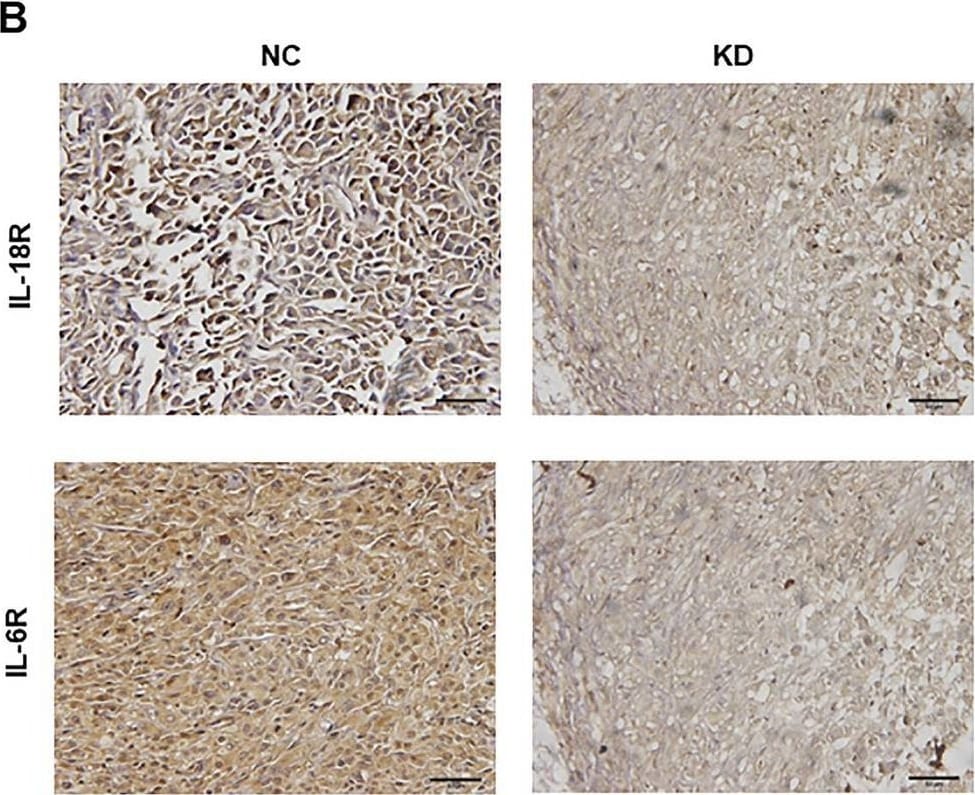
Detection of IL-18 R alpha /IL-1 R5 by Immunohistochemistry
MAP4K1 enhances the expression of IL-18R and IL-6R and promotes the proliferation of glioblastoma multiforme cells.(A) Real-time quantitative PCR analyses of IL-18R and IL-6R mRNA levels in MAP4K1-knockdown (KD) U87 and T98G cells and their negative control (NC) cells (n = 9, the data were from three independent experiments). (B) IL-18R and IL-6R protein expression detected by immunohistochemistry in mouse glioma tissues constructed by MAP4K1-KD (n = 3) and NC (n = 8) of U87 cells. Scale bar, 50 μm. (C, D, E) Respective flow cytometry histograms and relative levels of the mean fluorescence intensity for membrane-bound IL-18R in MAP4K1-KD or knockout (MAP4K1−/−) U87, T98G, and respective control cells 48 h after seeding (n = 3, the data were from an independent experiment, and the same experiment was repeated three times). (F, G, H) CCK8 assay of cell viability. The data were from three independent experiments. (F) MAP4K1-KD and NC cells were stimulated with IL-18 (100 ng/ml) and detected at different time points (24, 48, and 72 h) (n = 11). (G)MAP4K1−/− and MAP4K1+/+ T98G cells were treated with different doses of IL-18 (0, 50, and 100 ng/ml). (H) IL-18R was blocked with a neutralizing antibody (0, 1, 5 μg/ml). (G, H) Cell viability was determined at 96 h (n = 15 in (G, H)). In (A, C, D, E, F, G, H), data are presented as the mean ± SD. In (A, C, D, E), the data were analyzed by t tests. In (F, G, H), data were analyzed by two-way ANOVA. ns, not significant, *P < 0.05, **P < 0.01, ***P < 0.001, ****P < 0.0001. Image collected and cropped by CiteAb from the following open publication (https://pubmed.ncbi.nlm.nih.gov/37734869), licensed under a CC-BY license. Not internally tested by R&D Systems.Applications for Human IL-18 R alpha/IL-1 R5 Antibody (70625)
CyTOF-ready
Flow Cytometry
Sample: Human peripheral blood mononuclear cells
Immunocytochemistry
Sample: Immersion fixed human peripheral blood mononuclear cells (PBMCs)
Immunohistochemistry
Sample: Immersion fixed paraffin-embedded sections of human skin
Flow Cytometry Panel Builder
Bio-Techne Knows Flow Cytometry
Save time and reduce costly mistakes by quickly finding compatible reagents using the Panel Builder Tool.
Advanced Features
- Spectra Viewer - Custom analysis of spectra from multiple fluorochromes
- Spillover Popups - Visualize the spectra of individual fluorochromes
- Antigen Density Selector - Match fluorochrome brightness with antigen density

Formulation, Preparation, and Storage
Purification
Reconstitution
Reconstitute at 0.5 mg/mL in sterile PBS. For liquid material, refer to CoA for concentration.
Formulation
Shipping
Stability & Storage
- 12 months from date of receipt, -20 to -70 °C as supplied.
- 1 month, 2 to 8 °C under sterile conditions after reconstitution.
- 6 months, -20 to -70 °C under sterile conditions after reconstitution.
Calculators
Background: IL-18 R alpha/IL-1 R5
References
- Parnet, P. et al. (1996) J. Biol. Chem. 271:3967.
- Torigoe, K. et al. (1997) J. Biol. Chem. 272:25737.
- Born, T.L. et al. (1998) J. Biol. Chem. 273:29445.
Long Name
Alternate Names
Gene Symbol
UniProt
Additional IL-18 R alpha/IL-1 R5 Products
Product Documents for Human IL-18 R alpha/IL-1 R5 Antibody (70625)
Certificate of Analysis
To download a Certificate of Analysis, please enter a lot or batch number in the search box below.
Note: Certificate of Analysis not available for kit components.
Product Specific Notices for Human IL-18 R alpha/IL-1 R5 Antibody (70625)
For research use only
Citations for Human IL-18 R alpha/IL-1 R5 Antibody (70625)
 Powered by Bioz
Customer Reviews for Human IL-18 R alpha/IL-1 R5 Antibody (70625)
There are currently no reviews for this product. Be the first to review Human IL-18 R alpha/IL-1 R5 Antibody (70625) and earn rewards!
Have you used Human IL-18 R alpha/IL-1 R5 Antibody (70625)?
Submit a review and receive an Amazon gift card!
$25/€18/£15/$25CAN/¥2500 for a review with an image
$10/€7/£6/$10CAN/¥1110 for a review without an image
Submit a review
Protocols
Find general support by application which include: protocols, troubleshooting, illustrated assays, videos and webinars.
- 7-Amino Actinomycin D (7-AAD) Cell Viability Flow Cytometry Protocol
- Antigen Retrieval Protocol (PIER)
- Antigen Retrieval for Frozen Sections Protocol
- Appropriate Fixation of IHC/ICC Samples
- Cellular Response to Hypoxia Protocols
- Chromogenic IHC Staining of Formalin-Fixed Paraffin-Embedded (FFPE) Tissue Protocol
- Chromogenic Immunohistochemistry Staining of Frozen Tissue
- ClariTSA™ Fluorophore Kits
- Detection & Visualization of Antibody Binding
- Extracellular Membrane Flow Cytometry Protocol
- Flow Cytometry Protocol for Cell Surface Markers
- Flow Cytometry Protocol for Staining Membrane Associated Proteins
- Flow Cytometry Staining Protocols
- Flow Cytometry Troubleshooting Guide
- Fluorescent IHC Staining of Frozen Tissue Protocol
- Graphic Protocol for Heat-induced Epitope Retrieval
- Graphic Protocol for the Preparation and Fluorescent IHC Staining of Frozen Tissue Sections
- Graphic Protocol for the Preparation and Fluorescent IHC Staining of Paraffin-embedded Tissue Sections
- Graphic Protocol for the Preparation of Gelatin-coated Slides for Histological Tissue Sections
- ICC Cell Smear Protocol for Suspension Cells
- ICC Immunocytochemistry Protocol Videos
- ICC for Adherent Cells
- IHC Sample Preparation (Frozen sections vs Paraffin)
- Immunocytochemistry (ICC) Protocol
- Immunocytochemistry Troubleshooting
- Immunofluorescence of Organoids Embedded in Cultrex Basement Membrane Extract
- Immunofluorescent IHC Staining of Formalin-Fixed Paraffin-Embedded (FFPE) Tissue Protocol
- Immunohistochemistry (IHC) and Immunocytochemistry (ICC) Protocols
- Immunohistochemistry Frozen Troubleshooting
- Immunohistochemistry Paraffin Troubleshooting
- Intracellular Flow Cytometry Protocol Using Alcohol (Methanol)
- Intracellular Flow Cytometry Protocol Using Detergents
- Intracellular Nuclear Staining Flow Cytometry Protocol Using Detergents
- Intracellular Staining Flow Cytometry Protocol Using Alcohol Permeabilization
- Intracellular Staining Flow Cytometry Protocol Using Detergents to Permeabilize Cells
- Preparing Samples for IHC/ICC Experiments
- Preventing Non-Specific Staining (Non-Specific Binding)
- Primary Antibody Selection & Optimization
- Propidium Iodide Cell Viability Flow Cytometry Protocol
- Protocol for Heat-Induced Epitope Retrieval (HIER)
- Protocol for Liperfluo
- Protocol for Making a 4% Formaldehyde Solution in PBS
- Protocol for VisUCyte™ HRP Polymer Detection Reagent
- Protocol for the Characterization of Human Th22 Cells
- Protocol for the Characterization of Human Th9 Cells
- Protocol for the Fluorescent ICC Staining of Cell Smears - Graphic
- Protocol for the Fluorescent ICC Staining of Cultured Cells on Coverslips - Graphic
- Protocol for the Preparation & Fixation of Cells on Coverslips
- Protocol for the Preparation and Chromogenic IHC Staining of Frozen Tissue Sections
- Protocol for the Preparation and Chromogenic IHC Staining of Frozen Tissue Sections - Graphic
- Protocol for the Preparation and Chromogenic IHC Staining of Paraffin-embedded Tissue Sections
- Protocol for the Preparation and Chromogenic IHC Staining of Paraffin-embedded Tissue Sections - Graphic
- Protocol for the Preparation and Fluorescent ICC Staining of Cells on Coverslips
- Protocol for the Preparation and Fluorescent ICC Staining of Non-adherent Cells
- Protocol for the Preparation and Fluorescent ICC Staining of Stem Cells on Coverslips
- Protocol for the Preparation and Fluorescent IHC Staining of Frozen Tissue Sections
- Protocol for the Preparation and Fluorescent IHC Staining of Paraffin-embedded Tissue Sections
- Protocol for the Preparation of Gelatin-coated Slides for Histological Tissue Sections
- Protocol for the Preparation of a Cell Smear for Non-adherent Cell ICC - Graphic
- Protocol: Annexin V and PI Staining by Flow Cytometry
- Protocol: Annexin V and PI Staining for Apoptosis by Flow Cytometry
- TUNEL and Active Caspase-3 Detection by IHC/ICC Protocol
- The Importance of IHC/ICC Controls
- Troubleshooting Guide: Fluorokine Flow Cytometry Kits
- Troubleshooting Guide: Immunohistochemistry
- View all Protocols, Troubleshooting, Illustrated assays and Webinars
Associated Pathways