
Human IL‑2 APC‑conjugated Antibody

R&D Systems | Catalog # IC103561A

R&D Systems
Loading...

Key Product Details

Validated by

Biological Validation

Species Reactivity

Human

Applications

Intracellular Staining by Flow Cytometry

Label

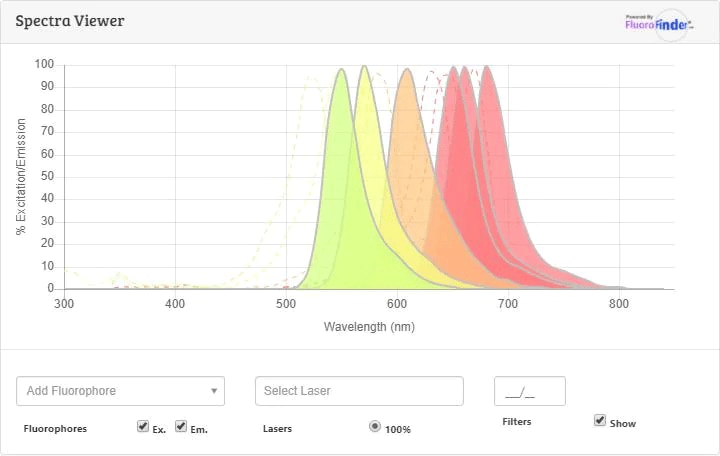
Allophycocyanin (Excitation = 620-650 nm, Emission = 660-670 nm)

Antibody Source

Monoclonal Mouse IgG1 Clone # 1019308
Loading...

Product Specifications

Immunogen

E. coli-derived human IL-2
Ala21-Thr153
Accession # P60568

Specificity

Detects human IL-2 in direct ELISA

Clonality

Monoclonal

Host

Mouse

Isotype

IgG1

Scientific Data Images for Human IL‑2 APC‑conjugated Antibody

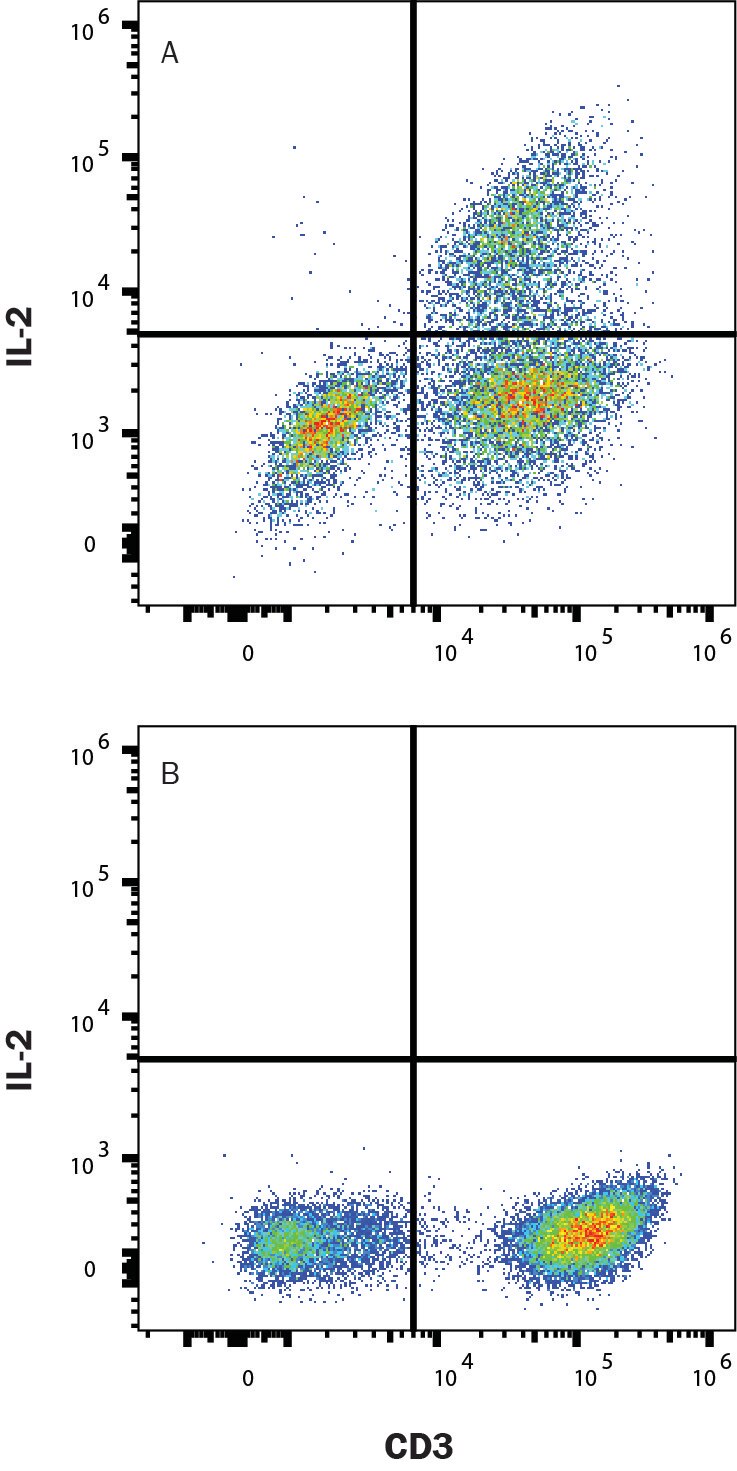
Detection of IL‑2 in PBMC lymphocytes by Flow Cytometry.

PBMC stimulated with 1 μg/ml of aCD3 and 3 μg/ml of aCD28 for 2 days were treated with Tocris cell activation cocktail 500x (5476) and Brefeldin A (1231/5) for 3 hours (A) or naïve PBMC lymphocytes (B) were stained with Mouse Anti-Human CD3 epsilon PE‑conjugated Monoclonal Antibody (Catalog # FAB100P) and Mouse Anti-Human IL‑2 APC conjugated Monoclonal Antibody (Catalog # IC103561A). To facilitate intracellular staining, cells were fixed and permeabilized with Flow Cytometry Fixation Buffer (Catalog # FC004). View our protocol for Staining Intracellular Molecules.

Applications for Human IL‑2 APC‑conjugated Antibody

Application
Recommended Usage

Intracellular Staining by Flow Cytometry

10 µL/106 cells
Sample: PBMC stimulated with 1 μg/mL of aCD3 and 3 ug/ml of aCD28 for 2 days were treated with Tocris cell activation cocktail 500x (Catalog # 5476) and Brefeldin A (Catalog # 1231/5) for 3 hours or naïve PBMC lymphocytes.

Spectra Viewer

Plan Your Experiments

Use our spectra viewer to interactively plan your experiments, assessing multiplexing options. View the excitation and emission spectra for our fluorescent dye range and other commonly used dyes.

Spectra Viewer

Flow Cytometry Panel Builder

Bio-Techne Knows Flow Cytometry

Save time and reduce costly mistakes by quickly finding compatible reagents using the Panel Builder Tool.

Advanced Features

  • Spectra Viewer - Custom analysis of spectra from multiple fluorochromes
  • Spillover Popups - Visualize the spectra of individual fluorochromes
  • Antigen Density Selector - Match fluorochrome brightness with antigen density
Build Your Panel Now

Formulation, Preparation, and Storage

Purification

Protein A or G purified from cell culture supernatant

Formulation

Supplied 0.2 mg/mL in a saline solution containing BSA and Sodium Azide.

Shipping

The product is shipped with polar packs. Upon receipt, store it immediately at the temperature recommended below.

Stability & Storage

Protect from light. Do not freeze.
  • 12 months from date of receipt, 2 to 8 °C as supplied.

Background: IL-2

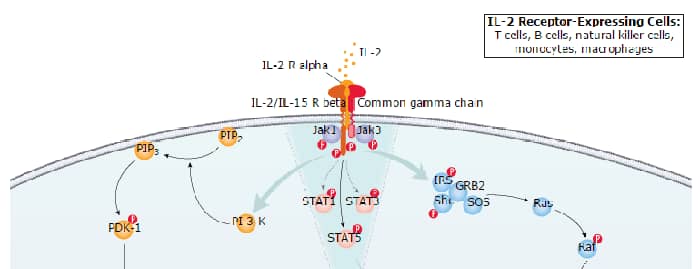
Recombinant Interleukin-2 (IL-2) is expressed in E. coli and has been engineered to contain the serine for cysteine substitution found in Proleukin® (aldesleukin). Recombinant IL-2 is widely used in cell culture for the expansion of T cells. IL-2 is expressed by CD4+ and CD8+ T cells, gamma delta T cells, B cells, dendritic cells, and eosinophils (1-3). Mature human IL-2 shares 56% and 66% amino acid (aa) sequence identity with mouse and rat IL-2, respectively. Human and mouse IL-2 exhibit cross-species activity (4). The receptor for IL-2 consists of three subunits that are present on the cell surface in varying preformed complexes (5-7). The 55 kDa IL-2 R alpha is specific for IL-2 and binds with low affinity. The 75 kDa IL-2 R beta, which is also a component of the IL-15 receptor, binds IL-2 with intermediate affinity. The 64 kDa common gamma chain gamma c/IL-2 R gamma, which is shared with the receptors for IL-4, -7, -9, -15, and -21, does not independently interact with IL-2. Upon ligand binding, signal transduction is performed by both IL-2 R beta and gamma c.

IL-2 is best known for its autocrine and paracrine activity on T cells. It drives resting T cells to proliferate and induces IL-2 and IL-2 R alpha synthesis (1, 2). It contributes to T cell homeostasis by promoting the Fas-induced death of naïve CD4+ T cells but not activated CD4+ memory lymphocytes (8). IL-2 plays a central role in the expansion and maintenance of regulatory T cells, although it inhibits the development of Th17 polarized cells (9-11). Thus, IL-2 may be a key cytokine in the natural suppression of autoimmunity (12, 13).

IL-2 expression and concentration can have either immunostimulatory effects at high doses or immunosuppressive effects at low doses due to its preferential binding to different receptor subunits expressed by various immune cell types. This has led to the generation of recombinant IL-2 variants aimed at modifying IL-2 receptor binding for increased antitumor efficacy (14, 15). These variants are typically used in combination with immune checkpoint inhibitors instead of as a monotherapy (14). IL-2 can be genetically engineered to express in NK cells for CAR T cell therapies, and in combination with other cytokines like IL-15, can increase cell viability and proliferation (16). In addition to adoptive cell transfer and checkpoint blockade inhibitors, cancer vaccines that boost immune responses have been combined with IL-2 treatment with promising results in recent studies (15).

In cell culture, IL-2 is a frequently used cytokine for the proliferation, differentiation, and increased antibody secretion of B cells as they transform into plasma cells in vitro (17). IL-2 is also a classically used cytokine for the expansion of NK cells, early differentiated T cells and effector memory Treg cells for adoptive cell transfer cancer immunotherapy (16, 18). GMP IL-2 is a commonly used supplement for the expansion of these cell types for cellular therapies.

References

  1. Ma, A. et al. (2006) Annu. Rev. Immunol. 24:657.
  2. Gaffen, S.L. and K.D. Liu (2004) Cytokine 28:109.
  3. Taniguchi, T. et al. (1983) Nature 302:305.
  4. Mosmann, T.R. et al. (1987) J. Immunol. 138:1813.
  5. Liparoto, S.F. et al. (2002) Biochemistry 41:2543.
  6. Wang, X. et al. (2005) Science 310:1159.
  7. Bodnar, A. et al. (2008) Immunol. Lett. 116:117.
  8. Jaleco, S. et al. (2003) J. Immunol. 171:61.
  9. Malek, T.R. (2003) J. Leukoc. Biol. 74:961.
  10. Laurence, A. et al. (2007) Immunity 26:371.
  11. Kryczek, I. et al. (2007) J. Immunol. 178:6730.
  12. Afzali, B. et al. (2007) Clin. Exp. Immunol. 148:32.
  13. Fehervari, Z.et al. (2006) Trends Immunol. 27:109.
  14. Xue, D. et al. (2021) Antibody Therapeutics. 4(2): 123-133.
  15. Wolfarth, A.A. et al. (2022) Immune Netw. 22(1): e5.
  16. Koehl, U. et al. (2015) Oncoimmunology. 5(4).
  17. Marsman, C. et al. (2022) Front. In Immunol. 13(815449).
  18. Chamucero-Millares, J.A. et al. (2021) Cellular Immunology. 360 (104257).

Long Name

Interleukin 2

Alternate Names

Aldesleukin, IL2, Proleukin, TCGF

Entrez Gene IDs

3558 (Human); 16183 (Mouse); 116562 (Rat); 396868 (Porcine); 280822 (Bovine); 403989 (Canine); 100034204 (Equine); 751114 (Feline); 100302458 (Rabbit)

Gene Symbol

IL2

UniProt

Additional IL-2 Products

Product Documents for Human IL‑2 APC‑conjugated Antibody

Certificate of Analysis

To download a Certificate of Analysis, please enter a lot or batch number in the search box below.

Note: Certificate of Analysis not available for kit components.

Product Specific Notices for Human IL‑2 APC‑conjugated Antibody

For research use only

Customer Reviews for Human IL‑2 APC‑conjugated Antibody

There are currently no reviews for this product. Be the first to review Human IL‑2 APC‑conjugated Antibody and earn rewards!

Have you used Human IL‑2 APC‑conjugated Antibody?

Submit a review and receive an Amazon gift card!

$25/€18/£15/$25CAN/¥2500 Yen for a review with an image

$10/€7/£6/$10CAN/¥1110 Yen for a review without an image

Submit a review
Amazon Gift Card

FAQs

No product specific FAQs exist for this product.

View all FAQs for Antibodies