
Multiplex Assays on Simple Western
There are several techniques that can be used to gain protein expression data from multiple protein targets from small sample volumes using Simple Western Technology. Simple Western assays allow for more efficient use of small sample volumes (e.g., 3 µL) compared to traditional western blotting, enabling simultaneous analysis of multiple protein targets, isoforms, and sizes. These method described below provide quantitative results with minimal hands-on time, using both fluorescent and chemiluminescent detection to maximize data points from a single sample, including protein normalization.
Multi-channel Detection | RePlex: Automated Strip and Reprobe | Resampling | Multiplex with Total Protein Normalization
Chemiluminescence Detection
Jess, Abby, and Leo provide sensitive chemiluminescence detection, enabling size-based multiplex western analysis of targets with non-overlapping molecular weights.
Fluorescence NIR/IR Detection
Jess and Leo provides additional fluorescence NIR/IR detection, enabling multi-channel multiplex fluorescence western analysis for targets of overlapping molecular weights.
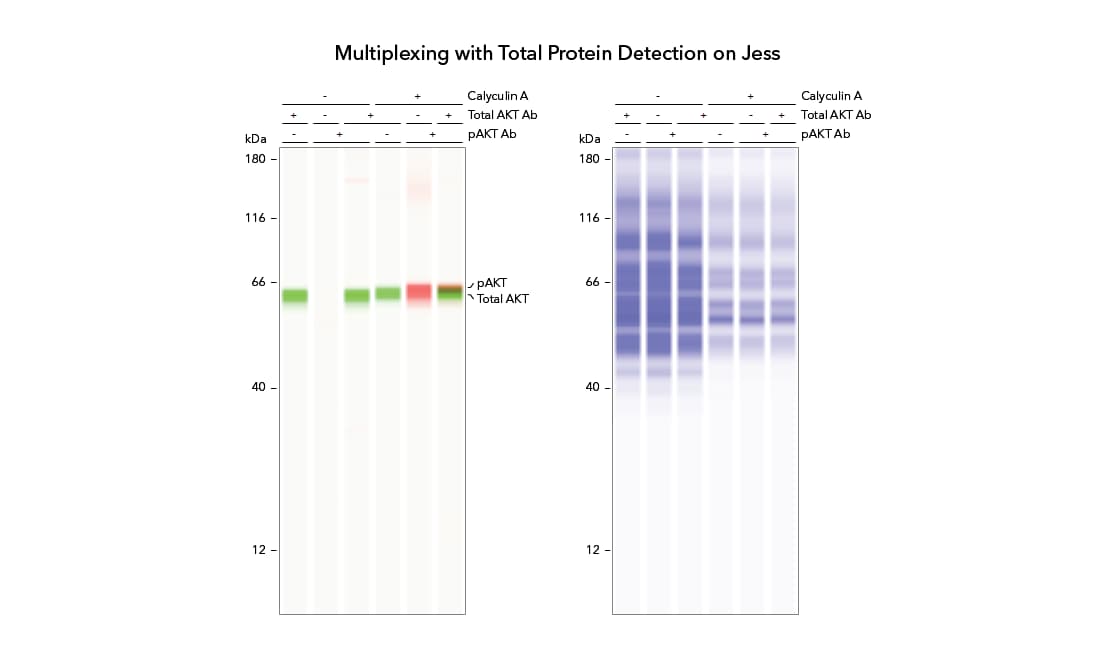
RePlex: Gain More Data From Every Sample
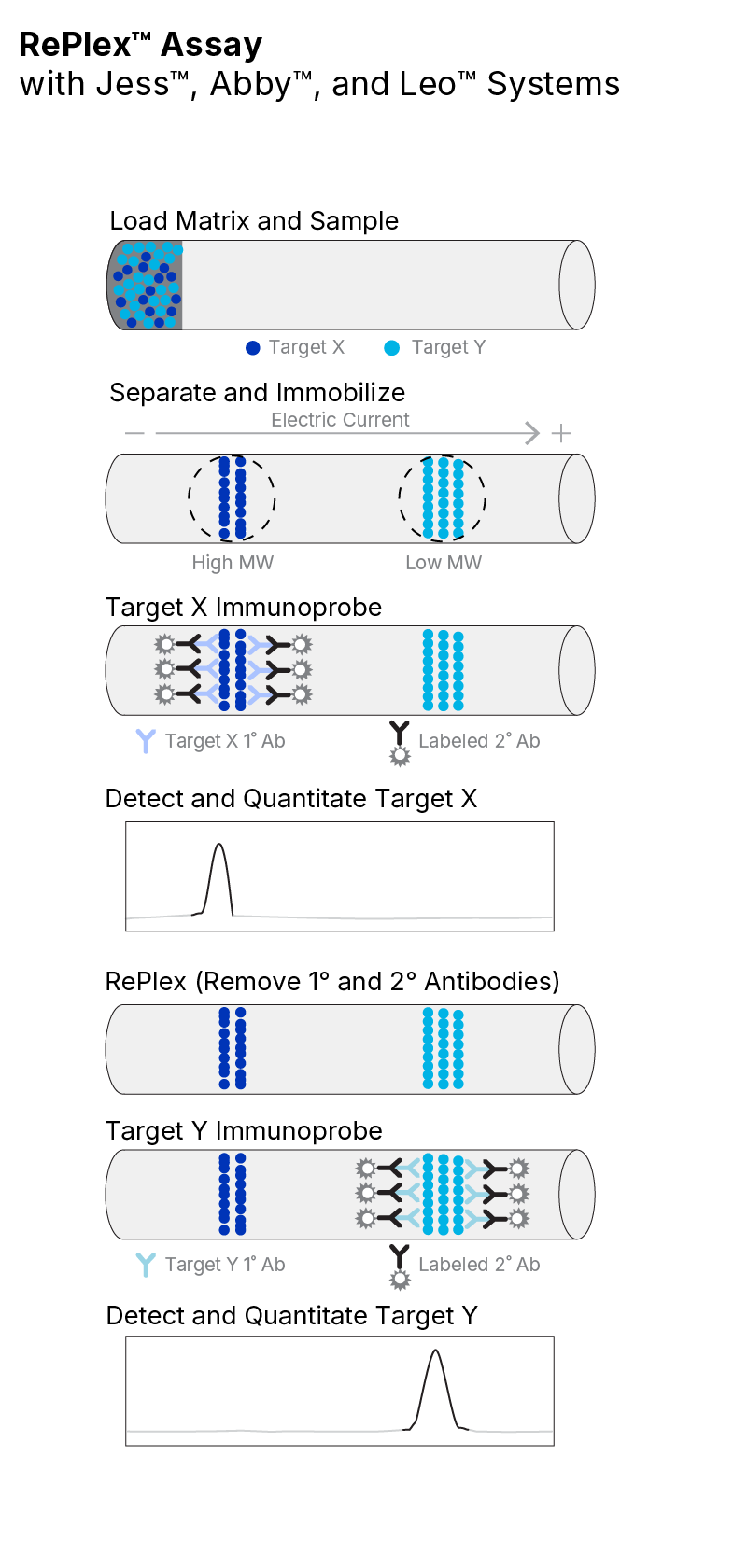
With the RePlex Module on Jess, Abby, and Leo, you can run two immunoassays within the same capillary, providing multiplex readouts to get all your rich protein characterization data from just one sample, one capillary.
- Quantify phosphorylated target and total target isoform ratios
- Normalize with total protein detection in the same capillary
- Greater flexibility in immunoprobe selection
- More data points per sample
- Save time and money on consumables
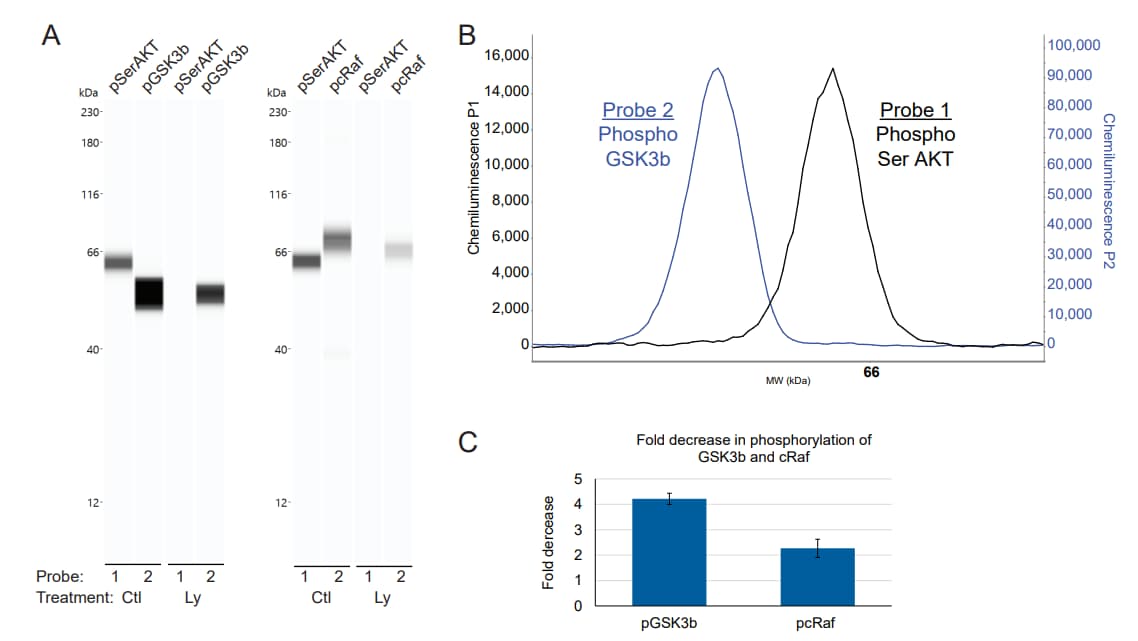
RePlex detection of concomitant phosphorylation for AKT and downstream targets in the same capillary. (A) Lane view of AKT, GSK3b and cRaf phosphorylation in control (Ctl) and LY294002-treated (LY) Jurkat lysates. (B) RePlex enables use of the same secondary antibody in Probe 1 and Probe 2, with no carryover signal, as demonstrated by detection of phosphorylated AKT and GSK3b using rabbit-derived primary antibodies in sequential probes of the same sample. (C) Quantitation shows a decrease in GSK3b and cRaf phosphorylation in LY294002-treated Jurkat lysates. Error bars represent standard deviations of the means.
Resample Up to Four Times
Simple Western Leo allows for the automatic re-sampling or use of the same sample for multiple runs, which enhances experimental efficiency. You can set up experiment to measure the expression or levels of different target proteins from a single sample by using different capillaries. Leo, the largest Simple Western Instrument utilizes 25-100 capillaries to run 25-100 samples per run enabling the detection of up to 24 protein targets per sample. Each sample can be re-sampled up to 4 times and analyzed in separate capillaries. This ability to perform multiple analyses from the same sample reduces sample consumption and minimizes the need for repetitive sample preparation, while still providing accurate, quantitative data for various protein targets in a streamlined and automated process.
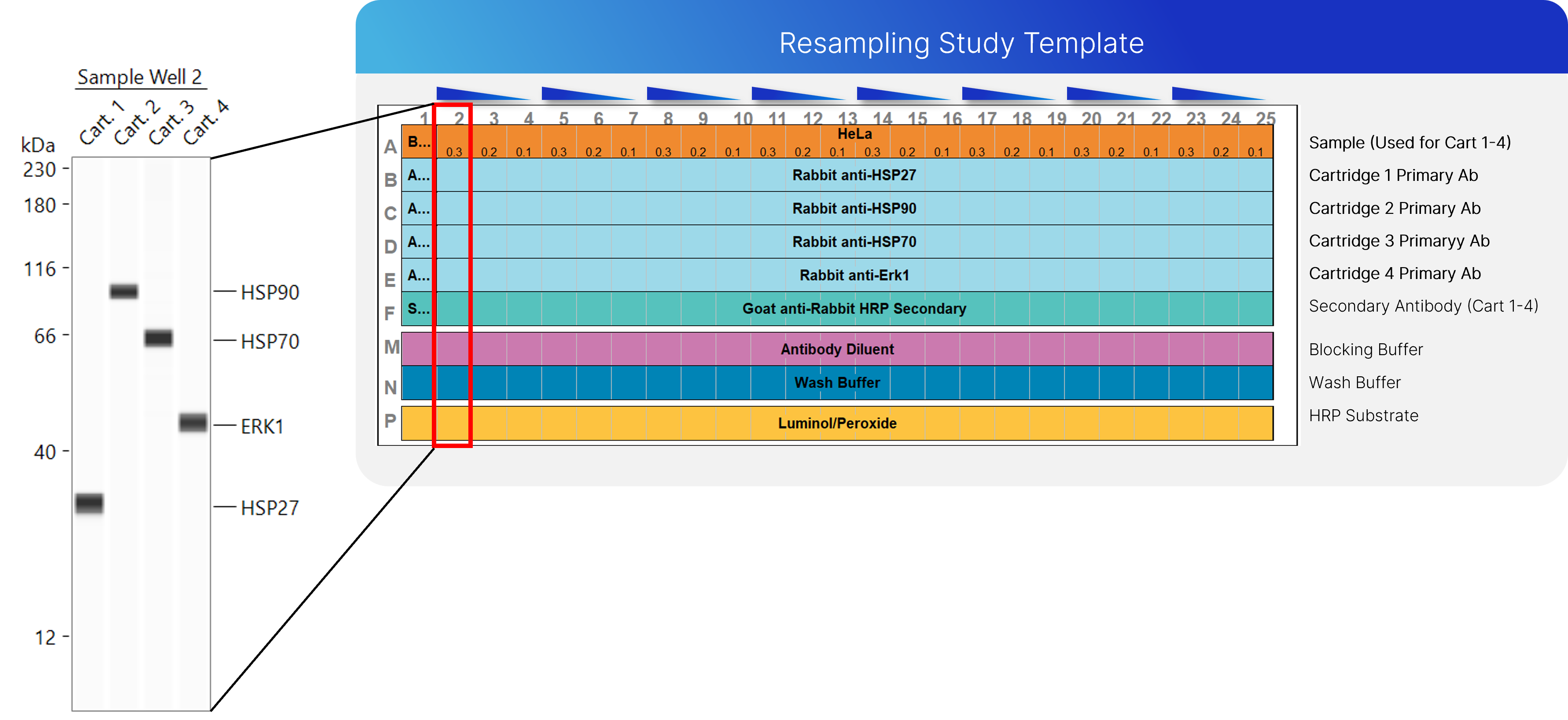
A single row of samples was loaded onto the sample plate, consisting of eight replicates each of HeLa lysates at 0.3, 0.2, and 0.1 mg/mL, for a total of 24 samples
TPN using the RePlex Module and Chemi Detection
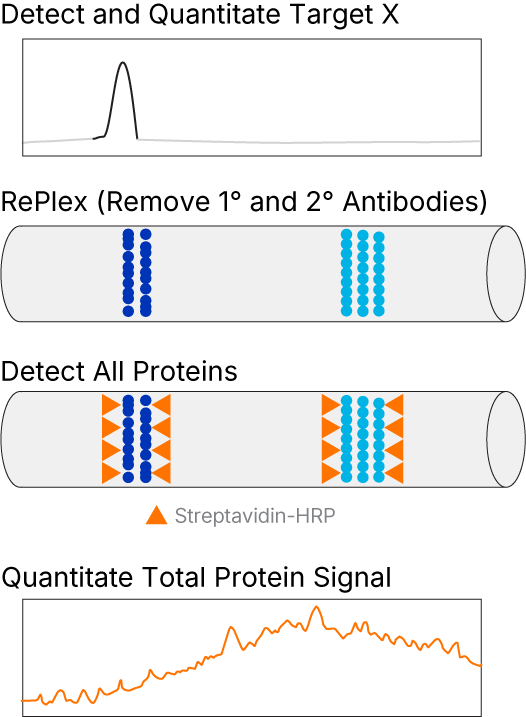
TPN using RePlex and Chemi detection allows total protein detection following RePlex to remove antibodies from an immunoassay with chemiluminescent or fluorescent probes.
TPN using the RePlex Module and NIR Detection
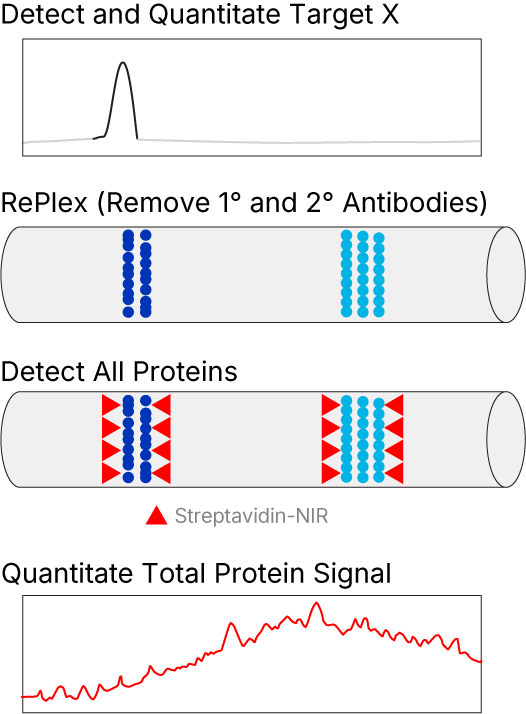
TPN using RePlex and NIR detection allows total protein detection following RePlex to remove antibodies from an immunoassay with chemiluminescent or fluorescent probes.
Resources
Webinar: Best Practices for Multiplex Western Blots
In this webinar, best practices for designing multiplex western analysis is described that were obtained through numerous projects performed at We-Met functional biochemistry core facility at Inserm. In particular, we present strategies for using RePlex to design multiplex western analysis on Simple Western platforms and how to perform an immunoassay followed by a total protein assay in the same sample to get accurate, normalized quantification of target proteins.

Request Information: Learn more. Get a quote.