CD28 Antibody (D665) - Chimeric - Azide and BSA Free
Novus Biologicals | Catalog # NBP2-81054
Recombinant Monoclonal Antibody

Key Product Details
Species Reactivity
Mouse
Applications
Immunohistochemistry, Western Blot, Block/Neutralize, Flow Cytometry, Functional, Surface Plasmon Resonance
Label
Unconjugated
Antibody Source
Recombinant Monoclonal Rabbit IgG Kappa Clone # D665
Format
Azide and BSA Free
Loading...
Product Specifications
Immunogen
The original D665 antibody was generated by immunizing mice alternately with A20 cells expressing mCD28 i.p. and with recombinant mCD28Ig s.c.
Specificity
This antibody binds to the laterally exposed C'D loop of CD28 and induces T cell proliferation without TCR ligation.
Clonality
Monoclonal
Host
Rabbit
Isotype
IgG Kappa
Applications for CD28 Antibody (D665) - Chimeric - Azide and BSA Free
Application
Recommended Usage
Block/Neutralize
Optimal dilutions of this antibody should be experimentally determined.
Flow Cytometry
Optimal dilutions of this antibody should be experimentally determined.
Functional
Optimal dilutions of this antibody should be experimentally determined.
Immunohistochemistry
Optimal dilutions of this antibody should be experimentally determined.
Surface Plasmon Resonance
Optimal dilutions of this antibody should be experimentally determined.
Western Blot
Optimal dilutions of this antibody should be experimentally determined.
Application Notes
This chimeric rabbit antibody was made using the variable domain sequences of the original Mouse IgG1 format, for improved compatibility with existing reagents, assays and techniques. This antibody binds to mouse CD28, and can trigger T-cell proliferation in vitro and in vivo in a TCR-independent manner. This antibody is a superagonistic antibody. This antibody does not compete with E18.
Flow Cytometry Panel Builder
Bio-Techne Knows Flow Cytometry
Save time and reduce costly mistakes by quickly finding compatible reagents using the Panel Builder Tool.
Advanced Features
- Spectra Viewer - Custom analysis of spectra from multiple fluorochromes
- Spillover Popups - Visualize the spectra of individual fluorochromes
- Antigen Density Selector - Match fluorochrome brightness with antigen density

Formulation, Preparation, and Storage
Purification
Protein A purified
Formulation
PBS
Format
Azide and BSA Free
Preservative
0.02% Proclin 300
Concentration
1 mg/ml
Shipping
The product is shipped with polar packs. Upon receipt, store it immediately at the temperature recommended below.
Stability & Storage
Store at 4C for up to 3 months. For longer storage, aliquot and store at -20C.
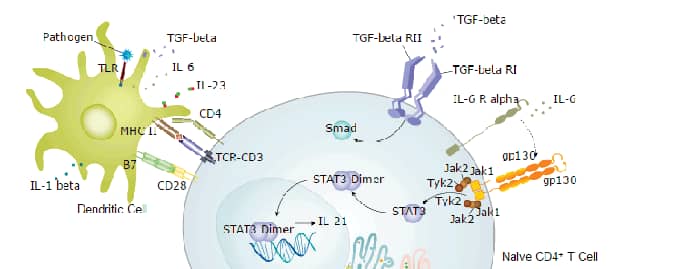
Background: CD28
CD28 is the prototypical and best-characterized costimulatory molecule on T cells (4). Its signals are critical for optimal naive T cell activation, cytokine production, proliferation, and survival (4). In order to sustain T cell activation, CD28 will consolidate immunological synapse formation, increase cell cycle progression through upregulated D-cyclin expression, and aid in T cell survival by in inducing the expression of the anti-apoptotic protein Bcl-XL (5). CD28 is constitutively expressed on naive and central memory CD4+ and CD8+ cells (5). CD28 deficiency has a large impact on T cell responses including activation, proliferation, immunoglobulin (Ig) class-switching, and germinal center (GC) formation (6). CD28 is a critical regulator of autoimmune diseases and tolerance to solid organ transplants in human patients (6). The CD28 pathway plays a central role in immune responses against pathogens, autoimmune diseases, and graft rejection (7). CD28 engagement via antibodies augments the proliferation of T cells in response to immobilized anti-CD3 antibodies (8). Additionally, antibody engagement of CD28 can supply costimulation to T cells encountering APCs deficient in costimulatory ligands, such as CD80 and CD86, and prevents the resultant anergic state that otherwise occurs in the absence of costimulatory signaling (8).
References
1. Esensten, J. H., Helou, Y. A., Chopra, G., Weiss, A., & Bluestone, J. A. (2016). CD28 Costimulation: From Mechanism to Therapy. Immunity, 44(5), 973-988. https://doi.org/10.1016/j.immuni.2016.04.020
2. Carreno, B. M., & Collins, M. (2002). The B7 family of ligands and its receptors: new pathways for costimulation and inhibition of immune responses. Annual review of immunology, 20, 29-53. https://doi.org/10.1146/annurev.immunol.20.091101.091806
3. Ward S. G. (1996). CD28: a signaling perspective. The Biochemical journal, 318 (Pt 2), 361-377. https://doi.org/10.1042/bj3180361
4. Zhang, R., Huynh, A., Whitcher, G., Chang, J., Maltzman, J. S., & Turka, L. A. (2013). An obligate cell-intrinsic function for CD28 in Tregs. The Journal of clinical investigation, 123(2), 580-593. https://doi.org/10.1172/JCI65013
5. Evans, E. J., Esnouf, R. M., Manso-Sancho, R., Gilbert, R. J., James, J. R., Yu, C., Fennelly, J. A., Vowles, C., Hanke, T., Walse, B., Hunig, T., Sorensen, P., Stuart, D. I., & Davis, S. J. (2005). Crystal structure of a soluble CD28-Fab complex. Nature immunology, 6(3), 271-279. https://doi.org/10.1038/ni1170
6. Bour-Jordan, H., & Blueston, J. A. (2002). CD28 function: a balance of costimulatory and regulatory signals. Journal of clinical immunology, 22(1), 1-7. https://doi.org/10.1023/a:1014256417651
7. Krummel, M. F., & Allison, J. P. (1995). CD28 and CTLA-4 have opposing effects on the response of T cells to stimulation. The Journal of experimental medicine, 182(2), 459-465. https://doi.org/10.1084/jem.182.2.459
8. Luhder, F., Huang, Y., Dennehy, K. M., Guntermann, C., Muller, I., Winkler, E., Kerkau, T., Ikemizu, S., Davis, S. J., Hanke, T., & Hunig, T. (2003). Topological requirements and signaling properties of T cell-activating, anti-CD28 antibody superagonists. The Journal of experimental medicine, 197(8), 955-966. https://doi.org/10.1084/jem.20021024
Alternate Names
CD28
Gene Symbol
CD28
Additional CD28 Products
Product Documents for CD28 Antibody (D665) - Chimeric - Azide and BSA Free
Certificate of Analysis
To download a Certificate of Analysis, please enter a lot or batch number in the search box below.
Product Specific Notices for CD28 Antibody (D665) - Chimeric - Azide and BSA Free
This product is for research use only and is not approved for use in humans or in clinical diagnosis. Primary Antibodies are guaranteed for 1 year from date of receipt.
Customer Reviews for CD28 Antibody (D665) - Chimeric - Azide and BSA Free
There are currently no reviews for this product. Be the first to review CD28 Antibody (D665) - Chimeric - Azide and BSA Free and earn rewards!
Have you used CD28 Antibody (D665) - Chimeric - Azide and BSA Free?
Submit a review and receive an Amazon gift card!
$25/€18/£15/$25CAN/¥2500 Yen for a review with an image
$10/€7/£6/$10CAN/¥1110 Yen for a review without an image
Submit a review
Protocols
Find general support by application which include: protocols, troubleshooting, illustrated assays, videos and webinars.
- 7-Amino Actinomycin D (7-AAD) Cell Viability Flow Cytometry Protocol
- Antigen Retrieval Protocol (PIER)
- Antigen Retrieval for Frozen Sections Protocol
- Appropriate Fixation of IHC/ICC Samples
- Cellular Response to Hypoxia Protocols
- Chromogenic IHC Staining of Formalin-Fixed Paraffin-Embedded (FFPE) Tissue Protocol
- Chromogenic Immunohistochemistry Staining of Frozen Tissue
- ClariTSA™ Fluorophore Kits
- Detection & Visualization of Antibody Binding
- Extracellular Membrane Flow Cytometry Protocol
- Flow Cytometry Protocol for Cell Surface Markers
- Flow Cytometry Protocol for Staining Membrane Associated Proteins
- Flow Cytometry Staining Protocols
- Flow Cytometry Troubleshooting Guide
- Fluorescent IHC Staining of Frozen Tissue Protocol
- Graphic Protocol for Heat-induced Epitope Retrieval
- Graphic Protocol for the Preparation and Fluorescent IHC Staining of Frozen Tissue Sections
- Graphic Protocol for the Preparation and Fluorescent IHC Staining of Paraffin-embedded Tissue Sections
- Graphic Protocol for the Preparation of Gelatin-coated Slides for Histological Tissue Sections
- IHC Sample Preparation (Frozen sections vs Paraffin)
- Immunofluorescent IHC Staining of Formalin-Fixed Paraffin-Embedded (FFPE) Tissue Protocol
- Immunohistochemistry (IHC) and Immunocytochemistry (ICC) Protocols
- Immunohistochemistry Frozen Troubleshooting
- Immunohistochemistry Paraffin Troubleshooting
- Intracellular Flow Cytometry Protocol Using Alcohol (Methanol)
- Intracellular Flow Cytometry Protocol Using Detergents
- Intracellular Nuclear Staining Flow Cytometry Protocol Using Detergents
- Intracellular Staining Flow Cytometry Protocol Using Alcohol Permeabilization
- Intracellular Staining Flow Cytometry Protocol Using Detergents to Permeabilize Cells
- Preparing Samples for IHC/ICC Experiments
- Preventing Non-Specific Staining (Non-Specific Binding)
- Primary Antibody Selection & Optimization
- Propidium Iodide Cell Viability Flow Cytometry Protocol
- Protocol for Heat-Induced Epitope Retrieval (HIER)
- Protocol for Liperfluo
- Protocol for Making a 4% Formaldehyde Solution in PBS
- Protocol for VisUCyte™ HRP Polymer Detection Reagent
- Protocol for the Characterization of Human Th22 Cells
- Protocol for the Characterization of Human Th9 Cells
- Protocol for the Preparation & Fixation of Cells on Coverslips
- Protocol for the Preparation and Chromogenic IHC Staining of Frozen Tissue Sections
- Protocol for the Preparation and Chromogenic IHC Staining of Frozen Tissue Sections - Graphic
- Protocol for the Preparation and Chromogenic IHC Staining of Paraffin-embedded Tissue Sections
- Protocol for the Preparation and Chromogenic IHC Staining of Paraffin-embedded Tissue Sections - Graphic
- Protocol for the Preparation and Fluorescent IHC Staining of Frozen Tissue Sections
- Protocol for the Preparation and Fluorescent IHC Staining of Paraffin-embedded Tissue Sections
- Protocol for the Preparation of Gelatin-coated Slides for Histological Tissue Sections
- Protocol: Annexin V and PI Staining by Flow Cytometry
- Protocol: Annexin V and PI Staining for Apoptosis by Flow Cytometry
- R&D Systems Quality Control Western Blot Protocol
- TUNEL and Active Caspase-3 Detection by IHC/ICC Protocol
- The Importance of IHC/ICC Controls
- Troubleshooting Guide: Fluorokine Flow Cytometry Kits
- Troubleshooting Guide: Immunohistochemistry
- Troubleshooting Guide: Western Blot Figures
- Western Blot Conditions
- Western Blot Protocol
- Western Blot Protocol for Cell Lysates
- Western Blot Troubleshooting
- Western Blot Troubleshooting Guide
- View all Protocols, Troubleshooting, Illustrated assays and Webinars