
DYKDDDDK Epitope Tag Antibody (L5) - BSA Free
Novus Biologicals | Catalog # NBP1-06712

![Western Blot: DYKDDDDK Epitope Tag Antibody (L5) [NBP1-06712]](https://resources.rndsystems.com/images/products/DYKDDDDK-Epitope-Tag-Antibody-L5-Western-Blot-NBP1-06712-img0010.jpg "Western Blot: DYKDDDDK Epitope Tag Antibody (L5) [NBP1-06712]")
Scientific images may be resized, cropped, or adjusted for brightness or contrast for presentation purposes. These updates are limited to presentation and do not affect the underlying scientific interpretation of the data. Where available, additional source data may be provided upon request.
Key Product Details
Species Reactivity
Validated:
Epitope Tag
Cited:
Mouse, Epitope Tag
Applications
Validated:
Immunohistochemistry, Immunohistochemistry-Frozen, Western Blot, Immunocytochemistry/ Immunofluorescence, Immunoprecipitation
Cited:
Immunohistochemistry, Immunohistochemistry-Frozen, Western Blot, Immunoblotting, Immunocytochemistry/ Immunofluorescence, Immunoprecipitation, IF/IHC
Label
Unconjugated
Antibody Source
Monoclonal Rat IgG2A Clone # L5
Format
BSA Free
Loading...
Product Specifications
Immunogen
DYKDDDDK Epitope Tag Antibody (L5) was made to N-terminal DYKDDDDK-tagged extracellular domain of mouse Langerin. Binds to same epitope as Sigma's Anti-FLAG® M2 Antibody.
Epitope
DDDDK
Specificity
Binds to same epitope as Sigma's Anti-FLAGM2 Antibody. FLAG is a registered trademark of Sigma-Aldrich Biotechnology LP and Sigma-Aldrich Co.
Clonality
Monoclonal
Host
Rat
Isotype
IgG2A
Theoretical MW
1.01 kDa.
Disclaimer note: The observed molecular weight of the protein may vary from the listed predicted molecular weight due to post translational modifications, post translation cleavages, relative charges, and other experimental factors.
Disclaimer note: The observed molecular weight of the protein may vary from the listed predicted molecular weight due to post translational modifications, post translation cleavages, relative charges, and other experimental factors.
Scientific Data Images for DYKDDDDK Epitope Tag Antibody (L5) - BSA Free
Western Blot: DYKDDDDK Epitope Tag Antibody (L5) [NBP1-06712]
Western Blot: DYKDDDDK Epitope Tag Antibody (L5) [NBP1-06712] - Analysis of DYKDDDDK tagged protein demonstrating that the rat monoclonal DYKDDDDK Epitope Tag Antibody (L5) [NBP1-06712] is 10-15 fold more sensitive than Sigma's M2 mouse ANTI-FLAG M2 antibody.![Western Blot: DYKDDDDK Epitope Tag Antibody (L5) [NBP1-06712]](https://resources.rndsystems.com/images/products/DYKDDDDK-Epitope-Tag-Antibody-L5-Western-Blot-NBP1-06712-img0005.jpg "Western Blot: DYKDDDDK Epitope Tag Antibody (L5) [NBP1-06712]")
Western Blot: DYKDDDDK Epitope Tag Antibody (L5) [NBP1-06712]
Western Blot: DYKDDDDK Epitope Tag Antibody (L5) [NBP1-06712] - Analysis of DYKDDDDK tagged SFO-p41 protein with DYKDDDDK Epitope Tag Antibody (L5) [NBP1-06712]. Observed molecular weight ~46.![Western Blot: DYKDDDDK Epitope Tag Antibody (L5) [NBP1-06712]](https://resources.rndsystems.com/images/products/DYKDDDDK-Epitope-Tag-Antibody-L5-Western-Blot-NBP1-06712-img0007.jpg "Western Blot: DYKDDDDK Epitope Tag Antibody (L5) [NBP1-06712]")
Western Blot: DYKDDDDK Epitope Tag Antibody (L5) [NBP1-06712]
Western Blot: DYKDDDDK Epitope Tag Antibody (L5) [NBP1-06712] - Analysis of DYKDDDDK tagged AIFm2 protein (A), DYKDDDDK tagged IREB2 protein (B), and vector control (C) using DYKDDDDK epitope tag antibody (L5) [NBP1-06712] at 2 ug/ml.![Immunocytochemistry/ Immunofluorescence: DYKDDDDK Epitope Tag Antibody (L5) [NBP1-06712]](https://resources.rndsystems.com/images/products/DYKDDDDK-Epitope-Tag-Antibody-L5-Immunocytochemistry-Immunofluorescence-NBP1-06712-img0009.jpg "Immunocytochemistry/ Immunofluorescence: DYKDDDDK Epitope Tag Antibody (L5) [NBP1-06712]")
Immunocytochemistry/ Immunofluorescence: DYKDDDDK Epitope Tag Antibody (L5) [NBP1-06712]
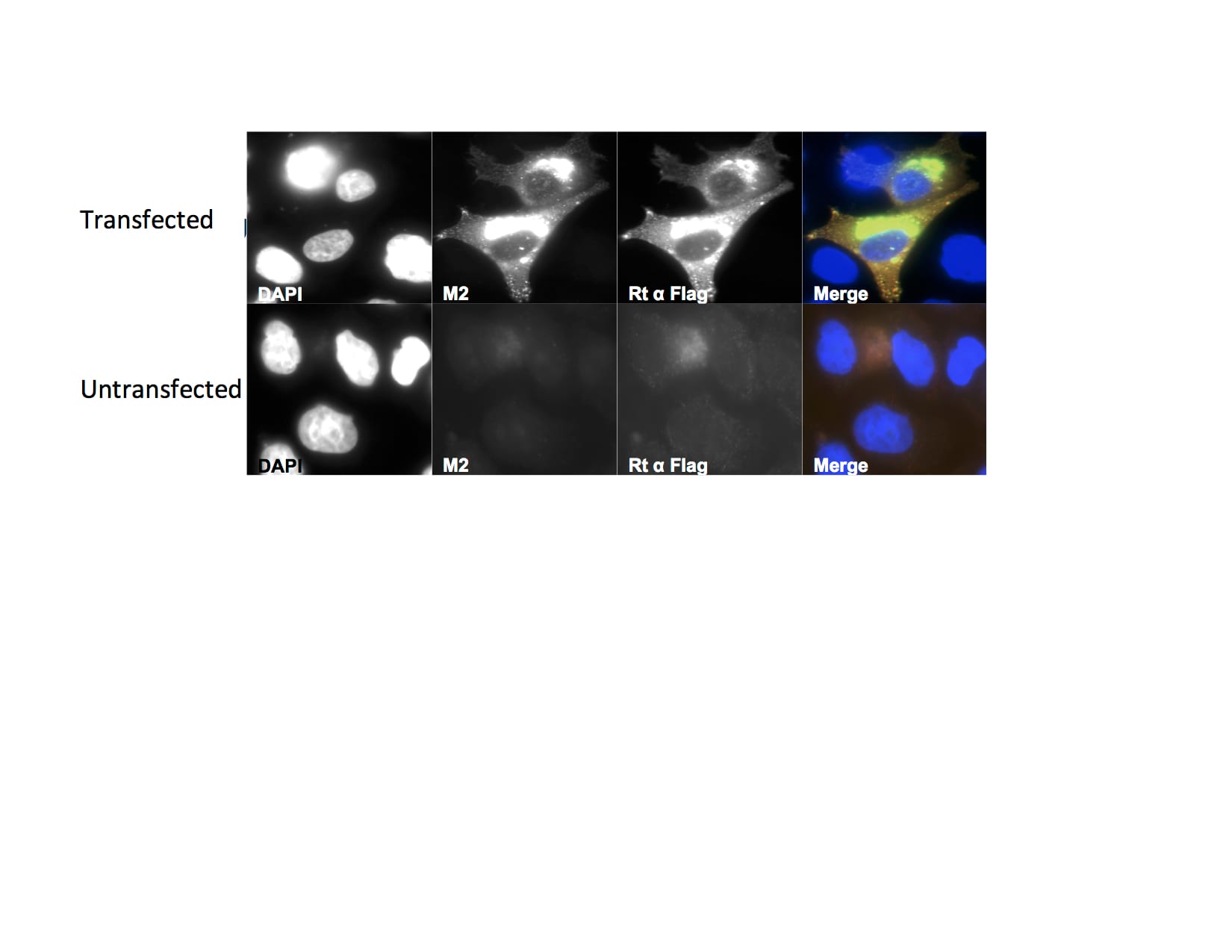
Immunocytochemistry/Immunofluorescence: DYKDDDDK Epitope Tag Antibody (L5) [NBP1-06712] - Analysis of HeLa cells transfected with a FLAG encoded construct (top) or untransfected (bottom), using DYKDDDDK Epitope Tag Antibody (L5) [NBP1-06712]. Image from verified customer review.![Immunohistochemistry: DYKDDDDK Epitope Tag Antibody (L5) [NBP1-06712]](https://resources.rndsystems.com/images/products/DYKDDDDK-Epitope-Tag-Antibody-L5-Immunohistochemistry-NBP1-06712-img0011.jpg "Immunohistochemistry: DYKDDDDK Epitope Tag Antibody (L5) [NBP1-06712]")
Immunohistochemistry: DYKDDDDK Epitope Tag Antibody (L5) [NBP1-06712]
DYKDDDDK-Epitope-Tag-Antibody-L5-Immunohistochemistry-NBP1-06712-img0011.jpg![Western Blot: DYKDDDDK Epitope Tag Antibody (L5) [NBP1-06712]](https://resources.rndsystems.com/images/products/DYKDDDDK-Epitope-Tag-Antibody-L5-Western-Blot-NBP1-06712-img0008.jpg "Western Blot: DYKDDDDK Epitope Tag Antibody (L5) [NBP1-06712]")
Western Blot: DYKDDDDK Epitope Tag Antibody (L5) [NBP1-06712]
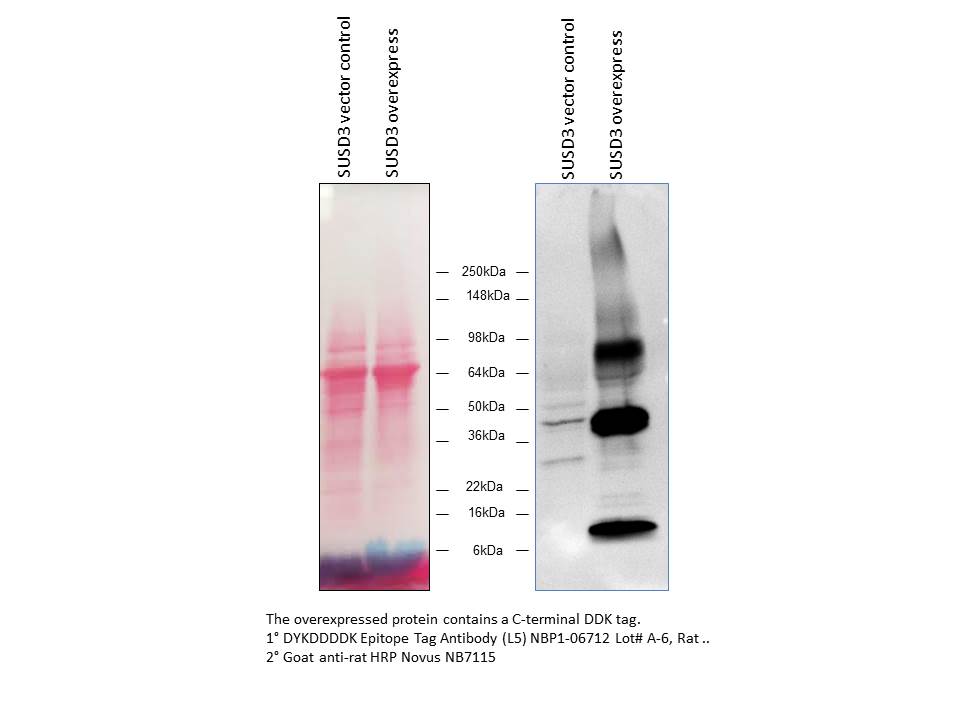
Western Blot: DYKDDDDK Epitope Tag Antibody (L5) [NBP1-06712] - Detection of DDK in SUSD3 overexpression lysate using [NBP1-06712] followed by goat anti-rat IgG HRP conjugated secondary antibody (cat.# NB7115). Image from verified customer review.
Immunocytochemistry/Immunofluorescence: Rat Monoclonal DYKDDDDK Epitope Tag Antibody (L5) [NBP1-06712] -
Immunocytochemistry/Immunofluorescence: Rat Monoclonal DYKDDDDK Epitope Tag Antibody (L5) [NBP1-06712] - Analysis using DyLight 488 conjugated antibody (NBP1-06712G). Normal mouse prostate cells overexpressed with Flag-tagged construct (Green: Flag). Image from verified customer review.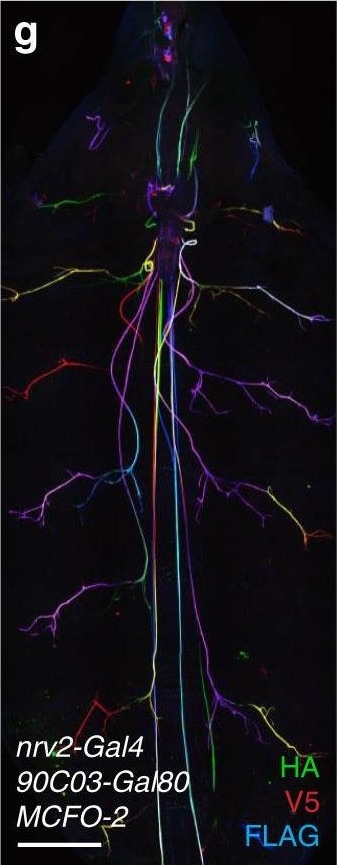
Immunohistochemistry: DYKDDDDK Epitope Tag Antibody (L5) [NBP1-06712] -
Immunohistochemistry: DYKDDDDK Epitope Tag Antibody (L5) [NBP1-06712] - Generation of a wrapping glia driver.Confocal projection of larval filet preparations of the genotypes indicated. Representative images are shown taken from >10 animals analyzed for each genotype. a Third instar larva with the genotype [nrv2-stGFP]. Broad GFP expression is detected in the CNS. Note the restricted expression in the peripheral nervous system which corresponds to the wrapping glia (arrowheads). b Third instar larva of the genotype [hs-Flp; nrv2-Gal4/MCFO-2]. flp expression of the multicolor FlpOut construct was induced by 1 h 37 °C heat shock during first instar stage. Larvae were stained for HA (green), V5 (red), & FLAG (blue). c Same animal as in (a). Expression of stRed is observed only in the CNS & no expression is found in the wrapping glia. d–f Overlay of nrv2-GFP (green) & 90C03 > dsRed (red) expression. Note the complete overlap of dsRed (e) & GFP expression in the CNS (f). g Young third instar larva with the genotype [hs-Flp; nrv2-Gal4/MCFO-2; 90C03-Gal80]. flp expression was induced by 1 h 37 °C heat shock during first instar stage. Larvae were stained for HA (green), V5 (red), & FLAG (blue). h Living third instar larva of the genotype [nrv2-Gal4, UAS-CD8GFP; 90C03-Gal80/90C03-Gal80]. Note strong expression at the anterior tip of the larva. Scale bars are 250 µm (a–c, g, h) & 100 µm (d–f). Image collected & cropped by CiteAb from the following publication (https://pubmed.ncbi.nlm.nih.gov/32901033), licensed under a CC-BY license. Not internally tested by Novus Biologicals.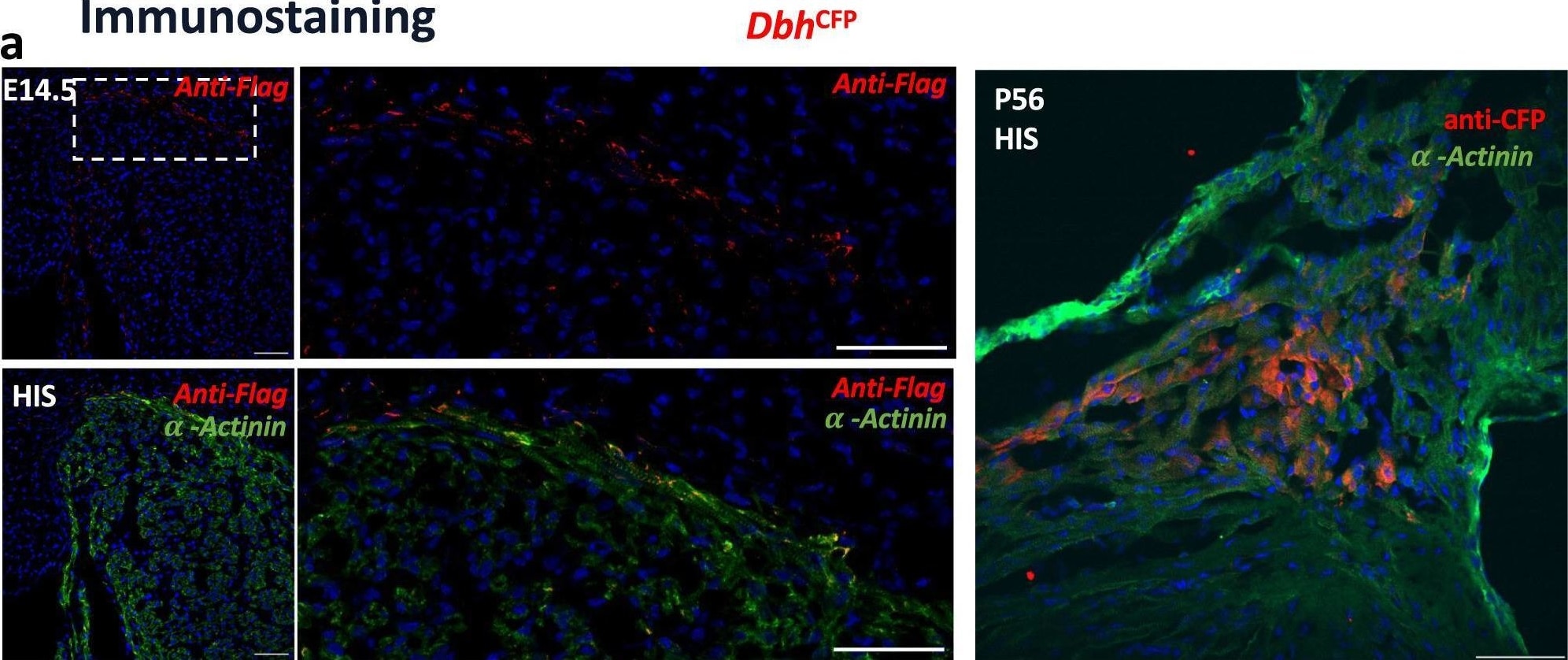
Immunocytochemistry/ Immunofluorescence: DYKDDDDK Epitope Tag Antibody (L5) - BSA Free [NBP1-06712] -
Validation of spatial distribution of Dbh+-CMs and their close association with CCS.a Representative images of immunostaining with anti-Flag (red) and anti-CFP (red), plus alpha -actinin (green) antibodies showing the expression of Dbh+-CMs in HIS region at E14.5 and adult (P56) by using DbhCFP reporter. b Representative images in AVN and HIS with alpha -actinin (green) immunostaining showing the expression pattern of Dbh+-CMs by using DbhCreERT/Rosa26-tdTomato inducible reporter at P56. c Representative images showing co-localization of Dbh+-derived CMs and Cx40+ cells in PKJ network in both left and right ventricle in DbhCre/ChR2-tdTomato/Cx40-eGFP neonatal mouse hearts. Scale bar: 50 μm n = 3 hearts/slices for each stage. Image collected and cropped by CiteAb from the following open publication (https://pubmed.ncbi.nlm.nih.gov/38016975), licensed under a CC-BY license. Not internally tested by Novus Biologicals.Applications for DYKDDDDK Epitope Tag Antibody (L5) - BSA Free
Application
Recommended Usage
Immunocytochemistry/ Immunofluorescence
1:10-1:100. Use reported in multiple pieces of scientific literature
Immunohistochemistry
1:50-1:100. Use reported in multiple pieces of scientific literature
Immunohistochemistry-Frozen
reported in scientific literature (PMID 24454782)
Immunoprecipitation
reported in multiple pieces of scientific literature
Western Blot
1:500-1:1000. Use reported in multiple pieces of scientific literature
Reviewed Applications
Read 10 reviews rated 4.7 using NBP1-06712 in the following applications:
Formulation, Preparation, and Storage
Purification
Tissue culture supernatant
Formulation
Tissue culture supernatant
Format
BSA Free
Preservative
0.1% Sodium Azide
Concentration
This product is unpurified. The exact concentration of antibody is not quantifiable.
Shipping
The product is shipped with polar packs. Upon receipt, store it immediately at the temperature recommended below.
Stability & Storage
Store at 4C. Do not freeze.
Background: DYKDDDDK Epitope Tag
The epitope tag, DYKDDDDK, is comprised of an eight amino acid sequence derived from the gene-10 product from bacteriophage T7 and contains an enterokinase-cleavage site (1). Its hydrophilic nature and short peptide sequence reduce possible interference with protein expression, post-translational modifications, protein interactions, and protein function (2). The DYKDDDDK (FLAG(R)) epitope tag can either be fused to the N-terminus, C-terminus, or placed at an internal position of the target protein, facilitating characterization of the protein of interest using immunodetection methods. Compared to the standard DYKDDDDK epitope tag antibody, the rat monoclonal DYKDDDDK Epitope Tag antibody (clone L5) is 2-8 times more sensitive (3).
References
1. Brizzard BL, Chubet RG, Vizard DL. (1994) Immunoaffinity purification of (FLAG(R)) epitope-tagged bacterial alkaline phosphatase using a novel monoclonal antibody and peptide elution. Biotechniques. 16(4):730-5. PMID: 8024796
2. Einhauer A, Jungbauer A. (2001) The (FLAG(R)) peptide, a versatile fusion tag for the purification of recombinant proteins. J Biochem Biophys Methods. 49(1-3):455-65. PMID: 11694294
3. Park SH, Cheong C, Idoyaga J, Kim JY, Choi JH, Do Y, Lee H, Jo JH, Oh YS, Im W, Steinman RM, Park CG. (2008) Generation and application of new rat monoclonal antibodies against synthetic DYKDDDDK Epitope Tag (FLAG(R)) and OLLAS tags for improved immunodetection. J Immunol Methods. 331(1-2):27-38. PMID: 18054954
FLAG(R) is a trademark of Sigma-Aldrich.
Alternate Names
FLAG Tag, anti-flag L5
Additional DYKDDDDK Epitope Tag Products
Product Documents for DYKDDDDK Epitope Tag Antibody (L5) - BSA Free
Certificate of Analysis
To download a Certificate of Analysis, please enter a lot or batch number in the search box below.
Product Specific Notices for DYKDDDDK Epitope Tag Antibody (L5) - BSA Free
This product is for research use only and is not approved for use in humans or in clinical diagnosis. Primary Antibodies are guaranteed for 1 year from date of receipt.
Citations for DYKDDDDK Epitope Tag Antibody (L5) - BSA Free
 Powered by Bioz
Customer Reviews for DYKDDDDK Epitope Tag Antibody (L5) - BSA Free (10)
4.7 out of 5
10 Customer Ratings
Have you used DYKDDDDK Epitope Tag Antibody (L5) - BSA Free?
Submit a review and receive an Amazon gift card!
$25/€18/£15/$25CAN/¥2500 for a review with an image
$10/€7/£6/$10CAN/¥1110 for a review without an image
Submit a review
Customer Images



-(0125-ml)_NBP1-06712_8131.jpg)
Showing
1
-
5 of
10 reviews
Showing All
Filter By:
-
Application: Western BlotSample Tested: HEK 293 cellsSpecies: HumanVerified Customer | Posted 01/28/2022HEK 293 cells

-
Application: Western BlotSample Tested: 293TSpecies: HumanVerified Customer | Posted 04/04/2020
-
Application: Western BlotSample Tested: 293 cell extractSpecies: HumanVerified Customer | Posted 12/27/2019
-
Application: Western BlotSample Tested: 293TSpecies: HumanVerified Customer | Posted 02/18/2019
-
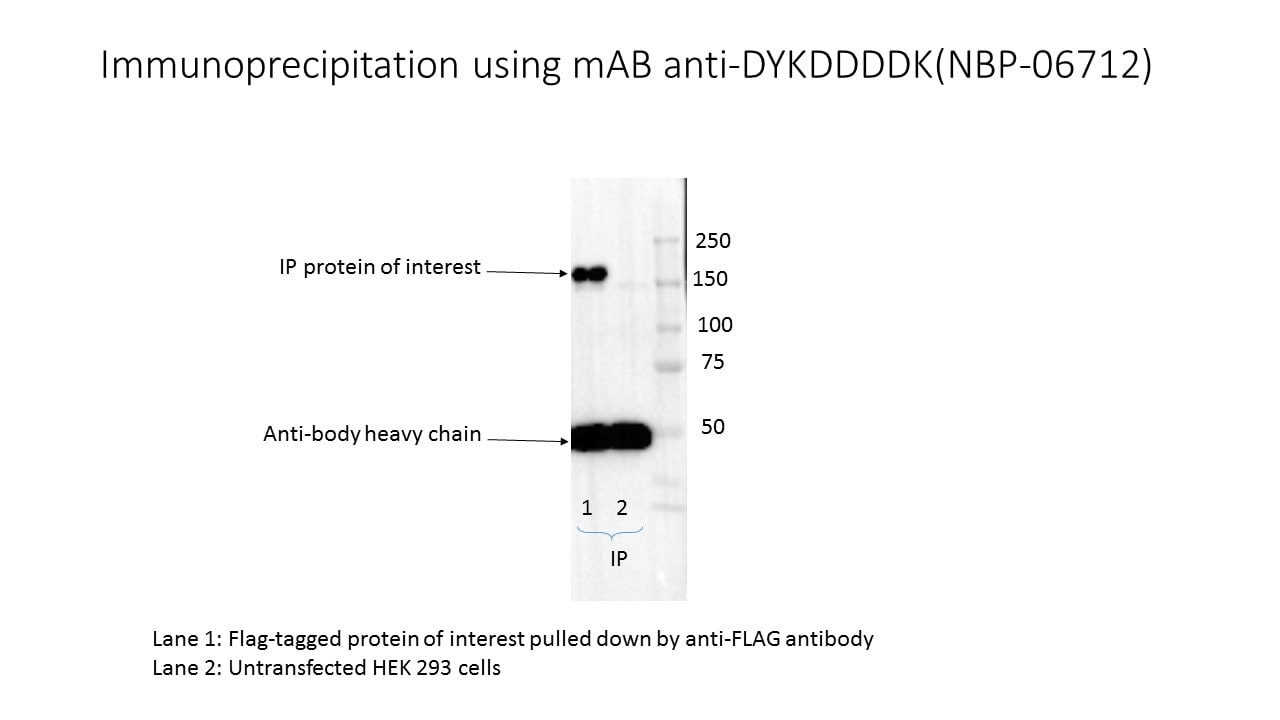
Application: ImmunoprecipitationSample Tested: Lane 1: Flag-tagged protein tranfected HEK293 cell lysate pulled down by NBP1-06712 and Lane 2: Untransfected HEK293 cells pulled down by NBP1-06712 (Control)Species: HumanVerified Customer | Posted 03/30/2017
-
Application: ImmunofluorescenceSample Tested:Species: RatVerified Customer | Posted 06/02/2015HeLa cells transfected with a FLAG encoded construct (top) or untransfected (bottom).
-
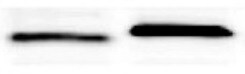
Application: Western BlotSample Tested: SUSD3 Overexpression Lysate, NBL1-16623Species: HumanVerified Customer | Posted 03/13/2015DDK tag antibody
-
Application: Western BlotSample Tested: Cos 7 cells infected with adenovirusSpecies: OtherVerified Customer | Posted 06/11/2014
-
Application: ImmunofluorescenceSample Tested: Hek 293TSpecies: HumanVerified Customer | Posted 05/27/2010
-
Application: Western BlotSample Tested: Novus TRUSS lysate (NBL1-17333)Species: OtherVerified Customer | Posted 03/31/2010
There are no reviews that match your criteria.
Protocols
View specific protocols for DYKDDDDK Epitope Tag Antibody (L5) - BSA Free (NBP1-06712):
Western Blot Protocol
1. Perform SDS-PAGE (4-12% MOPS) on samples to be analyzed, loading 5 ug of total protein per lane.
2. Transfer proteins to Nitrocellulose according to the instructions provided by the manufacturer of the transfer apparatus.
3. Rinse membrane with dH2O and then stain the blot using Ponceau S for 1-2 minutes to access the transfer of proteins onto the nitrocellulose membrane. Rinse the blot in water to remove excess stain and mark the lane locations and locations of molecular weight markers using a pencil.
4. Rinse the blot in TBS for approximately 5 minutes.
5. Block the membrane using 5% NFDM + 1% BSA in TBS + Tween, 1 hour at RT.
6. Rinse the membrane in dH2O and then wash the membrane in wash buffer [TBS + 0.1% Tween] 3 times for 10 minutes each.
7. Dilute the rat anti-DYKDDDDK primary antibody (NBP1-06712) in blocking buffer and incubate 1 hour at room temperature.
8. Rinse the membrane in dH2O and then wash the membrane in wash buffer [TBS + 0.1% Tween] 3 times for 10 minutes each.
9. Apply the diluted mouse-IgG HRP-conjugated secondary antibody in blocking buffer (as per manufacturers instructions) and incubate 1 hour at room temperature.
10. Wash the blot in wash buffer [TBS + 0.1% Tween] 3 times for 10 minutes each (this step can be repeated as required to reduce background).
11. Apply the detection reagent of choice in accordance with the manufacturers instructions (Pierce ECL).
Note: Tween-20 can be added to the blocking or antibody dilution buffer at a final concentration of 0.05-0.2%, provided it does not interfere with antibody-antigen binding.
Find general support by application which include: protocols, troubleshooting, illustrated assays, videos and webinars.
- Antigen Retrieval Protocol (PIER)
- Antigen Retrieval for Frozen Sections Protocol
- Appropriate Fixation of IHC/ICC Samples
- Cellular Response to Hypoxia Protocols
- Chromogenic IHC Staining of Formalin-Fixed Paraffin-Embedded (FFPE) Tissue Protocol
- Chromogenic Immunohistochemistry Staining of Frozen Tissue
- ClariTSA™ Fluorophore Kits
- Detection & Visualization of Antibody Binding
- Fluorescent IHC Staining of Frozen Tissue Protocol
- Graphic Protocol for Heat-induced Epitope Retrieval
- Graphic Protocol for the Preparation and Fluorescent IHC Staining of Frozen Tissue Sections
- Graphic Protocol for the Preparation and Fluorescent IHC Staining of Paraffin-embedded Tissue Sections
- Graphic Protocol for the Preparation of Gelatin-coated Slides for Histological Tissue Sections
- ICC Cell Smear Protocol for Suspension Cells
- ICC Immunocytochemistry Protocol Videos
- ICC for Adherent Cells
- IHC Sample Preparation (Frozen sections vs Paraffin)
- Immunocytochemistry (ICC) Protocol
- Immunocytochemistry Troubleshooting
- Immunofluorescence of Organoids Embedded in Cultrex Basement Membrane Extract
- Immunofluorescent IHC Staining of Formalin-Fixed Paraffin-Embedded (FFPE) Tissue Protocol
- Immunohistochemistry (IHC) and Immunocytochemistry (ICC) Protocols
- Immunohistochemistry Frozen Troubleshooting
- Immunohistochemistry Paraffin Troubleshooting
- Immunoprecipitation Protocol
- Preparing Samples for IHC/ICC Experiments
- Preventing Non-Specific Staining (Non-Specific Binding)
- Primary Antibody Selection & Optimization
- Protocol for Heat-Induced Epitope Retrieval (HIER)
- Protocol for Making a 4% Formaldehyde Solution in PBS
- Protocol for VisUCyte™ HRP Polymer Detection Reagent
- Protocol for the Fluorescent ICC Staining of Cell Smears - Graphic
- Protocol for the Fluorescent ICC Staining of Cultured Cells on Coverslips - Graphic
- Protocol for the Preparation & Fixation of Cells on Coverslips
- Protocol for the Preparation and Chromogenic IHC Staining of Frozen Tissue Sections
- Protocol for the Preparation and Chromogenic IHC Staining of Frozen Tissue Sections - Graphic
- Protocol for the Preparation and Chromogenic IHC Staining of Paraffin-embedded Tissue Sections
- Protocol for the Preparation and Chromogenic IHC Staining of Paraffin-embedded Tissue Sections - Graphic
- Protocol for the Preparation and Fluorescent ICC Staining of Cells on Coverslips
- Protocol for the Preparation and Fluorescent ICC Staining of Non-adherent Cells
- Protocol for the Preparation and Fluorescent ICC Staining of Stem Cells on Coverslips
- Protocol for the Preparation and Fluorescent IHC Staining of Frozen Tissue Sections
- Protocol for the Preparation and Fluorescent IHC Staining of Paraffin-embedded Tissue Sections
- Protocol for the Preparation of Gelatin-coated Slides for Histological Tissue Sections
- Protocol for the Preparation of a Cell Smear for Non-adherent Cell ICC - Graphic
- R&D Systems Quality Control Western Blot Protocol
- TUNEL and Active Caspase-3 Detection by IHC/ICC Protocol
- The Importance of IHC/ICC Controls
- Troubleshooting Guide: Immunohistochemistry
- Troubleshooting Guide: Western Blot Figures
- Western Blot Conditions
- Western Blot Protocol
- Western Blot Protocol for Cell Lysates
- Western Blot Troubleshooting
- Western Blot Troubleshooting Guide
- View all Protocols, Troubleshooting, Illustrated assays and Webinars
FAQs for DYKDDDDK Epitope Tag Antibody (L5) - BSA Free
Showing
1
-
5 of
7 FAQs
Showing All
-
Q: Are the FLAG Tag antibodies validated in Simple Western?
A: Yes, we offer 3 FLAG Tag antibodies that have been tested in Simple Western: NBP1-71705, NBP1-97410, and MAB8529.
-
Q: Do FLAG Tag antibodies comes in lyophilized form?
A: The following FLAG Tag antibodies come in lyophilized form: NBP1-97393, NBP1-97401, NBP1-97399, NBP1-97400, and NBP1-97402.
-
Q: I ordered your NBP1-06712SS Rat Monoclonal Flag tag antibody. I have 2 questions: (1) Will this antibody recognize FLAG at the C-terminal end ? (2) Does my secondary need to be rat ? Or can it be mouse ?
A: This antibody will recognize FLAG-tag at N- or C-termnus. This antibody is a rat monoclonal antibody, so you will need to use an anti-rat secondary.
-
Q: Upon the customer's inquiry, may we ask about the concentration of NBP1-06712?
A: NBP1-06712 is unpurified (tissue culture supernatant) and does not have a concentration.
-
Q: What the theoretical molecular weight for FLAG Tag antibodies?
A: The TMW for DYKDDDDK epitope FLAG Tag is approximately 1.01 kDa.
-
Q: Will FLAG Tag antibodies detect internal FLAG tags? My FLAG sequence is sandwiched between two other protein sequences.
A: If you are applying your sample(s) to SDS-PAGE, under reducing condition and follow by Western Blot, DYKDDDDK epitope tag antibodies should be able to detect the tag region located internally. However, it depends on the property of your chimeric protein and if your tag is in the hydrophobic or hydrophilic region. Although DYKDDDDK is very hydrophilic, it may not be exposed to the surface if embedded deeply inside the protein with a high content of hydrophobic amino acids with or without covalently-linked modifications such as lipid moieties.
-
Q: Will FLAG Tag antibodies recognize FLAG at the C-terminal end?
A: Yes, FLAG Tag antibodies can recognize FLAG-tag at both the N- or C-terminal.
-
Q: Are the FLAG Tag antibodies validated in Simple Western?
A: Yes, we offer 3 FLAG Tag antibodies that have been tested in Simple Western: NBP1-71705, NBP1-97410, and MAB8529.
-
Q: Do FLAG Tag antibodies comes in lyophilized form?
A: The following FLAG Tag antibodies come in lyophilized form: NBP1-97393, NBP1-97401, NBP1-97399, NBP1-97400, and NBP1-97402.
-
Q: I ordered your NBP1-06712SS Rat Monoclonal Flag tag antibody. I have 2 questions: (1) Will this antibody recognize FLAG at the C-terminal end ? (2) Does my secondary need to be rat ? Or can it be mouse ?
A: This antibody will recognize FLAG-tag at N- or C-termnus. This antibody is a rat monoclonal antibody, so you will need to use an anti-rat secondary.
-
Q: Upon the customer's inquiry, may we ask about the concentration of NBP1-06712?
A: NBP1-06712 is unpurified (tissue culture supernatant) and does not have a concentration.
-
Q: What the theoretical molecular weight for FLAG Tag antibodies?
A: The TMW for DYKDDDDK epitope FLAG Tag is approximately 1.01 kDa.
-
Q: Will FLAG Tag antibodies detect internal FLAG tags? My FLAG sequence is sandwiched between two other protein sequences.
A: If you are applying your sample(s) to SDS-PAGE, under reducing condition and follow by Western Blot, DYKDDDDK epitope tag antibodies should be able to detect the tag region located internally. However, it depends on the property of your chimeric protein and if your tag is in the hydrophobic or hydrophilic region. Although DYKDDDDK is very hydrophilic, it may not be exposed to the surface if embedded deeply inside the protein with a high content of hydrophobic amino acids with or without covalently-linked modifications such as lipid moieties.
-
Q: Will FLAG Tag antibodies recognize FLAG at the C-terminal end?
A: Yes, FLAG Tag antibodies can recognize FLAG-tag at both the N- or C-terminal.
-
Q: Are the FLAG Tag antibodies validated in Simple Western?
A: Yes, we offer 3 FLAG Tag antibodies that have been tested in Simple Western: NBP1-71705, NBP1-97410, and MAB8529.
-
Q: Do FLAG Tag antibodies comes in lyophilized form?
A: The following FLAG Tag antibodies come in lyophilized form: NBP1-97393, NBP1-97401, NBP1-97399, NBP1-97400, and NBP1-97402.
-
Q: I ordered your NBP1-06712SS Rat Monoclonal Flag tag antibody. I have 2 questions: (1) Will this antibody recognize FLAG at the C-terminal end ? (2) Does my secondary need to be rat ? Or can it be mouse ?
A: This antibody will recognize FLAG-tag at N- or C-termnus. This antibody is a rat monoclonal antibody, so you will need to use an anti-rat secondary.
-
Q: Upon the customer's inquiry, may we ask about the concentration of NBP1-06712?
A: NBP1-06712 is unpurified (tissue culture supernatant) and does not have a concentration.
-
Q: What the theoretical molecular weight for FLAG Tag antibodies?
A: The TMW for DYKDDDDK epitope FLAG Tag is approximately 1.01 kDa.
-
Q: Will FLAG Tag antibodies detect internal FLAG tags? My FLAG sequence is sandwiched between two other protein sequences.
A: If you are applying your sample(s) to SDS-PAGE, under reducing condition and follow by Western Blot, DYKDDDDK epitope tag antibodies should be able to detect the tag region located internally. However, it depends on the property of your chimeric protein and if your tag is in the hydrophobic or hydrophilic region. Although DYKDDDDK is very hydrophilic, it may not be exposed to the surface if embedded deeply inside the protein with a high content of hydrophobic amino acids with or without covalently-linked modifications such as lipid moieties.
-
Q: Will FLAG Tag antibodies recognize FLAG at the C-terminal end?
A: Yes, FLAG Tag antibodies can recognize FLAG-tag at both the N- or C-terminal.
-
Q: Are the FLAG Tag antibodies validated in Simple Western?
A: Yes, we offer 3 FLAG Tag antibodies that have been tested in Simple Western: NBP1-71705, NBP1-97410, and MAB8529.
-
Q: Do FLAG Tag antibodies comes in lyophilized form?
A: The following FLAG Tag antibodies come in lyophilized form: NBP1-97393, NBP1-97401, NBP1-97399, NBP1-97400, and NBP1-97402.
-
Q: I ordered your NBP1-06712SS Rat Monoclonal Flag tag antibody. I have 2 questions: (1) Will this antibody recognize FLAG at the C-terminal end ? (2) Does my secondary need to be rat ? Or can it be mouse ?
A: This antibody will recognize FLAG-tag at N- or C-termnus. This antibody is a rat monoclonal antibody, so you will need to use an anti-rat secondary.
-
Q: Upon the customer's inquiry, may we ask about the concentration of NBP1-06712?
A: NBP1-06712 is unpurified (tissue culture supernatant) and does not have a concentration.
-
Q: What the theoretical molecular weight for FLAG Tag antibodies?
A: The TMW for DYKDDDDK epitope FLAG Tag is approximately 1.01 kDa.
-
Q: Will FLAG Tag antibodies detect internal FLAG tags? My FLAG sequence is sandwiched between two other protein sequences.
A: If you are applying your sample(s) to SDS-PAGE, under reducing condition and follow by Western Blot, DYKDDDDK epitope tag antibodies should be able to detect the tag region located internally. However, it depends on the property of your chimeric protein and if your tag is in the hydrophobic or hydrophilic region. Although DYKDDDDK is very hydrophilic, it may not be exposed to the surface if embedded deeply inside the protein with a high content of hydrophobic amino acids with or without covalently-linked modifications such as lipid moieties.
-
Q: Will FLAG Tag antibodies recognize FLAG at the C-terminal end?
A: Yes, FLAG Tag antibodies can recognize FLAG-tag at both the N- or C-terminal.
-
Q: Are the FLAG Tag antibodies validated in Simple Western?
A: Yes, we offer 3 FLAG Tag antibodies that have been tested in Simple Western: NBP1-71705, NBP1-97410, and MAB8529.
-
Q: Do FLAG Tag antibodies comes in lyophilized form?
A: The following FLAG Tag antibodies come in lyophilized form: NBP1-97393, NBP1-97401, NBP1-97399, NBP1-97400, and NBP1-97402.
-
Q: I ordered your NBP1-06712SS Rat Monoclonal Flag tag antibody. I have 2 questions: (1) Will this antibody recognize FLAG at the C-terminal end ? (2) Does my secondary need to be rat ? Or can it be mouse ?
A: This antibody will recognize FLAG-tag at N- or C-termnus. This antibody is a rat monoclonal antibody, so you will need to use an anti-rat secondary.
-
Q: Upon the customer's inquiry, may we ask about the concentration of NBP1-06712?
A: NBP1-06712 is unpurified (tissue culture supernatant) and does not have a concentration.
-
Q: What the theoretical molecular weight for FLAG Tag antibodies?
A: The TMW for DYKDDDDK epitope FLAG Tag is approximately 1.01 kDa.
-
Q: Will FLAG Tag antibodies detect internal FLAG tags? My FLAG sequence is sandwiched between two other protein sequences.
A: If you are applying your sample(s) to SDS-PAGE, under reducing condition and follow by Western Blot, DYKDDDDK epitope tag antibodies should be able to detect the tag region located internally. However, it depends on the property of your chimeric protein and if your tag is in the hydrophobic or hydrophilic region. Although DYKDDDDK is very hydrophilic, it may not be exposed to the surface if embedded deeply inside the protein with a high content of hydrophobic amino acids with or without covalently-linked modifications such as lipid moieties.
-
Q: Will FLAG Tag antibodies recognize FLAG at the C-terminal end?
A: Yes, FLAG Tag antibodies can recognize FLAG-tag at both the N- or C-terminal.
-
Q: Are the FLAG Tag antibodies validated in Simple Western?
A: Yes, we offer 3 FLAG Tag antibodies that have been tested in Simple Western: NBP1-71705, NBP1-97410, and MAB8529.
-
Q: Do FLAG Tag antibodies comes in lyophilized form?
A: The following FLAG Tag antibodies come in lyophilized form: NBP1-97393, NBP1-97401, NBP1-97399, NBP1-97400, and NBP1-97402.
-
Q: I ordered your NBP1-06712SS Rat Monoclonal Flag tag antibody. I have 2 questions: (1) Will this antibody recognize FLAG at the C-terminal end ? (2) Does my secondary need to be rat ? Or can it be mouse ?
A: This antibody will recognize FLAG-tag at N- or C-termnus. This antibody is a rat monoclonal antibody, so you will need to use an anti-rat secondary.
-
Q: Upon the customer's inquiry, may we ask about the concentration of NBP1-06712?
A: NBP1-06712 is unpurified (tissue culture supernatant) and does not have a concentration.
-
Q: What the theoretical molecular weight for FLAG Tag antibodies?
A: The TMW for DYKDDDDK epitope FLAG Tag is approximately 1.01 kDa.
-
Q: Will FLAG Tag antibodies detect internal FLAG tags? My FLAG sequence is sandwiched between two other protein sequences.
A: If you are applying your sample(s) to SDS-PAGE, under reducing condition and follow by Western Blot, DYKDDDDK epitope tag antibodies should be able to detect the tag region located internally. However, it depends on the property of your chimeric protein and if your tag is in the hydrophobic or hydrophilic region. Although DYKDDDDK is very hydrophilic, it may not be exposed to the surface if embedded deeply inside the protein with a high content of hydrophobic amino acids with or without covalently-linked modifications such as lipid moieties.
-
Q: Will FLAG Tag antibodies recognize FLAG at the C-terminal end?
A: Yes, FLAG Tag antibodies can recognize FLAG-tag at both the N- or C-terminal.
-
Q: Are the FLAG Tag antibodies validated in Simple Western?
A: Yes, we offer 3 FLAG Tag antibodies that have been tested in Simple Western: NBP1-71705, NBP1-97410, and MAB8529.
-
Q: Do FLAG Tag antibodies comes in lyophilized form?
A: The following FLAG Tag antibodies come in lyophilized form: NBP1-97393, NBP1-97401, NBP1-97399, NBP1-97400, and NBP1-97402.
-
Q: I ordered your NBP1-06712SS Rat Monoclonal Flag tag antibody. I have 2 questions: (1) Will this antibody recognize FLAG at the C-terminal end ? (2) Does my secondary need to be rat ? Or can it be mouse ?
A: This antibody will recognize FLAG-tag at N- or C-termnus. This antibody is a rat monoclonal antibody, so you will need to use an anti-rat secondary.
-
Q: Upon the customer's inquiry, may we ask about the concentration of NBP1-06712?
A: NBP1-06712 is unpurified (tissue culture supernatant) and does not have a concentration.
-
Q: What the theoretical molecular weight for FLAG Tag antibodies?
A: The TMW for DYKDDDDK epitope FLAG Tag is approximately 1.01 kDa.
-
Q: Will FLAG Tag antibodies detect internal FLAG tags? My FLAG sequence is sandwiched between two other protein sequences.
A: If you are applying your sample(s) to SDS-PAGE, under reducing condition and follow by Western Blot, DYKDDDDK epitope tag antibodies should be able to detect the tag region located internally. However, it depends on the property of your chimeric protein and if your tag is in the hydrophobic or hydrophilic region. Although DYKDDDDK is very hydrophilic, it may not be exposed to the surface if embedded deeply inside the protein with a high content of hydrophobic amino acids with or without covalently-linked modifications such as lipid moieties.
-
Q: Will FLAG Tag antibodies recognize FLAG at the C-terminal end?
A: Yes, FLAG Tag antibodies can recognize FLAG-tag at both the N- or C-terminal.
Loading...