
EAAT2/GLT1 Antibody
Novus Biologicals | Catalog # NBP1-20136

![Western Blot: EAAT2/GLT1 AntibodyAzide Free [NBP1-20136]](https://resources.rndsystems.com/images/products/EAAT2-GLT1-Antibody---Azide-Free-Western-Blot-NBP1-20136-img0002.jpg "Western Blot: EAAT2/GLT1 AntibodyAzide Free [NBP1-20136]")
Scientific images may be resized, cropped, or adjusted for brightness or contrast for presentation purposes. These updates are limited to presentation and do not affect the underlying scientific interpretation of the data. Where available, additional source data may be provided upon request.
Key Product Details
Species Reactivity
Validated:
Cited:
Applications
Validated:
Cited:
Label
Antibody Source
Product Specifications
Immunogen
Reactivity Notes
Clonality
Host
Isotype
Scientific Data Images for EAAT2/GLT1 Antibody
Western Blot: EAAT2/GLT1 AntibodyAzide Free [NBP1-20136]
Western Blot: EAAT2/GLT1 Antibody - Azide Free [NBP1-20136] - Blocking: 1% LFDM for 30 min at RT; primary antibody: dilution 1:1000 incubated overnight at 4C.![Immunocytochemistry/ Immunofluorescence: EAAT2/GLT1 Antibody - Azide Free [NBP1-20136]](https://resources.rndsystems.com/images/products/EAAT2-GLT1-Antibody---Azide-Free-Immunocytochemistry-Immunofluorescence-NBP1-20136-img0015.jpg "Immunocytochemistry/ Immunofluorescence: EAAT2/GLT1 Antibody - Azide Free [NBP1-20136]")
Immunocytochemistry/ Immunofluorescence: EAAT2/GLT1 Antibody - Azide Free [NBP1-20136]
EAAT2-GLT1-Antibody---Azide-Free-Immunocytochemistry-Immunofluorescence-NBP1-20136-img0015.jpg![Immunohistochemistry: EAAT2/GLT1 Antibody - Azide Free [NBP1-20136]](https://resources.rndsystems.com/images/products/EAAT2-GLT1%20Antibody%20-%20Azide%20Free-Immunohistochemistry-NBP1-20136-img0016.jpg "Immunohistochemistry: EAAT2/GLT1 Antibody - Azide Free [NBP1-20136]")
Immunohistochemistry: EAAT2/GLT1 Antibody - Azide Free [NBP1-20136]
EAAT2-GLT1 Antibody - Azide Free-Immunohistochemistry-NBP1-20136-img0016.jpg![Immunohistochemistry-Paraffin: EAAT2/GLT1 Antibody - Azide Free [NBP1-20136]](https://resources.rndsystems.com/images/products/EAAT2-GLT1-Antibody---Azide-Free-Immunohistochemistry-Paraffin-NBP1-20136-img0003.jpg "Immunohistochemistry-Paraffin: EAAT2/GLT1 Antibody - Azide Free [NBP1-20136]")
Immunohistochemistry-Paraffin: EAAT2/GLT1 Antibody - Azide Free [NBP1-20136]
Immunohistochemistry-Paraffin: EAAT2/GLT1 Antibody - Azide Free [NBP1-20136] - Mouse spinal cord. The animal was perfused using Autoperfuser at a pressure of 130 mmHg with 300 ml 4% FA before being processed for paraffin embedding. HIER: Tris-EDTA, pH 9 for 20 min. Blocking: 0.2% LFDM in TBST filtered thru 0.2 um.![Immunohistochemistry-Paraffin: EAAT2/GLT1 Antibody - Azide Free [NBP1-20136]](https://resources.rndsystems.com/images/products/EAAT2-GLT1-Antibody---Azide-Free-Immunohistochemistry-Paraffin-NBP1-20136-img0004.jpg "Immunohistochemistry-Paraffin: EAAT2/GLT1 Antibody - Azide Free [NBP1-20136]")
Immunohistochemistry-Paraffin: EAAT2/GLT1 Antibody - Azide Free [NBP1-20136]
Immunohistochemistry-Paraffin: EAAT2/GLT1 Antibody - Azide Free [NBP1-20136] - Mouse spinal cord. The animal was perfused using Autoperfuser at a pressure of 130 mmHg with 300 ml 4% FA before being processed for paraffin embedding. HIER: Tris-EDTA, pH 9 for 20. Blocking: 0.2% LFDM in TBST filtered thru 0.2 um.![Immunohistochemistry-Paraffin: EAAT2/GLT1 Antibody - Azide Free [NBP1-20136]](https://resources.rndsystems.com/images/products/EAAT2-GLT1-Antibody---Azide-Free-Immunohistochemistry-Paraffin-NBP1-20136-img0005.jpg "Immunohistochemistry-Paraffin: EAAT2/GLT1 Antibody - Azide Free [NBP1-20136]")
Immunohistochemistry-Paraffin: EAAT2/GLT1 Antibody - Azide Free [NBP1-20136]
Immunohistochemistry-Paraffin: EAAT2/GLT1 Antibody - Azide Free [NBP1-20136] - Mouse olfactory bulbs. The animal was perfused using Autoperfuser at a pressure of 130 mmHg with 300 ml 4% FA before being processed for paraffin embedding. HIER: Tris-EDTA, pH 9 for 20 min. Blocking: 0.2% LFDM in TBST filtered thru 0.2 um.![Immunohistochemistry-Paraffin: EAAT2/GLT1 Antibody - Azide Free [NBP1-20136]](https://resources.rndsystems.com/images/products/EAAT2-GLT1-Antibody---Azide-Free-Immunohistochemistry-Paraffin-NBP1-20136-img0006.jpg "Immunohistochemistry-Paraffin: EAAT2/GLT1 Antibody - Azide Free [NBP1-20136]")
Immunohistochemistry-Paraffin: EAAT2/GLT1 Antibody - Azide Free [NBP1-20136]
Immunohistochemistry-Paraffin: EAAT2/GLT1 Antibody - Azide Free [NBP1-20136] - Mouse brain (hippocampus). The animal was perfused at a pressure of 130 mmHg with 300 ml 4% FA before being processed for paraffin embedding. HIER: Tris-EDTA, pH 9 for 20 min.![Immunohistochemistry-Paraffin: EAAT2/GLT1 Antibody - Azide Free [NBP1-20136]](https://resources.rndsystems.com/images/products/EAAT2-GLT1-Antibody---Azide-Free-Immunohistochemistry-Paraffin-NBP1-20136-img0007.jpg "Immunohistochemistry-Paraffin: EAAT2/GLT1 Antibody - Azide Free [NBP1-20136]")
Immunohistochemistry-Paraffin: EAAT2/GLT1 Antibody - Azide Free [NBP1-20136]
Immunohistochemistry-Paraffin: EAAT2/GLT1 Antibody - Azide Free [NBP1-20136] - Mouse brain (hippocampus). The animal was perfused at a pressure of 130 mmHg with 300 ml 4% FA before being processed for paraffin embedding. HIER: Tris-EDTA, pH 9 for 20 min.![Immunohistochemistry-Paraffin: EAAT2/GLT1 Antibody - Azide Free [NBP1-20136]](https://resources.rndsystems.com/images/products/EAAT2-GLT1-Antibody---Azide-Free-Immunohistochemistry-Paraffin-NBP1-20136-img0008.jpg "Immunohistochemistry-Paraffin: EAAT2/GLT1 Antibody - Azide Free [NBP1-20136]")
Immunohistochemistry-Paraffin: EAAT2/GLT1 Antibody - Azide Free [NBP1-20136]
Immunohistochemistry-Paraffin: EAAT2/GLT1 Antibody - Azide Free [NBP1-20136] - Mouse brain (hippocampus). The animal was perfused at a pressure of 130 mmHg with 300 ml 4% FA before being processed for paraffin embedding. HIER: Tris-EDTA, pH 9 for 20 min.![Immunohistochemistry-Paraffin: EAAT2/GLT1 Antibody - Azide Free [NBP1-20136]](https://resources.rndsystems.com/images/products/EAAT2-GLT1-Antibody---Azide-Free-Immunohistochemistry-Paraffin-NBP1-20136-img0009.jpg "Immunohistochemistry-Paraffin: EAAT2/GLT1 Antibody - Azide Free [NBP1-20136]")
Immunohistochemistry-Paraffin: EAAT2/GLT1 Antibody - Azide Free [NBP1-20136]
Immunohistochemistry-Paraffin: EAAT2/GLT1 Antibody - Azide Free [NBP1-20136] - Mouse olfactory bulbs. The animal was perfused using Autoperfuser at a pressure of 130 mmHg with 300 ml 4% FA before being processed for paraffin embedding. HIER: Tris-EDTA, pH 9 for 20 min using. Blocking: 0.2% LFDM in TBST filtered thru 0.2 um.![Immunohistochemistry-Paraffin: EAAT2/GLT1 Antibody - Azide Free [NBP1-20136]](https://resources.rndsystems.com/images/products/EAAT2-GLT1-Antibody---Azide-Free-Immunohistochemistry-Paraffin-NBP1-20136-img0010.jpg "Immunohistochemistry-Paraffin: EAAT2/GLT1 Antibody - Azide Free [NBP1-20136]")
Immunohistochemistry-Paraffin: EAAT2/GLT1 Antibody - Azide Free [NBP1-20136]
Immunohistochemistry-Paraffin: EAAT2/GLT1 Antibody - Azide Free [NBP1-20136] - Mouse brain (hippocampus). The animal was perfused using Autoperfuser at a pressure of 130 mmHg with 300 ml 4% FA before being processed for paraffin embedding. HIER: Tris-EDTA, pH 9 for 20 min. Blocking: 0.2% LFDM in TBST filtered thru 0.2 um.![Immunohistochemistry-Paraffin: EAAT2/GLT1 Antibody - Azide Free [NBP1-20136]](https://resources.rndsystems.com/images/products/EAAT2-GLT1-Antibody---Azide-Free-Immunohistochemistry-Paraffin-NBP1-20136-img0011.jpg "Immunohistochemistry-Paraffin: EAAT2/GLT1 Antibody - Azide Free [NBP1-20136]")
Immunohistochemistry-Paraffin: EAAT2/GLT1 Antibody - Azide Free [NBP1-20136]
Immunohistochemistry-Paraffin: EAAT2/GLT1 Antibody - Azide Free [NBP1-20136] - Sections of mouse spinal cord. The animal was perfused using Autoperfuser at a pressure of 130 mmHg with 300 ml 4% FA before being processed for paraffin embedding. HIER: Tris-EDTA, pH 9 for 20 min. Blocking: 0.2% LFDM in TBST filtered thru 0.2 um.![Immunohistochemistry-Paraffin: EAAT2/GLT1 Antibody - Azide Free [NBP1-20136]](https://resources.rndsystems.com/images/products/EAAT2-GLT1-Antibody---Azide-Free-Immunohistochemistry-Paraffin-NBP1-20136-img0012.jpg "Immunohistochemistry-Paraffin: EAAT2/GLT1 Antibody - Azide Free [NBP1-20136]")
Immunohistochemistry-Paraffin: EAAT2/GLT1 Antibody - Azide Free [NBP1-20136]
Immunohistochemistry-Paraffin: EAAT2/GLT1 Antibody - Azide Free [NBP1-20136] - Sections of mouse spinal cord. The animal was perfused using Autoperfuser at a pressure of 130 mmHg with 300 ml 4% FA before being processed for paraffin embedding. HIER: Tris-EDTA, pH 9 for 20 min. Blocking: 0.2% LFDM in TBST filtered thru 0.2 um.![Immunohistochemistry-Paraffin: EAAT2/GLT1 Antibody - Azide Free [NBP1-20136]](https://resources.rndsystems.com/images/products/EAAT2-GLT1-Antibody---Azide-Free-Immunohistochemistry-Paraffin-NBP1-20136-img0013.jpg "Immunohistochemistry-Paraffin: EAAT2/GLT1 Antibody - Azide Free [NBP1-20136]")
Immunohistochemistry-Paraffin: EAAT2/GLT1 Antibody - Azide Free [NBP1-20136]
Immunohistochemistry-Paraffin: EAAT2/GLT1 Antibody - Azide Free [NBP1-20136] - Sections of mouse olfactory bulbs. The animal was perfused using Autoperfuser at a pressure of 130 mmHg with 300 ml 4% FA before being processed for paraffin embedding. HIER: Tris-EDTA, pH 9 for 20 min. Blocking: 0.2% LFDM in TBST filtered thru 0.2 um.![Immunohistochemistry-Paraffin: EAAT2/GLT1 Antibody - Azide Free [NBP1-20136]](https://resources.rndsystems.com/images/products/EAAT2-GLT1-Antibody---Azide-Free-Immunohistochemistry-Paraffin-NBP1-20136-img0014.jpg "Immunohistochemistry-Paraffin: EAAT2/GLT1 Antibody - Azide Free [NBP1-20136]")
Immunohistochemistry-Paraffin: EAAT2/GLT1 Antibody - Azide Free [NBP1-20136]
Immunohistochemistry-Paraffin: EAAT2/GLT1 Antibody - Azide Free [NBP1-20136] - Sections of mouse olfactory bulbs. The animal was perfused using Autoperfuser at a pressure of 130 mmHg with 300 ml 4% FA before being processed for paraffin embedding. HIER: Tris-EDTA, pH 9 for 20 min. Blocking: 0.2% LFDM in TBST filtered thru 0.2 um.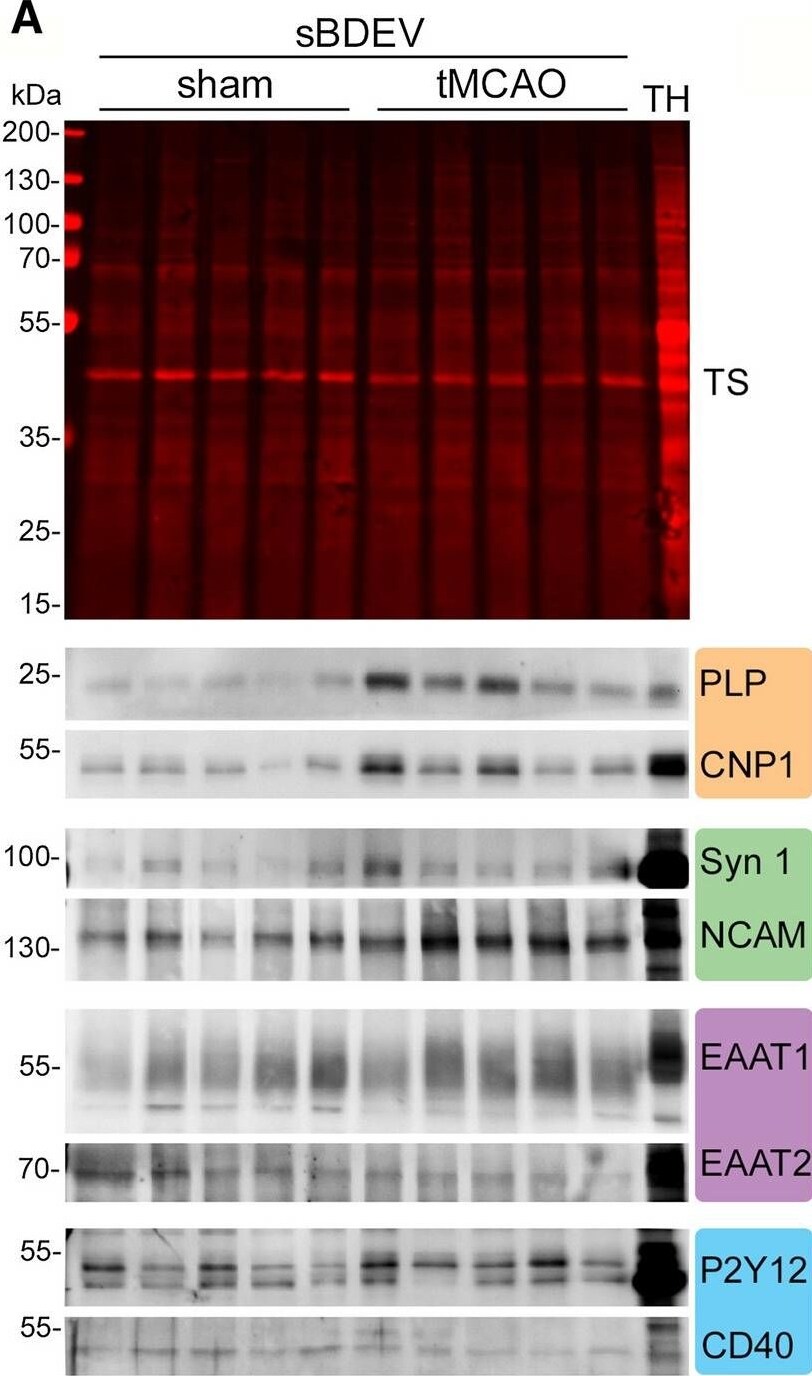
Western Blot: EAAT2/GLT1 Antibody [NBP1-20136] -
The contribution of oligodendrocytes to the BDEVs pool is significantly upregulated at 72 h after tMCAO. A Western blots of sBDEVs samples from tMCAO and shams (n = 5 per group) blotted for cell-type-specific markers: PLP and CNP1 are used as protein markers for oligodendrocytes (orange frame); synapsin 1 (Syn1) and NCAM as markers for neurons (green); EAAT1 and EAAT2 as protein markers for astrocytes (pink) and P2Y12 and CD40 as markers for microglia/macrophages (blue). TH is a total mouse brain homogenate loaded in parallel for comparison purposes. TS is a representative total protein staining of the nitrocellulose membranes (TSs of all blots used for these analyses are provided in Suppl. Fig. 5). B Dot plots showing the quantifications of the western blot intensities. For the quantification, each band intensity was first referred to the corresponding lanes of the total protein staining. Both markers for oligodendrocytes were found significantly increased upon stroke. Regarding neuronal markers, NCAM was significantly increased while Syn1 only showed a tendency to be elevated. Exact p-values are given in the main text Image collected and cropped by CiteAb from the following open publication (https://pubmed.ncbi.nlm.nih.gov/35639208), licensed under a CC-BY license. Not internally tested by Novus Biologicals.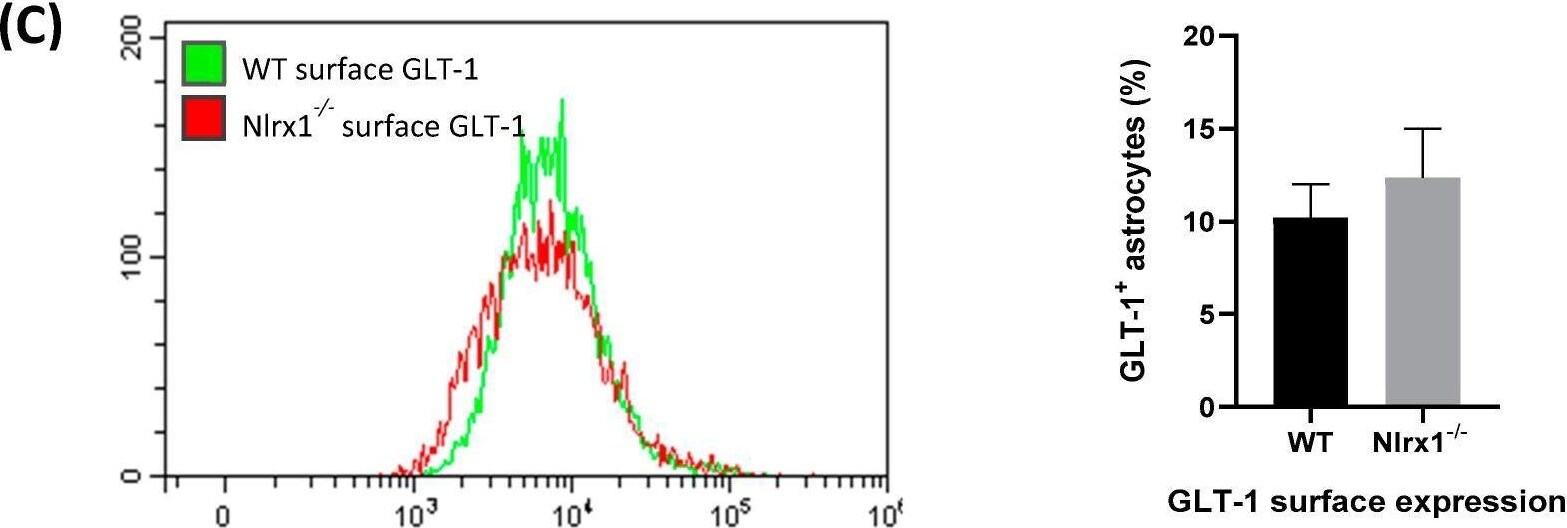
Flow Cytometry: EAAT2/GLT1 Antibody [NBP1-20136] -
mRNA and protein expression of GLT-1 and GLAST in astrocytes. (A) mRNA expression of GLT-1 and GLAST is significantly upregulated in Nlrx1-/- astrocytes compared to WT (n = 5). ** p < 0.01 as determined by Mann–Whitney test; (B) the total protein expression of GLT-1 and GLAST proteins in WT and Nlrx1-/- astrocytes was measured by flow cytometry (n = 5); (C) the cell surface expression of both transporters on astrocytes was measured by flow cytometry (n = 7). Representative flow cytometric histograms presented on the left side, p > 0.05 as determined by Mann–Whitney test, results are presented as mean +/- SEM. Image collected and cropped by CiteAb from the following open publication (https://pubmed.ncbi.nlm.nih.gov/31052241), licensed under a CC-BY license. Not internally tested by Novus Biologicals.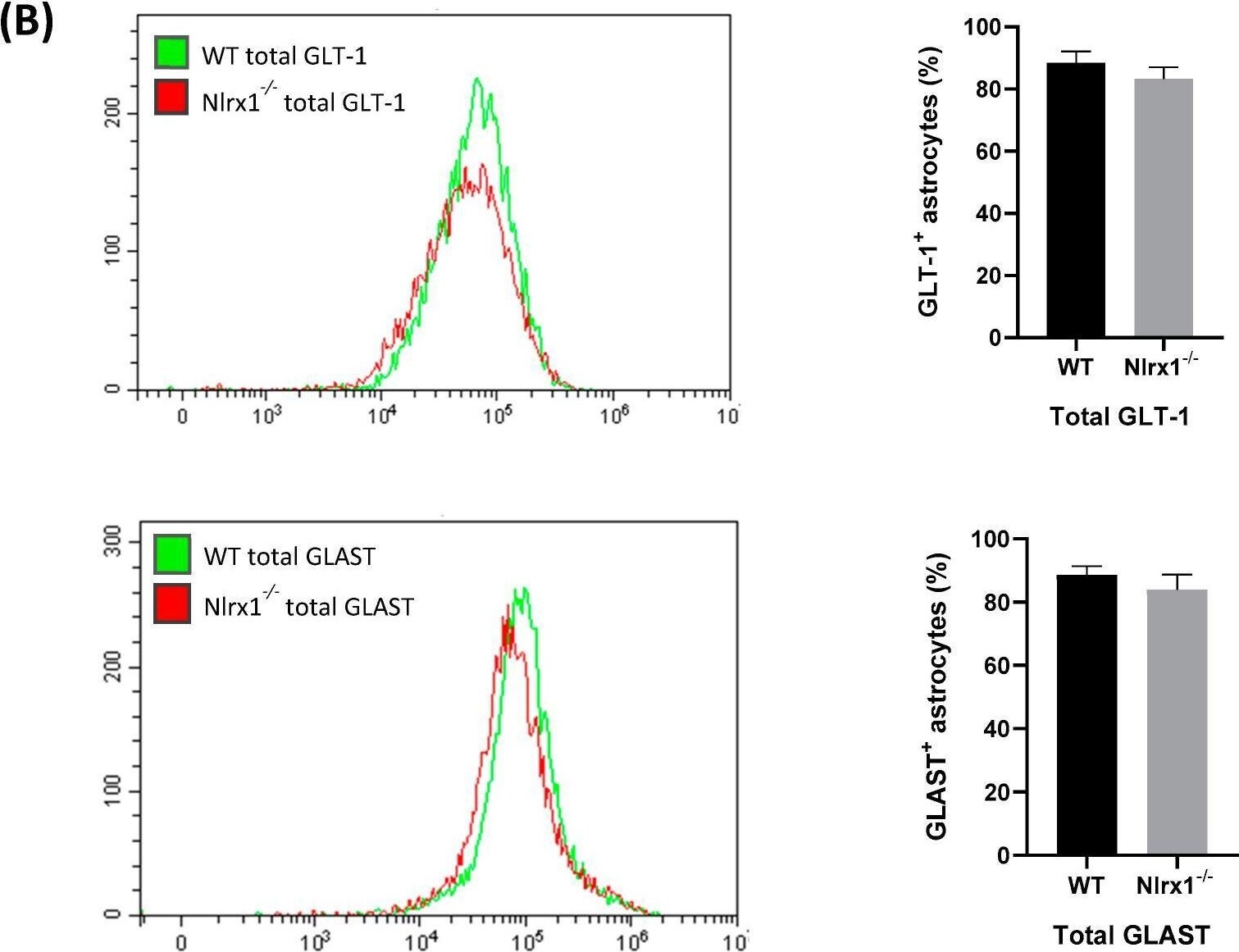
Flow Cytometry: EAAT2/GLT1 Antibody [NBP1-20136] -
mRNA and protein expression of GLT-1 and GLAST in astrocytes. (A) mRNA expression of GLT-1 and GLAST is significantly upregulated in Nlrx1-/- astrocytes compared to WT (n = 5). ** p < 0.01 as determined by Mann–Whitney test; (B) the total protein expression of GLT-1 and GLAST proteins in WT and Nlrx1-/- astrocytes was measured by flow cytometry (n = 5); (C) the cell surface expression of both transporters on astrocytes was measured by flow cytometry (n = 7). Representative flow cytometric histograms presented on the left side, p > 0.05 as determined by Mann–Whitney test, results are presented as mean +/- SEM. Image collected and cropped by CiteAb from the following open publication (https://pubmed.ncbi.nlm.nih.gov/31052241), licensed under a CC-BY license. Not internally tested by Novus Biologicals.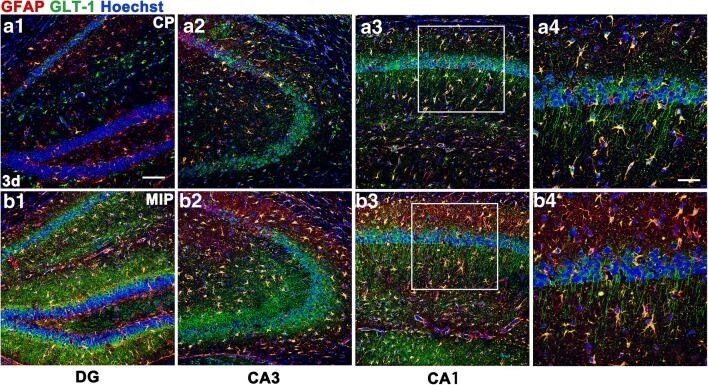
Immunocytochemistry/ Immunofluorescence: EAAT2/GLT1 Antibody [NBP1-20136] -
Hippocampal GLT-1 and NR1 expression 3 days after SE with MyD88 inhibition. Sections from the hippocampi of mice in the CP group (A1–A3) and MIP group (B1–B3) 3 days after SE with GLT-1 immunoreactivity in astrocytes and neuronal processes. (A4, B4) Higher magnification of the boxes in (A3) and (B3). (C) Comparison of the numbers of GFAP/GLT-1 double-labeled cells in the DG, CA1, and CA3 between the CP and MIP groups (means +/- SEM, n = 3). *p < 0.05 versus the CP group; **p < 0.01 versus the CP group. Independent samples t tests were performed. (D1) Immunoblots of NR1, NR2a, and NR2b for the control, CP, and MIP groups. (D2–D4) Comparison of NR1, NR2a, and NR2b levels among the above groups (calibrated to beta -actin). *p < 0.05; ***p < 0.001 between groups. One-way ANOVA followed by Tukey’s test. Scale bars: (A1–A3, B1–B3) 100 μm; (A4, B4) 50 μm Image collected and cropped by CiteAb from the following open publication (https://pubmed.ncbi.nlm.nih.gov/30112701), licensed under a CC-BY license. Not internally tested by Novus Biologicals.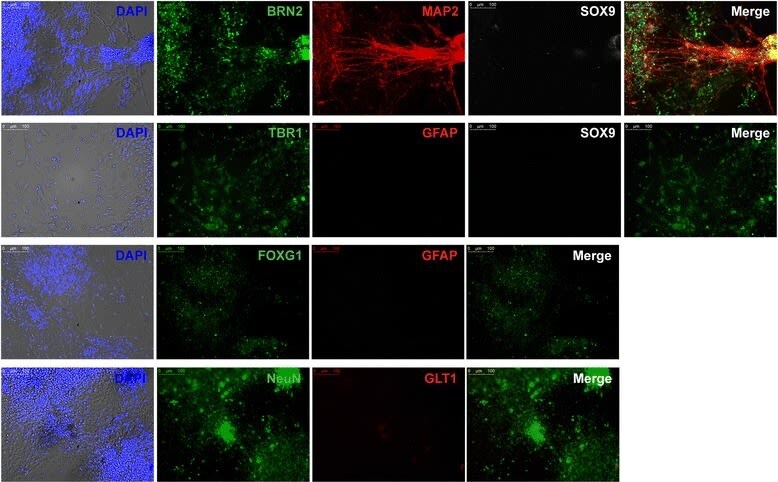
Immunocytochemistry/ Immunofluorescence: EAAT2/GLT1 Antibody [NBP1-20136] -
Human NPCs differentiate into mature neurons. Immunofluorescence staining of differentiated neurons derived from human dorsal NPCs (1323–2 line, day 35 after differentiation) for mature cortical neuronal markers expressed in the nucleus (BRN2, TBR1, NeuN) and cytoplasm (MAP2), glial markers (SOX9, GFAP, GLT1), and dorsal forebrain marker (FOXG1). Nuclei stained with DAPI, shown as an overlay over brightfield images. The merge is an overlay of the neuronal and glial markers. Scale bar 100 μm. DAPI 4,6′-diamino-2-phenylindole Image collected and cropped by CiteAb from the following open publication (https://pubmed.ncbi.nlm.nih.gov/29544541), licensed under a CC-BY license. Not internally tested by Novus Biologicals.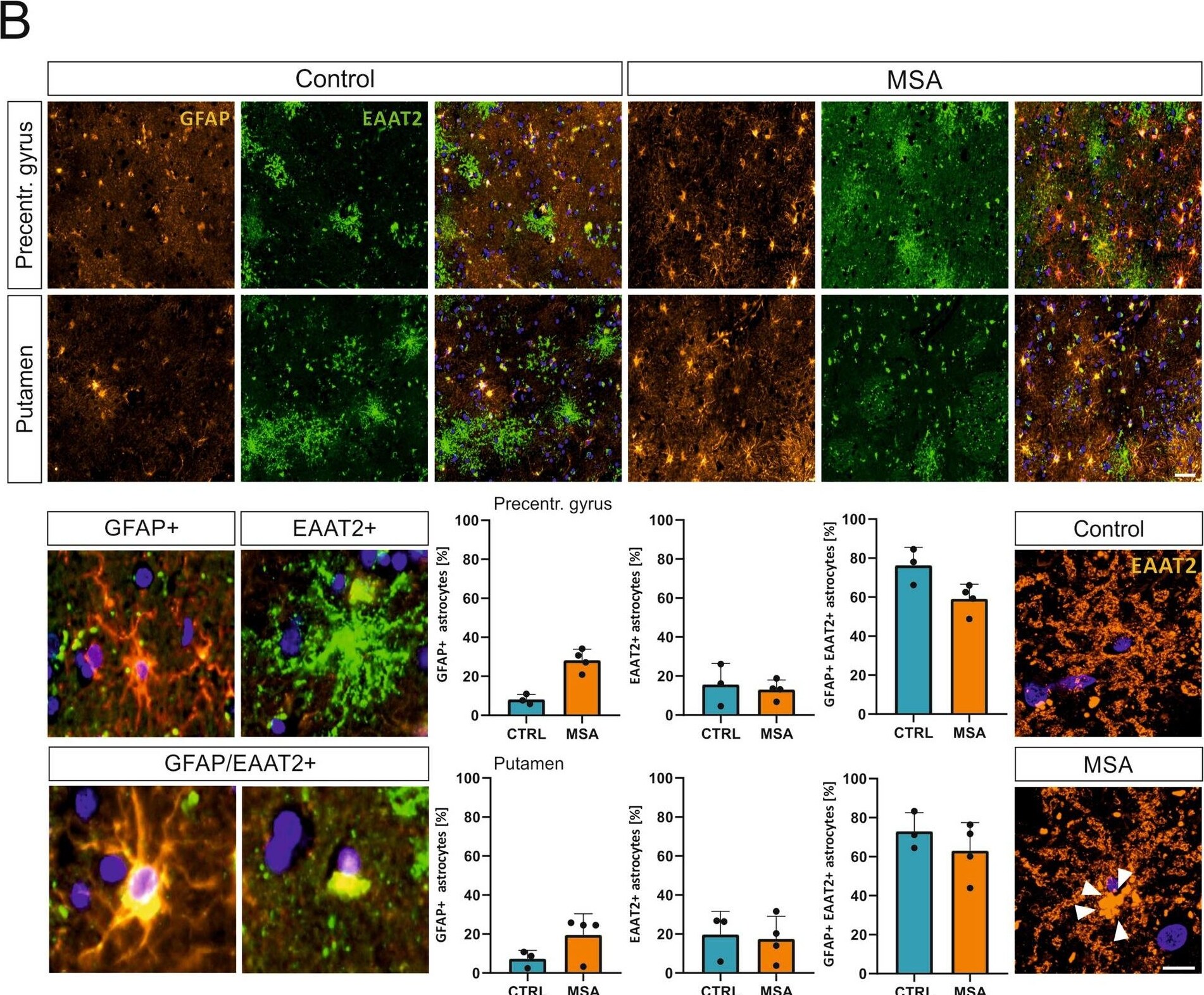
Immunocytochemistry/ Immunofluorescence: EAAT2/GLT1 Antibody [NBP1-20136] -
Astrogliosis in post mortem brain tissue of MSA patients. A Representative image of DAB staining of GFAP+ astrocytes in precentral gyrus, putamen, and substantia nigra of MSA-P patient (female, 67) and control individual (female, 60) and quantification of GFAP+ cells/mm2 (4 MSA patients vs. 4 Controls). SN was identified by presence of neuromelanin-containing neurons (white asterisks). Welch’s t-test was used for statistical analysis. Scale bar = 20 um. All three regions display elevated numbers of GFAP+ astrocytes in cortex (p = 0.002), putamen (p = 0.0003), and substantia nigra (p < 0.0001) of MSA patients. CTRL = Control, MSA = multiple system atrophy, SN = substantia nigra. (B, Upper panel) Immunofluorescence staining of four MSA-P patients and three controls. For visualization of astrocytes GFAP was used as a marker (orange). To analyze expression of glutamate reuptake transporter tissue was stained for EAAT2 (green). Scale bar = 50 um. (B, Lower panel) Overview of single cells expressing GFAP, EAAT2, and GFAP/EAAT2 (yellow, lower panel). Astrocytic GFAP/EAAT2 expression is decreased in the precentral gyrus (p = 0.0571). Moreover, a re-distribution towards the cytoplasm of EAAT2 is observed in astrocytes of MSA patients (Lower right panel) Image collected and cropped by CiteAb from the following open publication (https://pubmed.ncbi.nlm.nih.gov/38167307), licensed under a CC-BY license. Not internally tested by Novus Biologicals.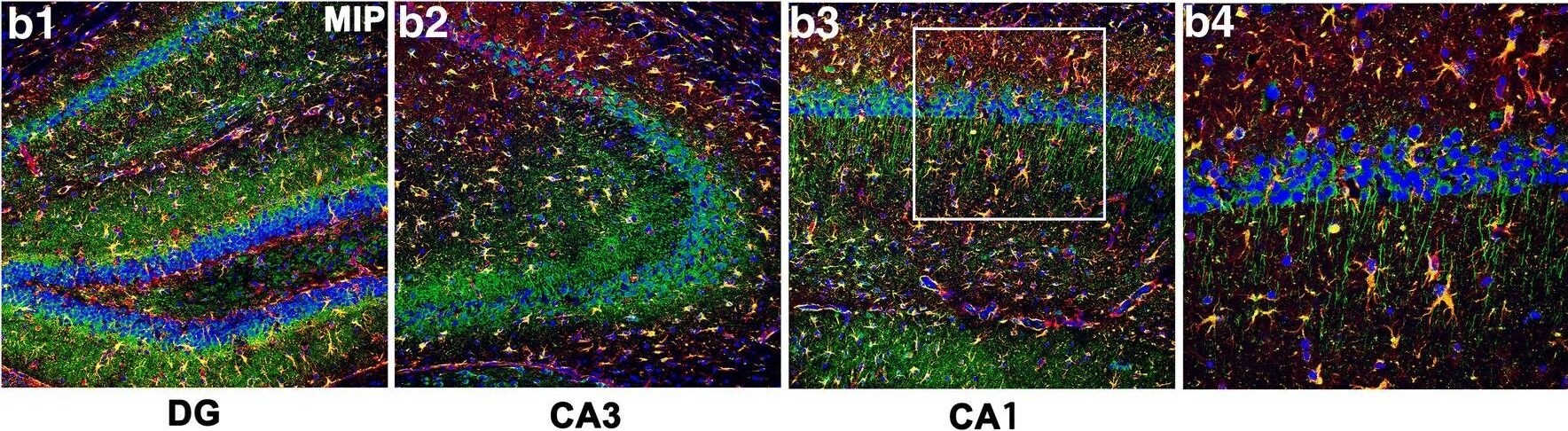
Immunocytochemistry/ Immunofluorescence: EAAT2/GLT1 Antibody [NBP1-20136] -
Hippocampal GLT-1 and NR1 expression 3 days after SE with MyD88 inhibition. Sections from the hippocampi of mice in the CP group (A1–A3) and MIP group (B1–B3) 3 days after SE with GLT-1 immunoreactivity in astrocytes and neuronal processes. (A4, B4) Higher magnification of the boxes in (A3) and (B3). (C) Comparison of the numbers of GFAP/GLT-1 double-labeled cells in the DG, CA1, and CA3 between the CP and MIP groups (means +/- SEM, n = 3). *p < 0.05 versus the CP group; **p < 0.01 versus the CP group. Independent samples t tests were performed. (D1) Immunoblots of NR1, NR2a, and NR2b for the control, CP, and MIP groups. (D2–D4) Comparison of NR1, NR2a, and NR2b levels among the above groups (calibrated to beta -actin). *p < 0.05; ***p < 0.001 between groups. One-way ANOVA followed by Tukey’s test. Scale bars: (A1–A3, B1–B3) 100 μm; (A4, B4) 50 μm Image collected and cropped by CiteAb from the following open publication (https://pubmed.ncbi.nlm.nih.gov/30112701), licensed under a CC-BY license. Not internally tested by Novus Biologicals.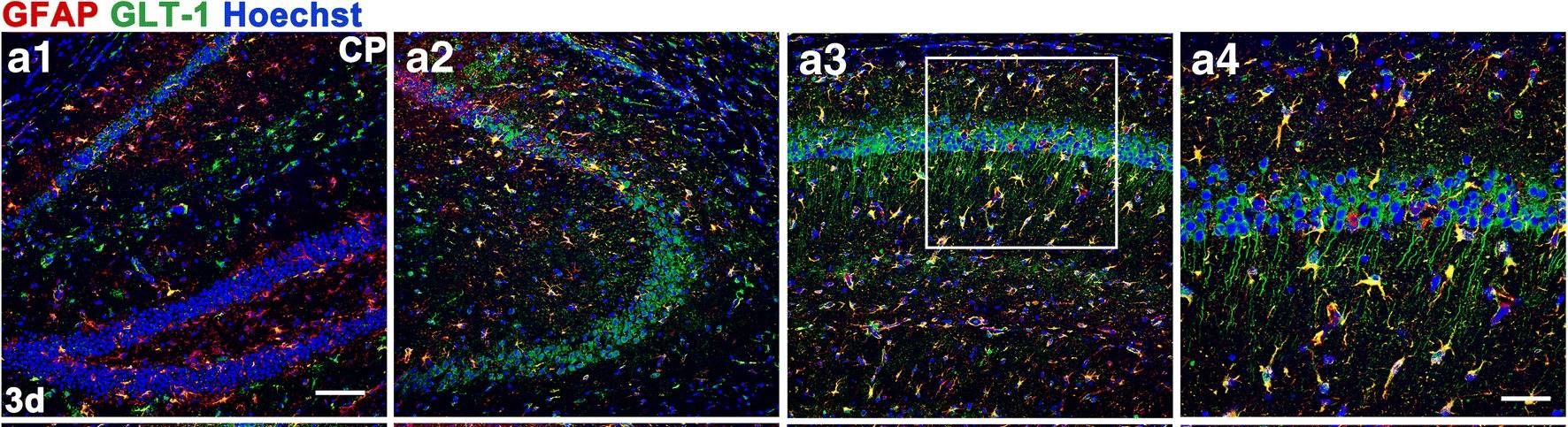
Immunocytochemistry/ Immunofluorescence: EAAT2/GLT1 Antibody [NBP1-20136] -
Hippocampal GLT-1 and NR1 expression 3 days after SE with MyD88 inhibition. Sections from the hippocampi of mice in the CP group (A1–A3) and MIP group (B1–B3) 3 days after SE with GLT-1 immunoreactivity in astrocytes and neuronal processes. (A4, B4) Higher magnification of the boxes in (A3) and (B3). (C) Comparison of the numbers of GFAP/GLT-1 double-labeled cells in the DG, CA1, and CA3 between the CP and MIP groups (means +/- SEM, n = 3). *p < 0.05 versus the CP group; **p < 0.01 versus the CP group. Independent samples t tests were performed. (D1) Immunoblots of NR1, NR2a, and NR2b for the control, CP, and MIP groups. (D2–D4) Comparison of NR1, NR2a, and NR2b levels among the above groups (calibrated to beta -actin). *p < 0.05; ***p < 0.001 between groups. One-way ANOVA followed by Tukey’s test. Scale bars: (A1–A3, B1–B3) 100 μm; (A4, B4) 50 μm Image collected and cropped by CiteAb from the following open publication (https://pubmed.ncbi.nlm.nih.gov/30112701), licensed under a CC-BY license. Not internally tested by Novus Biologicals.Applications for EAAT2/GLT1 Antibody
Flow Cytometry
Immunohistochemistry
Immunohistochemistry-Paraffin
Western Blot
Flow Cytometry Panel Builder
Bio-Techne Knows Flow Cytometry
Save time and reduce costly mistakes by quickly finding compatible reagents using the Panel Builder Tool.
Advanced Features
- Spectra Viewer - Custom analysis of spectra from multiple fluorochromes
- Spillover Popups - Visualize the spectra of individual fluorochromes
- Antigen Density Selector - Match fluorochrome brightness with antigen density

Formulation, Preparation, and Storage
Purification
Reconstitution
Formulation
Preservative
Concentration
Shipping
Stability & Storage
Calculators
Background: EAAT2/GLT1
Long Name
Alternate Names
Gene Symbol
UniProt
Additional EAAT2/GLT1 Products
Product Documents for EAAT2/GLT1 Antibody
Certificate of Analysis
To download a Certificate of Analysis, please enter a lot or batch number in the search box below.
Product Specific Notices for EAAT2/GLT1 Antibody
This product is for research use only and is not approved for use in humans or in clinical diagnosis. Primary Antibodies are guaranteed for 1 year from date of receipt.
Related Research Areas
Citations for EAAT2/GLT1 Antibody
 Powered by Bioz
Customer Reviews for EAAT2/GLT1 Antibody
There are currently no reviews for this product. Be the first to review EAAT2/GLT1 Antibody and earn rewards!
Have you used EAAT2/GLT1 Antibody?
Submit a review and receive an Amazon gift card!
$25/€18/£15/$25CAN/¥2500 for a review with an image
$10/€7/£6/$10CAN/¥1110 for a review without an image
Submit a review
Protocols
Find general support by application which include: protocols, troubleshooting, illustrated assays, videos and webinars.
- 7-Amino Actinomycin D (7-AAD) Cell Viability Flow Cytometry Protocol
- Antigen Retrieval Protocol (PIER)
- Antigen Retrieval for Frozen Sections Protocol
- Appropriate Fixation of IHC/ICC Samples
- Cellular Response to Hypoxia Protocols
- Chromogenic IHC Staining of Formalin-Fixed Paraffin-Embedded (FFPE) Tissue Protocol
- Chromogenic Immunohistochemistry Staining of Frozen Tissue
- ClariTSA™ Fluorophore Kits
- Detection & Visualization of Antibody Binding
- Extracellular Membrane Flow Cytometry Protocol
- Flow Cytometry Protocol for Cell Surface Markers
- Flow Cytometry Protocol for Staining Membrane Associated Proteins
- Flow Cytometry Staining Protocols
- Flow Cytometry Troubleshooting Guide
- Fluorescent IHC Staining of Frozen Tissue Protocol
- Graphic Protocol for Heat-induced Epitope Retrieval
- Graphic Protocol for the Preparation and Fluorescent IHC Staining of Frozen Tissue Sections
- Graphic Protocol for the Preparation and Fluorescent IHC Staining of Paraffin-embedded Tissue Sections
- Graphic Protocol for the Preparation of Gelatin-coated Slides for Histological Tissue Sections
- ICC Cell Smear Protocol for Suspension Cells
- ICC Immunocytochemistry Protocol Videos
- ICC for Adherent Cells
- IHC Sample Preparation (Frozen sections vs Paraffin)
- Immunocytochemistry (ICC) Protocol
- Immunocytochemistry Troubleshooting
- Immunofluorescence of Organoids Embedded in Cultrex Basement Membrane Extract
- Immunofluorescent IHC Staining of Formalin-Fixed Paraffin-Embedded (FFPE) Tissue Protocol
- Immunohistochemistry (IHC) and Immunocytochemistry (ICC) Protocols
- Immunohistochemistry Frozen Troubleshooting
- Immunohistochemistry Paraffin Troubleshooting
- Intracellular Flow Cytometry Protocol Using Alcohol (Methanol)
- Intracellular Flow Cytometry Protocol Using Detergents
- Intracellular Nuclear Staining Flow Cytometry Protocol Using Detergents
- Intracellular Staining Flow Cytometry Protocol Using Alcohol Permeabilization
- Intracellular Staining Flow Cytometry Protocol Using Detergents to Permeabilize Cells
- Preparing Samples for IHC/ICC Experiments
- Preventing Non-Specific Staining (Non-Specific Binding)
- Primary Antibody Selection & Optimization
- Propidium Iodide Cell Viability Flow Cytometry Protocol
- Protocol for Heat-Induced Epitope Retrieval (HIER)
- Protocol for Liperfluo
- Protocol for Making a 4% Formaldehyde Solution in PBS
- Protocol for VisUCyte™ HRP Polymer Detection Reagent
- Protocol for the Characterization of Human Th22 Cells
- Protocol for the Characterization of Human Th9 Cells
- Protocol for the Fluorescent ICC Staining of Cell Smears - Graphic
- Protocol for the Fluorescent ICC Staining of Cultured Cells on Coverslips - Graphic
- Protocol for the Preparation & Fixation of Cells on Coverslips
- Protocol for the Preparation and Chromogenic IHC Staining of Frozen Tissue Sections
- Protocol for the Preparation and Chromogenic IHC Staining of Frozen Tissue Sections - Graphic
- Protocol for the Preparation and Chromogenic IHC Staining of Paraffin-embedded Tissue Sections
- Protocol for the Preparation and Chromogenic IHC Staining of Paraffin-embedded Tissue Sections - Graphic
- Protocol for the Preparation and Fluorescent ICC Staining of Cells on Coverslips
- Protocol for the Preparation and Fluorescent ICC Staining of Non-adherent Cells
- Protocol for the Preparation and Fluorescent ICC Staining of Stem Cells on Coverslips
- Protocol for the Preparation and Fluorescent IHC Staining of Frozen Tissue Sections
- Protocol for the Preparation and Fluorescent IHC Staining of Paraffin-embedded Tissue Sections
- Protocol for the Preparation of Gelatin-coated Slides for Histological Tissue Sections
- Protocol for the Preparation of a Cell Smear for Non-adherent Cell ICC - Graphic
- Protocol: Annexin V and PI Staining by Flow Cytometry
- Protocol: Annexin V and PI Staining for Apoptosis by Flow Cytometry
- R&D Systems Quality Control Western Blot Protocol
- TUNEL and Active Caspase-3 Detection by IHC/ICC Protocol
- The Importance of IHC/ICC Controls
- Troubleshooting Guide: Fluorokine Flow Cytometry Kits
- Troubleshooting Guide: Immunohistochemistry
- Troubleshooting Guide: Western Blot Figures
- Western Blot Conditions
- Western Blot Protocol
- Western Blot Protocol for Cell Lysates
- Western Blot Troubleshooting
- Western Blot Troubleshooting Guide
- View all Protocols, Troubleshooting, Illustrated assays and Webinars
FAQs for EAAT2/GLT1 Antibody
-
Q: I am writing to you to ask for further information on the GLT-1 antibody (NBP1-20136). It says on your website that this is an antibody which binds to an extracellular epitope on GLT-1. Could you please tell me where this is? Also, do you know if this antibody can be used in live cell imaging or has it only been used in fixed samples?
A:
In regards to your inquiry, this product maps to amino acids 143-238. This antibody has never been tested on live cell imaging. So far we have only tested its use on Immunohistochemistry-Paraffin embedded tissues and cell lysates. Due to the fact that it is provided with no preservatives there may be a chance it will work on live cells, but since we have not specifically tested that we cannot guarantee it to work. Please see our Innovators Reward Program for details if you would like to try using this product in a live cell experiment.