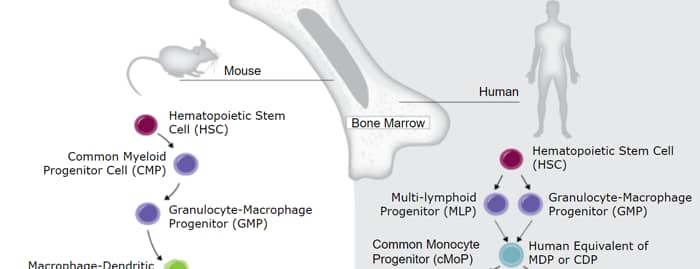
2B4, also known as CD244, is a cell surface glycoprotein belonging to the CD2 subgroup of the immunoglobulin superfamily. It acts as a high-affinity receptor for CD48. It is expressed by natural killer (NK) cells and CD8+ T cell subsets. It can regulate killing by CD8+ T cells and NK cells, and IFN-gamma secretion by NK cells. It may also regulate NK cell and T cell proliferation.
Human 2B4/CD244/SLAMF4 DuoSet ELISA
R&D Systems | Catalog # DY1039


Discontinued Product
DY1039 has been discontinued.
View all 2B4/CD244/SLAMF4 products.
Key Product Details
Assay Type
Solid Phase Sandwich ELISA
Assay Range
62.5-4000 pg/mL
Sample Type
Cell culture supernates, serum, and plasma
Note: Diluents for complex matrices, such as serum and plasma, should be evaluated prior to use in this DuoSet
Note: Diluents for complex matrices, such as serum and plasma, should be evaluated prior to use in this DuoSet
Reactivity
Human
Human 2B4/CD244/SLAMF4 DuoSet ELISA Features
- Optimized capture and detection antibody pairings with recommended concentrations save lengthy development time
- Development protocols are provided to guide further assay optimization
- Assay can be customized to your specific needs
- Economical alternative to complete kits
Loading...
Product Summary for Human 2B4/CD244/SLAMF4 DuoSet ELISA
This DuoSet ELISA Development kit contains the basic components required for the development of sandwich ELISAs to measure natural and Recombinant. The suggested diluent is suitable for the analysis of most cell culture supernate samples. Diluents for complex matrices, such as serum and plasma, should be evaluated prior to use in this DuoSet.
Product Specifications
Assay Format
96-well strip plate (sold separately)
Sample Volume Required
100 µL
Detection Method
Colorimetric ELISA - 450nm (TMB)
Conjugate
Unconjugated
Specificity
Label
HRP
Scientific Data Images for Human 2B4/CD244/SLAMF4 DuoSet ELISA
Kit Contents for Human 2B4/CD244/SLAMF4 DuoSet ELISA
- Capture Antibody
- Detection Antibody
- Recombinant Standard
- Streptavidin conjugated to horseradish-peroxidase (Streptavidin-HRP)
Other Reagents Required
PBS: (Catalog # DY006), or 137 mM NaCl, 2.7 mM KCl, 8.1 mM Na2HPO4, 1.5 mM KH2PO4, pH 7.2 - 7.4, 0.2 µm filtered
Wash Buffer: (Catalog # WA126), or equivalent
Reagent Diluent:1% BSA in PBS, pH 7.2 - 7.4, 0.2 m filtered (R&D Systems Catalog # DY995). Quality of BSA is critical (see Technical Hints).
Blocking Buffer:1% BSA in PBS, pH 7.2 - 7.4, 0.2 m filtered (R&D Systems Catalog # DY995). Quality of BSA is critical (see Technical Hints).
Substrate Solution: 1:1 mixture of Color Reagent A (H2O2) and Color Reagent B (Tetramethylbenzidine) (Catalog # DY999)
Stop Solution: 2 N H2SO4 (Catalog # DY994)
Microplates: R&D Systems (Catalog # DY990), or equivalent
Plate Sealers: ELISA Plate Sealers (Catalog # DY992), or equivalent
Preparation and Storage
Shipping
The product is shipped at ambient temperature. Upon receipt, store it immediately at the temperature recommended below.
Stability & Storage
Store the unopened product at 2 - 8 °C. Do not use past expiration date.
Background: 2B4/CD244/SLAMF4
Alternate Names
CD244, NAIL, NKR2B4, Nmrk, SLAMF4
Gene Symbol
CD244
Additional 2B4/CD244/SLAMF4 Products
Product Documents for Human 2B4/CD244/SLAMF4 DuoSet ELISA
Certificate of Analysis
To download a Certificate of Analysis, please enter a lot or batch number in the search box below.
Note: Certificate of Analysis not available for kit components.
Product Specific Notices for Human 2B4/CD244/SLAMF4 DuoSet ELISA
For research use only
Customer Reviews for Human 2B4/CD244/SLAMF4 DuoSet ELISA
There are currently no reviews for this product. Be the first to review Human 2B4/CD244/SLAMF4 DuoSet ELISA and earn rewards!
Have you used Human 2B4/CD244/SLAMF4 DuoSet ELISA?
Submit a review and receive an Amazon gift card!
$25/€18/£15/$25CAN/¥2500 Yen for a review with an image
$10/€7/£6/$10CAN/¥1110 Yen for a review without an image
Submit a review
Protocols
View specific protocols for Human 2B4/CD244/SLAMF4 DuoSet ELISA (DY1039):
GENERAL ELISA PROTOCOL
Plate Preparation
- Dilute the Capture Antibody (to the working concentration stated in the product datasheet ) in PBS without carrier protein. Immediately coat a 96-well microplate with 100 µL per well of the diluted Capture Antibody. Seal the plate and incubate overnight at room temperature.
- Aspirate each well and wash with Wash Buffer, repeating the process two times for a total of three washes. Wash by filling each well with Wash Buffer (400 µL) using a squirt bottle, manifold dispenser, or autowasher. Complete removal of liquid at each step is essential for good performance. After the last wash, remove any remaining Wash Buffer by aspirating or by inverting the plate and blotting it against clean paper towels.
- Block each well of the microplate as recommended in the product datasheet. Incubate at room temperature for a minimum of 1 hour.
Note: The recommended Reagent Diluent typically contains 1% BSA. Some DuoSet Development Kits require alternative blocking agents, or for plates to be blocked overnight with a higher percentage of BSA, please see the product datasheet for details.
- Repeat the aspiration/wash as in step 2. The plates are now ready for sample addition.
PRECAUTION
The Stop Solution suggested for use with this kit is an acid solution. Wear eye, hand, face and clothing protection when using this material.
Assay Procedure
- Add 100 µL of sample or standards in Reagent Diluent, or an appropriate diluent, per well. Cover with an adhesive strip and incubate 2 hours at room temperature.
- Repeat the aspiration/wash as in step 2 of Plate Preparation.
- Add 100 µL of the Detection Antibody, diluted in Reagent Diluent (as recommended in the product datasheet), to each well. Cover with a new adhesive strip and incubate 2 hours at room temperature.
- Repeat the aspiration/wash as in step 2 of Plate Preparation.
- Add 100 µL of the working dilution of Streptavidin-HRP to each well. Cover the plate and incubate for 20 minutes at room temperature. Avoid placing the plate in direct light.
- Repeat the aspiration/wash as in step 2.
- Add 100 µL of Substrate Solution to each well. Incubate for 20 minutes at room temperature. Avoid placing the plate in direct light.
- Add 50 µL of Stop Solution to each well. Gently tap the plate to ensure thorough mixing.
- Determine the optical density of each well immediately, using a microplate reader set to 450 nm. If wavelength correction is available, set to 540 nm or 570 nm. If wavelength correction is not available, subtract readings at 540 nm or 570 nm from the readings at 450 nm. This subtraction will correct for optical imperfections in the plate. Readings made directly at 450 nm without correction may be higher and less accurate.