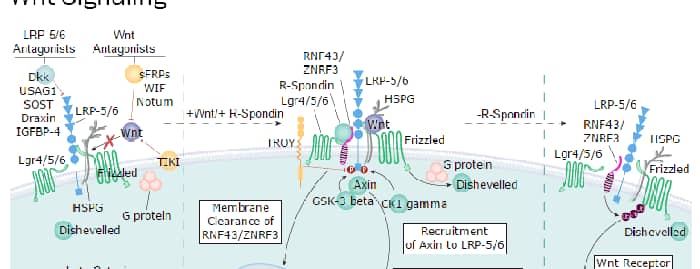
Syndecan-4, previously known as Amphiglycan or Ryudocan, is a member of the syndecan family of Type 1 transmembrane proteins capable of carrying Heparan Sulfate (HS) and Chondroitin Sulfate (CS) glycosaminoglycans. The four vertebrate syndecans have two conserved cytoplasmic domains and divergent extracellular portions, except for HS attachment sites. Syndecan-4 is the most similar to Syndecan-2, but is more universally expressed and is found in virtually every cell type. Expression can be upregulated by TGF-beta 2 and in response to mechanical stress in smooth muscle, wound healing, arterial injury or acute myocardial infarction, probably in response to at least one inflammatory mediator (1, 2). Human Syndecan-4 is synthesized as a 198 amino acid (aa) core protein with an 18 aa signal sequence, a 127 aa extracellular domain containing three consensus Ser-Gly sequences for the attachment of HS side chains, a 25 aa transmembrane region and a 28 aa cytoplasmic tail (3). Human Syndecan-4 ECD shares approximately 79%, 78% and 81% aa sequence identity with mouse, rat and porcine Syndecan-4 ECD, respectively. Addition of 20‑80 disaccharides per side chain adds considerably to the size of the 20 kDa core protein. Non-covalent homodimerization of Syndecan-4 is dependent on the transmembrane domain (4). The HS chains can bind fibronectin, SDF-1, antithrombin, FGF-2, midkine and tissue factor pathway inhibitor and can present FGF‑2 to its receptors (1, 2, 5). Proteolytic cleavage by plasmin, thrombin or a metalloproteinase may create a functional ectodomain (6‑8). Genetic disruption of the Syndecan-4 gene causes a mild phenotype, presumably due to compensation by other syndecans, but mice have an increase in placental thrombi as well as defects in wound healing and response to endotoxin shock (9, 10).
Human Syndecan-4 Antibody (336304) [APC]
R&D Systems | Catalog # FAB29181A

Scientific images may be resized, cropped, or adjusted for brightness or contrast for presentation purposes. These updates are limited to presentation and do not affect the underlying scientific interpretation of the data. Where available, additional source data may be provided upon request.
Key Product Details
Species Reactivity
Validated:
Cited:
Applications
Validated:
Cited:
Label
Antibody Source
Product Specifications
Immunogen
Ser20-Glu145
Accession # P31431
Specificity
Clonality
Host
Isotype
Scientific Data Images for Human Syndecan-4 Antibody (336304) [APC]
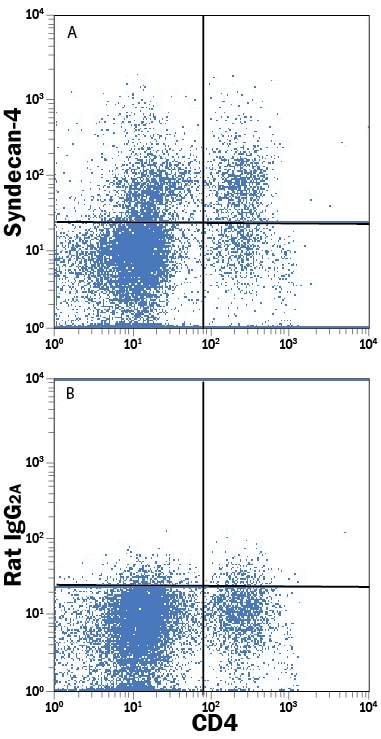
Detection of Syndecan‑4 in Activated Lymphocytes in Human PBMCs by Flow Cytometry.
Activated lymphocytes in human peripheral blood mononuclear cells were stained with Mouse Anti-Human CD4 PE-conjugated Monoclonal Antibody (Catalog # FAB3791P) and either (A) Rat Anti-Human Syndecan-4 APC-conjugated Monoclonal Antibody (Catalog # FAB29181A) or (B) Rat IgG2AAllophycocyanin Isotype Control (IC006A). View our protocol for Staining Membrane-associated Proteins.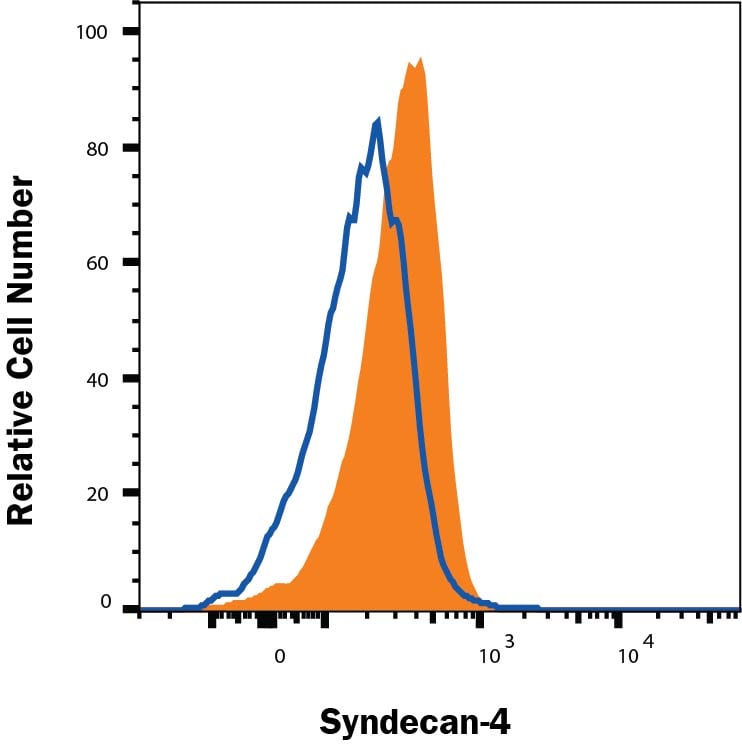
Detection of Syndecan‑4 in U87MG Human Cell Line by Flow Cytometry.
U87MG human glioblastoma cell line was stained with Rat Anti-Human Syndecan-4 APC-conjugated Monoclonal Antibody (Catalog # FAB29181A, filled histogram) or Rat IgG2A Allophycocyanin Isotype Control (IC006A,open histogram). View our protocol for Staining Membrane-associated Proteins.Applications for Human Syndecan-4 Antibody (336304) [APC]
Flow Cytometry
Sample: Activated lymphocytes in human peripheral blood mononuclear cells and U87MG human glioblastoma cell line
Spectra Viewer
Plan Your Experiments
Use our spectra viewer to interactively plan your experiments, assessing multiplexing options. View the excitation and emission spectra for our fluorescent dye range and other commonly used dyes.
Spectra Viewer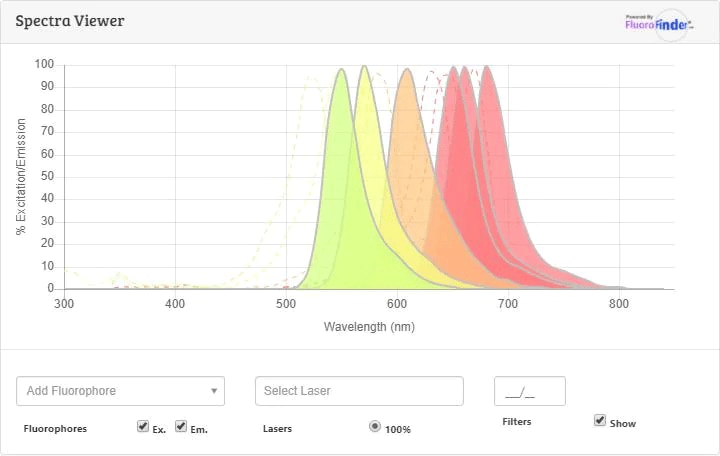
Flow Cytometry Panel Builder
Bio-Techne Knows Flow Cytometry
Save time and reduce costly mistakes by quickly finding compatible reagents using the Panel Builder Tool.
Advanced Features
- Spectra Viewer - Custom analysis of spectra from multiple fluorochromes
- Spillover Popups - Visualize the spectra of individual fluorochromes
- Antigen Density Selector - Match fluorochrome brightness with antigen density

Formulation, Preparation, and Storage
Purification
Formulation
Shipping
Stability & Storage
Background: Syndecan-4
References
- Tkachenko, E. et al. (2005) Circ. Res. 96:488.
- Oh, E.-S, and J. R. Couchman (2004) Mol. Cells 17:181.
- David, G. et al. (1992) J. Cell Biol. 118:961.
- Choi, S. et al. (2005) J. Biol. Chem. 280:42573.
- Charnaux, N. et al. (2005) FEBS J. 272:1937.
- Schmidt, A. et al., J. Biol. Chem. 280:34441.
- Rauch, B. H. et al. (2005) J. Biol. Chem. 280:17507.
- Fitzgerald, M. L. et al. (2000) J. Cell Biol. 148:811.
- Ishiguro, K. et al. (2003) Glycoconj. J. 19:315.
- Echtermeyer, F. et al. (2001) J. Clin. Invest. 107:R9.
Alternate Names
Gene Symbol
UniProt
Additional Syndecan-4 Products
Product Documents for Human Syndecan-4 Antibody (336304) [APC]
Certificate of Analysis
To download a Certificate of Analysis, please enter a lot or batch number in the search box below.
Note: Certificate of Analysis not available for kit components.
Product Specific Notices for Human Syndecan-4 Antibody (336304) [APC]
For research use only
Citations for Human Syndecan-4 Antibody (336304) [APC]
 Powered by Bioz
Customer Reviews for Human Syndecan-4 Antibody (336304) [APC]
There are currently no reviews for this product. Be the first to review Human Syndecan-4 Antibody (336304) [APC] and earn rewards!
Have you used Human Syndecan-4 Antibody (336304) [APC]?
Submit a review and receive an Amazon gift card!
$25/€18/£15/$25CAN/¥2500 for a review with an image
$10/€7/£6/$10CAN/¥1110 for a review without an image
Submit a review
Protocols
Find general support by application which include: protocols, troubleshooting, illustrated assays, videos and webinars.
- 7-Amino Actinomycin D (7-AAD) Cell Viability Flow Cytometry Protocol
- Extracellular Membrane Flow Cytometry Protocol
- Flow Cytometry Protocol for Cell Surface Markers
- Flow Cytometry Protocol for Staining Membrane Associated Proteins
- Flow Cytometry Staining Protocols
- Flow Cytometry Troubleshooting Guide
- Intracellular Flow Cytometry Protocol Using Alcohol (Methanol)
- Intracellular Flow Cytometry Protocol Using Detergents
- Intracellular Nuclear Staining Flow Cytometry Protocol Using Detergents
- Intracellular Staining Flow Cytometry Protocol Using Alcohol Permeabilization
- Intracellular Staining Flow Cytometry Protocol Using Detergents to Permeabilize Cells
- Propidium Iodide Cell Viability Flow Cytometry Protocol
- Protocol for Liperfluo
- Protocol for the Characterization of Human Th22 Cells
- Protocol for the Characterization of Human Th9 Cells
- Protocol: Annexin V and PI Staining by Flow Cytometry
- Protocol: Annexin V and PI Staining for Apoptosis by Flow Cytometry
- Troubleshooting Guide: Fluorokine Flow Cytometry Kits
- View all Protocols, Troubleshooting, Illustrated assays and Webinars
Associated Pathways