
Laminin Antibody [Alexa Fluor® 647]
Novus Biologicals | Catalog # NB300-144AF647

Scientific images may be resized, cropped, or adjusted for brightness or contrast for presentation purposes. These updates are limited to presentation and do not affect the underlying scientific interpretation of the data. Where available, additional source data may be provided upon request.
Key Product Details
Species Reactivity
Validated:
Human, Mouse, Rat, Chinese Hamster, Invertebrate, Mammal, Rabbit, Sheep
Cited:
Mouse
Applications
Validated:
Immunohistochemistry, Immunohistochemistry-Paraffin, Immunohistochemistry-Frozen, Immunohistochemistry Free-Floating, Western Blot, Flow Cytometry, Immunocytochemistry/ Immunofluorescence
Cited:
Immunohistochemistry-Frozen, Immunocytochemistry/ Immunofluorescence
Label
Alexa Fluor 647 (Excitation = 650 nm, Emission = 668 nm)
Antibody Source
Polyclonal Rabbit IgG
Loading...
Product Specifications
Immunogen
Laminin Antibody was made to Laminin 111 isolated from mouse Engelbreth-Holm-Swarm (EHS) sarcoma cells. [UniProt# P19137]
Reactivity Notes
Rabbit, Fruit Bat, Chinese Hamster, and S. mansoni reactivity reported in scientific literature (PMID: 18214989, 31877588, 29251349, and 28114363 respectively). Human, Mouse, Rat, and Sheep reported in multiple pieces of scientific literature.
Localization
Secreted, Basement membrane, Extracellular matrix
Marker
Basement Membrane Marker
Specificity
Laminin Antibody is pan-specific and reacts well with all Laminin isoforms tested: Laminin-1 (alpha-1, beta-1, and gamma-1) and Laminin-2 (alpha-2, beta-1, and gamma-1).
Clonality
Polyclonal
Host
Rabbit
Isotype
IgG
Description
This conjugate is made on demand and is not held in inventory. Each order represents a unique lot. All conjugates are generated using validated conjugation protocols and meet strict degree of labeling (F/P) specifications; additional information is available upon request. The antibody concentration is provided on the individual product label.
For specialized conjugation needs, like large quantities, specific concentrations, and defined F/P ratios, bulk and custom antibody conjugation services are available.
For specialized conjugation needs, like large quantities, specific concentrations, and defined F/P ratios, bulk and custom antibody conjugation services are available.
Scientific Data Images for Laminin Antibody [Alexa Fluor® 647]
Frozen Mouse Tissue Stained for Laminin
Laminin-Antibody-Alexa-Fluor-R-647-Immunohistochemistry-NB300-144AF647-img0003.jpg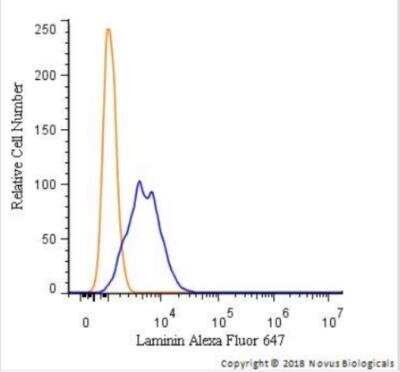
Flow Cytometry of HeLa Cells Stained with Conjugated Laminin Antibody
A surface stain was performed on HeLa cells with Laminin Antibody NB300-144AF647 (blue) and a matched isotype control (orange). Cells were incubated in an antibody dilution of 2.5 ug/mL for 20 minutes at room temperature. Both antibodies were conjugated to Alexa Fluor 647.![Laminin Antibody [Alexa Fluor® 647]](https://resources.rndsystems.com/images/products/nb300-144af647_rabbit-polyclonal-laminin-antibody-alexa-fluor-647-31020241620371.jpg "Immunocytochemistry/ Immunofluorescence: Laminin Antibody [Alexa Fluor® 647] [NB300-144AF647] -")
Immunocytochemistry/ Immunofluorescence: Laminin Antibody [Alexa Fluor® 647] [NB300-144AF647] -
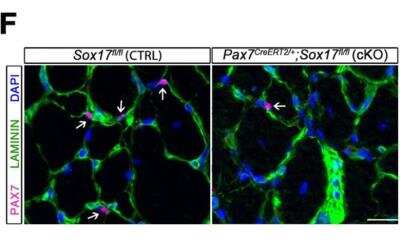
Immunocytochemistry/ Immunofluorescence: Laminin Antibody [Alexa Fluor® 647] [NB300-144AF647] - SOX17 regulates adult muscle regeneration after injury in Pax7CreERT2/+;Sox17fl/fl mutant mice.(A) Schematic outline of experimental procedure for tamoxifen (TMX) injection (i.p., intraperitoneal). CTX, cardiotoxin injection; d, days. (B) Representative images of cryosections from regenerating adult TA muscles d7 after injury, showing immunofluorescence for PAX7+ (quiescent, arrows) & PH3+PAX7+ (proliferating, arrowheads) cells. Scale bar, 25 μm. (C–D) Quantification of satellite cells as illustrated in (B). (E) Schematic outline of experimental procedure for TMX diet. CTX, cardiotoxin injection; d, days. (F) Representative images of cryosections from regenerating adult TA muscles d28 after injury, showing immunofluorescence for PAX7+ (quiescent, arrows) cells. Scale bar, 25 µm. (G) Quantification of satellite cells as illustrated in (F). (H–I) Quantification of cross-sectional area in µm2 (H) & myofiber number per mm2 (I). (J–K) Quantification of fat infiltration (Oil red O) (J) & fibrosis (Sirius red) (K) indicated as proportion of stained section (average of five sections per muscle). (L) Representative images of histological characterization of adult TA muscles 28 days after injury w/ Hematoxylin & eosin (cell infiltration; upper panel), Oil red O (fat infiltration; middle panel), & Sirius red (fibrosis; bottom panel) staining. Scale bars, 100 µm. CTRL, Sox17fl/fl; cKO, Pax7CreERT2/+;Sox17fl/fl. n ≥ 3 mice (each quantified at least in triplicate) for all experiments. Data expressed as mean ± s.e.m., statistically analyzed w/ Student’s unpaired t-test (C,D,G) & Mann-Whitney ranking test (H–K): n.s., not significant; *, p<0.05; **, p<0.01; ***, p<0.001, compared to CTRL. Image collected & cropped by CiteAb from following publication (https://pubmed.ncbi.nlm.nih.gov/29882512), licensed under a CC-BY license. Not internally tested by Novus Biologicals.![Laminin Antibody [Alexa Fluor® 647]](https://resources.rndsystems.com/images/products/nb300-144af647_rabbit-polyclonal-laminin-antibody-alexa-fluor-647-310202416205152.jpg "Immunocytochemistry/ Immunofluorescence: Laminin Antibody [Alexa Fluor® 647] [NB300-144AF647] -")
Immunocytochemistry/ Immunofluorescence: Laminin Antibody [Alexa Fluor® 647] [NB300-144AF647] -
Immunocytochemistry/ Immunofluorescence: Laminin Antibody [Alexa Fluor® 647] [NB300-144AF647] - SOX17 is necessary to maintain satellite cell quiescence in adult muscles.(A,F) Representative Soleus cryosection images showing immunofluorescence for satellite cells (PAX7+, arrows) in Pax3Cre/+;Sox17GFP/fl & Pax7CreERT2/+;Sox17fl/fl mice, with appropriate controls. Scale bars, 25 μm. Fibers are identified by LAMININ & nuclei are counterstained with DAPI. (B,G) Quantification of satellite cell number during postnatal growth (P14) & in adult. (C) Quantification of the ratio PAX7/MYOD+ satellite cells in P14 Soleus cryosections. (D) RT-qPCR analysis on adult TA muscles for Pax7 & SoxF genes in fresh FACS-isolated satellite cells from control & Sox17-knockout mice. (A–D) CTRL, Sox17GFP/fl; KO, Pax3Cre/+;Sox17GFP/fl. (E) Schematic outline of the experimental procedure for tamoxifen (TMX) injection (i.p., intraperitoneal) in Sox17fl/fl (CTRL) & Pax7CreERT2/+;Sox17fl/fl (cKO) mice. d, days. (E–G) CTRL, Sox17fl/fl; cKO, Pax7CreERT2/+;Sox17fl/fl. Quantification was performed in whole cross-sections. n ≥ 4 mice (each quantified in triplicate) for all experiments. Data expressed as mean ± s.e.m., statistically analyzed with Student’s unpaired t-test: *, p<0.05; **, p<0.01, compared to CTRL.Satellite cells characterization of control & Sox17-knockout mice.(A) Immunofluorescence of satellite cells (MCAD; M-cadherin) in adult Soleus cryosections from control & Sox17 mutant mice. Scale bar, 25 μm. (B) Quantification of satellite cell number illustrated in (A). CTRL, Sox17GFP/fl; KO, Pax3Cre/+;Sox17GFP/fl. n ≥ 4 mice (each quantified in triplicate) for all experiments. Data expressed as mean ± s.e.m., statistically analyzed with Student’s unpaired t-test: *, p<0.05, compared to CTRL. Image collected & cropped by CiteAb from the following publication (https://pubmed.ncbi.nlm.nih.gov/29882512), licensed under a CC-BY license. Not internally tested by Novus Biologicals.![Laminin Antibody [Alexa Fluor® 647]](https://resources.rndsystems.com/images/products/nb300-144af647_rabbit-polyclonal-laminin-antibody-alexa-fluor-647-310202416205182.jpg "Immunocytochemistry/ Immunofluorescence: Laminin Antibody [Alexa Fluor® 647] [NB300-144AF647] -")
Immunocytochemistry/ Immunofluorescence: Laminin Antibody [Alexa Fluor® 647] [NB300-144AF647] -
Immunocytochemistry/ Immunofluorescence: Laminin Antibody [Alexa Fluor® 647] [NB300-144AF647] - SOX17 is necessary to maintain satellite cell quiescence in adult muscles.(A,F) Representative Soleus cryosection images showing immunofluorescence for satellite cells (PAX7+, arrows) in Pax3Cre/+;Sox17GFP/fl & Pax7CreERT2/+;Sox17fl/fl mice, with appropriate controls. Scale bars, 25 μm. Fibers are identified by LAMININ & nuclei are counterstained with DAPI. (B,G) Quantification of satellite cell number during postnatal growth (P14) & in adult. (C) Quantification of the ratio PAX7/MYOD+ satellite cells in P14 Soleus cryosections. (D) RT-qPCR analysis on adult TA muscles for Pax7 & SoxF genes in fresh FACS-isolated satellite cells from control & Sox17-knockout mice. (A–D) CTRL, Sox17GFP/fl; KO, Pax3Cre/+;Sox17GFP/fl. (E) Schematic outline of the experimental procedure for tamoxifen (TMX) injection (i.p., intraperitoneal) in Sox17fl/fl (CTRL) & Pax7CreERT2/+;Sox17fl/fl (cKO) mice. d, days. (E–G) CTRL, Sox17fl/fl; cKO, Pax7CreERT2/+;Sox17fl/fl. Quantification was performed in whole cross-sections. n ≥ 4 mice (each quantified in triplicate) for all experiments. Data expressed as mean ± s.e.m., statistically analyzed with Student’s unpaired t-test: *, p<0.05; **, p<0.01, compared to CTRL.Satellite cells characterization of control & Sox17-knockout mice.(A) Immunofluorescence of satellite cells (MCAD; M-cadherin) in adult Soleus cryosections from control & Sox17 mutant mice. Scale bar, 25 μm. (B) Quantification of satellite cell number illustrated in (A). CTRL, Sox17GFP/fl; KO, Pax3Cre/+;Sox17GFP/fl. n ≥ 4 mice (each quantified in triplicate) for all experiments. Data expressed as mean ± s.e.m., statistically analyzed with Student’s unpaired t-test: *, p<0.05, compared to CTRL. Image collected & cropped by CiteAb from the following publication (https://pubmed.ncbi.nlm.nih.gov/29882512), licensed under a CC-BY license. Not internally tested by Novus Biologicals.![Laminin Antibody [Alexa Fluor® 647]](https://resources.rndsystems.com/images/products/nb300-144af647_rabbit-polyclonal-laminin-antibody-alexa-fluor-647-310202416212386.jpg "Immunocytochemistry/ Immunofluorescence: Laminin Antibody [Alexa Fluor® 647] [NB300-144AF647] -")
Immunocytochemistry/ Immunofluorescence: Laminin Antibody [Alexa Fluor® 647] [NB300-144AF647] -
Immunocytochemistry/ Immunofluorescence: Laminin Antibody [Alexa Fluor® 647] [NB300-144AF647] - MuSC-specific Cdkn1c ablation hinders muscle regeneration.(A) Time-course of tamoxifen administration, intramuscular injury of TA muscle (CTX arrow), & muscle harvest (D7 arrow). (B–G) Cryosections of TA muscle were stained for histological & satellite cell population characterization 7 days after CTX injection. Analyzed animals at (B-G) were wild-type littermates (Wt; Pax7+; Cdkn1c+; B–G), Cre control (Pax7CreERT2; B’–G’), & Cdkn1c cKO (Pax7CreERT2; Cdkn1cFlox; B’’–G’’). (B) HE staining for histologic characterization of the muscles. (C) Oil Red O staining for evaluation of fat infiltration of the muscles. (D–E) embryonic myosin (eMYHC, red)/LAMININ (LAM, green) immunofluorescence to mark newly formed myofibers post-regeneration. (F–G) PAX7 (red)/LAMININ (LAM, green) immunofluorescence to mark PAX7+ satellite cells. Nuclei in (D-G) were counter-stained with DAPI (blue). Scale bars, 50 μm. (H) Quantification of (F-G). Data show mean +SD, n ≥ 5 animals. Asterisks indicate significance; **p≤0.01.In vivo MuSC-specific Cdkn1c ablation. Image collected & cropped by CiteAb from the following publication (https://pubmed.ncbi.nlm.nih.gov/30284969), licensed under a CC-BY license. Not internally tested by Novus Biologicals.![Laminin Antibody [Alexa Fluor® 647]](https://resources.rndsystems.com/images/products/nb300-144af647_rabbit-polyclonal-laminin-antibody-alexa-fluor-647-310202416212376.jpg "Immunocytochemistry/ Immunofluorescence: Laminin Antibody [Alexa Fluor® 647] [NB300-144AF647] -")
Immunocytochemistry/ Immunofluorescence: Laminin Antibody [Alexa Fluor® 647] [NB300-144AF647] -
Immunocytochemistry/ Immunofluorescence: Laminin Antibody [Alexa Fluor® 647] [NB300-144AF647] - MuSC-specific Cdkn1c ablation hinders muscle regeneration.(A) Time-course of tamoxifen administration, intramuscular injury of TA muscle (CTX arrow), & muscle harvest (D7 arrow). (B–G) Cryosections of TA muscle were stained for histological & satellite cell population characterization 7 days after CTX injection. Analyzed animals at (B-G) were wild-type littermates (Wt; Pax7+; Cdkn1c+; B–G), Cre control (Pax7CreERT2; B’–G’), & Cdkn1c cKO (Pax7CreERT2; Cdkn1cFlox; B’’–G’’). (B) HE staining for histologic characterization of the muscles. (C) Oil Red O staining for evaluation of fat infiltration of the muscles. (D–E) embryonic myosin (eMYHC, red)/LAMININ (LAM, green) immunofluorescence to mark newly formed myofibers post-regeneration. (F–G) PAX7 (red)/LAMININ (LAM, green) immunofluorescence to mark PAX7+ satellite cells. Nuclei in (D-G) were counter-stained with DAPI (blue). Scale bars, 50 μm. (H) Quantification of (F-G). Data show mean +SD, n ≥ 5 animals. Asterisks indicate significance; **p≤0.01.In vivo MuSC-specific Cdkn1c ablation. Image collected & cropped by CiteAb from the following publication (https://pubmed.ncbi.nlm.nih.gov/30284969), licensed under a CC-BY license. Not internally tested by Novus Biologicals.Applications for Laminin Antibody [Alexa Fluor® 647]
Application
Recommended Usage
Flow Cytometry
Optimal dilutions of this antibody should be experimentally determined.
Immunocytochemistry/ Immunofluorescence
Optimal dilutions of this antibody should be experimentally determined.
Immunohistochemistry
Optimal dilutions of this antibody should be experimentally determined.
Immunohistochemistry Free-Floating
Optimal dilutions of this antibody should be experimentally determined.
Immunohistochemistry-Frozen
Optimal dilutions of this antibody should be experimentally determined.
Immunohistochemistry-Paraffin
Optimal dilutions of this antibody should be experimentally determined.
Western Blot
Optimal dilutions of this antibody should be experimentally determined.
Application Notes
This Laminin antibody can be used for Immunocytochemistry/Immunofluorescence, Functional assays, Immunohistochemistry paraffin and frozen sections, and Western blotting where it detects bands at 200 and 400 kDa. Immunostaining is enhanced by antigen retrieval with pepsin, especially paraffin tissue.
Recommended applications are based on validated applications from the unconjugated base product NB300-144. This conjugated antibody is not kept in inventory and is made to order using validated conjugation protocols.
Recommended applications are based on validated applications from the unconjugated base product NB300-144. This conjugated antibody is not kept in inventory and is made to order using validated conjugation protocols.
Spectra Viewer
Plan Your Experiments
Use our spectra viewer to interactively plan your experiments, assessing multiplexing options. View the excitation and emission spectra for our fluorescent dye range and other commonly used dyes.
Spectra Viewer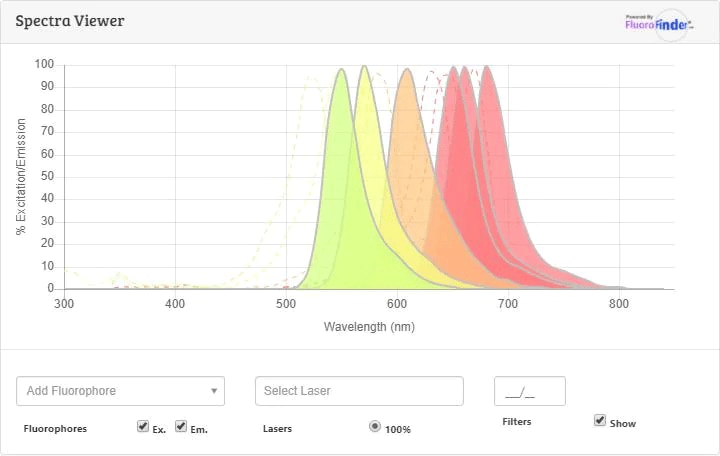
Flow Cytometry Panel Builder
Bio-Techne Knows Flow Cytometry
Save time and reduce costly mistakes by quickly finding compatible reagents using the Panel Builder Tool.
Advanced Features
- Spectra Viewer - Custom analysis of spectra from multiple fluorochromes
- Spillover Popups - Visualize the spectra of individual fluorochromes
- Antigen Density Selector - Match fluorochrome brightness with antigen density

Formulation, Preparation, and Storage
Purification
Affinity purified
Formulation
50mM Sodium Borate
Preservative
0.05% Sodium Azide
Concentration
Please see the vial label for concentration. If unlisted please contact technical services.
Shipping
The product is shipped with polar packs. Upon receipt, store it immediately at the temperature recommended below.
Stability & Storage
Store at 4C in the dark.
Background: Laminin
Laminins are an important and biologically active part of the basal lamina, influencing cell adhesion, differentiation, migration, signaling, neurite outgrowth and metastasis, where anti-laminin antibodies can be widely used to label blood vessels and basement membranes (1). Significant quantities of laminin are found in basement membranes, the thin extracellular matrices that surround epithelial tissue, nerve, fat cells and smooth, striated and cardiac muscle. Excessive serum laminin levels have been associated with fibrosis, cirrhosis and hepatitis, serious and frequent complications of chronic active liver disease characterized by excessive deposition of various normal components of connective tissue in liver (2). Epithelial mesenchymal transition (EMT) biomarkers include fibronectin, laminin, N-cadherin, and Slug (3).
References
1. Yang, M. Y., Chiao, M. T., Lee, H. T., Chen, C. M., Yang, Y. C., Shen, C. C., & Ma, H. I. (2015). An innovative three-dimensional gelatin foam culture system for improved study of glioblastoma stem cell behavior. J Biomed Mater Res B Appl Biomater, 103(3), 618-628. doi:10.1002/jbm.b.33214
2. Mak, K. M., & Mei, R. (2017). Basement Membrane Type IV Collagen and Laminin: An Overview of Their Biology and Value as Fibrosis Biomarkers of Liver Disease. Anat Rec (Hoboken), 300(8), 1371-1390. doi:10.1002/ar.23567
3. Choi, S., Yu, J., Park, A., Dubon, M. J., Do, J., Kim, Y.,... Park, K. S. (2019). BMP-4 enhances epithelial mesenchymal transition and cancer stem cell properties of breast cancer cells via Notch signaling. Sci Rep, 9(1), 11724. doi:10.1038/s41598-019-48190-5
Alternate Names
LAMA, Laminin A chain, laminin subunit alpha-1, laminin, alpha 1, Laminin-1 subunit alpha, Laminin-3 subunit alpha, PTBHS, S-LAM alpha, S-laminin subunit alpha
Gene Symbol
LAMA1
Additional Laminin Products
Product Documents for Laminin Antibody [Alexa Fluor® 647]
Certificate of Analysis
To download a Certificate of Analysis, please enter a lot or batch number in the search box below.
Product Specific Notices for Laminin Antibody [Alexa Fluor® 647]
Alexa Fluor (R) products are provided under an intellectual property license from Life Technologies Corporation. The purchase of this product conveys to the buyer the non-transferable right to use the purchased product and components of the product only in research conducted by the buyer (whether the buyer is an academic or for-profit entity). The sale of this product is expressly conditioned on the buyer not using the product or its components, or any materials made using the product or its components, in any activity to generate revenue, which may include, but is not limited to use of the product or its components: (i) in manufacturing; (ii) to provide a service, information, or data in return for payment; (iii) for therapeutic, diagnostic or prophylactic purposes; or (iv) for resale, regardless of whether they are resold for use in research. For information on purchasing a license to this product for purposes other than as described above, contact Life Technologies Corporation, 5791 Van Allen Way, Carlsbad, CA 92008 USA or outlicensing@lifetech.com. This conjugate is made on demand. Actual recovery may vary from the stated volume of this product. The volume will be greater than or equal to the unit size stated on the datasheet.
This product is for research use only and is not approved for use in humans or in clinical diagnosis. Primary Antibodies are guaranteed for 1 year from date of receipt.
Citations for Laminin Antibody [Alexa Fluor® 647]
 Powered by Bioz
Customer Reviews for Laminin Antibody [Alexa Fluor® 647]
There are currently no reviews for this product. Be the first to review Laminin Antibody [Alexa Fluor® 647] and earn rewards!
Have you used Laminin Antibody [Alexa Fluor® 647]?
Submit a review and receive an Amazon gift card!
$25/€18/£15/$25CAN/¥2500 for a review with an image
$10/€7/£6/$10CAN/¥1110 for a review without an image
Submit a review
Protocols
Find general support by application which include: protocols, troubleshooting, illustrated assays, videos and webinars.
- 7-Amino Actinomycin D (7-AAD) Cell Viability Flow Cytometry Protocol
- Antigen Retrieval Protocol (PIER)
- Antigen Retrieval for Frozen Sections Protocol
- Appropriate Fixation of IHC/ICC Samples
- Cellular Response to Hypoxia Protocols
- Chromogenic IHC Staining of Formalin-Fixed Paraffin-Embedded (FFPE) Tissue Protocol
- Chromogenic Immunohistochemistry Staining of Frozen Tissue
- ClariTSA™ Fluorophore Kits
- Detection & Visualization of Antibody Binding
- Extracellular Membrane Flow Cytometry Protocol
- Flow Cytometry Protocol for Cell Surface Markers
- Flow Cytometry Protocol for Staining Membrane Associated Proteins
- Flow Cytometry Staining Protocols
- Flow Cytometry Troubleshooting Guide
- Fluorescent IHC Staining of Frozen Tissue Protocol
- Graphic Protocol for Heat-induced Epitope Retrieval
- Graphic Protocol for the Preparation and Fluorescent IHC Staining of Frozen Tissue Sections
- Graphic Protocol for the Preparation and Fluorescent IHC Staining of Paraffin-embedded Tissue Sections
- Graphic Protocol for the Preparation of Gelatin-coated Slides for Histological Tissue Sections
- ICC Cell Smear Protocol for Suspension Cells
- ICC Immunocytochemistry Protocol Videos
- ICC for Adherent Cells
- IHC Sample Preparation (Frozen sections vs Paraffin)
- Immunocytochemistry (ICC) Protocol
- Immunocytochemistry Troubleshooting
- Immunofluorescence of Organoids Embedded in Cultrex Basement Membrane Extract
- Immunofluorescent IHC Staining of Formalin-Fixed Paraffin-Embedded (FFPE) Tissue Protocol
- Immunohistochemistry (IHC) and Immunocytochemistry (ICC) Protocols
- Immunohistochemistry Frozen Troubleshooting
- Immunohistochemistry Paraffin Troubleshooting
- Intracellular Flow Cytometry Protocol Using Alcohol (Methanol)
- Intracellular Flow Cytometry Protocol Using Detergents
- Intracellular Nuclear Staining Flow Cytometry Protocol Using Detergents
- Intracellular Staining Flow Cytometry Protocol Using Alcohol Permeabilization
- Intracellular Staining Flow Cytometry Protocol Using Detergents to Permeabilize Cells
- Preparing Samples for IHC/ICC Experiments
- Preventing Non-Specific Staining (Non-Specific Binding)
- Primary Antibody Selection & Optimization
- Propidium Iodide Cell Viability Flow Cytometry Protocol
- Protocol for Heat-Induced Epitope Retrieval (HIER)
- Protocol for Liperfluo
- Protocol for Making a 4% Formaldehyde Solution in PBS
- Protocol for VisUCyte™ HRP Polymer Detection Reagent
- Protocol for the Characterization of Human Th22 Cells
- Protocol for the Characterization of Human Th9 Cells
- Protocol for the Fluorescent ICC Staining of Cell Smears - Graphic
- Protocol for the Fluorescent ICC Staining of Cultured Cells on Coverslips - Graphic
- Protocol for the Preparation & Fixation of Cells on Coverslips
- Protocol for the Preparation and Chromogenic IHC Staining of Frozen Tissue Sections
- Protocol for the Preparation and Chromogenic IHC Staining of Frozen Tissue Sections - Graphic
- Protocol for the Preparation and Chromogenic IHC Staining of Paraffin-embedded Tissue Sections
- Protocol for the Preparation and Chromogenic IHC Staining of Paraffin-embedded Tissue Sections - Graphic
- Protocol for the Preparation and Fluorescent ICC Staining of Cells on Coverslips
- Protocol for the Preparation and Fluorescent ICC Staining of Non-adherent Cells
- Protocol for the Preparation and Fluorescent ICC Staining of Stem Cells on Coverslips
- Protocol for the Preparation and Fluorescent IHC Staining of Frozen Tissue Sections
- Protocol for the Preparation and Fluorescent IHC Staining of Paraffin-embedded Tissue Sections
- Protocol for the Preparation of Gelatin-coated Slides for Histological Tissue Sections
- Protocol for the Preparation of a Cell Smear for Non-adherent Cell ICC - Graphic
- Protocol: Annexin V and PI Staining by Flow Cytometry
- Protocol: Annexin V and PI Staining for Apoptosis by Flow Cytometry
- R&D Systems Quality Control Western Blot Protocol
- TUNEL and Active Caspase-3 Detection by IHC/ICC Protocol
- The Importance of IHC/ICC Controls
- Troubleshooting Guide: Fluorokine Flow Cytometry Kits
- Troubleshooting Guide: Immunohistochemistry
- Troubleshooting Guide: Western Blot Figures
- Western Blot Conditions
- Western Blot Protocol
- Western Blot Protocol for Cell Lysates
- Western Blot Troubleshooting
- Western Blot Troubleshooting Guide
- View all Protocols, Troubleshooting, Illustrated assays and Webinars
FAQs for Laminin Antibody [Alexa Fluor® 647]
Showing
1
-
4 of
4 FAQs
Showing All
-
Q: I'm looking for a basement membrane marker, can you suggest a Laminin antibody that can be used for this purpose?
A: The following Laminin antibodies are Basement Membrane markers: NB120-17107, NB300-144, NB600-883, and NBP1-51759.
-
Q: If this product is used in an application or species as a part of a customer review, will that validate this product in the application/species?
A: If any of our primary antibodes are used in an untested application or species and it is shown to work through images from customer reviews or through publications, this validates the application/species for this product. Please check out our Innovator's Reward Program if you decide to test an antibody with a species or application that is not currently listed.
-
Q: What is the theoretical molecular weight for your Laminin antibodies?
A: The theoretical molecular weight for Laminin antibodies is 337 kDa.
-
Q: What research areas can this product be used in?
A: All Laminin products can be used in: Angiogenesis, Apoptosis, Cancer, Cell Biology, Cellular Markers, Extracellular Matrix, Neuroscience, Signal Transduction, Tumor Suppressors.
-
Q: I'm looking for a basement membrane marker, can you suggest a Laminin antibody that can be used for this purpose?
A: The following Laminin antibodies are Basement Membrane markers: NB120-17107, NB300-144, NB600-883, and NBP1-51759.
-
Q: If this product is used in an application or species as a part of a customer review, will that validate this product in the application/species?
A: If any of our primary antibodes are used in an untested application or species and it is shown to work through images from customer reviews or through publications, this validates the application/species for this product. Please check out our Innovator's Reward Program if you decide to test an antibody with a species or application that is not currently listed.
-
Q: What is the theoretical molecular weight for your Laminin antibodies?
A: The theoretical molecular weight for Laminin antibodies is 337 kDa.
-
Q: What research areas can this product be used in?
A: All Laminin products can be used in: Angiogenesis, Apoptosis, Cancer, Cell Biology, Cellular Markers, Extracellular Matrix, Neuroscience, Signal Transduction, Tumor Suppressors.
-
Q: I'm looking for a basement membrane marker, can you suggest a Laminin antibody that can be used for this purpose?
A: The following Laminin antibodies are Basement Membrane markers: NB120-17107, NB300-144, NB600-883, and NBP1-51759.
-
Q: If this product is used in an application or species as a part of a customer review, will that validate this product in the application/species?
A: If any of our primary antibodes are used in an untested application or species and it is shown to work through images from customer reviews or through publications, this validates the application/species for this product. Please check out our Innovator's Reward Program if you decide to test an antibody with a species or application that is not currently listed.
-
Q: What is the theoretical molecular weight for your Laminin antibodies?
A: The theoretical molecular weight for Laminin antibodies is 337 kDa.
-
Q: What research areas can this product be used in?
A: All Laminin products can be used in: Angiogenesis, Apoptosis, Cancer, Cell Biology, Cellular Markers, Extracellular Matrix, Neuroscience, Signal Transduction, Tumor Suppressors.
-
Q: I'm looking for a basement membrane marker, can you suggest a Laminin antibody that can be used for this purpose?
A: The following Laminin antibodies are Basement Membrane markers: NB120-17107, NB300-144, NB600-883, and NBP1-51759.
-
Q: If this product is used in an application or species as a part of a customer review, will that validate this product in the application/species?
A: If any of our primary antibodes are used in an untested application or species and it is shown to work through images from customer reviews or through publications, this validates the application/species for this product. Please check out our Innovator's Reward Program if you decide to test an antibody with a species or application that is not currently listed.
-
Q: What is the theoretical molecular weight for your Laminin antibodies?
A: The theoretical molecular weight for Laminin antibodies is 337 kDa.
-
Q: What research areas can this product be used in?
A: All Laminin products can be used in: Angiogenesis, Apoptosis, Cancer, Cell Biology, Cellular Markers, Extracellular Matrix, Neuroscience, Signal Transduction, Tumor Suppressors.
Loading...