
PGC1 alpha [p Ser571] Antibody [DyLight 350]
Novus Biologicals | Catalog # AF6650D

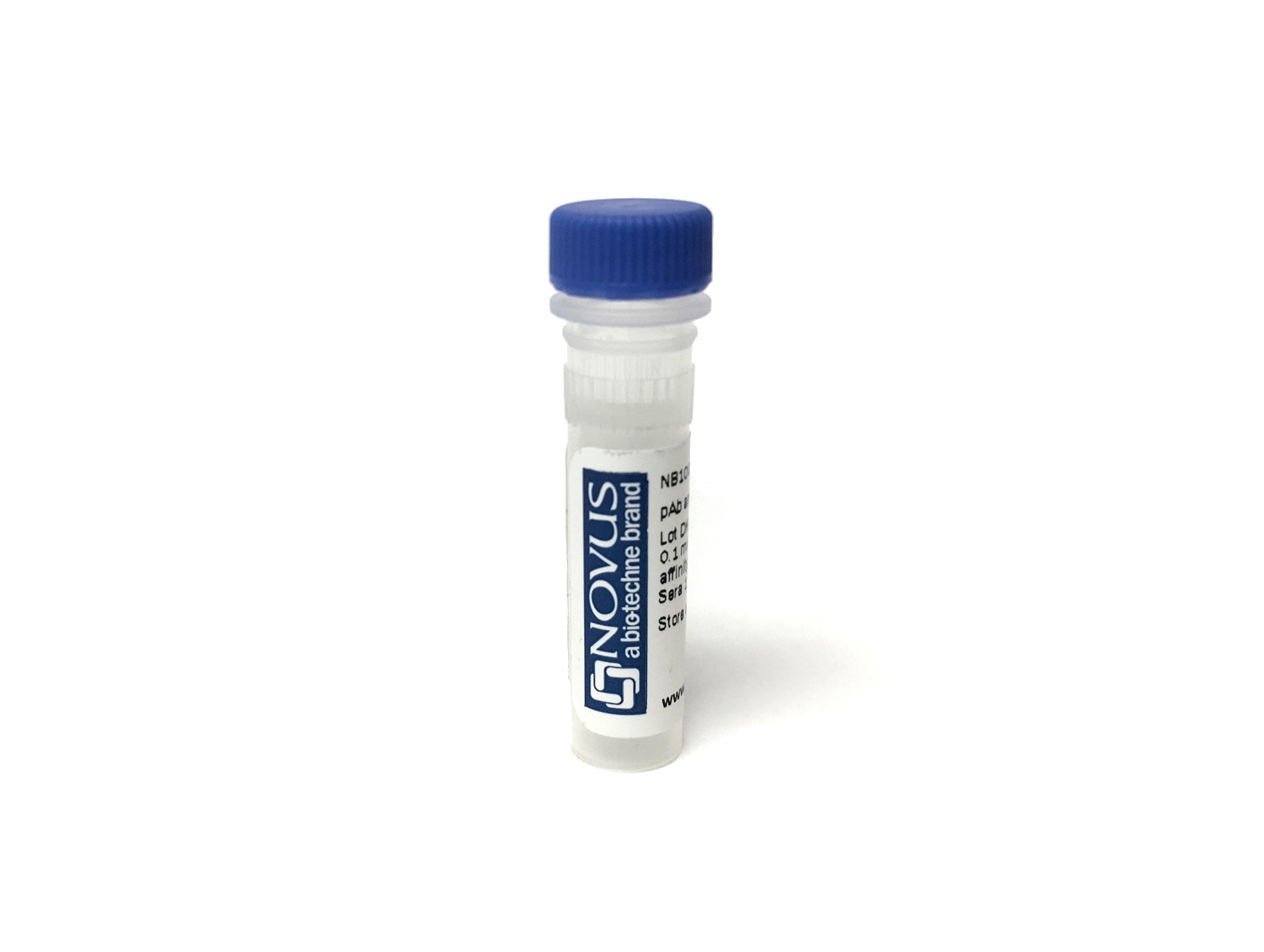
Key Product Details
Species Reactivity
Human
Applications
Western Blot
Label
DyLight 350 (Excitation = 353 nm, Emission = 432 nm)
Antibody Source
Polyclonal Rabbit IgG
Loading...
Product Specifications
Immunogen
Phosphopeptide containing the human PGC1 alpha S571 site.
Modification
p Ser571
Specificity
Detects human PGC1 alpha when phosphorylated at S571 in Western blots.
Clonality
Polyclonal
Host
Rabbit
Isotype
IgG
Description
This conjugate is made on demand and is not held in inventory. Each order represents a unique lot. All conjugates are generated using validated conjugation protocols and meet strict degree of labeling (F/P) specifications; additional information is available upon request. The antibody concentration is provided on the individual product label.
For specialized conjugation needs, like large quantities, specific concentrations, and defined F/P ratios, bulk and custom antibody conjugation services are available.
For specialized conjugation needs, like large quantities, specific concentrations, and defined F/P ratios, bulk and custom antibody conjugation services are available.
Applications for PGC1 alpha [p Ser571] Antibody [DyLight 350]
Application
Recommended Usage
Western Blot
Optimal dilutions of this antibody should be experimentally determined.
Application Notes
Recommended applications are based on validated applications from the unconjugated base product AF6650. This conjugated antibody is not kept in inventory and is made to order using validated conjugation protocols.
Formulation, Preparation, and Storage
Purification
Antigen Affinity-purified
Formulation
50mM Sodium Borate
Preservative
0.05% Sodium Azide
Concentration
Please see the vial label for concentration. If unlisted please contact technical services.
Shipping
The product is shipped with polar packs. Upon receipt, store it immediately at the temperature recommended below.
Stability & Storage
Store at 4C in the dark.
Background: PGC1 alpha
PGC1 alpha is highly expressed in skeletal muscle, cardiac muscle, and brown adipose tissue, all tissues with high oxidative capacity (1, 2). PGC1 alpha is also induced by energy taxing physiological states, for example increased physical activity, reduced body temperature, and reduced food intake (3). Because of its role in pathways controlling cellular energy expenditure, PGC1 alpha dysfunction has been associated with pathophysiological conditions such as type 2 diabetes and the metabolic syndrome (3).
References
1.Liang, H., & Ward, W. F. (2006). PGC-1alpha: A key regulator of energy metabolism. American Journal of Physiology - Advances in Physiology Education. https://doi.org/10.1152/advan.00052.2006
2.Arany, Z., He, H., Lin, J., Hoyer, K., Handschin, C., Toka, O.,... Spiegelman, B. M. (2005). Transcriptional coactivator PGC-1alpha controls the energy state and contractile function of cardiac muscle. Cell Metabolism. https://doi.org/10.1016/j.cmet.2005.03.002
3.Canto, C., & Auwerx, J. (2009). PGC-1alpha, SIRT1 and AMPK, an energy sensing network that controls energy expenditure. Current Opinion in Lipidology. https://doi.org/10.1097/MOL.0b013e328328d0a4
Long Name
Peroxisome Proliferator-activated Receptor gamma, Coactivator 1 alpha
Alternate Names
LEM6, PPARGC1A
Gene Symbol
PPARGC1A
Additional PGC1 alpha Products
Product Documents for PGC1 alpha [p Ser571] Antibody [DyLight 350]
Certificate of Analysis
To download a Certificate of Analysis, please enter a lot or batch number in the search box below.
Product Specific Notices for PGC1 alpha [p Ser571] Antibody [DyLight 350]
DyLight (R) is a trademark of Thermo Fisher Scientific Inc. and its subsidiaries.
This product is for research use only and is not approved for use in humans or in clinical diagnosis. Primary Antibodies are guaranteed for 1 year from date of receipt.
Customer Reviews for PGC1 alpha [p Ser571] Antibody [DyLight 350]
There are currently no reviews for this product. Be the first to review PGC1 alpha [p Ser571] Antibody [DyLight 350] and earn rewards!
Have you used PGC1 alpha [p Ser571] Antibody [DyLight 350]?
Submit a review and receive an Amazon gift card!
$25/€18/£15/$25CAN/¥2500 for a review with an image
$10/€7/£6/$10CAN/¥1110 for a review without an image
Submit a review
Protocols
Find general support by application which include: protocols, troubleshooting, illustrated assays, videos and webinars.
- Cellular Response to Hypoxia Protocols
- R&D Systems Quality Control Western Blot Protocol
- Troubleshooting Guide: Western Blot Figures
- Western Blot Conditions
- Western Blot Protocol
- Western Blot Protocol for Cell Lysates
- Western Blot Troubleshooting
- Western Blot Troubleshooting Guide
- View all Protocols, Troubleshooting, Illustrated assays and Webinars
FAQs for PGC1 alpha [p Ser571] Antibody [DyLight 350]
Showing
1
-
1 of
1 FAQ
Showing All
-
Q: Please differentiate to me between PPAR and PGC clearly. I am confused with the difference between these two
A:
Thank you very much for contacting Novus Biologicals technical support team and sharing your query on the differences between PGC-1 alpha and PPAR. These are two different proteins encoded by their respective genes and serves different functions. PGC-1 alpha (PGC1A or PPAR gamma coactivator 1-alpha) is a transcriptional co-activator for steroid receptors and nuclear receptors, and it regulates diverse aspects of cellular physiology. It up-regulates the transcriptional activity of PPAR-gamma /thyroid hormone receptor on the uncoupling protein promoter; regulates the key mitochondrial genes involved in adaptive thermogenesis; implicates in the metabolic reprogramming in response to nutrients availability through the coordination of the expression of a wide array of genes involved in the regulation of glucose and fatty acid metabolism. Among our PGC-1 alpha antibodies, NBP1-04676 is our best selling product with nice customer feedback and citations in at least 13 research publications. PPAR (PPAR alpha) on the other hand is a ligand-activated transcription factor which gets activated by the endogenous ligand 1-palmitoyl-2-oleoyl-sn-glycerol-3-phosphocholine, and oleylethanolamide (a naturally occurring lipid that regulates satiety), and acts as a key regulator of lipid metabolism. It also acts as a receptor for peroxisome proliferators such as hypolipidemic drugs and fatty acids. It regulates the peroxisomal beta-oxidation pathway of fatty acids, and also functions as transcription activator for the ACOX1 and P450 genes. We have a variety of PPAR alpha antibodies. I hope you will find this information helpful but please let me know if I can support you with anything else from my end. Thank you very much for choosing Novus Biologicals as your quality reagent supplier and we wish you the best with your research projects.
Loading...
Associated Pathways
