Loading...
Key Product Details
- R&D Systems NS0-derived Recombinant Mouse SLAM/CD150 Protein (4330-SL)
- Quality control testing to verify active proteins with lot specific assays by in-house scientists
- All R&D Systems proteins are covered with a 100% guarantee
Source
NS0
Accession Number
Applications
Bioactivity
Loading...
Product Specifications
Source
Mouse myeloma cell line, NS0-derived mouse SLAM/CD150 protein
Thr25-Pro242, with a C-terminal 6-His tag
Thr25-Pro242, with a C-terminal 6-His tag
Purity
>95%, by SDS-PAGE under reducing conditions and visualized by silver stain.
Endotoxin Level
<0.01 EU per 1 μg of the protein by the LAL method.
N-terminal Sequence Analysis
Thr25
Predicted Molecular Mass
25 kDa
SDS-PAGE
41-55 kDa, reducing conditions
Activity
Measured by its ability to co-stimulate IL-4 secretion by D10.G4.1 mouse helper T cells in the presence of anti-CD3.
The ED50 for this effect is 0.6-2.4 μg/mL.
Optimal dilutions should be determined by each laboratory for each application.
The ED50 for this effect is 0.6-2.4 μg/mL.
Optimal dilutions should be determined by each laboratory for each application.
Reviewed Applications
Read 1 review rated 4 using 4330-SL in the following applications:
Formulation, Preparation, and Storage
4330-SL
| Formulation | Lyophilized from a 0.2 μm filtered solution in PBS. |
| Reconstitution | Reconstitute at 200 μg/mL in sterile PBS.
Loading...
|
| Shipping | The product is shipped at ambient temperature. Upon receipt, store it immediately at the temperature recommended below. |
| Stability & Storage | Use a manual defrost freezer and avoid repeated freeze-thaw cycles.
|
Calculators
Background: SLAM/CD150
References
- Cannons, J.L. et al. (2011) Annu. Rev. Immunol. 29:665.
- Castro, A.G. et al. (1999) J. Immunol. 163:5860.
- Cocks, B.G. et al. (1995) Nature 376:260.
- Wang, N. et al. (2004) J. Exp. Med. 199:1255.
- Hahm, B. et al. (2004) Virology 323:292.
- Nanda, N. et al. (2005) Blood 106:3028.
- Kiel, M.J. et al. (2005) Cell 121:1109.
- Punnonen, J. et al. (1997) J. Exp. Med. 185:993.
- Mavaddat, N. et al. (2000) J. Biol. Chem. 275:28100.
- Aversa, G. et al. (1997) J. Immunol. 158:4036.
- Mehrle, S. et al. (2008) Mol. Immunol. 45:796.
- Wang, N. et al. (2006) Am. J. Respir. Cell Mol. Biol. 35:206.
- Jordan, M.A. et al. (2011) J. Immunol. 186:3953.
- Berger, S.B. et al. (2010) Nat. Immunol. 11:920.
- Tatsuo, H. et al. (2000) Nature 406:893.
- Hsu, E.C. et al. (2001) Virology 279:9.
Long Name
Signaling Lymphocytic Activation Molecule
Alternate Names
CD150, IPO-3, SLAMF1
Gene Symbol
SLAMF1
UniProt
Additional SLAM/CD150 Products
Product Documents for Recombinant Mouse SLAM/CD150 Protein, CF
Certificate of Analysis
To download a Certificate of Analysis, please enter a lot or batch number in the search box below.
Note: Certificate of Analysis not available for kit components.
Product Specific Notices for Recombinant Mouse SLAM/CD150 Protein, CF
For research use only
Related Research Areas
Customer Reviews for Recombinant Mouse SLAM/CD150 Protein, CF (1)
4 out of 5
1 Customer Rating
Have you used Recombinant Mouse SLAM/CD150 Protein, CF?
Submit a review and receive an Amazon gift card!
$25/€18/£15/$25CAN/¥2500 for a review with an image
$10/€7/£6/$10CAN/¥1110 for a review without an image
Submit a review
Customer Images
Showing
1
-
1 of
1 review
Showing All
Filter By:
-
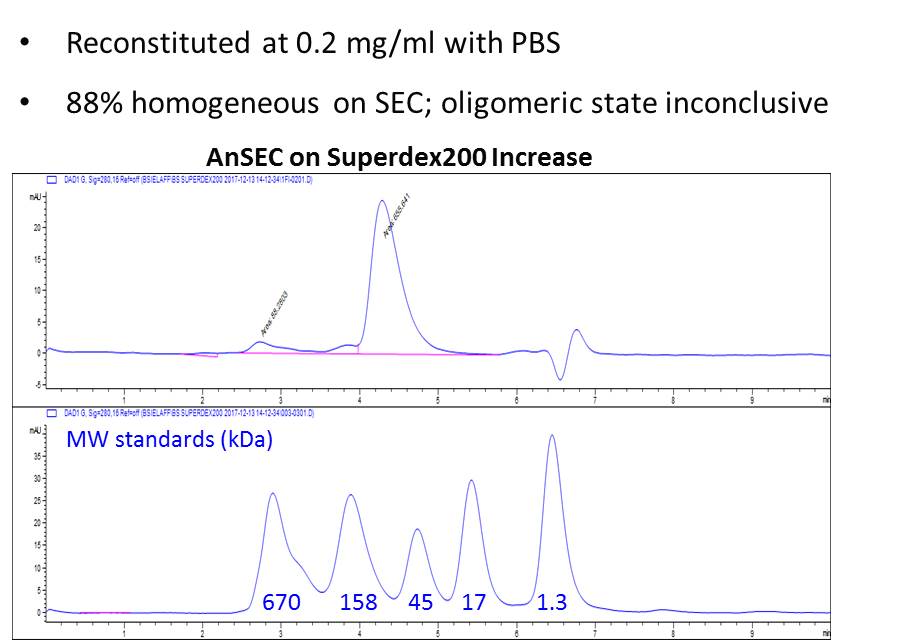
Application: Characterization prior to use.Verified Customer | Posted 01/08/2018

There are no reviews that match your criteria.
Loading...
Associated Pathways