
S100A9 Antibody - BSA Free
Novus Biologicals | Catalog # NB110-89726

Scientific images may be resized, cropped, or adjusted for brightness or contrast for presentation purposes. These updates are limited to presentation and do not affect the underlying scientific interpretation of the data. Where available, additional source data may be provided upon request.
Key Product Details
Validated by
Species Reactivity
Validated:
Cited:
Applications
Validated:
Cited:
Label
Antibody Source
Format
Product Specifications
Immunogen
Clonality
Host
Isotype
Theoretical MW
Disclaimer note: The observed molecular weight of the protein may vary from the listed predicted molecular weight due to post translational modifications, post translation cleavages, relative charges, and other experimental factors.
Scientific Data Images for S100A9 Antibody - BSA Free
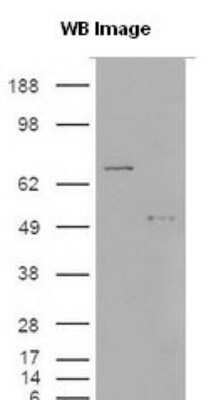
Western Blot: S100A9 Antibody [NB110-89726]
Western Blot: S100A9 Antibody [NB110-89726] - Cells were transfected with the pCMV6-ENTRY S100A9 cDNA or the pCMV6-ENTRY control for 48 hrs and lysed. Equivalent amounts of cell lysates (5 ug per lane) were separated by SDS-PAGE and immunoblotted with anti-S100A9.![Immunocytochemistry/ Immunofluorescence: S100A9 Antibody [NB110-89726]](https://resources.rndsystems.com/images/products/S100A9-Antibody-Immunocytochemistry-Immunofluorescence-NB110-89726-img0008.jpg "Immunocytochemistry/ Immunofluorescence: S100A9 Antibody [NB110-89726]")
Immunocytochemistry/ Immunofluorescence: S100A9 Antibody [NB110-89726]
Immunocytochemistry/Immunofluorescence: S100A9 Antibody [NB110-89726] - S100A9 antibody was tested in A431 cells with FITC (green). Nuclei and alpha-tubulin were counterstained with Dapi (blue) and Dylight 550 (red).![Immunohistochemistry-Paraffin: S100A9 Antibody [NB110-89726]](https://resources.rndsystems.com/images/products/S100A9-Antibody-Immunohistochemistry-Paraffin-NB110-89726-img0010.jpg "Immunohistochemistry-Paraffin: S100A9 Antibody [NB110-89726]")
![Western Blot: S100A9 Antibody [NB110-89726]](https://resources.rndsystems.com/images/products/S100A9-Antibody-Western-Blot-NB110-89726-img0006.jpg "Western Blot: S100A9 Antibody [NB110-89726]")
![Simple Western: S100A9 Antibody [NB110-89726]](https://resources.rndsystems.com/images/products/S100A9-Antibody-Simple-Western-NB110-89726-img0009.jpg "Simple Western: S100A9 Antibody [NB110-89726]")
Simple Western: S100A9 Antibody [NB110-89726]
Simple Western: S100A9 Antibody [NB110-89726] - Simple Western lane view shows a specific band for S100A9 in 0.5 mg/ml of Human PBMC's lysate. This experiment was performed under reducing conditions using the 12-230 kDa separation system.
Immunohistochemistry: S100A9 Antibody [NB110-89726] -
Immunohistochemistry: S100A9 Antibody [NB110-89726] - Key molecules of specific signaling pathways are assayed by immunohistochemistry in the colorectum of mice. Immunohistochemistry (200× magnification) of (A) S100a9, (B) beta -catenin, (C) c-Myc, (D) p-Akt, (E) p-Smad2, & (F) Cxcl5 in normal control, IgG Ab, & anti-S100a9 Ab-treated colorectal tissues of the colitis-associated cancer mouse (n = 4). Scale bar, 50 µm. Staining scores were determined by semi-quantitative optical analysis. Image collected & cropped by CiteAb from the following publication (https://pubmed.ncbi.nlm.nih.gov/29326691), licensed under a CC-BY license. Not internally tested by Novus Biologicals.
Immunohistochemistry: S100A9 Antibody [NB110-89726] -
Immunohistochemistry: S100A9 Antibody [NB110-89726] - Key molecules of specific signaling pathways are assayed by immunohistochemistry in the colorectum of mice. Immunohistochemistry (200× magnification) of (A) S100a9, (B) beta -catenin, (C) c-Myc, (D) p-Akt, (E) p-Smad2, & (F) Cxcl5 in normal control, IgG Ab, & anti-S100a9 Ab-treated colorectal tissues of the colitis-associated cancer mouse (n = 4). Scale bar, 50 µm. Staining scores were determined by semi-quantitative optical analysis. Image collected & cropped by CiteAb from the following publication (https://pubmed.ncbi.nlm.nih.gov/29326691), licensed under a CC-BY license. Not internally tested by Novus Biologicals.
Immunohistochemistry: S100A9 Antibody [NB110-89726] -
Immunohistochemistry: S100A9 Antibody [NB110-89726] - Key molecules of specific signaling pathways are assayed by immunohistochemistry in the colorectum of mice. Immunohistochemistry (200× magnification) of (A) S100a9, (B) beta -catenin, (C) c-Myc, (D) p-Akt, (E) p-Smad2, & (F) Cxcl5 in normal control, IgG Ab, & anti-S100a9 Ab-treated colorectal tissues of the colitis-associated cancer mouse (n = 4). Scale bar, 50 µm. Staining scores were determined by semi-quantitative optical analysis. Image collected & cropped by CiteAb from the following publication (https://pubmed.ncbi.nlm.nih.gov/29326691), licensed under a CC-BY license. Not internally tested by Novus Biologicals.
Immunohistochemistry: S100A9 Antibody [NB110-89726] -
Immunohistochemistry: S100A9 Antibody [NB110-89726] - Key molecules of specific signaling pathways are assayed by immunohistochemistry in the colorectum of mice. Immunohistochemistry (200× magnification) of (A) S100a9, (B) beta -catenin, (C) c-Myc, (D) p-Akt, (E) p-Smad2, & (F) Cxcl5 in normal control, IgG Ab, & anti-S100a9 Ab-treated colorectal tissues of the colitis-associated cancer mouse (n = 4). Scale bar, 50 µm. Staining scores were determined by semi-quantitative optical analysis. Image collected & cropped by CiteAb from the following publication (https://pubmed.ncbi.nlm.nih.gov/29326691), licensed under a CC-BY license. Not internally tested by Novus Biologicals.
Immunohistochemistry: S100A9 Antibody [NB110-89726] -
Immunohistochemistry: S100A9 Antibody [NB110-89726] - Key molecules of specific signaling pathways are assayed by immunohistochemistry in the colorectum of mice. Immunohistochemistry (200× magnification) of (A) S100a9, (B) beta -catenin, (C) c-Myc, (D) p-Akt, (E) p-Smad2, & (F) Cxcl5 in normal control, IgG Ab, & anti-S100a9 Ab-treated colorectal tissues of the colitis-associated cancer mouse (n = 4). Scale bar, 50 µm. Staining scores were determined by semi-quantitative optical analysis. Image collected & cropped by CiteAb from the following publication (https://pubmed.ncbi.nlm.nih.gov/29326691), licensed under a CC-BY license. Not internally tested by Novus Biologicals.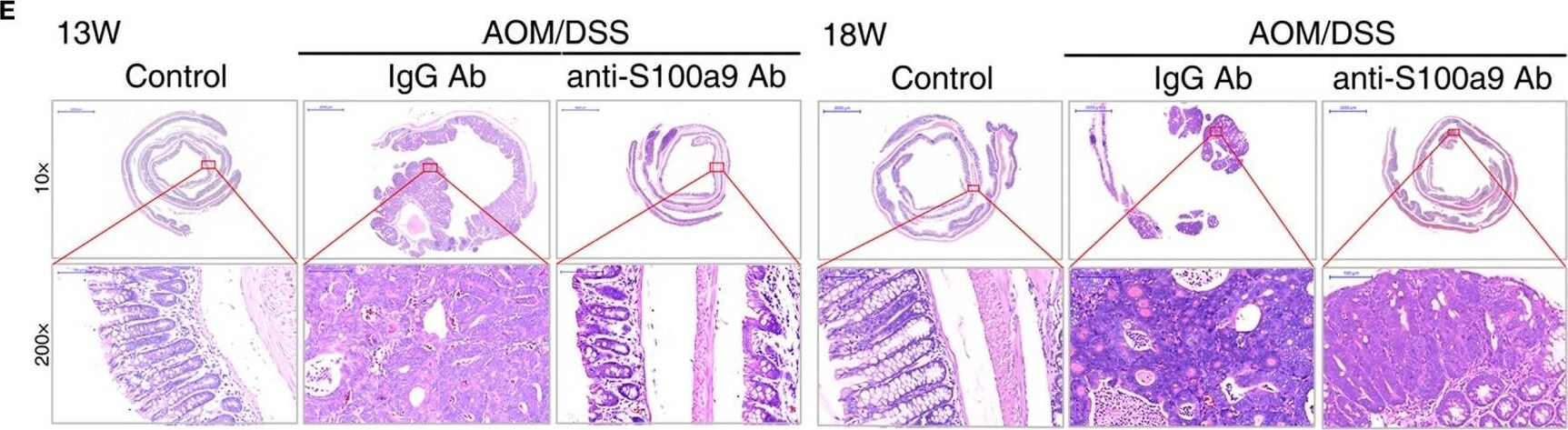
Immunohistochemistry: S100A9 Antibody [NB110-89726] -
Immunohistochemistry: S100A9 Antibody [NB110-89726] - Effects of anti-S100a9 Ab administration on the azoxymethane (AOM)/dextran sulfate sodium (DSS)-induced colitis-associated cancer development. (A) Experimental procedure of the control group & the AOM/DSS group treated with IgG Ab or anti-S100a9 Ab. (B) DAI of the IgG Ab or anti-S100a9 Ab-treated AOM/DSS mice & normal controls. (C) General observation of the colorectums in mice at the end of the 13th & 18th week. (D) Colon length, tumor rate, & number of macroscopic neoplasms were statisticed at 13 & 18 weeks, individually. n = 5–9 per group. Results were representative of the three experiments performed. (E) Histopathological examination of colon sections was shown under the Pannoramic Viewer (H&E staining, upper panels: original magnification 10×, scale bar: 2000 µm; lower panels: original magnification 200×, scale bar: 100 µm). Image collected & cropped by CiteAb from the following publication (https://pubmed.ncbi.nlm.nih.gov/29326691), licensed under a CC-BY license. Not internally tested by Novus Biologicals.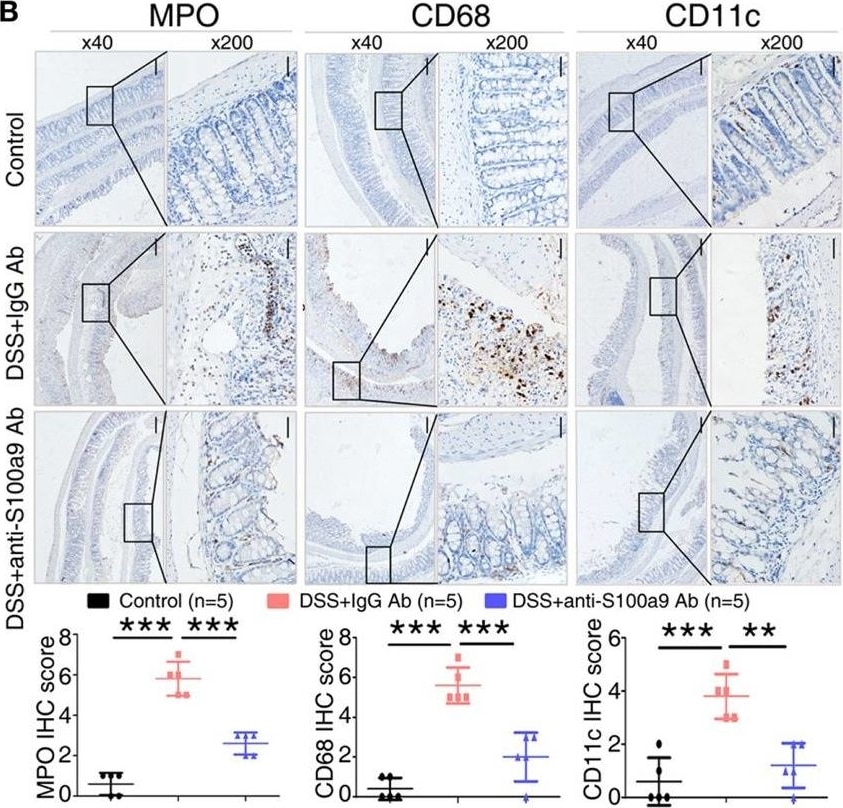
Immunohistochemistry: S100A9 Antibody [NB110-89726] -
Immunohistochemistry: S100A9 Antibody [NB110-89726] - Effects of anti-S100a9 Ab on the frequency of neutrophils, macrophages, & dendritic cells (DCs) in the colon of the dextran sulfate sodium (DSS) mouse model. (A) Colon lamina propria cells were isolated from normal control & IgG Ab or anti-S100a9 Ab-treated DSS mice at day 6 post-DSS colitis induction. Frequencies of neutrophils, macrophages, & DCs in the colon were determined by flow cytometry. Cells were gated on CD45+CD3−CD4−CD11b+Ly6G+, CD45+CD3−CD4−CD11b+F4/80+, & CD45+CD3−CD4−CD11b+CD11c+ populations respectively. Representative flow cytometric figures were shown. The percentage of cells was presented as the mean ± SEM of four to six individual mice per group. *p < 0.05 in a one-way analysis of variance followed by Bonferroni correction. Data were representative of three independent experiments. (B) Immunohistochemical staining of myeloperoxidase (MPO), CD68, & CD11c proteins in the normal control & IgG Ab or anti-S100a9 Ab-treated colitis mice at day 6 (left panels: original magnification 40×, scale bar: 200 µm; right panels: original magnification 200×, scale bar: 50 µm). Staining scores were counted. One-way analysis of variance followed by Bonferroni correction. Results were representative of the three experiments performed. Error bars represent SD. (C) Expression of S100a9, Tnf alpha, Il1 beta, Il6, Il17a, Ifn gamma, Il12a, Il23a, Il4, & Il10 mRNA, as assessed by quantitative real-time PCR in normal control & IgG Ab, or anti-S100a9 Ab-treated colitis tissues. Image collected & cropped by CiteAb from the following publication (https://pubmed.ncbi.nlm.nih.gov/29326691), licensed under a CC-BY license. Not internally tested by Novus Biologicals.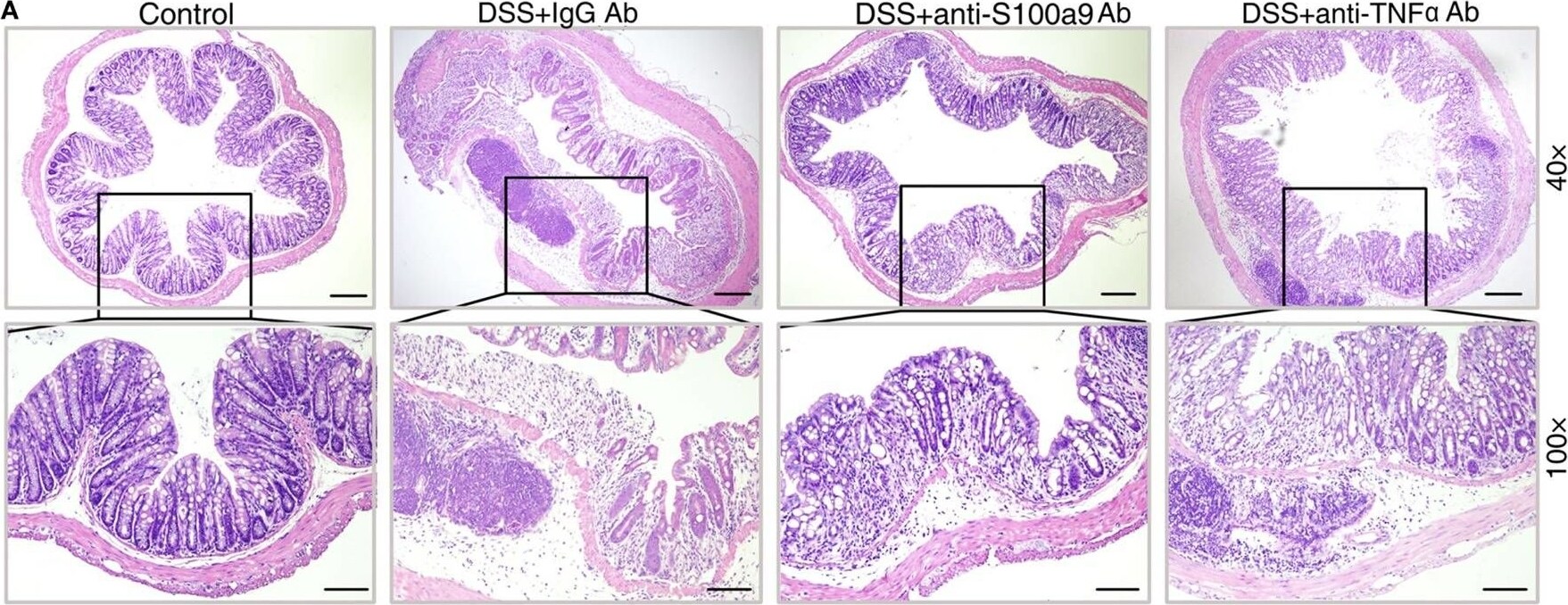
Immunohistochemistry: S100A9 Antibody [NB110-89726] -
Immunohistochemistry: S100A9 Antibody [NB110-89726] - Anti-S100a9 Ab ameliorates inflammatory response of dextran sulfate sodium (DSS)-induced colitis in mice. (A) 6 days after DSS treatment, representative H&E-stained colon sections were shown (upper panels: original magnification 40×, scale bar: 200 µm; lower panels: original magnification 100×, scale bar: 100 µm). (B) Colon inflammation, ulceration, & crypt damage were scored individually, & composite total score was scored. n = 5 per group. (C) Isolated lymphoid follicles (ILFs) area was measured at day 6. Representative TUNEL staining (D) & ethynyl-2′-deoxyuridine (EdU) staining (E) of normal mice & DSS-induced mice, which were treated with IgG Ab or anti-S100a9 Ab on day 6. The percent of positive cells was measured. At least six fields were counted per mouse. Scale bar, 100 µm. Image collected & cropped by CiteAb from the following publication (https://pubmed.ncbi.nlm.nih.gov/29326691), licensed under a CC-BY license. Not internally tested by Novus Biologicals.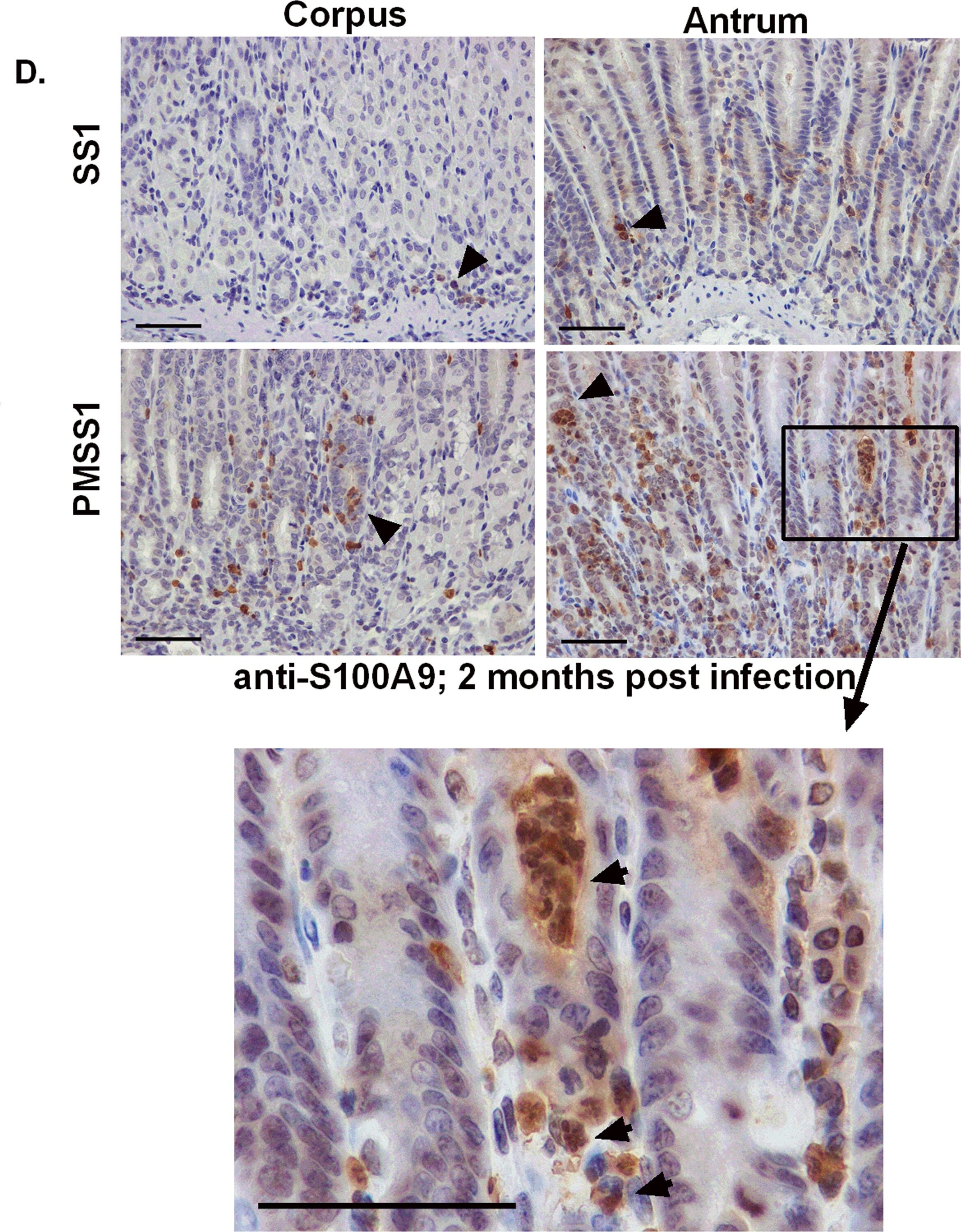
Immunohistochemistry: S100A9 Antibody [NB110-89726] -
Immunohistochemistry: S100A9 Antibody [NB110-89726] - Host CP (S100A8/A9) is elevated in H. pylori infected stomach tissue.A) s100a8/s100a9 transcript abundance in RNA extracted from C57BL/6 mice infected with H. pylori PMSS1 or SS1 for 1, 2, or 3 months relative to uninfected animals as determined by real-time RT-PCR analysis. Points indicate mean relative units of transcript abundance +/− SEM (levels of s100a8 in PMSS1-infected mice compared to uninfected mice; 1 mo p = 0.0511; 2 mo p = 0.0432; 3 mo p = 0.0127; levels of s100a8 in SS1-infected mice compared to uninfected mice at 2 mo p = 0.0623 Student's t test). (B) Inflammation scores of H. pylori infected mice at 1, 2, & 3 months post infection. (C) s100a8/s100a9 transcript abundance in RNA extracted from gastric biopsies derived from human patients, which were either H. pylori-positive or H. pylori-negative (s100a8 p = 0.15; s100a9 *p = 0.05). Bars indicate mean relative units of transcript abundance +/− SEM. Each experimental group represents≥5 individuals (mice or human samples). D) Gastric samples derived from H. pylori PMSS1-infected WT mice or SS1-infected WT mice at 2 months post-infection were analyzed via immunohistochemistry using a polyclonal antibody to S100A9 (scale bars are 50 microns). E) Real-time RT-PCR was performed on gastric tissue to quantify s100a8 & s100a9 transcript abundance from WT (C57BL/6 mice) & IL-17RA-/- mice infected with PMSS1. Data represent relative units of transcript abundance +/− SEM in WT mice & IL-17RA-/- mice, *p = 0.0169 & p = 0.0143, respectively. Image collected & cropped by CiteAb from the following publication (https://pubmed.ncbi.nlm.nih.gov/25330071), licensed under a CC0-1.0 license. Not internally tested by Novus Biologicals.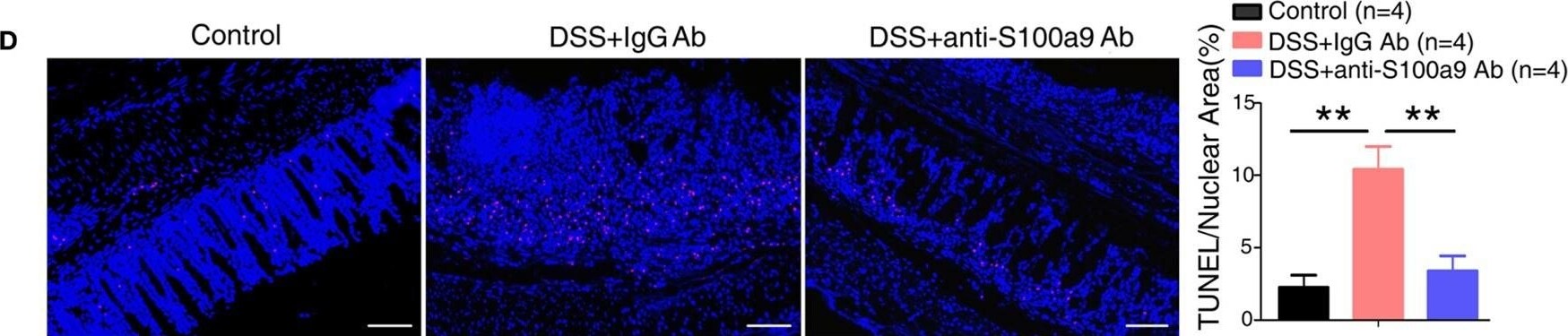
Immunohistochemistry: S100A9 Antibody [NB110-89726] -
Immunohistochemistry: S100A9 Antibody [NB110-89726] - Anti-S100a9 Ab ameliorates inflammatory response of dextran sulfate sodium (DSS)-induced colitis in mice. (A) 6 days after DSS treatment, representative H&E-stained colon sections were shown (upper panels: original magnification 40×, scale bar: 200 µm; lower panels: original magnification 100×, scale bar: 100 µm). (B) Colon inflammation, ulceration, & crypt damage were scored individually, & composite total score was scored. n = 5 per group. (C) Isolated lymphoid follicles (ILFs) area was measured at day 6. Representative TUNEL staining (D) & ethynyl-2′-deoxyuridine (EdU) staining (E) of normal mice & DSS-induced mice, which were treated with IgG Ab or anti-S100a9 Ab on day 6. The percent of positive cells was measured. At least six fields were counted per mouse. Scale bar, 100 µm. Image collected & cropped by CiteAb from the following publication (https://pubmed.ncbi.nlm.nih.gov/29326691), licensed under a CC-BY license. Not internally tested by Novus Biologicals.
Immunohistochemistry: S100A9 Antibody [NB110-89726] -
Immunohistochemistry: S100A9 Antibody [NB110-89726] - Anti-S100a9 Ab ameliorates inflammatory response of dextran sulfate sodium (DSS)-induced colitis in mice. (A) 6 days after DSS treatment, representative H&E-stained colon sections were shown (upper panels: original magnification 40×, scale bar: 200 µm; lower panels: original magnification 100×, scale bar: 100 µm). (B) Colon inflammation, ulceration, & crypt damage were scored individually, & composite total score was scored. n = 5 per group. (C) Isolated lymphoid follicles (ILFs) area was measured at day 6. Representative TUNEL staining (D) & ethynyl-2′-deoxyuridine (EdU) staining (E) of normal mice & DSS-induced mice, which were treated with IgG Ab or anti-S100a9 Ab on day 6. The percent of positive cells was measured. At least six fields were counted per mouse. Scale bar, 100 µm. Image collected & cropped by CiteAb from the following publication (https://pubmed.ncbi.nlm.nih.gov/29326691), licensed under a CC-BY license. Not internally tested by Novus Biologicals.Applications for S100A9 Antibody - BSA Free
Immunocytochemistry/ Immunofluorescence
Immunohistochemistry
Immunohistochemistry-Paraffin
Simple Western
Western Blot
In Simple Western only 10 - 15 uL of the recommended dilution is used per data point.
See Simple Western Antibody Database for Simple Western validation: Tested in Human PBMC's lysate 0.5 mg/mL, separated by Size, antibody dilution of 1:100. Separated by Size-Wes, Sally Sue/Peggy Sue.
The observed molecular weight of the protein may vary from the listed predicted molecular weight due to post translational modifications, post translation cleavages, relative charges, and other experimental factors.
Formulation, Preparation, and Storage
Purification
Formulation
Format
Preservative
Concentration
Shipping
Stability & Storage
Background: S100A9
Long Name
Alternate Names
Gene Symbol
UniProt
Additional S100A9 Products
Product Documents for S100A9 Antibody - BSA Free
Certificate of Analysis
To download a Certificate of Analysis, please enter a lot or batch number in the search box below.
Product Specific Notices for S100A9 Antibody - BSA Free
This product is for research use only and is not approved for use in humans or in clinical diagnosis. Primary Antibodies are guaranteed for 1 year from date of receipt.
Citations for S100A9 Antibody - BSA Free
 Powered by Bioz
Customer Reviews for S100A9 Antibody - BSA Free
There are currently no reviews for this product. Be the first to review S100A9 Antibody - BSA Free and earn rewards!
Have you used S100A9 Antibody - BSA Free?
Submit a review and receive an Amazon gift card!
$25/€18/£15/$25CAN/¥2500 for a review with an image
$10/€7/£6/$10CAN/¥1110 for a review without an image
Submit a review
Protocols
View specific protocols for S100A9 Antibody - BSA Free (NB110-89726):
Western Blot Protocol
1. Perform SDS-PAGE (4-12% MES) on samples to be analyzed, loading 40 ug of total protein per lane.
2. Transfer proteins to Nitrocellulose according to the instructions provided by the manufacturer of the transfer
apparatus.
3. Rinse membrane with dH2O and then stain the blot using Ponceau S for 1-2 minutes to access the transfer of proteins onto the nitrocellulose membrane. Rinse the blot in water to remove excess stain and mark the lane locations and locations of molecular weight markers using a pencil.
4. Rinse the blot in TBS for approximately 5 minutes.
5. Block the membrane using 5% BSA in TBS + Tween, 1 hour at RT.
6. Rinse the membrane in dH2O and then wash the membrane in wash buffer [TBS + 0.1% Tween] 3 times for 10 minutes each.
7. Dilute the rabbit anti-S100A9 primary antibody (NB 110-89726) in blocking buffer and incubate 1 hour at room temperature.
8. Rinse the membrane in dH2O and then wash the membrane in wash buffer [TBS + 0.1% Tween] 3 times for 10 minutes each.
9. Apply the diluted rabbit-IgG HRP-conjugated secondary antibody in blocking buffer (as per manufacturers
instructions) and incubate 1 hour at room temperature.
10. Wash the blot in wash buffer [TBS + 0.1% Tween] 3 times for 10 minutes each (this step can be repeated as required to reduce background).
11. Apply the detection reagent of choice in accordance with the manufacturers instructions (Pierce ECL).
Note: Tween-20 can be added to the blocking or antibody dilution buffer at a final concentration of 0.05-0.2%, provided it does not interfere with antibody-antigen binding.
Find general support by application which include: protocols, troubleshooting, illustrated assays, videos and webinars.
- Antigen Retrieval Protocol (PIER)
- Antigen Retrieval for Frozen Sections Protocol
- Appropriate Fixation of IHC/ICC Samples
- Cellular Response to Hypoxia Protocols
- Chromogenic IHC Staining of Formalin-Fixed Paraffin-Embedded (FFPE) Tissue Protocol
- Chromogenic Immunohistochemistry Staining of Frozen Tissue
- ClariTSA™ Fluorophore Kits
- Detection & Visualization of Antibody Binding
- Fluorescent IHC Staining of Frozen Tissue Protocol
- Graphic Protocol for Heat-induced Epitope Retrieval
- Graphic Protocol for the Preparation and Fluorescent IHC Staining of Frozen Tissue Sections
- Graphic Protocol for the Preparation and Fluorescent IHC Staining of Paraffin-embedded Tissue Sections
- Graphic Protocol for the Preparation of Gelatin-coated Slides for Histological Tissue Sections
- ICC Cell Smear Protocol for Suspension Cells
- ICC Immunocytochemistry Protocol Videos
- ICC for Adherent Cells
- IHC Sample Preparation (Frozen sections vs Paraffin)
- Immunocytochemistry (ICC) Protocol
- Immunocytochemistry Troubleshooting
- Immunofluorescence of Organoids Embedded in Cultrex Basement Membrane Extract
- Immunofluorescent IHC Staining of Formalin-Fixed Paraffin-Embedded (FFPE) Tissue Protocol
- Immunohistochemistry (IHC) and Immunocytochemistry (ICC) Protocols
- Immunohistochemistry Frozen Troubleshooting
- Immunohistochemistry Paraffin Troubleshooting
- Preparing Samples for IHC/ICC Experiments
- Preventing Non-Specific Staining (Non-Specific Binding)
- Primary Antibody Selection & Optimization
- Protocol for Heat-Induced Epitope Retrieval (HIER)
- Protocol for Making a 4% Formaldehyde Solution in PBS
- Protocol for VisUCyte™ HRP Polymer Detection Reagent
- Protocol for the Fluorescent ICC Staining of Cell Smears - Graphic
- Protocol for the Fluorescent ICC Staining of Cultured Cells on Coverslips - Graphic
- Protocol for the Preparation & Fixation of Cells on Coverslips
- Protocol for the Preparation and Chromogenic IHC Staining of Frozen Tissue Sections
- Protocol for the Preparation and Chromogenic IHC Staining of Frozen Tissue Sections - Graphic
- Protocol for the Preparation and Chromogenic IHC Staining of Paraffin-embedded Tissue Sections
- Protocol for the Preparation and Chromogenic IHC Staining of Paraffin-embedded Tissue Sections - Graphic
- Protocol for the Preparation and Fluorescent ICC Staining of Cells on Coverslips
- Protocol for the Preparation and Fluorescent ICC Staining of Non-adherent Cells
- Protocol for the Preparation and Fluorescent ICC Staining of Stem Cells on Coverslips
- Protocol for the Preparation and Fluorescent IHC Staining of Frozen Tissue Sections
- Protocol for the Preparation and Fluorescent IHC Staining of Paraffin-embedded Tissue Sections
- Protocol for the Preparation of Gelatin-coated Slides for Histological Tissue Sections
- Protocol for the Preparation of a Cell Smear for Non-adherent Cell ICC - Graphic
- R&D Systems Quality Control Western Blot Protocol
- TUNEL and Active Caspase-3 Detection by IHC/ICC Protocol
- The Importance of IHC/ICC Controls
- Troubleshooting Guide: Immunohistochemistry
- Troubleshooting Guide: Western Blot Figures
- Western Blot Conditions
- Western Blot Protocol
- Western Blot Protocol for Cell Lysates
- Western Blot Troubleshooting
- Western Blot Troubleshooting Guide
- View all Protocols, Troubleshooting, Illustrated assays and Webinars
FAQs for S100A9 Antibody - BSA Free
-
Q: Have any of your S100A9 antibodies been tested for use in neutralization, or blocking assays, on human samples?
A: Unfortunately at this time we have not tested, or received customer feedback on our S100A9 antibodies for use in blocking or neutralizing assays. If you were planning on testing any of our S100A9 antibodies for neutralizing or blocking capabilities, we would recommend our Innovator’s Reward Program. Under the terms of this program we would be happy to provide a credit for a free vial in exchange for new data on this previously untested or reported application. Please submit this data in the form of an online review. Additional Innovators Reward Program information can be found using this link.
-
Q: We would like to know detail information about immunocytochemistry and immunofluorescence. Could you provide protocol and other image for our reference?
A:
For our ICC testing of this product, our lab tested in A431 cells. This image is visible on our datasheet here: Datasheet. The lab followed the following protocol: Protocol, and used the antibody at a 1:100 dilution.
-
Q: We would like to stain paraffin embedded human intestinal tissue for Calprotectin. One question will be which cells express the majority of Calprotectin - invading neutrophils vs epithelium for example. The antibody list you provide is quite extensive. Which antibody would you recommend for our purpose? Which tissue would you recommend as positive control.
A:
Nine of our antibodies to Calprotectin have been validated for IHC-P with human tissue, and you can see all of these products. A number of our IHC images were generated using human spleen samples, and as such this may be a good choice of a positive control tissue. We do sell a human spleen slide product, which is suitable for IHC-P. Unfortunately I do not have an in-depth knowledge of Calprotectin, however the image shown for our antibody with catalogue number NBP1-02826 demonstrates clear staining of neutrophils. The following paper also suggests that the protein is abundant in neutrophils: PMID 11435495.
-
Q: Have any of your S100A9 antibodies been tested for use in neutralization, or blocking assays, on human samples?
A: Unfortunately at this time we have not tested, or received customer feedback on our S100A9 antibodies for use in blocking or neutralizing assays. If you were planning on testing any of our S100A9 antibodies for neutralizing or blocking capabilities, we would recommend our Innovator’s Reward Program. Under the terms of this program we would be happy to provide a credit for a free vial in exchange for new data on this previously untested or reported application. Please submit this data in the form of an online review. Additional Innovators Reward Program information can be found using this link.
-
Q: We would like to know detail information about immunocytochemistry and immunofluorescence. Could you provide protocol and other image for our reference?
A:
For our ICC testing of this product, our lab tested in A431 cells. This image is visible on our datasheet here: Datasheet. The lab followed the following protocol: Protocol, and used the antibody at a 1:100 dilution.
-
Q: We would like to stain paraffin embedded human intestinal tissue for Calprotectin. One question will be which cells express the majority of Calprotectin - invading neutrophils vs epithelium for example. The antibody list you provide is quite extensive. Which antibody would you recommend for our purpose? Which tissue would you recommend as positive control.
A:
Nine of our antibodies to Calprotectin have been validated for IHC-P with human tissue, and you can see all of these products. A number of our IHC images were generated using human spleen samples, and as such this may be a good choice of a positive control tissue. We do sell a human spleen slide product, which is suitable for IHC-P. Unfortunately I do not have an in-depth knowledge of Calprotectin, however the image shown for our antibody with catalogue number NBP1-02826 demonstrates clear staining of neutrophils. The following paper also suggests that the protein is abundant in neutrophils: PMID 11435495.
-
Q: Have any of your S100A9 antibodies been tested for use in neutralization, or blocking assays, on human samples?
A: Unfortunately at this time we have not tested, or received customer feedback on our S100A9 antibodies for use in blocking or neutralizing assays. If you were planning on testing any of our S100A9 antibodies for neutralizing or blocking capabilities, we would recommend our Innovator’s Reward Program. Under the terms of this program we would be happy to provide a credit for a free vial in exchange for new data on this previously untested or reported application. Please submit this data in the form of an online review. Additional Innovators Reward Program information can be found using this link.
-
Q: We would like to know detail information about immunocytochemistry and immunofluorescence. Could you provide protocol and other image for our reference?
A:
For our ICC testing of this product, our lab tested in A431 cells. This image is visible on our datasheet here: Datasheet. The lab followed the following protocol: Protocol, and used the antibody at a 1:100 dilution.
-
Q: We would like to stain paraffin embedded human intestinal tissue for Calprotectin. One question will be which cells express the majority of Calprotectin - invading neutrophils vs epithelium for example. The antibody list you provide is quite extensive. Which antibody would you recommend for our purpose? Which tissue would you recommend as positive control.
A:
Nine of our antibodies to Calprotectin have been validated for IHC-P with human tissue, and you can see all of these products. A number of our IHC images were generated using human spleen samples, and as such this may be a good choice of a positive control tissue. We do sell a human spleen slide product, which is suitable for IHC-P. Unfortunately I do not have an in-depth knowledge of Calprotectin, however the image shown for our antibody with catalogue number NBP1-02826 demonstrates clear staining of neutrophils. The following paper also suggests that the protein is abundant in neutrophils: PMID 11435495.