
SR-BI Antibody (1C1I8)
Novus Biologicals | Catalog # NBP3-15311
Recombinant Monoclonal Antibody

![Western Blot: SR-BI Antibody (1C1I8) [NBP3-15311]](https://resources.rndsystems.com/images/products/SR-BI-Antibody-1C1I8-Western-Blot-NBP3-15311-img0002.jpg "Western Blot: SR-BI Antibody (1C1I8) [NBP3-15311]")
Scientific images may be resized, cropped, or adjusted for brightness or contrast for presentation purposes. These updates are limited to presentation and do not affect the underlying scientific interpretation of the data. Where available, additional source data may be provided upon request.
Loading...
Key Product Details
Species Reactivity
Human, Mouse, Rat
Applications
Immunohistochemistry, Immunohistochemistry-Paraffin, Western Blot
Label
Unconjugated
Antibody Source
Recombinant Monoclonal Rabbit IgG Clone # 1C1I8 expressed in HEK293
Loading...
Product Specifications
Immunogen
A synthetic peptide corresponding to a sequence within amino acids 1-100 of human SR-BI (Q8WTV0). MGCSAKARWAAGALGVAGLLCAVLGAVMIVMVPSLIKQQVLKNVRIDPSSLSFNMWKEIPIPFYLSVYFFDVMNPSEILKGEKPQVRERGPYVYREFRHK
Clonality
Monoclonal
Host
Rabbit
Isotype
IgG
Scientific Data Images for SR-BI Antibody (1C1I8)
Western Blot: SR-BI Antibody (1C1I8) [NBP3-15311]
Western Blot: SR-BI Antibody (1C1I8) [NBP3-15311] - Western blot analysis of extracts of various cell lines, using SR-BI Rabbit mAb (NBP3-15311) at 1:1000 dilution. Secondary antibody: HRP Goat Anti-Rabbit IgG (H+L) at 1:10000 dilution. Lysates/proteins: 25ug per lane. Blocking buffer: 3% nonfat dry milk in TBST. Detection: ECL Basic Kit. Exposure time: 30s.![Immunohistochemistry-Paraffin: SR-BI Antibody (1C1I8) [NBP3-15311]](https://resources.rndsystems.com/images/products/SR-BI-Antibody-1C1I8-Immunohistochemistry-Paraffin-NBP3-15311-img0001.jpg "Immunohistochemistry-Paraffin: SR-BI Antibody (1C1I8) [NBP3-15311]")
Immunohistochemistry-Paraffin: SR-BI Antibody (1C1I8) [NBP3-15311]
Immunohistochemistry-Paraffin: SR-BI Antibody (1C1I8) [NBP3-15311] - Immunohistochemistry of paraffin-embedded rat ovary using SR-BI Rabbit mAb (NBP3-15311) at dilution of 1:100 (40x lens).Perform microwave antigen retrieval with 10 mM PBS buffer pH 7.2 before commencing with IHC staining protocol.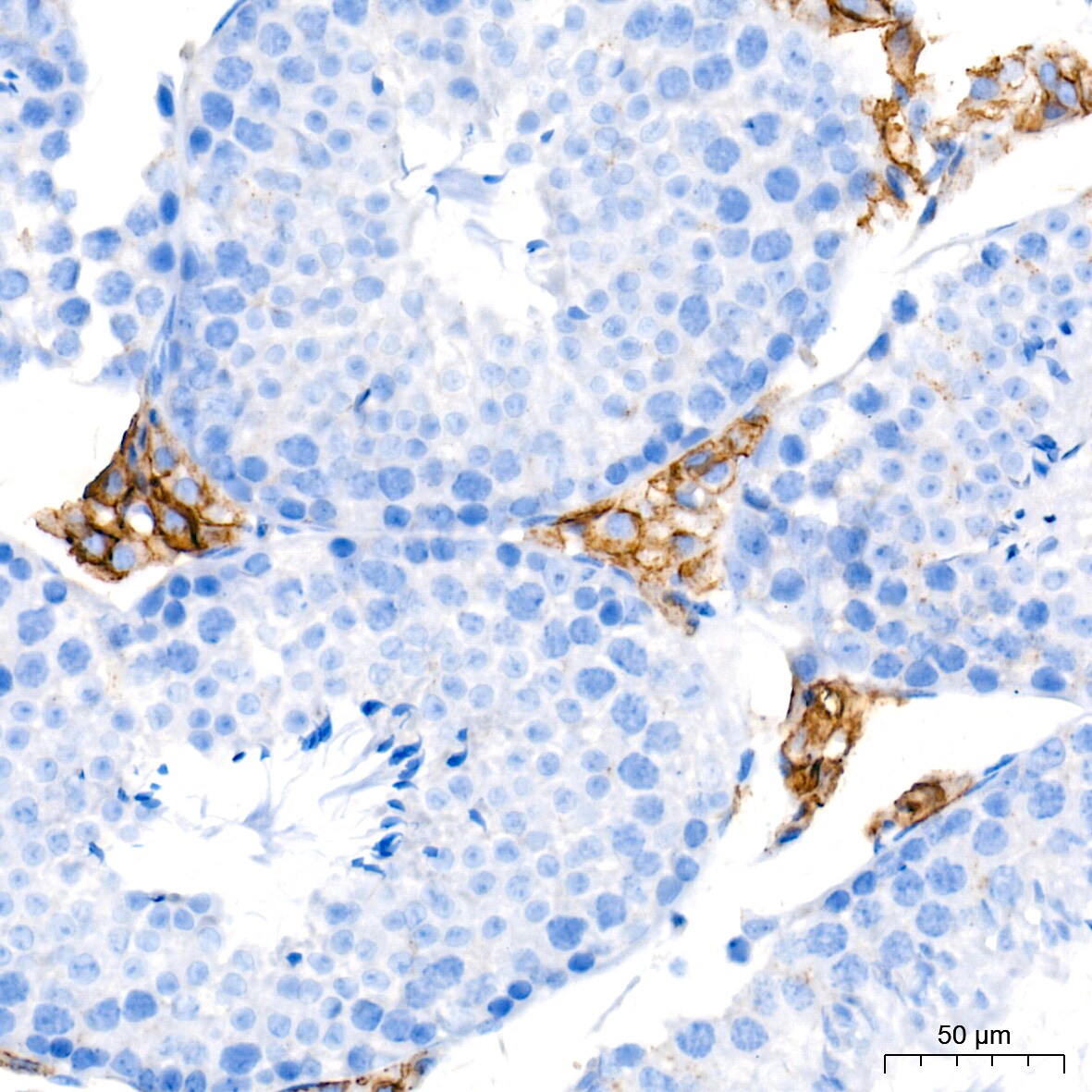
Immunohistochemistry: SR-BI Antibody (1C1I8) [SR-BI] -
Immunohistochemistry: SR-BI Antibody (1C1I8) [SR-BI] - Immunohistochemistry analysis of paraffin-embedded Mouse testis tissue using SR-BI Rabbit mAb at a dilution of 1:1000 (40x lens). High pressure antigen retrieval performed with 0.01M Tris-EDTA Buffer (pH 9.0) prior to IHC staining.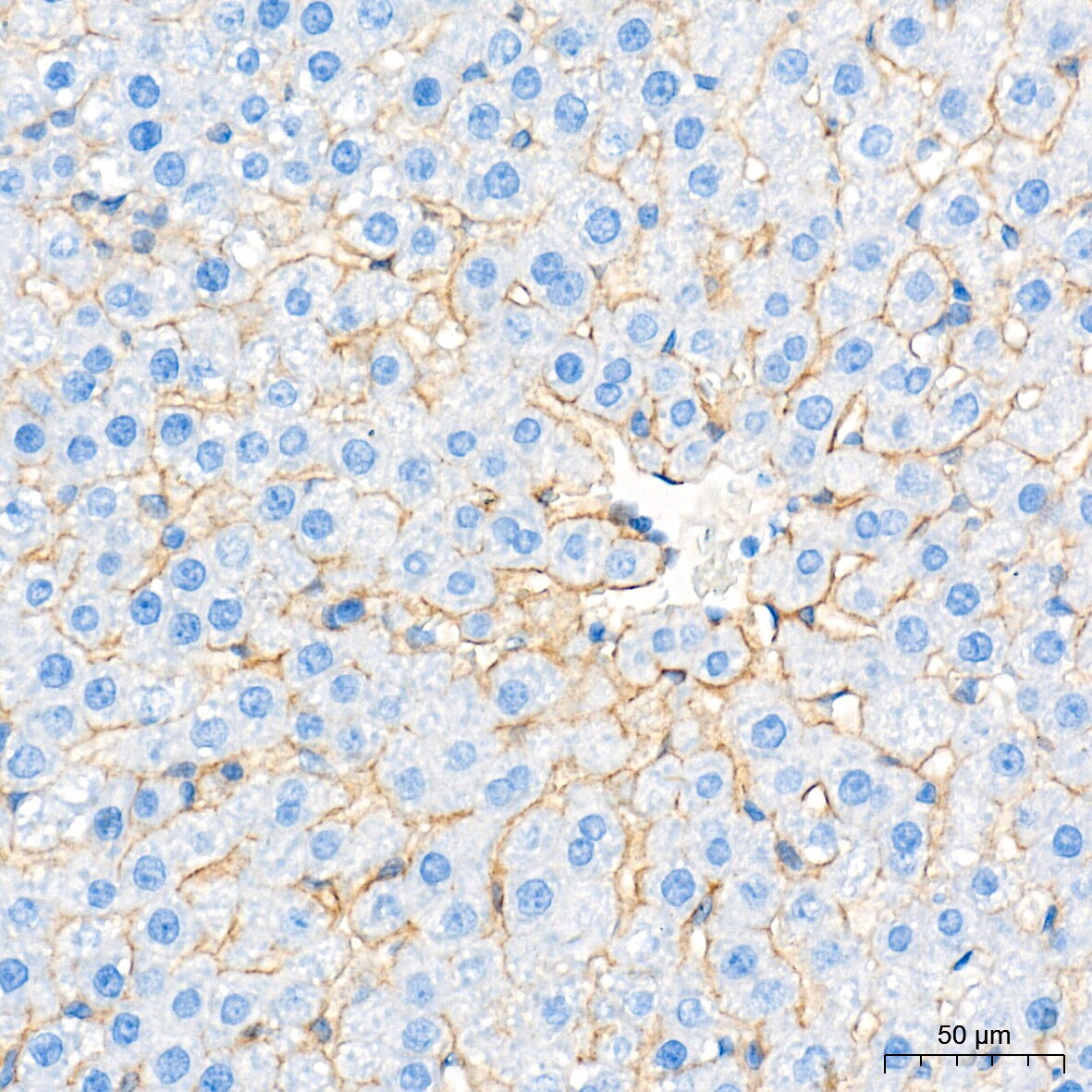
Immunohistochemistry: SR-BI Antibody (1C1I8) [SR-BI] -
Immunohistochemistry: SR-BI Antibody (1C1I8) [SR-BI] - Immunohistochemistry analysis of paraffin-embedded Rat liver tissue using SR-BI Rabbit mAb at a dilution of 1:1000 (40x lens). High pressure antigen retrieval performed with 0.01M Tris-EDTA Buffer (pH 9.0) prior to IHC staining.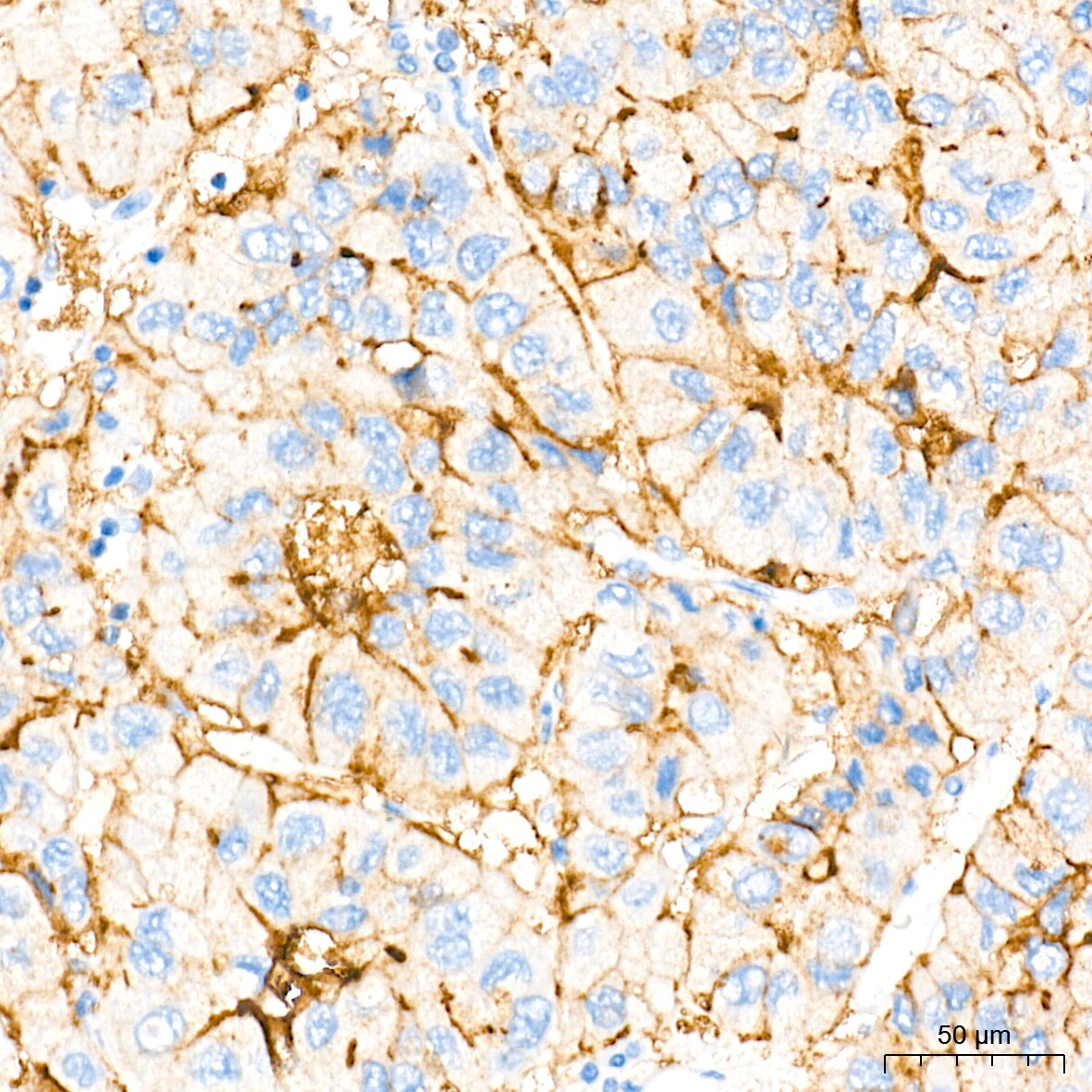
Immunohistochemistry: SR-BI Antibody (1C1I8) [SR-BI] -
Immunohistochemistry: SR-BI Antibody (1C1I8) [SR-BI] - Immunohistochemistry analysis of paraffin-embedded Human liver cancer tissue using SR-BI Rabbit mAb at a dilution of 1:1000 (40x lens). High pressure antigen retrieval performed with 0.01M Tris-EDTA Buffer (pH 9.0) prior to IHC staining.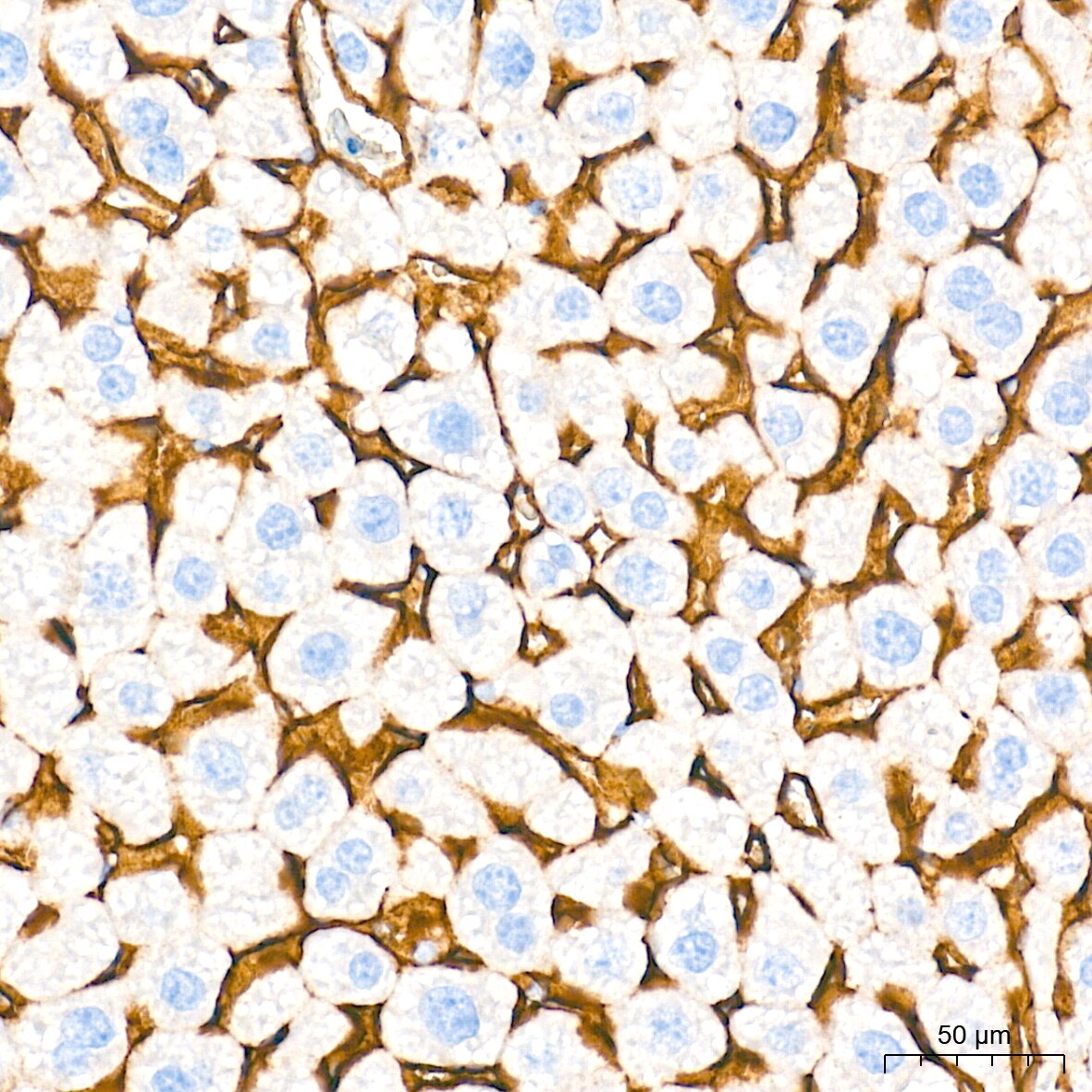
Immunohistochemistry: SR-BI Antibody (1C1I8) [SR-BI] -
Immunohistochemistry: SR-BI Antibody (1C1I8) [SR-BI] - Immunohistochemistry analysis of paraffin-embedded Mouse liver tissue using SR-BI Rabbit mAb at a dilution of 1:1000 (40x lens). High pressure antigen retrieval performed with 0.01M Tris-EDTA Buffer (pH 9.0) prior to IHC staining.Applications for SR-BI Antibody (1C1I8)
Application
Recommended Usage
Immunohistochemistry
1:50 - 1:200
Western Blot
1:500 - 1:1000
Formulation, Preparation, and Storage
Purification
Affinity purified
Formulation
PBS (pH 7.3), 50% glycerol, 0.05% BSA
Preservative
0.02% Sodium Azide
Concentration
Please see the vial label for concentration. If unlisted please contact technical services.
Shipping
The product is shipped with polar packs. Upon receipt, store it immediately at the temperature recommended below.
Stability & Storage
Store at -20C. Avoid freeze-thaw cycles.
Background: SR-BI
At least 5 different human splice variants have been identified with theoretical molecular weights ranging from 60.9 kDa for the canonical sequence to 45 kDa for an N-terminally truncated variant (SR-BII) (3). The extracellular domain of human SR-BI (CLA-1) shares 80%, 80%, 89%, 86% and 84% aa sequence identity with mouse, rat, porcine, rabbit, and bovine SR-BI, respectively. SR-BI is highly glycosylated and removal of N-linked glycosylation reduces lipid transport.
References
1. Linton MF, Tao H, Linton EF, Yancey PG. (2017) SR-BI: A Multifunctional Receptor in Cholesterol Homeostasis and Atherosclerosis. Trends Endocrinol Metab. 28(6):461-472. PMID: 28259375
2. Hoekstra M, Sorci-Thomas M. (2017) Rediscovering scavenger receptor type BI: surprising new roles for the HDL receptor. Curr Opin Lipidol. 28(3):255-260. PMID: 28301373
3. Shen WJ, Asthana S, Kraemer FB, Azhar S. (2018) Scavenger receptor B type 1: expression, molecular regulation, and cholesterol transport function.
Long Name
Scavenger Receptor Class B, Member I
Alternate Names
CD36L1, CLA1, HDLQTL6, SCARB1, SR-B1, SRBI
Gene Symbol
SCARB1
Additional SR-BI Products
Product Documents for SR-BI Antibody (1C1I8)
Certificate of Analysis
To download a Certificate of Analysis, please enter a lot or batch number in the search box below.
Product Specific Notices for SR-BI Antibody (1C1I8)
This product is for research use only and is not approved for use in humans or in clinical diagnosis. Primary Antibodies are guaranteed for 1 year from date of receipt.
Related Research Areas
Customer Reviews for SR-BI Antibody (1C1I8)
There are currently no reviews for this product. Be the first to review SR-BI Antibody (1C1I8) and earn rewards!
Have you used SR-BI Antibody (1C1I8)?
Submit a review and receive an Amazon gift card!
$25/€18/£15/$25CAN/¥2500 for a review with an image
$10/€7/£6/$10CAN/¥1110 for a review without an image
Submit a review
Protocols
Find general support by application which include: protocols, troubleshooting, illustrated assays, videos and webinars.
- Antigen Retrieval Protocol (PIER)
- Antigen Retrieval for Frozen Sections Protocol
- Appropriate Fixation of IHC/ICC Samples
- Cellular Response to Hypoxia Protocols
- Chromogenic IHC Staining of Formalin-Fixed Paraffin-Embedded (FFPE) Tissue Protocol
- Chromogenic Immunohistochemistry Staining of Frozen Tissue
- ClariTSA™ Fluorophore Kits
- Detection & Visualization of Antibody Binding
- Fluorescent IHC Staining of Frozen Tissue Protocol
- Graphic Protocol for Heat-induced Epitope Retrieval
- Graphic Protocol for the Preparation and Fluorescent IHC Staining of Frozen Tissue Sections
- Graphic Protocol for the Preparation and Fluorescent IHC Staining of Paraffin-embedded Tissue Sections
- Graphic Protocol for the Preparation of Gelatin-coated Slides for Histological Tissue Sections
- IHC Sample Preparation (Frozen sections vs Paraffin)
- Immunofluorescent IHC Staining of Formalin-Fixed Paraffin-Embedded (FFPE) Tissue Protocol
- Immunohistochemistry (IHC) and Immunocytochemistry (ICC) Protocols
- Immunohistochemistry Frozen Troubleshooting
- Immunohistochemistry Paraffin Troubleshooting
- Preparing Samples for IHC/ICC Experiments
- Preventing Non-Specific Staining (Non-Specific Binding)
- Primary Antibody Selection & Optimization
- Protocol for Heat-Induced Epitope Retrieval (HIER)
- Protocol for Making a 4% Formaldehyde Solution in PBS
- Protocol for VisUCyte™ HRP Polymer Detection Reagent
- Protocol for the Preparation & Fixation of Cells on Coverslips
- Protocol for the Preparation and Chromogenic IHC Staining of Frozen Tissue Sections
- Protocol for the Preparation and Chromogenic IHC Staining of Frozen Tissue Sections - Graphic
- Protocol for the Preparation and Chromogenic IHC Staining of Paraffin-embedded Tissue Sections
- Protocol for the Preparation and Chromogenic IHC Staining of Paraffin-embedded Tissue Sections - Graphic
- Protocol for the Preparation and Fluorescent IHC Staining of Frozen Tissue Sections
- Protocol for the Preparation and Fluorescent IHC Staining of Paraffin-embedded Tissue Sections
- Protocol for the Preparation of Gelatin-coated Slides for Histological Tissue Sections
- R&D Systems Quality Control Western Blot Protocol
- TUNEL and Active Caspase-3 Detection by IHC/ICC Protocol
- The Importance of IHC/ICC Controls
- Troubleshooting Guide: Immunohistochemistry
- Troubleshooting Guide: Western Blot Figures
- Western Blot Conditions
- Western Blot Protocol
- Western Blot Protocol for Cell Lysates
- Western Blot Troubleshooting
- Western Blot Troubleshooting Guide
- View all Protocols, Troubleshooting, Illustrated assays and Webinars
Loading...