
TERT Antibody (2C4) - BSA Free
Novus Biologicals | Catalog # NB100-317

![Western Blot: TERT Antibody (2C4) [NB100-317]](https://resources.rndsystems.com/images/products/TERT-Antibody-2C4-Western-Blot-NB100-317-img0019.jpg "Western Blot: TERT Antibody (2C4) [NB100-317]")
Scientific images may be resized, cropped, or adjusted for brightness or contrast for presentation purposes. These updates are limited to presentation and do not affect the underlying scientific interpretation of the data. Where available, additional source data may be provided upon request.
Key Product Details
Species Reactivity
Validated:
Cited:
Applications
Validated:
Cited:
Label
Antibody Source
Format
Product Specifications
Immunogen
Reactivity Notes
Localization
Marker
Clonality
Host
Isotype
Theoretical MW
Disclaimer note: The observed molecular weight of the protein may vary from the listed predicted molecular weight due to post translational modifications, post translation cleavages, relative charges, and other experimental factors.
Scientific Data Images for TERT Antibody (2C4) - BSA Free
Western Blot: TERT Antibody (2C4) [NB100-317]
TERT-Antibody-2C4-Western-Blot-NB100-317-img0019.jpg![Immunohistochemistry-Paraffin: TERT Antibody (2C4) [NB100-317]](https://resources.rndsystems.com/images/products/TERT-Antibody-2C4-Immunohistochemistry-Paraffin-NB100-317-img0017.jpg "Immunohistochemistry-Paraffin: TERT Antibody (2C4) [NB100-317]")
Immunohistochemistry-Paraffin: TERT Antibody (2C4) [NB100-317]
Immunohistochemistry-Paraffin: TERT Antibody (2C4) [NB100-317] - Human Pancreatic carcinoma showing strong staining of tumor cells.![Flow Cytometry: TERT Antibody (2C4) [NB100-317]](https://resources.rndsystems.com/images/products/TERT-Antibody-2C4-Flow-Cytometry-NB100-317-img0020.jpg "Flow Cytometry: TERT Antibody (2C4) [NB100-317]")
Flow Cytometry: TERT Antibody (2C4) [NB100-317]
Flow Cytometry: TERT Antibody (2C4) [NB100-317] - An intracellular stain was performed on A431 cells with TERT Antibody [2C4] NB100-317 (blue) and a matched isotype control (orange). Cells were fixed with 4% PFA and then permeabilized with 0.1% saponin. Cells were incubated in an antibody dilution of 1.0 ug/mL for 30 minutes at room temperature, followed by Mouse IgM (H+L) Cross-Adsorbed Secondary Antibody, AlexaFluor 488.![Western Blot: TERT Antibody (2C4) [NB100-317]](https://resources.rndsystems.com/images/products/TERT-Antibody-2C4-Western-Blot-NB100-317-img0015.jpg "Western Blot: TERT Antibody (2C4) [NB100-317]")
Western Blot: TERT Antibody (2C4) [NB100-317]
Western Blot: TERT Antibody (2C4) [NB100-317] - 1:500 dilution on MJ90 cells.![Immunohistochemistry-Paraffin: TERT Antibody (2C4) [NB100-317]](https://resources.rndsystems.com/images/products/TERT-Antibody-2C4-Immunohistochemistry-Paraffin-NB100-317-img0016.jpg "Immunohistochemistry-Paraffin: TERT Antibody (2C4) [NB100-317]")
Immunohistochemistry-Paraffin: TERT Antibody (2C4) [NB100-317]
Immunohistochemistry-Paraffin: TERT Antibody (2C4) [NB100-317] - Normal human pancreas showing moderate staining of exocrine cells and a subset of islets of Langerhans.![Flow Cytometry: TERT Antibody (2C4) [NB100-317]](https://resources.rndsystems.com/images/products/TERT-Antibody-2C4-Flow-Cytometry-NB100-317-img0018.jpg "Flow Cytometry: TERT Antibody (2C4) [NB100-317]")
Flow Cytometry: TERT Antibody (2C4) [NB100-317]
Flow Cytometry: TERT Antibody (2C4) [NB100-317] - An intracellular stain was performed on Jurkat cells with TERT Antibody (2C4) NB100-317 (blue) and a matched isotype control (orange). Cells were fixed with 4% PFA and then permeablized with 0.1% saponin. Cells were incubated in an antibody dilution of 1 ug/mL for 30 minutes at room temperature, followed by mouse IgM Alexa Fluor 488-conjugated secondary antibody.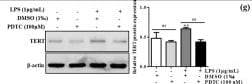
Western Blot: TERT Antibody (2C4) [NB100-317] -
Western Blot: TERT Antibody (2C4) [NB100-317] - The interaction of TERT with p65 in murine macrophages.(a) Expression of p65 in liver tissue was analyzed by IHC staining analysis. Representative views from each group were presented (original magnification, ×40). (b) The protein expression & phosphorylation of p65 at Ser 536 were observed in liver tissue & KCs isolated from the liver by WB. The results are shown as relative expression against control expression without treatment. Values represent means ± SD. (n = 4 in CD-fed group, n=6 in EtOH-fed group) *P < 0.05, **P < 0.01 vs liver tissues of CD-fed group. #P < 0.05, ##P < 0.01 vs KCs of CD-fed group. (c) p65 protein expression & phosphorylation were analyzed in total cell lysates of M0, M1 & M2 macrophages by WB. The results are shown as relative expression against control expression without treatment. Data shown are the mean ± SD from 3 independent experiments. *P < 0.05, **P < 0.01 vs control. (d) Representative colocalization of TERT with macrophage p65 immunoreactivity in liver tissue by using the double immunofluorescent (IF) analysis. (e) Effect of TERT on p65 expression & activation in LPS-stimulated RAW 264.7 cells. Expression of p65 & phosphorylated p65 were determined by WB. (f) Effect of PDTC on p65 expression in LPS-stimulated RAW 264.7 cells. Expression of p65 was determined by WB. (g) Expression of TERT upon treatment with PDTC was determined by WB in LPS-stimulated RAW 264.7 cells. (h) Effect of PDTC on the expression of M1 macrophage biomarkers in LPS-stimulated RAW 264.7 cells. The results are shown as relative expression against control expression without treatment. Data shown are the mean ± SD from 3 independent experiments. *P < 0.05, **P < 0.01 vs control. #P < 0.05, ##P < 0.01 vs LPS-treated group. Image collected & cropped by CiteAb from the following publication (https://pubmed.ncbi.nlm.nih.gov/26725521), licensed under a CC-BY license. Not internally tested by Novus Biologicals.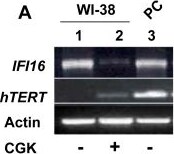
Western Blot: TERT Antibody (2C4) [NB100-317] -
Western Blot: TERT Antibody (2C4) [NB100-317] - Reduced expression levels of IFI16 protein in human normal diploid fibroblasts after treatment with histone deacetylase inhibitor are associated with increased expression of hTERT & increased telomerase activity.(A) Total RNA isolated from untreated (control, lane 1) or CGK1026 (10 µM for 24 h, lane 2) treated young WI-38 fibroblasts was subjected cDNA synthesis followed by semi-quantitative PCR using a pair of primer specific to the IFI16, hTERT, or actin. As a positive control, we used RNA from human HT1080, a human fibrosarcoma cell line. (B) Total RNA isolated from untreated (control) or CGK1026 (10 µM for 24 h; treated) treated young WI-38 fibroblasts was subjected cDNA synthesis, followed by quantitative real-time PCR using the TaqMan assay for the hTERT gene. Results are mean values of triplicate experiments & error bars represent standard deviation (**p<0.005). (C & D) Total protein extracts prepared from untreated (lane 1) or CGK1026 (10 µM for 24 h; treated) treated young WI-38 fibroblasts were subjected to immunoblotting using antibodies specific to the indicated proteins. Image collected & cropped by CiteAb from the following publication (https://dx.plos.org/10.1371/journal.pone.0008569), licensed under a CC0-1.0 license. Not internally tested by Novus Biologicals.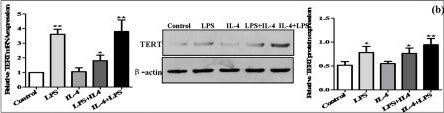
Western Blot: TERT Antibody (2C4) [NB100-317] -
Western Blot: TERT Antibody (2C4) [NB100-317] - Plastic expression of TERT in murine macrophages.RAW264.7 cells were treated with LPS (1 μg/mL) for 24 h to polarize M1 macrophage phenotype, while treatment with IL-4 (15 ng/mL) for 24 h induced M2 macrophage phenotype. One population into another was transformed by culturing M1 macrophages with IL-4 & M2 macrophages with LPS, respectively. (a) The mRNA levels of M1 macrophage markers (TNF-alpha, IL-1 beta, CCL2 & NOS2) & M2 macrophage markers (Arg-1, IL-10, Mrc2 & CD163) were analyzed by real-time PCR. (b) The plastic expression of TERT in murine macrophage polarization was determined by real-time PCR & western blot. The results are shown as relative expression against control expression without treatment. Data shown are the mean ± SD from 3 independent experiments. *P < 0.05, **P < 0.01 vs control. (c) The expression of TERT in RAW264.7 macrophages polarization was analyzed by immunofluorescence (IF) assay. Representative views from each group were presented (original magnification, ×20). (d) RAW264.7 cells were treated with IFN-gamma (10 ng/mL) for 24 h alone or in combination with LPS. The production of TERT was determined by real-time PCR & western blot. The results are shown as relative expression against control expression without treatment. Data shown are the mean ± SD from 3 independent experiments. *P < 0.05, **P < 0.01 vs control. Image collected & cropped by CiteAb from the following publication (https://pubmed.ncbi.nlm.nih.gov/26725521), licensed under a CC-BY license. Not internally tested by Novus Biologicals.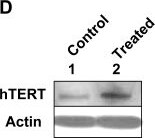
Western Blot: TERT Antibody (2C4) [NB100-317] -
Western Blot: TERT Antibody (2C4) [NB100-317] - Reduced expression levels of IFI16 protein in human normal diploid fibroblasts after treatment with histone deacetylase inhibitor are associated with increased expression of hTERT & increased telomerase activity.(A) Total RNA isolated from untreated (control, lane 1) or CGK1026 (10 µM for 24 h, lane 2) treated young WI-38 fibroblasts was subjected cDNA synthesis followed by semi-quantitative PCR using a pair of primer specific to the IFI16, hTERT, or actin. As a positive control, we used RNA from human HT1080, a human fibrosarcoma cell line. (B) Total RNA isolated from untreated (control) or CGK1026 (10 µM for 24 h; treated) treated young WI-38 fibroblasts was subjected cDNA synthesis, followed by quantitative real-time PCR using the TaqMan assay for the hTERT gene. Results are mean values of triplicate experiments & error bars represent standard deviation (**p<0.005). (C & D) Total protein extracts prepared from untreated (lane 1) or CGK1026 (10 µM for 24 h; treated) treated young WI-38 fibroblasts were subjected to immunoblotting using antibodies specific to the indicated proteins. Image collected & cropped by CiteAb from the following publication (https://dx.plos.org/10.1371/journal.pone.0008569), licensed under a CC0-1.0 license. Not internally tested by Novus Biologicals.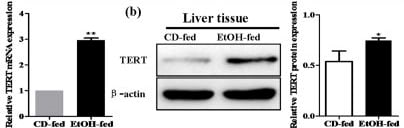
Western Blot: TERT Antibody (2C4) [NB100-317] -
Western Blot: TERT Antibody (2C4) [NB100-317] - Effect of alcohol on TERT expression in liver tissues & KCs during ALD development.(a) TERT expression in liver tissues was performed by IHC analysis. Representative views from each group were presented (original magnification, ×40). (b) Total TERT mRNA & protein levels in liver tissue were analyzed by real-time PCR & western blot. The results are shown as relative expression against control expression without treatment. (c) Representative colocalization of TERT with macrophage CD68 immunoreactivity in liver tissue by using the double immunofluorescent (IF) analysis. (d) Total TERT mRNA & protein levels in KCs isolated from the liver were analyzed by real-time PCR & western blot. The results are shown as relative expression against control expression without treatment. (e) Quantification of telomerase activity (TA) in CD-fed mice & EtOH-fed mice. RNase treatment or heat inactivation of KCs isolated from the liver of EtOH-fed mice served as negative controls for the TA assay. All quantitative data are presented as mean ± SD percentage increase compared with CD-fed group (n = 4 in CD-fed group, n = 6 in EtOH-fed group) *P < 0.05, **P < 0.01 vs CD-fed group. Image collected & cropped by CiteAb from the following publication (https://pubmed.ncbi.nlm.nih.gov/26725521), licensed under a CC-BY license. Not internally tested by Novus Biologicals.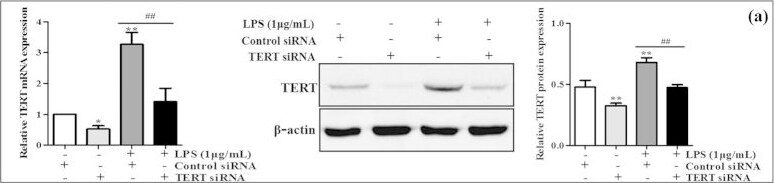
Western Blot: TERT Antibody (2C4) [NB100-317] -
Western Blot: TERT Antibody (2C4) [NB100-317] - Effect of TERT silencing on murine M1 macrophage polarization.TERT siRNA & GV144-TERT were transiently transfected into LPS-treated RAW264.7 cells, respectively. (a) The endogeous TERT levels were detected by real-time PCR & western blot. The results are shown as relative expression against control expression without treatment. (b) The mRNA levels of M1 macrophages biomarkers including TNF-alpha, IL-1 beta, NOS2 & CCL2 were detected by real-time PCR. The results are shown as relative expression against control expression without treatment. (c) The secretion of proinflammatory cytokines including TNF-alpha, IL-1 beta, IL-6 & IL-12 were determined by ELISA. (d) TERT successful over-expression was verified by real-time PCR & western blot in LPS-stimulated RAW 264.7 cells. The results are shown as relative expression against control expression without treatment. (e) The mRNA levels of M1 macrophages biomarkers were detected by real-time PCR. The results are shown as relative expression against control expression without treatment. (f) The secretion of proinflammatory cytokines were determined by ELISA. Data shown are the mean ± SD from 3 independent experiments. *P < 0.05, **P < 0.01 vs control group. #P < 0.05, ##P < 0.01 vs LPS-treated group. Image collected & cropped by CiteAb from the following publication (https://pubmed.ncbi.nlm.nih.gov/26725521), licensed under a CC-BY license. Not internally tested by Novus Biologicals.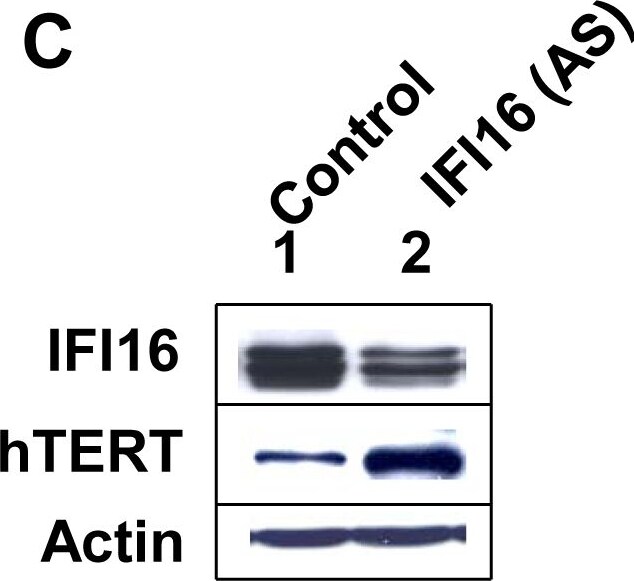
Western Blot: TERT Antibody (2C4) [NB100-317] -
Western Blot: TERT Antibody (2C4) [NB100-317] - IFI16 inhibits c-Myc-stimulated transcription & hTERT expression in HeLa cells.(A) Total protein extracts prepared from HeLa cells infected with control retrovirus (lane 1) or a virus encoding IFI16 protein (lane 2) were subjected to immunoblotting using antibodies specific to the indicated proteins. (B) Sub-confluent cultures of HeLa cells were transfected with pMyc-TA-luc reporter plasmid (1.0 µg) along with a second pRL-TK reporter plasmid (0.2 µg) & an empty plasmid (pCMV; column 1), a plasmid encoding c-Myc (column 2 & 4), a plasmid encoding IFI16 (column 3), or both plasmids encoding c-Myc & increasing amounts of the plasmid encoding IFI16 protein (column 5 & 6). After 44–48 h of transfections, cells were lysed & the lysates were analyzed for dual luciferase activity. Normalized relative luciferase activity in control cells is indicated as 1.0. (C) Total protein extracts prepared from HeLa cells infected with control retrovirus (lane 1) or a virus encoding antisense to IFI16 mRNA (lanes 2) were subjected to immunoblotting using antibodies specific to the indicated proteins. Image collected & cropped by CiteAb from the following publication (https://dx.plos.org/10.1371/journal.pone.0008569), licensed under a CC0-1.0 license. Not internally tested by Novus Biologicals.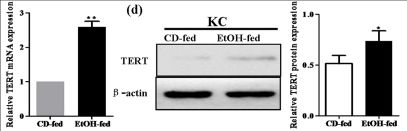
Western Blot: TERT Antibody (2C4) [NB100-317] -
Western Blot: TERT Antibody (2C4) [NB100-317] - Effect of alcohol on TERT expression in liver tissues & KCs during ALD development.(a) TERT expression in liver tissues was performed by IHC analysis. Representative views from each group were presented (original magnification, ×40). (b) Total TERT mRNA & protein levels in liver tissue were analyzed by real-time PCR & western blot. The results are shown as relative expression against control expression without treatment. (c) Representative colocalization of TERT with macrophage CD68 immunoreactivity in liver tissue by using the double immunofluorescent (IF) analysis. (d) Total TERT mRNA & protein levels in KCs isolated from the liver were analyzed by real-time PCR & western blot. The results are shown as relative expression against control expression without treatment. (e) Quantification of telomerase activity (TA) in CD-fed mice & EtOH-fed mice. RNase treatment or heat inactivation of KCs isolated from the liver of EtOH-fed mice served as negative controls for the TA assay. All quantitative data are presented as mean ± SD percentage increase compared with CD-fed group (n = 4 in CD-fed group, n = 6 in EtOH-fed group) *P < 0.05, **P < 0.01 vs CD-fed group. Image collected & cropped by CiteAb from the following publication (https://pubmed.ncbi.nlm.nih.gov/26725521), licensed under a CC-BY license. Not internally tested by Novus Biologicals.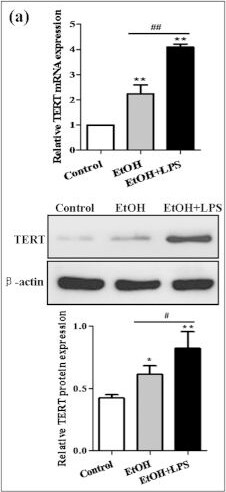
Western Blot: TERT Antibody (2C4) [NB100-317] -
Western Blot: TERT Antibody (2C4) [NB100-317] - Effect of alcohol on TERT expression in vitro.Acute alcohol treatment of RAW 264.7 cells can be achieved with 25 mM EtOH for 24 h. (a) TERT mRNA & protein expression in EtOH-stimulated RAW 264.7 cells were analyzed by real-time PCR & western blot. The results are shown as relative expression against control expression without treatment. The values represent means ± SD. *P < 0.05, **P < 0.01 vs control. #P<0.05, ##P<0.01 vs EtOH-treated group. (b) Effect of alcohol on M1 macrophage markers (TNF-alpha, IL-1 beta, CCL2 & NOS2) in RAW 264.7 cells without or with LPS stimulation. (c) Effect of alcohol on M2 macrophage markers (Arg-1, IL-10, Mrc2 & CD163) in RAW 264.7 cells without or with LPS stimulation. (d) Effect of alcohol on the production of cytokines including TNF-alpha, IL-1 beta, IL-6, IL-12 & IL-10 in RAW 264.7 cells without or with LPS stimulation. The results are shown as line chart. Image collected & cropped by CiteAb from the following publication (https://pubmed.ncbi.nlm.nih.gov/26725521), licensed under a CC-BY license. Not internally tested by Novus Biologicals.Applications for TERT Antibody (2C4) - BSA Free
Chromatin Immunoprecipitation
Flow Cytometry
Immunocytochemistry/ Immunofluorescence
Immunohistochemistry
Immunohistochemistry-Paraffin
Immunoprecipitation
Western Blot
Flow Cytometry Panel Builder
Bio-Techne Knows Flow Cytometry
Save time and reduce costly mistakes by quickly finding compatible reagents using the Panel Builder Tool.
Advanced Features
- Spectra Viewer - Custom analysis of spectra from multiple fluorochromes
- Spillover Popups - Visualize the spectra of individual fluorochromes
- Antigen Density Selector - Match fluorochrome brightness with antigen density

Formulation, Preparation, and Storage
Purification
Formulation
Format
Preservative
Concentration
Shipping
Stability & Storage
Background: TERT
Long Name
Alternate Names
Entrez Gene IDs
Gene Symbol
UniProt
Additional TERT Products
Product Documents for TERT Antibody (2C4) - BSA Free
Certificate of Analysis
To download a Certificate of Analysis, please enter a lot or batch number in the search box below.
Product Specific Notices for TERT Antibody (2C4) - BSA Free
This product is for research use only and is not approved for use in humans or in clinical diagnosis. Primary Antibodies are guaranteed for 1 year from date of receipt.
Related Research Areas
Citations for TERT Antibody (2C4) - BSA Free
 Powered by Bioz
Customer Reviews for TERT Antibody (2C4) - BSA Free
There are currently no reviews for this product. Be the first to review TERT Antibody (2C4) - BSA Free and earn rewards!
Have you used TERT Antibody (2C4) - BSA Free?
Submit a review and receive an Amazon gift card!
$25/€18/£15/$25CAN/¥2500 for a review with an image
$10/€7/£6/$10CAN/¥1110 for a review without an image
Submit a review
Protocols
View specific protocols for TERT Antibody (2C4) - BSA Free (NB100-317):
Culture cells to appropriate density in 35 mm culture dishes or 6-well plates.
1. Remove culture medium and wash the cells briefly in PBS. Add 10% formalin to the dish and fix at room temperature for 10 minutes.
2. Remove the formalin and wash the cells in PBS.
3. Permeablize the cells with 0.1% Triton X100 or other suitable detergent for 10 min.
4. Remove the permeablization buffer and wash three times for 10 minutes each in PBS. Be sure to not let the specimen dry out.
5. To block nonspecific antibody binding, incubate in 10% normal goat serum from 1 hour to overnight at room temperature.
6. Add primary antibody at appropriate dilution and incubate overnight at 4C.
7. Remove primary antibody and replace with PBS. Wash three times for 10 minutes each.
8. Add secondary antibody at appropriate dilution. Incubate for 1 hour at room temperature.
9. Remove secondary antibody and replace with PBS. Wash three times for 10 minutes each.
10. Counter stain DNA with DAPi if required.
Immunofluorescence
1. Cell growth and feeding for IF
A. Seed cells in 4-chamber slides at 20,000 per chamber.
B. Grow to medium confluence
C. Feed with MCDB170+IP at -48 and -24 hr.
2. Fixing cells for IF
A. Wash cells (~70-80% confluent) with 1XPBS
B. Fix slides each in 1:1 ice cold MEOH:acetone and place at -20C for 10 minutes.
C. Store no more than 48 hr in 100% ethanol.
3. IF for hTERT
A. Remove fixative/ethanol from slides.
B. Add 1 ml 2N HCl to each chamber.
C. Incubate for 20 minutes.
D. Remove the HCl and neutralize with 1 ml 0.1 M Na-borate.
E. Incubate for 5 minutes.
F. Remove Na-borate and add 1 ml blocking buffer.
G. Incubate for 2 hr at RT.
H. Prepare NB 100-297 at indicated dilution.
I. Incubate ON at 4C.
J. Wash 4X5 min. in RT PBS.
K. Add secondary (FITC conjugated rabbit anti-mouse IgM).
L. Incubate at RT for 2 hrs.
M. Wash 4X5 min. in 1X PBS.
N. Wash 5 min in 1X PBS with DAPI (1.5 ug/ml).
O. Rinse slides briefly on PBS.
P. Remove chambers from slides.
Q. Mount in Vectashield (Vector catalog # H1200) and observe.
Blocking buffer To 500 ml of 1X PBS:
A. 5 g fish gelatin (Sigma catalog #G7765)
B. 25 ml goat serum
C. 5 g BSA Filter through 0.2 u filter and store at 4C
Immunohistochemistry - FFPE sections
I. Deparaffinization:
A. Treat slides with Xylene: 3 changes for 5 minutes each. Drain slides for 10 seconds between changes.
B. Treat slides with 100% Reagent Alcohol: 3 changes for 5 minutes each. Drain slides for 10 seconds between changes.
II. Quench Endogenous Peroxidase:
To Prepare 200 ml of Quenching Solution: Add 3 ml of 30% Hydrogen Peroxide to 200 ml of Methanol.
**Use within 4 hours of preparation
A. Place slides in peroxidase quenching solution: 15-30 minutes.
B. Place slides in distilled water: 2 changes for 2 minutes each.
III. Retrieve Epitopes:
A. Preheat Citrate Buffer. Place 200 ml of Citrate Buffer Working Solution into container, cover and place into steamer. Heat to 90-96C.
B. Place rack of slides into hot Citrate Buffer for 20 minutes. Cover.
C. Carefully remove container with slides from steamer and cool on bench, uncovered, for 20 minutes.
D. Slowly add distilled water to further cool for 5 minutes.
E. Rinse slides with distilled water. 2 changes for 2 minutes each.
IV. Immunostaining Procedure:
A. Remove each slide from rack and circle tissue section with a hydrophobic barrier pen (e.g. Liquid Blocker-Super Pap Pen.
B. Flood slide with Wash Solution. Do not allow tissue sections to dry for the rest of the procedure.
C. Drain wash solution and apply 4 drops of Blocking Reagent to each slide and incubate for 15 minutes.
D. Drain Blocking Reagent (do not wash off the Blocking Reagent), apply 200 ul of primary antibody solution to each slide, and incubate for 1 hour.
E. Wash slides with Wash Solution: 3 changes for 5 minutes each.
F. Drain wash solution, apply 4 drops of Secondary antibody to each slide and incubate for 1 hour.
G. Wash slides with Wash Solution: 3 changes for 5 minutes each.
H. Drain wash solution, apply 4 drops of DAB Substrate to each slide and develop for 5-10 minutes. Check development with microscope.
I. Wash slides with Wash Solution: 3 changes for 5 minutes each
J. Drain wash solution, apply 4 drops of Hematoxylin to each slide and stain for 1-3 minutes. Increase time if darker counterstaining is desired.
K. Wash slides with Wash Solution: 2-3 changes for 2 minutes each.
L. Drain wash solution and apply 4 drops of Bluing Solution to each slide for 1-2 minutes.
M. Rinse slides in distilled water.
N. Soak slides in 70% reagent alcohol: 3 minutes with intermittent agitation.
O. Soak slides in 95% reagent alcohol: 2 changes for 3 minutes each with intermittent agitation.
P. Soak slides in 100% reagent alcohol: 3 changes for 3 minutes each with intermittent agitation. Drain slides for 10 seconds between each change.
Q. Soak slides in Xylene: 3 changes for 3 minutes each with intermittent agitation. Drain slides for 10 seconds between each change.
R. Apply 2-3 drops of non-aqueous mounting media to each slide and mount coverslip.
S. Lay slides on a flat surface to dry prior to viewing under microscope.
NOTES:
- Use treated slides (e.g. HistoBond) to assure adherence of FFPE sections to slide.
- Prior to deparaffinization, heat slides overnight in a 60 degrees celcius oven.
- All steps in which Xylene is used should be performed in a fume hood.
- For Epitope Retrieval, a microwave or pressure cooker may be substituted for the steamer method. Adjust times as necessary depending on conditions.
- For the initial IHC run with a new primary antibody, test tissues with and without Epitope Retrieval. In some instances, Epitope Retrieval may not be necessary.
- 200 ul is the recommended maximum volume to apply to a slide for full coverage. Using more than 200 ul may allow solutions to wick off the slide and create drying artifacts. for small tissue sections less than 200 ul may be used.
- 5 minutes of development with DAB Substrate should be sufficient. Do not develop for more than 10 minutes. If 5 minutes of development causes background staining, further dilution of the primary antibody may be necessary.
- Hematoxylin should produce a light nuclear counterstain so as not to obscure the DAB staining. Counterstain for 1-1.5 minutes for nuclear antigens. Counterstain for 2-3 minutes for cytoplasmic and membranous antigens. If darker counterstaining is desired increase time (up to 10 minutes).
Immobilization of Anti-hTERT anibody
All reagents were from the Seize Primary Mammalian IP Kit.
50 ml of mouse ascites (3.3 mg/ml) was diluted with 350 ml of coupling buffer and coupled to 400 ml of AminoLink Plus slurry per the manufactures instructions. Greater than 80% of the protein in the antibody solution were coupled to the beads.
Immunoprecipitation
1. hTERT was synthesized in rabbit reticulocytes using a pET vector and [35S]-methionine was used to allow visualization of the protein.
2. Beads were washed 2X with wash buffer (WB1): 20 mM Tris-acetate, pH 7.5, 10% glycerol, 1 mM EDTA, 5 mM MgCl2, 100 mM potassium glutamate, 0.1% IGEPAL, and 1 mM DTT, then blocked twice with 250 mL of blocking buffer (20 mM Tris-acetate, pH 7.5, 10% glycerol, 1 mM EDTA, 5 mM MgCl2, 100 mM potassium glutamate, 0.1% IGEPAL, 1 mM DTT, 0.5 mg/mL lysozyme, 0.5 mg/mL BSA, 0.05 mg/mL glycogen, and 0.1 mg/mL yeast RNA) for 15 min at 4C.
3. In between each washing and blocking step the beads were precipitated by centrifugation at 1500g and the supernatant was removed.
4. 50 mL of blocking buffer was then mixed with the 50 mL RNA/protein sample and centrifuged at 17 000g for 10 min at 4C to remove any precipitates.
5. This supernatant was then added to the blocked beads and the samples were mixed on a rotary platform for 2 h at 4C.
6. Following mixing, the beads were washed three times with 325 mL of Wash Buffer #2 (20 mM Tris-acetate, pH 7.5, 10% glycerol, 1 mM EDTA, 5 mM MgCl2, 300 mM potassium glutamate, 0.1% IGEPAL, and 1 mM DTT) and twice with 325 mL of TMG (10 mM Tris-acetate, pH 7.5, 1 mM MgCl2, and 10% glycerol).
7. The beads were precipitated by centrifugation at 1500g in between each wash and the supernatant was removed.
8. The beads were then resuspended in 1X SDS gel loading buffer containing 10 mM DTT and analyzed by SDS PAGE.
9. The immunoprecipitation was also performed on 1x10(7) A549 cells.
10. The beads were assayed by TRAP assay.
Results: IP of [35S]-labled hTERT resulted in 10% yield. This is the same efficiency we observed for anti-HA beads used to IP HA tagged hTERT. IP of telomerase from cells allowed isolation of beads that contained telomerase activity.
Conclusion: We successfully immobilized anti-hTERT antibodies on AminoLink beads using the Seize kit from Pierce. These can be used to immunopurify telomerase. The efficiency should be optimized, but the preliminary results are promising.
Protocol courtesy of Pamela K. Dominick and Michael B. Jarstfer from University of North Carolina, Chapel Hill.
1. Perform SDS-PAGE on samples to be analyzed, loading 10-25 ug of total protein per lane.
2. Transfer proteins to PVDF membrane according to the instructions provided by the manufacturer of the membrane and transfer apparatus.
3. Stain the membrane with Ponceau S (or similar product) to assess transfer success, and mark molecular weight standards where appropriate.
4. Rinse the blot TBS -0.05% Tween 20 (TBST).
5. Block the membrane in 5% Non-fat milk in TBST (blocking buffer) for at least 1 hour.
6. Wash the membrane in TBST three times for 10 minutes each.
7. Dilute primary antibody in blocking buffer and incubate overnight at 4C with gentle rocking.
8. Wash the membrane in TBST three times for 10 minutes each.
9. Incubate the membrane in diluted HRP conjugated secondary antibody in blocking buffer (as per manufacturer's instructions) for 1 hour at room temperature.
10. Wash the blot in TBST three times for 10 minutes each (this step can be repeated as required to reduce background).
11. Apply the detection reagent of choice in accordance with the manufacturer's instructions.
**NOTE: This primary antibody is made in mouse and the isotype of the antibody is IgM.
Find general support by application which include: protocols, troubleshooting, illustrated assays, videos and webinars.
- 7-Amino Actinomycin D (7-AAD) Cell Viability Flow Cytometry Protocol
- Antigen Retrieval Protocol (PIER)
- Antigen Retrieval for Frozen Sections Protocol
- Appropriate Fixation of IHC/ICC Samples
- Cellular Response to Hypoxia Protocols
- ChIP Protocol Video
- Chromatin Immunoprecipitation (ChIP) Protocol
- Chromatin Immunoprecipitation Protocol
- Chromogenic IHC Staining of Formalin-Fixed Paraffin-Embedded (FFPE) Tissue Protocol
- Chromogenic Immunohistochemistry Staining of Frozen Tissue
- ClariTSA™ Fluorophore Kits
- Detection & Visualization of Antibody Binding
- Extracellular Membrane Flow Cytometry Protocol
- Flow Cytometry Protocol for Cell Surface Markers
- Flow Cytometry Protocol for Staining Membrane Associated Proteins
- Flow Cytometry Staining Protocols
- Flow Cytometry Troubleshooting Guide
- Fluorescent IHC Staining of Frozen Tissue Protocol
- Graphic Protocol for Heat-induced Epitope Retrieval
- Graphic Protocol for the Preparation and Fluorescent IHC Staining of Frozen Tissue Sections
- Graphic Protocol for the Preparation and Fluorescent IHC Staining of Paraffin-embedded Tissue Sections
- Graphic Protocol for the Preparation of Gelatin-coated Slides for Histological Tissue Sections
- ICC Cell Smear Protocol for Suspension Cells
- ICC Immunocytochemistry Protocol Videos
- ICC for Adherent Cells
- IHC Sample Preparation (Frozen sections vs Paraffin)
- Immunocytochemistry (ICC) Protocol
- Immunocytochemistry Troubleshooting
- Immunofluorescence of Organoids Embedded in Cultrex Basement Membrane Extract
- Immunofluorescent IHC Staining of Formalin-Fixed Paraffin-Embedded (FFPE) Tissue Protocol
- Immunohistochemistry (IHC) and Immunocytochemistry (ICC) Protocols
- Immunohistochemistry Frozen Troubleshooting
- Immunohistochemistry Paraffin Troubleshooting
- Immunoprecipitation Protocol
- Intracellular Flow Cytometry Protocol Using Alcohol (Methanol)
- Intracellular Flow Cytometry Protocol Using Detergents
- Intracellular Nuclear Staining Flow Cytometry Protocol Using Detergents
- Intracellular Staining Flow Cytometry Protocol Using Alcohol Permeabilization
- Intracellular Staining Flow Cytometry Protocol Using Detergents to Permeabilize Cells
- Preparing Samples for IHC/ICC Experiments
- Preventing Non-Specific Staining (Non-Specific Binding)
- Primary Antibody Selection & Optimization
- Propidium Iodide Cell Viability Flow Cytometry Protocol
- Protocol for Heat-Induced Epitope Retrieval (HIER)
- Protocol for Liperfluo
- Protocol for Making a 4% Formaldehyde Solution in PBS
- Protocol for VisUCyte™ HRP Polymer Detection Reagent
- Protocol for the Characterization of Human Th22 Cells
- Protocol for the Characterization of Human Th9 Cells
- Protocol for the Fluorescent ICC Staining of Cell Smears - Graphic
- Protocol for the Fluorescent ICC Staining of Cultured Cells on Coverslips - Graphic
- Protocol for the Preparation & Fixation of Cells on Coverslips
- Protocol for the Preparation and Chromogenic IHC Staining of Frozen Tissue Sections
- Protocol for the Preparation and Chromogenic IHC Staining of Frozen Tissue Sections - Graphic
- Protocol for the Preparation and Chromogenic IHC Staining of Paraffin-embedded Tissue Sections
- Protocol for the Preparation and Chromogenic IHC Staining of Paraffin-embedded Tissue Sections - Graphic
- Protocol for the Preparation and Fluorescent ICC Staining of Cells on Coverslips
- Protocol for the Preparation and Fluorescent ICC Staining of Non-adherent Cells
- Protocol for the Preparation and Fluorescent ICC Staining of Stem Cells on Coverslips
- Protocol for the Preparation and Fluorescent IHC Staining of Frozen Tissue Sections
- Protocol for the Preparation and Fluorescent IHC Staining of Paraffin-embedded Tissue Sections
- Protocol for the Preparation of Gelatin-coated Slides for Histological Tissue Sections
- Protocol for the Preparation of a Cell Smear for Non-adherent Cell ICC - Graphic
- Protocol: Annexin V and PI Staining by Flow Cytometry
- Protocol: Annexin V and PI Staining for Apoptosis by Flow Cytometry
- R&D Systems Quality Control Western Blot Protocol
- TUNEL and Active Caspase-3 Detection by IHC/ICC Protocol
- The Importance of IHC/ICC Controls
- Troubleshooting Guide: Fluorokine Flow Cytometry Kits
- Troubleshooting Guide: Immunohistochemistry
- Troubleshooting Guide: Western Blot Figures
- Western Blot Conditions
- Western Blot Protocol
- Western Blot Protocol for Cell Lysates
- Western Blot Troubleshooting
- Western Blot Troubleshooting Guide
- View all Protocols, Troubleshooting, Illustrated assays and Webinars
FAQs for TERT Antibody (2C4) - BSA Free
-
Q: What part of hTERT is recognised by NB100-317?
A: The immunogen used to generate our telomerase reverse transcriptase antibody with catalogue number NB100-317 is full-length recombinant human telomerase reverse transcriptase from insect cells [UniProt# O14746]. We do not epitope map our antibodies and so I am unfortunately unable to give you any further information regarding the binding of this antibody to its target.
Associated Pathways
