
ZC3H15 Antibody - BSA Free
Novus Biologicals | Catalog # NBP1-81312

![Immunocytochemistry/ Immunofluorescence: ZC3H15 Antibody [NBP1-81312]](https://resources.rndsystems.com/images/products/ZC3H15-Antibody-Immunocytochemistry-Immunofluorescence-NBP1-81312-img0006.jpg "Immunocytochemistry/ Immunofluorescence: ZC3H15 Antibody [NBP1-81312]")
Loading...
Key Product Details
Validated by
Knockout/Knockdown, Independent Antibodies
Species Reactivity
Validated:
Human
Cited:
Human
Predicted:
Mouse (97%), Rat (97%). Backed by our 100% Guarantee.
Applications
Validated:
Immunohistochemistry, Immunohistochemistry-Paraffin, Western Blot, Immunocytochemistry/ Immunofluorescence, Knockdown Validated
Cited:
Western Blot, IF/IHC
Label
Unconjugated
Antibody Source
Polyclonal Rabbit IgG
Format
BSA Free
Loading...
Product Specifications
Immunogen
This antibody was developed against Recombinant Protein corresponding to amino acids: IVCKHFLEAIENNKYGWFWVCPGGGDICMYRHALPPGFVLKKDKKKEEKEDEISLEDLIERERSALGPNVTKITL
Clonality
Polyclonal
Host
Rabbit
Isotype
IgG
Scientific Data Images for ZC3H15 Antibody - BSA Free
Immunocytochemistry/ Immunofluorescence: ZC3H15 Antibody [NBP1-81312]
Immunocytochemistry/Immunofluorescence: ZC3H15 Antibody [NBP1-81312] - Immunofluorescent staining of human cell line U-2 OS shows localization to cytosol.![Western Blot: ZC3H15 Antibody [NBP1-81312]](https://resources.rndsystems.com/images/products/ZC3H15-Antibody-Western-Blot-NBP1-81312-img0009.jpg "Western Blot: ZC3H15 Antibody [NBP1-81312]")
![Immunohistochemistry-Paraffin: ZC3H15 Antibody [NBP1-81312]](https://resources.rndsystems.com/images/products/ZC3H15-Antibody-Immunohistochemistry-Paraffin-NBP1-81312-img0011.jpg "Immunohistochemistry-Paraffin: ZC3H15 Antibody [NBP1-81312]")
Immunohistochemistry-Paraffin: ZC3H15 Antibody [NBP1-81312]
Immunohistochemistry-Paraffin: ZC3H15 Antibody [NBP1-81312] - Staining of human breast, cerebral cortex, colon and testis using Anti-ZC3H15 antibody NBP1-81312 (A) shows similar protein distribution across tissues to independent antibody NBP1-81314 (B).![Immunohistochemistry-Paraffin: ZC3H15 Antibody [NBP1-81312]](https://resources.rndsystems.com/images/products/ZC3H15-Antibody-Immunohistochemistry-Paraffin-NBP1-81312-img0015.jpg "Immunohistochemistry-Paraffin: ZC3H15 Antibody [NBP1-81312]")
Immunohistochemistry-Paraffin: ZC3H15 Antibody [NBP1-81312]
Immunohistochemistry-Paraffin: ZC3H15 Antibody [NBP1-81312] - Staining of human colon.![Immunohistochemistry-Paraffin: ZC3H15 Antibody [NBP1-81312]](https://resources.rndsystems.com/images/products/ZC3H15-Antibody-Immunohistochemistry-Paraffin-NBP1-81312-img0012.jpg "Immunohistochemistry-Paraffin: ZC3H15 Antibody [NBP1-81312]")
Immunohistochemistry-Paraffin: ZC3H15 Antibody [NBP1-81312]
Immunohistochemistry-Paraffin: ZC3H15 Antibody [NBP1-81312] - Staining of human breast.![Immunohistochemistry-Paraffin: ZC3H15 Antibody [NBP1-81312]](https://resources.rndsystems.com/images/products/ZC3H15-Antibody-Immunohistochemistry-Paraffin-NBP1-81312-img0013.jpg "Immunohistochemistry-Paraffin: ZC3H15 Antibody [NBP1-81312]")
Immunohistochemistry-Paraffin: ZC3H15 Antibody [NBP1-81312]
Immunohistochemistry-Paraffin: ZC3H15 Antibody [NBP1-81312] - Staining of human testis.![Immunohistochemistry-Paraffin: ZC3H15 Antibody [NBP1-81312]](https://resources.rndsystems.com/images/products/ZC3H15-Antibody-Immunohistochemistry-Paraffin-NBP1-81312-img0014.jpg "Immunohistochemistry-Paraffin: ZC3H15 Antibody [NBP1-81312]")
Immunohistochemistry-Paraffin: ZC3H15 Antibody [NBP1-81312]
Immunohistochemistry-Paraffin: ZC3H15 Antibody [NBP1-81312] - Staining of human cerebral cortex.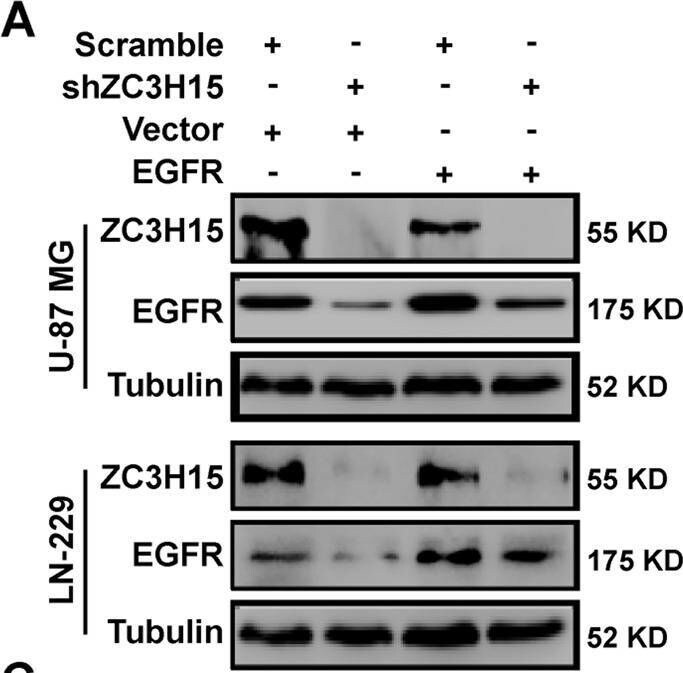
Western Blot: ZC3H15 Antibody - BSA Free [NBP1-81312] -
EGFR overexpression significantly restored cell proliferation, migration, and invasion of ZC3H15-knockdown GBM cells.A The protein level of ZC3H15 and EGFR were detected in the indicated GBM cells. B MTT assays were performed to examine the effect of EGFR overexpression on the cell proliferation of ZC3H15-knockdown GBM cells. C, D Transwell assays were used to detect the effects of EGFR overexpression on cell migration and invasion of ZC3H15-knockdown GBM cells. All data were expressed as mean +/- SD. Student’s t test was performed to analyzed significance. *P < 0.05, **P < 0.01, ***P < 0.001. Image collected and cropped by CiteAb from the following open publication (https://pubmed.ncbi.nlm.nih.gov/35027542), licensed under a CC-BY license. Not internally tested by Novus Biologicals.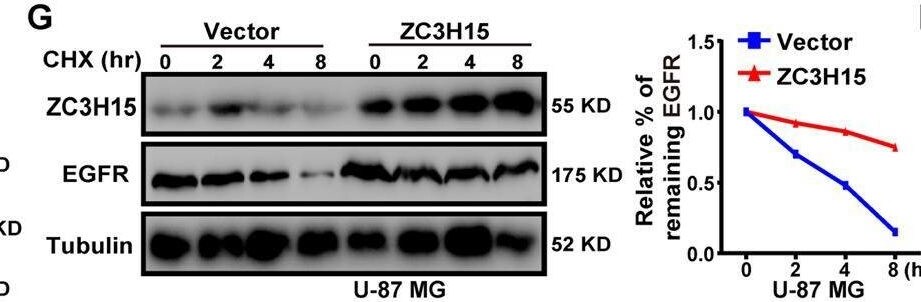
Western Blot: ZC3H15 Antibody - BSA Free [NBP1-81312] -
ZC3H15 activates the EGFR-mediated signaling pathway by increasing EGFR protein stability.A Western blot analysis was performed to detect the expression of EGFR signaling proteins (EGFR, p-EGFR, AKT, p-AKT) of GBM cells. B The inhibitory effect of EGFR inhibitor-erlotinib on the proliferation activity in control or ZC3H15 overexpression cells. C, D The inhibitory effect of EGFR inhibitor-erlotinib on the invasion and migration in control and ZC3H15 overexpression cells. The number of cells invaded and migrated were counted and analyzed. E Western blot analysis was performed to detect the protein expression of EGFR in the indicated cells. F Cells were treated with MG-132 for 8 h before harvesting to detect the protein level of EGFR in the indicated cells. G, H CHX treatment for time gradient (0 h, 2 h, 4 h, 8 h) with the ZC3H15 overexpression and control group. To determine whether ZC3H15 could stabilize EGFR. The gray value was calculated by ImageJ. I HA-tagged Ub plasmid and Flag-tagged ZC3H15 plasmid were co-transfected into the cells. The ubiquitinated EGFR proteins were pulled down with anti-HA antibody and immunoblotted with ant-EGFR antibody. All data were expressed as mean +/- SD. Student’s t test was performed to analyzed significance. *P < 0.05, **P < 0.01, ***P < 0.001. Image collected and cropped by CiteAb from the following open publication (https://pubmed.ncbi.nlm.nih.gov/35027542), licensed under a CC-BY license. Not internally tested by Novus Biologicals.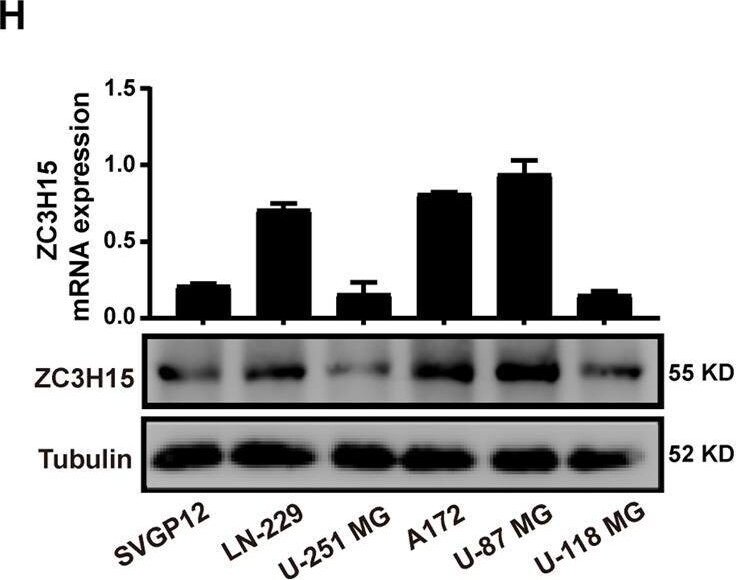
Western Blot: ZC3H15 Antibody - BSA Free [NBP1-81312] -
ZC3H15 is commonly upregulated in GBM and correlates with poor prognosis.A, B ZC3H15 gene expression was obtained from TCGA and CGGA database. Box plot of ZC3H15 expression levels in Grade and Histology glioma set with the log-rank test P-values indicated. C Box plot of ZC3H15 expression levels in Copy number glioma set with the log-rank test P-values indicated. D–F The correlation between ZC3H15 expression levels and survival rate were obtained from TCGA, Phillips, and Tumor Glioma-kawaguchi-50 and were performed through Kaplan–Meier (K–M) analysis, the log-rank test P-value was indicated. G Representative immunohistochemistry staining of ZC3H15 expression level in normal tissue and different grades of GBM. And analysis based on the staining of normal tissue (eight samples) and different grades of GBM (eight samples of each group). H The protein and mRNA expression profile of ZC3H15 was examined by qRT-PCR and Western Blot assay. All data were expressed as mean +/- SD. Student’s t test was performed to analyzed significance. *P < 0.05, **P < 0.01, ***P < 0.001. Image collected and cropped by CiteAb from the following open publication (https://pubmed.ncbi.nlm.nih.gov/35027542), licensed under a CC-BY license. Not internally tested by Novus Biologicals.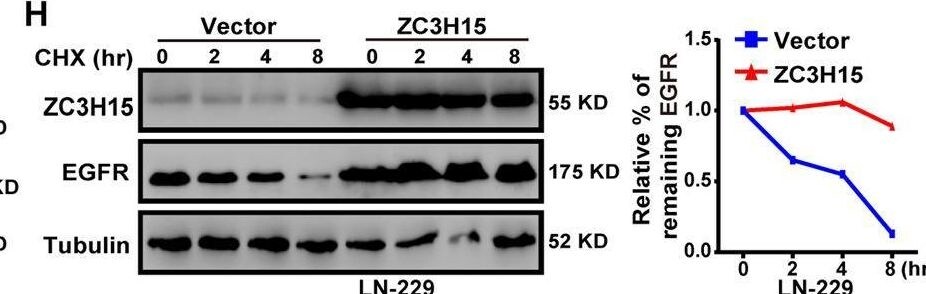
Western Blot: ZC3H15 Antibody - BSA Free [NBP1-81312] -
ZC3H15 activates the EGFR-mediated signaling pathway by increasing EGFR protein stability.A Western blot analysis was performed to detect the expression of EGFR signaling proteins (EGFR, p-EGFR, AKT, p-AKT) of GBM cells. B The inhibitory effect of EGFR inhibitor-erlotinib on the proliferation activity in control or ZC3H15 overexpression cells. C, D The inhibitory effect of EGFR inhibitor-erlotinib on the invasion and migration in control and ZC3H15 overexpression cells. The number of cells invaded and migrated were counted and analyzed. E Western blot analysis was performed to detect the protein expression of EGFR in the indicated cells. F Cells were treated with MG-132 for 8 h before harvesting to detect the protein level of EGFR in the indicated cells. G, H CHX treatment for time gradient (0 h, 2 h, 4 h, 8 h) with the ZC3H15 overexpression and control group. To determine whether ZC3H15 could stabilize EGFR. The gray value was calculated by ImageJ. I HA-tagged Ub plasmid and Flag-tagged ZC3H15 plasmid were co-transfected into the cells. The ubiquitinated EGFR proteins were pulled down with anti-HA antibody and immunoblotted with ant-EGFR antibody. All data were expressed as mean +/- SD. Student’s t test was performed to analyzed significance. *P < 0.05, **P < 0.01, ***P < 0.001. Image collected and cropped by CiteAb from the following open publication (https://pubmed.ncbi.nlm.nih.gov/35027542), licensed under a CC-BY license. Not internally tested by Novus Biologicals.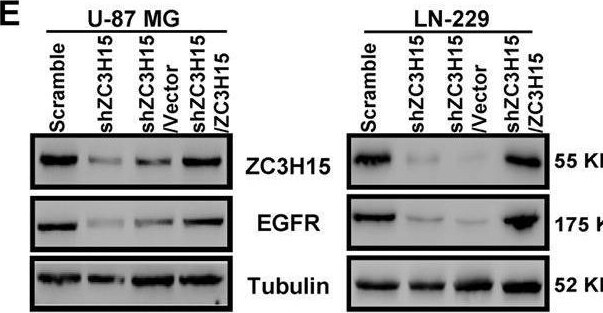
Western Blot: ZC3H15 Antibody - BSA Free [NBP1-81312] -
ZC3H15 activates the EGFR-mediated signaling pathway by increasing EGFR protein stability.A Western blot analysis was performed to detect the expression of EGFR signaling proteins (EGFR, p-EGFR, AKT, p-AKT) of GBM cells. B The inhibitory effect of EGFR inhibitor-erlotinib on the proliferation activity in control or ZC3H15 overexpression cells. C, D The inhibitory effect of EGFR inhibitor-erlotinib on the invasion and migration in control and ZC3H15 overexpression cells. The number of cells invaded and migrated were counted and analyzed. E Western blot analysis was performed to detect the protein expression of EGFR in the indicated cells. F Cells were treated with MG-132 for 8 h before harvesting to detect the protein level of EGFR in the indicated cells. G, H CHX treatment for time gradient (0 h, 2 h, 4 h, 8 h) with the ZC3H15 overexpression and control group. To determine whether ZC3H15 could stabilize EGFR. The gray value was calculated by ImageJ. I HA-tagged Ub plasmid and Flag-tagged ZC3H15 plasmid were co-transfected into the cells. The ubiquitinated EGFR proteins were pulled down with anti-HA antibody and immunoblotted with ant-EGFR antibody. All data were expressed as mean +/- SD. Student’s t test was performed to analyzed significance. *P < 0.05, **P < 0.01, ***P < 0.001. Image collected and cropped by CiteAb from the following open publication (https://pubmed.ncbi.nlm.nih.gov/35027542), licensed under a CC-BY license. Not internally tested by Novus Biologicals.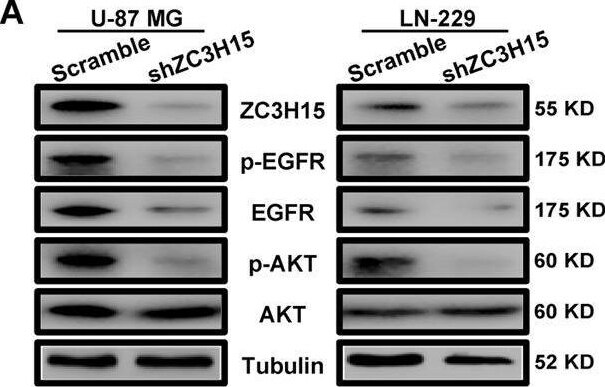
Western Blot: ZC3H15 Antibody - BSA Free [NBP1-81312] -
ZC3H15 activates the EGFR-mediated signaling pathway by increasing EGFR protein stability.A Western blot analysis was performed to detect the expression of EGFR signaling proteins (EGFR, p-EGFR, AKT, p-AKT) of GBM cells. B The inhibitory effect of EGFR inhibitor-erlotinib on the proliferation activity in control or ZC3H15 overexpression cells. C, D The inhibitory effect of EGFR inhibitor-erlotinib on the invasion and migration in control and ZC3H15 overexpression cells. The number of cells invaded and migrated were counted and analyzed. E Western blot analysis was performed to detect the protein expression of EGFR in the indicated cells. F Cells were treated with MG-132 for 8 h before harvesting to detect the protein level of EGFR in the indicated cells. G, H CHX treatment for time gradient (0 h, 2 h, 4 h, 8 h) with the ZC3H15 overexpression and control group. To determine whether ZC3H15 could stabilize EGFR. The gray value was calculated by ImageJ. I HA-tagged Ub plasmid and Flag-tagged ZC3H15 plasmid were co-transfected into the cells. The ubiquitinated EGFR proteins were pulled down with anti-HA antibody and immunoblotted with ant-EGFR antibody. All data were expressed as mean +/- SD. Student’s t test was performed to analyzed significance. *P < 0.05, **P < 0.01, ***P < 0.001. Image collected and cropped by CiteAb from the following open publication (https://pubmed.ncbi.nlm.nih.gov/35027542), licensed under a CC-BY license. Not internally tested by Novus Biologicals.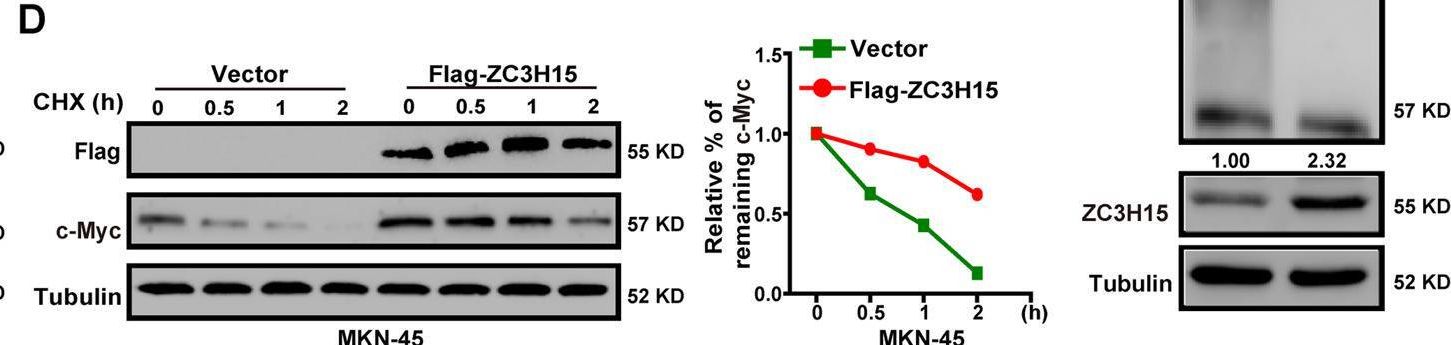
Western Blot: ZC3H15 Antibody - BSA Free [NBP1-81312] -
ZC3H15 stabilized c-Myc by mediating its ubiquitination degradation.A, B ZC3H15-knockdown HGC-27 and MKN-45 cells were treated with or without MG-132 for 8 h before harvesting. Western blot assays were performed to detect the protein expression of ZC3H15 and c-Myc. C, D The c-Myc turnover rate of ZC3H15-overexpression HGC-27 cells and MKN-45 cells was shown. Cells were treated with CHX (100 μg/ml) for the indicated times and then were harvested for western blot assays. E Transfected cells were treated with MG-132 for 8 h before harvesting. The ubiquitinated c-Myc proteins were pulled down with anti-HA antibody and immunoblotted with anti-c-Myc antibody. All data were expressed as mean +/- SD. Student’s t-test was performed to analyzed significance, *P < 0.05, **P < 0.01, ***P < 0.001. Image collected and cropped by CiteAb from the following open publication (https://pubmed.ncbi.nlm.nih.gov/35064102), licensed under a CC-BY license. Not internally tested by Novus Biologicals.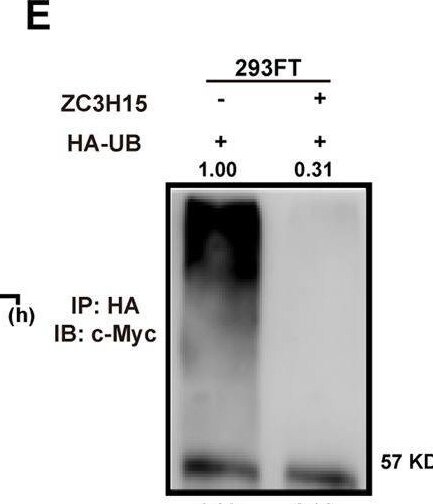
Western Blot: ZC3H15 Antibody - BSA Free [NBP1-81312] -
ZC3H15 stabilized c-Myc by mediating its ubiquitination degradation.A, B ZC3H15-knockdown HGC-27 and MKN-45 cells were treated with or without MG-132 for 8 h before harvesting. Western blot assays were performed to detect the protein expression of ZC3H15 and c-Myc. C, D The c-Myc turnover rate of ZC3H15-overexpression HGC-27 cells and MKN-45 cells was shown. Cells were treated with CHX (100 μg/ml) for the indicated times and then were harvested for western blot assays. E Transfected cells were treated with MG-132 for 8 h before harvesting. The ubiquitinated c-Myc proteins were pulled down with anti-HA antibody and immunoblotted with anti-c-Myc antibody. All data were expressed as mean +/- SD. Student’s t-test was performed to analyzed significance, *P < 0.05, **P < 0.01, ***P < 0.001. Image collected and cropped by CiteAb from the following open publication (https://pubmed.ncbi.nlm.nih.gov/35064102), licensed under a CC-BY license. Not internally tested by Novus Biologicals.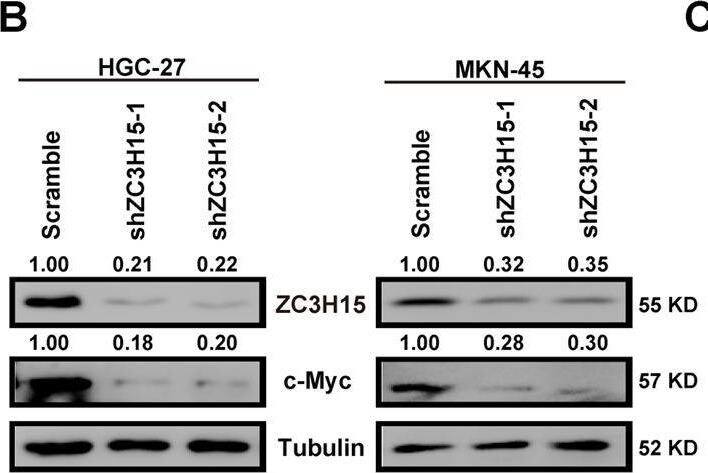
Western Blot: ZC3H15 Antibody - BSA Free [NBP1-81312] -
ZC3H15 promoted GC progression by increasing c-Myc expression.A GSEA enrichment plots of c-Myc target genes in high ZC3H15 expression versus low ZC3H15 expression TCGA GCs. Normalized enrichment score (NES), false discovery rate (FDR), and P-values were shown in the plot. B, C ZC3H15 modulated the protein and mRNA expression of c-Myc in HGC-27 and MKN-45 cells. D, E MTT assays were performed to examine the inhibitory effect of 10058-F4 (100 μM) on the cell proliferation of ZC3H15-overexpression HGC-27 and MKN-45 cells. F, G Transwell assays were performed to examine the inhibitory effect of 10058-F4 (100 μM) on the cell migration and invasion of ZC3H15-overexpression HGC-27 and MKN-45 cells. All data were expressed as mean +/- SD. Student’s t-test was performed to analyzed significance, *P < 0.05, **P < 0.01, ***P < 0.001. Image collected and cropped by CiteAb from the following open publication (https://pubmed.ncbi.nlm.nih.gov/35064102), licensed under a CC-BY license. Not internally tested by Novus Biologicals.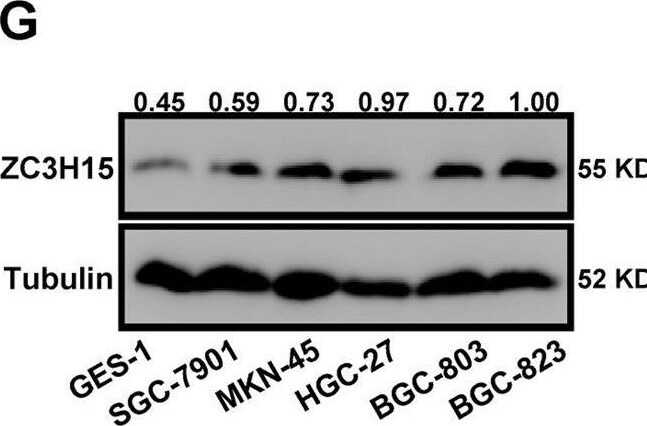
Western Blot: ZC3H15 Antibody - BSA Free [NBP1-81312] -
ZC3H15 was upregulated in GC and high expression of ZC3H15 was correlated with poor patient prognosis.A Up-regulation of ZC3H15 was found in 8 of 20 cancer types. B, C The level of ZC3H15 mRNA was significantly increased from normal stomach tissues to gastric cancer tissues in DErrico and Cho dataset and P-values were indicated. D, E Kaplan–Meier analysis of overall survival using data from the GSE14210 and GSE15459 database and P-values were indicated. F Immunohistochemical analyses of ZC3H15 expression in eight paired samples of gastric cancer and normal stomach tissue, P < 0.001. The data were expressed as mean +/- SD. Student’s t-test was performed to analyze significance. G Western blot analyses were used to examine ZC3H15 expression in GES-1 cells and gastric cancer cell lines. Image collected and cropped by CiteAb from the following open publication (https://pubmed.ncbi.nlm.nih.gov/35064102), licensed under a CC-BY license. Not internally tested by Novus Biologicals.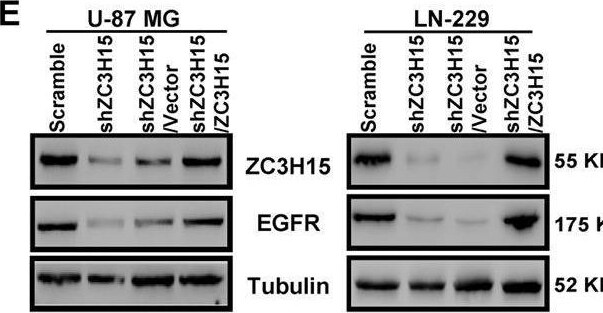
Knockdown Validated: ZC3H15 Antibody - BSA Free [NBP1-81312] -
ZC3H15 activates the EGFR-mediated signaling pathway by increasing EGFR protein stability.A Western blot analysis was performed to detect the expression of EGFR signaling proteins (EGFR, p-EGFR, AKT, p-AKT) of GBM cells. B The inhibitory effect of EGFR inhibitor-erlotinib on the proliferation activity in control or ZC3H15 overexpression cells. C, D The inhibitory effect of EGFR inhibitor-erlotinib on the invasion and migration in control and ZC3H15 overexpression cells. The number of cells invaded and migrated were counted and analyzed. E Western blot analysis was performed to detect the protein expression of EGFR in the indicated cells. F Cells were treated with MG-132 for 8 h before harvesting to detect the protein level of EGFR in the indicated cells. G, H CHX treatment for time gradient (0 h, 2 h, 4 h, 8 h) with the ZC3H15 overexpression and control group. To determine whether ZC3H15 could stabilize EGFR. The gray value was calculated by ImageJ. I HA-tagged Ub plasmid and Flag-tagged ZC3H15 plasmid were co-transfected into the cells. The ubiquitinated EGFR proteins were pulled down with anti-HA antibody and immunoblotted with ant-EGFR antibody. All data were expressed as mean +/- SD. Student’s t test was performed to analyzed significance. *P < 0.05, **P < 0.01, ***P < 0.001. Image collected and cropped by CiteAb from the following open publication (https://pubmed.ncbi.nlm.nih.gov/35027542), licensed under a CC-BY license. Not internally tested by Novus Biologicals.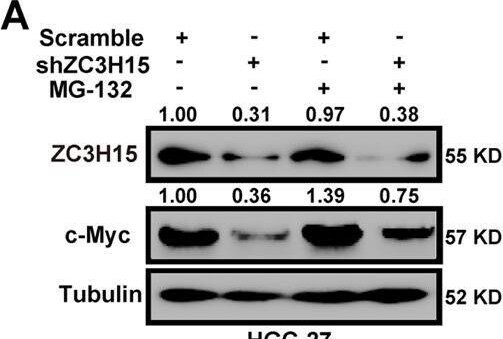
Western Blot: ZC3H15 Antibody - BSA Free [NBP1-81312] -
ZC3H15 stabilized c-Myc by mediating its ubiquitination degradation.A, B ZC3H15-knockdown HGC-27 and MKN-45 cells were treated with or without MG-132 for 8 h before harvesting. Western blot assays were performed to detect the protein expression of ZC3H15 and c-Myc. C, D The c-Myc turnover rate of ZC3H15-overexpression HGC-27 cells and MKN-45 cells was shown. Cells were treated with CHX (100 μg/ml) for the indicated times and then were harvested for western blot assays. E Transfected cells were treated with MG-132 for 8 h before harvesting. The ubiquitinated c-Myc proteins were pulled down with anti-HA antibody and immunoblotted with anti-c-Myc antibody. All data were expressed as mean +/- SD. Student’s t-test was performed to analyzed significance, *P < 0.05, **P < 0.01, ***P < 0.001. Image collected and cropped by CiteAb from the following open publication (https://pubmed.ncbi.nlm.nih.gov/35064102), licensed under a CC-BY license. Not internally tested by Novus Biologicals.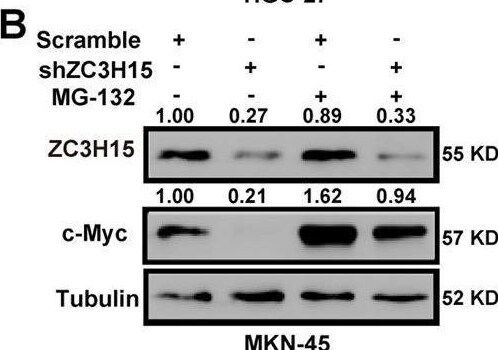
Knockdown Validated: ZC3H15 Antibody - BSA Free [NBP1-81312] -
ZC3H15 stabilized c-Myc by mediating its ubiquitination degradation.A, B ZC3H15-knockdown HGC-27 and MKN-45 cells were treated with or without MG-132 for 8 h before harvesting. Western blot assays were performed to detect the protein expression of ZC3H15 and c-Myc. C, D The c-Myc turnover rate of ZC3H15-overexpression HGC-27 cells and MKN-45 cells was shown. Cells were treated with CHX (100 μg/ml) for the indicated times and then were harvested for western blot assays. E Transfected cells were treated with MG-132 for 8 h before harvesting. The ubiquitinated c-Myc proteins were pulled down with anti-HA antibody and immunoblotted with anti-c-Myc antibody. All data were expressed as mean +/- SD. Student’s t-test was performed to analyzed significance, *P < 0.05, **P < 0.01, ***P < 0.001. Image collected and cropped by CiteAb from the following open publication (https://pubmed.ncbi.nlm.nih.gov/35064102), licensed under a CC-BY license. Not internally tested by Novus Biologicals.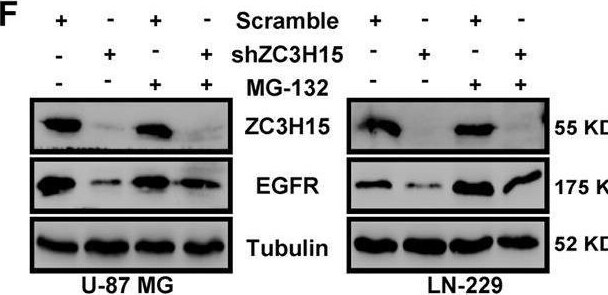
Knockdown Validated: ZC3H15 Antibody - BSA Free [NBP1-81312] -
ZC3H15 activates the EGFR-mediated signaling pathway by increasing EGFR protein stability.A Western blot analysis was performed to detect the expression of EGFR signaling proteins (EGFR, p-EGFR, AKT, p-AKT) of GBM cells. B The inhibitory effect of EGFR inhibitor-erlotinib on the proliferation activity in control or ZC3H15 overexpression cells. C, D The inhibitory effect of EGFR inhibitor-erlotinib on the invasion and migration in control and ZC3H15 overexpression cells. The number of cells invaded and migrated were counted and analyzed. E Western blot analysis was performed to detect the protein expression of EGFR in the indicated cells. F Cells were treated with MG-132 for 8 h before harvesting to detect the protein level of EGFR in the indicated cells. G, H CHX treatment for time gradient (0 h, 2 h, 4 h, 8 h) with the ZC3H15 overexpression and control group. To determine whether ZC3H15 could stabilize EGFR. The gray value was calculated by ImageJ. I HA-tagged Ub plasmid and Flag-tagged ZC3H15 plasmid were co-transfected into the cells. The ubiquitinated EGFR proteins were pulled down with anti-HA antibody and immunoblotted with ant-EGFR antibody. All data were expressed as mean +/- SD. Student’s t test was performed to analyzed significance. *P < 0.05, **P < 0.01, ***P < 0.001. Image collected and cropped by CiteAb from the following open publication (https://pubmed.ncbi.nlm.nih.gov/35027542), licensed under a CC-BY license. Not internally tested by Novus Biologicals.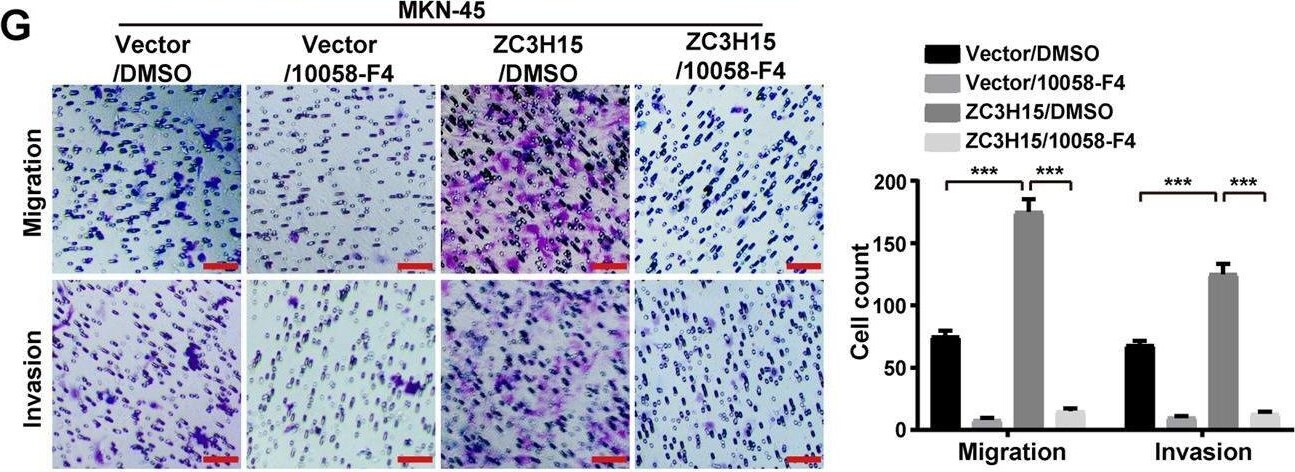
Immunohistochemistry: ZC3H15 Antibody - BSA Free [NBP1-81312] -
ZC3H15 promoted GC progression by increasing c-Myc expression.A GSEA enrichment plots of c-Myc target genes in high ZC3H15 expression versus low ZC3H15 expression TCGA GCs. Normalized enrichment score (NES), false discovery rate (FDR), and P-values were shown in the plot. B, C ZC3H15 modulated the protein and mRNA expression of c-Myc in HGC-27 and MKN-45 cells. D, E MTT assays were performed to examine the inhibitory effect of 10058-F4 (100 μM) on the cell proliferation of ZC3H15-overexpression HGC-27 and MKN-45 cells. F, G Transwell assays were performed to examine the inhibitory effect of 10058-F4 (100 μM) on the cell migration and invasion of ZC3H15-overexpression HGC-27 and MKN-45 cells. All data were expressed as mean +/- SD. Student’s t-test was performed to analyzed significance, *P < 0.05, **P < 0.01, ***P < 0.001. Image collected and cropped by CiteAb from the following open publication (https://pubmed.ncbi.nlm.nih.gov/35064102), licensed under a CC-BY license. Not internally tested by Novus Biologicals.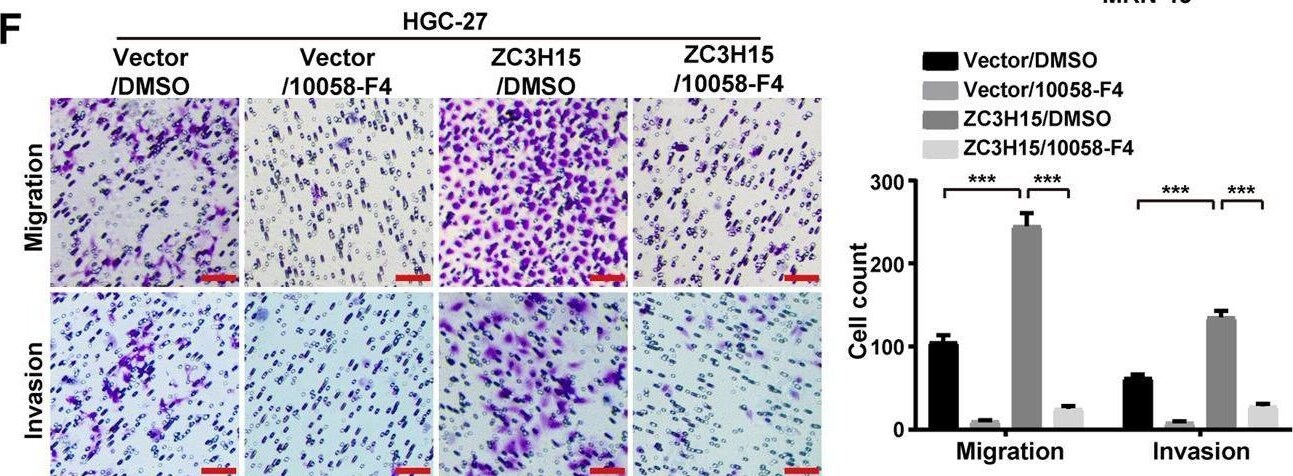
Immunohistochemistry: ZC3H15 Antibody - BSA Free [NBP1-81312] -
ZC3H15 promoted GC progression by increasing c-Myc expression.A GSEA enrichment plots of c-Myc target genes in high ZC3H15 expression versus low ZC3H15 expression TCGA GCs. Normalized enrichment score (NES), false discovery rate (FDR), and P-values were shown in the plot. B, C ZC3H15 modulated the protein and mRNA expression of c-Myc in HGC-27 and MKN-45 cells. D, E MTT assays were performed to examine the inhibitory effect of 10058-F4 (100 μM) on the cell proliferation of ZC3H15-overexpression HGC-27 and MKN-45 cells. F, G Transwell assays were performed to examine the inhibitory effect of 10058-F4 (100 μM) on the cell migration and invasion of ZC3H15-overexpression HGC-27 and MKN-45 cells. All data were expressed as mean +/- SD. Student’s t-test was performed to analyzed significance, *P < 0.05, **P < 0.01, ***P < 0.001. Image collected and cropped by CiteAb from the following open publication (https://pubmed.ncbi.nlm.nih.gov/35064102), licensed under a CC-BY license. Not internally tested by Novus Biologicals.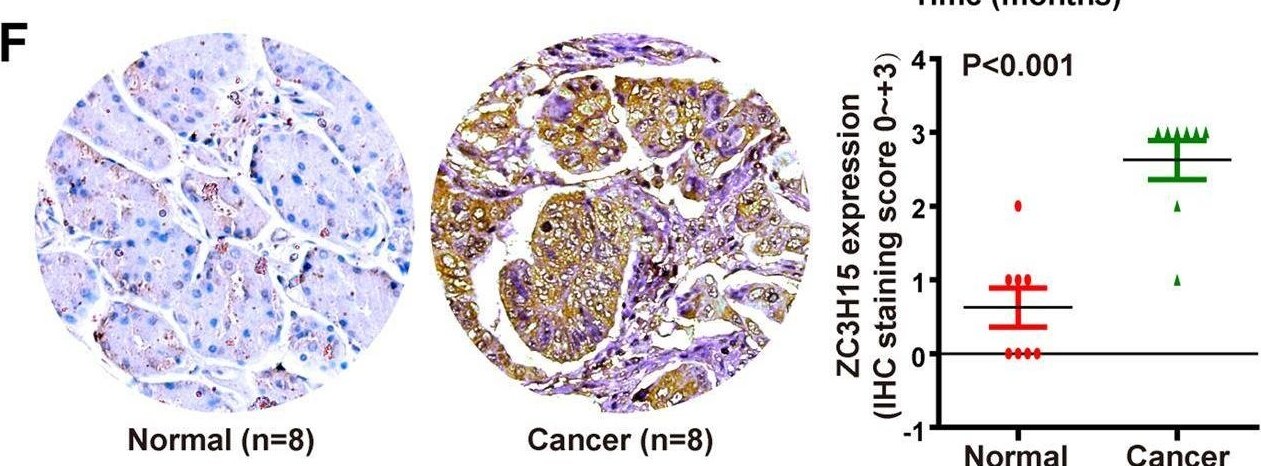
Immunohistochemistry: ZC3H15 Antibody - BSA Free [NBP1-81312] -
ZC3H15 was upregulated in GC and high expression of ZC3H15 was correlated with poor patient prognosis.A Up-regulation of ZC3H15 was found in 8 of 20 cancer types. B, C The level of ZC3H15 mRNA was significantly increased from normal stomach tissues to gastric cancer tissues in DErrico and Cho dataset and P-values were indicated. D, E Kaplan–Meier analysis of overall survival using data from the GSE14210 and GSE15459 database and P-values were indicated. F Immunohistochemical analyses of ZC3H15 expression in eight paired samples of gastric cancer and normal stomach tissue, P < 0.001. The data were expressed as mean +/- SD. Student’s t-test was performed to analyze significance. G Western blot analyses were used to examine ZC3H15 expression in GES-1 cells and gastric cancer cell lines. Image collected and cropped by CiteAb from the following open publication (https://pubmed.ncbi.nlm.nih.gov/35064102), licensed under a CC-BY license. Not internally tested by Novus Biologicals.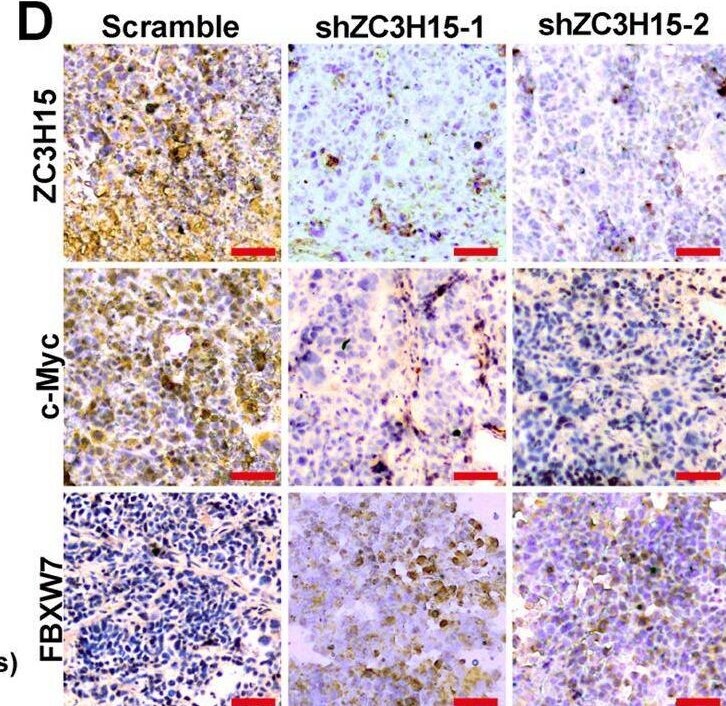
Immunohistochemistry: ZC3H15 Antibody - BSA Free [NBP1-81312] -
ZC3H15 promoted the colony formation and tumor growth of GC cells.A Soft agar assays were performed to detect the colony formation ability of GC cells. B, C Xenograft assays were performed in ZC3H15-knockdown HGC-27 cells. The weight and volumes of tumors were analyzed and P-values were indicated. D Immunohistochemical staining assays were performed to detect the expression of ZC3H15, c-Myc, and FBXW7 in ZC3H15-knockdown tumor tissues and control tissues. All data were expressed as mean +/- SD. Student’s t-test was performed to analyzed significance, *P < 0.05, **P < 0.01, ***P < 0.001. Image collected and cropped by CiteAb from the following open publication (https://pubmed.ncbi.nlm.nih.gov/35064102), licensed under a CC-BY license. Not internally tested by Novus Biologicals.Applications for ZC3H15 Antibody - BSA Free
Application
Recommended Usage
Immunocytochemistry/ Immunofluorescence
0.25-2 ug/ml
Immunohistochemistry
1:500 - 1:1000
Immunohistochemistry-Paraffin
1:500 - 1:1000
Western Blot
0.04 - 0.4 ug/ml
Application Notes
For IHC-Paraffin, HIER pH 6 retrieval is recommended. ICC/IF,Fixation Permeabilization: Use PFA/Triton X-100.
Formulation, Preparation, and Storage
Purification
Affinity purified
Formulation
PBS (pH 7.2) and 40% Glycerol
Format
BSA Free
Preservative
0.02% Sodium Azide
Concentration
Concentrations vary lot to lot. See vial label for concentration. If unlisted please contact technical services.
Shipping
The product is shipped with polar packs. Upon receipt, store it immediately at the temperature recommended below.
Stability & Storage
Store at 4C short term. Aliquot and store at -20C long term. Avoid freeze-thaw cycles.
Background: ZC3H15
Alternate Names
DFRP1, DRG family-regulatory protein 1, HT010, LEREPO4MSTP012, Likely ortholog of mouse immediate early response erythropoietin 4, zinc finger CCCH domain-containing protein 15, zinc finger CCCH-type containing 15
Gene Symbol
ZC3H15
Additional ZC3H15 Products
Product Documents for ZC3H15 Antibody - BSA Free
Certificate of Analysis
To download a Certificate of Analysis, please enter a lot or batch number in the search box below.
Product Specific Notices for ZC3H15 Antibody - BSA Free
This product is for research use only and is not approved for use in humans or in clinical diagnosis. Primary Antibodies are guaranteed for 1 year from date of receipt.
Citations for ZC3H15 Antibody - BSA Free
 Powered by Bioz
Customer Reviews for ZC3H15 Antibody - BSA Free
There are currently no reviews for this product. Be the first to review ZC3H15 Antibody - BSA Free and earn rewards!
Have you used ZC3H15 Antibody - BSA Free?
Submit a review and receive an Amazon gift card!
$25/€18/£15/$25CAN/¥2500 for a review with an image
$10/€7/£6/$10CAN/¥1110 for a review without an image
Submit a review
Protocols
Find general support by application which include: protocols, troubleshooting, illustrated assays, videos and webinars.
- Antigen Retrieval Protocol (PIER)
- Antigen Retrieval for Frozen Sections Protocol
- Appropriate Fixation of IHC/ICC Samples
- Cellular Response to Hypoxia Protocols
- Chromogenic IHC Staining of Formalin-Fixed Paraffin-Embedded (FFPE) Tissue Protocol
- Chromogenic Immunohistochemistry Staining of Frozen Tissue
- ClariTSA™ Fluorophore Kits
- Detection & Visualization of Antibody Binding
- Fluorescent IHC Staining of Frozen Tissue Protocol
- Graphic Protocol for Heat-induced Epitope Retrieval
- Graphic Protocol for the Preparation and Fluorescent IHC Staining of Frozen Tissue Sections
- Graphic Protocol for the Preparation and Fluorescent IHC Staining of Paraffin-embedded Tissue Sections
- Graphic Protocol for the Preparation of Gelatin-coated Slides for Histological Tissue Sections
- ICC Cell Smear Protocol for Suspension Cells
- ICC Immunocytochemistry Protocol Videos
- ICC for Adherent Cells
- IHC Sample Preparation (Frozen sections vs Paraffin)
- Immunocytochemistry (ICC) Protocol
- Immunocytochemistry Troubleshooting
- Immunofluorescence of Organoids Embedded in Cultrex Basement Membrane Extract
- Immunofluorescent IHC Staining of Formalin-Fixed Paraffin-Embedded (FFPE) Tissue Protocol
- Immunohistochemistry (IHC) and Immunocytochemistry (ICC) Protocols
- Immunohistochemistry Frozen Troubleshooting
- Immunohistochemistry Paraffin Troubleshooting
- Preparing Samples for IHC/ICC Experiments
- Preventing Non-Specific Staining (Non-Specific Binding)
- Primary Antibody Selection & Optimization
- Protocol for Heat-Induced Epitope Retrieval (HIER)
- Protocol for Making a 4% Formaldehyde Solution in PBS
- Protocol for VisUCyte™ HRP Polymer Detection Reagent
- Protocol for the Fluorescent ICC Staining of Cell Smears - Graphic
- Protocol for the Fluorescent ICC Staining of Cultured Cells on Coverslips - Graphic
- Protocol for the Preparation & Fixation of Cells on Coverslips
- Protocol for the Preparation and Chromogenic IHC Staining of Frozen Tissue Sections
- Protocol for the Preparation and Chromogenic IHC Staining of Frozen Tissue Sections - Graphic
- Protocol for the Preparation and Chromogenic IHC Staining of Paraffin-embedded Tissue Sections
- Protocol for the Preparation and Chromogenic IHC Staining of Paraffin-embedded Tissue Sections - Graphic
- Protocol for the Preparation and Fluorescent ICC Staining of Cells on Coverslips
- Protocol for the Preparation and Fluorescent ICC Staining of Non-adherent Cells
- Protocol for the Preparation and Fluorescent ICC Staining of Stem Cells on Coverslips
- Protocol for the Preparation and Fluorescent IHC Staining of Frozen Tissue Sections
- Protocol for the Preparation and Fluorescent IHC Staining of Paraffin-embedded Tissue Sections
- Protocol for the Preparation of Gelatin-coated Slides for Histological Tissue Sections
- Protocol for the Preparation of a Cell Smear for Non-adherent Cell ICC - Graphic
- R&D Systems Quality Control Western Blot Protocol
- TUNEL and Active Caspase-3 Detection by IHC/ICC Protocol
- The Importance of IHC/ICC Controls
- Troubleshooting Guide: Immunohistochemistry
- Troubleshooting Guide: Western Blot Figures
- Western Blot Conditions
- Western Blot Protocol
- Western Blot Protocol for Cell Lysates
- Western Blot Troubleshooting
- Western Blot Troubleshooting Guide
- View all Protocols, Troubleshooting, Illustrated assays and Webinars
Loading...