
Life Science Posters Summary
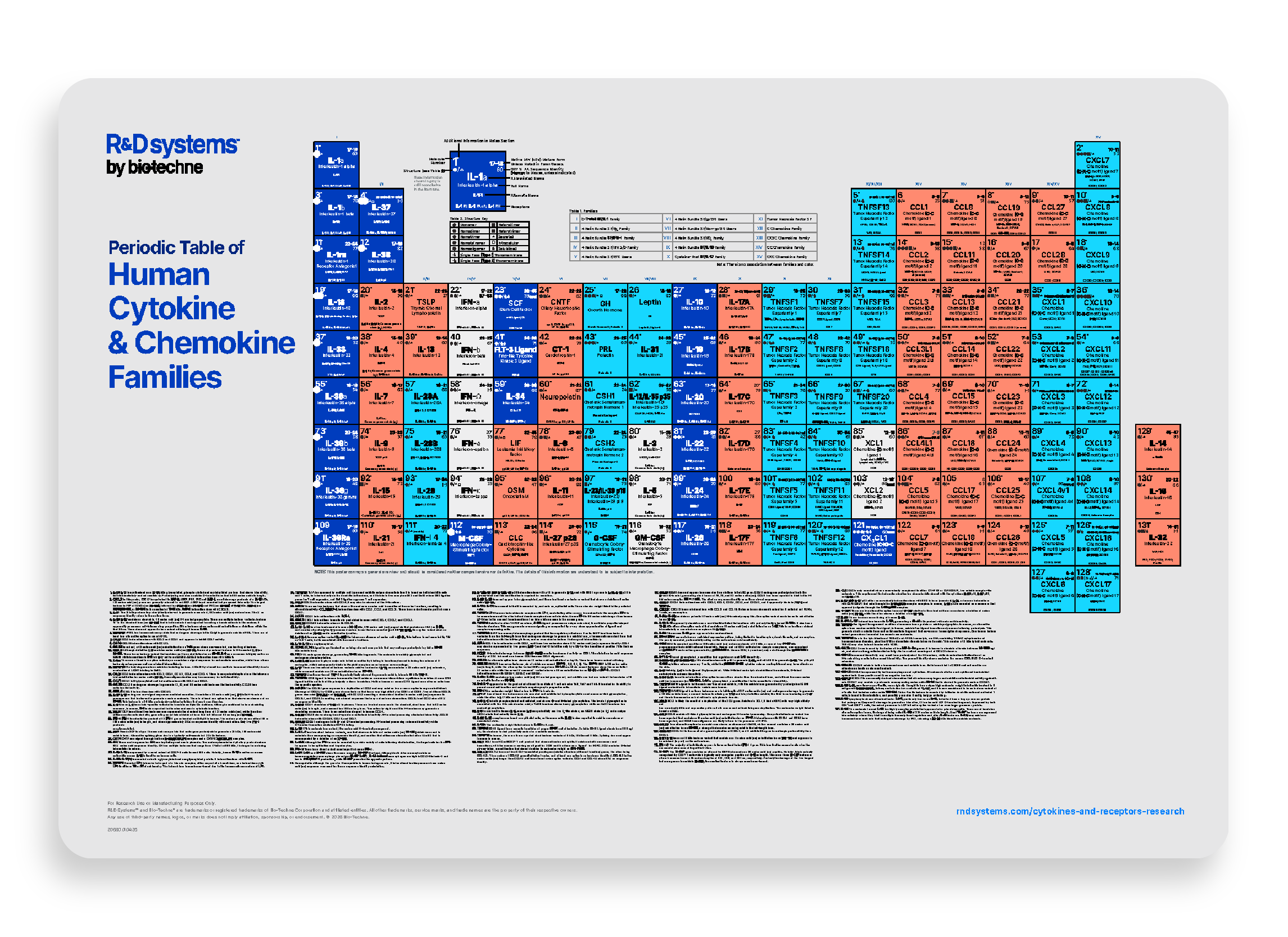
Cytokines are pivotal signaling molecules involved in a diverse range of biological processes, including embryonic development, immune responses, wound healing, tissue remodeling, aging, and disease pathogenesis. Their effects can be either beneficial or detrimental depending on their context, as cytokines provide protection against infections but may also contribute to pathology in chronic inflammatory and autoimmune diseases.
Cytokines are grouped into large families based on structural similarities and the specificities and composition of their receptor complexes.
Interleukins, classified into families such as IL-1, IL-6, IL-10, IL-17, and others, promote immune cell proliferation, maturation, migration, and activation to regulate inflammatory responses.
Chemokines, grouped by cysteine residue patterns in their N-terminal regions (CC, CXC, CX3C, XC), guide cell migration and maintain immune homeostasis.
Interferons (IFNs), categorized as type I, type II, or type III IFNs, mediate anti-viral defenses and play key roles in regulating immune responses and inhibiting viral replication.
TNF superfamily (TNFSF) proteins, typically subcategorized based on their structural features, receptor interactions, and functional roles, are central regulators of immune cell activation, apoptosis, cell survival, and tissue remodeling. Dysregulation of TNF superfamily signaling promotes tumor growth and immune evasion, making TNFSF proteins crucial targets for cancer immunotherapy.
Request our Periodic Table of Human Cytokine & Chemokine Families poster to learn more about:
- Cytokine family and subfamily classifications
- Cytokine alternate names and structural features
- Native molecular weights and sequence identity between human and mouse cytokines
- Specific receptors targeted by each cytokine
Request Literature
To access this literature content please fill out the form below.