
AIF-1/Iba1 Antibody
Novus Biologicals | Catalog # NB100-2833

![Immunocytochemistry/ Immunofluorescence: AIF-1/Iba1 Antibody [NB100-2833]](https://resources.rndsystems.com/images/products/AIF-1-Iba1-Antibody-Immunocytochemistry-Immunofluorescence-NB100-2833-img0015.jpg "Immunocytochemistry/ Immunofluorescence: AIF-1/Iba1 Antibody [NB100-2833]")
Loading...
Key Product Details
Species Reactivity
Validated:
Human, Mouse
Cited:
Mouse
Predicted:
Canine (100%). Backed by our 100% Guarantee.
Applications
Validated:
Immunohistochemistry, Immunohistochemistry-Paraffin, Peptide ELISA, Flow Cytometry, Immunocytochemistry/ Immunofluorescence
Cited:
Immunohistochemistry-Paraffin, Immunohistochemistry-Frozen, Western Blot, IF/IHC
Label
Unconjugated
Antibody Source
Polyclonal Goat IgG
Loading...
Product Specifications
Immunogen
This AIF-1/Iba1 Antibody was developed against a peptide with sequence C-NKQFLDDPKYSSDED corresponding to internal region according to NP_001614.3.
Reactivity Notes
Use in Mouse reported in scientific literature (PMID:31560162).
Marker
pan-Microglia Marker
Specificity
This AIF-1/Iba1 Antibody is expected to recognize isoform 3 (NP_001614.3) only.
Clonality
Polyclonal
Host
Goat
Isotype
IgG
Theoretical MW
16.7 kDa.
Disclaimer note: The observed molecular weight of the protein may vary from the listed predicted molecular weight due to post translational modifications, post translation cleavages, relative charges, and other experimental factors.
Disclaimer note: The observed molecular weight of the protein may vary from the listed predicted molecular weight due to post translational modifications, post translation cleavages, relative charges, and other experimental factors.
Scientific Data Images for AIF-1/Iba1 Antibody
Immunocytochemistry/ Immunofluorescence: AIF-1/Iba1 Antibody [NB100-2833]
Immunocytochemistry/Immunofluorescence: AIF-1/Iba1 Antibody [NB100-2833] - Immunofluorescence analysis of paraformaldehyde fixed U937 cells immobilized on Shi-fix coverslip, permeabilized with 0.15% Triton. Primary incubation 1hr (10ug/ml) followed by Alexa Fluor 488 secondary antibody (2ug/ml), showing cytoplasmic staining. The nuclear stain is DAPI (blue). Negative control: Unimmunized goat IgG (10ug/ml) followed by Alexa Fluor 488 secondary antibody (2ug/ml).![Immunohistochemistry-Paraffin: AIF-1/Iba1 Antibody [NB100-2833]](https://resources.rndsystems.com/images/products/AIF-1-Iba1-Antibody-Immunohistochemistry-Paraffin-NB100-2833-img0016.jpg "Immunohistochemistry-Paraffin: AIF-1/Iba1 Antibody [NB100-2833]")
Immunohistochemistry-Paraffin: AIF-1/Iba1 Antibody [NB100-2833]
Immunohistochemistry-Paraffin: AIF-1/Iba1 Antibody [NB100-2833] - Staining (6ug/ml) of paraffin embedded Human Lung. Heat induced antigen retrieval with citrate buffer pH 6, HRP-Staining.![Flow Cytometry: AIF-1/Iba1 Antibody [NB100-2833]](https://resources.rndsystems.com/images/products/AIF-1-Iba1-Antibody-Flow-Cytometry-NB100-2833-img0013.jpg "Flow Cytometry: AIF-1/Iba1 Antibody [NB100-2833]")
Flow Cytometry: AIF-1/Iba1 Antibody [NB100-2833]
Flow Cytometry: AIF-1/Iba1 Antibody [NB100-2833] - Flow cytometric analysis of paraformaldehyde fixed K562 cells (blue line), permeabilized with 0.5% Triton. Primary incubation 1hr (10ug/ml) followed by Alexa Fluor 488 secondary antibody (1ug/ml). IgG control: Unimmunized goat IgG (black line) followed by Alexa Fluor 488 secondary antibody.![Immunocytochemistry/ Immunofluorescence: AIF-1/Iba1 Antibody [NB100-2833]](https://resources.rndsystems.com/images/products/AIF-1-Iba1-Antibody-Immunocytochemistry-Immunofluorescence-NB100-2833-img0012.jpg "Immunocytochemistry/ Immunofluorescence: AIF-1/Iba1 Antibody [NB100-2833]")
Immunocytochemistry/ Immunofluorescence: AIF-1/Iba1 Antibody [NB100-2833]
AIF-1-Iba1-Antibody-Immunocytochemistry-Immunofluorescence-NB100-2833-img0012.jpg![Immunocytochemistry/ Immunofluorescence: AIF-1/Iba1 Antibody [NB100-2833]](https://resources.rndsystems.com/images/products/AIF-1-Iba1-Antibody-Immunocytochemistry-Immunofluorescence-NB100-2833-img0014.jpg "Immunocytochemistry/ Immunofluorescence: AIF-1/Iba1 Antibody [NB100-2833]")
Immunocytochemistry/ Immunofluorescence: AIF-1/Iba1 Antibody [NB100-2833]
Immunocytochemistry/Immunofluorescence: AIF-1/Iba1 Antibody [NB100-2833] - Immunofluorescence analysis of paraformaldehyde fixed CaCo-2 cells immobilized on Shi-fix coverslip, permeabilized with 0.15% Triton. Primary incubation 1hr (10ug/ml) followed by Alexa Fluor 488 secondary antibody (2ug/ml), showing cytoplasmic staining. The nuclear stain is DAPI (blue). Negative control: Unimmunized goat IgG (10ug/ml) followed by Alexa Fluor 488 secondary antibody (2ug/ml).![Immunohistochemistry-Paraffin: AIF-1/Iba1 Antibody [NB100-2833]](https://resources.rndsystems.com/images/products/AIF-1-Iba1-Antibody-Immunohistochemistry-Paraffin-NB100-2833-img0017.jpg "Immunohistochemistry-Paraffin: AIF-1/Iba1 Antibody [NB100-2833]")
Immunohistochemistry-Paraffin: AIF-1/Iba1 Antibody [NB100-2833]
Immunohistochemistry-Paraffin: AIF-1/Iba1 Antibody [NB100-2833] - Negative Control showing staining of paraffin embedded Human Lung, with no primary antibody.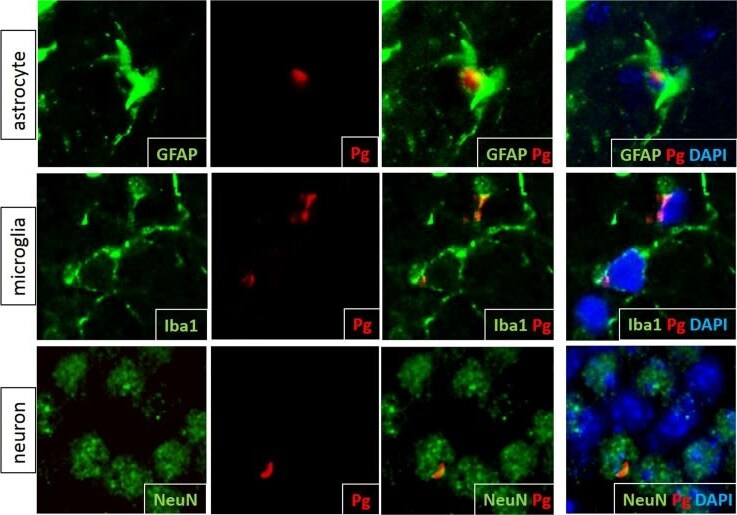
Immunocytochemistry/ Immunofluorescence: AIF-1/Iba1 Antibody [NB100-2833] -
Immunocytochemistry/ Immunofluorescence: AIF-1/Iba1 Antibody [NB100-2833] - Pg/gingipain is present intracellularly in astrocytes, microglia & neurons in the hippocampus of experimental mice.Green: astrocytes (top panels), microglia (middle panels), & neurons (bottom panels). Red: Pg/gingipain. Blue: DAPI. Representative of N = 4 (GFAP), 3 (Iba1) & 4 (NeuN) experimental mice. Image collected & cropped by CiteAb from the following publication (https://pubmed.ncbi.nlm.nih.gov/30281647), licensed under a CC-BY license. Not internally tested by Novus Biologicals.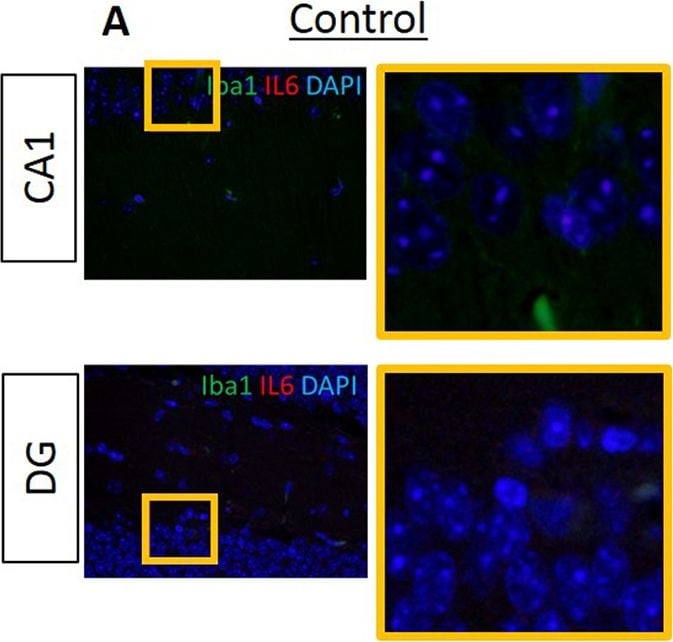
Immunocytochemistry/ Immunofluorescence: AIF-1/Iba1 Antibody [NB100-2833] -
Immunocytochemistry/ Immunofluorescence: AIF-1/Iba1 Antibody [NB100-2833] - Proinflammatory cytokines IL6, IL1 beta & TNF alpha are evident in the hippocampus of experimental but not in control mice.Data from IF microscopy & RT-PCR. (A-F) Results from IF microscopy. IL6 expression in control (A) & experimental (B) mice, IL1 beta expression in control (C) & experimental (D) mice & TNF alpha expression in control (E) & experimental (F) mice. N = 3 mice/group. (G-I) Gene expression of cytokines was detected by RT-PCR (G, H, I). In all cases, there is significantly higher gene expression of all three cytokines in experimental compared with control group (G, H, I). Green: Iba1, Red: cytokines, Blue: DAPI. N = 5 mice/group. Image collected & cropped by CiteAb from the following publication (https://pubmed.ncbi.nlm.nih.gov/30281647), licensed under a CC-BY license. Not internally tested by Novus Biologicals.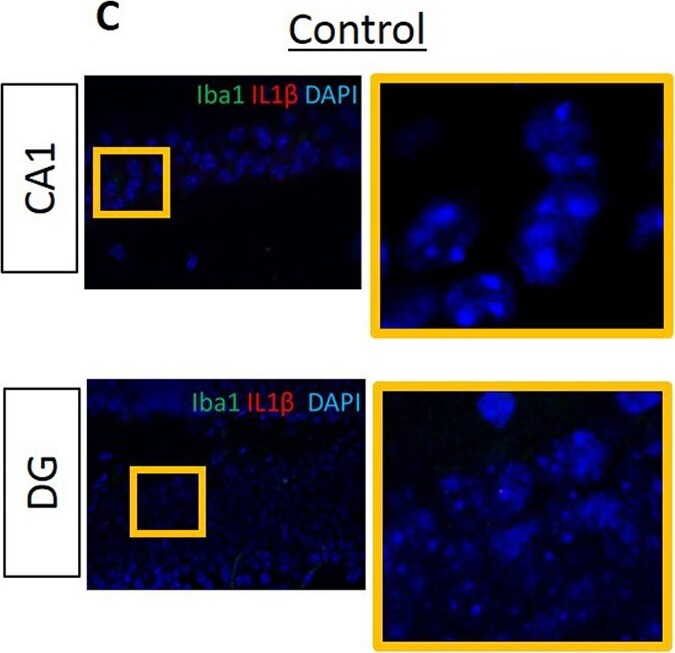
Immunocytochemistry/ Immunofluorescence: AIF-1/Iba1 Antibody [NB100-2833] -
Immunocytochemistry/ Immunofluorescence: AIF-1/Iba1 Antibody [NB100-2833] - Proinflammatory cytokines IL6, IL1 beta & TNF alpha are evident in the hippocampus of experimental but not in control mice.Data from IF microscopy & RT-PCR. (A-F) Results from IF microscopy. IL6 expression in control (A) & experimental (B) mice, IL1 beta expression in control (C) & experimental (D) mice & TNF alpha expression in control (E) & experimental (F) mice. N = 3 mice/group. (G-I) Gene expression of cytokines was detected by RT-PCR (G, H, I). In all cases, there is significantly higher gene expression of all three cytokines in experimental compared with control group (G, H, I). Green: Iba1, Red: cytokines, Blue: DAPI. N = 5 mice/group. Image collected & cropped by CiteAb from the following publication (https://pubmed.ncbi.nlm.nih.gov/30281647), licensed under a CC-BY license. Not internally tested by Novus Biologicals.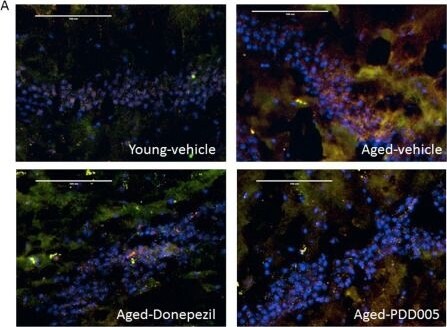
Immunocytochemistry/ Immunofluorescence: AIF-1/Iba1 Antibody [NB100-2833] -
Immunocytochemistry/ Immunofluorescence: AIF-1/Iba1 Antibody [NB100-2833] - IL-1 beta synthesis, & microglial activation modulation in PDD005-treated aged mice. (A) Images showing IL-1 beta (green fluorescence), iba-1 (red fluorescence) expression. Yellow = Overlay; Blue = nuclei; SGZ region of mouse brain. 40X magnification, scale bar = 100 μm. (B) Graphs representing the average relative fluorescence of Iba-1 in SGZ. Significant differences determined by using one-way ANOVA with Tukey’s test. *P < 0.050, **P < 0.01 & ***P < 0.001 compared with aged-vehicle. Image collected & cropped by CiteAb from the following publication (https://pubmed.ncbi.nlm.nih.gov/31980673), licensed under a CC-BY license. Not internally tested by Novus Biologicals.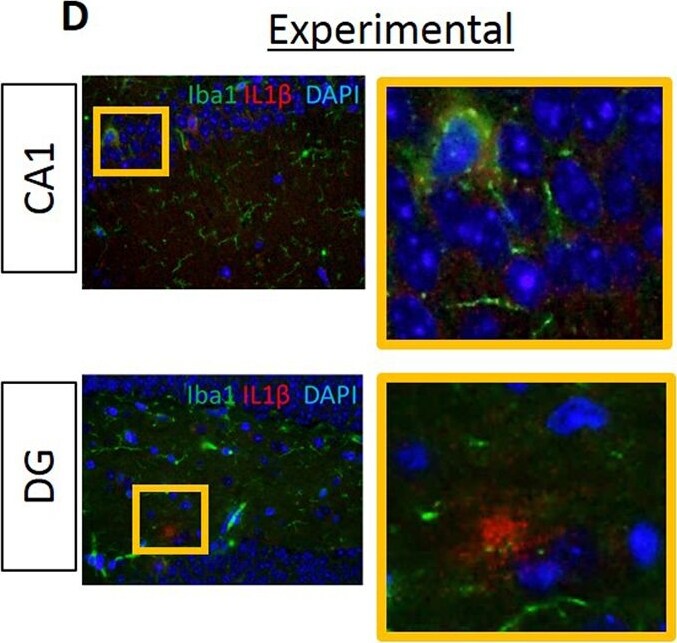
Immunocytochemistry/ Immunofluorescence: AIF-1/Iba1 Antibody [NB100-2833] -
Immunocytochemistry/ Immunofluorescence: AIF-1/Iba1 Antibody [NB100-2833] - Proinflammatory cytokines IL6, IL1 beta & TNF alpha are evident in the hippocampus of experimental but not in control mice.Data from IF microscopy & RT-PCR. (A-F) Results from IF microscopy. IL6 expression in control (A) & experimental (B) mice, IL1 beta expression in control (C) & experimental (D) mice & TNF alpha expression in control (E) & experimental (F) mice. N = 3 mice/group. (G-I) Gene expression of cytokines was detected by RT-PCR (G, H, I). In all cases, there is significantly higher gene expression of all three cytokines in experimental compared with control group (G, H, I). Green: Iba1, Red: cytokines, Blue: DAPI. N = 5 mice/group. Image collected & cropped by CiteAb from the following publication (https://pubmed.ncbi.nlm.nih.gov/30281647), licensed under a CC-BY license. Not internally tested by Novus Biologicals.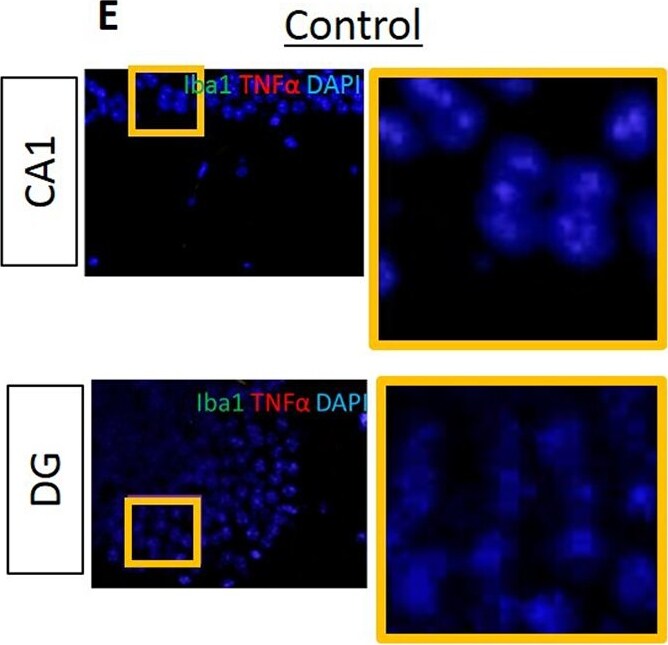
Immunocytochemistry/ Immunofluorescence: AIF-1/Iba1 Antibody [NB100-2833] -
Immunocytochemistry/ Immunofluorescence: AIF-1/Iba1 Antibody [NB100-2833] - Proinflammatory cytokines IL6, IL1 beta & TNF alpha are evident in the hippocampus of experimental but not in control mice.Data from IF microscopy & RT-PCR. (A-F) Results from IF microscopy. IL6 expression in control (A) & experimental (B) mice, IL1 beta expression in control (C) & experimental (D) mice & TNF alpha expression in control (E) & experimental (F) mice. N = 3 mice/group. (G-I) Gene expression of cytokines was detected by RT-PCR (G, H, I). In all cases, there is significantly higher gene expression of all three cytokines in experimental compared with control group (G, H, I). Green: Iba1, Red: cytokines, Blue: DAPI. N = 5 mice/group. Image collected & cropped by CiteAb from the following publication (https://pubmed.ncbi.nlm.nih.gov/30281647), licensed under a CC-BY license. Not internally tested by Novus Biologicals.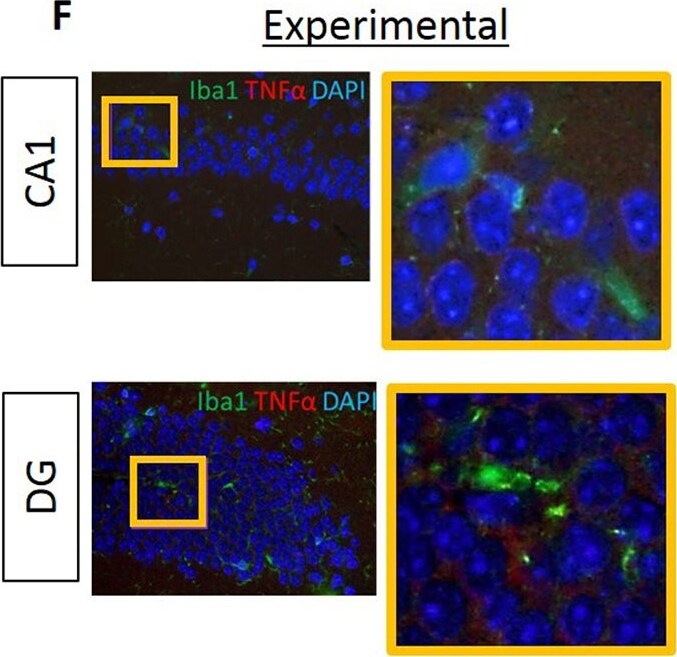
Immunocytochemistry/ Immunofluorescence: AIF-1/Iba1 Antibody [NB100-2833] -
Immunocytochemistry/ Immunofluorescence: AIF-1/Iba1 Antibody [NB100-2833] - Proinflammatory cytokines IL6, IL1 beta & TNF alpha are evident in the hippocampus of experimental but not in control mice.Data from IF microscopy & RT-PCR. (A-F) Results from IF microscopy. IL6 expression in control (A) & experimental (B) mice, IL1 beta expression in control (C) & experimental (D) mice & TNF alpha expression in control (E) & experimental (F) mice. N = 3 mice/group. (G-I) Gene expression of cytokines was detected by RT-PCR (G, H, I). In all cases, there is significantly higher gene expression of all three cytokines in experimental compared with control group (G, H, I). Green: Iba1, Red: cytokines, Blue: DAPI. N = 5 mice/group. Image collected & cropped by CiteAb from the following publication (https://pubmed.ncbi.nlm.nih.gov/30281647), licensed under a CC-BY license. Not internally tested by Novus Biologicals.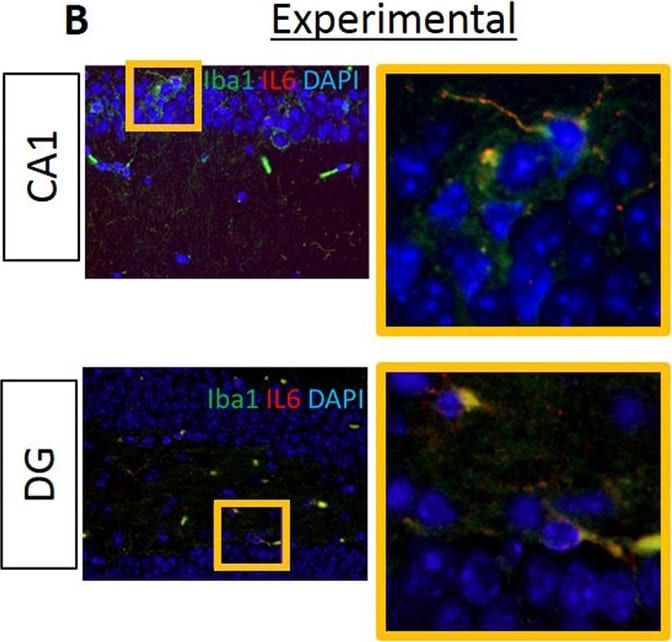
Immunocytochemistry/ Immunofluorescence: AIF-1/Iba1 Antibody [NB100-2833] -
Immunocytochemistry/ Immunofluorescence: AIF-1/Iba1 Antibody [NB100-2833] - Proinflammatory cytokines IL6, IL1 beta & TNF alpha are evident in the hippocampus of experimental but not in control mice.Data from IF microscopy & RT-PCR. (A-F) Results from IF microscopy. IL6 expression in control (A) & experimental (B) mice, IL1 beta expression in control (C) & experimental (D) mice & TNF alpha expression in control (E) & experimental (F) mice. N = 3 mice/group. (G-I) Gene expression of cytokines was detected by RT-PCR (G, H, I). In all cases, there is significantly higher gene expression of all three cytokines in experimental compared with control group (G, H, I). Green: Iba1, Red: cytokines, Blue: DAPI. N = 5 mice/group. Image collected & cropped by CiteAb from the following publication (https://pubmed.ncbi.nlm.nih.gov/30281647), licensed under a CC-BY license. Not internally tested by Novus Biologicals.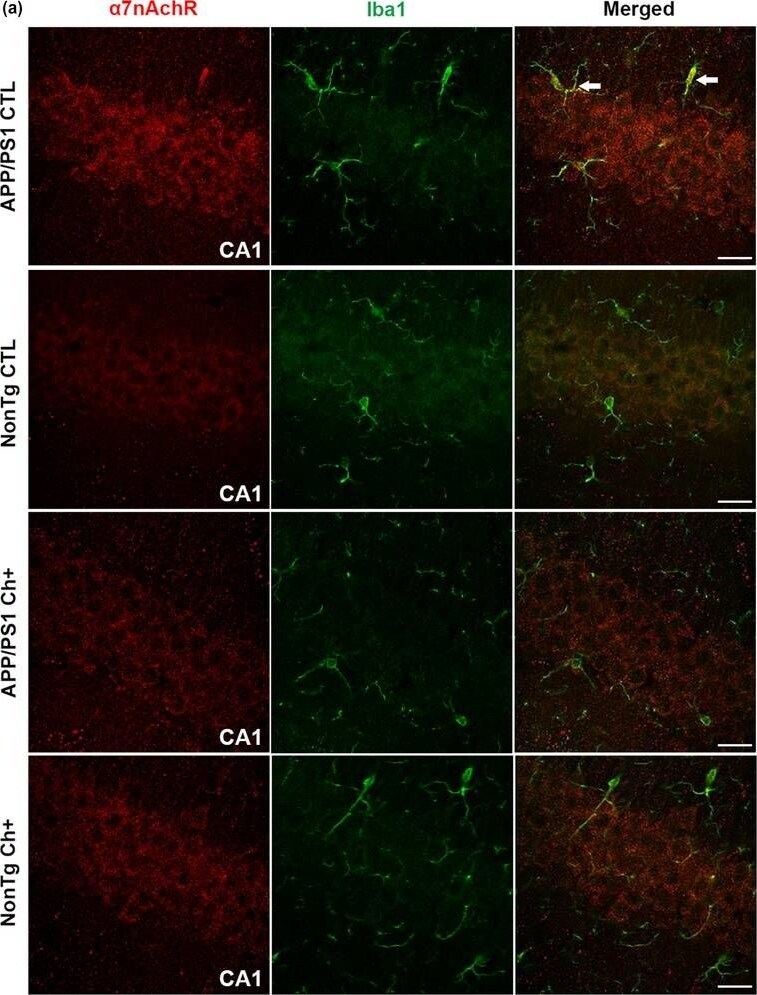
Immunocytochemistry/ Immunofluorescence: AIF-1/Iba1 Antibody [NB100-2833] -
Immunocytochemistry/ Immunofluorescence: AIF-1/Iba1 Antibody [NB100-2833] - Lifelong choline supplementation alters the expression of the alpha7 nicotinic acetylcholine receptor ( alpha 7nAchR) within microglia. (a) Photomicrographs depicting the Cornus Ammonis 1 (CA1) of the hippocampus from APP/PS1 & NonTg mice fluorescently stained for alpha 7nAchR & Iba1. Images taken at 40X; scale bar = 25 µm (n = 6 mice/group). (b) Quantitative analysis reveals a significant main effect of genotype, where the APP/PS1 mice have a significantly higher intensity of yellow pixels of alpha 7nAchR/Iba1 colocalization than the NonTg mice (p < .01). Additionally, we find a significant main effect of diet, where the Ch+ groups show a significant reduction in alpha 7nAchR/Iba1 colocalization than the CTL groups (p < .05). A genotype by diet interaction was found, where the APP/PS1 Ch+ mice show a significant reduction of alpha 7nR/Iba1 colocalization compared to the CTL counterparts (p < .001). The center line represents the median value, the limits represent the 25th & 75th percentile, & the whiskers represent the minimum & maximum value of the distribution. **p < .01, ***p < .001 Image collected & cropped by CiteAb from the following publication (https://pubmed.ncbi.nlm.nih.gov/31560162), licensed under a CC-BY license. Not internally tested by Novus Biologicals.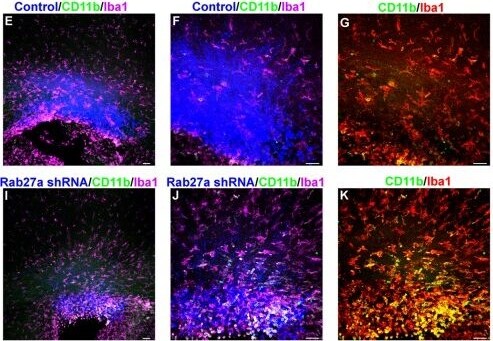
Immunocytochemistry/ Immunofluorescence: AIF-1/Iba1 Antibody [NB100-2833] -
Immunocytochemistry/ Immunofluorescence: AIF-1/Iba1 Antibody [NB100-2833] - (A–D) Images of coronal brain sections showing DiI (red) labeled EVs taken up by IBA1 (blue) & CD11b (green) positive microglia. (E,F) Tomato & control plasmid (blue) dorsal SVZ electroporations stained for CD11b (green) & IBA1 (magenta) at P7, 10x (E), 20x (F). (G,H) 20x magnification of E showing CD11b (green) & IBA1 (red) (G) or CD11b (H). (I,J) Tomato & Rab27a shRNA plasmid (blue) dorsal SVZ electroporations stained for CD11b (green) & IBA1 (magenta) at P7, 10x (I), 20x (J). (K,L) 20x magnification of I showing CD11b (green) & IBA1 (red) (K) or CD11b (L). (M) Western blot of Rab27a following shRNA mediated knockdown. (N) Images of coronal section stained for Rab27a (green) following control or Rab27a shRNA & tomato (magenta) co-electroporation at P0 & sacrificed 48 hrs later. (O) Quantification of CD11b positive microglia at P2 & P7 following control or Rab27a shRNA electroporation. Data are represented as mean ± SEM. ****p < 0.0001 A, E, I scale bar, 100 μm. B–D, F–H, J–L, N scale bar, 50 μm. Image collected & cropped by CiteAb from the following publication (https://pubmed.ncbi.nlm.nih.gov/30816224), licensed under a CC-BY license. Not internally tested by Novus Biologicals.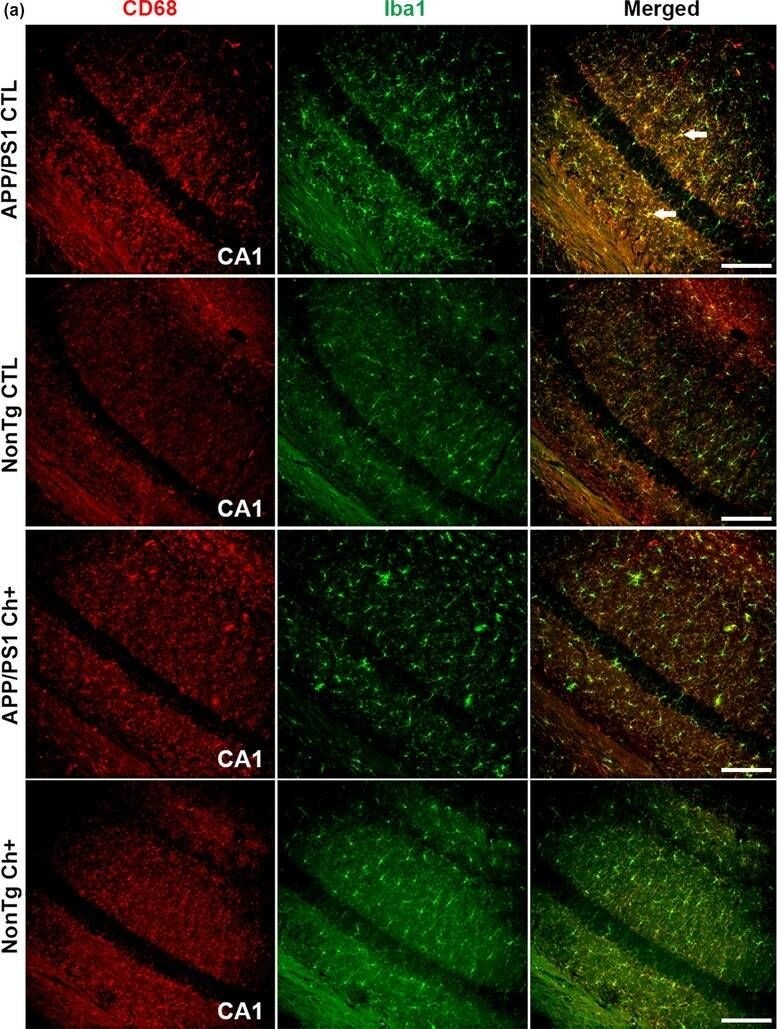
Immunocytochemistry/ Immunofluorescence: AIF-1/Iba1 Antibody [NB100-2833] -
Immunocytochemistry/ Immunofluorescence: AIF-1/Iba1 Antibody [NB100-2833] - Lifelong choline supplementation reduces activated microglia. (a) Photomicrographs depicting the Cornus Ammonis 1 (CA1) of the hippocampus from APP/PS1 & NonTg mice fluorescently stained for CD68 & Iba1. Images taken at 10X; Scale bar = 150 µm (n = 6 mice/group). Arrows illustrate colocalization of CD68/Iba1. (b) Quantitative analysis reveals a significant main effect of genotype, where the APP/PS1 mice have a significantly higher intensity of yellow pixels of CD68/Iba1 colocalization than the NonTg mice (p < .05). Additionally, we find a significant main effect of diet, where the Ch+ groups show a significant reduction in CD68/Iba1 colocalization than the CTL groups (p < .001). Data are presented as box plots. The center line represents the median value, the limits represent the 25th & 75th percentile, & the whiskers represent the minimum & maximum value of the distribution. *p < .05, ***p < .001 Image collected & cropped by CiteAb from the following publication (https://pubmed.ncbi.nlm.nih.gov/31560162), licensed under a CC-BY license. Not internally tested by Novus Biologicals.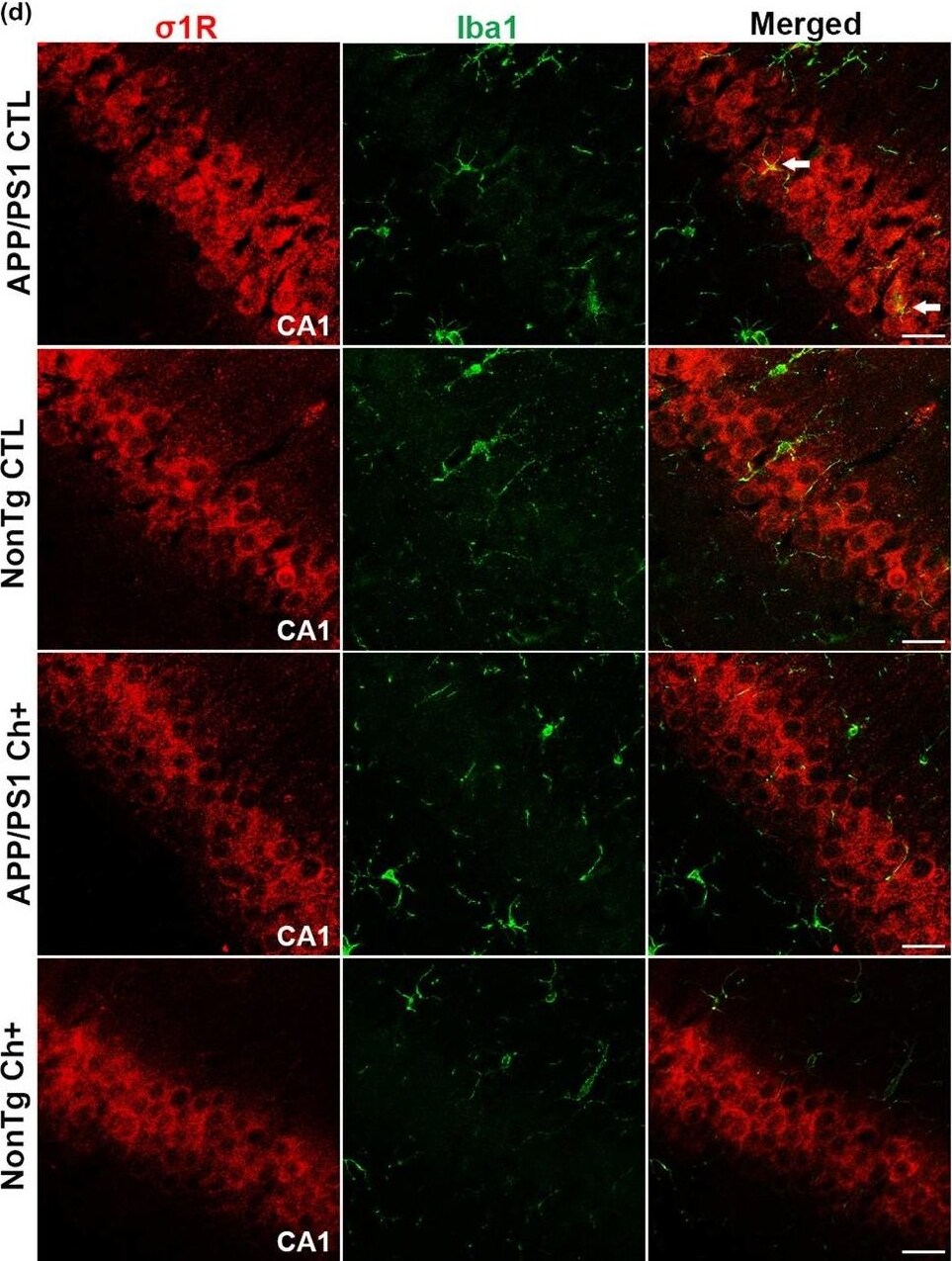
Immunocytochemistry/ Immunofluorescence: AIF-1/Iba1 Antibody [NB100-2833] -
Immunocytochemistry/ Immunofluorescence: AIF-1/Iba1 Antibody [NB100-2833] - Lifelong choline supplementation alters the expression of the Sigma‐1 receptor ( sigma 1R) within microglia. (a‐b) Representative Western blot of sigma 1R levels. Quantitative analysis of sigma 1R protein levels reveals a significant reduction with Ch+ (p < .05; n = 5/APP group; n = 4/NonTg group). (c‐d) Quantitative analysis reveals a significant main effect of genotype, where the APP/PS1 mice have a significantly higher intensity of yellow pixels of sigma 1R/Iba1 colocalization than the NonTg mice (p < .05, n = 6 APP/PS1 CTL, n = 5 APP/PS1 Ch+, n = 6 NonTg CTL, n = 6 NonTg Ch+). Additionally, we find a significant genotype by diet interaction where the APP/PS1 Ch+ mice show a significant reduction in sigma 1R/Iba1 colocalization than the APP/PS1 CTL mice (p < .001). Photomicrographs depicting the Cornus Ammonis 1 (CA1) of the hippocampus from APP/PS1 & NonTg mice fluorescently stained for the sigma 1R & Iba1; images taken at 40×; scale bar = 25 µm. Data are presented as box plots. The center line represents the median value, the limits represent the 25th & 75th percentile, & the whiskers represent the minimum & maximum value of the distribution. *p < .05, ***p < .001 Image collected & cropped by CiteAb from the following publication (https://pubmed.ncbi.nlm.nih.gov/31560162), licensed under a CC-BY license. Not internally tested by Novus Biologicals.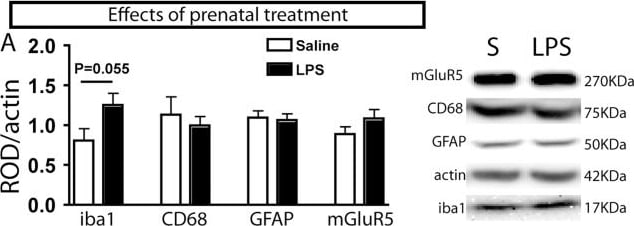
Western Blot: AIF-1/Iba1 Antibody [NB100-2833] -
Western Blot: AIF-1/Iba1 Antibody [NB100-2833] - Astrocytic marker was decreased in the brain of prenatally saline-exposed offspring, but not in the offspring prenatally exposed to LPS, following pharmacological activation of mGluR5.A prenatal administration of LPS did not change the brain expression level of iba1, CD68, GFAP or mGluR5 in 4-month-old mice (A). Postnatal CDPPB treatment reduced the GFAP level, without effect on iba1, CD68 or mGluR5 in the mice prenatally exposed to saline solution. The quantified molecular markers did not change in the brain of mice treated with MTEP (B). No change in iba1, CD68, GFAP or mGluR5 was observed in the brain of the mice prenatally exposed to LPS (C). Values are expressed as mean ± SEM. Abbreviations: MTEP, 3-((2-methyl-4-thiazolyl)ethynyl)pyridine; CDPPB, 3-cyano-N-(1,3-diphenyl-1H-pyrazol-5-yl) benzamide; CD68, cluster of differentiation 68); iba1, ionized calcium binding adaptor molecule-1; GFAP, glial fibrillary acidic protein; mGluR5, metabotropic glutamate receptor subtype 5; ROD, relative optical density. **p < 0.01 >> Image collected & cropped by CiteAb from the following publication (https://pubmed.ncbi.nlm.nih.gov/26536027), licensed under a CC-BY license. Not internally tested by Novus Biologicals.Applications for AIF-1/Iba1 Antibody
Application
Recommended Usage
Flow Cytometry
10 ug/mL
Immunocytochemistry/ Immunofluorescence
10 ug/mL
Immunohistochemistry-Paraffin
6 ug/ml
Peptide ELISA
Detection limit 1:128000
Application Notes
Use in Immunohistochemistry reported in scientific literature (PMID:31560162).
Flow Cytometry Panel Builder
Bio-Techne Knows Flow Cytometry
Save time and reduce costly mistakes by quickly finding compatible reagents using the Panel Builder Tool.
Advanced Features
- Spectra Viewer - Custom analysis of spectra from multiple fluorochromes
- Spillover Popups - Visualize the spectra of individual fluorochromes
- Antigen Density Selector - Match fluorochrome brightness with antigen density

Formulation, Preparation, and Storage
Purification
Immunogen affinity purified
Formulation
Tris saline (20 mM Tris pH 7.3, 150 mM NaCl), 0.5% BSA
Preservative
0.02% Sodium Azide
Concentration
0.5 mg/ml
Shipping
The product is shipped with polar packs. Upon receipt, store it immediately at the temperature recommended below.
Stability & Storage
Store at -20C. Avoid freeze-thaw cycles.
Background: AIF-1/Iba1
Several cellular functions have been associated with AIF-1/Iba1 expression including cell growth, cell migration, actin bundling, membrane ruffling, and phagocytic activity (2, 4). Iba1 induces Rac signaling through a PLC-gamma dependent pathway (1). Rac, a member of the Rho family of small GTPases, localizes with Iba1 and F-actin in membrane ruffles and phagocytic cups and plays a role in microglia activation. AIF-1/Iba1 induction in macrophages and microglia occur in association with immunological inflammatory processes in various disease states including endometriosis, cerebral infarction and rheumatoid arthritis (5). Immunodetection of Iba1 through flow cytometry, immunohistochemical or immunocytochemical applications is commonly used for identification and analysis of microglia.
References
1. Imai, Y., & Kohsaka, S. (2002). Intracellular signaling in M-CSF-induced microglia activation: Role of Iba1. GLIA. https://doi.org/10.1002/glia.10149
2. Deininger, M. H., Meyermann, R., & Schluesener, H. J. (2002). The allograft inflammatory factor-1 family of proteins. FEBS Letters. https://doi.org/10.1016/S0014-5793(02)02430-4
3. Utans, U., Quist, W. C., Mcmanus, B. M., Wilson, J. E., Arceci, R. J., Wallace, A. F., & Russell, M. E. (1996). Allograft inflammatory factor-1: A cytokine-responsive macrophage molecule expressed in transplanted human hearts. Transplantation. https://doi.org/10.1097/00007890-199605150-00018
4. Franco-Bocanegra, McAuley, Nicoll, & Boche. (2019). Molecular Mechanisms of Microglial Motility: Changes in Ageing and Alzheimer's Disease. Cells. https://doi.org/10.3390/cells8060639
5. Kimura, M., Kawahito, Y., Obayashi, H., Ohta, M., Hara, H., Adachi, T.,... Yoshikawa, T. (2007). A Critical Role for Allograft Inflammatory Factor-1 in the Pathogenesis of Rheumatoid Arthritis. The Journal of Immunology. https://doi.org/10.4049/jimmunol.178.5.3316
Long Name
Allograft Inflammatory Factor 1
Alternate Names
AIF1, IBA1, IRT1
Gene Symbol
AIF1
UniProt
Additional AIF-1/Iba1 Products
Product Documents for AIF-1/Iba1 Antibody
Certificate of Analysis
To download a Certificate of Analysis, please enter a lot or batch number in the search box below.
Product Specific Notices for AIF-1/Iba1 Antibody
This product is for research use only and is not approved for use in humans or in clinical diagnosis. Primary Antibodies are guaranteed for 1 year from date of receipt.
Related Research Areas
Citations for AIF-1/Iba1 Antibody
 Powered by Bioz
Customer Reviews for AIF-1/Iba1 Antibody
There are currently no reviews for this product. Be the first to review AIF-1/Iba1 Antibody and earn rewards!
Have you used AIF-1/Iba1 Antibody?
Submit a review and receive an Amazon gift card!
$25/€18/£15/$25CAN/¥2500 for a review with an image
$10/€7/£6/$10CAN/¥1110 for a review without an image
Submit a review
Protocols
Find general support by application which include: protocols, troubleshooting, illustrated assays, videos and webinars.
- 7-Amino Actinomycin D (7-AAD) Cell Viability Flow Cytometry Protocol
- Antigen Retrieval Protocol (PIER)
- Antigen Retrieval for Frozen Sections Protocol
- Appropriate Fixation of IHC/ICC Samples
- Cellular Response to Hypoxia Protocols
- Chromogenic IHC Staining of Formalin-Fixed Paraffin-Embedded (FFPE) Tissue Protocol
- Chromogenic Immunohistochemistry Staining of Frozen Tissue
- ClariTSA™ Fluorophore Kits
- Detection & Visualization of Antibody Binding
- ELISA Sample Preparation & Collection Guide
- ELISA Troubleshooting Guide
- Extracellular Membrane Flow Cytometry Protocol
- Flow Cytometry Protocol for Cell Surface Markers
- Flow Cytometry Protocol for Staining Membrane Associated Proteins
- Flow Cytometry Staining Protocols
- Flow Cytometry Troubleshooting Guide
- Fluorescent IHC Staining of Frozen Tissue Protocol
- Graphic Protocol for Heat-induced Epitope Retrieval
- Graphic Protocol for the Preparation and Fluorescent IHC Staining of Frozen Tissue Sections
- Graphic Protocol for the Preparation and Fluorescent IHC Staining of Paraffin-embedded Tissue Sections
- Graphic Protocol for the Preparation of Gelatin-coated Slides for Histological Tissue Sections
- How to Run an R&D Systems DuoSet ELISA
- How to Run an R&D Systems Quantikine ELISA
- How to Run an R&D Systems Quantikine™ QuicKit™ ELISA
- ICC Cell Smear Protocol for Suspension Cells
- ICC Immunocytochemistry Protocol Videos
- ICC for Adherent Cells
- IHC Sample Preparation (Frozen sections vs Paraffin)
- Immunocytochemistry (ICC) Protocol
- Immunocytochemistry Troubleshooting
- Immunofluorescence of Organoids Embedded in Cultrex Basement Membrane Extract
- Immunofluorescent IHC Staining of Formalin-Fixed Paraffin-Embedded (FFPE) Tissue Protocol
- Immunohistochemistry (IHC) and Immunocytochemistry (ICC) Protocols
- Immunohistochemistry Frozen Troubleshooting
- Immunohistochemistry Paraffin Troubleshooting
- Intracellular Flow Cytometry Protocol Using Alcohol (Methanol)
- Intracellular Flow Cytometry Protocol Using Detergents
- Intracellular Nuclear Staining Flow Cytometry Protocol Using Detergents
- Intracellular Staining Flow Cytometry Protocol Using Alcohol Permeabilization
- Intracellular Staining Flow Cytometry Protocol Using Detergents to Permeabilize Cells
- Preparing Samples for IHC/ICC Experiments
- Preventing Non-Specific Staining (Non-Specific Binding)
- Primary Antibody Selection & Optimization
- Propidium Iodide Cell Viability Flow Cytometry Protocol
- Protocol for Heat-Induced Epitope Retrieval (HIER)
- Protocol for Liperfluo
- Protocol for Making a 4% Formaldehyde Solution in PBS
- Protocol for VisUCyte™ HRP Polymer Detection Reagent
- Protocol for the Characterization of Human Th22 Cells
- Protocol for the Characterization of Human Th9 Cells
- Protocol for the Fluorescent ICC Staining of Cell Smears - Graphic
- Protocol for the Fluorescent ICC Staining of Cultured Cells on Coverslips - Graphic
- Protocol for the Preparation & Fixation of Cells on Coverslips
- Protocol for the Preparation and Chromogenic IHC Staining of Frozen Tissue Sections
- Protocol for the Preparation and Chromogenic IHC Staining of Frozen Tissue Sections - Graphic
- Protocol for the Preparation and Chromogenic IHC Staining of Paraffin-embedded Tissue Sections
- Protocol for the Preparation and Chromogenic IHC Staining of Paraffin-embedded Tissue Sections - Graphic
- Protocol for the Preparation and Fluorescent ICC Staining of Cells on Coverslips
- Protocol for the Preparation and Fluorescent ICC Staining of Non-adherent Cells
- Protocol for the Preparation and Fluorescent ICC Staining of Stem Cells on Coverslips
- Protocol for the Preparation and Fluorescent IHC Staining of Frozen Tissue Sections
- Protocol for the Preparation and Fluorescent IHC Staining of Paraffin-embedded Tissue Sections
- Protocol for the Preparation of Gelatin-coated Slides for Histological Tissue Sections
- Protocol for the Preparation of a Cell Smear for Non-adherent Cell ICC - Graphic
- Protocol: Annexin V and PI Staining by Flow Cytometry
- Protocol: Annexin V and PI Staining for Apoptosis by Flow Cytometry
- Quantikine HS ELISA Kit Assay Principle, Alkaline Phosphatase
- Quantikine HS ELISA Kit Principle, Streptavidin-HRP Polymer
- Sandwich ELISA (Colorimetric) – Biotin/Streptavidin Detection Protocol
- Sandwich ELISA (Colorimetric) – Direct Detection Protocol
- TUNEL and Active Caspase-3 Detection by IHC/ICC Protocol
- The Importance of IHC/ICC Controls
- Troubleshooting Guide: ELISA
- Troubleshooting Guide: Fluorokine Flow Cytometry Kits
- Troubleshooting Guide: Immunohistochemistry
- View all Protocols, Troubleshooting, Illustrated assays and Webinars
Loading...