CD38 Antibody (AT2) - Azide and BSA Free
Novus Biologicals | Catalog # NBP3-11588

Key Product Details
Species Reactivity
Human
Applications
Flow Cytometry, Immunofluorescence, Immunocytochemistry/ Immunofluorescence
Label
Unconjugated
Antibody Source
Monoclonal Mouse IgG3 Kappa Clone # AT2
Format
Azide and BSA Free
Loading...
Product Specifications
Immunogen
Human T cell line CCRF-CEM
Localization
Cell surface, cytoplasm and nucleus
Clonality
Monoclonal
Host
Mouse
Isotype
IgG3 Kappa
Description
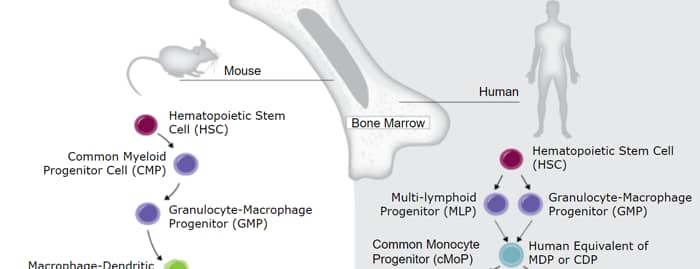
This MAb reacts with a 45kDa glycopeptide, which is a type II membrane glycoprotein with a transmembrane sequence near the NH2terminus. CD38 is a type II transmembrane glycoprotein that is present on early B- and T-cell lineages and activated B- and T-cells but is absent from most mature resting peripheral lymphocytes. CD38 is also found on thymocytes, pre-B cells, germinal center B-cells, mitogen-activated T-cells, monocytes and Ig-secreting plasma cells. CD38 is expressed on CD34+ cells. The CD34+CD38- population of hematopoietic stems cells defines the most pluripotent cells (e.g. blast colony forming cells).
1.0 mg/ml of antibody purified from Bioreactor Concentrate by Protein A or G chromatography supplied in 10 mM PBS, pH 7.4 WITHOUT BSA & azide.
Antibody with azide - store at 2 to 8C.
1.0 mg/ml of antibody purified from Bioreactor Concentrate by Protein A or G chromatography supplied in 10 mM PBS, pH 7.4 WITHOUT BSA & azide.
Antibody with azide - store at 2 to 8C.
Applications for CD38 Antibody (AT2) - Azide and BSA Free
Application
Recommended Usage
Flow Cytometry
0.5 - 1 ug/million cells in 0.1 mL
Application Notes
Optimal dilution for a specific application should be determined.
Flow Cytometry Panel Builder
Bio-Techne Knows Flow Cytometry
Save time and reduce costly mistakes by quickly finding compatible reagents using the Panel Builder Tool.
Advanced Features
- Spectra Viewer - Custom analysis of spectra from multiple fluorochromes
- Spillover Popups - Visualize the spectra of individual fluorochromes
- Antigen Density Selector - Match fluorochrome brightness with antigen density

Formulation, Preparation, and Storage
Purification
Protein A or G purified
Formulation
10 mM PBS, pH 7.4
Format
Azide and BSA Free
Preservative
No Preservative
Concentration
1 mg/ml
Shipping
The product is shipped with polar packs. Upon receipt, store it immediately at the temperature recommended below.
Stability & Storage
Store at -20C. Avoid freeze-thaw cycles.
Background: CD38
As described above, CD38 is highly expressed in plasma cells and, as a result, is a target for treating multiple myeloma (MM), the cancer of white blood cells (4,6). The anti-CD38 monoclonal antibody daratumumab is one specific treatment for MM (4,6). Daratumumab has been shown to target MM cells through antibody-dependent cellular cytotoxicity and antibody dependent cellular phagocytosis (4). Additionally, CD38 has a potential role in neurodegenerative disorders and neuroinflammation as elucidated CD38's high expression in neurons, astrocytes, and microglia along with its enzymatic role in NAD degradation (3). Reduced NAD levels is a consequence of aging and occurs during neurodegeneration (3). Furthermore, murine studies have found that CD38 deletion inhibits neuroinflammation and neurodegeneration and therefore might be a potential therapeutic target (3). Similarly, CD38 inhibitors, like quercetin and luteolin, are used to treat age-related diseases and metabolic disorders (7).
References
1. Malavasi, F., Funaro, A., Alessio, M., DeMonte, L. B., Ausiello, C. M., Dianzani, U., Lanza, F., Magrini, E., Momo, M., & Roggero, S. (1992). CD38: a multi-lineage cell activation molecule with a split personality. International journal of clinical & laboratory research. https://doi.org/10.1007/BF02591400
2. Malavasi, F., Deaglio, S., Funaro, A., Ferrero, E., Horenstein, A. L., Ortolan, E., Vaisitti, T., & Aydin, S. (2008). Evolution and function of the ADP ribosyl cyclase/CD38 gene family in physiology and pathology. Physiological reviews. https://doi.org/10.1152/physrev.00035.2007
3. Guerreiro, S., Privat, A. L., Bressac, L., & Toulorge, D. (2020). CD38 in Neurodegeneration and Neuroinflammation. Cells. https://doi.org/10.3390/cells9020471
4. van de Donk, N., Richardson, P. G., & Malavasi, F. (2018). CD38 antibodies in multiple myeloma: back to the future. Blood. https://doi.org/10.1182/blood-2017-06-740944
5. Lund, F. E., Cockayne, D. A., Randall, T. D., Solvason, N., Schuber, F., & Howard, M. C. (1998). CD38: a new paradigm in lymphocyte activation and signal transduction. Immunological reviews. https://doi.org/10.1111/j.1600-065x.1998.tb01573.x
6. Glaria, E., & Valledor, A. F. (2020). Roles of CD38 in the Immune Response to Infection. Cells. https://doi.org/10.3390/cells9010228
7. Rajman, L., Chwalek, K., & Sinclair, D. A. (2018). Therapeutic Potential of NAD-Boosting Molecules: The In Vivo Evidence. Cell metabolism. https://doi.org/10.1016/j.cmet.2018.02.011
Long Name
Cluster of Differentiation 38
Alternate Names
ADP-ribosyl Cyclase, CD38, Cyclic ADP-ribose Hydrolase
Gene Symbol
CD38
Additional CD38 Products
Product Documents for CD38 Antibody (AT2) - Azide and BSA Free
Certificate of Analysis
To download a Certificate of Analysis, please enter a lot or batch number in the search box below.
Product Specific Notices for CD38 Antibody (AT2) - Azide and BSA Free
This product is for research use only and is not approved for use in humans or in clinical diagnosis. Primary Antibodies are guaranteed for 1 year from date of receipt.
Customer Reviews for CD38 Antibody (AT2) - Azide and BSA Free
There are currently no reviews for this product. Be the first to review CD38 Antibody (AT2) - Azide and BSA Free and earn rewards!
Have you used CD38 Antibody (AT2) - Azide and BSA Free?
Submit a review and receive an Amazon gift card!
$25/€18/£15/$25CAN/¥2500 Yen for a review with an image
$10/€7/£6/$10CAN/¥1110 Yen for a review without an image
Submit a review
Protocols
Find general support by application which include: protocols, troubleshooting, illustrated assays, videos and webinars.
- 7-Amino Actinomycin D (7-AAD) Cell Viability Flow Cytometry Protocol
- Appropriate Fixation of IHC/ICC Samples
- Cellular Response to Hypoxia Protocols
- ClariTSA™ Fluorophore Kits
- Detection & Visualization of Antibody Binding
- Extracellular Membrane Flow Cytometry Protocol
- Flow Cytometry Protocol for Cell Surface Markers
- Flow Cytometry Protocol for Staining Membrane Associated Proteins
- Flow Cytometry Staining Protocols
- Flow Cytometry Troubleshooting Guide
- ICC Cell Smear Protocol for Suspension Cells
- ICC Immunocytochemistry Protocol Videos
- ICC for Adherent Cells
- Immunocytochemistry (ICC) Protocol
- Immunocytochemistry Troubleshooting
- Immunofluorescence of Organoids Embedded in Cultrex Basement Membrane Extract
- Immunohistochemistry (IHC) and Immunocytochemistry (ICC) Protocols
- Intracellular Flow Cytometry Protocol Using Alcohol (Methanol)
- Intracellular Flow Cytometry Protocol Using Detergents
- Intracellular Nuclear Staining Flow Cytometry Protocol Using Detergents
- Intracellular Staining Flow Cytometry Protocol Using Alcohol Permeabilization
- Intracellular Staining Flow Cytometry Protocol Using Detergents to Permeabilize Cells
- Preparing Samples for IHC/ICC Experiments
- Preventing Non-Specific Staining (Non-Specific Binding)
- Primary Antibody Selection & Optimization
- Propidium Iodide Cell Viability Flow Cytometry Protocol
- Protocol for Liperfluo
- Protocol for VisUCyte™ HRP Polymer Detection Reagent
- Protocol for the Characterization of Human Th22 Cells
- Protocol for the Characterization of Human Th9 Cells
- Protocol for the Fluorescent ICC Staining of Cell Smears - Graphic
- Protocol for the Fluorescent ICC Staining of Cultured Cells on Coverslips - Graphic
- Protocol for the Preparation and Fluorescent ICC Staining of Cells on Coverslips
- Protocol for the Preparation and Fluorescent ICC Staining of Non-adherent Cells
- Protocol for the Preparation and Fluorescent ICC Staining of Stem Cells on Coverslips
- Protocol for the Preparation of a Cell Smear for Non-adherent Cell ICC - Graphic
- Protocol: Annexin V and PI Staining by Flow Cytometry
- Protocol: Annexin V and PI Staining for Apoptosis by Flow Cytometry
- TUNEL and Active Caspase-3 Detection by IHC/ICC Protocol
- The Importance of IHC/ICC Controls
- Troubleshooting Guide: Fluorokine Flow Cytometry Kits
- View all Protocols, Troubleshooting, Illustrated assays and Webinars
FAQs for CD38 Antibody (AT2) - Azide and BSA Free
Showing
1
-
1 of
1 FAQ
Showing All
-
Q: Which is your best antibody anti-human CD38 for IHC-P?
A:
We do have a number of CD38 antibodies validated in IHC-P, please use the filters on the left side of the search page to help find the product that mostly suits to your experimental design.
Loading...
Associated Pathways