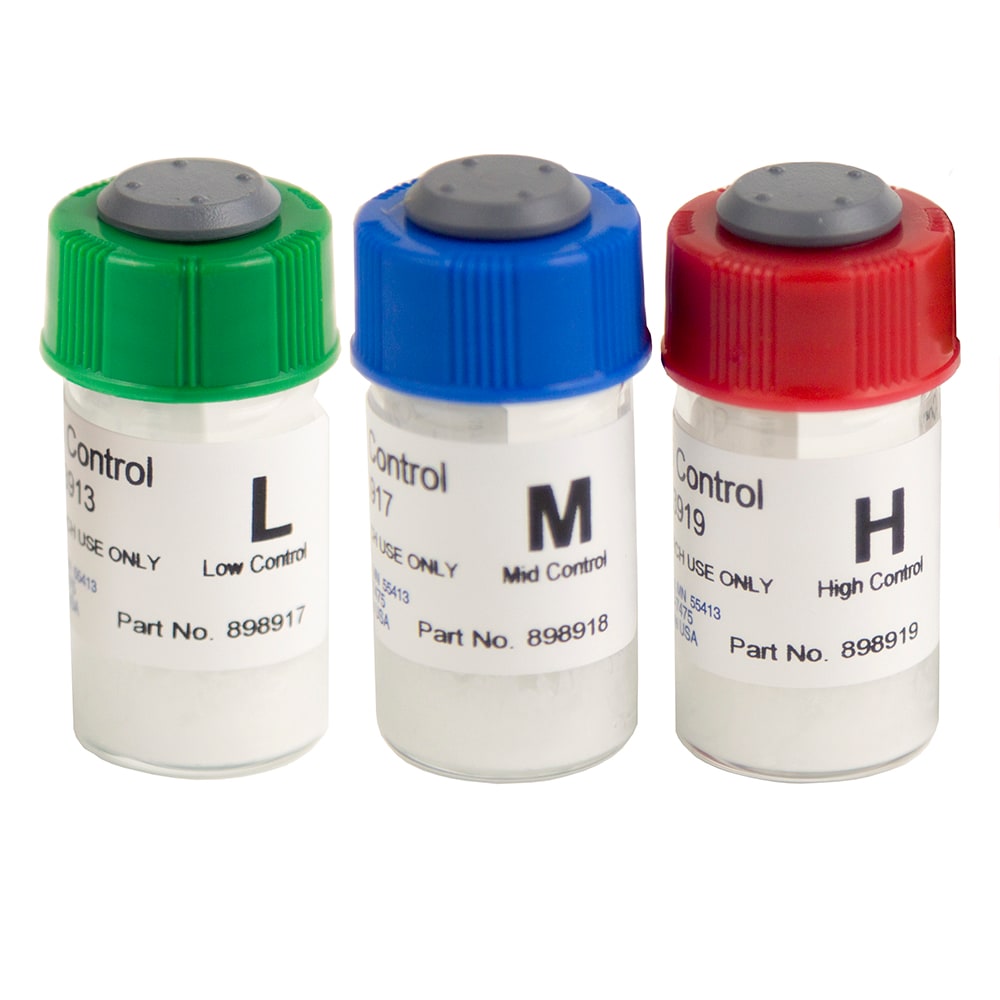
Human CD14 Quantikine QuicKit Control Group 263

R&D Systems | Catalog # QC263

For use with catalog number QK383
R&D Systems
Loading...

Key Product Details

Species

Human

Applications

Control
Loading...

Formulation, Preparation, and Storage

Shipping

The product is shipped at ambient temperature. Upon receipt, store it immediately at the temperature recommended below.

Storage

Store the unopened product at 2 - 8 °C. Do not use past expiration date.

Background: CD14

CD14 is a glycoprotein that mediates the interaction of lipopolysaccharide (LPS, endotoxin) with cells, thereby signaling the presence of gram-negative bacteria (1-3). CD14 is either soluble (CD14) (4, 5) or membrane-bound (mCD14) by a glycosylphosphatidylinositol (GPI) anchor (6, 7). mCD14 is a 55 kDa glycoprotein (1), while CD14 varies from about 43 to 53 kDa, depending on the degree of glycosylation and whether it was synthesized without the anchor or was shed by phospholipase cleavage of the anchor or by proteolysis (12-14). There is no evidence for different mRNAs for m- and CD14. There is no apparent sequence homology with other proteins. The sequence of human CD14 is 63-73% identical to that of mouse, rat, or rabbit CD14 (15).
CD14 is expressed primarily on myeloid cells, such as monocytes, macrophages and neutrophils (1-3), the cells most sensitive to LPS, and to a lesser extent on other cells, such as B cells (8) and a circulating dendritic cell progenitor (9). CD14 appears to mediate LPS stimulation of cells that do not express mCD14 (10, 11), such as endothelial, epithelial and smooth-muscle cells. CD14 is found in both serum and urine (5).
The binding of LPS to CD14 requires an acute phase protein, LPS-binding protein (LBP) (16). The relationship of mCD14, CD14, LPS and LBP is complicated. At low concentrations of LPS, LBP is essential for the binding of LPS to CD14, but at high concentrations, LBP may actually inhibit binding of LPS to CD14. In addition, CD14 may compete with mCD14 for LPS (17) and may serve to help clear LPS (18). These four factors thus appear to participate in a complex feedback mechanism of immune regulation involving both up-regulation and down-regulation of the inflammatory process triggered by LPS. It is loss of control of this mechanism that appears to lead to septic shock. LPS-bound CD14 signals production of inflammatory cytokines and other inflammatory proteins, but the mechanism of signal transduction is unclear. Since a GPI anchor is not transmembrane, there presumably is another transmembrane protein on cells through which LPS-bound CD14 transmits a signal (19).
In addition to its well known role in gram-negative infections, CD14 likely serves other functions as well. It recognizes soluble peptidylglycan from gram-positive cell walls (20), and it has been reported to bind apoptotic cells and induce their phagocytosis (21).

Alternate Names

CD14

Entrez Gene IDs

929 (Human); 12475 (Mouse); 60350 (Rat); 100037938 (Porcine)

Gene Symbol

CD14

Additional CD14 Products

Product Documents for Human CD14 Quantikine QuicKit Control Group 263

Certificate of Analysis

To download a Certificate of Analysis, please enter a lot or batch number in the search box below.

Note: Certificate of Analysis not available for kit components.

Product Specific Notices for Human CD14 Quantikine QuicKit Control Group 263

For research use only

Customer Reviews for Human CD14 Quantikine QuicKit Control Group 263

There are currently no reviews for this product. Be the first to review Human CD14 Quantikine QuicKit Control Group 263 and earn rewards!

Have you used Human CD14 Quantikine QuicKit Control Group 263?

Submit a review and receive an Amazon gift card!

$25/€18/£15/$25CAN/¥2500 Yen for a review with an image

$10/€7/£6/$10CAN/¥1110 Yen for a review without an image

Submit a review
Amazon Gift Card

FAQs

No product specific FAQs exist for this product.

View all FAQs for ELISA Kits