Human CD14 Quantikine QuicKit ELISA

R&D Systems | Catalog # QK383

R&D Systems
Loading...

Key Product Details

Assay Length

80 minutes

Sample Type & Volume Required Per Well

Cell Culture Supernates (50 µL), Serum (10 µL), EDTA Plasma (10 µL), Heparin Plasma (10 µL)

Sensitivity

18.8 pg/mL

Assay Range

188-12000 pg/mL (Cell Culture Supernates, Serum, EDTA Plasma, Heparin Plasma)
Loading...

Product Summary for Human CD14 Quantikine QuicKit ELISA

The Quantikine® QuicKit™ Human CD14 Immunoassay is a one step, 80-minute solid phase ELISA designed to measure human CD14 levels in cell culture supernates, serum, and plasma. It contains CHO cell-expressed recombinant human CD14 and antibodies raised against the recombinant protein. Results obtained for naturally occurring human CD14 showed linear curves that were parallel to the standard curves obtained using the recombinant QuicKit™ standards. These results indicate that this kit can be used determine relative mass values for natural CD14.

Product Specifications

Measurement

Quantitative ELISA

Detection Method

Colorimetric - 450nm (TMB)

Conjugate

HRP

Species

Human

Specificity

Natural and recombinant human CD14.

Cross-reactivity

< 0.5% cross-reactivity observed with available related molecules. < 50% cross-species reactivity observed with species tested.

Interference

No significant interference observed with available related molecules.

Sample Values

Serum/Plasma - Samples from apparently healthy volunteers were evaluated for the presence of human CD14 in this assay. No medical histories were available for the donors used in this study.

Sample TypeMean (ng/mL)Range (ng/mL)
Serum (n=10)19011457-2260
EDTA plasma (n=10)15341040-2015
Heparin plasma (n=10)16781330-2480

Cell Culture Supernates - Human peripheral blood mononuclear cells (PBMCs) (1 x 10⁶ cells/mL) were cultured in RPMI supplemented with 10% fetal bovine serum, 2 mM L-glutamine, 100 U/mL penicillin, and 100 μg/mL streptomycin sulfate. An aliquots of the cell culture supernates was removed after 1 day, assayed for human CD14, and measured 6561 pg/mL. 

Precision

Intra-Assay Precision (Precision within an assay) Two samples of known concentration were tested twenty times on one plate to assess intra-assay precision.

Inter-Assay Precision (Precision between assays) Two samples of known concentration were tested in ten separate assays to assess inter-assay precision. Assays were performed by at least three technicians.

Cell Culture Supernates, EDTA Plasma, Heparin Plasma, Serum

Intra-Assay Precision Inter-Assay Precision
Sample 1 2 1 2
n 20 20 10 10
Mean (pg/mL) 1228 8177 1282 8360
Standard Deviation 28.3 262 77.4 339
CV% 2.3 3.2 6.0 4.1

Recovery for Human CD14 Quantikine QuicKit ELISA

The recovery of human CD14 spiked to three different levels in samples throughout the range of the assay in various matrices was evaluated.

Sample Type Average % Recovery Range %
Cell Culture Supernates (n=4) 97 92-100

Linearity

To assess the linearity of the assay, samples containing high concentrations of human CD14 were diluted with calibrator diluent to produce samples with values within the dynamic range of the assay. 

HIV-Gag p24 Linearity
HIV-1 Gag p24 Linearity
Human CD14 ELISA Linearity

Scientific Data Images for Human CD14 Quantikine QuicKit ELISA

HIV-1 Gag p24 Standard Curve

HIV-1 Gag p24 Standard Curve

HIV-1 Gag p24 Standard Curve

HIV-1 Gag p24 Standard Curve

Human CD14 Standard Curve

Human CD14 Standard Curve

Preparation and Storage

Shipping

The product is shipped at ambient temperature. Upon receipt, store it immediately at the temperature recommended below.

Stability & Storage

Store the unopened product at 2 - 8 °C. Do not use past expiration date.

Background: CD14

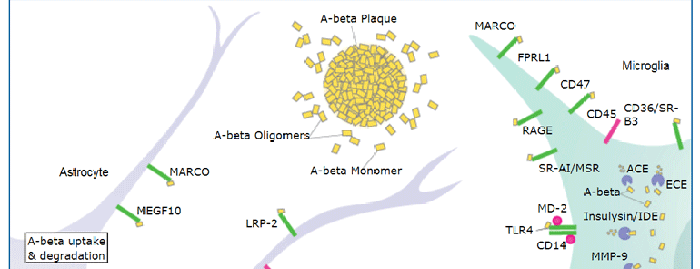
CD14 is a glycoprotein that mediates the interaction of lipopolysaccharide (LPS, endotoxin) with cells, thereby signaling the presence of gram-negative bacteria (1-3). CD14 is either soluble (CD14) (4, 5) or membrane-bound (mCD14) by a glycosylphosphatidylinositol (GPI) anchor (6, 7). mCD14 is a 55 kDa glycoprotein (1), while CD14 varies from about 43 to 53 kDa, depending on the degree of glycosylation and whether it was synthesized without the anchor or was shed by phospholipase cleavage of the anchor or by proteolysis (12-14). There is no evidence for different mRNAs for m- and CD14. There is no apparent sequence homology with other proteins. The sequence of human CD14 is 63-73% identical to that of mouse, rat, or rabbit CD14 (15). 
mCD14 is expressed primarily on myeloid cells, such as monocytes, macrophages and neutrophils (1-3), the cells most sensitive to LPS, and to a lesser extent on other cells, such as B cells (8) and a circulating dendritic cell progenitor (9). CD14 appears to mediate LPS stimulation of cells that do not express mCD14 (10, 11), such as endothelial, epithelial and smooth-muscle cells. CD14 is found in both serum and urine (5).  
The binding of LPS to CD14 requires an acute phase protein, LPS-binding protein (LBP) (16). The relationship of mCD14, CD14, LPS and LBP is complicated. At low concentrations of LPS, LBP is essential for the binding of LPS to CD14, but at high concentrations, LBP may actually inhibit binding of LPS to CD14. In addition, CD14 may compete with mCD14 for LPS (17) and may serve to help clear LPS (18). These four factors thus appear to participate in a complex feedback mechanism of immune regulation involving both up-regulation and down-regulation of the inflammatory process triggered by LPS. It is loss of control of this mechanism that appears to lead to septic shock. LPS-bound CD14 signals production of inflammatory cytokines and other inflammatory proteins, but the mechanism of signal transduction is unclear. Since a GPI anchor is not transmembrane, there presumably is another transmembrane protein on cells through which LPS-bound CD14 transmits a signal (19). 
In addition to its well known role in gram-negative infections, CD14 likely serves other functions as well. It recognizes soluble peptidylglycan from gram-positive cell walls (20), and it has been reported to bind apoptotic cells and induce their phagocytosis (21).

Alternate Names

CD14

Entrez Gene IDs

929 (Human); 12475 (Mouse); 60350 (Rat); 100037938 (Porcine)

Gene Symbol

CD14

Additional CD14 Products

Product Documents for Human CD14 Quantikine QuicKit ELISA

Certificate of Analysis

To download a Certificate of Analysis, please enter a lot or batch number in the search box below.

Note: Certificate of Analysis not available for kit components.

Product Specific Notices for Human CD14 Quantikine QuicKit ELISA

For research use only

Citations for Human CD14 Quantikine QuicKit ELISA

Customer Reviews for Human CD14 Quantikine QuicKit ELISA

There are currently no reviews for this product. Be the first to review Human CD14 Quantikine QuicKit ELISA and earn rewards!

Have you used Human CD14 Quantikine QuicKit ELISA?

Submit a review and receive an Amazon gift card!

$25/€18/£15/$25CAN/¥2500 Yen for a review with an image

$10/€7/£6/$10CAN/¥1110 Yen for a review without an image

Submit a review
Amazon Gift Card

Protocols

View specific protocols for Human CD14 Quantikine QuicKit ELISA (QK383):

These assays utilize an anti-tag coated microplate. Standards, samples, and controls are added to plate, followed by subsequent addition of an antibody cocktail. Following a 1 hour incubation, plates are washed and substrate is added and incubated for 20 minutes. Stop solution is then added and plates are read using a standard microplate reader.

QuicKit ELISA assay procedure

Find general support by application which include: protocols, troubleshooting, illustrated assays, videos and webinars.

FAQs

No product specific FAQs exist for this product.

View all FAQs for ELISA Kits