
DPPIV/CD26 (EC 3.4.14.5) is a serine exopeptidase that releases Xaa-Pro dipeptides from the N-terminus of oligo- and polypeptides (1, 2). It is a type II membrane protein consisting of a short cytoplasmic tail, a transmembrane domain, and a long extracellular domain (3‑5). The extracellular domain contains glycosylation sites, a cysteine-rich region and the catalytic active site (Ser, Asp and His charge relay system). The amino acid sequence of the mouse DPPIV/CD26 extracellular domain is 84% and 91% identical to the human and rat counterparts, respectively. In the native state, DPPIV/CD26 is present as a noncovalently linked homodimer on the cell surface of a variety of cell types. The soluble form is also detectable in human serum and other body fluids, the levels of which may have clinical significance in patients with cancer, liver and kidney diseases, and depression. DPPIV/CD26 plays an important role in many biological and pathological processes. It functions as T cell-activating molecule (THAM). It serves as a cofactor for entry of HIV in CD4+ cells (6). It binds adenosine deaminase, the deficiency of which causes severe combined immunodeficiency disease in humans (7). It cleaves chemokines such as stromal-cell-derived factor 1 alpha and macrophage-derived chemokine (8, 9). It degrades peptide hormones such as glucagon (10). It truncates procalcitonin, a marker for systemic bacterial infections with elevated levels detected in patients with thermal injury, sepsis and severe infection, and in children with bacterial meningitis (11).
Human DPPIV/CD26 Antibody (222113) [Alexa Fluor™ Plus 405]
R&D Systems | Catalog # FAB1180AFP405

![Human DPPIV/CD26 Antibody (222113) [Alexa Fluor™ Plus 405]](https://resources.rndsystems.com/images/icons/RnD-Default-Product-Image_Antibodies-Icon.svg "Human DPPIV/CD26 Antibody (222113) [Alexa Fluor™ Plus 405]")
Key Product Details
Species Reactivity
Applications
Label
Antibody Source
Product Specifications
Immunogen
Specificity
Clonality
Host
Isotype
Applications for Human DPPIV/CD26 Antibody (222113) [Alexa Fluor™ Plus 405]
CyTOF-ready
ELISA Capture (Matched Antibody Pair)
Flow Cytometry
Western Blot
Spectra Viewer
Plan Your Experiments
Use our spectra viewer to interactively plan your experiments, assessing multiplexing options. View the excitation and emission spectra for our fluorescent dye range and other commonly used dyes.
Spectra Viewer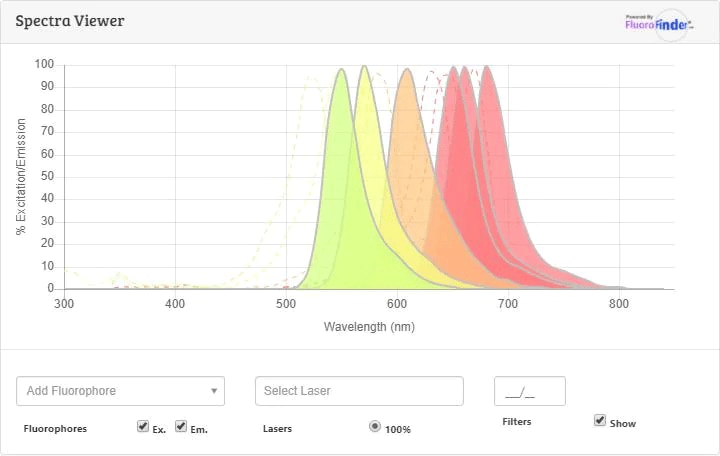
Flow Cytometry Panel Builder
Bio-Techne Knows Flow Cytometry
Save time and reduce costly mistakes by quickly finding compatible reagents using the Panel Builder Tool.
Advanced Features
- Spectra Viewer - Custom analysis of spectra from multiple fluorochromes
- Spillover Popups - Visualize the spectra of individual fluorochromes
- Antigen Density Selector - Match fluorochrome brightness with antigen density

Formulation, Preparation, and Storage
Formulation
Shipping
Stability & Storage
Background: DPPIV/CD26
References
- Misumi and Ikehara (1998) in Handbook of Proteolytic Enzymes. Barrett, et al. (eds) San Diego: Academic Press, p. 378.
- Ikehara, et al. (1994) Methods Enzymol. 244:215.
- Marguet, et al. (1992) J. Biol. Chem. 267:2200.
- Bernard, et al. (1994) Biochemistry 33:15204.
- Viver, et al. (1991) J. Immunol. 147:447.
- Callebaut, et al. (1993) Science 262:2045.
- Kameoka, et al. (1993) Science 261:466.
- Ohtsuki, et al. (1998) FEBS Lett. 431:236.
- Proost, et al. (1999) J. Biol. Chem. 274:3988.
- Hinke, et al. (2000) J. Biol. Chem. 275:3827.
- Wrenger, et al. (2000) FEBS Lett. 466:155.
Long Name
Alternate Names
Gene Symbol
UniProt
Additional DPPIV/CD26 Products
Product Documents for Human DPPIV/CD26 Antibody (222113) [Alexa Fluor™ Plus 405]
Certificate of Analysis
To download a Certificate of Analysis, please enter a lot or batch number in the search box below.
Note: Certificate of Analysis not available for kit components.
Product Specific Notices for Human DPPIV/CD26 Antibody (222113) [Alexa Fluor™ Plus 405]
This conjugate is made on demand and is not held in inventory. Each order represents a unique lot. All conjugates are generated using validated conjugation protocols and meet strict degree of labeling (F/P) specifications; additional information is available upon request. The antibody concentration is provided on the individual product label.
Recommended applications are based on validated applications from the unconjugated base product MAB1180.
For specialized conjugation needs, like large quantities, specific concentrations, and defined F/P ratios, bulk and custom antibody conjugation services are available.
This product is provided under an intellectual property license from Life Technologies Corporation. The transfer of this product is conditioned on the buyer using the purchased product solely in research conducted by the buyer, excluding contract research or any fee for service research, and the buyer must not (1) use this product or its components for (a) diagnostic, therapeutic or prophylactic purposes; (b) testing, analysis or screening services, or information in return for compensation on a per-test basis; or (c) manufacturing or quality assurance or quality control, and/or (2) sell or transfer this product or its components for resale, whether or not resold for use in research. For information on purchasing a license to this product for purposes other than as described above, contact Life Technologies Corporation, 5781 Van Allen Way, Carlsbad, CA 92008 USA or outlicensing@thermofisher.com.
For research use only
Customer Reviews for Human DPPIV/CD26 Antibody (222113) [Alexa Fluor™ Plus 405]
There are currently no reviews for this product. Be the first to review Human DPPIV/CD26 Antibody (222113) [Alexa Fluor™ Plus 405] and earn rewards!
Have you used Human DPPIV/CD26 Antibody (222113) [Alexa Fluor™ Plus 405]?
Submit a review and receive an Amazon gift card!
$25/€18/£15/$25CAN/¥2500 for a review with an image
$10/€7/£6/$10CAN/¥1110 for a review without an image
Submit a review
Protocols
Find general support by application which include: protocols, troubleshooting, illustrated assays, videos and webinars.
- 7-Amino Actinomycin D (7-AAD) Cell Viability Flow Cytometry Protocol
- Cellular Response to Hypoxia Protocols
- Extracellular Membrane Flow Cytometry Protocol
- Flow Cytometry Protocol for Cell Surface Markers
- Flow Cytometry Protocol for Staining Membrane Associated Proteins
- Flow Cytometry Staining Protocols
- Flow Cytometry Troubleshooting Guide
- Intracellular Flow Cytometry Protocol Using Alcohol (Methanol)
- Intracellular Flow Cytometry Protocol Using Detergents
- Intracellular Nuclear Staining Flow Cytometry Protocol Using Detergents
- Intracellular Staining Flow Cytometry Protocol Using Alcohol Permeabilization
- Intracellular Staining Flow Cytometry Protocol Using Detergents to Permeabilize Cells
- Propidium Iodide Cell Viability Flow Cytometry Protocol
- Protocol for Liperfluo
- Protocol for the Characterization of Human Th22 Cells
- Protocol for the Characterization of Human Th9 Cells
- Protocol: Annexin V and PI Staining by Flow Cytometry
- Protocol: Annexin V and PI Staining for Apoptosis by Flow Cytometry
- R&D Systems Quality Control Western Blot Protocol
- Troubleshooting Guide: Fluorokine Flow Cytometry Kits
- Troubleshooting Guide: Western Blot Figures
- Western Blot Conditions
- Western Blot Protocol
- Western Blot Protocol for Cell Lysates
- Western Blot Troubleshooting
- Western Blot Troubleshooting Guide
- View all Protocols, Troubleshooting, Illustrated assays and Webinars