Human IL-8/CXCL8 Quantikine ELISA Kit

R&D Systems | Catalog # D8000C

R&D Systems
Loading...

Key Product Details

Assay Length

3.5 hours

Sample Type & Volume Required Per Well

Cell Culture Supernates (50 µL), Serum (50 µL), EDTA Plasma (50 µL), Heparin Plasma (50 µL), Citrate Plasma (50 µL)

Sensitivity

7.5 pg/mL

Assay Range

31.2-2000 pg/mL (Cell Culture Supernates, Serum, EDTA Plasma, Heparin Plasma, Citrate Plasma)
Loading...

Product Summary for Human IL-8/CXCL8 Quantikine ELISA Kit

The Quantikine Human IL-8 Immunoassay is a 3.5 hour solid phase ELISA designed to measure human IL-8 in cell culture supernates, serum, and plasma. It is based on antibodies raised against the 72 aa variant of human IL-8 derived from E. coli. It is calibrated with the same recombinant factor. This immunoassay accurately quantitates recombinant human IL-8. Measurement of natural human IL-8 or the 77 aa variant of human IL-8 gave results parallel to the standard curves obtained using the E. coli-expressed Quantikine kit standards. These results indicate that this kit can be used to determine relative mass values for natural human IL-8.

Product Specifications

Assay Type

Solid Phase Sandwich ELISA

Format

96-well strip plate

Measurement

Quantitative ELISA

Detection Method

Colorimetric - 450nm (TMB)

Conjugate

HRP

Species

Human

Specificity

Natural and recombinant human IL-8

Cross-reactivity

< 0.5% cross-reactivity observed with available related molecules. < 50% cross-species reactivity observed with species tested.

Interference

No significant interference observed with available related molecules.

Sample Values

Serum/Plasma - Thirty-four samples from apparently healthy volunteers were evaluated for the presence of human IL-8 in this assay. All samples measured less than the lowest human IL-8 standard, 31.3 pg/mL. No medical histories were available for the donors used in this study.

Cell Culture Supernates - Human peripheral blood mononuclear cells (1 x 10⁶ cells/mL) were cultured in RPMI supplemented with 10% fetal bovine serum, 50 μM b-mercaptoethanol, 2 mM L-glutamine, 100 U/mL penicillin, and 100 μg/mL streptomycin sulfate and stimulated with 10 μg/mL PHA. Aliquots of the culture supernate were removed on days 1 and 5 and assayed for levels of human IL-8.

ConditionDay 1 (pg/mL)Day 5 (pg/mL)
Unstimulated 27,00033.000
Stimulated 73,000102,000

Precision

Intra-Assay Precision (Precision within an assay) Three samples of known concentration were tested on one plate to assess intra-assay precision.

Inter-Assay Precision (Precision between assays) hree samples of known concentration were tested in separate assays to assess inter-assay precision.

Cell Culture Supernates

Intra-Assay Precision Inter-Assay Precision
Sample 1 2 3 1 2 3
n 20 20 20 20 20 20
Mean (pg/mL) 115 386 802 132 410 817
Standard Deviation 5.3 17.0 37.9 10.7 28.0 42.4
CV% 4.6 4.4 4.7 8.1 6.8 5.2

Citrate Plasma, EDTA Plasma, Heparin Plasma, Serum

Intra-Assay Precision Inter-Assay Precision
Sample 1 2 3 1 2 3
n 20 20 20 20 20 20
Mean (pg/mL) 168 526 1093 196 581 1160
Standard Deviation 9.4 28.6 70.7 14.5 56.6 70.2
CV% 5.6 5.4 6.5 7.4 9.7 6.1

Recovery for Human IL-8/CXCL8 Quantikine ELISA Kit

The recovery of IL-8 spiked to three different levels throughout the range of the assay in various matrices was evaluated.

Sample Type Average % Recovery Range %
Cell Culture Media (n=5) 98 85-114
Citrate Plasma (n=5) 105 95-114
EDTA Plasma (n=5) 103 97-111
Heparin Plasma (n=5) 102 92-107
Serum (n=5) 98 88-106

Linearity

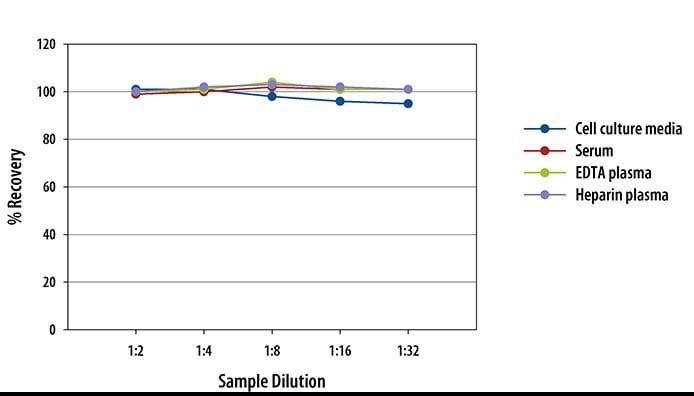
To assess the linearity of the assay, samples were spiked with high concentrations of IL-8 in various matrices and diluted with the appropriate Calibrator Diluent to produce samples with values within the dynamic range of the assay.

Human CXCL8 ELISA/IL-8 ELISA Linearity

Scientific Data Images for Human IL-8/CXCL8 Quantikine ELISA Kit

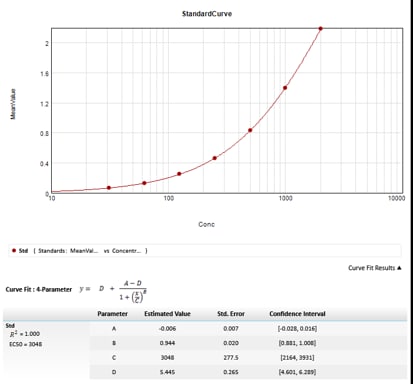
Human CXCL8 ELISA/IL-8 ELISA Cell Culture Supernate Standard Curve

Human CXCL8 ELISA/IL-8 ELISA Cell Culture Supernate Standard Curve

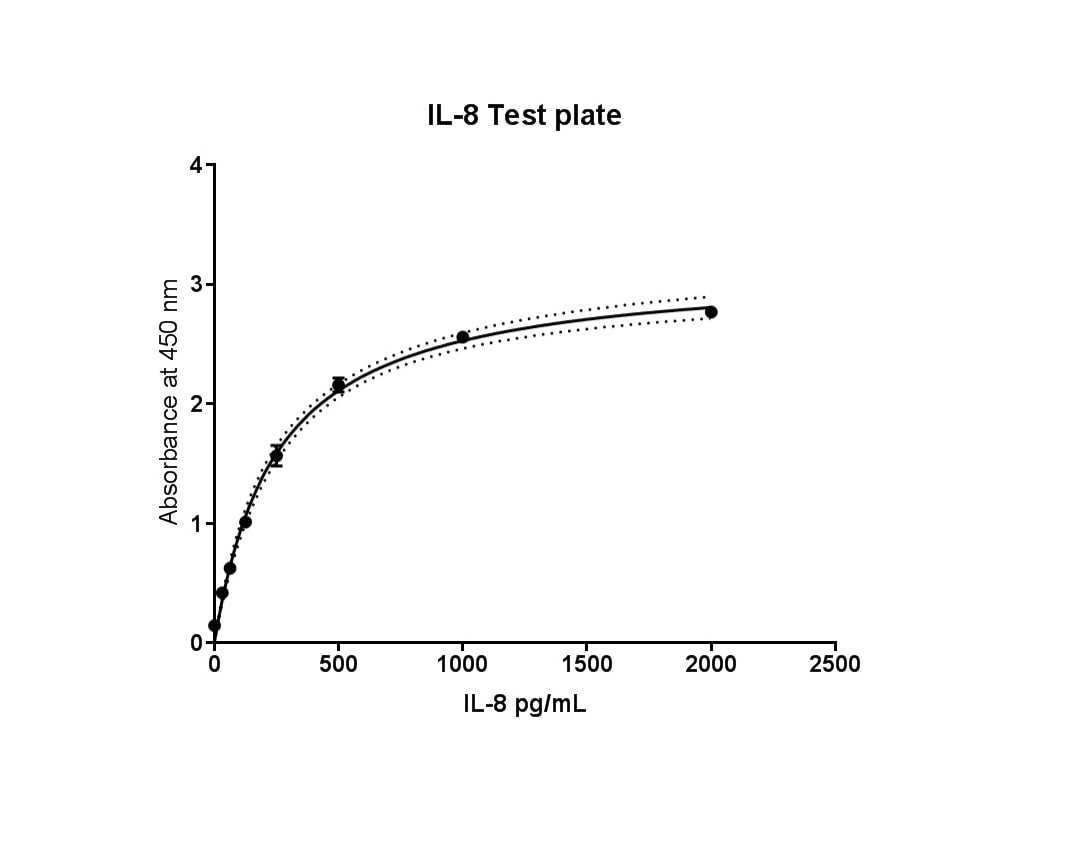
Human CXCL8 ELISA/IL-8 ELISA Serum/Plasma Standard Curve

Human CXCL8 ELISA/IL-8 ELISA Serum/Plasma Standard Curve

Human IL-8/CXCL8 Quantikine ELISA Kit

Human IL-8/CXCL8 Quantikine ELISA Kit

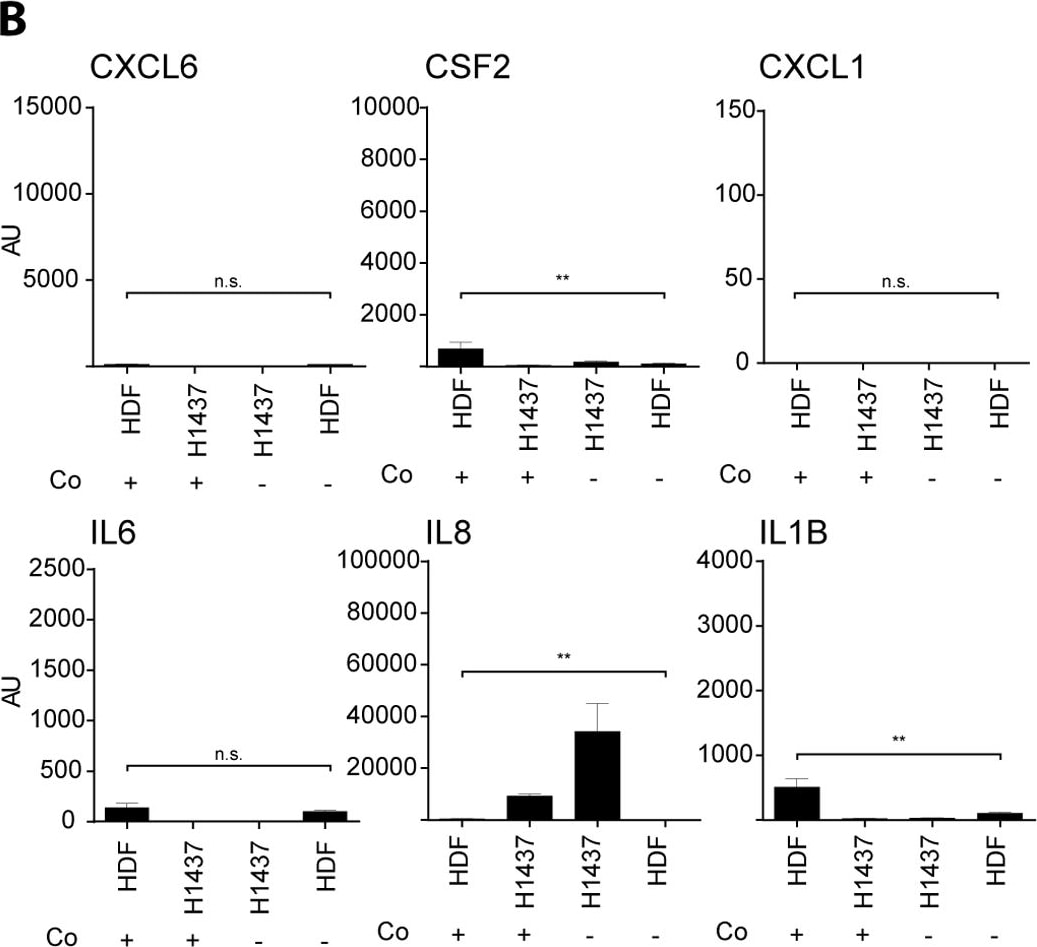
RT-qPCR for a set of cytokines (CSF2, IL6, IL8 and IL1B) and chemokines (CXCL1 and CXCL6) of total RNA samples derived from mono- and co-cultures in a transwell assay.The respective co- (+) or mono- (-) culture is indicated on the X-axis. The respective analyzed cytokine or chemokine is indicated in the header of each graph. Expression values are shown in arbitrary units (AU) and have been normalized to beta-2 microglobulin (B2M) mRNA copies. Experiments were performed in triplicates (n = 3). Statistical analysis was performed on the mean values by unpaired comparison of mono-cultured HDF and co-cultured HDF RNA samples by using Student’s t-test (**p<0.01, ***p<0.001; n.s.: not significant). Image collected and cropped by CiteAb from the following open publication (https://pubmed.ncbi.nlm.nih.gov/25919140), licensed under a CC-BY license. Not internally tested by R&D Systems.
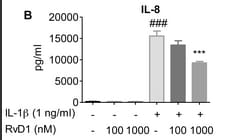
Detection of Human Human IL-8/CXCL8 Quantikine ELISA Kit by ELISA

Detection of Human Human IL-8/CXCL8 Quantikine ELISA Kit by ELISA

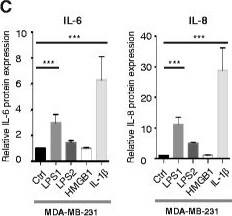
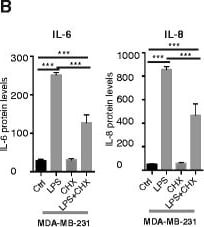
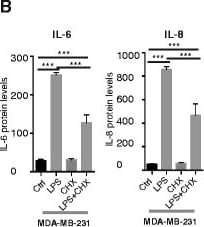
Pathogen-associated molecular patterns (PAMPs) and damage-associated molecular pattern (DAMPs) induce cytokine expression in human breast cancer cells in vitro. a Relative expression of IL-6 and IL-8 mRNAs after 6 h stimulation with lipopolysaccharide 1 (LPS1) and LPS2, using quantitative real-time PCR (QPCR) on mRNA from the cell lines indicated; n = 6. Error bars standard error of the mean (SEM); ***P <0.001 (analysis of variance (ANOVA)). b Release of IL-6 and IL-8 after stimulation with LPS1 and cycloheximide for 6 h, using ELISA on supernatants from stimulated MDA-MB-231 cells; n = 3. c-e Relative release of IL-6 and IL-8 after stimulation with LPS1, LPS2, the DAMP HMGB1 or IL-1 beta for 6 h, using ELISA on supernatants from stimulated MDA-MB-231 cells (c), SUM-149 cells (d) and SUM-159 cells (e); n = 10. Error bars SEM; *P <0.05, ***P <0.001 (ANOVA). f Dual luciferase reporter assays of MDA-MB-231 cells transfected with an NF kappa B reporter. TK-Renilla was co-transfected as control (Ctrl). LPS1, LPS2, HMGB1 or IL-1 beta was added to stimulate NF kappa B activity as described in “Methods”; n = 14. Error bars SEM; ***P <0.001 (ANOVA). g The relative release of IL-6 and IL-8 after stimulation with the DAMP S100A9 for 20 h, using ELISA on supernatants from stimulated MDA-MB-231, SUM-149 and SUM-159 cells; n = 6. Error bars SEM. *P <0.05, ***P <0.001 (ANOVA). h Transient transfection of pDUO-MD2/hTLR4 for 72 h in MCF-7 cells induces release of both IL-6 and IL-8 measured by ELISA; n = 6. Error bars SEM; *P <0.05, ***P <0.001 (Students t test) Image collected and cropped by CiteAb from the following publication (https://pubmed.ncbi.nlm.nih.gov/26392082), licensed under a CC-BY license. Not internally tested by R&D Systems.
Detection of Human Human IL-8/CXCL8 Quantikine ELISA Kit by ELISA

Detection of Human Human IL-8/CXCL8 Quantikine ELISA Kit by ELISA

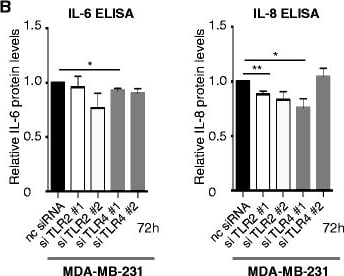
Toll-like receptor 4 (TLR4) silencing decreases endogenous levels of pro-inflammatory cytokines. a Effect of TLR2/4 silencing in breast cancer cells transfected with negative control (nc) siRNA, or siRNA directed against TLR2 mRNA (si#1 and si#2) or TLR4 mRNA (si#1 and si#2) was analyzed using quantitative real-time PCR; ***P <0.001 (analysis of variance (ANOVA)). b IL-6 (left) and IL-8 (right) ELISA on supernatants from MDA-MB-231 breast cancer cells transfected with nc siRNA, or siRNA directed against TLR2 mRNA (si#1 and si#2) or TLR4 mRNA (si#1 and si#2); n = 4. Error bars standard error of the mean (SEM); *P <0.05, **P <0.01, ***P <0.001 (ANOVA). c Boyden chamber migration assays. Migration of primary human myeloid cells towards supernatants from different cell lines indicated. Human primary peripheral blood mononuclear cells were isolated as previously described [48] and allowed to migrate through a Costar Transwell® Permeable Support 8.0-μm 24-well plate (Corning) to the supernatants of breast cancer supernatants cultured under serum-free conditions. Percentage of migrated CD11b+ cells was analyzed using a flow cytometer and CD11b-APC antibodies (BD Sciences); n = 4. Error bars SEM; *P <0.05, **P <0.01, ***P <0.001 (ANOVA). d Matrigel invasion assays. Invasion of lipopolysaccharide (LPS)-stimulated/un-stimulated MDA-MB-231 cells into matrigel invasion chambers (BD Sciences) as indicated: 25 × 103 MDA-MB-231 cells were stimulated or not with LPS and allowed to invade from 72 h. Amount of invaded cells was analyzed using crystal violet staining and manual counting in four separate experiments; n = 4. Error bars SEM; *P <0.05, **P <0.01, ***P <0.001 (Student’s t test) Image collected and cropped by CiteAb from the following publication (https://pubmed.ncbi.nlm.nih.gov/26392082), licensed under a CC-BY license. Not internally tested by R&D Systems.
Detection of Human Human IL-8/CXCL8 Quantikine ELISA Kit by ELISA

Detection of Human Human IL-8/CXCL8 Quantikine ELISA Kit by ELISA

Pathogen-associated molecular patterns (PAMPs) and damage-associated molecular pattern (DAMPs) induce cytokine expression in human breast cancer cells in vitro. a Relative expression of IL-6 and IL-8 mRNAs after 6 h stimulation with lipopolysaccharide 1 (LPS1) and LPS2, using quantitative real-time PCR (QPCR) on mRNA from the cell lines indicated; n = 6. Error bars standard error of the mean (SEM); ***P <0.001 (analysis of variance (ANOVA)). b Release of IL-6 and IL-8 after stimulation with LPS1 and cycloheximide for 6 h, using ELISA on supernatants from stimulated MDA-MB-231 cells; n = 3. c-e Relative release of IL-6 and IL-8 after stimulation with LPS1, LPS2, the DAMP HMGB1 or IL-1 beta for 6 h, using ELISA on supernatants from stimulated MDA-MB-231 cells (c), SUM-149 cells (d) and SUM-159 cells (e); n = 10. Error bars SEM; *P <0.05, ***P <0.001 (ANOVA). f Dual luciferase reporter assays of MDA-MB-231 cells transfected with an NF kappa B reporter. TK-Renilla was co-transfected as control (Ctrl). LPS1, LPS2, HMGB1 or IL-1 beta was added to stimulate NF kappa B activity as described in “Methods”; n = 14. Error bars SEM; ***P <0.001 (ANOVA). g The relative release of IL-6 and IL-8 after stimulation with the DAMP S100A9 for 20 h, using ELISA on supernatants from stimulated MDA-MB-231, SUM-149 and SUM-159 cells; n = 6. Error bars SEM. *P <0.05, ***P <0.001 (ANOVA). h Transient transfection of pDUO-MD2/hTLR4 for 72 h in MCF-7 cells induces release of both IL-6 and IL-8 measured by ELISA; n = 6. Error bars SEM; *P <0.05, ***P <0.001 (Students t test) Image collected and cropped by CiteAb from the following publication (https://pubmed.ncbi.nlm.nih.gov/26392082), licensed under a CC-BY license. Not internally tested by R&D Systems.
Detection of Human Human IL-8/CXCL8 Quantikine ELISA Kit by ELISA

Detection of Human Human IL-8/CXCL8 Quantikine ELISA Kit by ELISA

Pathogen-associated molecular patterns (PAMPs) and damage-associated molecular pattern (DAMPs) induce cytokine expression in human breast cancer cells in vitro. a Relative expression of IL-6 and IL-8 mRNAs after 6 h stimulation with lipopolysaccharide 1 (LPS1) and LPS2, using quantitative real-time PCR (QPCR) on mRNA from the cell lines indicated; n = 6. Error bars standard error of the mean (SEM); ***P <0.001 (analysis of variance (ANOVA)). b Release of IL-6 and IL-8 after stimulation with LPS1 and cycloheximide for 6 h, using ELISA on supernatants from stimulated MDA-MB-231 cells; n = 3. c-e Relative release of IL-6 and IL-8 after stimulation with LPS1, LPS2, the DAMP HMGB1 or IL-1 beta for 6 h, using ELISA on supernatants from stimulated MDA-MB-231 cells (c), SUM-149 cells (d) and SUM-159 cells (e); n = 10. Error bars SEM; *P <0.05, ***P <0.001 (ANOVA). f Dual luciferase reporter assays of MDA-MB-231 cells transfected with an NF kappa B reporter. TK-Renilla was co-transfected as control (Ctrl). LPS1, LPS2, HMGB1 or IL-1 beta was added to stimulate NF kappa B activity as described in “Methods”; n = 14. Error bars SEM; ***P <0.001 (ANOVA). g The relative release of IL-6 and IL-8 after stimulation with the DAMP S100A9 for 20 h, using ELISA on supernatants from stimulated MDA-MB-231, SUM-149 and SUM-159 cells; n = 6. Error bars SEM. *P <0.05, ***P <0.001 (ANOVA). h Transient transfection of pDUO-MD2/hTLR4 for 72 h in MCF-7 cells induces release of both IL-6 and IL-8 measured by ELISA; n = 6. Error bars SEM; *P <0.05, ***P <0.001 (Students t test) Image collected and cropped by CiteAb from the following publication (https://pubmed.ncbi.nlm.nih.gov/26392082), licensed under a CC-BY license. Not internally tested by R&D Systems.

Preparation and Storage

Shipping

The product is shipped at ambient temperature. Upon receipt, store it immediately at the temperature recommended below.

Stability & Storage

Store the unopened product at 2 - 8 °C. Do not use past expiration date.

Background: IL-8/CXCL8

Interleukin-8 (IL-8), also known as IL-8, GCP-1, and NAP-1, is a heparin-binding 8-9 kDa member of the alpha, or CXC family of chemokines. There are at least 15 human CXC family members that all adopt a three beta -sheet/one alpha -helix structure. Most CXC chemokines show an N-terminal Glu-Leu-Arg (ELR) tripeptide motif. IL-8 circulates as a monomer, homodimer, and heterodimer with CXCL4/PF4. The monomer is considered the most bio-active, while the heterodimer can potentiate PF4 activity. IL-8 oligomerization is modulated by its interactions with matrix and cell surface glycosaminoglycans (GAGs). Mature human IL-8 shares 65-69% amino acid (aa) identity with canine, feline, and porcine IL-8. There is no IL-8 gene counterpart in rodent. 

Multiple isoforms of IL-8 are generated through both alternative splicing and differential proteolytic cleavage. In humans, alternative splicing generates an iso-form with an eleven aa substitution at the C-terminus. Proteolytic processing results in N-terminal truncation of IL-8 and is likely a cell-specific event. For example, fibroblasts and endothelial cells generate the 1-77 form by cleaving IL-8 following Glu21, while monocytes and lymphocytes generate the 6-77 form by cleaving following Leu25. These truncated forms generally show increased bioactivity, particularly through the CXCR1 receptor. IL-8 can also undergo citrullination on Arg27 of the precursor, a modification that increases its half-life and ability to induce leukocytosis. A wide variety of cells secrete IL-8 including monocytes and neutrophils, fibroblasts and keratinocytes, mast cells, visceral smooth muscle cells, dendritic cells, type II great alveolar cells, and endothelial cells. 

IL-8 bioactivity is mediated through two G-protein-coupled receptors, termed CXCR1/IL-8 RA and CXCR2/IL-8 RB. CXCR1 is 45-50 kDa in size and is used almost exclusively by IL-8. CXCR2 is 35-40 kDa in size and is used by nearly all CXC chemokines. Both CXCR1 and CXCR2 constitutively associate into functional homodimers. They can also heterodimerize, but these complexes dissociate following IL-8 binding. CXCR2 responds to low concentrations of IL-8 and is principally associated with chemotaxis and MMP-9 release. CXCR1, in contrast, responds to high concentrations of IL-8 and is associated with respiratory burst and phospholipase D2 activation. Thus, CXCR2 ligation induces leukocyte adhesion to activated vascular endothelium and migration to sites of inflammation, while CXCR1 ligation primes neutrophil antimicrobial activity. IL-8 can also form a complex with Serpin A1/alpha-1 Antitrypsin, and this prevents IL-8 interaction with CXCR1. 

In addition to its pro-inflammatory effects, IL-8 is involved in angiogenesis and the pathogenesis of atherosclerosis and cancer. It induces VEGF expression in vascular endothelial cells and functions as an autocrine factor for EC growth and angiogenesis. It is upregulated in atherosclerotic lesions and is elevated in the serum and cerebrospinal fluid following myocardial infarction. In cancer, IL-8 promotes epithelial-mesenchymal transition as well as tumor cell invasiveness and metastasis.

Long Name

Interleukin 8

Alternate Names

CXCL8, GCP1, IL8, LAI, LECT, LUCT, LYNAP, MDNCF, MONAP, NAF, NAP1, NCF, TCF, TSG1

Entrez Gene IDs

3576 (Human); 396880 (Porcine); 403850 (Canine); 493836 (Feline)

Gene Symbol

CXCL8

Additional IL-8/CXCL8 Products

Product Documents for Human IL-8/CXCL8 Quantikine ELISA Kit

Certificate of Analysis

To download a Certificate of Analysis, please enter a lot or batch number in the search box below.

Note: Certificate of Analysis not available for kit components.

Product Specific Notices for Human IL-8/CXCL8 Quantikine ELISA Kit

For research use only

⚠ WARNING: This product can expose you to chemicals including N,N-Dimethylforamide, which is known to the State of California to cause cancer. For more information, go to www.P65Warnings.ca.gov.

Citations for Human IL-8/CXCL8 Quantikine ELISA Kit

Customer Reviews for Human IL-8/CXCL8 Quantikine ELISA Kit (11)

4.9 out of 5
11 Customer Ratings
5 Stars
91%
4 Stars
9%
3 Stars
0%
2 Stars
0%
1 Stars
0%

Have you used Human IL-8/CXCL8 Quantikine ELISA Kit?

Submit a review and receive an Amazon gift card!

$25/€18/£15/$25CAN/¥2500 Yen for a review with an image

$10/€7/£6/$10CAN/¥1110 Yen for a review without an image

Submit a review
Amazon Gift Card

Customer Images


Showing  1 - 5 of 11 reviews Showing All
Filter By:
  • Human IL-8/CXCL8 Quantikine ELISA Kit
    Name: Khuynh Nguyen
    Sample Tested: Caco-2 human colorectal adenocarcinoma cell line
    Verified Customer | Posted 05/06/2023
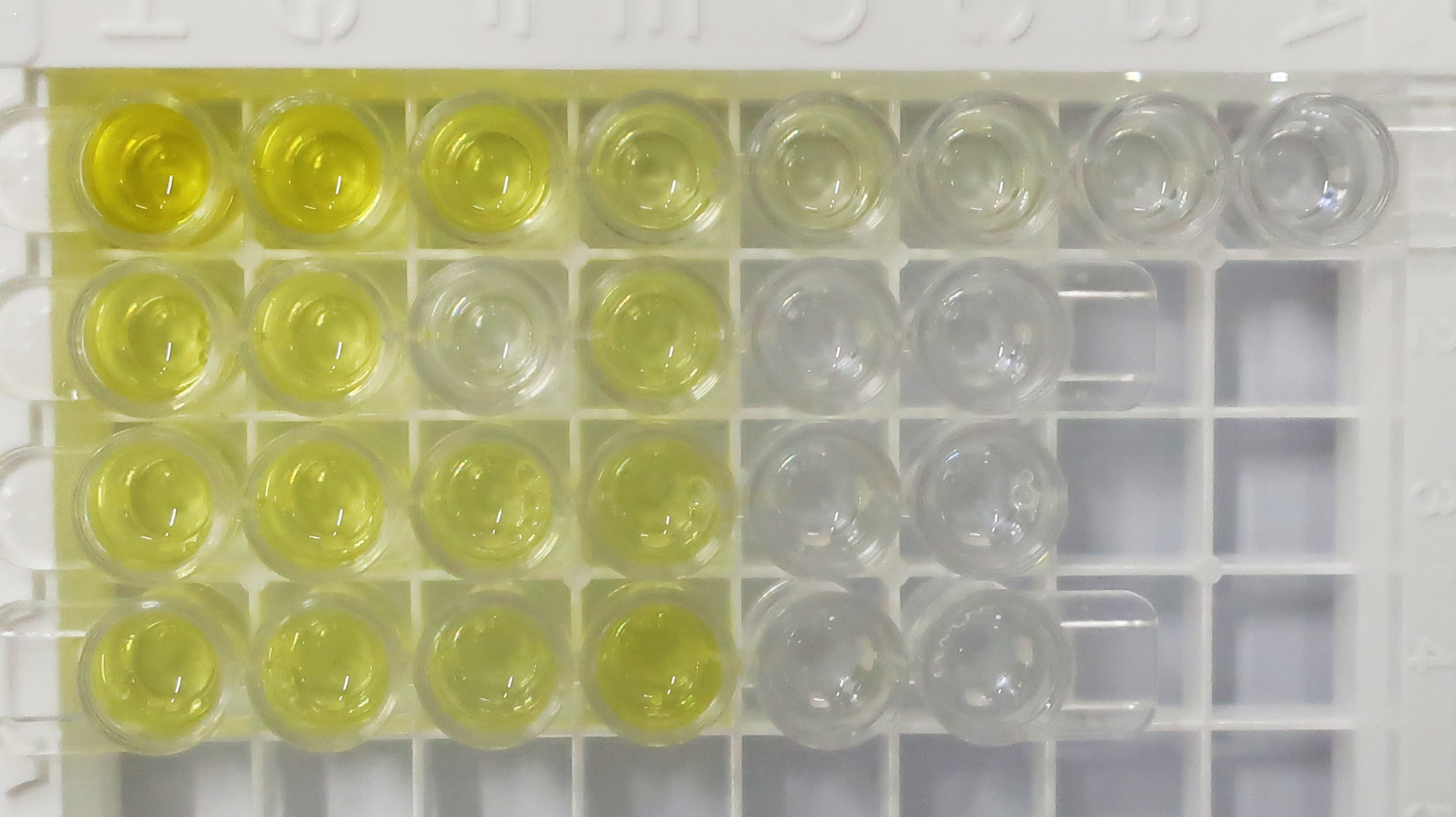
    This product works very well
    Human IL-8/CXCL8 Quantikine ELISA Kit D8000C
  • Human IL-8/CXCL8 Quantikine ELISA Kit
    Name: Anonymous
    Sample Tested: Cell culture supernatant
    Verified Customer | Posted 04/24/2023
  • Human IL-8/CXCL8 Quantikine ELISA Kit
    Name: Anonymous
    Sample Tested: Urine and Plasma
    Verified Customer | Posted 11/07/2022
    Can detect in normal urine at low levels. Urine was measured neat, 4-fold, and 16-fold. Could not detect in plasma run neat.
    Human IL-8/CXCL8 Quantikine ELISA Kit D8000C
  • Human IL-8/CXCL8 Quantikine ELISA Kit
    Name: Anonymous
    Sample Tested: human aortic endothelial cells
    Verified Customer | Posted 12/06/2019
  • Human IL-8/CXCL8 Quantikine ELISA Kit
    Name: Nicole Stone
    Sample Tested: Human cell conditioned medium
    Verified Customer | Posted 01/17/2019
    Great product! Very easy to use
    Human IL-8/CXCL8 Quantikine ELISA Kit D8000C
  • Human IL-8/CXCL8 Quantikine ELISA Kit
    Name: Anonymous
    Sample Tested: Cell Culture Media
    Verified Customer | Posted 05/02/2018
  • Human IL-8/CXCL8 Quantikine ELISA Kit
    Name: Alisha Freeman
    Sample Tested: CHO Chinese hamster ovary cell line
    Verified Customer | Posted 04/24/2018
  • Human IL-8/CXCL8 Quantikine ELISA Kit
    Name: Leslie Priddy
    Sample Tested: Serum
    Verified Customer | Posted 04/01/2018
  • Human IL-8/CXCL8 Quantikine ELISA Kit
    Name: Balaji Mahender
    Sample Tested: EDTA Plasma
    Verified Customer | Posted 01/18/2018
  • Human IL-8/CXCL8 Quantikine ELISA Kit
    Name: Jim Hsiao
    Sample Tested: Primary human lung fibroblasts
    Verified Customer | Posted 12/04/2017
    This result has been published in PlosONE journal: 10.1371/journal.pone.0058258
    Human IL-8/CXCL8 Quantikine ELISA Kit D8000C
  • Human IL-8/CXCL8 Quantikine ELISA Kit
    Name: Michelle Chen
    Sample Tested: A375 human melanoma cell line
    Verified Customer | Posted 04/26/2017
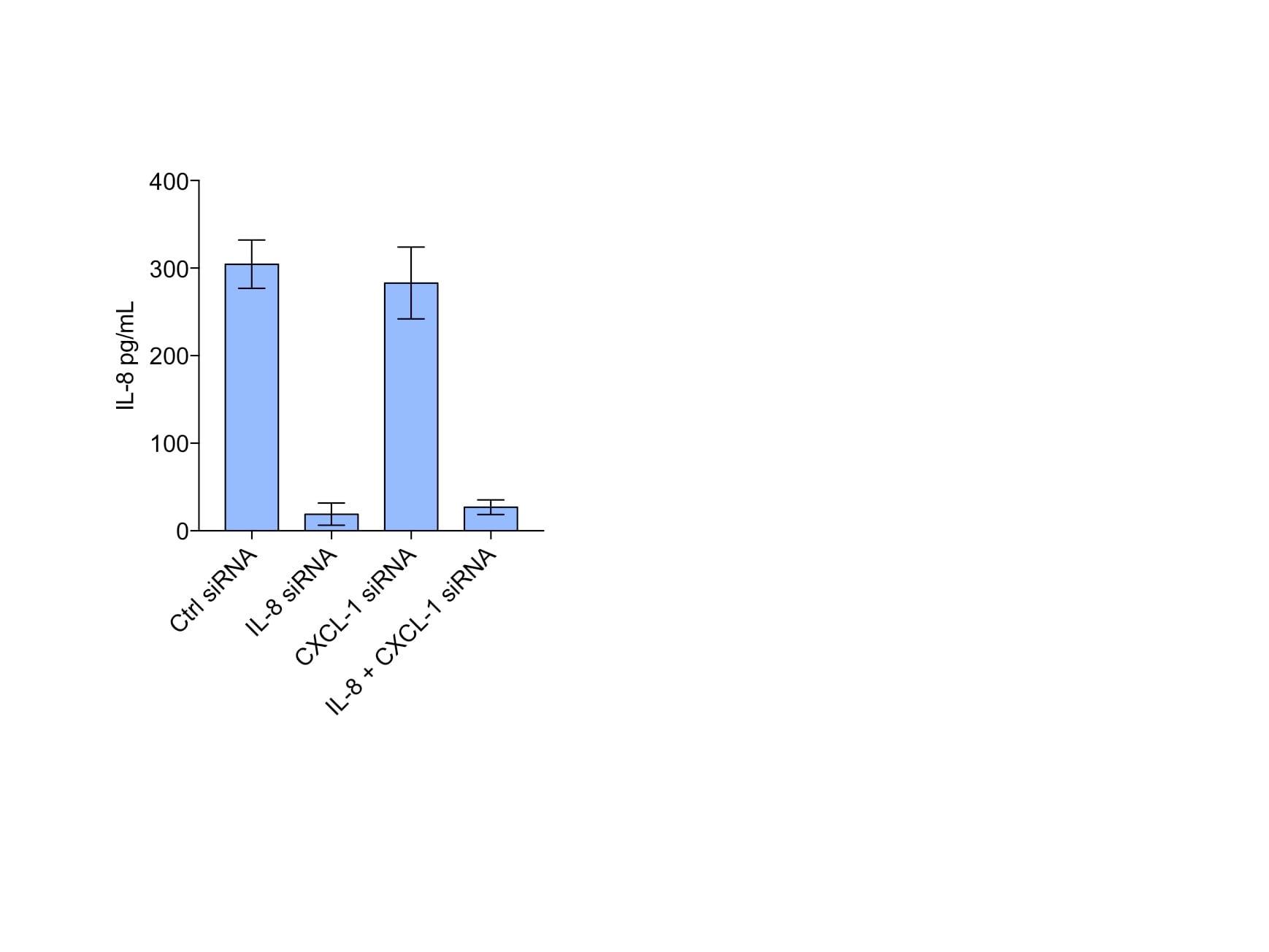
    Supernatents of A375-MA2 treated with siCtrl or siIL-8 were assessed using IL-8 ELISA (R&D).
    Human IL-8/CXCL8 Quantikine ELISA Kit D8000C

There are no reviews that match your criteria.

Showing  1 - 5 of 11 reviews Showing All

Protocols

View specific protocols for Human IL-8/CXCL8 Quantikine ELISA Kit (D8000C):

Refer to the product for complete assay procedure.

Bring all reagents and samples to room temperature before use. It is recommended that all samples, standards, and controls be assayed in duplicate.
  1.   Prepare all reagents, standard dilutions, and samples as directed in the product insert.
  2.   Remove excess microplate strips from the plate frame, return them to the foil pouch containing the desiccant pack, and reseal.

  3. 100 µL Assay Diluent
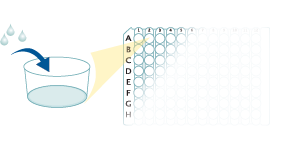
  4.   Add 100 µL of Assay Diluent to each well.

  5. 50 µL Standard, Control, or Sample
  6.   Add 50 µL of Standard, control, or sample to each well. Cover with a plate sealer, and incubate at room temperature for 2 hours.
  7.   Aspirate each well and wash, repeating the process 3 times for a total of 4 washes.

  8. 100 µL Conjugate
  9.   Add 100 µL of Conjugate to each well. Cover with a new plate sealer, and incubate at room temperature for 1 hour.
  10.   Aspirate and wash 4 times.

  11. 200 µL Substrate Solution
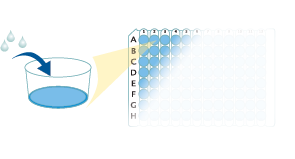
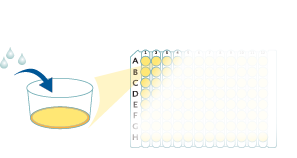
  12.   Add 200 µL Substrate Solution to each well. Incubate at room temperature for 30 minutes. PROTECT FROM LIGHT.

  13. 50 µL Stop Solution
  14.   Add 50 µL of Stop Solution to each well. Read at 450 nm within 30 minutes. Set wavelength correction to 540 nm or 570 nm.

Find general support by application which include: protocols, troubleshooting, illustrated assays, videos and webinars.

FAQs

No product specific FAQs exist for this product.

View all FAQs for ELISA Kits